
Ecology BIO C 322 Freshwater EcosystemsBiomes Types of
Ecology (BIO C 322) Freshwater Ecosystems/Biomes
Types of Freshwater Biomes • Lentic – Standing water. e. g. lakes, ponds. • Lotic – Running water. e. g. springs, streams, rivers. • Wetlands – Fluctuating water levels. e. g. marshes, swamps. • Groundwater – Important freshwater source for humans; not generally considered as an ecosystem.
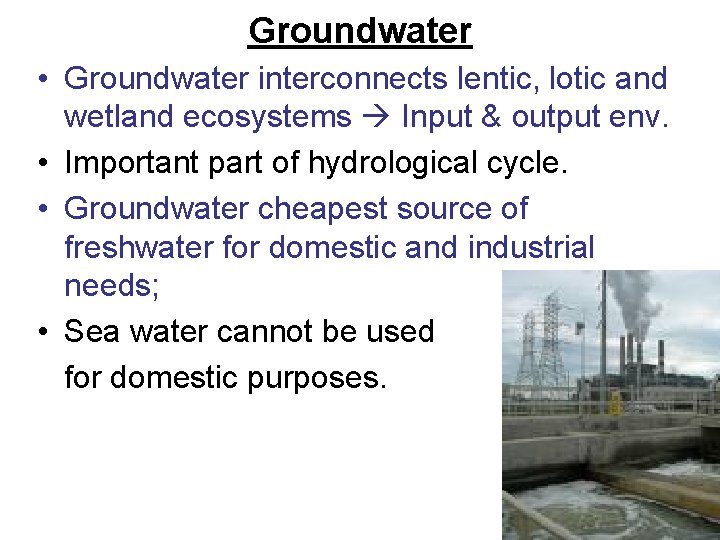
Groundwater • Groundwater interconnects lentic, lotic and wetland ecosystems Input & output env. • Important part of hydrological cycle. • Groundwater cheapest source of freshwater for domestic and industrial needs; • Sea water cannot be used for domestic purposes.
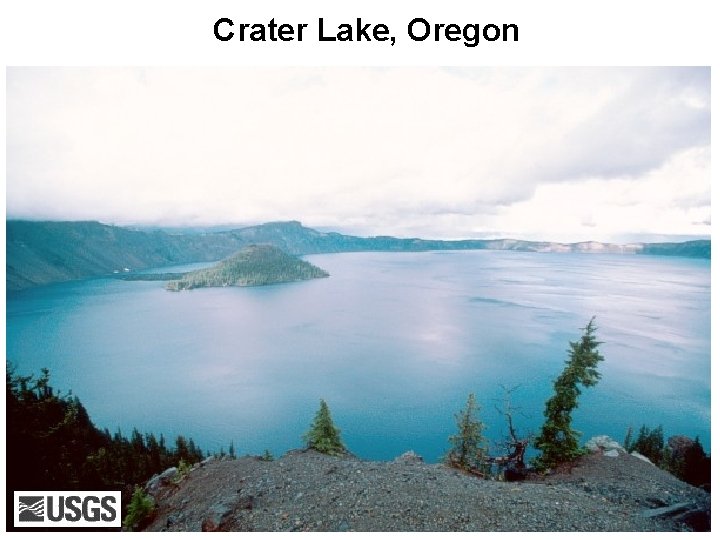
Crater Lake, Oregon

Lentic Ecosystems • Age of pond/lake variable. • Mainly freshwater, saline lakes also exist. • Species diversity lower than marine or terrestrial ecosystems; at times, biologically poor lake preferable to fertile one. • Oligotrophic (nutrient-poor) and eutrophic (nutrient-rich). • Impoundments – Artificial ponds & lakes.
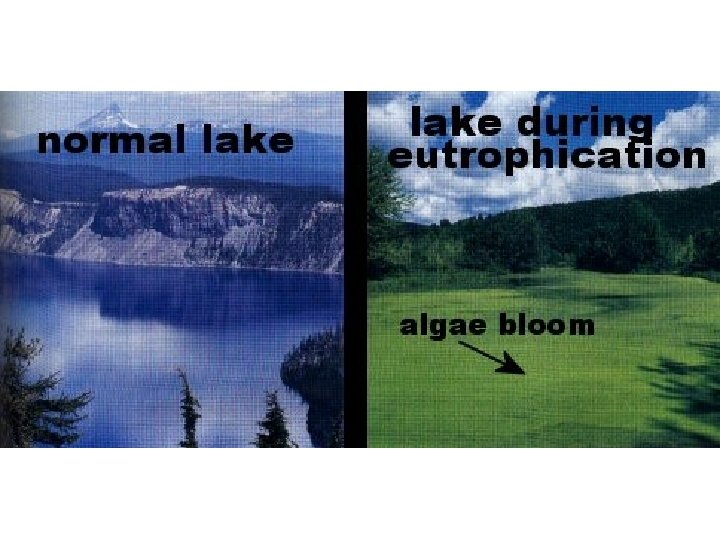
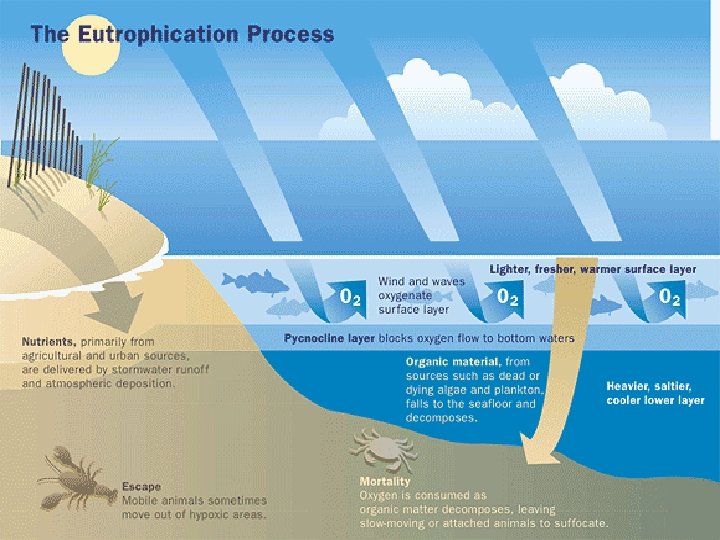
Eutrophication • Human activity Mining, construction, agriculture N, P, org matter flowing into lake Nutrient enrichment. • Growth of algae & aquatic plants. • Organic debris drift to bottom Decomposition Low O 2 in bottom sediments No aerobic life.
Oligotrophic Lakes • Poor in nutrients. • Clear water blue or blue-green. • Less production of org matter Less material for decomposers High O 2 in hypolimnion.
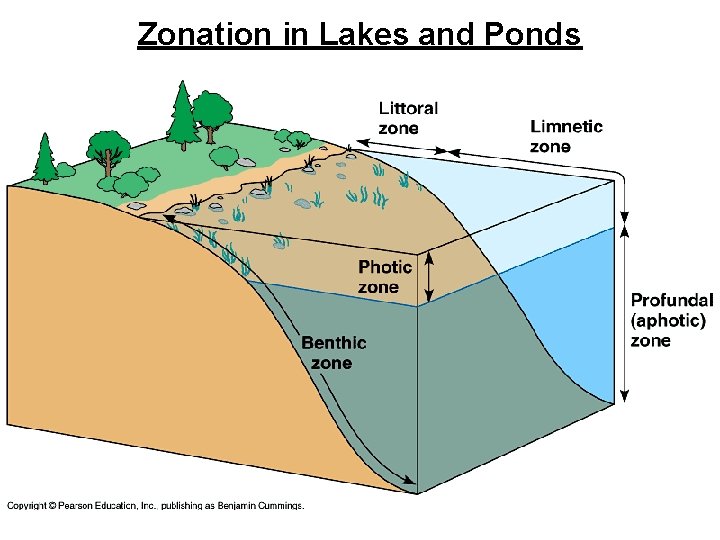
Zonation in Lakes and Ponds
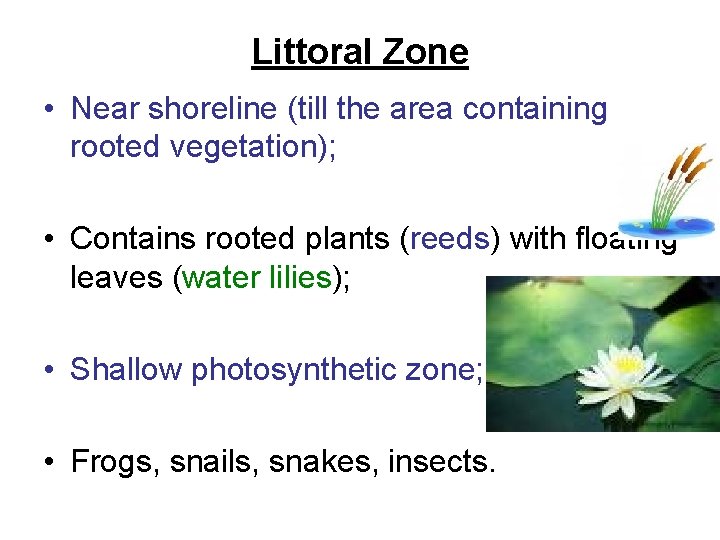
Littoral Zone • Near shoreline (till the area containing rooted vegetation); • Contains rooted plants (reeds) with floating leaves (water lilies); • Shallow photosynthetic zone; • Frogs, snails, snakes, insects.
Limnetic Zone • Open water till the depth of light penetration; • Photosynthetic zone; • Contains phytoplankton – diatoms, green and blue-green algae; • Zooplankton – Protozoans to microarthropods; • Nekton (Swimming animals) – Fish, amphibians, large insects; • Periphyton (Attached organisms) – Hydra.
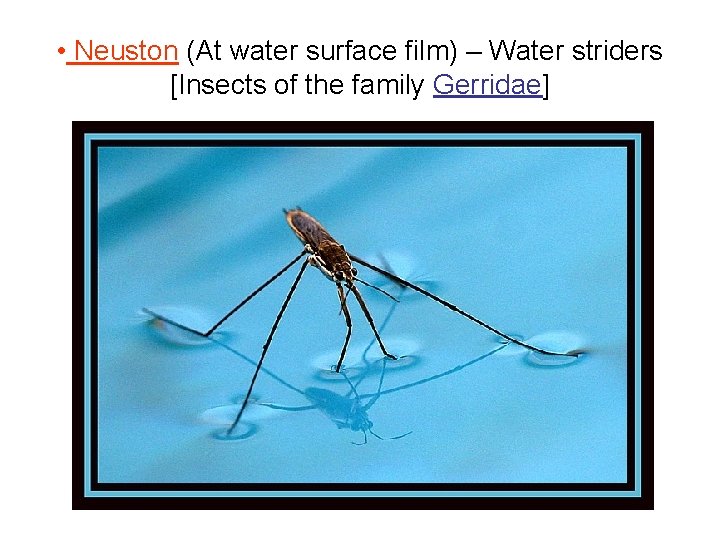
• Neuston (At water surface film) – Water striders [Insects of the family Gerridae]

Profundal Zone • Occurs below limnetic zone; • Aphotic zone; • (compensation depth of light = O 2 produced by photosynthesis balanced by O 2 used by respiration b/w limnetic & profundal zones ); • Detritus rain from limnetic zone is the major organic food source; • Inhabited by decomposers, nekton, etc. • Further zonation: benthic zone (bottom dwellers).
Lotic ecosystems • Current an imp controlling factor • Land-water interchange is more extensive • Oxygen tension is very high more uniform
Lotic Ecosystems • • Include streams and rivers; No thermal or chemical stratification; Types of river: - Soft water or chloride rivers: contain low conc. (less than 25 ppm) of dissolved solids; • - Hard water or carbonate: contain >100 ppm of dissolved inorganic solids; • - Humic or black water: high conc. of DOM.
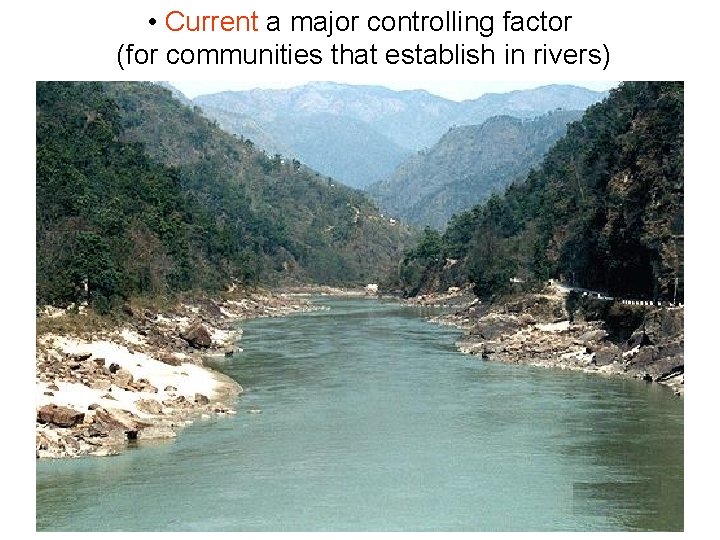
• Current a major controlling factor (for communities that establish in rivers)
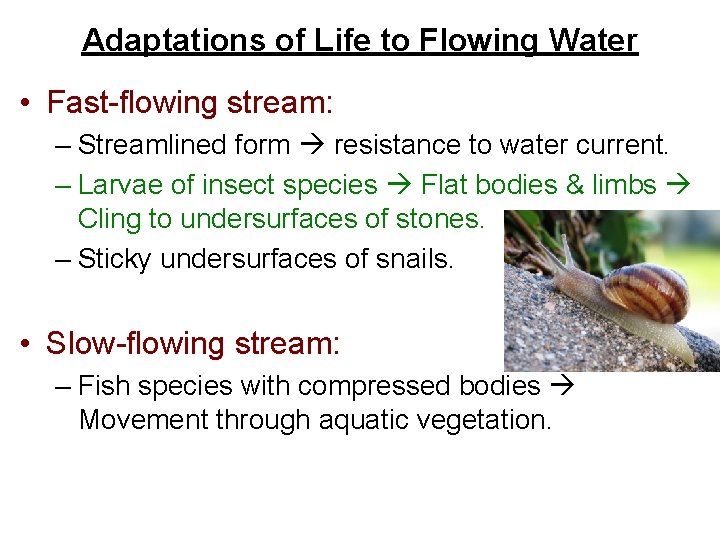
Adaptations of Life to Flowing Water • Fast-flowing stream: – Streamlined form resistance to water current. – Larvae of insect species Flat bodies & limbs Cling to undersurfaces of stones. – Sticky undersurfaces of snails. • Slow-flowing stream: – Fish species with compressed bodies Movement through aquatic vegetation.
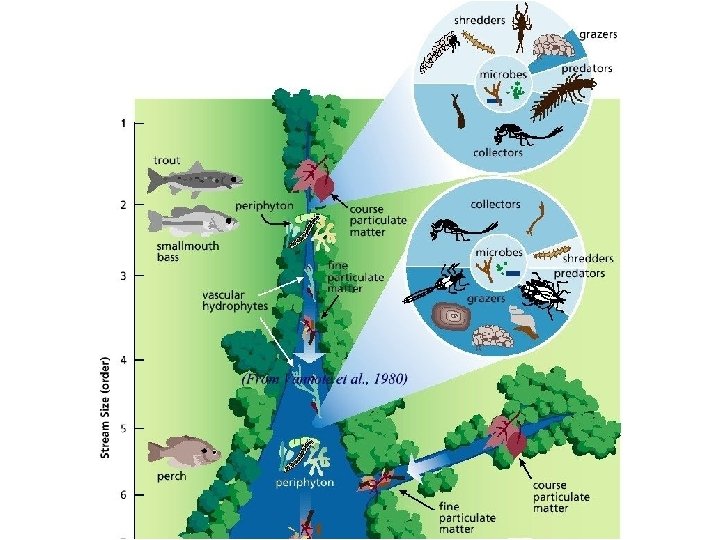
Major Groups of Invertebrates • Shredders: Trichoptera insects (caddisflies); break Coarse Particulate Organic Matter (CPOM) – detrital feeders. • Collectors: Blackflies; feed on FPOM (produced by shredder & microbial activity) – detrital feeders. • Grazers: Feed on algal coating of stones. • Gougers: Burrow into water-logged limbs & trunks of fallen trees. • Predators: Insects & fish feeding on above groups.
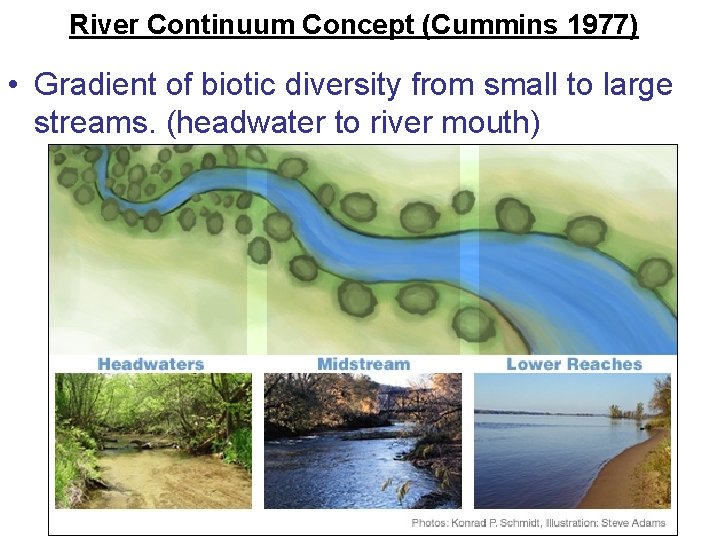
River Continuum Concept (Cummins 1977) • Gradient of biotic diversity from small to large streams. (headwater to river mouth)
• Streams at headwater: - Small; cold; - In shaded forested regions; - Low primary productivity; - Depend on organic matter input from terrestrial vegetation. - Mainly heterotrophic; - Coarse Particulate Organic Matter (CPOM), like leaves & branches predominates; - Dominant organism: shredder; - Rapids zone i. e. high current, no loose silt/sand at bottom.
• Streams at river mouth (midsection): - Wider; sunny; warmer; - Deeper water; reduced current velocity; - Primary production by algae & macrophytes (rooted aquatic plants); - Fine Particulate Organic Matter (FPOM) predominates; - Collectors & grazers dominant consumers. - Pool zone deeper water, i. e. low current and settled silt/sand; - Soft bottom suitable for burrowing animals.
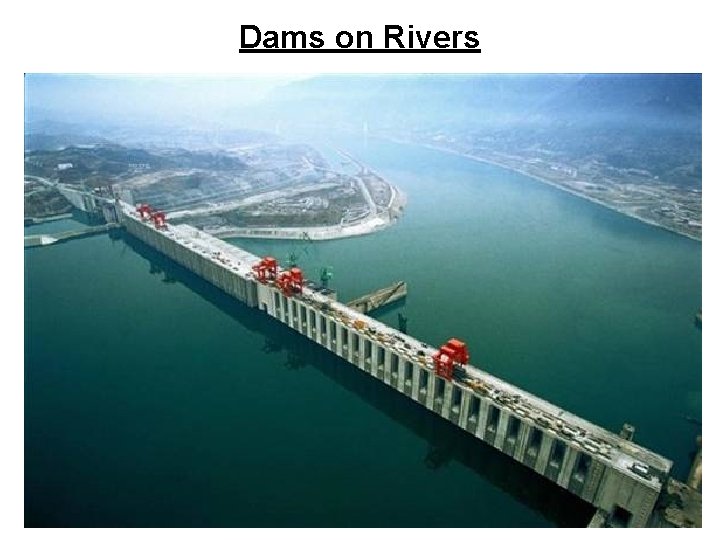
Dams on Rivers
• Dams regulate the natural flow of water. • Interrupt the river continuum. • Flow reduced as water fills up behind Lake-like conditions. • Newly flooded land Decaying material Heavy bloom of phytoplankton. - Single-purpose dams: Flood control & water storage. - Multi-purpose dams: Provide hydroelectric power or irrigation water.
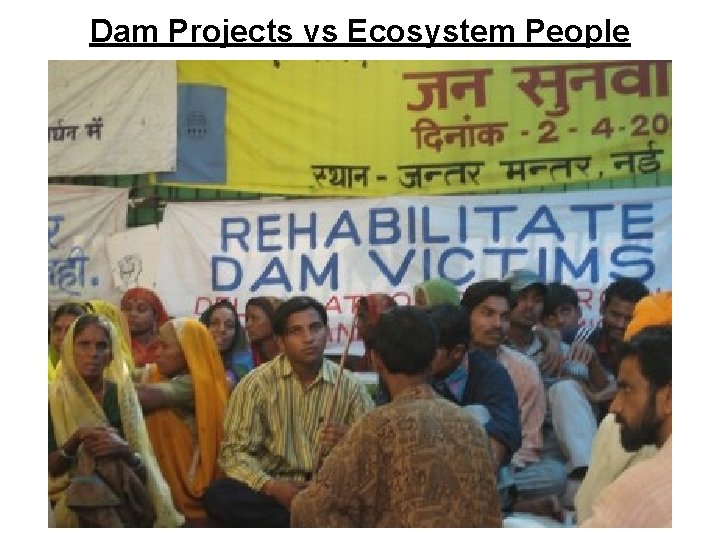
Dam Projects vs Ecosystem People
• Aim of project: Save coal, provide electricity Light up urban areas, industries. • Displacement of local people Resentment: – Experience of previously displaced communities. – Low cash compensation. – Promise of land-for-land rarely fulfilled. – Poor quality lands provided. – Difficulty of making new homes in unfamiliar environments.
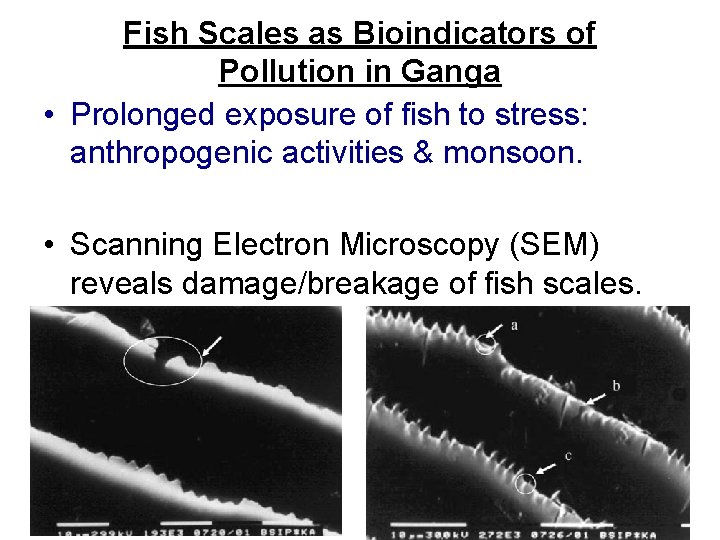
Fish Scales as Bioindicators of Pollution in Ganga • Prolonged exposure of fish to stress: anthropogenic activities & monsoon. • Scanning Electron Microscopy (SEM) reveals damage/breakage of fish scales.
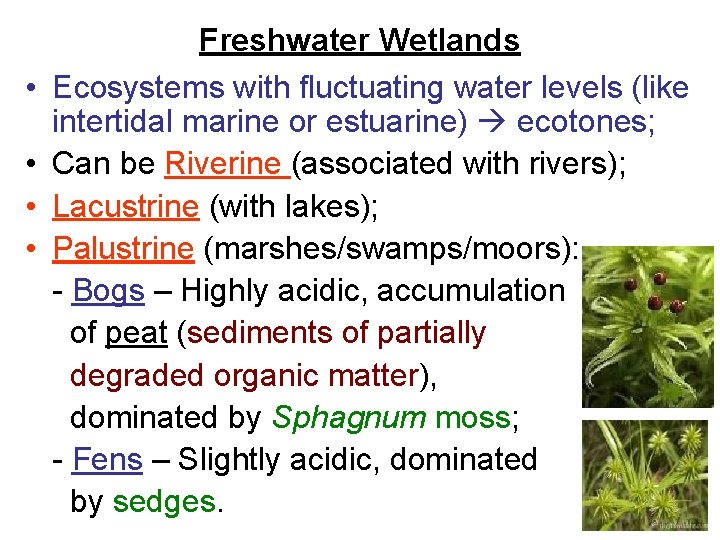
• • Freshwater Wetlands Ecosystems with fluctuating water levels (like intertidal marine or estuarine) ecotones; Can be Riverine (associated with rivers); Lacustrine (with lakes); Palustrine (marshes/swamps/moors): - Bogs – Highly acidic, accumulation of peat (sediments of partially degraded organic matter), dominated by Sphagnum moss; - Fens – Slightly acidic, dominated by sedges.
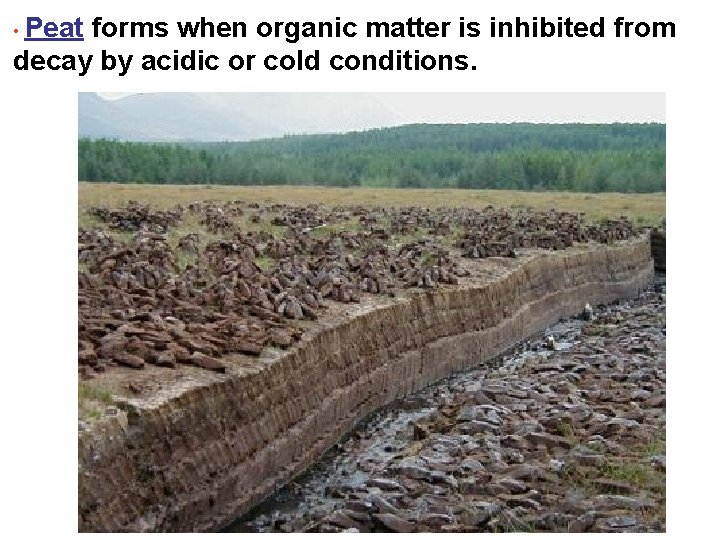
• Peat forms when organic matter is inhibited from decay by acidic or cold conditions.
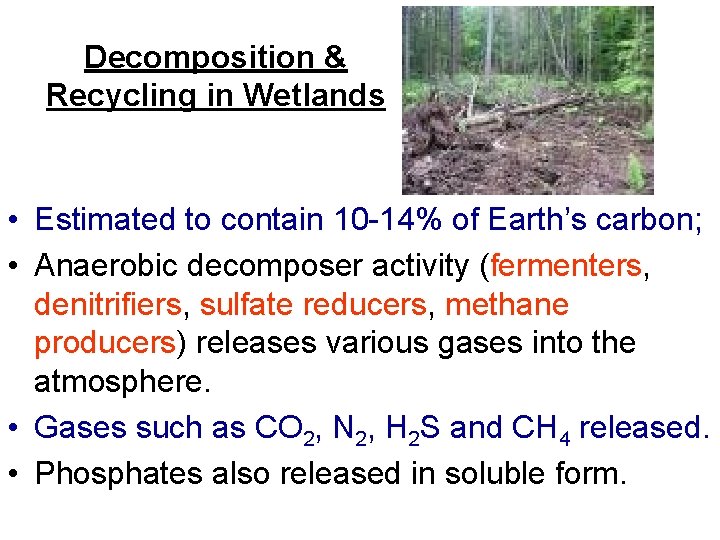
Decomposition & Recycling in Wetlands • Estimated to contain 10 -14% of Earth’s carbon; • Anaerobic decomposer activity (fermenters, denitrifiers, sulfate reducers, methane producers) releases various gases into the atmosphere. • Gases such as CO 2, N 2, H 2 S and CH 4 released. • Phosphates also released in soluble form.
Rice culture • Fresh water marsh ecosystem • Cultivated marsh grass • Flooding process is similar to hydroperiod of natural wetlands.
Forested wetlands • -swamps and floodplain forestsin the river bottoms. • -hydrology plays major role in species composition and productivity. • -Bald cypress (knees supply oxygen) and water tupelo are adapted to flooding.
Tidal freshwater marshes - Low lying coastal plains, tides extend inlands on large rivers. - Biota benefit from tidal pulses. - The anaerobic microbes dominated by sulfide reducers in salt water marshes and by methane producers in freshwater marshes.
- Slides: 34