
Ecology BIO C 322 Community Ecology Contd Neutralism
Ecology (BIO C 322) Community Ecology (Cont’d)
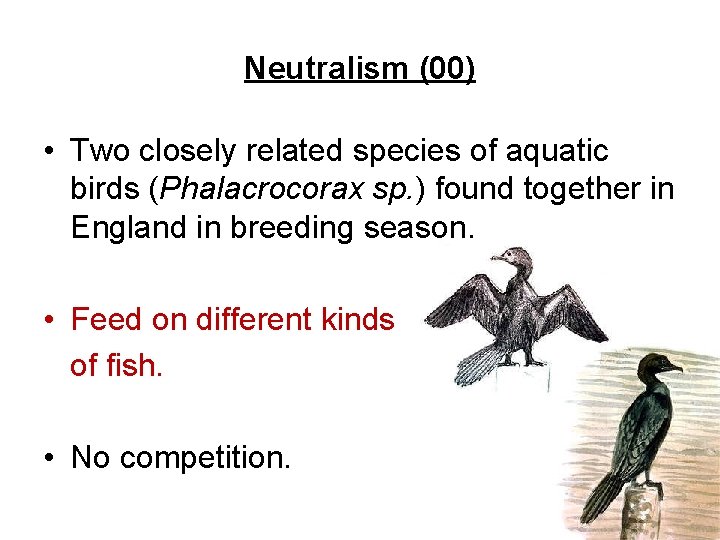
Neutralism (00) • Two closely related species of aquatic birds (Phalacrocorax sp. ) found together in England in breeding season. • Feed on different kinds of fish. • No competition.
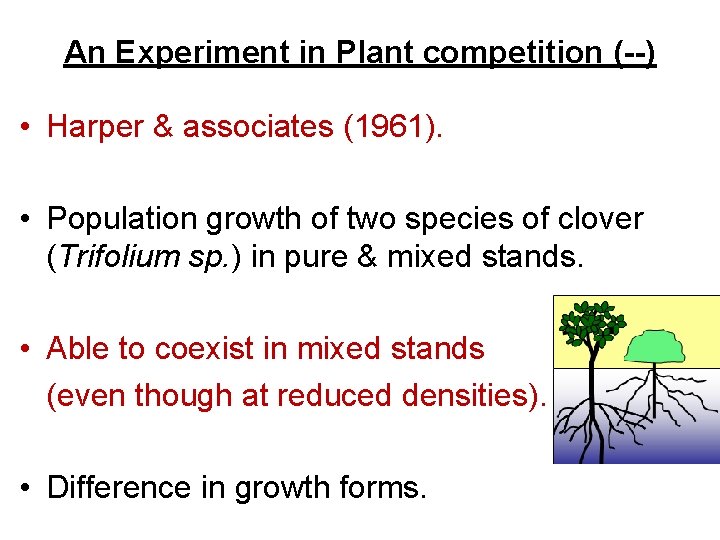
An Experiment in Plant competition (--) • Harper & associates (1961). • Population growth of two species of clover (Trifolium sp. ) in pure & mixed stands. • Able to coexist in mixed stands (even though at reduced densities). • Difference in growth forms.
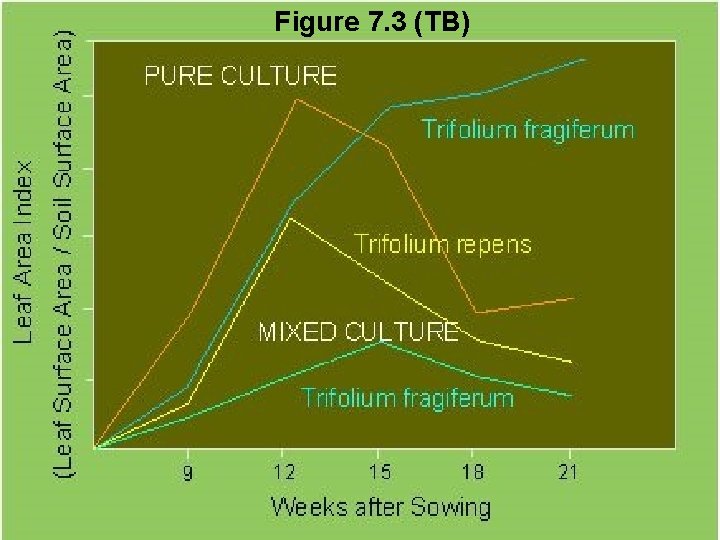
Figure 7. 3 (TB)
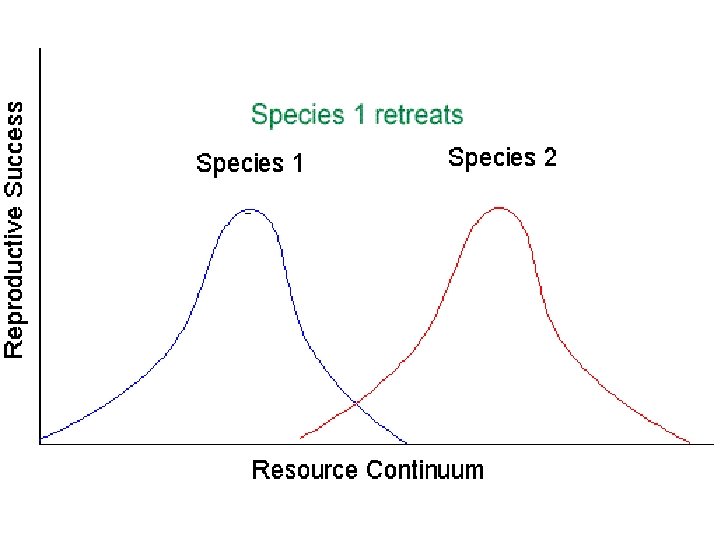
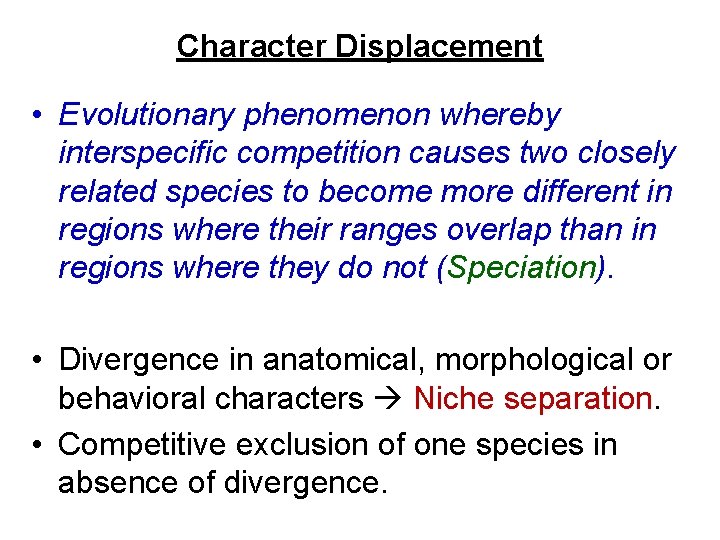
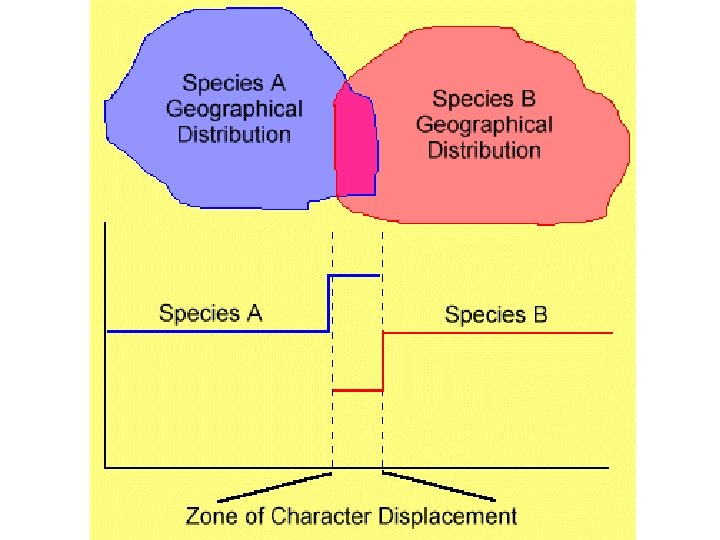
Character Displacement • Evolutionary phenomenon whereby interspecific competition causes two closely related species to become more different in regions where their ranges overlap than in regions where they do not (Speciation). • Divergence in anatomical, morphological or behavioral characters Niche separation. • Competitive exclusion of one species in absence of divergence.
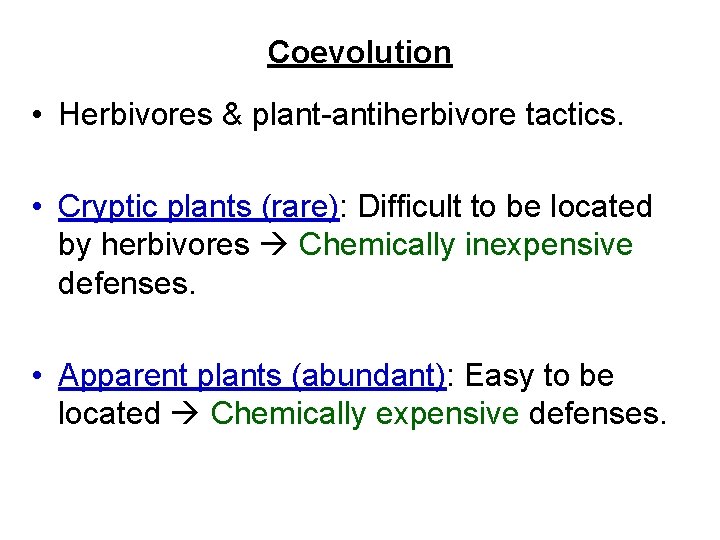
Coevolution • Herbivores & plant-antiherbivore tactics. • Cryptic plants (rare): Difficult to be located by herbivores Chemically inexpensive defenses. • Apparent plants (abundant): Easy to be located Chemically expensive defenses.
Altruism • Sacrifice of fitness (survival & fecundity) by one individual for benefit of another. • e. g. Warning signals on predator approach Neighbour’s fitness ↑; caller’s fitness ↓. • Among genetically related individuals (parents & offspring). • Even in unrelated species.
Positive-Negative Interactions (+-) • Predation, herbivory, parasitism & allelopathy. • Over long term, parasite-host or predator-prey interactions evolve to coexistence. • -ve interactions become less –ve with time if ecosystem allows reciprocal adaptations.
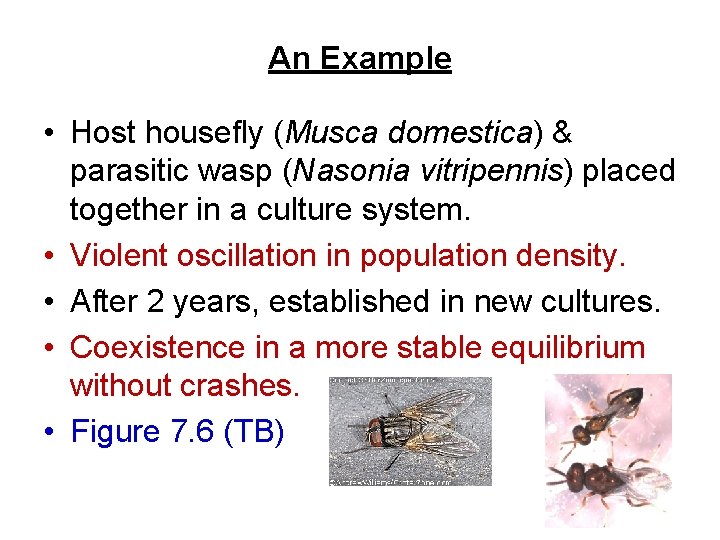
An Example • Host housefly (Musca domestica) & parasitic wasp (Nasonia vitripennis) placed together in a culture system. • Violent oscillation in population density. • After 2 years, established in new cultures. • Coexistence in a more stable equilibrium without crashes. • Figure 7. 6 (TB)
• When parasites or predators have long been associated with their respective hosts or prey, the effect is moderate, neutral & sometimes beneficial from longterm viewpoint.
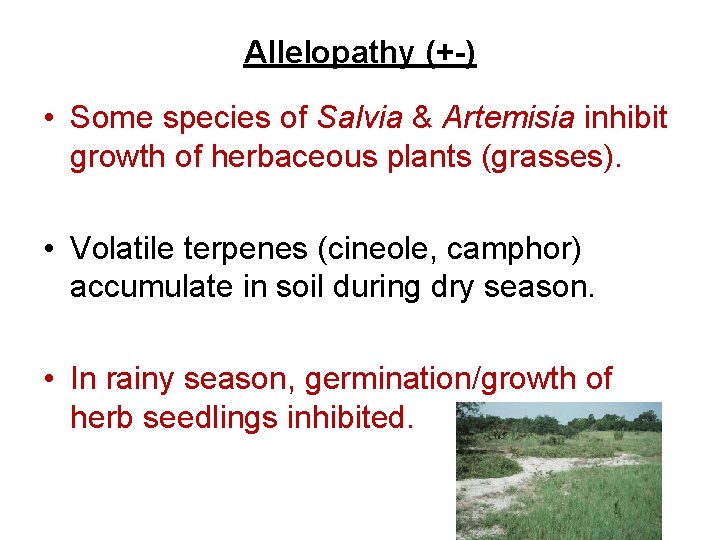
Allelopathy (+-) • Some species of Salvia & Artemisia inhibit growth of herbaceous plants (grasses). • Volatile terpenes (cineole, camphor) accumulate in soil during dry season. • In rainy season, germination/growth of herb seedlings inhibited.
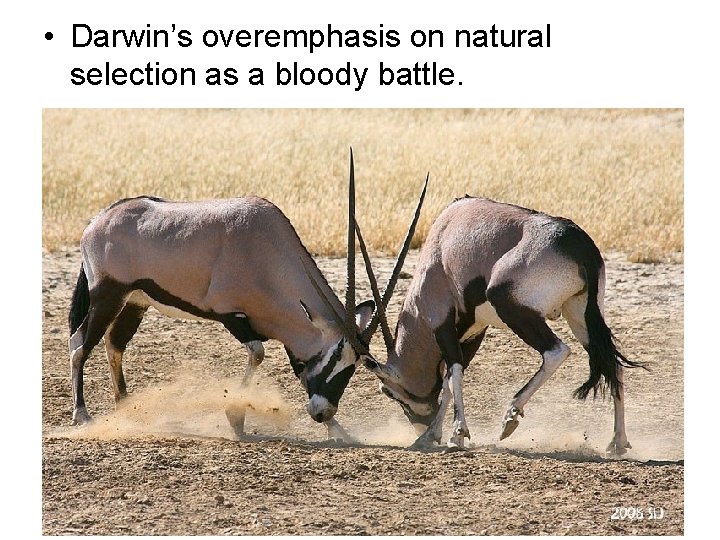
• Darwin’s overemphasis on natural selection as a bloody battle.
Positive Interactions • Commensalism (+0), protocooperation (++) & mutualism (++). • One view (Darwin): Competition sole force in shaping speciation & evolution. • Another view: Cooperation.
Commensalism (+0) • A step towards ++. • e. g. shellfish, sponges harbour commensals that gain shelter. • e. g. Crabs (commensals) in mantle cavity of oysters (hosts). • Many commensals not host-specific.
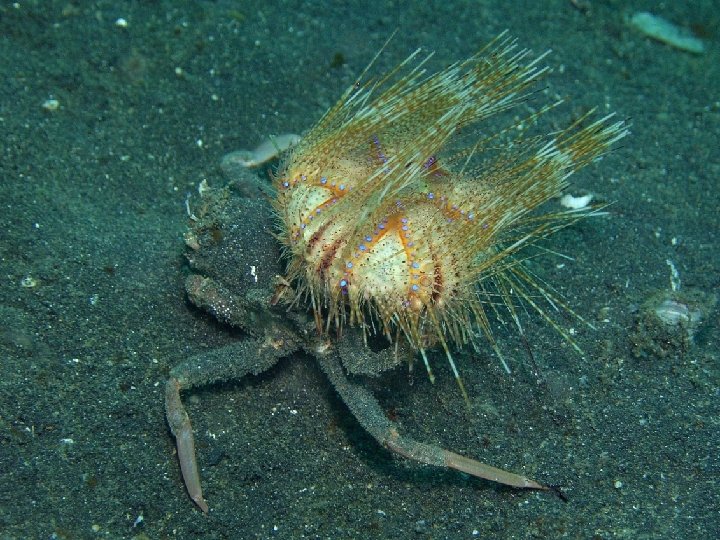
Protocooperation (++) • Next step from +0. • e. g. coelenterates (jellyfish, sea anemones) on back of crabs. • Former provide camouflage & protection. • Latter: Transport/food.
Mutualism (++) • Next step from protocooperation. • Autotrophs (food) & heterotrophs (pollinators). • Cellulose digesting microbes in gut of ruminating animals. - Cellulose Digestible products. - Gut microflora Temperature-controlled culture medium.
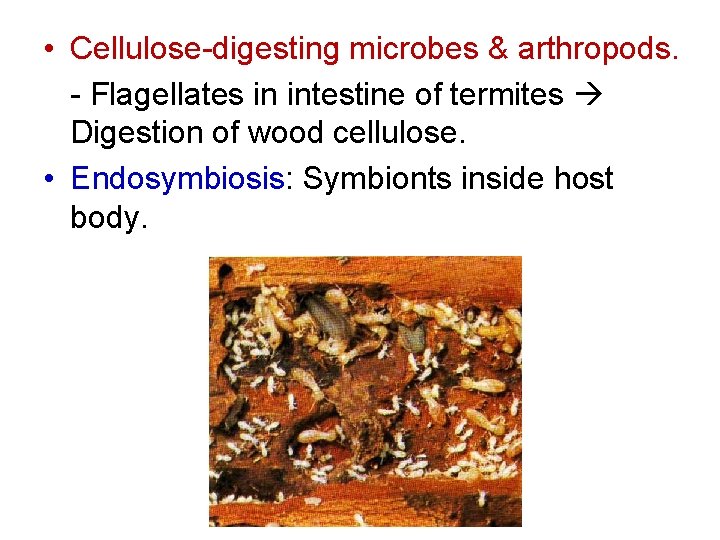
• Cellulose-digesting microbes & arthropods. - Flagellates in intestine of termites Digestion of wood cellulose. • Endosymbiosis: Symbionts inside host body.
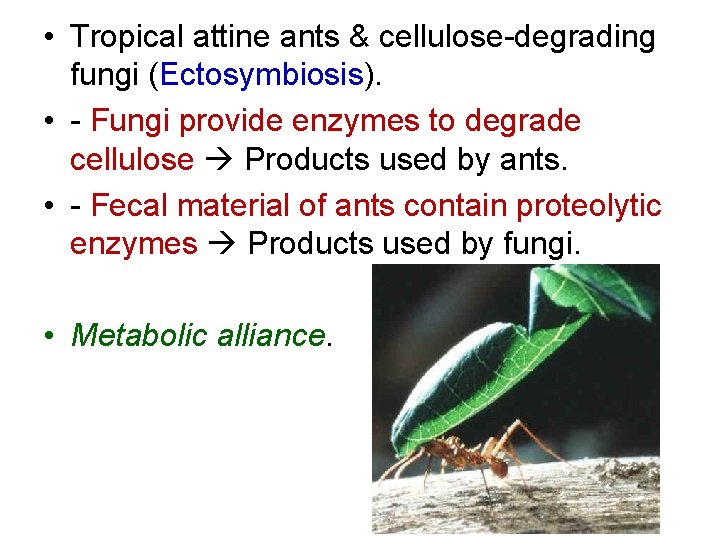
• Tropical attine ants & cellulose-degrading fungi (Ectosymbiosis). • - Fungi provide enzymes to degrade cellulose Products used by ants. • - Fecal material of ants contain proteolytic enzymes Products used by fungi. • Metabolic alliance.
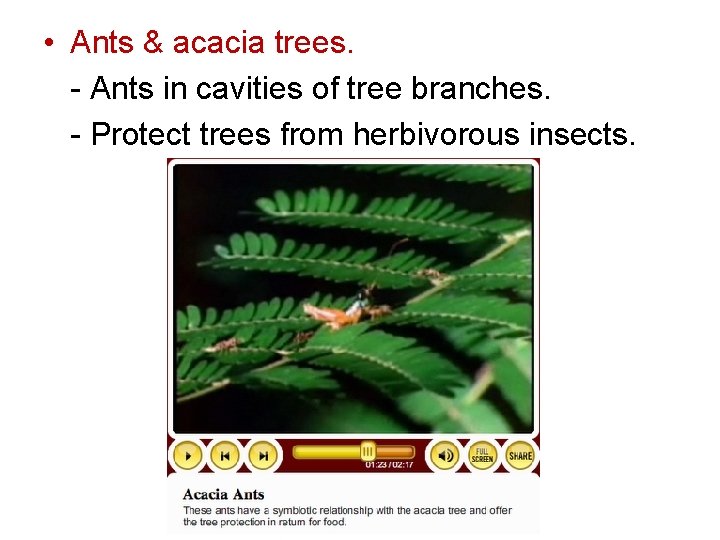
• Ants & acacia trees. - Ants in cavities of tree branches. - Protect trees from herbivorous insects.
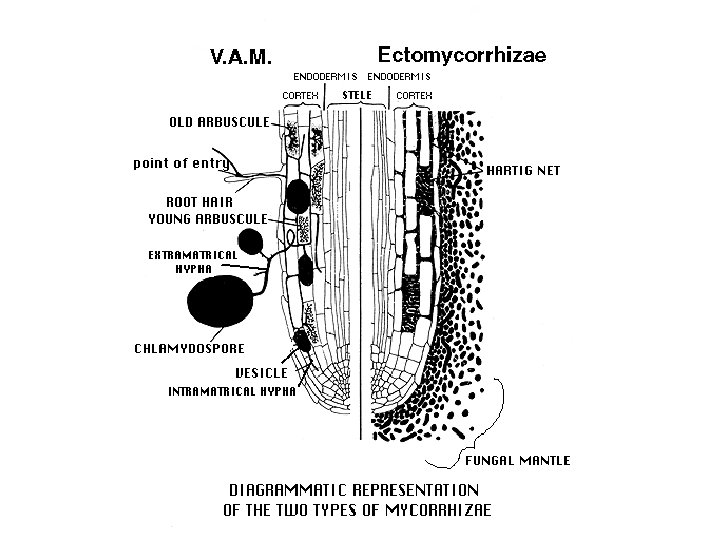
• Mycorrhizae (fungal mycelia) & plants. - Enhance ability of plants to extract nutrients from soil. - Suppress weeds, pathogens. - Improves soil texture (loosening) root penetration. • Plants supply some photosynthetic products to fungi.
Types of Mycorrhizae • Ecotmycorrhizae: - Fungi form sheath around roots from which hyphae grow out into soil. • Endomycorrhizae: - Vescicular-arbuscular mycorrhizae. - Penetrate into the root tissue.
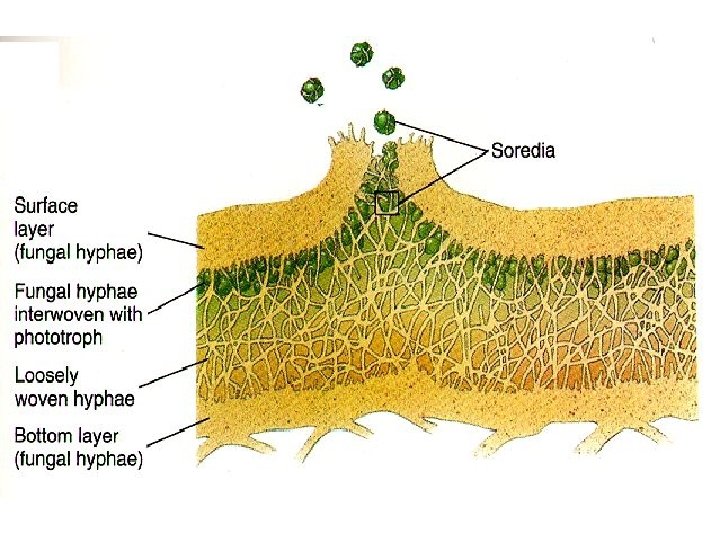
Lichens • Fungi & algae. • Classified as a single species. • e. g. Lobaria oregana: Fungus + green algae. • Fungi do or do not penetrate algal cells. • Some cyanobacteria may also be present.
Obligate Nature of Symbiosis • Some forest trees transplanted to prairie soil in a different region fail to grow unless inoculated with fungal symbionts.
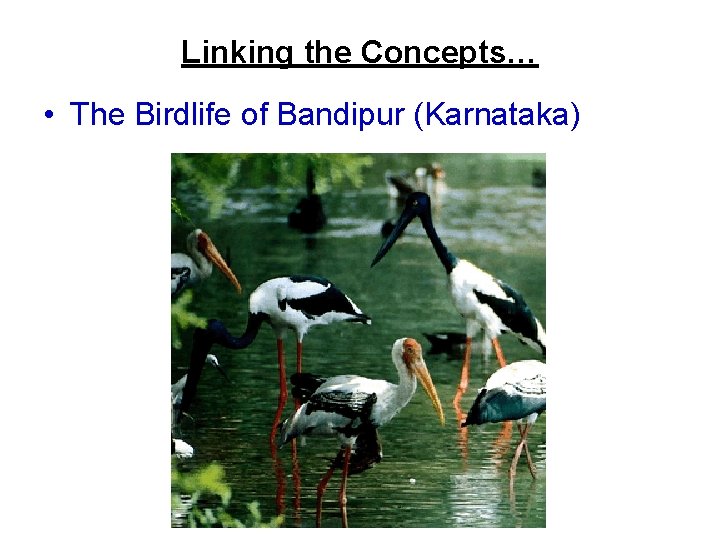
Linking the Concepts… • The Birdlife of Bandipur (Karnataka)
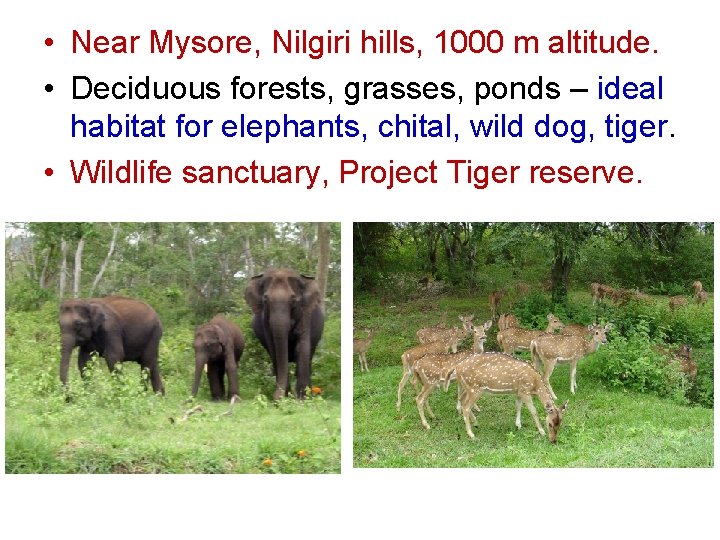
• Near Mysore, Nilgiri hills, 1000 m altitude. • Deciduous forests, grasses, ponds – ideal habitat for elephants, chital, wild dog, tiger. • Wildlife sanctuary, Project Tiger reserve.
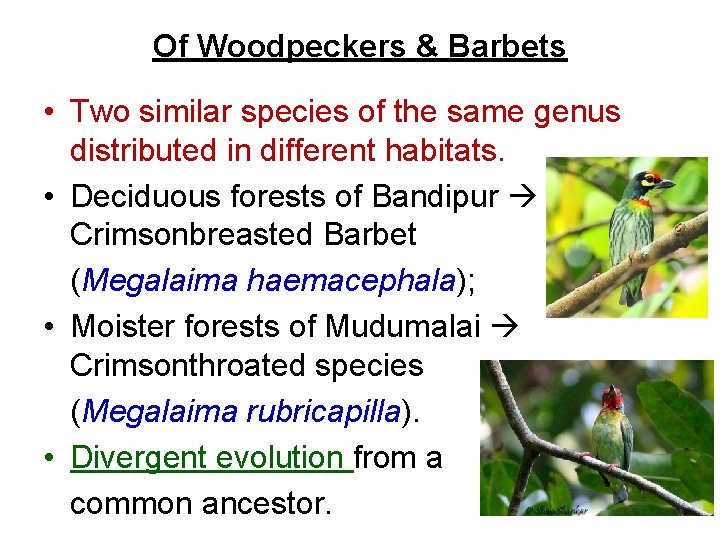
Of Woodpeckers & Barbets • Two similar species of the same genus distributed in different habitats. • Deciduous forests of Bandipur Crimsonbreasted Barbet (Megalaima haemacephala); • Moister forests of Mudumalai Crimsonthroated species (Megalaima rubricapilla). • Divergent evolution from a common ancestor.
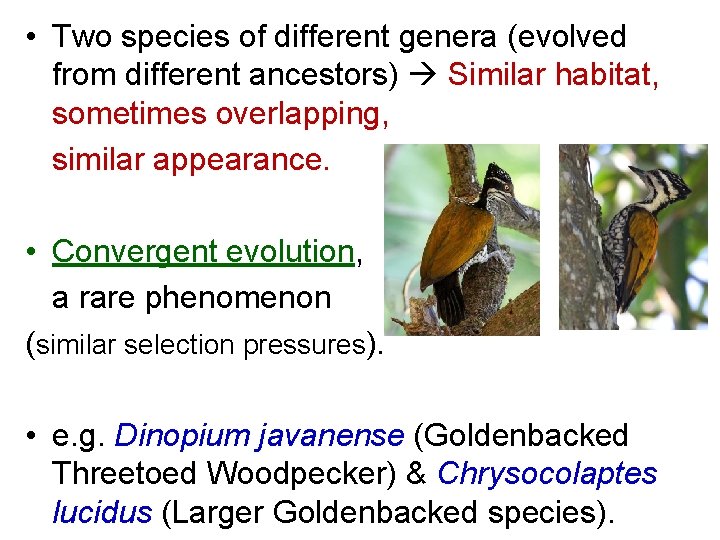
• Two species of different genera (evolved from different ancestors) Similar habitat, sometimes overlapping, similar appearance. • Convergent evolution, a rare phenomenon (similar selection pressures). • e. g. Dinopium javanense (Goldenbacked Threetoed Woodpecker) & Chrysocolaptes lucidus (Larger Goldenbacked species).
The Fruit Eaters • Eighteen bird species of fruit eaters: barbets, parakeets, etc. • Exclusive fruit-eating guild a tropical phenomenon; no year-round supply of fruit in colder climates. • Fruit-producing plants & fruit-eating birds Coevolution.
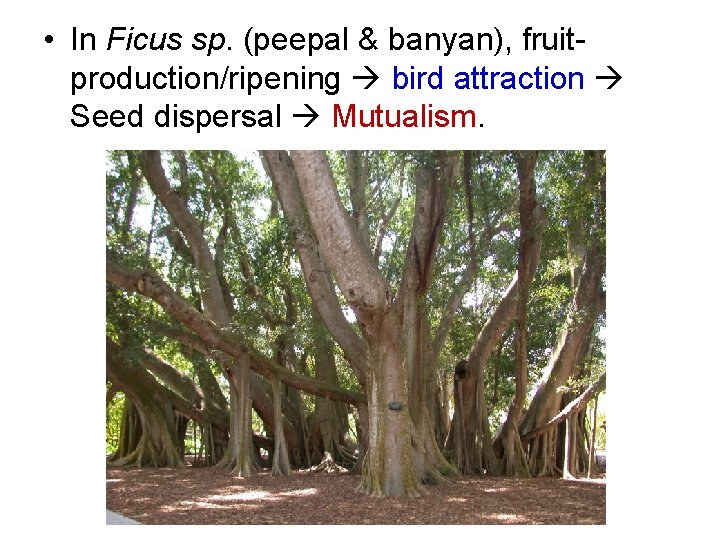
• In Ficus sp. (peepal & banyan), fruitproduction/ripening bird attraction Seed dispersal Mutualism.
Practice Concept: The Pollinators • Plants use birds to pollinate flowers. • It is advantageous for flowers to bloom in a season in which other food sources (for pollinators) are at a low level. • e. g. Flowers like ‘Silk Cotton’ & ‘Flame of the Forest’ bloom in Dec-March when insect food of their major pollinators – the mynas – is at its minimum. • They further enhance their attraction by advertising the blossom in a burst of mass flowering. • And the birds do come to them in large flocks.
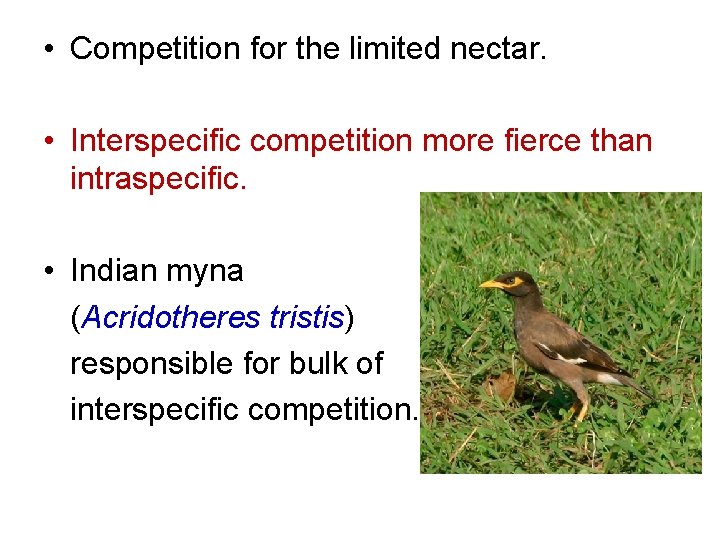
• Competition for the limited nectar. • Interspecific competition more fierce than intraspecific. • Indian myna (Acridotheres tristis) responsible for bulk of interspecific competition.
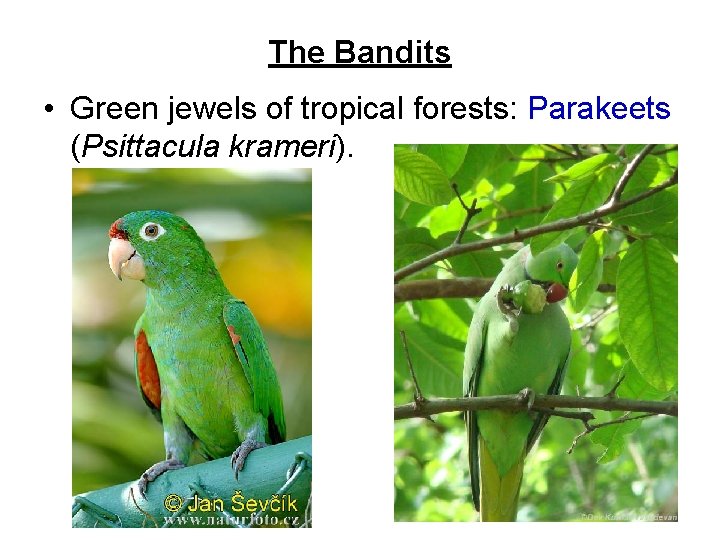
The Bandits • Green jewels of tropical forests: Parakeets (Psittacula krameri).
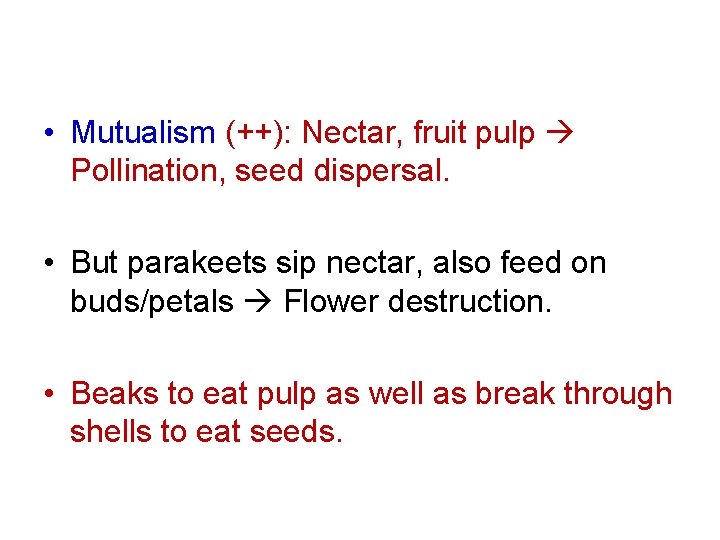
• Mutualism (++): Nectar, fruit pulp Pollination, seed dispersal. • But parakeets sip nectar, also feed on buds/petals Flower destruction. • Beaks to eat pulp as well as break through shells to eat seeds.
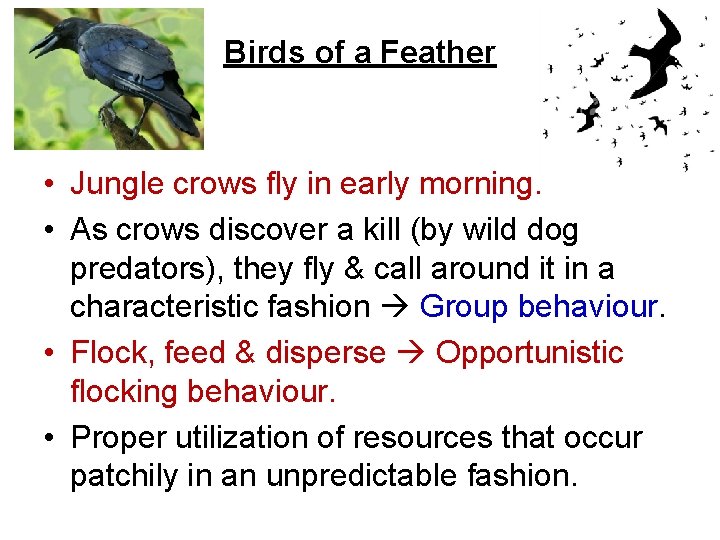
Birds of a Feather • Jungle crows fly in early morning. • As crows discover a kill (by wild dog predators), they fly & call around it in a characteristic fashion Group behaviour. • Flock, feed & disperse Opportunistic flocking behaviour. • Proper utilization of resources that occur patchily in an unpredictable fashion.
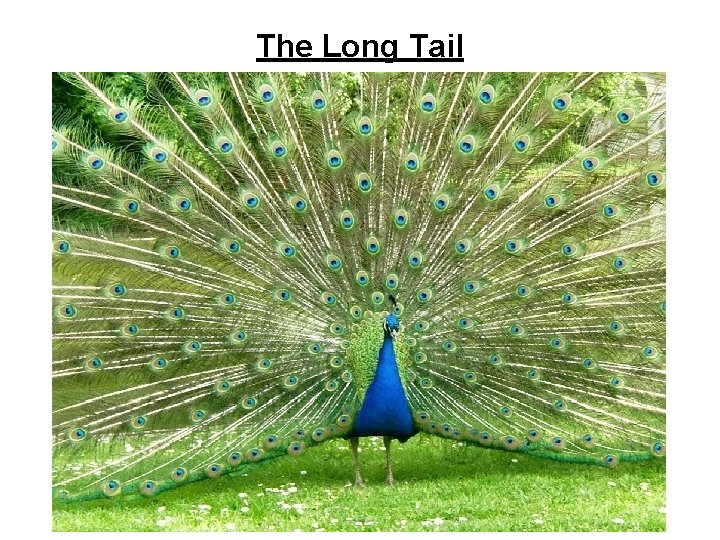
The Long Tail
• Peacock Heavy investment in long, colourful tails to attract females. • Polygamous; tremendous competition among males for acquisition of a harem. • Long tail serious disadvantage in flight. • Selection for a handicap.
- Slides: 41