
Ecology and Ecosystem Dr Mitali Gupta Dr Ambedkar
Ecology and Ecosystem Dr. Mitali Gupta Dr. Ambedkar Institute of Management Studies and Research
Ecology is the study of organisms, environment and how the organisms interact with each other and their environment. Ecology is the study of the relationships between living organisms, including humans, and their physical environment
Ecosystem An ecosystem is a geographic area where plants, animals, and other organisms, as well as weather and landscape, work together to form a bubble of life.
Relations between Environment, Ecology and Ecosystem Environment: living and non-living things that are present around the organisms. Ecosystem: it is the area in which living and non-living things interact with each other and one another. Ecology: it is the study of ecosystem, means how the interaction between the organism is happening. .
Ecosystem= Ecology+ Environment Ecology is the study of interactions between organisms, organisms and the surroundings occurring within an ecosystem or environment. An ecosystem is a functional unit of the environment (mostly biosphere). An environment is a group of ecosystems.
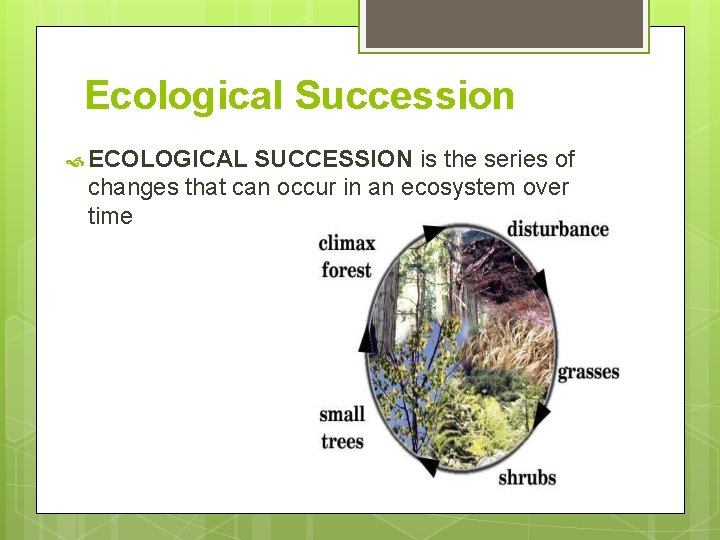
Ecological Succession ECOLOGICAL SUCCESSION is the series of changes that can occur in an ecosystem over time
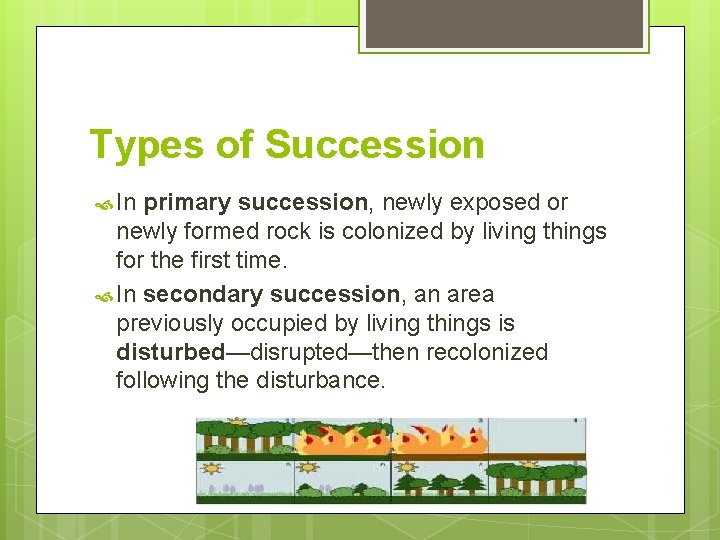
Types of Succession In primary succession, newly exposed or newly formed rock is colonized by living things for the first time. In secondary succession, an area previously occupied by living things is disturbed—disrupted—then recolonized following the disturbance.
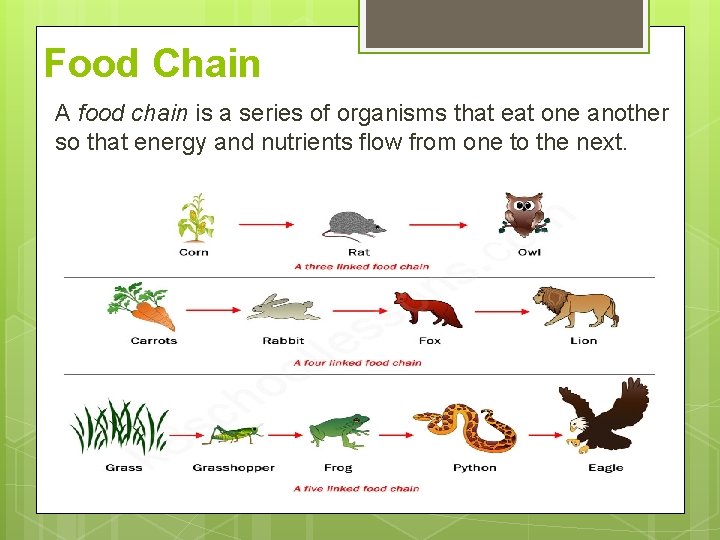
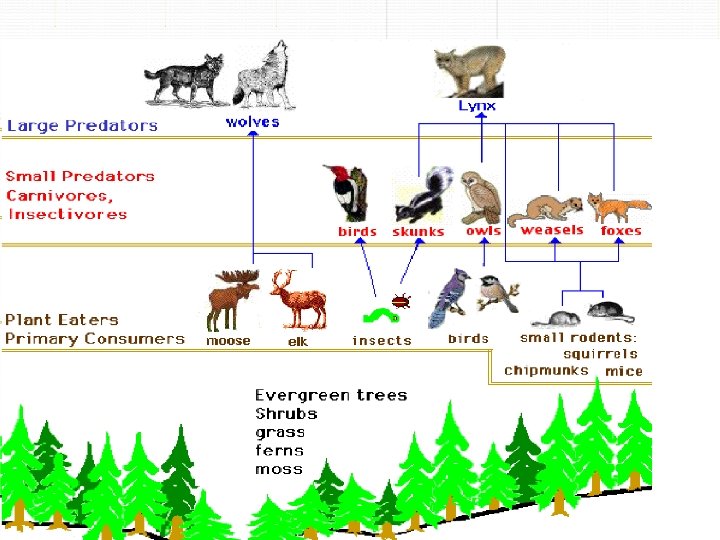
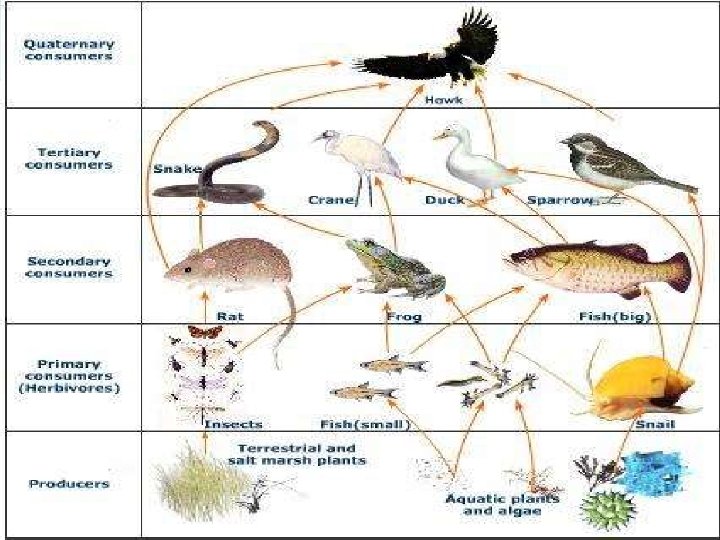
Food Chain A food chain is a series of organisms that eat one another so that energy and nutrients flow from one to the next.
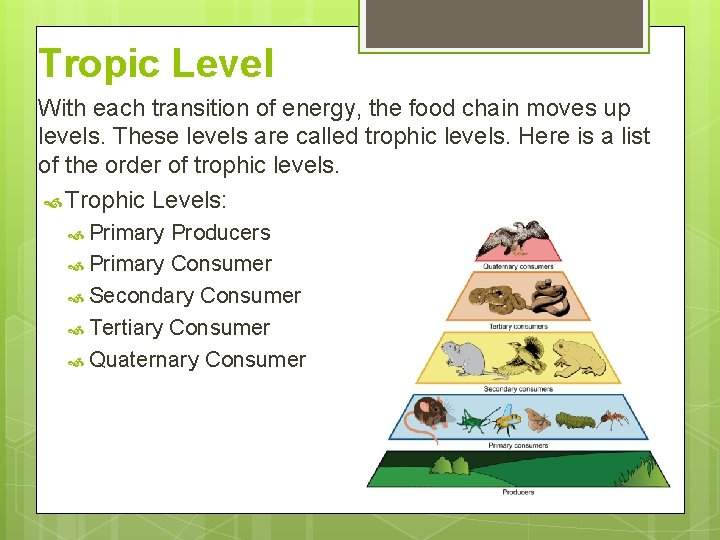
Tropic Level With each transition of energy, the food chain moves up levels. These levels are called trophic levels. Here is a list of the order of trophic levels. Trophic Levels: Primary Producers Primary Consumer Secondary Consumer Tertiary Consumer Quaternary Consumer
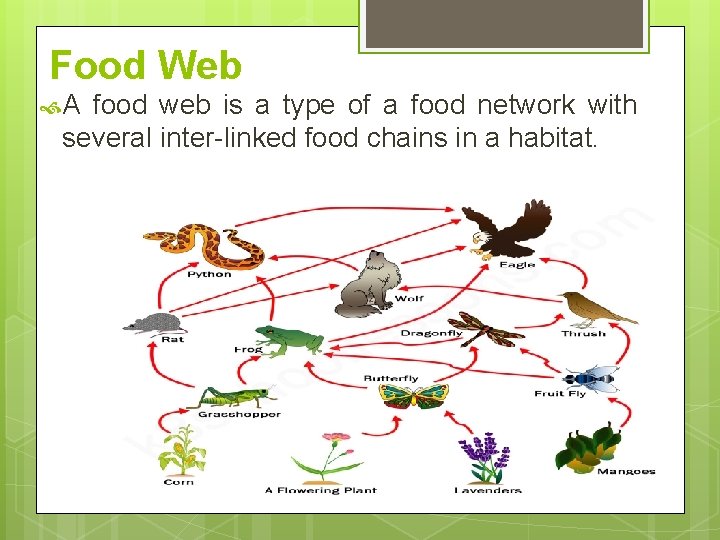
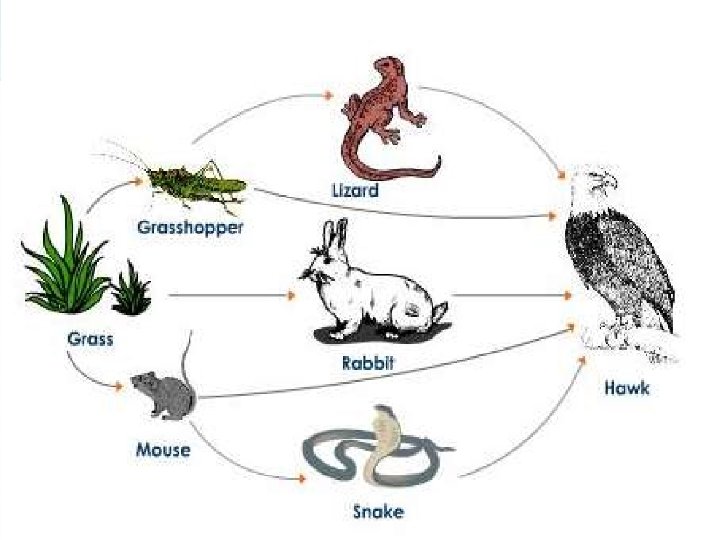
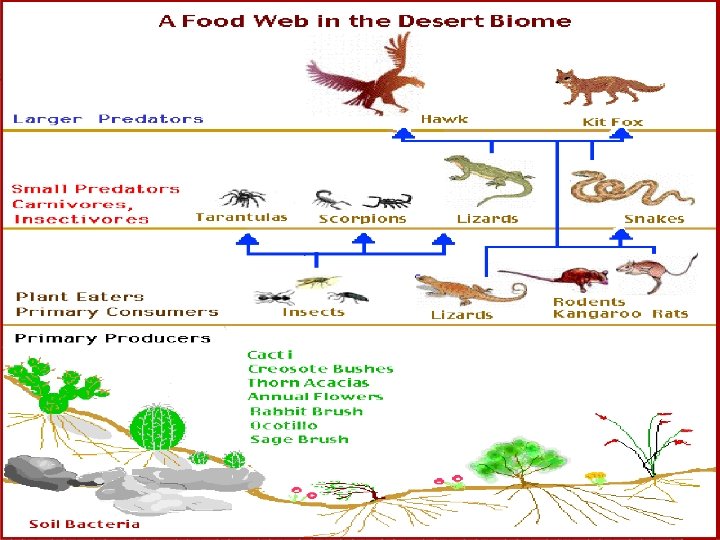
Food Web A food web is a type of a food network with several inter-linked food chains in a habitat.
Terrestrial Ecosystem A terrestrial ecosystem is found only on landforms is known as the terrestrial ecosystem. . There are four main types of terrestrial ecosystem: – Desert ecosystem Forest ecosystem Grassland ecosystem Mountain ecosystem.
Aquatic Ecosystem An aquatic ecosystem can be defined as one that exists in a water body. All the living organisms are dependent on each other and their surroundings for their survival. There are two subcategories of an aquatic ecosystem: Marine ecosystem Freshwater ecosystem.
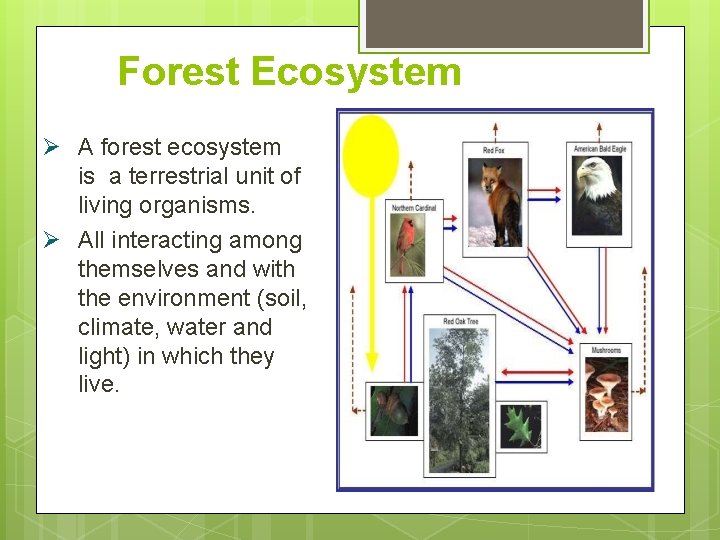
Forest Ecosystem A forest ecosystem is a terrestrial unit of living organisms. All interacting among themselves and with the environment (soil, climate, water and light) in which they live.
Types Of Forest Ecosystems Tropical Rain Forest Tropical Seasonal Forest Temperate Evergreen and Deciduous Forest Boreal Forest Savanna and Woodland
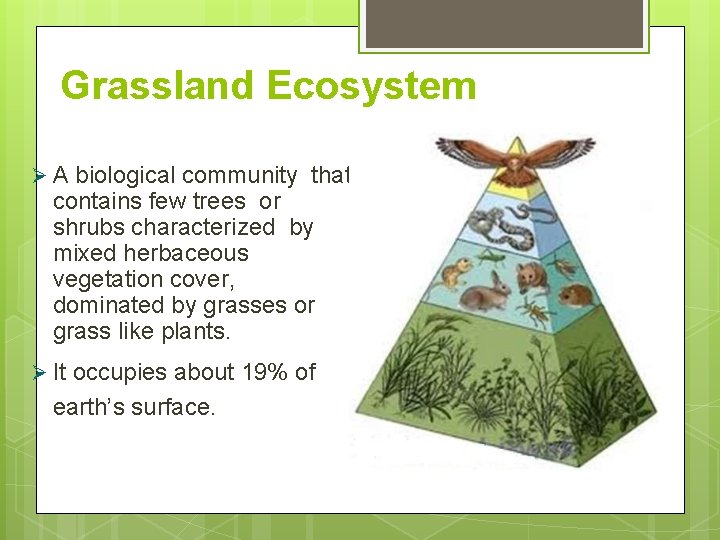
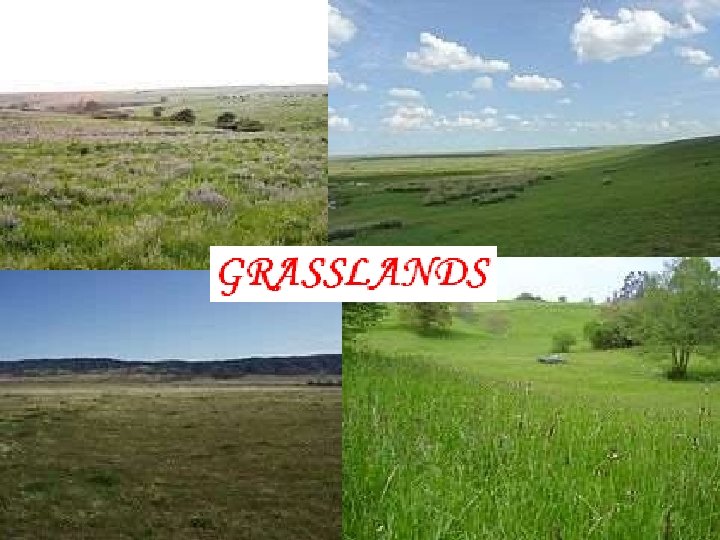
Grassland Ecosystem A biological community that contains few trees or shrubs characterized by mixed herbaceous vegetation cover, dominated by grasses or grass like plants. It occupies about 19% of earth’s surface.
Types Of Grassland Ecosystem Tropical and subtropical grasslands Temperate grasslands Flooded grasslands Montane grasslands Tundra grasslands Desert and xeric grasslands
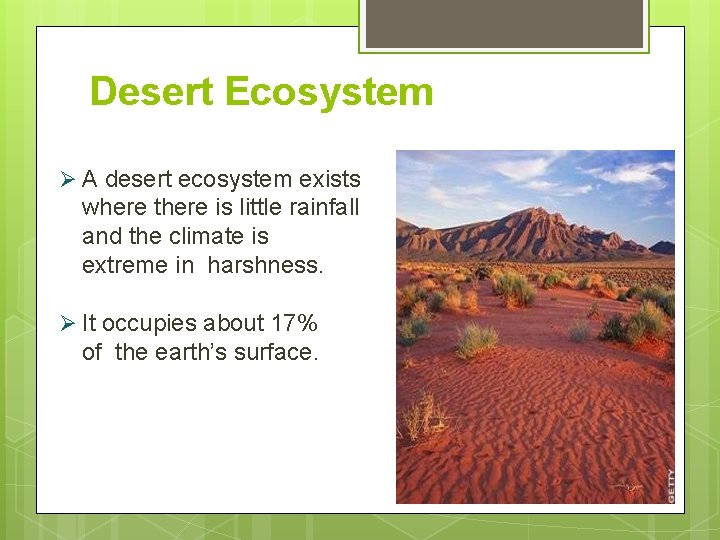
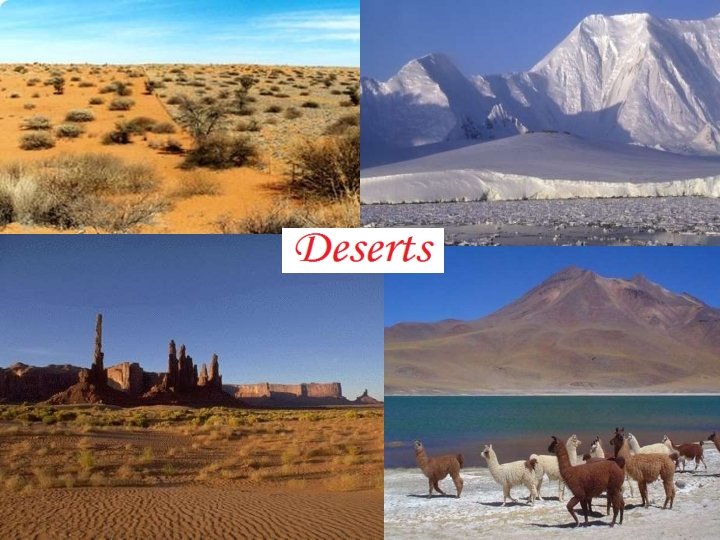
Desert Ecosystem A desert ecosystem exists where there is little rainfall and the climate is extreme in harshness. It occupies about 17% of the earth’s surface.
Types Of Desert Ecosystem Hot and Dry Deserts Cold Deserts Semi-Arid Deserts Coastal Deserts
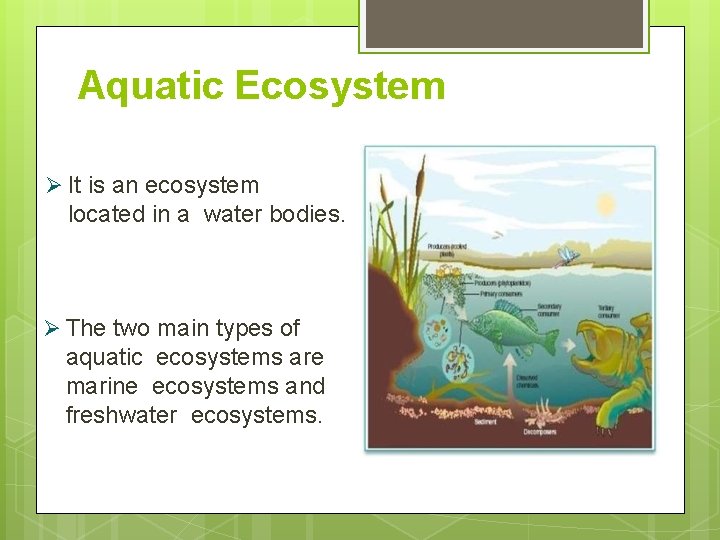
Aquatic Ecosystem It is an ecosystem located in a water bodies. The two main types of aquatic ecosystems are marine ecosystems and freshwater ecosystems.
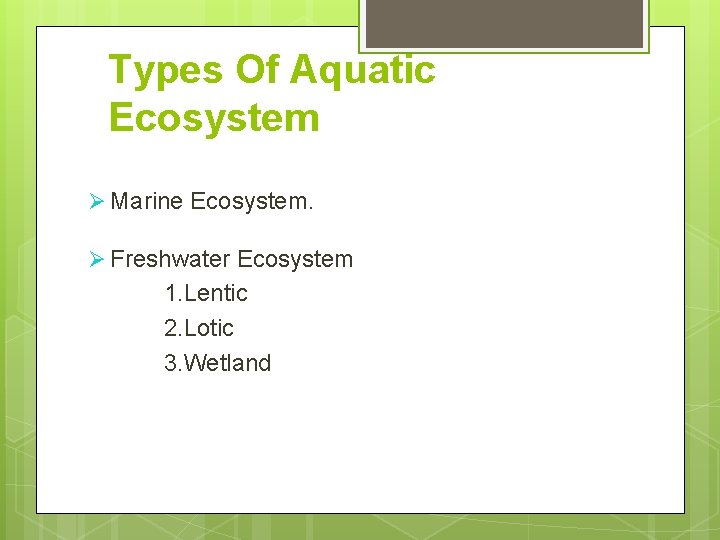
Types Of Aquatic Ecosystem Marine Ecosystem. Freshwater Ecosystem 1. Lentic 2. Lotic 3. Wetland

- Slides: 27