
Ecological Succession Ecological Succession Secondary Disturbances fire flood
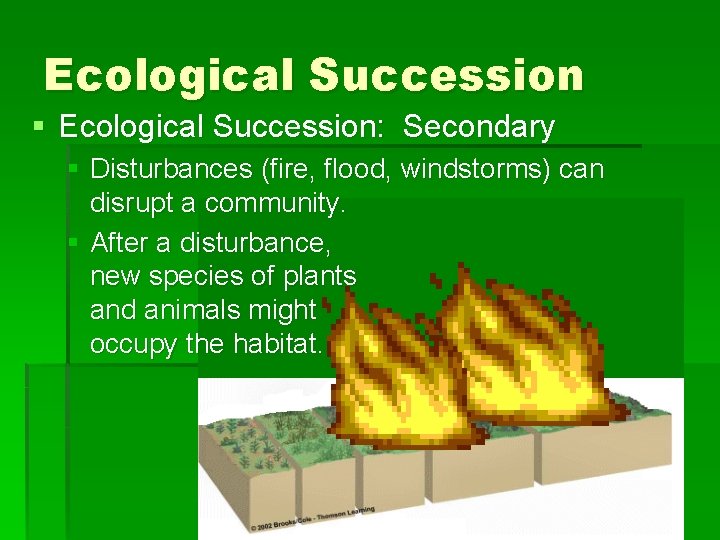
Ecological Succession § Ecological Succession: Secondary § Disturbances (fire, flood, windstorms) can disrupt a community. § After a disturbance, new species of plants and animals might occupy the habitat.
Secondary Succession § Begins in a place that already has soil and was once the home of living organisms § Occurs faster and has different pioneer species than primary succession § Example: after forest fires
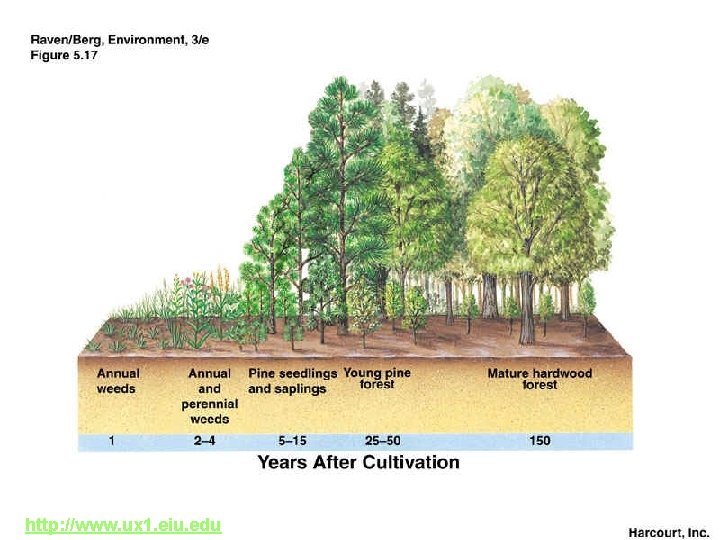
http: //www. ux 1. eiu. edu
Climax community § A community that has reached a stable stage of ecological succession Grasses in prairies Cacti in deserts

Extinction Rates § The gradual process of becoming extinct is known as background extinction. § Mass extinctions: When a large percentage of all living species become extinct in a relatively short period of time.
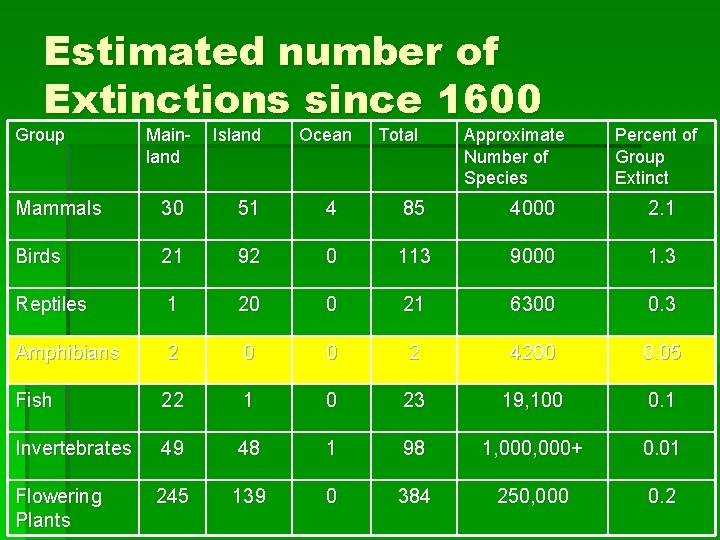
Estimated number of Extinctions since 1600 Group Mainland Island Ocean Total Approximate Number of Species Percent of Group Extinct Mammals 30 51 4 85 4000 2. 1 Birds 21 92 0 113 9000 1. 3 Reptiles 1 20 0 21 6300 0. 3 Amphibians 2 0 0 2 4200 0. 05 Fish 22 1 0 23 19, 100 0. 1 Invertebrates 49 48 1 98 1, 000+ 0. 01 Flowering Plants 245 139 0 384 250, 000 0. 2
Biome § Large geographic areas with similar climates and ecosystems
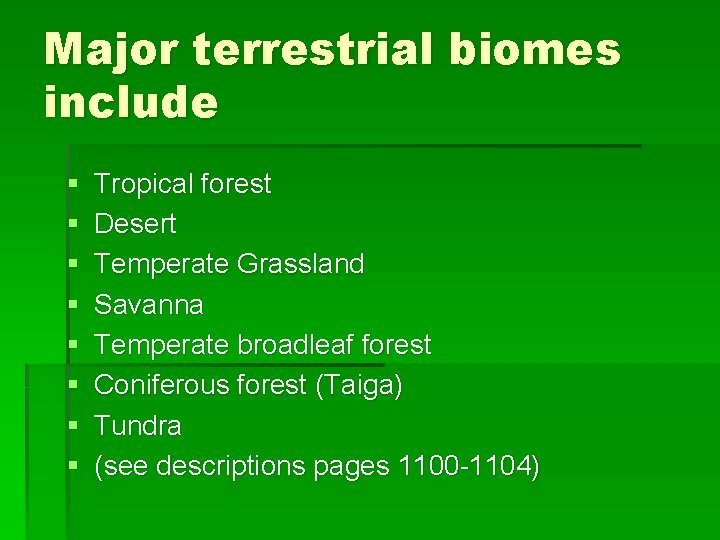
Major terrestrial biomes include § § § § Tropical forest Desert Temperate Grassland Savanna Temperate broadleaf forest Coniferous forest (Taiga) Tundra (see descriptions pages 1100 -1104)
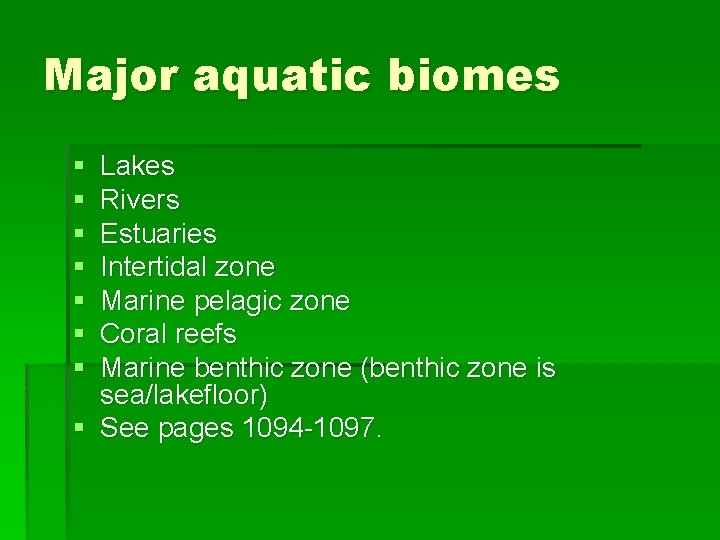
Major aquatic biomes § § § § Lakes Rivers Estuaries Intertidal zone Marine pelagic zone Coral reefs Marine benthic zone (benthic zone is sea/lakefloor) § See pages 1094 -1097.
Biogeochemical Cycles (Matter moving through the environment) § All living organisms need certain elements/compounds for life processes § Ex: your cells need C, H, O, P, N & S in order to live and reproduce (make more cell) § Cycles in nature keep these elements “moving” from organisms to organism (and sometimes into the atmosphere)
Biogeochemical Cycles (Matter moving through the environment) § The flow of a nutrient from the environment to living organisms and back to the environment § Main reservoir for the nutrient is in the environment § Transfer rates to and from reservoir are usually lower than the rates of exchange between and among organisms. § Matter is recycled through an ecosystem – not one way flow
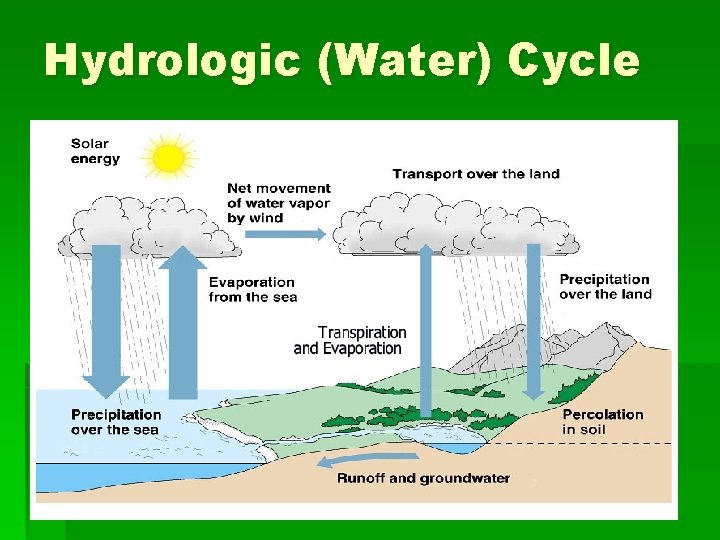
Hydrologic (Water) Cycle
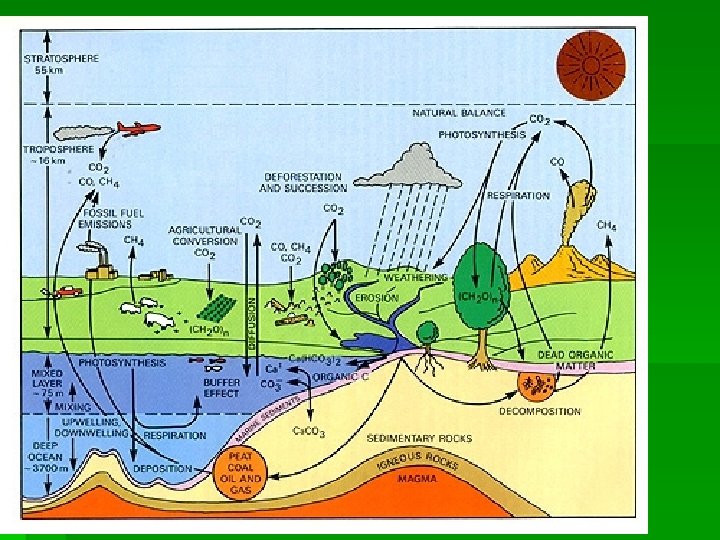
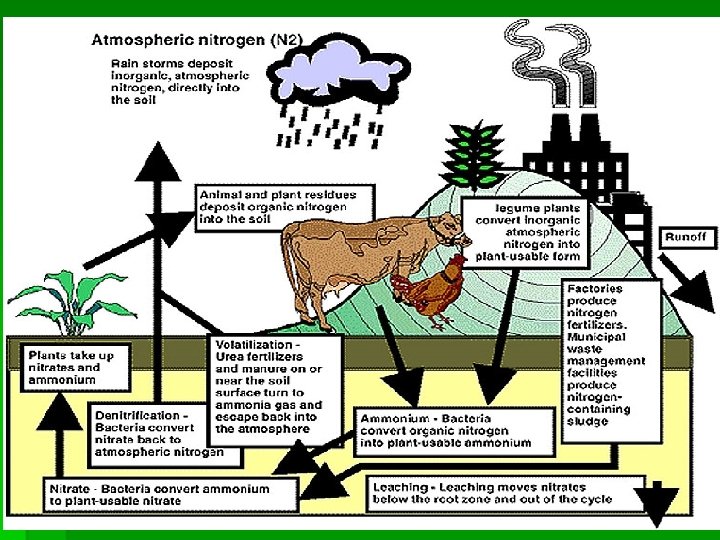
Nitrogen Cycle § Nitrogen is used in amino acids and nucleic acids (all living organism need nitrogen to make proteins) § Main reservoir is nitrogen gas in the atmosphere § Decomposers are vital to convert ammonia into: 1. usable nitrites & nitrates for plants (nitrogen fixation) 2. nitrogen gas (denitrification = puts it back into the atmosphere)
Phosphorus Cycle § Phosphorus is part of phospholipids and all nucleotides § What are these? § It is the most prevalent limiting factor in ecosystems § Main reservoir is Earth’s crust; no gaseous phase (it never enters the atmosphere – like carbon and nitrogen)
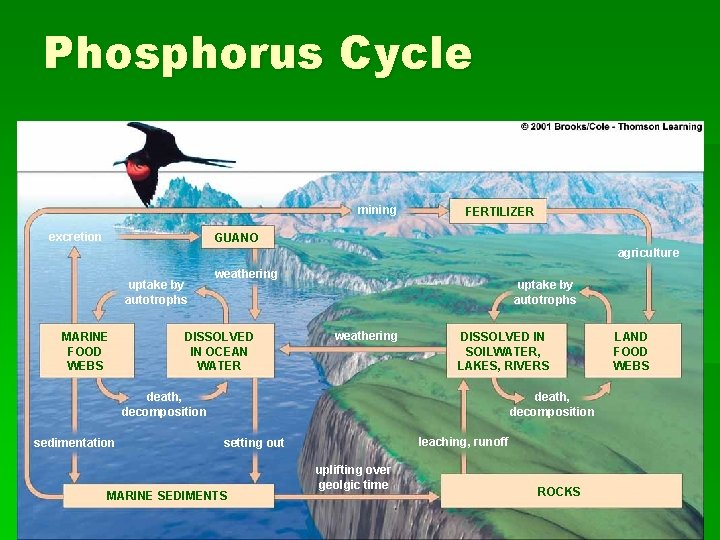
Phosphorus Cycle mining excretion FERTILIZER GUANO agriculture uptake by autotrophs MARINE FOOD WEBS weathering DISSOLVED IN OCEAN WATER uptake by autotrophs weathering DISSOLVED IN SOILWATER, LAKES, RIVERS death, decomposition sedimentation death, decomposition leaching, runoff setting out MARINE SEDIMENTS uplifting over geolgic time ROCKS LAND FOOD WEBS
- Slides: 17