
Ecological Succession Ecological Succession Ecosystems are constantly changing
- Slides: 16
Ecological Succession
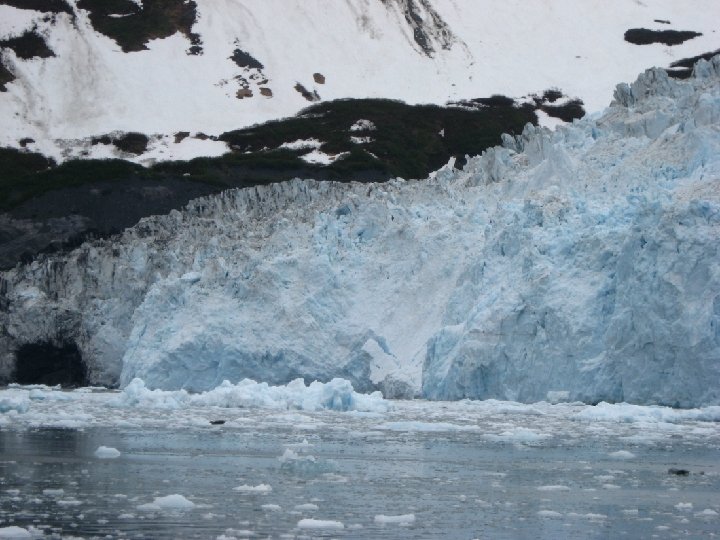
Ecological Succession • Ecosystems are constantly changing in response to both natural and human disturbances. Examples: forest fires, strip mining, glacier recession, volcanic eruption, etc. • It occurs when one community (animal and plant species) in an area gradually replaces another community over time. • Each community has its own dominant plant and animal species and ecological succession results in certain species becoming less abundant and other species becoming more competitive and dominant over time.
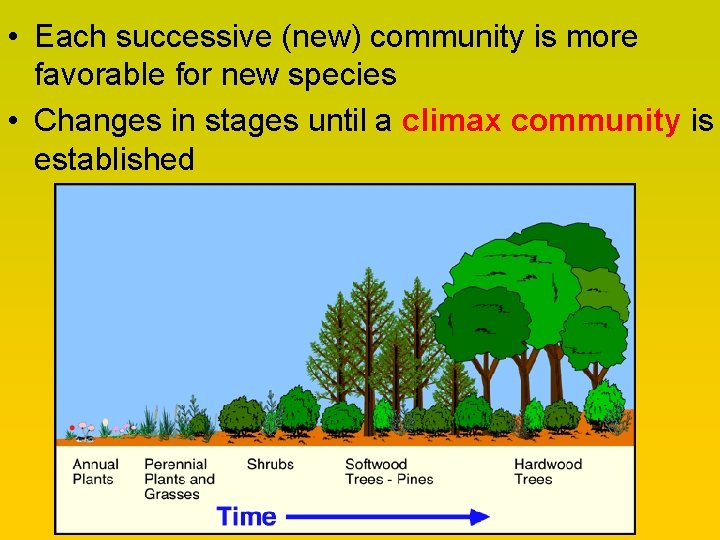
• Each successive (new) community is more favorable for new species • Changes in stages until a climax community is established
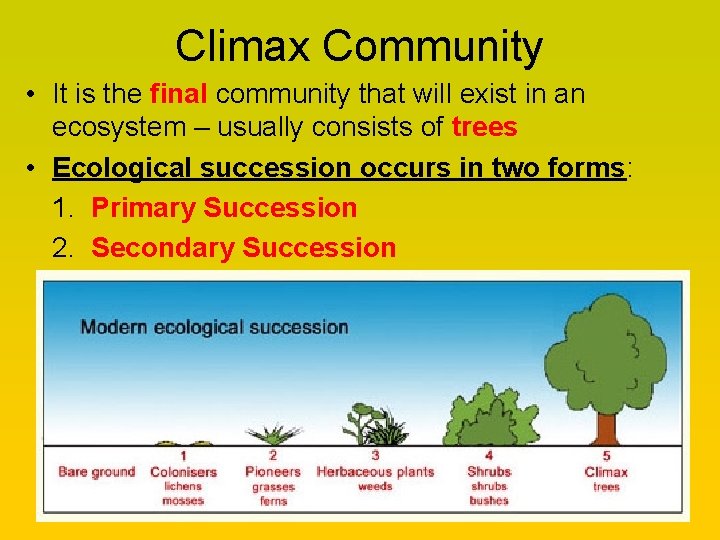
Climax Community • It is the final community that will exist in an ecosystem – usually consists of trees • Ecological succession occurs in two forms: 1. Primary Succession 2. Secondary Succession
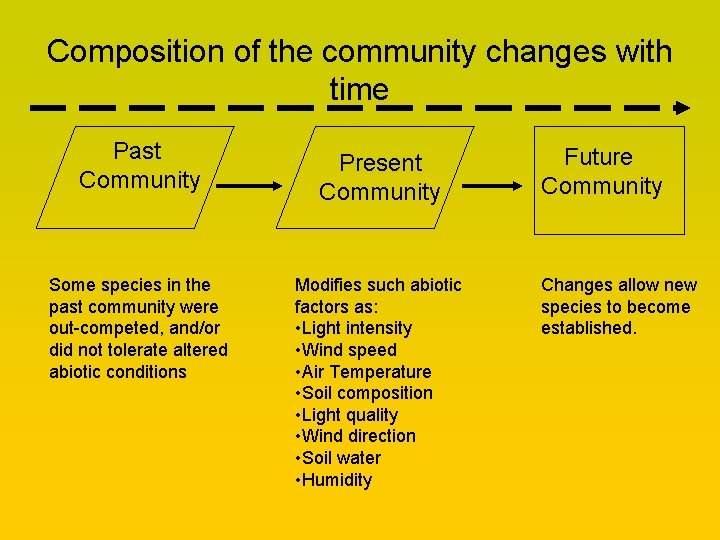
Composition of the community changes with time Past Community Some species in the past community were out-competed, and/or did not tolerate altered abiotic conditions Present Community Modifies such abiotic factors as: • Light intensity • Wind speed • Air Temperature • Soil composition • Light quality • Wind direction • Soil water • Humidity Future Community Changes allow new species to become established.
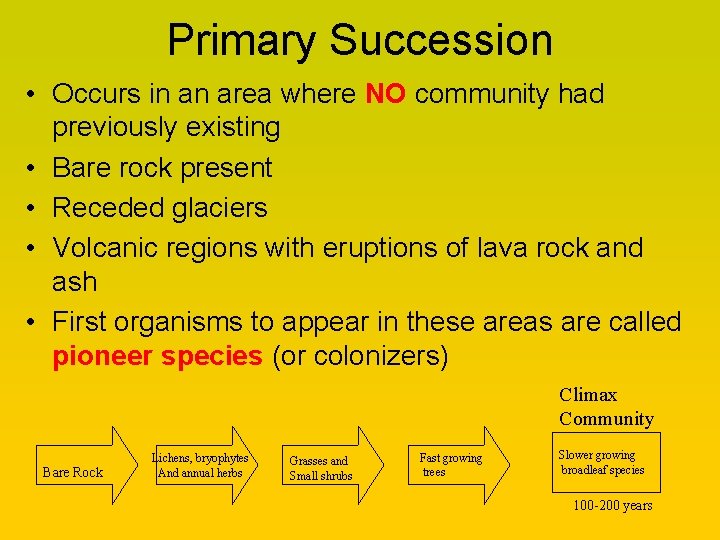
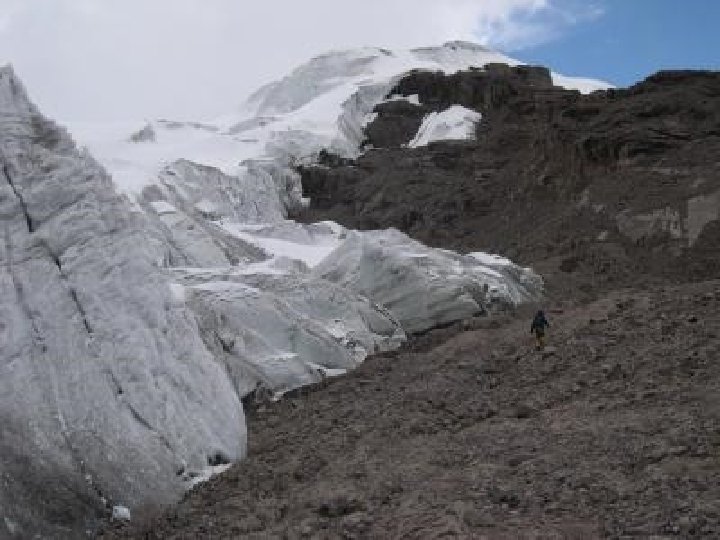
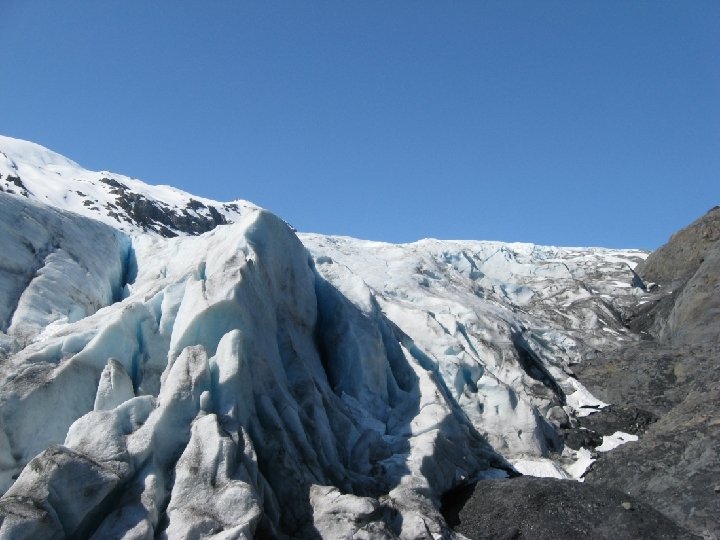
Primary Succession • Occurs in an area where NO community had previously existing • Bare rock present • Receded glaciers • Volcanic regions with eruptions of lava rock and ash • First organisms to appear in these areas are called pioneer species (or colonizers) Climax Community Bare Rock Lichens, bryophytes And annual herbs Grasses and Small shrubs Fast growing trees Slower growing broadleaf species 100 -200 years
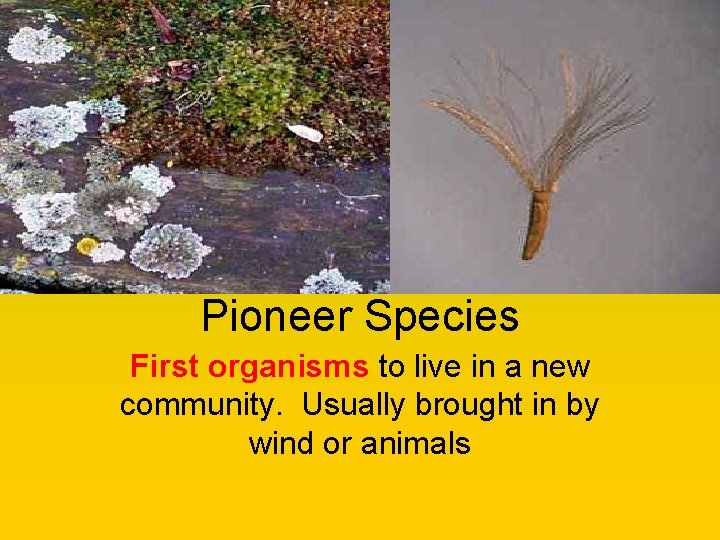
Pioneer Species First organisms to live in a new community. Usually brought in by wind or animals
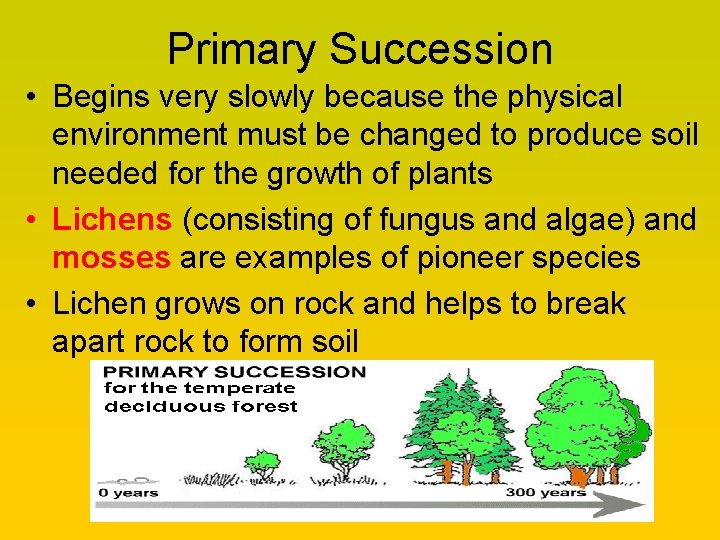
Primary Succession • Begins very slowly because the physical environment must be changed to produce soil needed for the growth of plants • Lichens (consisting of fungus and algae) and mosses are examples of pioneer species • Lichen grows on rock and helps to break apart rock to form soil
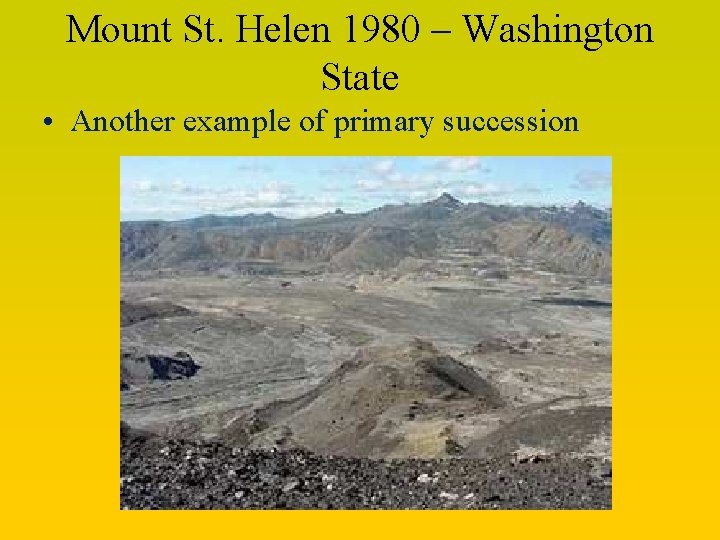
Mount St. Helen 1980 – Washington State • Another example of primary succession
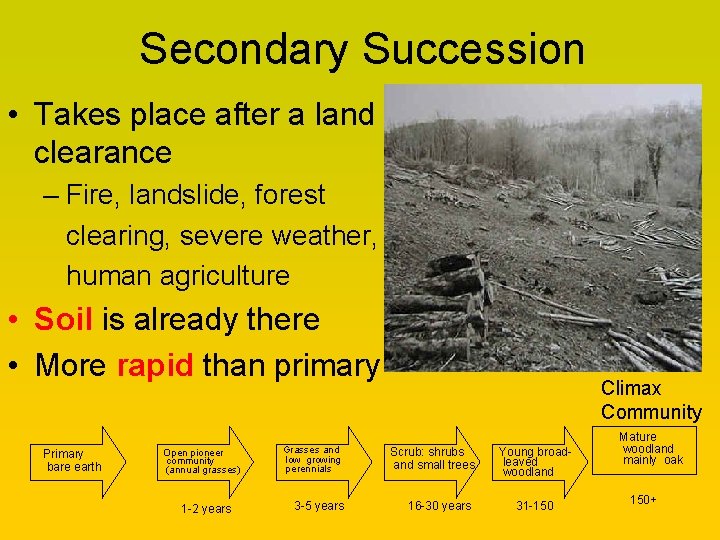
Secondary Succession • Takes place after a land clearance – Fire, landslide, forest clearing, severe weather, human agriculture • Soil is already there • More rapid than primary Primary bare earth Open pioneer community (annual grasses) 1 -2 years Grasses and low growing perennials 3 -5 years Climax Community Scrub: shrubs and small trees 16 -30 years Young broadleaved woodland 31 -150 Mature woodland mainly oak 150+
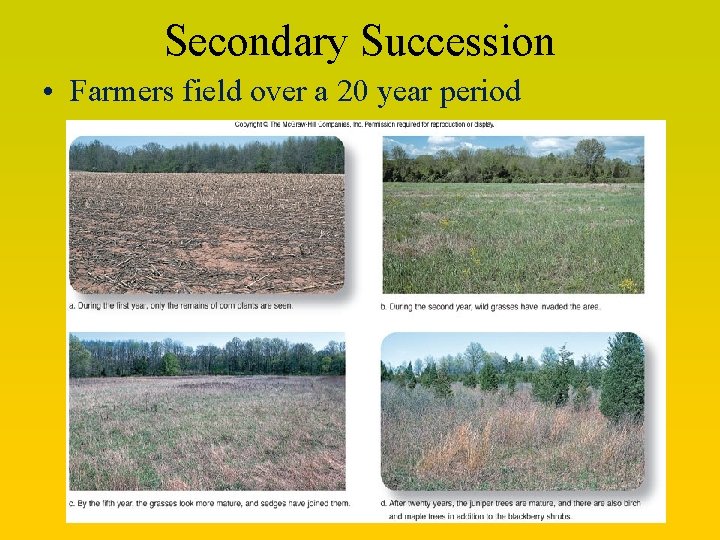
Secondary Succession • Farmers field over a 20 year period
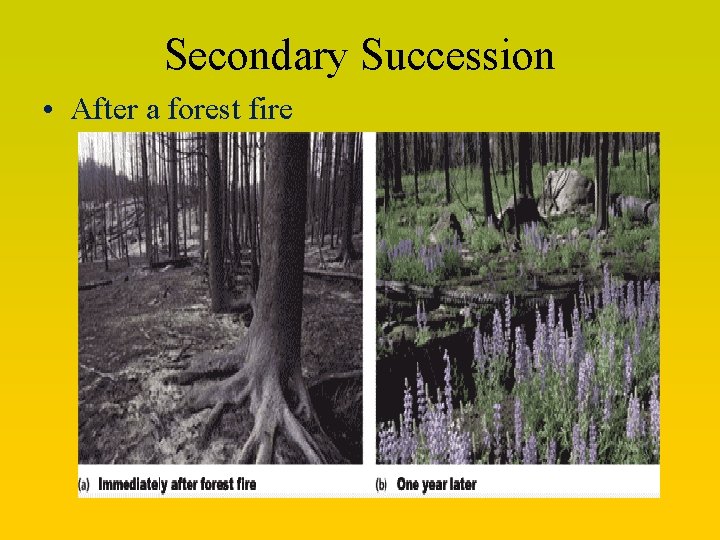
Secondary Succession • After a forest fire
Gap Succession • Example: forested area with a thick canopy has reduced light on soil • When a tree falls sunlight fills forest floor • New communities are formed