
Ecological Succession CHANGE OVER TIME What is a
- Slides: 11
Ecological Succession CHANGE OVER TIME
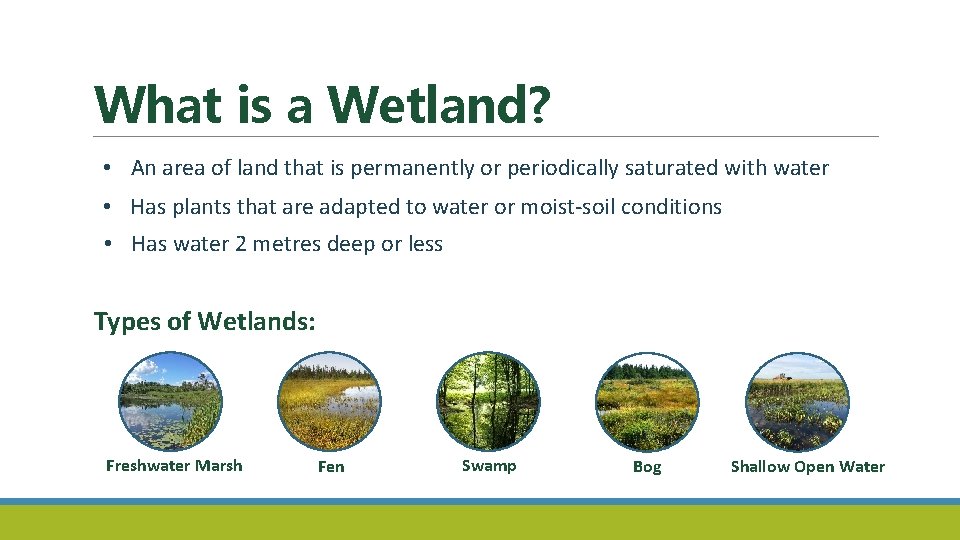
What is a Wetland? • An area of land that is permanently or periodically saturated with water • Has plants that are adapted to water or moist-soil conditions • Has water 2 metres deep or less Types of Wetlands: Freshwater Marsh Fen Swamp Bog Shallow Open Water
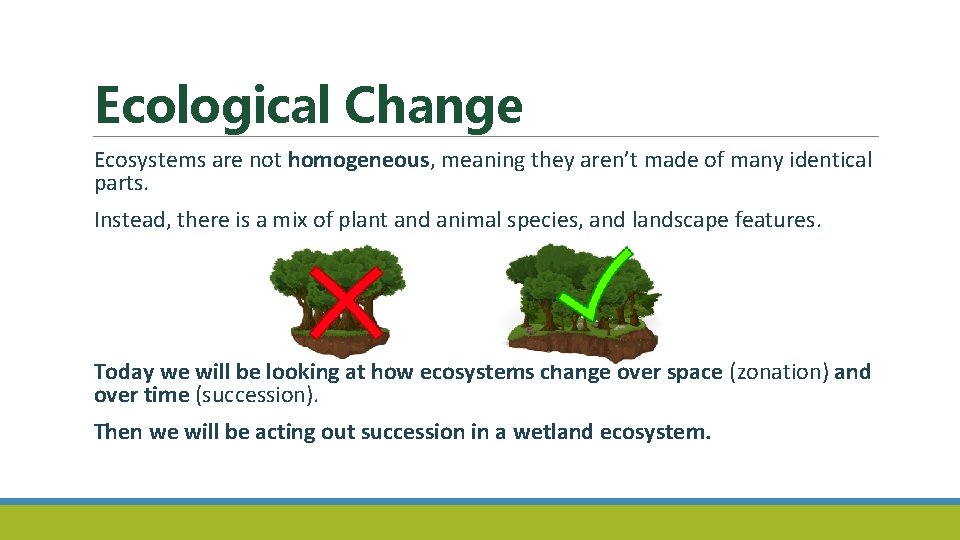
Ecological Change Ecosystems are not homogeneous, meaning they aren’t made of many identical parts. Instead, there is a mix of plant and animal species, and landscape features. Today we will be looking at how ecosystems change over space (zonation) and over time (succession). Then we will be acting out succession in a wetland ecosystem.
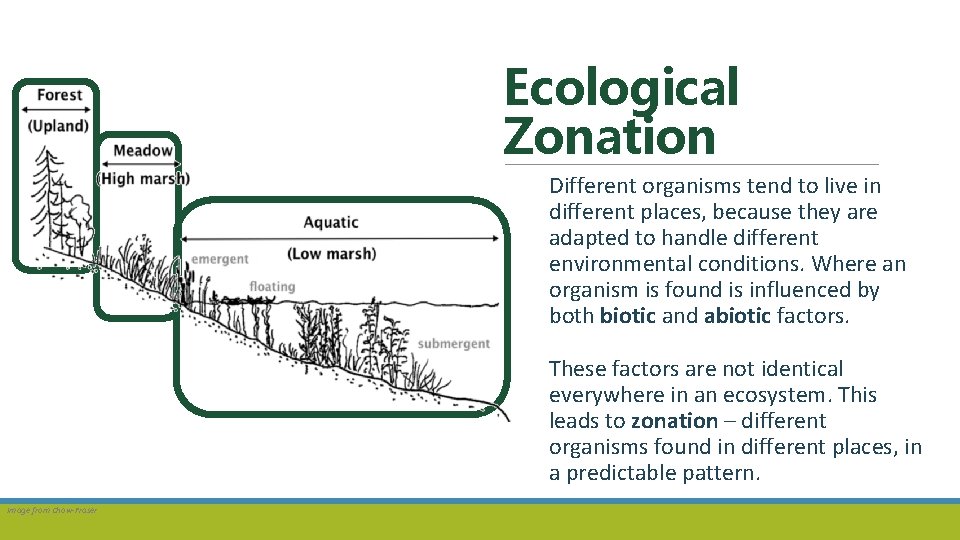
Ecological Zonation Different organisms tend to live in different places, because they are adapted to handle different environmental conditions. Where an organism is found is influenced by both biotic and abiotic factors. These factors are not identical everywhere in an ecosystem. This leads to zonation – different organisms found in different places, in a predictable pattern. Image from Chow-Fraser
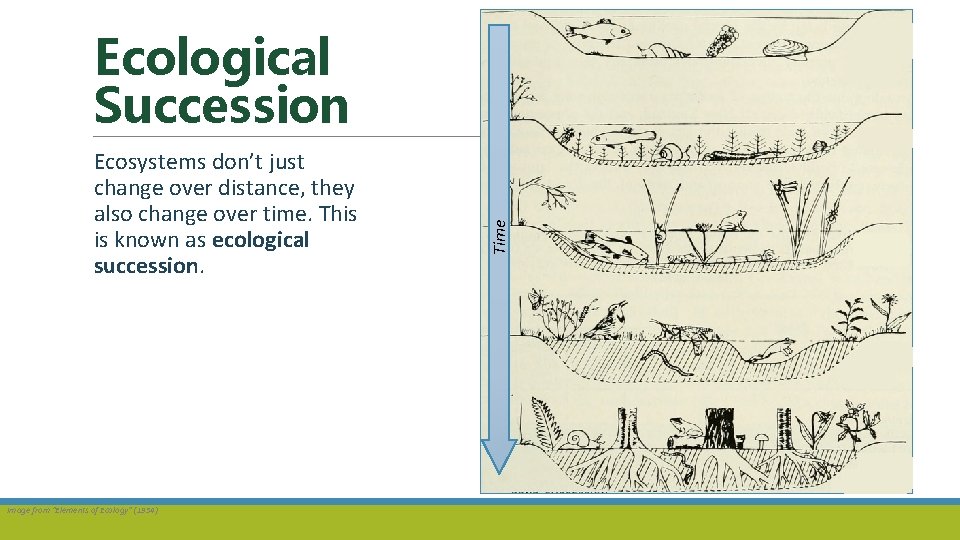
Ecosystems don’t just change over distance, they also change over time. This is known as ecological succession. Image from “Elements of Ecology” (1954) Time Ecological Succession
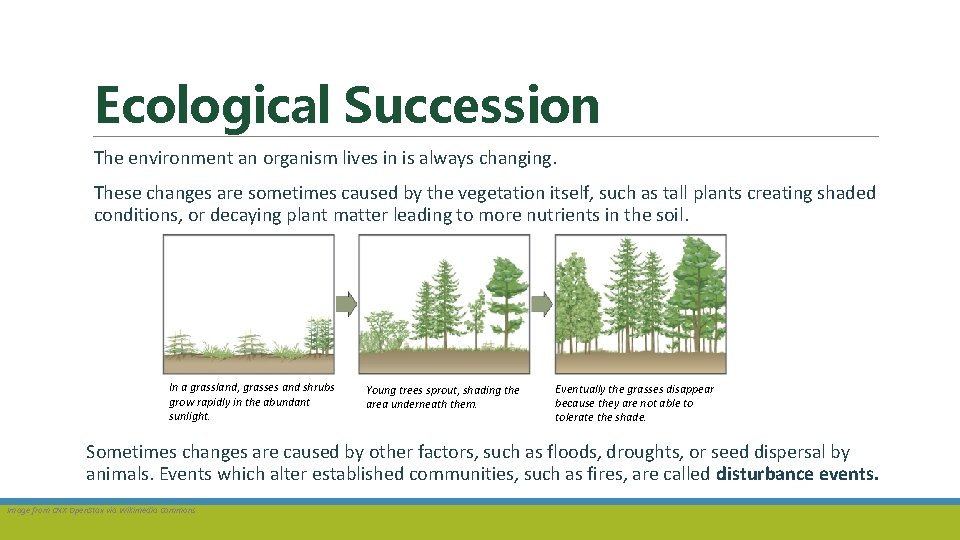
Ecological Succession The environment an organism lives in is always changing. These changes are sometimes caused by the vegetation itself, such as tall plants creating shaded conditions, or decaying plant matter leading to more nutrients in the soil. In a grassland, grasses and shrubs grow rapidly in the abundant sunlight. Young trees sprout, shading the area underneath them. Eventually the grasses disappear because they are not able to tolerate the shade. Sometimes changes are caused by other factors, such as floods, droughts, or seed dispersal by animals. Events which alter established communities, such as fires, are called disturbance events. Image from CNX Open. Stax via Wikimedia Commons
Succession Stages Different types of communities are formed at different stages of succession. Pioneer Community First stage of succession • Fast-growing • Short-lived • Shade-intolerant Image from CNX Open. Stax via Wikimedia Commons Seral Community Intermediate stages of succession • Medium-growing • Medium-lived • Semi-shade-tolerant Climax Community Final stage of succession • Slow-growing • Long-lived • Shade-tolerant
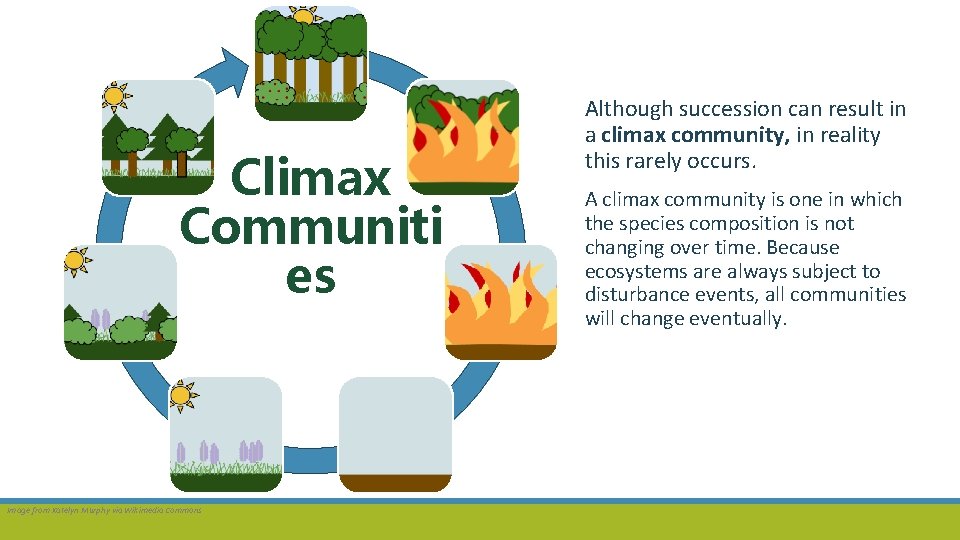
Climax Communiti es Image from Katelyn Murphy via Wikimedia Commons Although succession can result in a climax community, in reality this rarely occurs. A climax community is one in which the species composition is not changing over time. Because ecosystems are always subject to disturbance events, all communities will change eventually.
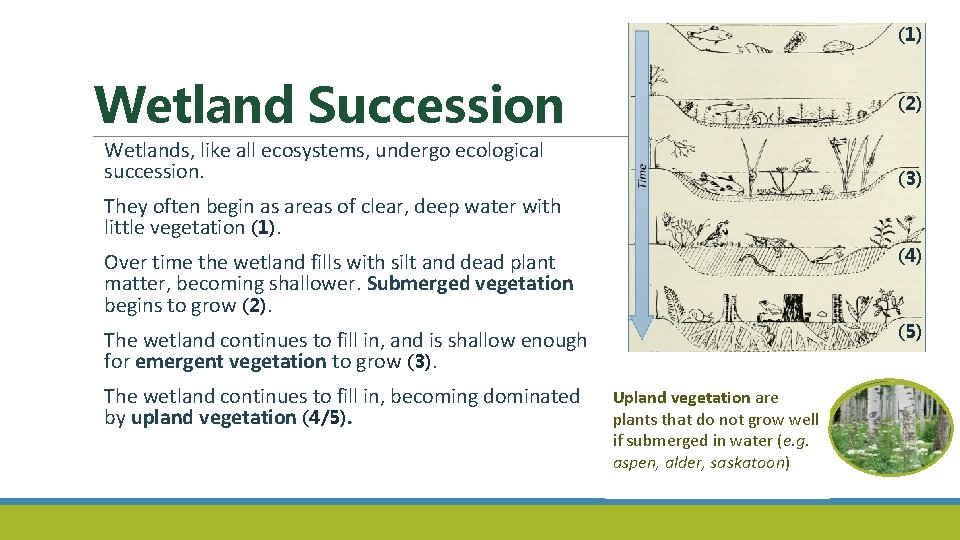
(1) Wetland Succession (2) Wetlands, like all ecosystems, undergo ecological succession. (3) They often begin as areas of clear, deep water with little vegetation (1). Over time the wetland fills with silt and dead plant matter, becoming shallower. Submerged vegetation begins to grow (2). (4) The wetland continues to fill in, and is shallow enough for emergent vegetation to grow (3). (5) The wetland continues to fill in, becoming dominated by upland vegetation (4/5). Emergent vegetation Submerged vegetation are Upland vegetation areare plants leaves and that live entirely plants with do not growstems well above water, (e. g. but roots(e. g. underwater pondweed, if submerged in water below water cattail, coontail) aspen, alder, (e. g. saskatoon) bulrush)
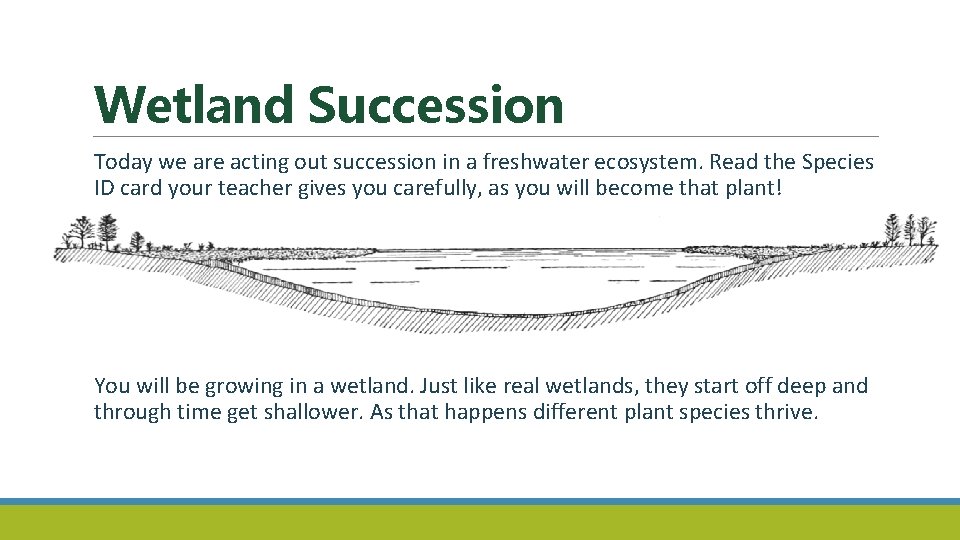
Wetland Succession Today we are acting out succession in a freshwater ecosystem. Read the Species ID card your teacher gives you carefully, as you will become that plant! You will be growing in a wetland. Just like real wetlands, they start off deep and through time get shallower. As that happens different plant species thrive.
Thank You!