
Ecological Pyramids Topic 4 Ecosystems Ecology Statements G
- Slides: 17
Ecological Pyramids Topic 4 – Ecosystems & Ecology Statements: G – I
What are Ecological Pyramids • A pyramid is a kind of graph/model that can be used to quantitatively represent differences in the trophic levels in a single ecosystem. • Three types: 1. Pyramids of numbers 2. Pyramids of biomass 3. Pyramids of productivity
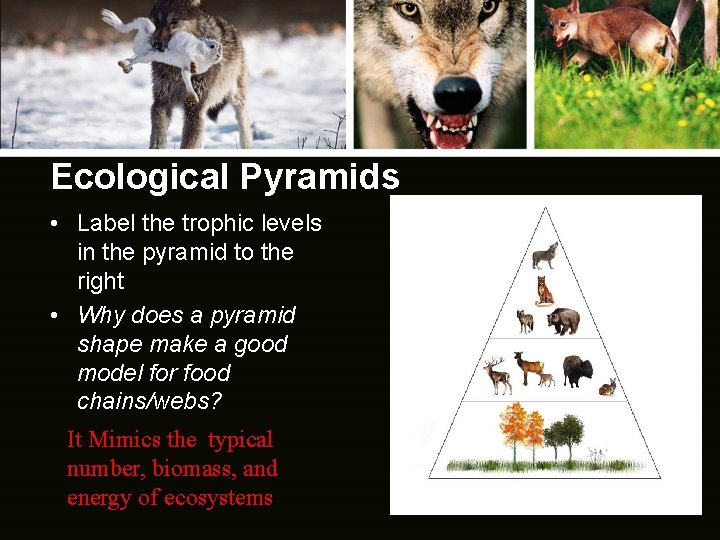
Ecological Pyramids • Label the trophic levels in the pyramid to the right • Why does a pyramid shape make a good model for food chains/webs? It Mimics the typical number, biomass, and energy of ecosystems
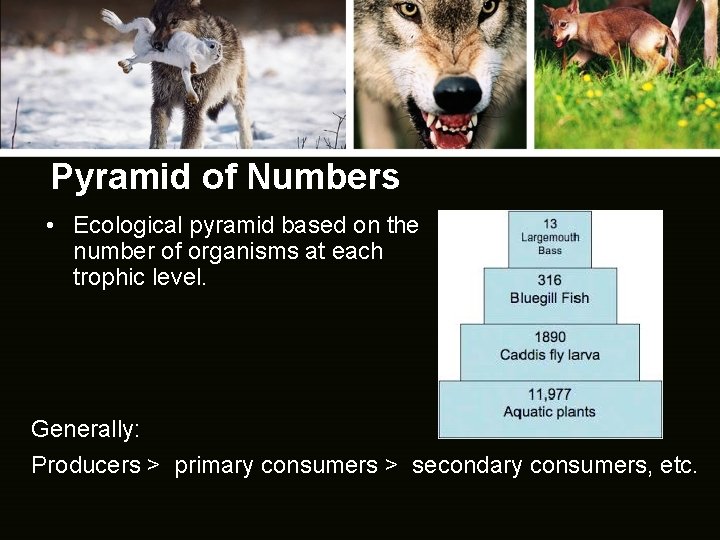
Pyramid of Numbers • Ecological pyramid based on the number of organisms at each trophic level. Generally: Producers > primary consumers > secondary consumers, etc.
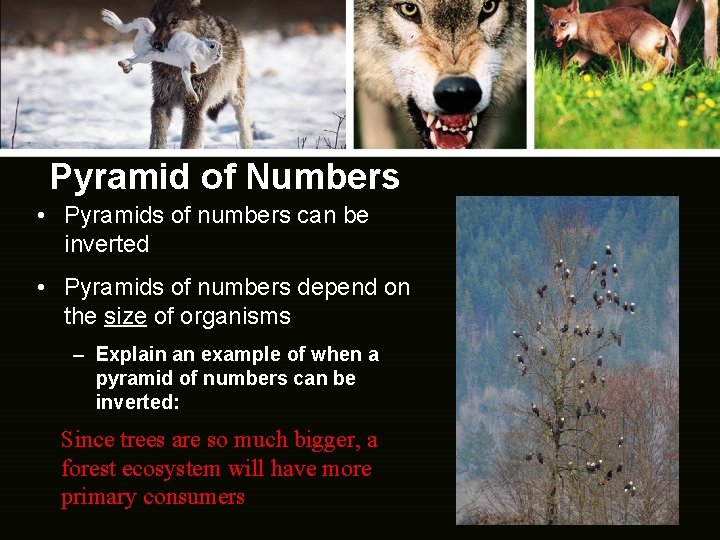
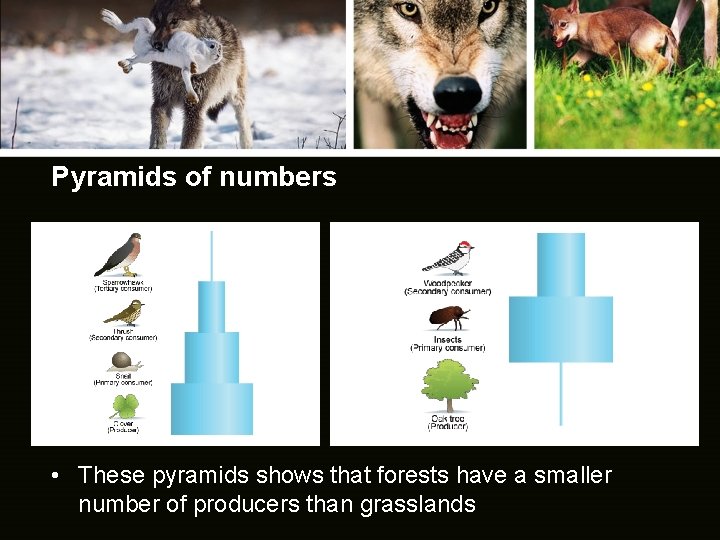
Pyramid of Numbers • Pyramids of numbers can be inverted • Pyramids of numbers depend on the size of organisms – Explain an example of when a pyramid of numbers can be inverted: Since trees are so much bigger, a forest ecosystem will have more primary consumers
Pyramids of numbers • These pyramids shows that forests have a smaller number of producers than grasslands
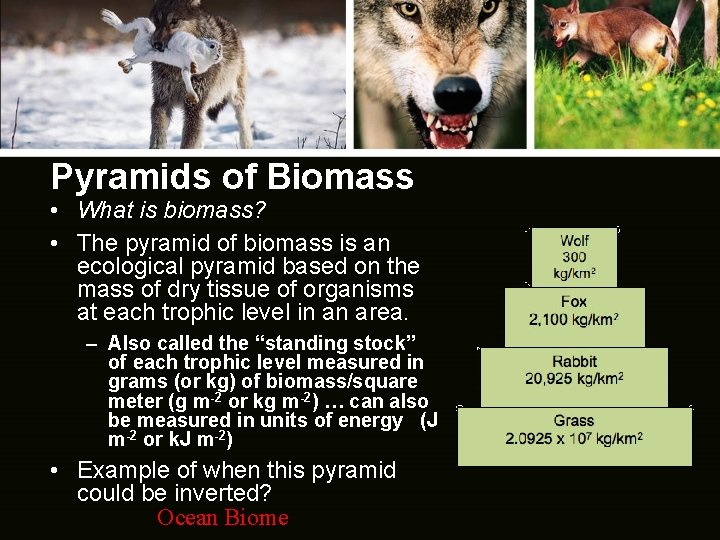
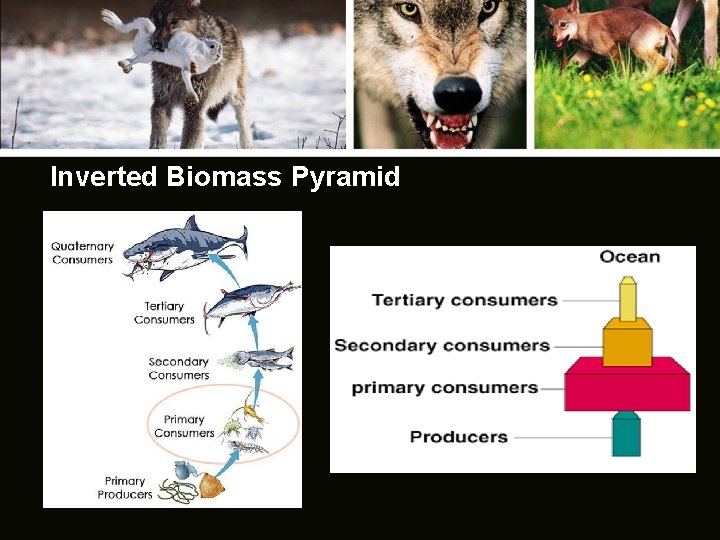
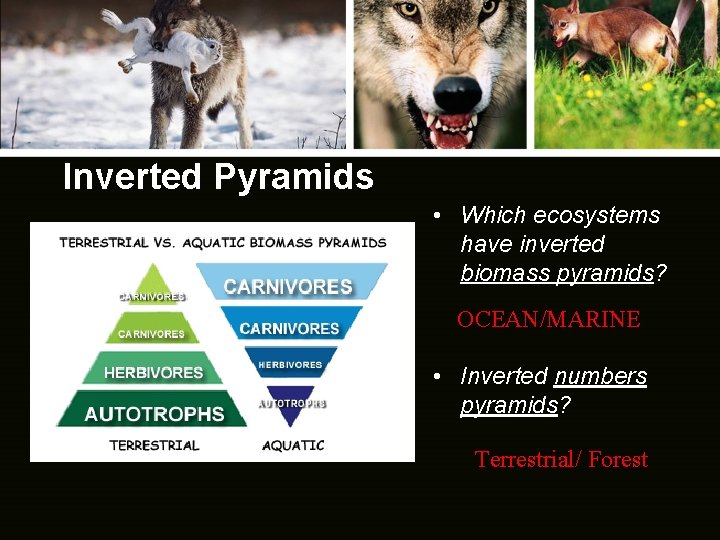
Pyramids of Biomass • What is biomass? • The pyramid of biomass is an ecological pyramid based on the mass of dry tissue of organisms at each trophic level in an area. – Also called the “standing stock” of each trophic level measured in grams (or kg) of biomass/square meter (g m-2 or kg m-2) … can also be measured in units of energy (J m-2 or k. J m-2) • Example of when this pyramid could be inverted? Ocean Biome
Inverted Biomass Pyramid
Inverted Pyramids • Which ecosystems have inverted biomass pyramids? OCEAN/MARINE • Inverted numbers pyramids? Terrestrial/ Forest
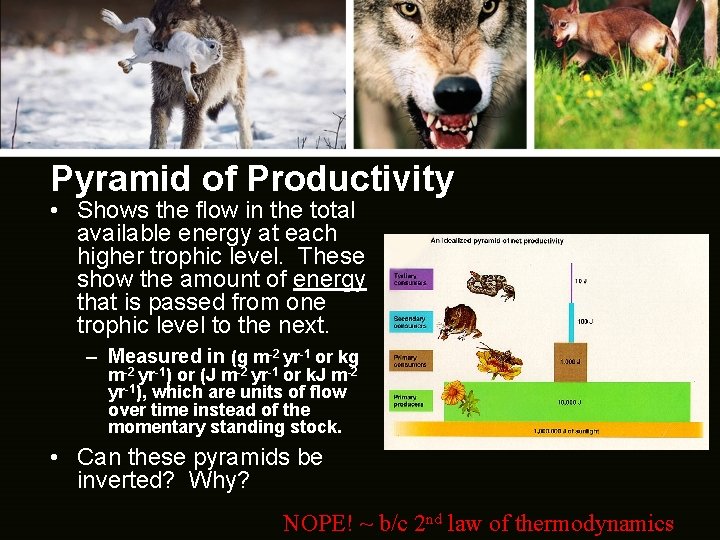
Pyramid of Productivity • Shows the flow in the total available energy at each higher trophic level. These show the amount of energy that is passed from one trophic level to the next. – Measured in (g m-2 yr-1 or kg m-2 yr-1) or (J m-2 yr-1 or k. J m-2 yr-1), which are units of flow over time instead of the momentary standing stock. • Can these pyramids be inverted? Why? NOPE! ~ b/c 2 nd law of thermodynamics
Implications of Pyramids • Why are food chain lengths limited? Also b/c of 2 nd law of Thermodynamics. 10% law. • Top carnivores are very vulnerable if there is a disturbance anywhere in the food chain. – Why? b/c top carnivores rely on lower trophic levels to survive!
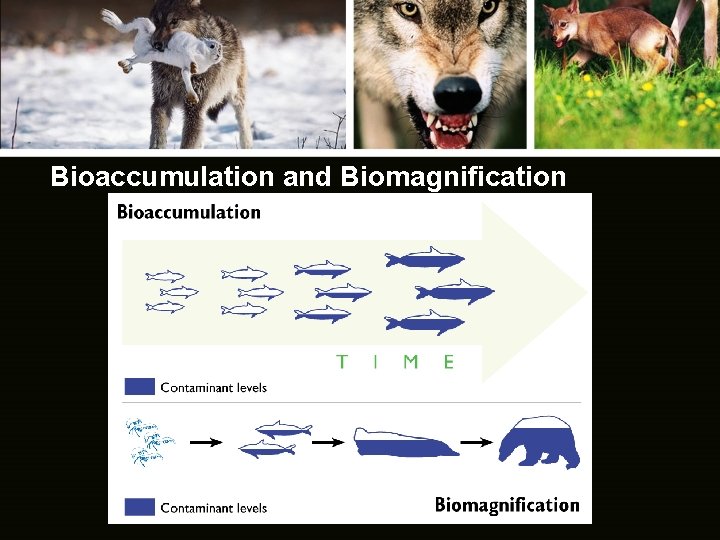
Bioaccumulation • Organisms absorb, breathe and ingest nonbiodegradable (persistent) toxins from the environment • If the organisms do not digest and excrete the toxins out of their bodies they will be stored in body tissues • Over time, organisms will build up a large concentration of the toxins in their bodies – this is called bioaccumulation • The gradual buildup of toxins in a living organism • What happens to bioaccumulated toxins in the food chain? They get passed on to next level and build up faster.
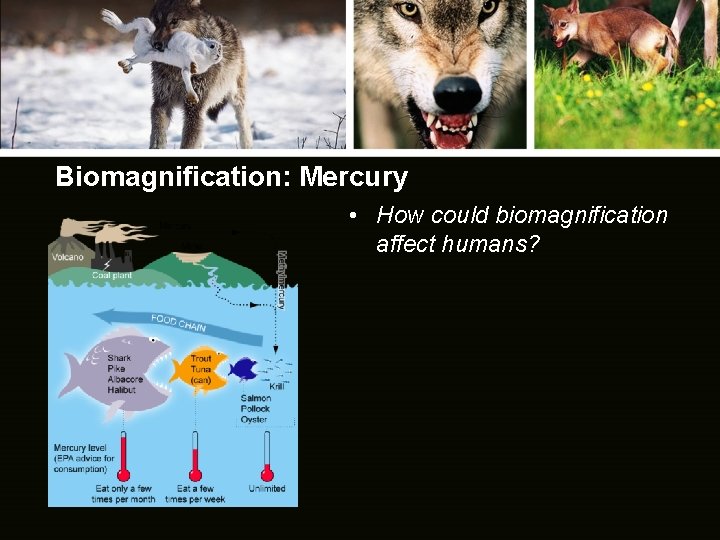
Biomagnification • Accumulated non-biodegradable (persistent) toxins are passed up from one trophic level to the next • Concentration of toxins in living organisms increases (or magnifies) at each trophic level – this is called biomagnification • Which trophic levels are most vulnerable to biomagnification? Top Carnivires/Omnivores
Bioaccumulation and Biomagnification
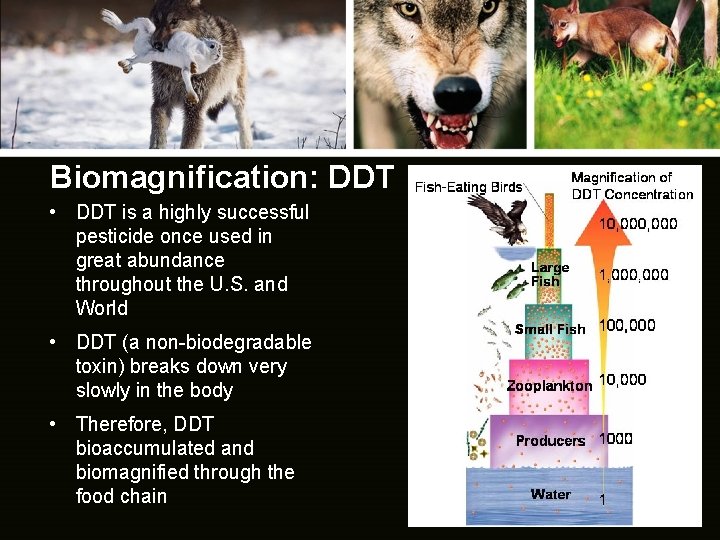
Biomagnification: DDT • DDT is a highly successful pesticide once used in great abundance throughout the U. S. and World • DDT (a non-biodegradable toxin) breaks down very slowly in the body • Therefore, DDT bioaccumulated and biomagnified through the food chain
Biomagnification: DDT • The hazard of DDT was to “non-target animals” 1. Who were the “target animal”? 2. Who were the “non-target animals”? 3. Why were they so affected? 4. How were they affected?
Biomagnification: Mercury • How could biomagnification affect humans?