
Ecological Pyramids Ecological Pyramids Three types of ecological
- Slides: 8
Ecological Pyramids
Ecological Pyramids • Three types of ecological pyramids Pyramid of Energy Pyramid of Biomass Pyramid of Numbers
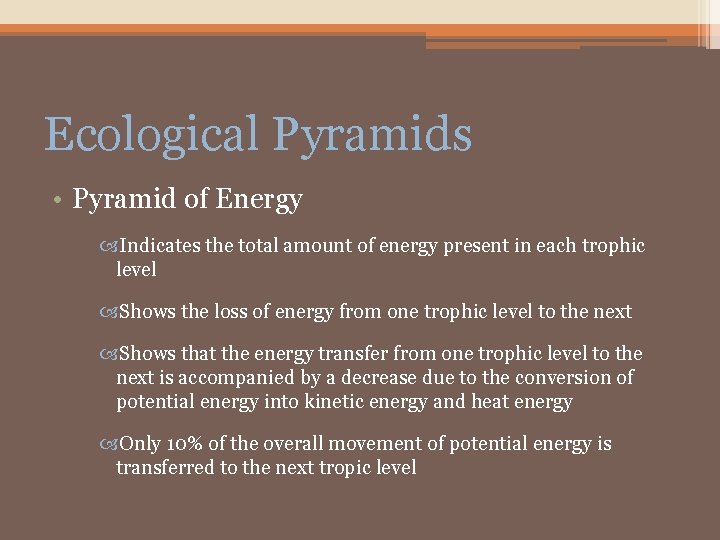
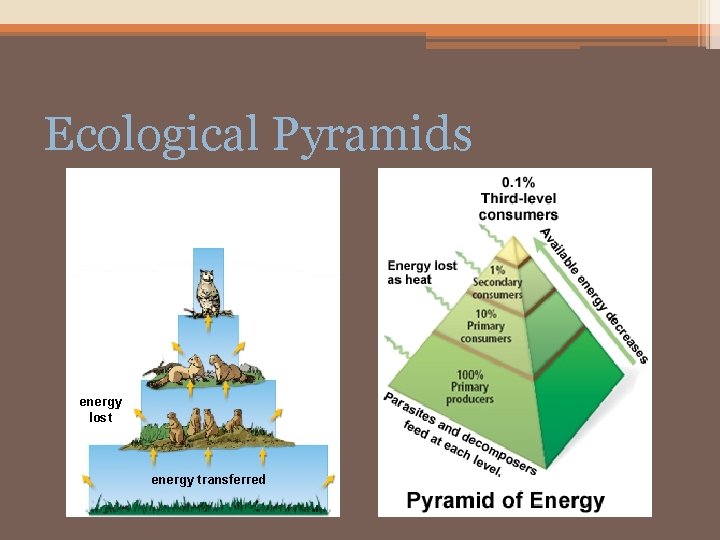
Ecological Pyramids • Pyramid of Energy Indicates the total amount of energy present in each trophic level Shows the loss of energy from one trophic level to the next Shows that the energy transfer from one trophic level to the next is accompanied by a decrease due to the conversion of potential energy into kinetic energy and heat energy Only 10% of the overall movement of potential energy is transferred to the next tropic level
Ecological Pyramids energy lost energy transferred
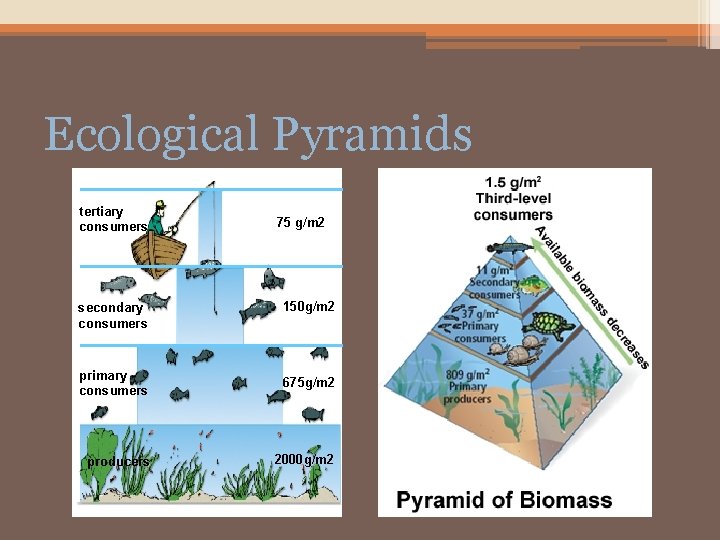
Ecological Pyramids • Pyramid of Biomass Indicates the total dry mass of the organisms in each trophic level The size of the organism is over-emphasized and it can happen that the mass of level 2 is greater than that of level 1, because the productivity of level 1 is not taken into consideration Thus an enormous mass of grass is required to support a smaller mass of gazelle, which in turn would support a smaller mass of lions.
Ecological Pyramids tertiary consumers secondary consumers 75 g/m 2 150 g/m 2 primary consumers 675 g/m 2 producers 2000 g/m 2
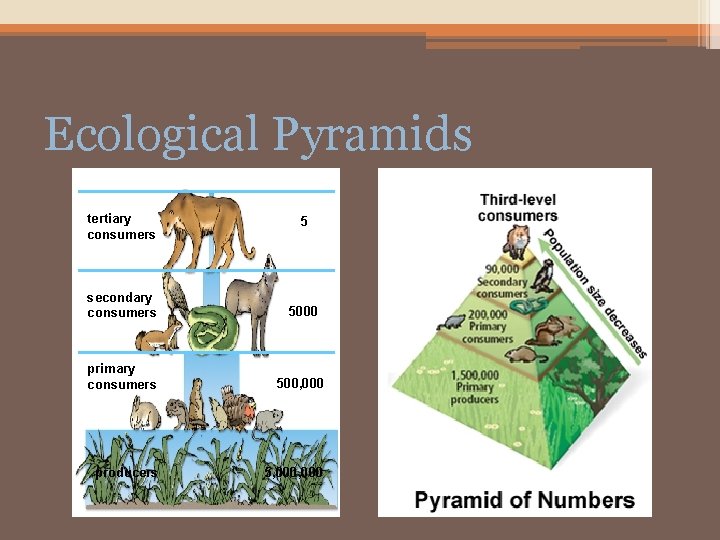
Ecological Pyramids • Pyramid of Numbers Shows the number of organisms in each trophic level and does not take into consideration the size of the organisms and overemphasizes the importance of small organisms In a pyramid of numbers the higher up one moves, so each consecutive layer or level contains fewer organisms than the level below it
Ecological Pyramids tertiary consumers 5 secondary consumers 5000 primary consumers 500, 000 producers 5, 000