
Ecological Organization Ecologists study environments at different levels
- Slides: 9
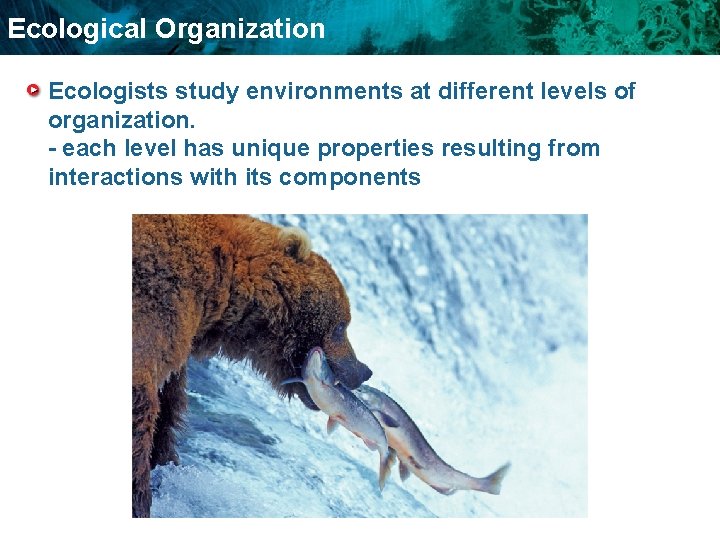
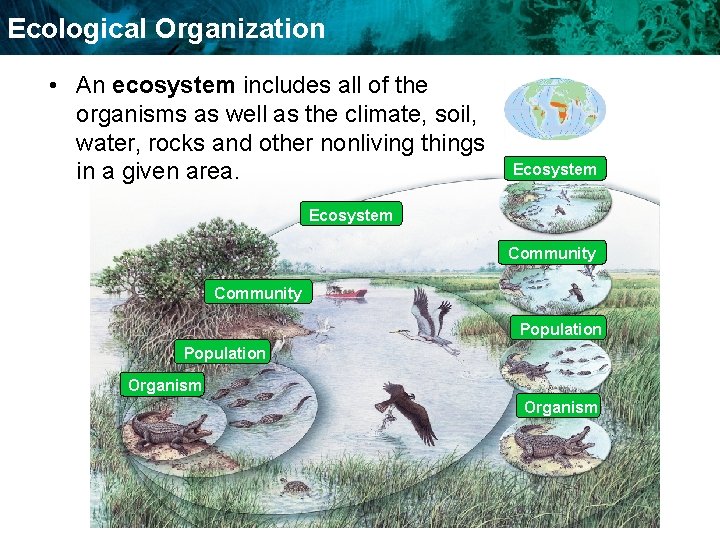
Ecological Organization Ecologists study environments at different levels of organization. - each level has unique properties resulting from interactions with its components Food Chains And Food Webs
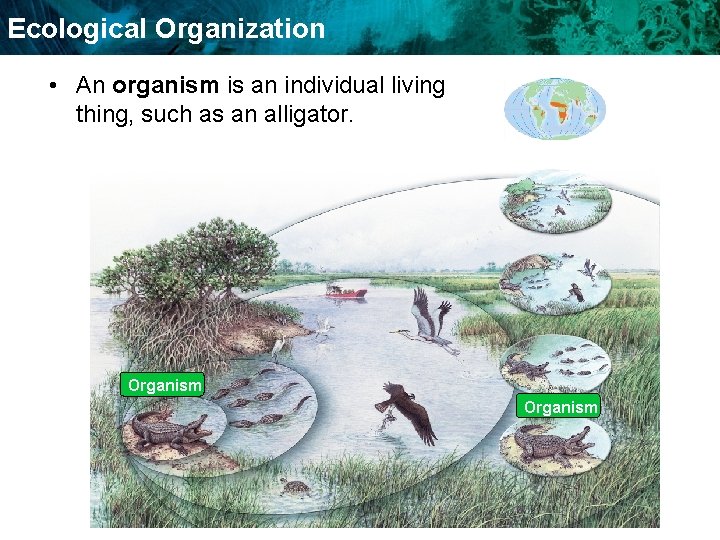
Ecological Organization • An organism is an individual living thing, such as an alligator. Food Chains And Food Webs Organism
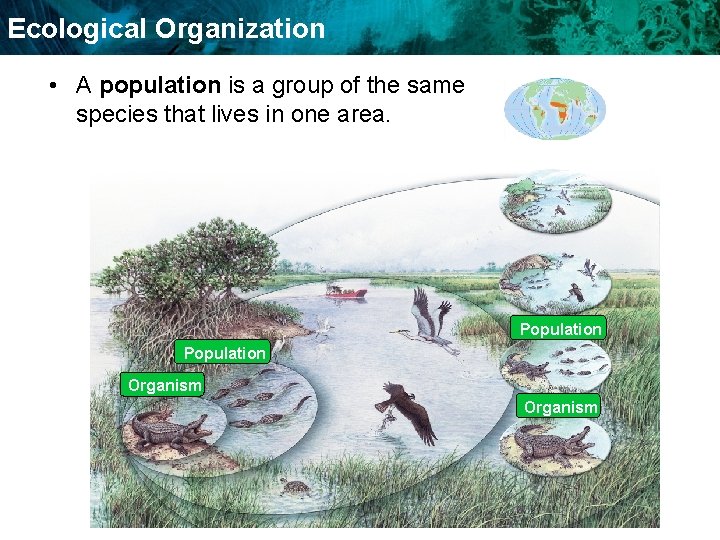
Ecological Organization • A population is a group of the same species that lives in one area. Food Chains And Food Webs Population Organism
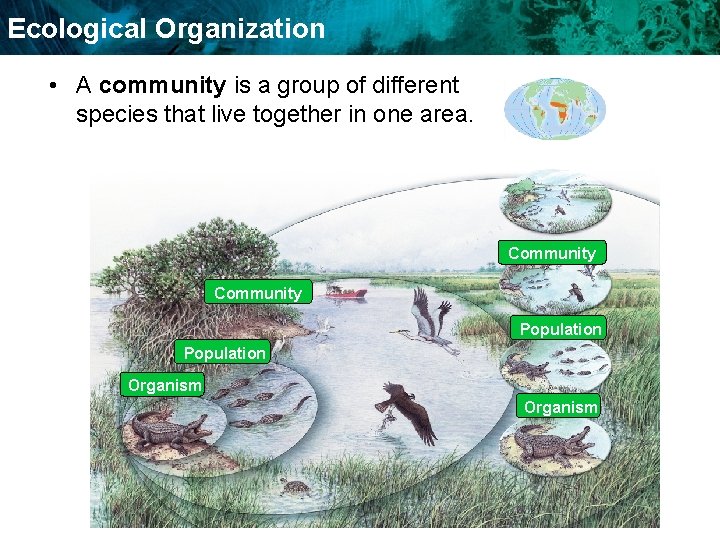
Ecological Organization • A community is a group of different species that live together in one area. Community Food Chains And Food Webs Community Population Organism
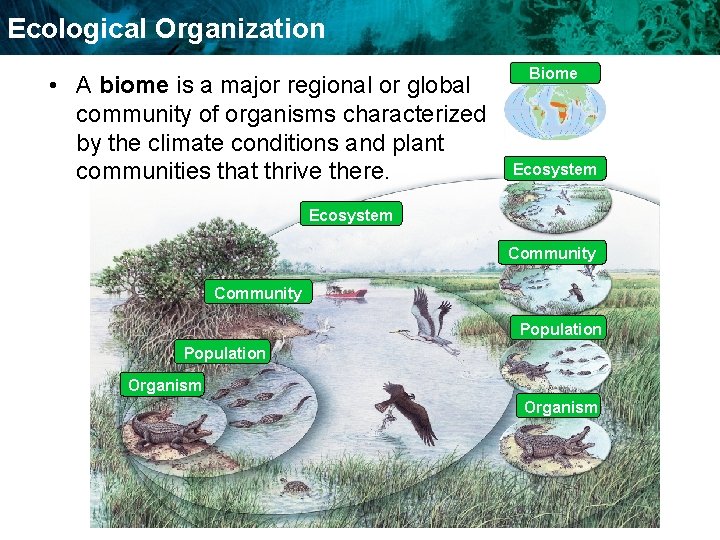
Ecological Organization • An ecosystem includes all of the organisms as well as the climate, soil, water, rocks and other nonliving things in a given area. Ecosystem Community Food Chains And Food Webs Community Population Organism
Ecological Organization Biome • A biome is a major regional or global community of organisms characterized by the climate conditions and plant communities that thrive there. Ecosystem Community Food Chains And Food Webs Community Population Organism
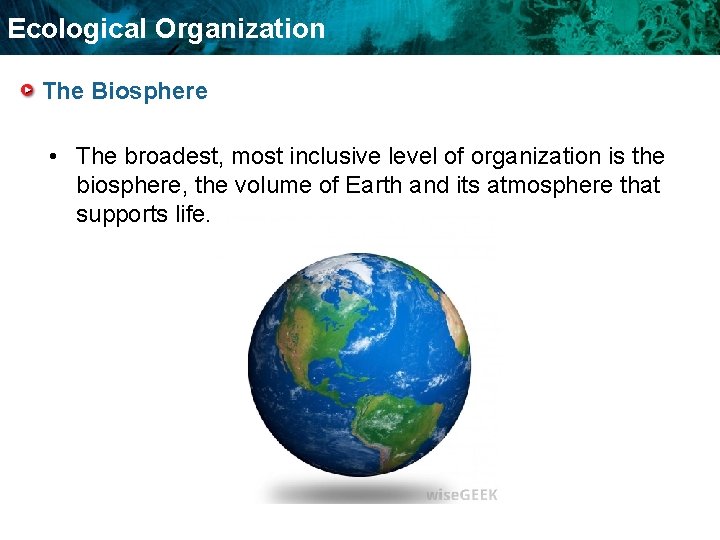
Ecological Organization The Biosphere • The broadest, most inclusive level of organization is the biosphere, the volume of Earth and its atmosphere that supports life. Food Chains And Food Webs
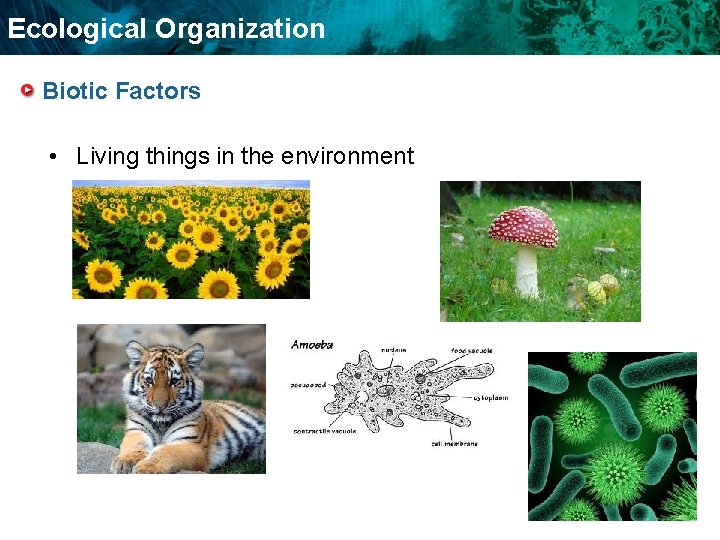
Ecological Organization Biotic Factors • Living things in the environment Food Chains And Food Webs
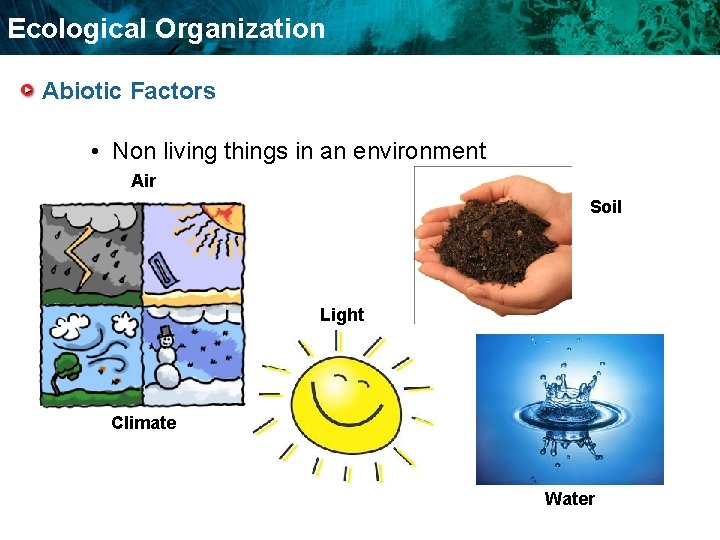
Ecological Organization Abiotic Factors • Non living things in an environment Air Soil Food Chains And Food Webs Light Climate Water