
Ecological niches Niches fundamental and realized Principle of

- Slides: 34
Ecological niches ¬ Niches: fundamental and realized ¬ Principle of competitive exclusion ¬ Realized niche as competitive refuge ¬ Niche crossovers ¬ Character displacement ¬ Adaptive radiation
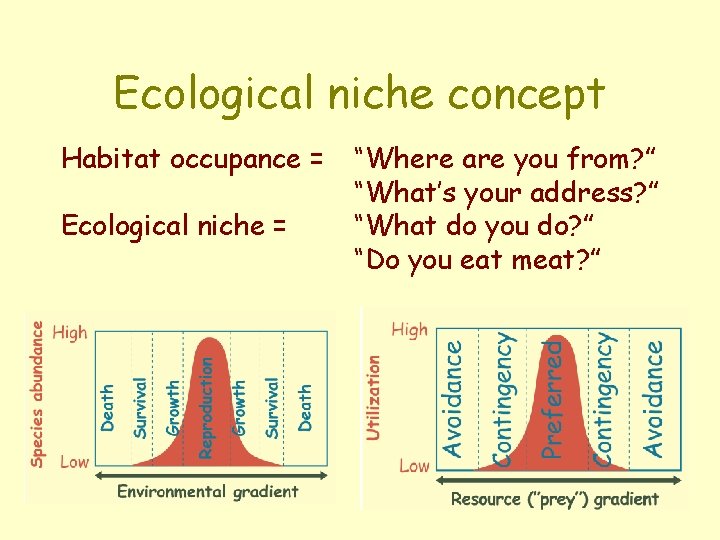
Ecological niche concept Habitat occupance = Ecological niche = “Where are you from? ” “What’s your address? ” “What do you do? ” “Do you eat meat? ”
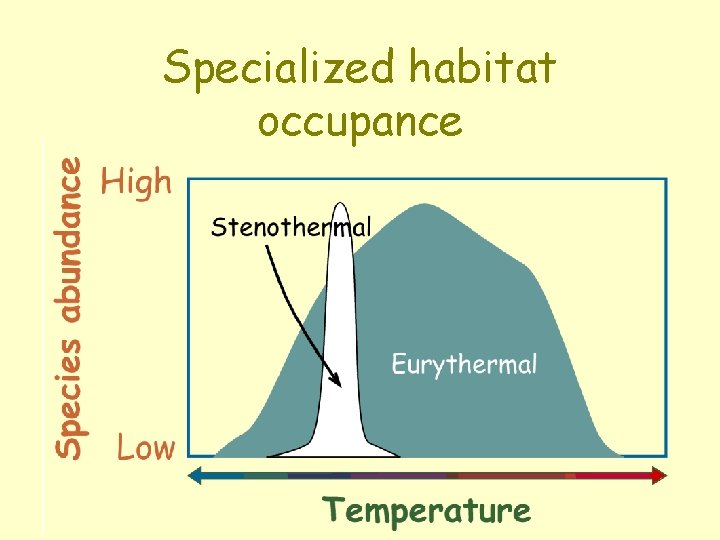
Specialized habitat occupance
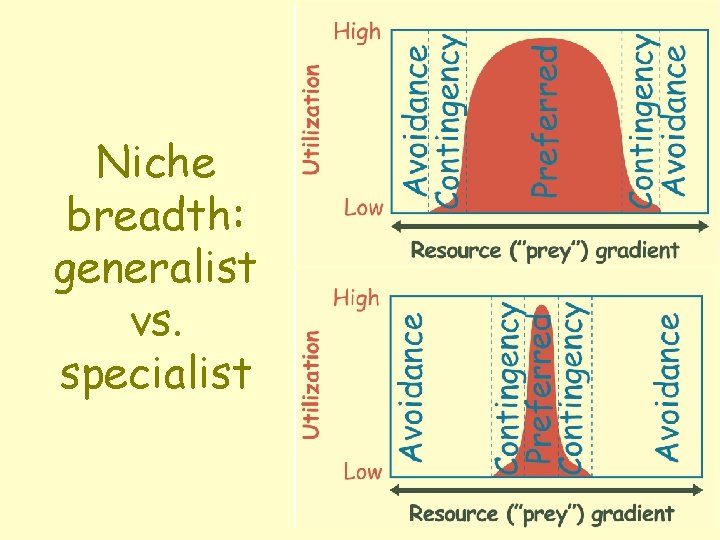
Niche breadth: generalist vs. specialist
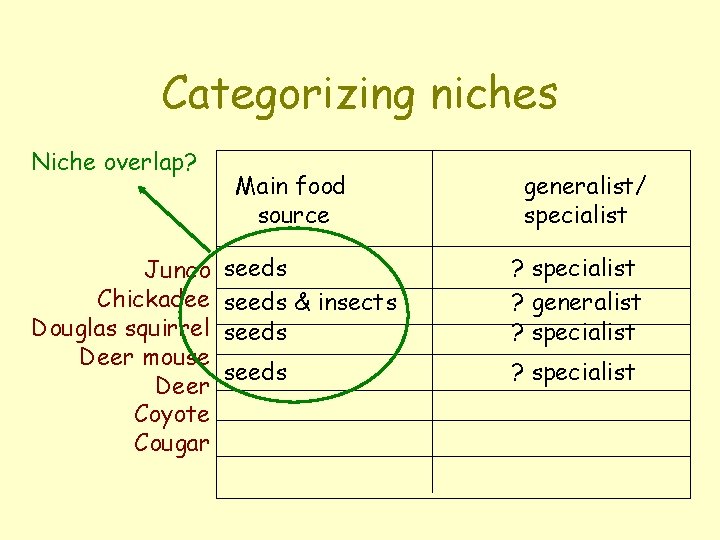
Categorizing niches Niche overlap? Junco Chickadee Douglas squirrel Deer mouse Deer Coyote Cougar Main food source generalist/ specialist seeds & insects seeds ? specialist ? generalist ? specialist seeds ? specialist
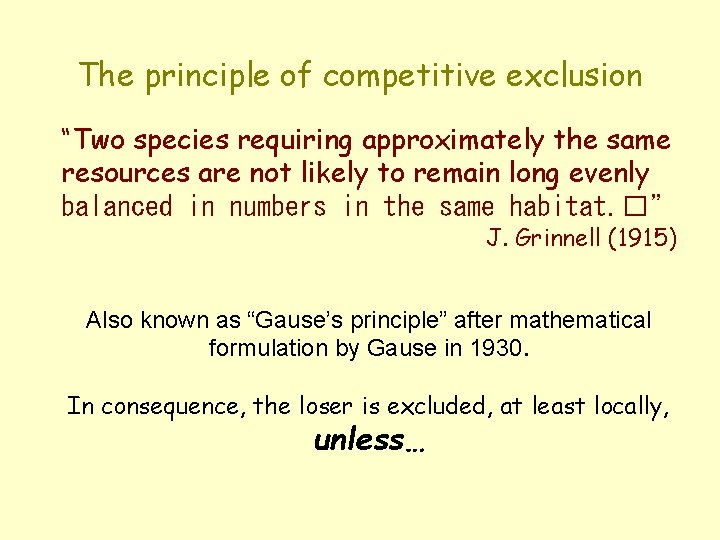
The principle of competitive exclusion “Two species requiring approximately the same resources are not likely to remain long evenly balanced in numbers in the same habitat. �” J. Grinnell (1915) Also known as “Gause’s principle” after mathematical formulation by Gause in 1930. In consequence, the loser is excluded, at least locally, unless…
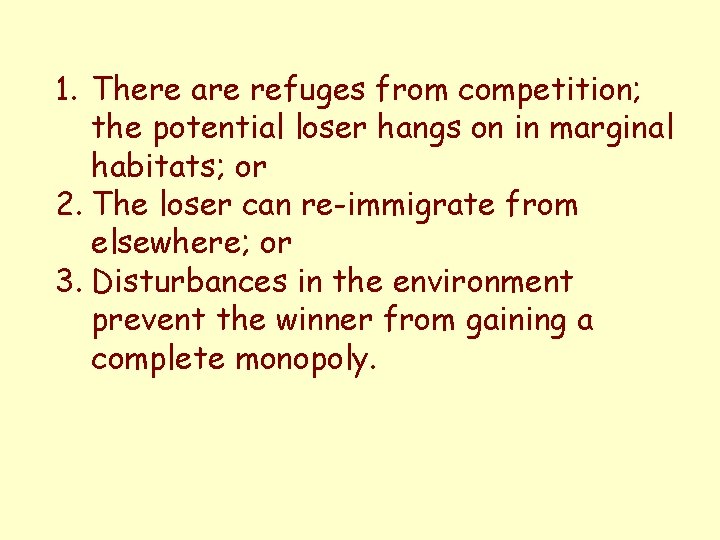
1. There are refuges from competition; the potential loser hangs on in marginal habitats; or 2. The loser can re-immigrate from elsewhere; or 3. Disturbances in the environment prevent the winner from gaining a complete monopoly.
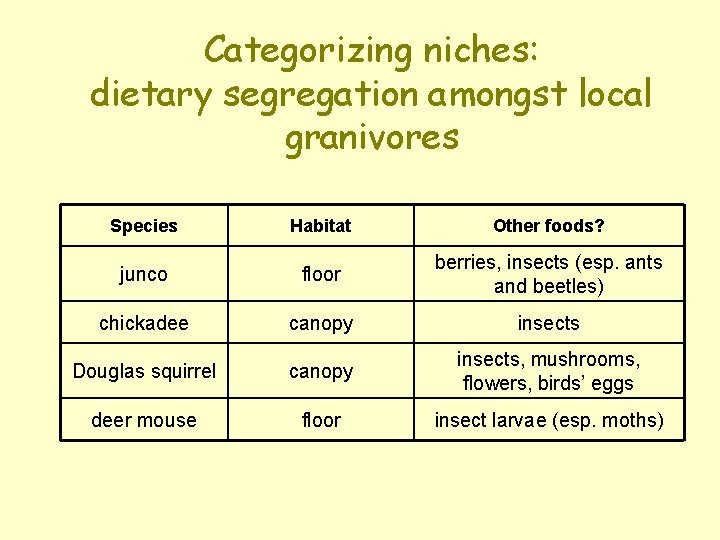
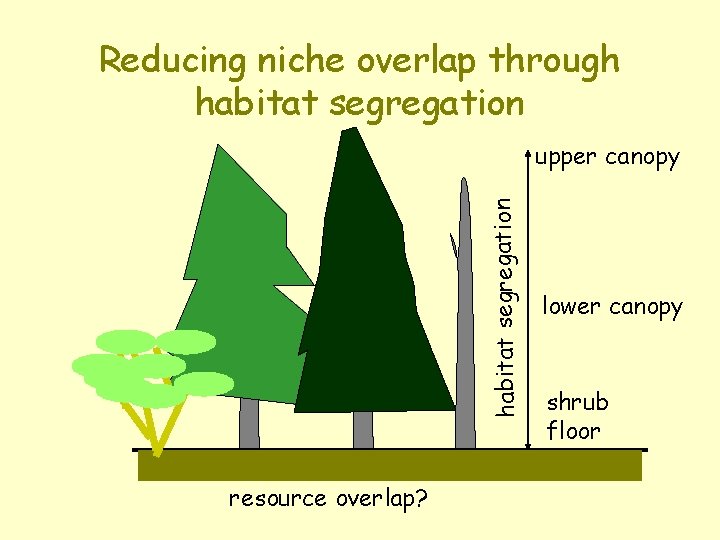
Categorizing niches: dietary segregation amongst local granivores Species Habitat Other foods? junco floor berries, insects (esp. ants and beetles) chickadee canopy insects Douglas squirrel canopy insects, mushrooms, flowers, birds’ eggs deer mouse floor insect larvae (esp. moths)
Reducing niche overlap through habitat segregation upper canopy resource overlap? lower canopy shrub floor
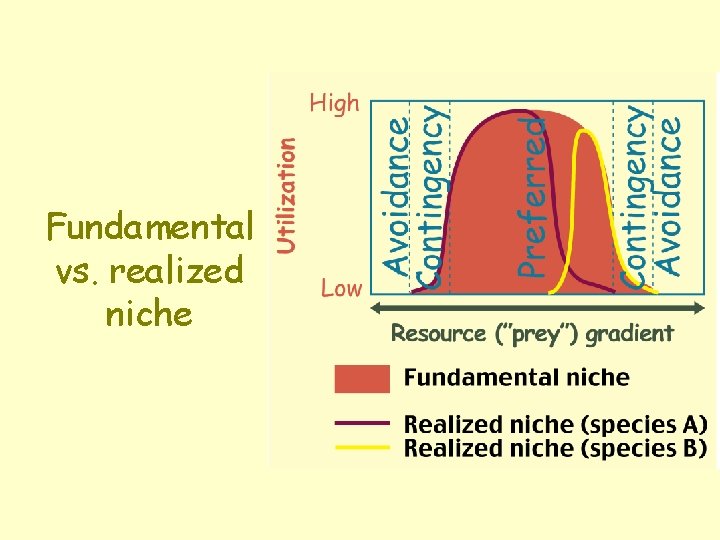
Fundamental vs. realized niche
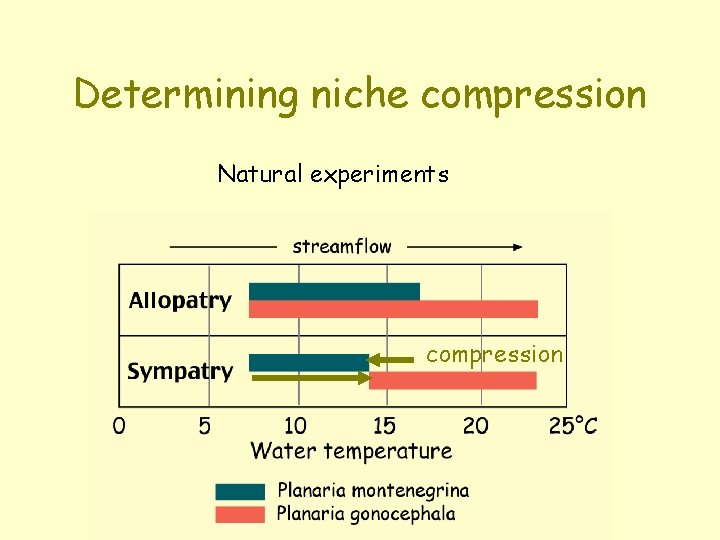
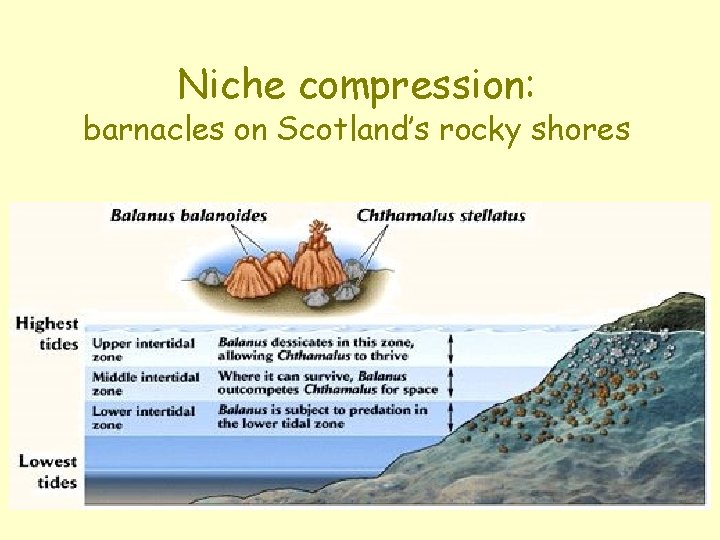
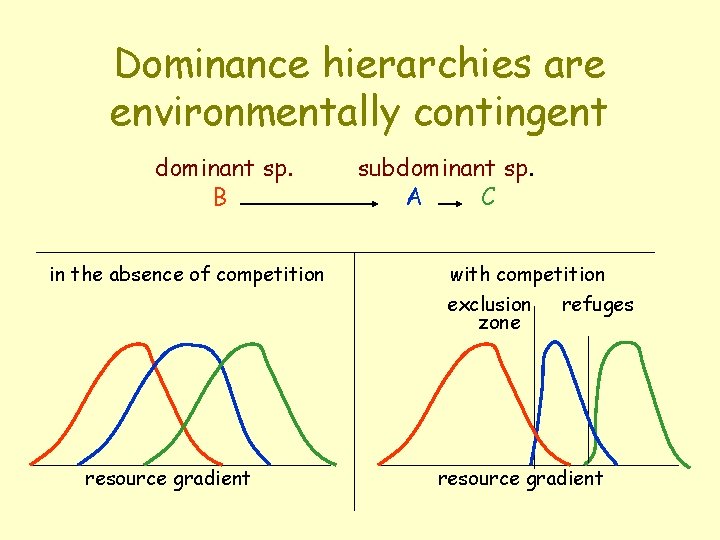
Niche compression ð Realized niches are narrower than fundamental niches, therefore the species occupies a narrower range of habitats than it would in the absence of competition. ð The realized niche can be regarded as a ‘competitive refuge’.
Determining niche compression Natural experiments compression
Niche compression: barnacles on Scotland’s rocky shores
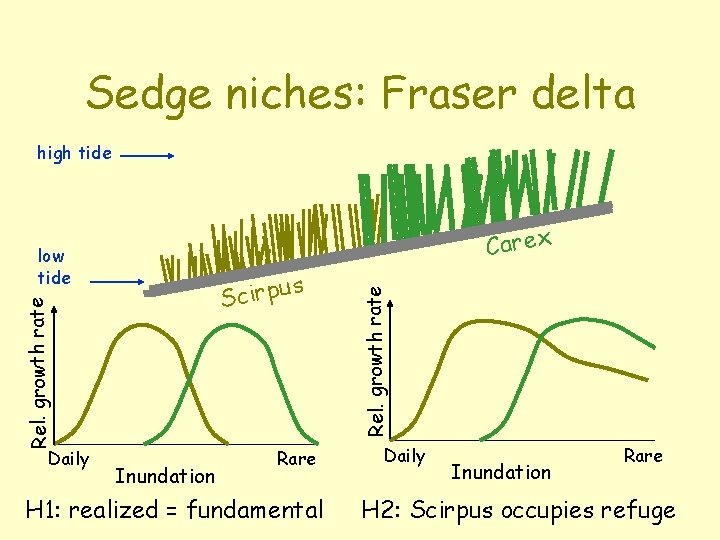
Sedge niches: Fraser delta high tide low tide s Rel. growth rate Scirpu Daily Inundation Rare H 1: realized = fundamental Rel. growth rate Carex Daily Inundation Rare H 2: Scirpus occupies refuge
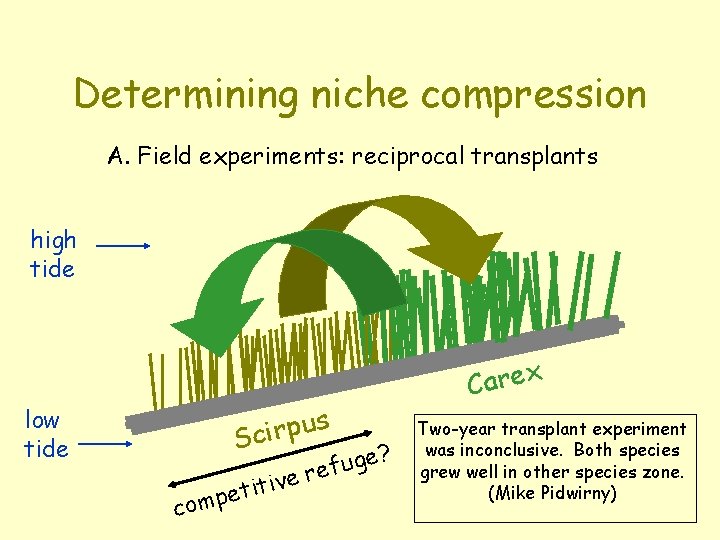
Determining niche compression A. Field experiments: reciprocal transplants high tide s u p r i Sc low tide c ? ge u f e er v i t e omp Carex Two-year transplant experiment was inconclusive. Both species grew well in other species zone. (Mike Pidwirny)
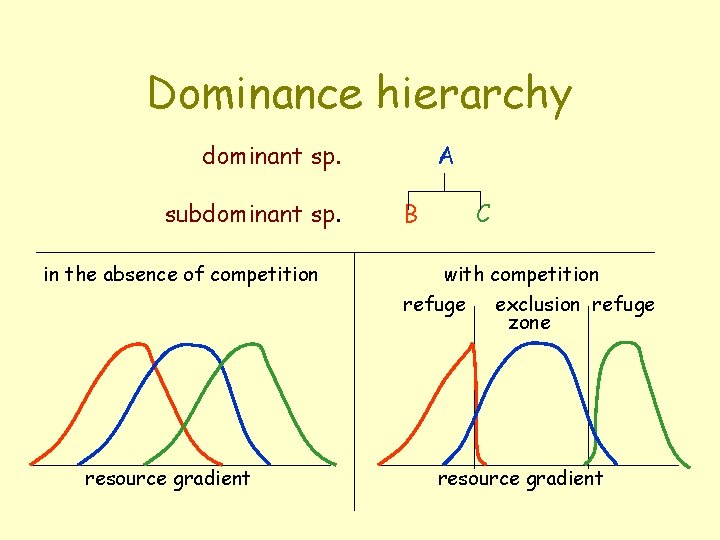
Dominance hierarchy dominant sp. subdominant sp. in the absence of competition resource gradient A B C with competition refuge exclusion refuge zone resource gradient
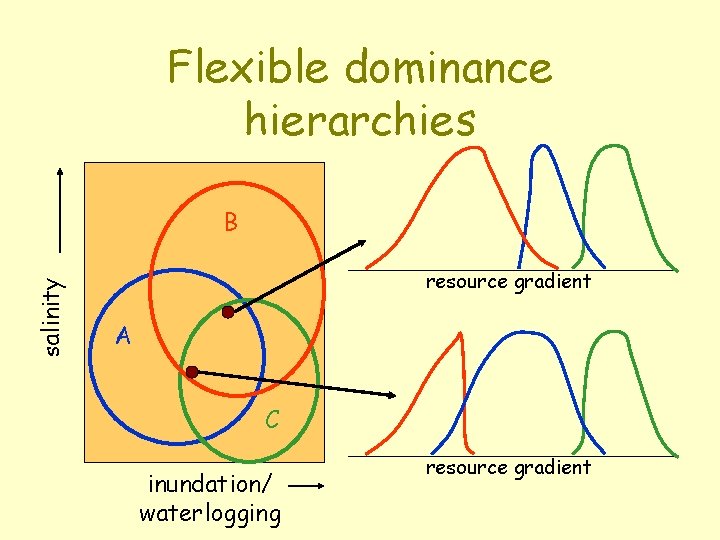
Dominance hierarchies are environmentally contingent dominant sp. B in the absence of competition resource gradient subdominant sp. A C with competition exclusion refuges zone resource gradient
Flexible dominance hierarchies salinity B resource gradient A C inundation/ waterlogging resource gradient
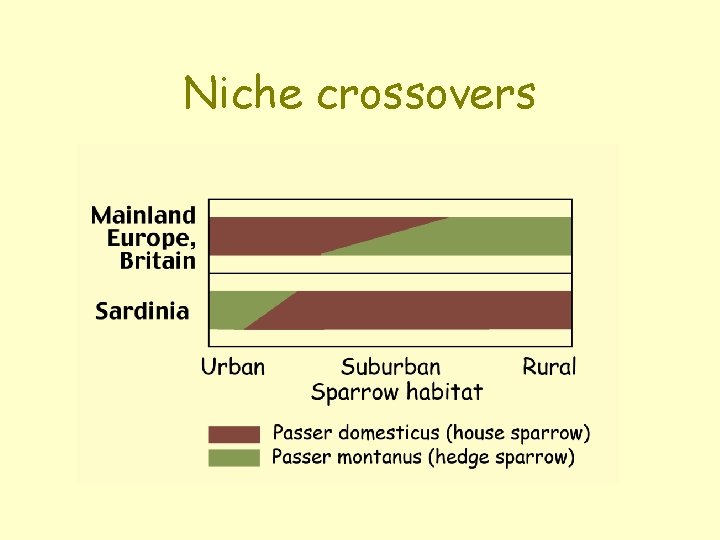
Niche crossovers
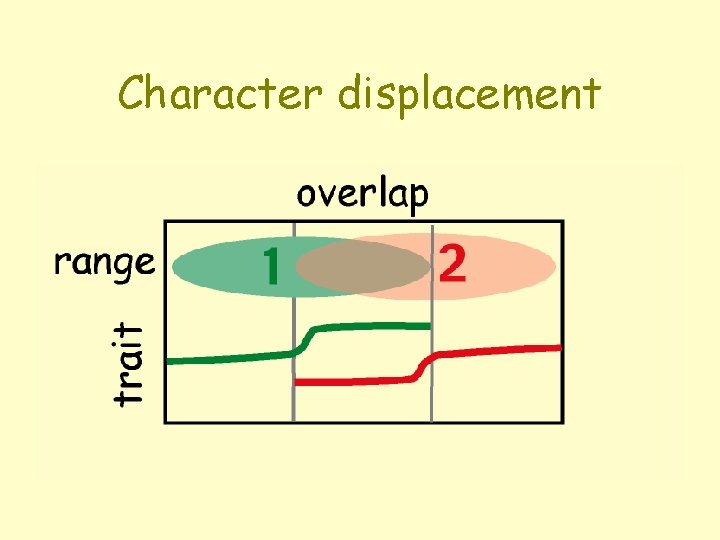
Character displacement
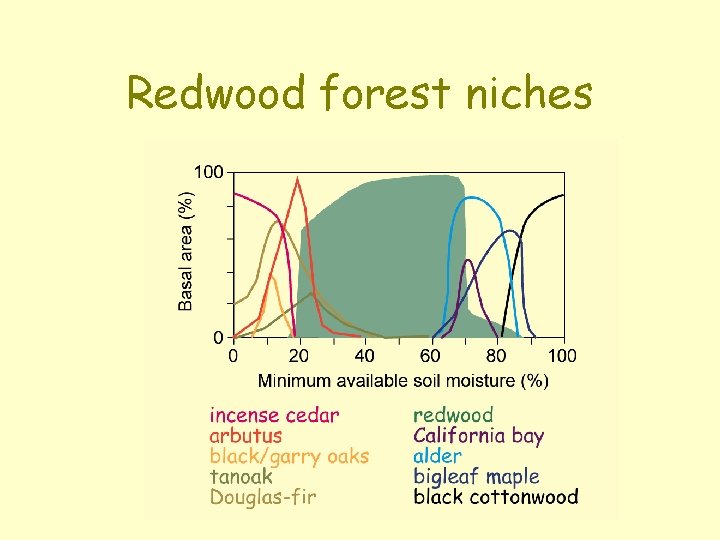
Redwood forest niches
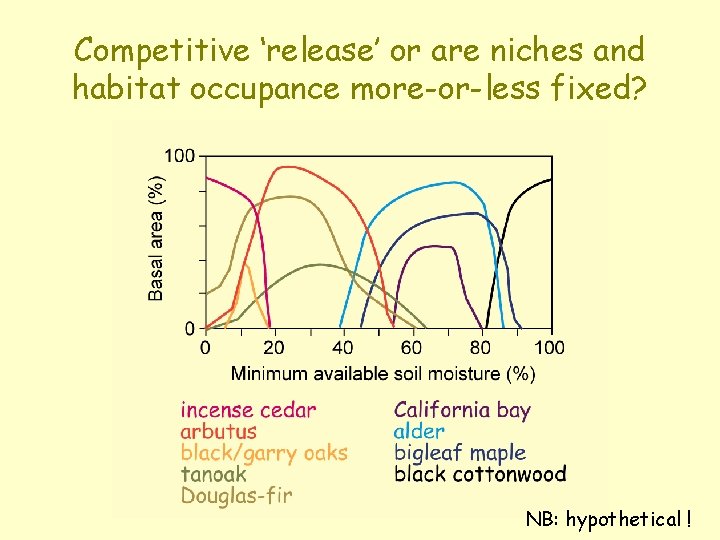
Competitive ‘release’ or are niches and habitat occupance more-or-less fixed? NB: hypothetical !
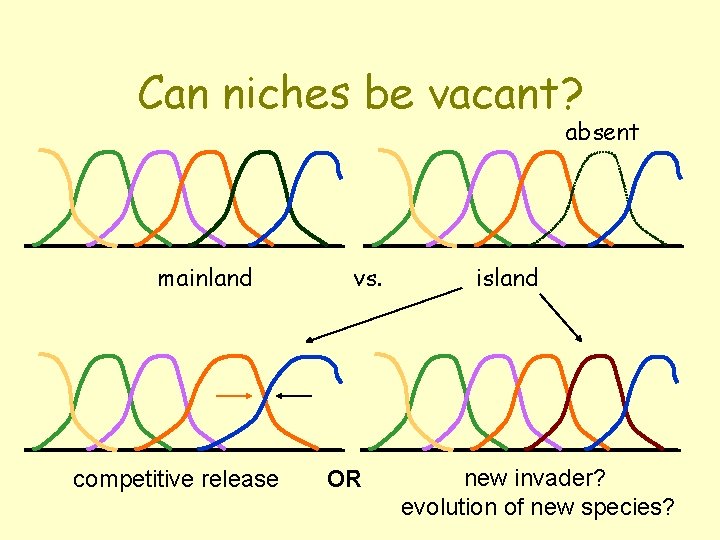
Can niches be vacant? absent mainland competitive release vs. OR island new invader? evolution of new species?
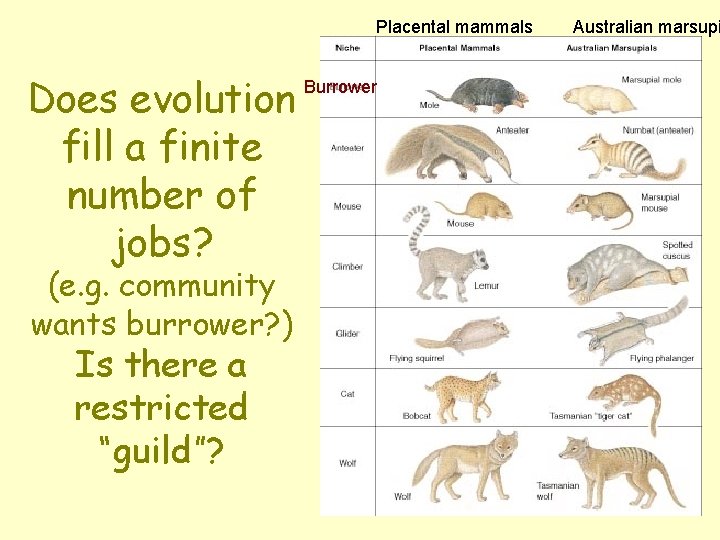
Placental mammals Does evolution fill a finite number of jobs? (e. g. community wants burrower? ) Is there a restricted “guild”? Burrower Australian marsupi
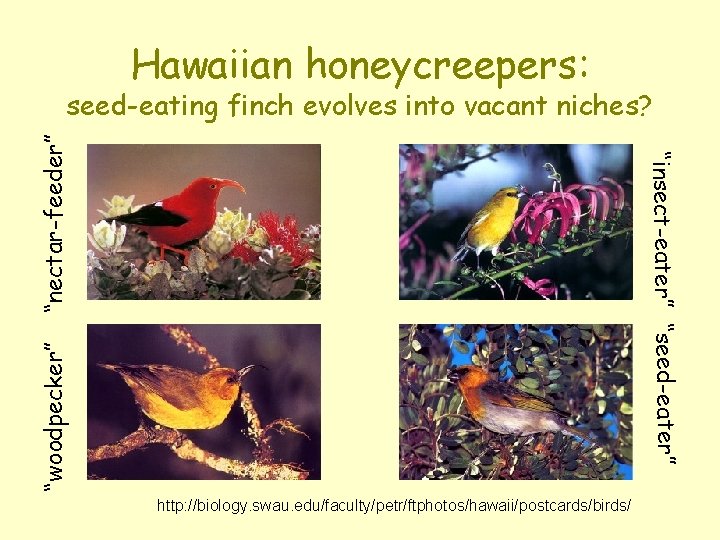
Hawaiian honeycreepers: “woodpecker” “insect-eater” “seed-eater” “nectar-feeder” seed-eating finch evolves into vacant niches? http: //biology. swau. edu/faculty/petr/ftphotos/hawaii/postcards/birds/
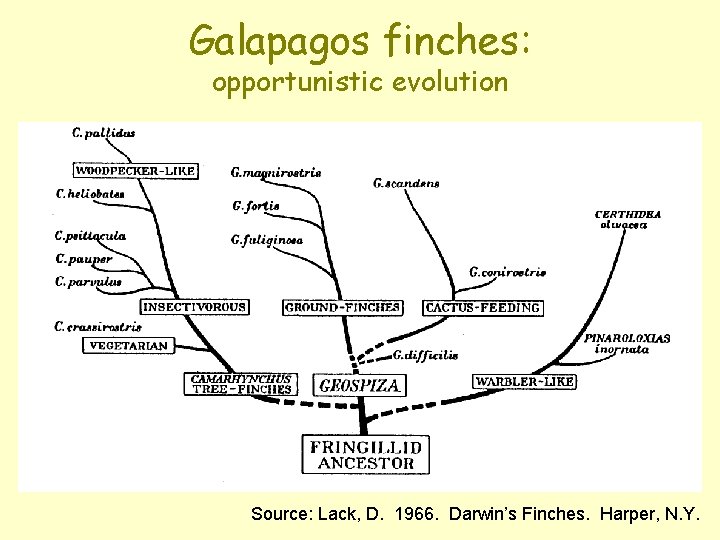
Galapagos finches: opportunistic evolution Source: Lack, D. 1966. Darwin’s Finches. Harper, N. Y.
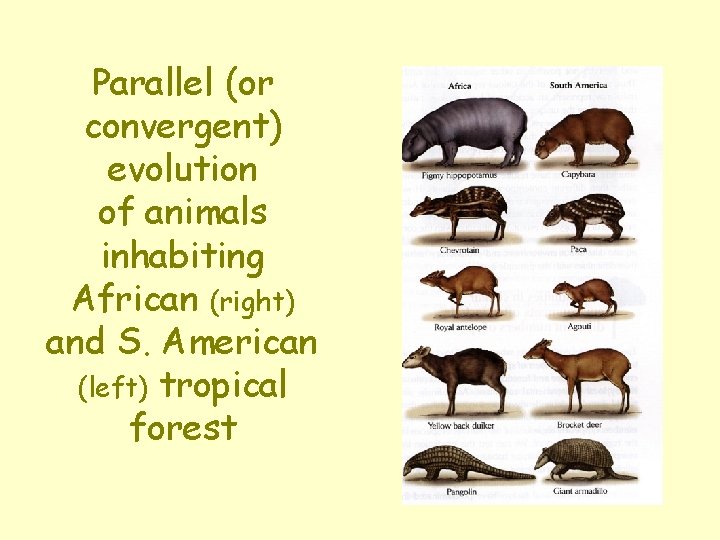
Parallel (or convergent) evolution of animals inhabiting African (right) and S. American (left) tropical forest
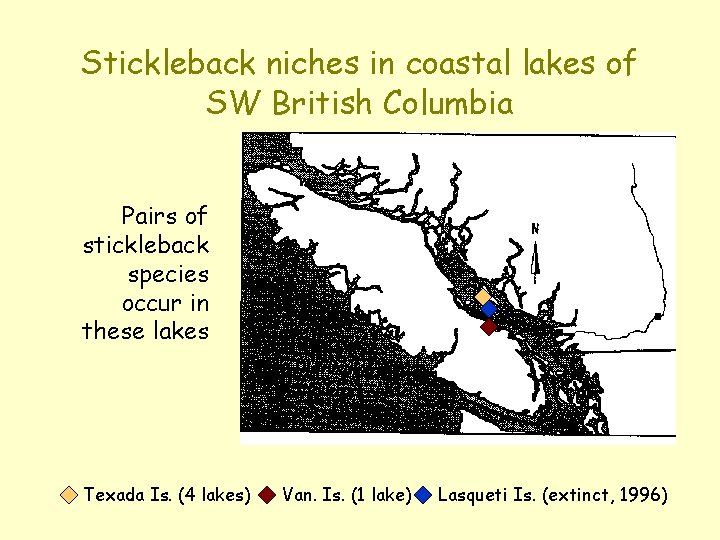
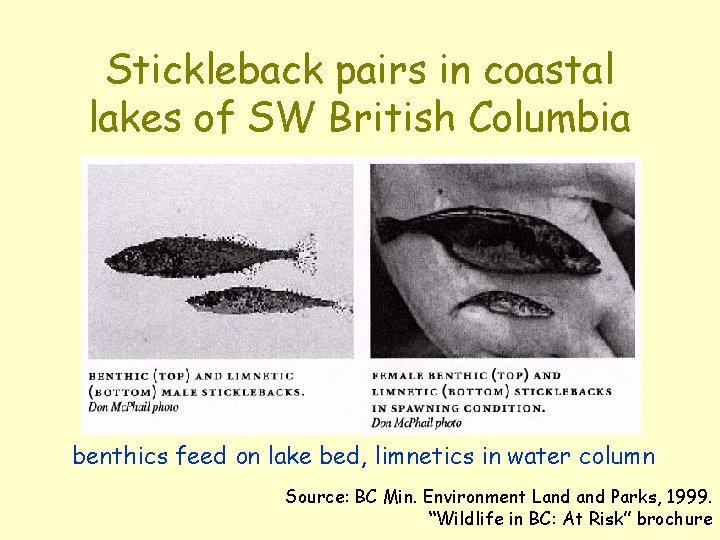
Stickleback niches in coastal lakes of SW British Columbia Pairs of stickleback species occur in these lakes Texada Is. (4 lakes) Van. Is. (1 lake) Lasqueti Is. (extinct, 1996)
Stickleback pairs in coastal lakes of SW British Columbia benthics feed on lake bed, limnetics in water column Source: BC Min. Environment Land Parks, 1999. “Wildlife in BC: At Risk” brochure
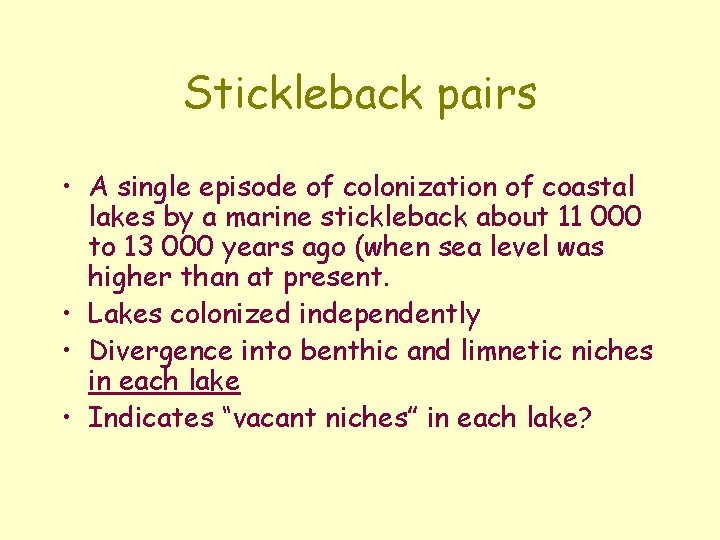
Stickleback pairs • A single episode of colonization of coastal lakes by a marine stickleback about 11 000 to 13 000 years ago (when sea level was higher than at present. • Lakes colonized independently • Divergence into benthic and limnetic niches in each lake • Indicates “vacant niches” in each lake?
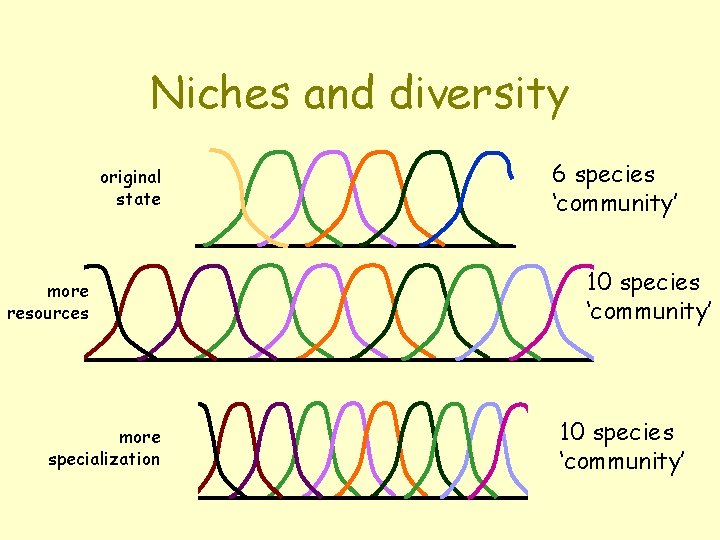
Niches and diversity original state more resources more specialization 6 species ‘community’ 10 species ‘community’
So, are communities ‘designed’ by natural selection for maximum efficiency and orderly function? * Does this only happen in stable ‘saturated’ communities? And how do we determine that a community is ‘saturated’? *Source: Eric Pianka.
Community structure ¬Closed vs. open communities ¬Ecotones (community boundaries) ¬The continuum concept ¬Biogeoclimatic zones
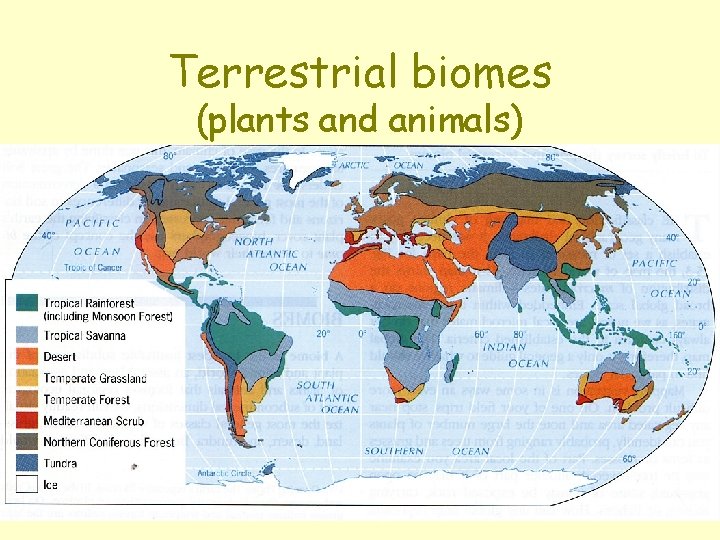
Terrestrial biomes (plants and animals)