
ECOLOGICAL INTEGRITY ASSESSMENT CONDOR BIORESERVE CASE STUDY Silvia
ECOLOGICAL INTEGRITY ASSESSMENT CONDOR BIORESERVE CASE STUDY Silvia Benítez P. The Nature Conservancy is a proud supporter of the 2003 World Parks Congress conserveonline. org
Condor Bioreserve Project TNC Ecuador Program Eco. Ciencia Fundacion Antisana Fundacion Rumicocha Ministerio del Medio Ambiente Parks in Peril - USAID
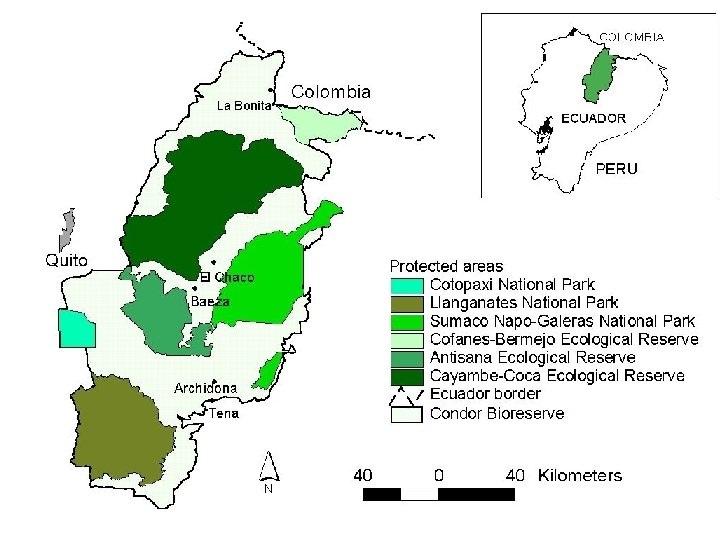
CONDOR BIORESERVE
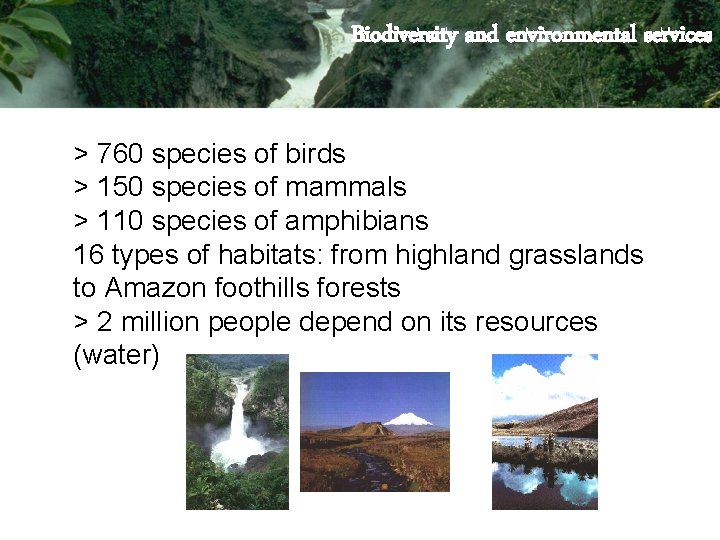
Biodiversity and environmental services > 760 species of birds > 150 species of mammals > 110 species of amphibians 16 types of habitats: from highland grasslands to Amazon foothills forests > 2 million people depend on its resources (water)
CBR as a functional landscape Capacity to maintain healthy and viable biodiversity elements and maintain key ecological processes within their ranges of variation* (Poiani and Ritcher 1999)
Select focal biodiversity elements Represent biodiversity Represent threats Represent different scales: geographic biodiversity organization
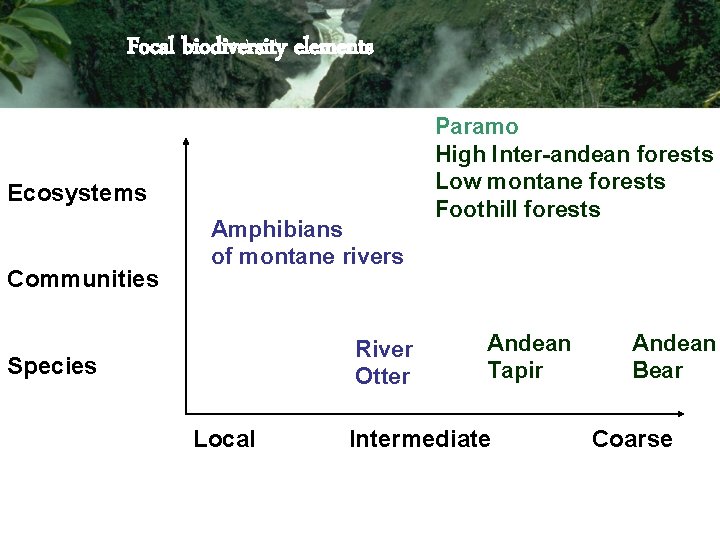
Focal biodiversity elements Ecosystems Communities Amphibians of montane rivers River Otter Species Local Paramo High Inter-andean forests Low montane forests Foothill forests Andean Tapir Intermediate Andean Bear Coarse
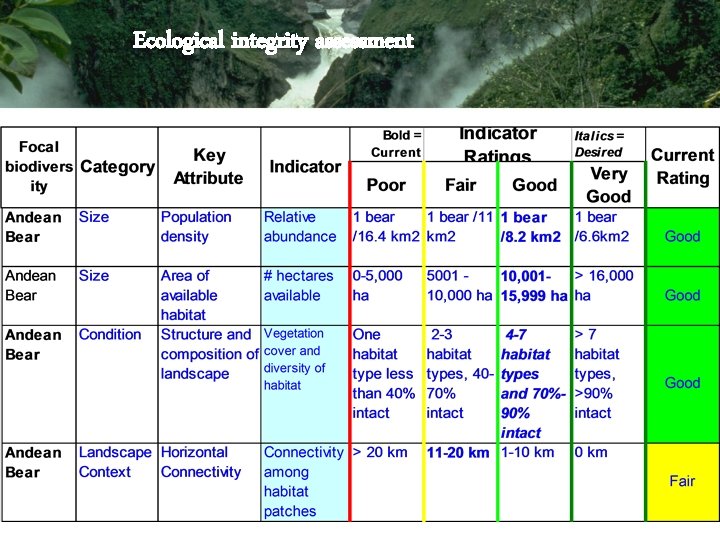
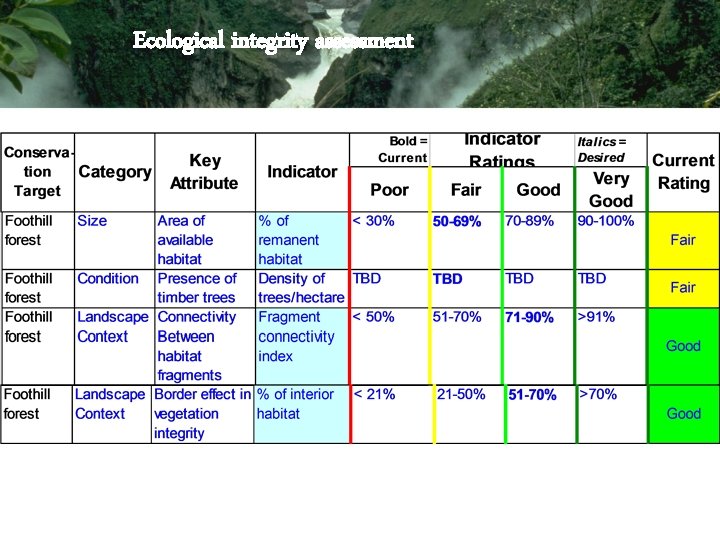
Ecological integrity assessment Why it is relevant for the CBR? Size and configuration defined by biodiversity elements Ability to maintain healthy and viable biodiversity elements on the long-term Identify sustaining ecological processes at different scales needed to conserve the area
Ecological integrity assessment What are the key ecological attributes of focal biodiversity elements? What are their acceptable levels of change? What is the current state of focal biodiversity elements?
Ecological integrity assessment Process Data compilation Expert consultation Workshops
Ecological integrity assessment
Ecological integrity assessment

Ecological integrity assessment
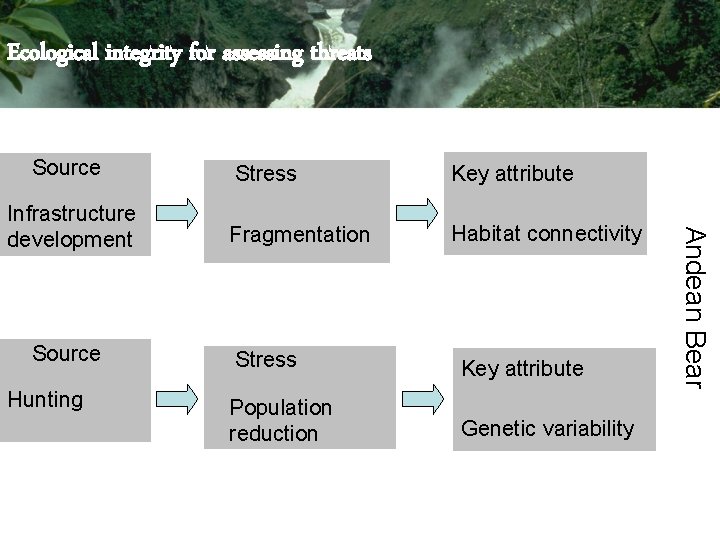
Ecological integrity for assessing threats Source Hunting Key attribute Fragmentation Habitat connectivity Stress Key attribute Population reduction Genetic variability Andean Bear Infrastructure development Stress
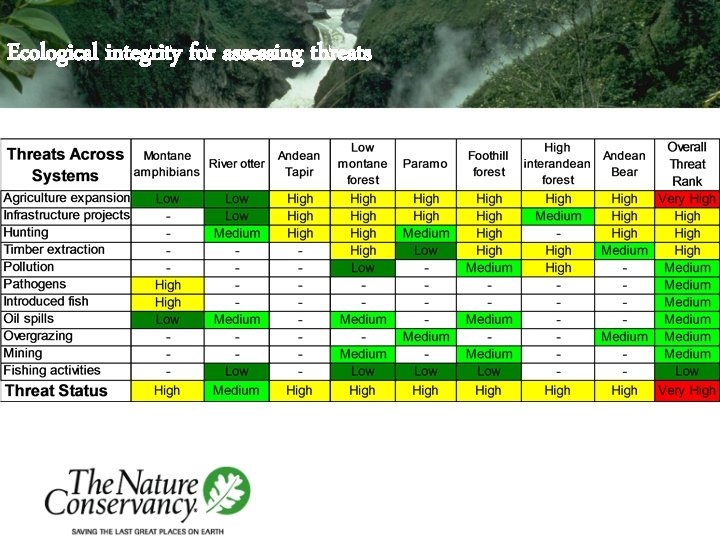
Ecological integrity for assessing threats
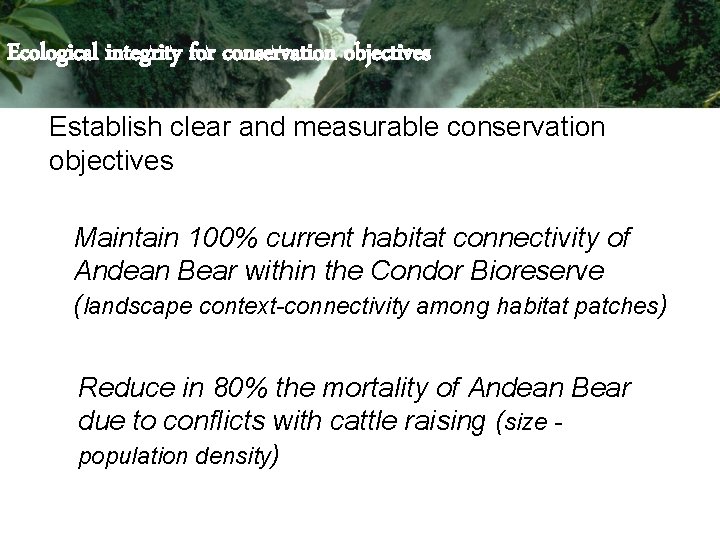
Ecological integrity for conservation objectives Establish clear and measurable conservation objectives Maintain 100% current habitat connectivity of Andean Bear within the Condor Bioreserve (landscape context-connectivity among habitat patches) Reduce in 80% the mortality of Andean Bear due to conflicts with cattle raising (size population density)
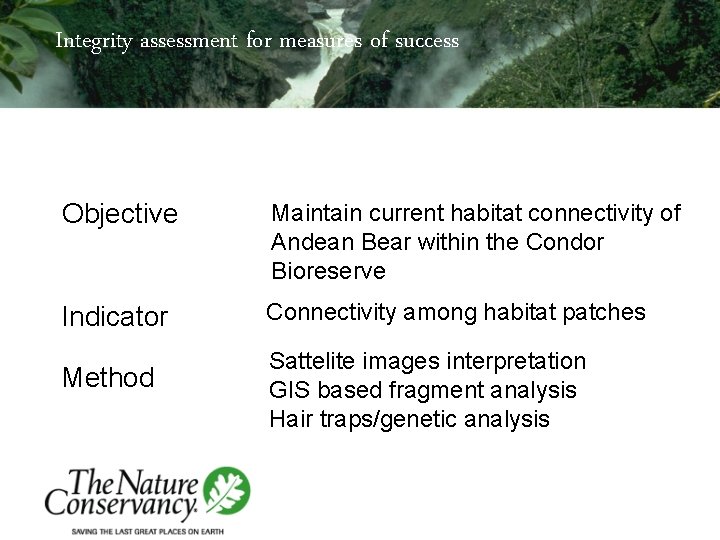
Integrity assessment for measures of success Objective Maintain current habitat connectivity of Andean Bear within the Condor Bioreserve Indicator Connectivity among habitat patches Method Sattelite images interpretation GIS based fragment analysis Hair traps/genetic analysis
Integrity assessment for measures of success Objective Reduce in 80% the mortality of Andean Bear due to conflicts with cattle raising Indicator Relative abundance Frequency of bears killed Method Population studies using hair traps and DNA analysis Number of bears killed

Lessons learned Scale based on biodiversity elements (space-time) Reduction on subjectivity Science guides management and decision making
Lessons learned Identify data gaps and prioritize research needs Data needs (eg. thresholds, baseline) State and document assumptions Keep an iterative process
Thank you!
- Slides: 21