
ECOLOGICAL HAZARDS OF BOTH NATURAL AND ANTHROPOGENIC HUMAN
ECOLOGICAL HAZARDS • OF BOTH NATURAL AND ANTHROPOGENIC (HUMAN) CAUSES • INCLUDE BIOLOGICAL (TROPICAL DISEASES) AND CHEMICAL (OIL SPILL) HAZARDS
WHAT YOU NEED TO KNOW ABOUT ECOLOGICAL HAZARDS - EBOLA • Nature and Causes • Spatial and Temporal Distribution (LEDC and MEDC comparison). How do biophysical (environmental) and human processes explain the spatial scale and patterns? Spatial interactions/associations. • Relationship (associations) - frequency, magnitude, duration, severity and probability of the ecological hazard. Factors that influence each e. g how human actions intensify the impacts. • Nature of the impact– Social, Economic and Environmental impacts • Factors (physical and human) that influence the level of risk i. e. increase level of vulnerability and level of loss e. g. health care, nutrition, education and LEDC vs, MEDC characterisics • Risk analysis for MEDC and LEDC (hazard matrix). Which context is more or less likely to deal with the impact and why? Factors that impact on the intensity and probability of the hazards.
KEY TERMS • Pandemic - A pandemic is a global disease outbreak (HIV/AIDS). Larger scale/more people than an epidemic. • Epidemic - An epidemic occurs when an infectious disease spreads rapidly to many people. (SARS outbreak in 2003 – 800 people dies) • Biophysical processes – atmospheric, biologic, chemical and physical processes that take place in the earth's four spheres. They can be broken into fluvial processes, marine processes cloud forming processes etc. • Mitigation – taking action to reduce or minimise the impact of natural or ecological hazards • Adaptation – the modification or changes in response to the natural or ecological hazard • Infrastructure – the physical, human and organisational facilites that a society requires in order to operate e. g buildings, staff and systems of the City of Rockingham or Rockingham Hospital
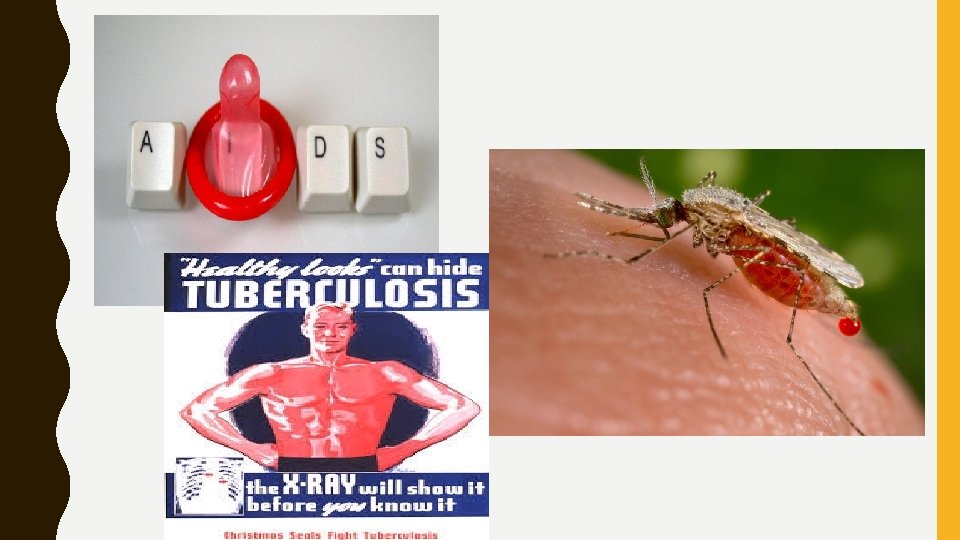
BIOLOGICAL HAZARDS • CAUSED BY THE SPREAD OF BACTERIAL OR VIRAL ORGANISMS FROM PLANTS AND ANIMALS • E. G. TROPICAL DISEASES WHICH ARE COMMON AND UNIQUE TO TROPICAL AND EQUATORIAL REGIONS
DENGUE FEVER, TUBERCULOSIS OR AIDS In your group investigate one of the above ecological hazards and note the following aspects. Be prepared to share your information in an expert group activity. • Characteristics • Causes • Location • Describe and account for the spatial distribution. Website option - www. who. int/topics/tropical_diseases/en/_
HOMEWORK LIST KEY STAKEHOLDERS (MEDC/LEDC) DOT POINT THEIR VIEWPOINTS AND/OR THE WAYS THEY SUPPORT OR HELP TO REDUCE THE LEVEL OF HUMAN VULNERABILITY, OR SUPPORT THOSE IMPACTED.
SPATIAL DISTRIBUTION HOW IS THE HAZARD SPREAD OUT ACROSS A REGION OR GLOBALLY? WHY?
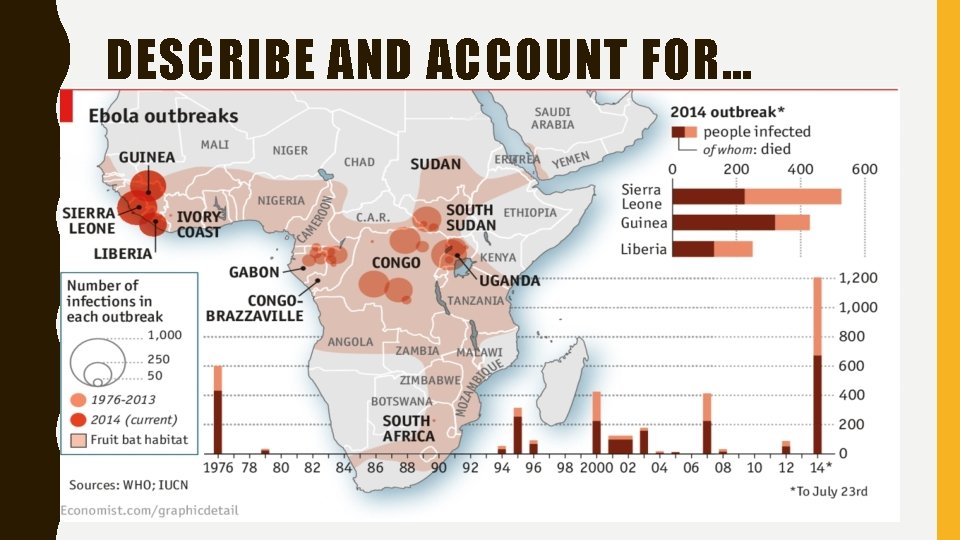
DESCRIBE AND ACCOUNT FOR…
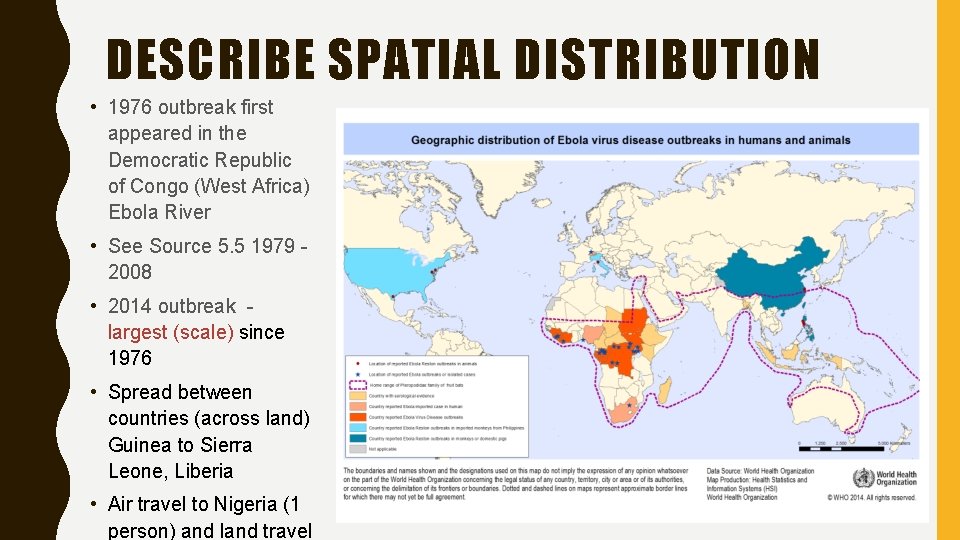
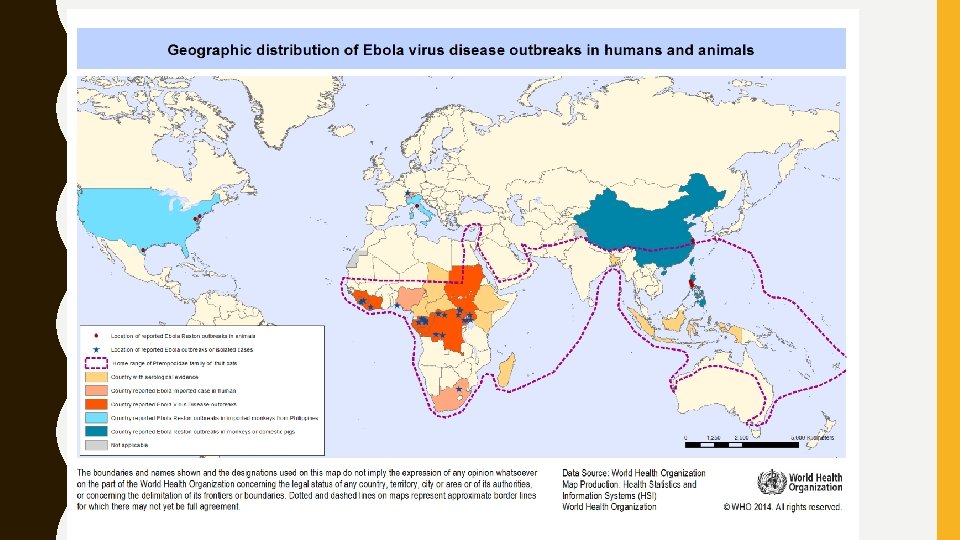
DESCRIBE SPATIAL DISTRIBUTION • 1976 outbreak first appeared in the Democratic Republic of Congo (West Africa) Ebola River • See Source 5. 5 1979 2008 • 2014 outbreak largest (scale) since 1976 • Spread between countries (across land) Guinea to Sierra Leone, Liberia • Air travel to Nigeria (1 person) and land travel
ACCOUNT FOR THE SPATIAL DISTRIBUTION ( MAGNITUDE, SCALE AND FREQUENCY) Sub-sahara Africa • Inter-Tropical Convergence Zone (effects weather patterns/rain clouds) • Heavy rainfall for two seasons • Congo basin for major rivers (low lying region Congo to Zaire) • Run off accounts for constant moisture/tropical rainforest ecosystems and disease • East of the basin is a rift valley/ lakes (Lake Victoria) –habitats for vectors Movement of people Climate change Trade Adaptation of vector Higher Risk – LEDC characteristics
INCREASED RISK (MAGNITUDE, SCALE AND FREQUENCY) OR LIMIT RISK- WHY? LDC's in tropics – all increase risk MEDCs • Human factors – economic development, conflict LEDC • Limit - Greater capacity to access characterisics pharmaceutical goods and services • People living in rural communities (stakeholder), values • Inrease - Climate change and viewpoints act against key seeking assistance. Australia Suspicious, cultural practices etc • Vulnerable due to travel, Geographic • Densely populated and uncontrolled slums in urban position areas • Limited due to strong public health • Lack of border controls (regulations set by governments services, quarantine regulations, (stakeholder) – isolation and movement control of high standard of treatment if infected. population required because of the nature of the disease • Limited - Early • Reliance on hygiene control – because of the expense of identification/screening processes pharmaceuticals • Limited - Condition of the • Less capacity to manage risk $100/year/person health environment (linked to health of
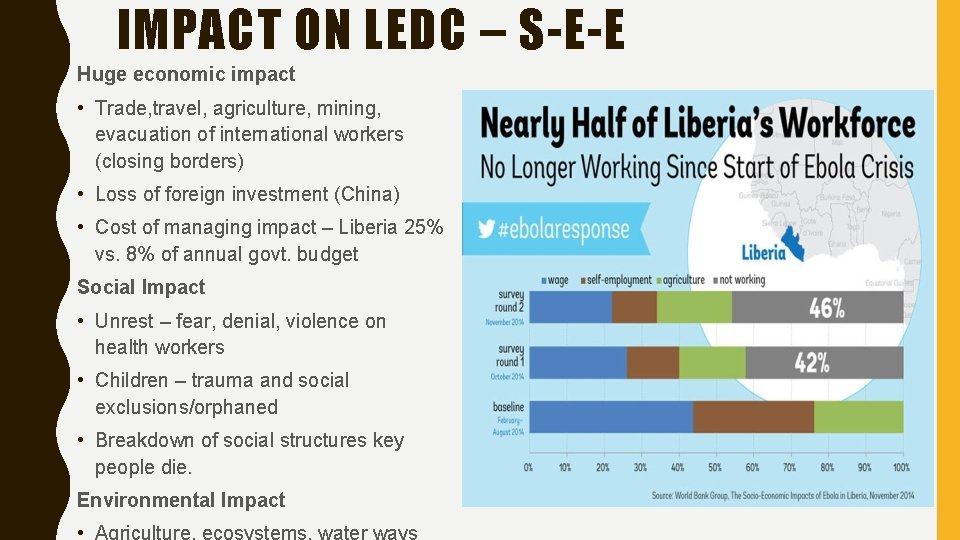
IMPACT ON LEDC – S-E-E Huge economic impact • Trade, travel, agriculture, mining, evacuation of international workers (closing borders) • Loss of foreign investment (China) • Cost of managing impact – Liberia 25% vs. 8% of annual govt. budget Social Impact • Unrest – fear, denial, violence on health workers • Children – trauma and social exclusions/orphaned • Breakdown of social structures key people die. Environmental Impact
STAKEHOLDERS (VALUES, VIEWPOINTS) – THOSE IMPACTED OR THOSE INVOLVED IN SUPPORT Non - Government Organisations (NGOs) v Bill and Melinda Gates Foundation – donate pharmaceuticals v. Community level – local aid workers and volunteers focusing oin reducing risk and impacts v. Local residents of impacted countries have a range of values and viewpoints depending on cultural practices, level of education and rural v. Medecins Sans Frontieres (doctors without borders) for medical humanitarian aid Government Organisations (GOs) v United Nations – UNICEF flew 250 tonnes of supplies (hygiene kits, treatment for diarrhoea, plastic sheeting and protection clothing) to Liberia. Educate locals on hygiene. Supplies water treatment plants v. World Health Organisation – see WHO website v. Australian Agency for International Development (AUSAID) – medical and emergency services as part of contribution to LEDC's v Australian Government – foreign aid but less generous than other countries in OECD (16 out of 23), generally Australians views are to support but not to increase foreign aid. But high individual
• LIBERIA is EBOLA free from TUESDAY • There are two vaccinations ready for trials but there isn't enough people with Ebola in the world to run the trials • Lessons have been learnt says W. H. O. Earlier declaration as a global health concern would have prevented the level of spatial distribution and impact
- Slides: 16