
Ecological Footprint and Biocapacity Basic Equations May 23
Ecological Footprint and Biocapacity: Basic Equations May 23 -25, 2018 David Lin, Ph. D Director of Research Global Footprint Network

What is a Footprint? F=? P(t) A footprint can be production Example: Production of CO 2 1 tonne CO 2
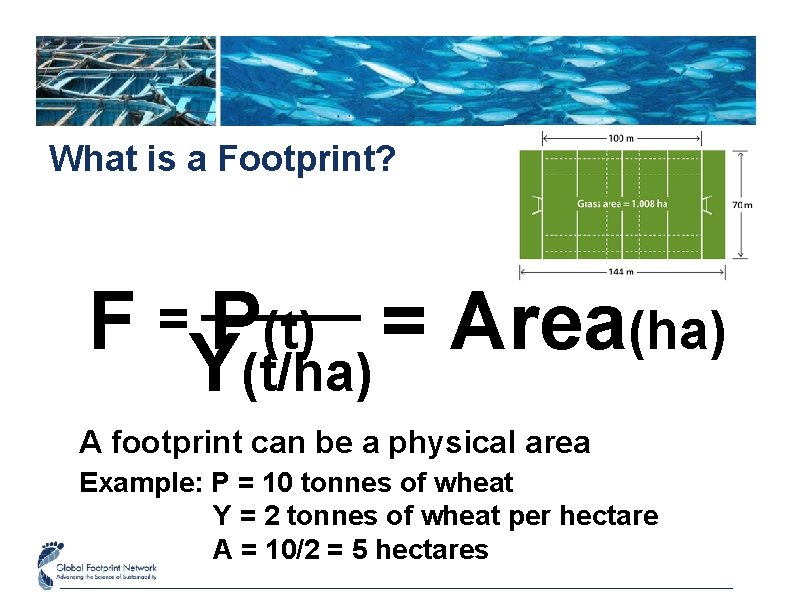
What is a Footprint? F = P(t) = Area(ha) Y(t/ha) A footprint can be a physical area Example: P = 10 tonnes of wheat Y = 2 tonnes of wheat per hectare A = 10/2 = 5 hectares
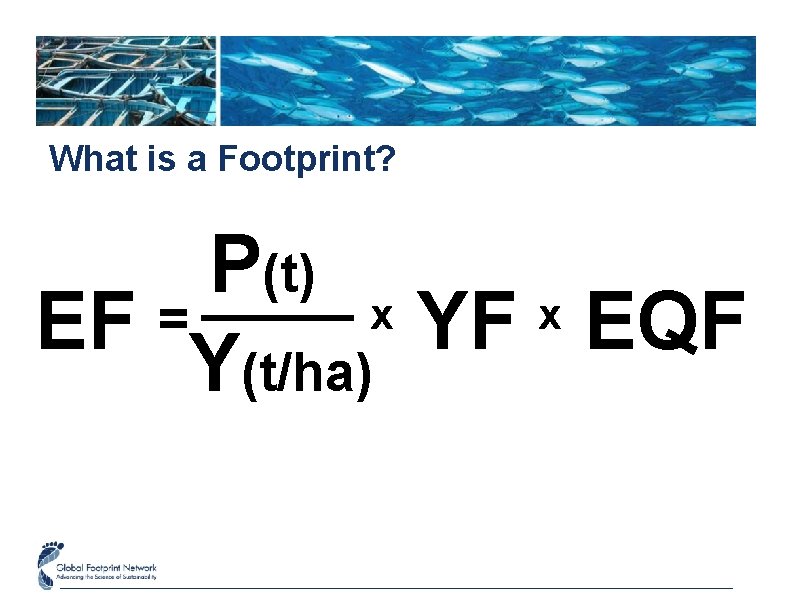
What is a Footprint? P(t) x x = EF YF EQF Y(t/ha)
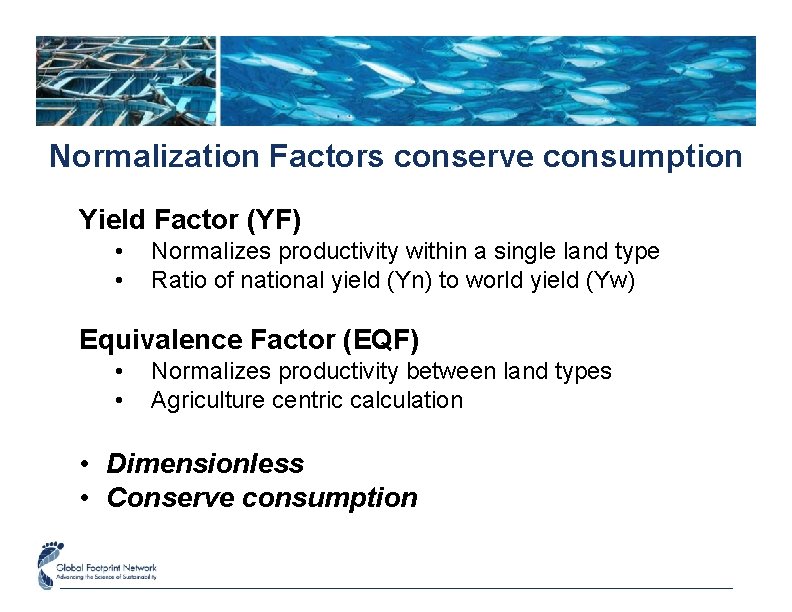
Normalization Factors conserve consumption Yield Factor (YF) • • Normalizes productivity within a single land type Ratio of national yield (Yn) to world yield (Yw) Equivalence Factor (EQF) • • Normalizes productivity between land types Agriculture centric calculation • Dimensionless • Conserve consumption
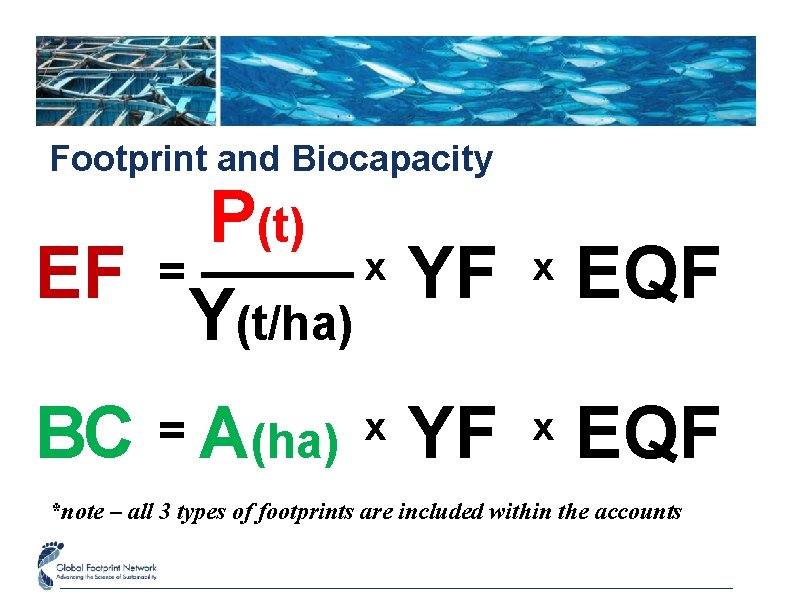
Footprint and Biocapacity P(t) x = EF YF Y(t/ha) x EQF = A(ha) x x EQF BC YF *note – all 3 types of footprints are included within the accounts
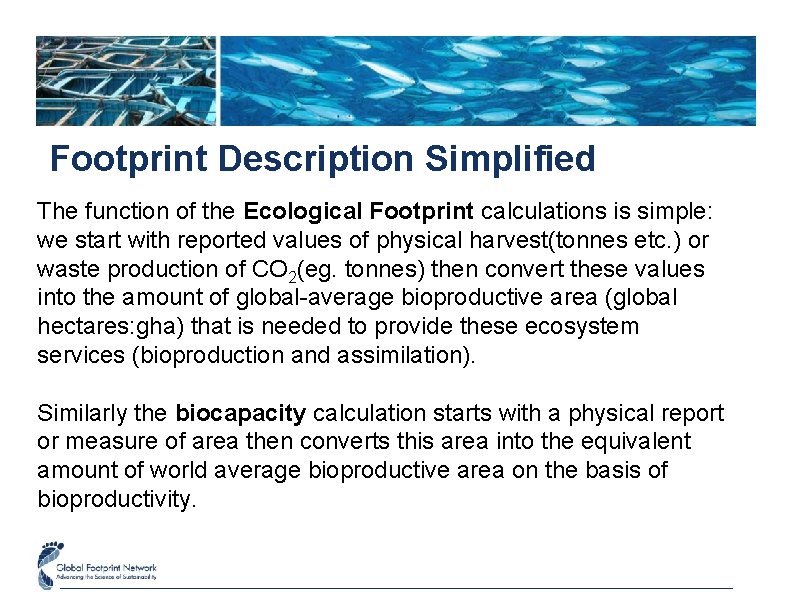
Footprint Description Simplified The function of the Ecological Footprint calculations is simple: we start with reported values of physical harvest(tonnes etc. ) or waste production of CO 2(eg. tonnes) then convert these values into the amount of global-average bioproductive area (global hectares: gha) that is needed to provide these ecosystem services (bioproduction and assimilation). Similarly the biocapacity calculation starts with a physical report or measure of area then converts this area into the equivalent amount of world average bioproductive area on the basis of bioproductivity.

Footprint Formula Simplified EF = P Yn x YF x EQF P x EF = Yn EQF YF = Yw Yw
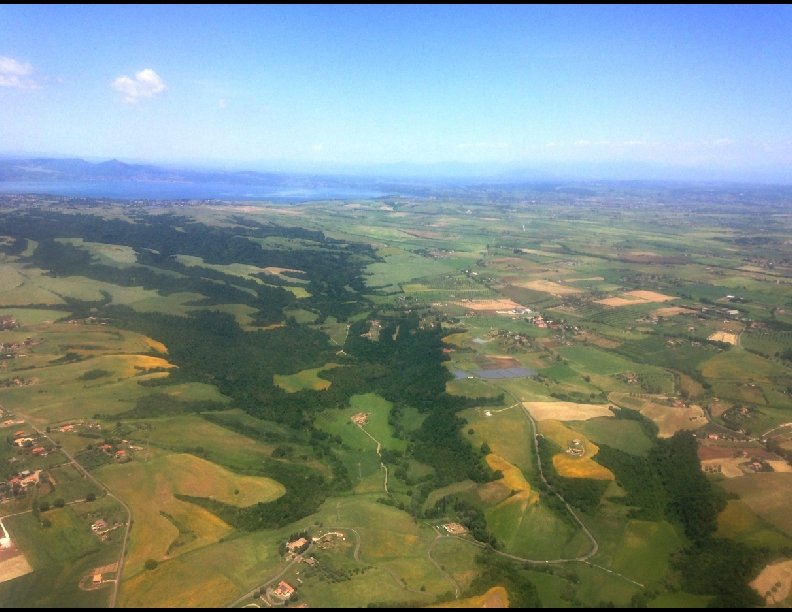
The Cropland Footprint Total cropland area required to produce crops consumed by people

Thank you! Contact info David. Lin@Footprintnetwork. org
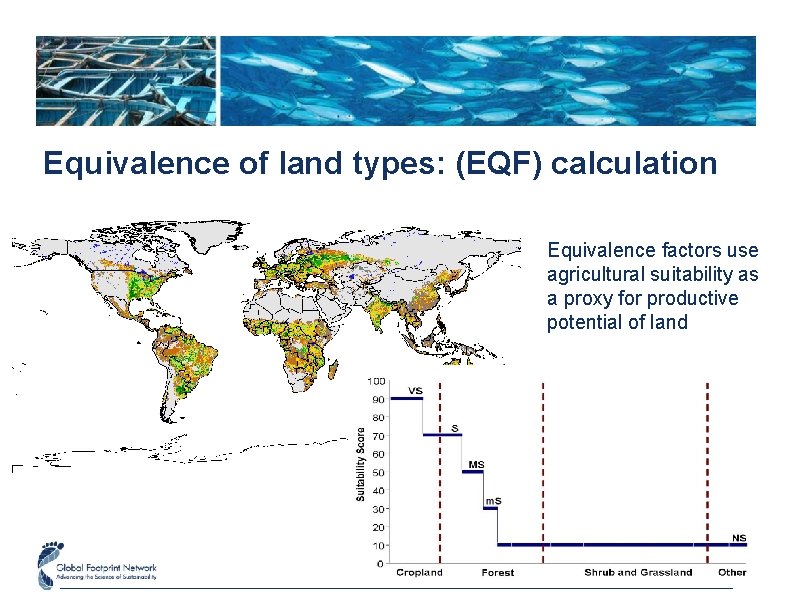
Equivalence of land types: (EQF) calculation Equivalence factors use agricultural suitability as a proxy for productive potential of land
- Slides: 11