
Eco 101 Chapter 1 notes Definition of economics
- Slides: 17
Eco 101: Chapter 1 notes
Definition of economics n the study of how individuals and societies use limited resources to satisfy unlimited wants.
Fundamental economic problem n n scarcity. individuals and societies must choose among available alternatives.
Economic goods, free goods, and economic bads n n n economic good (scarce good) - the quantity demanded exceeds the quantity supplied at a zero price. free good - the quantity supplied exceeds the quantity demanded at a zero price. economic bad - people are willing to pay to avoid the item
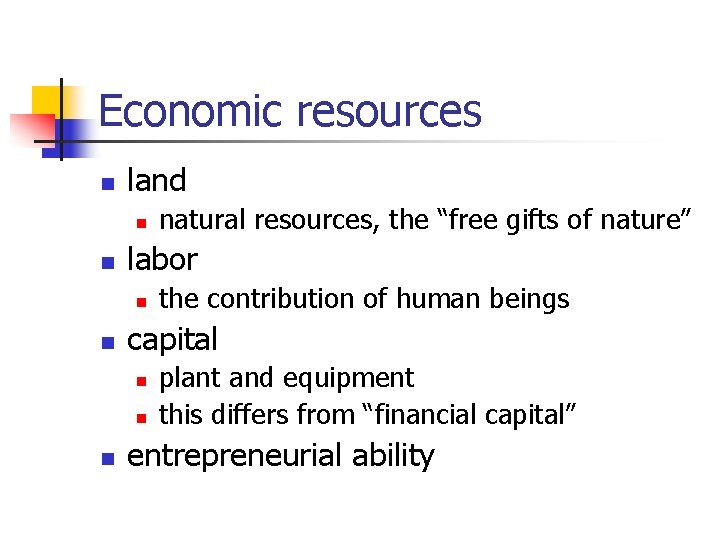
Economic resources n land n n labor n n the contribution of human beings capital n natural resources, the “free gifts of nature” plant and equipment this differs from “financial capital” entrepreneurial ability
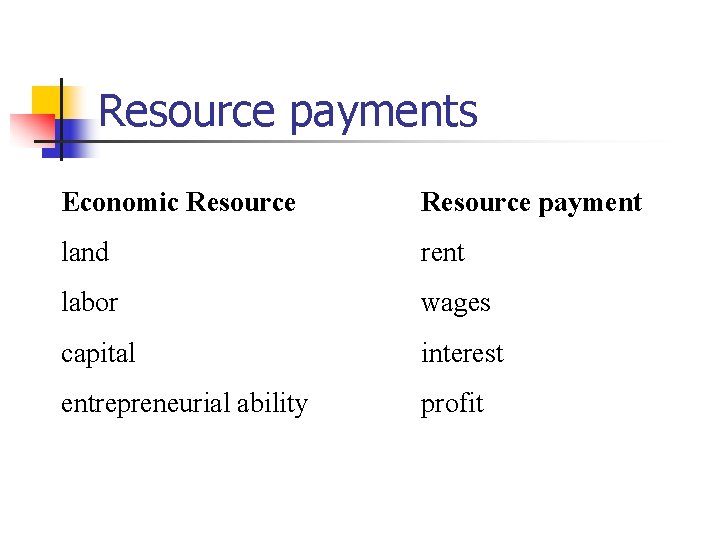
Resource payments Economic Resource payment land rent labor wages capital interest entrepreneurial ability profit
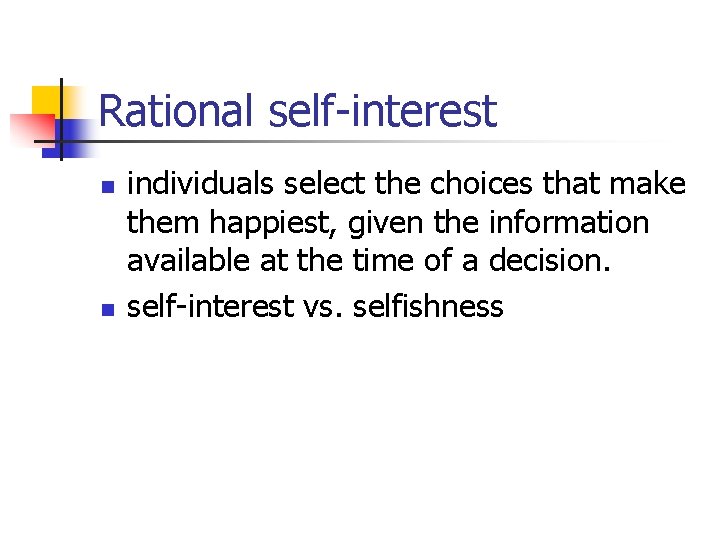
Rational self-interest n n individuals select the choices that make them happiest, given the information available at the time of a decision. self-interest vs. selfishness
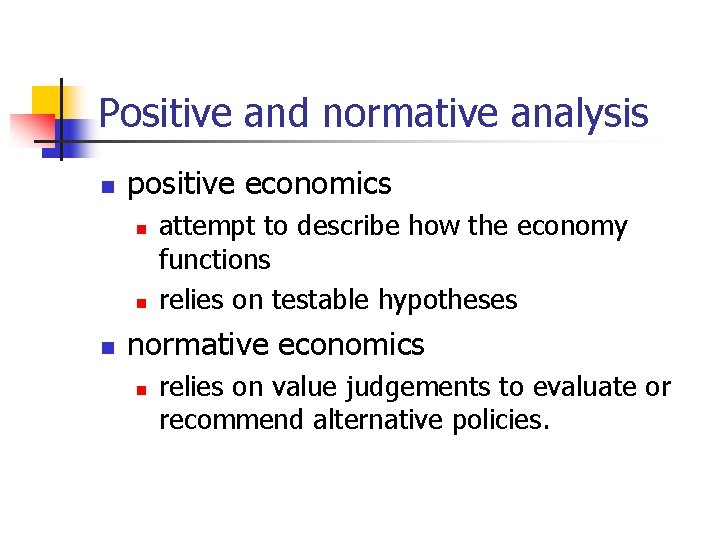
Positive and normative analysis n positive economics n n n attempt to describe how the economy functions relies on testable hypotheses normative economics n relies on value judgements to evaluate or recommend alternative policies.
Economic methodology n scientific method n n observe a phenomenon, make simplifying assumptions and formulate a hypothesis, generate predictions, and test the hypothesis.
Simplifying assumptions n n ceteris paribus – holding everything else constant abstraction in economics n used to simplify reality
Logical fallacies n fallacy of composition n n occurs when it is incorrectly assumed that what is true for each and every individual in isolation is true for an entire group. post hoc, ergo propter hoc fallacy (association as causation) n occurs when one incorrectly assumes that one event is the cause of another because it precedes the other.
Microeconomics vs. macroeconomics n n microeconomics - the study of individual economic agents and individual markets macroeconomics - the study of economic aggregates
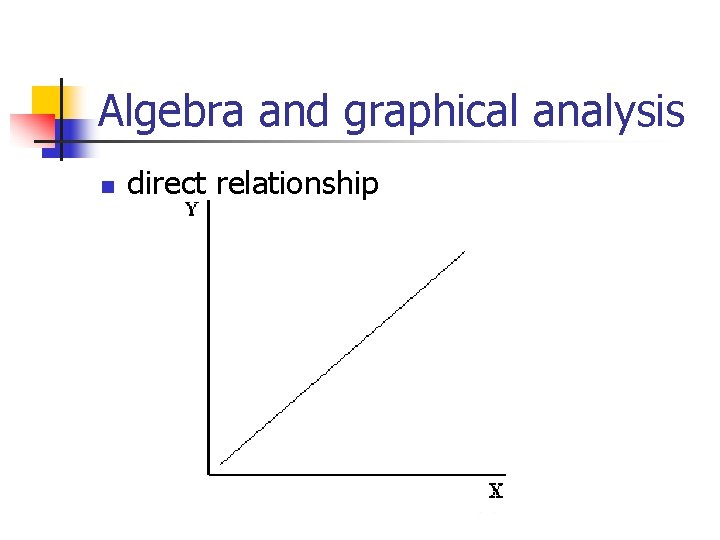
Algebra and graphical analysis n direct relationship
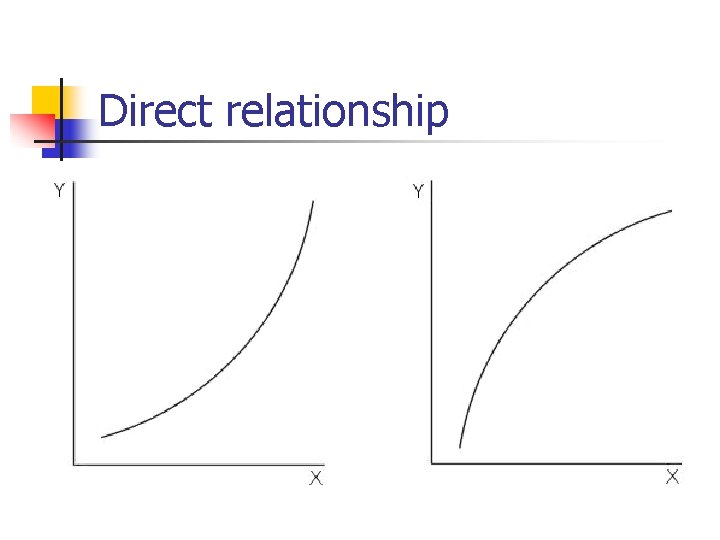
Direct relationship
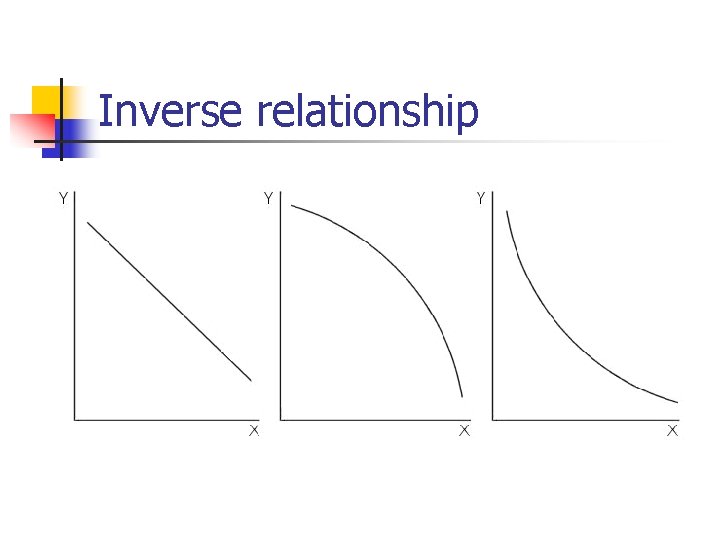
Inverse relationship
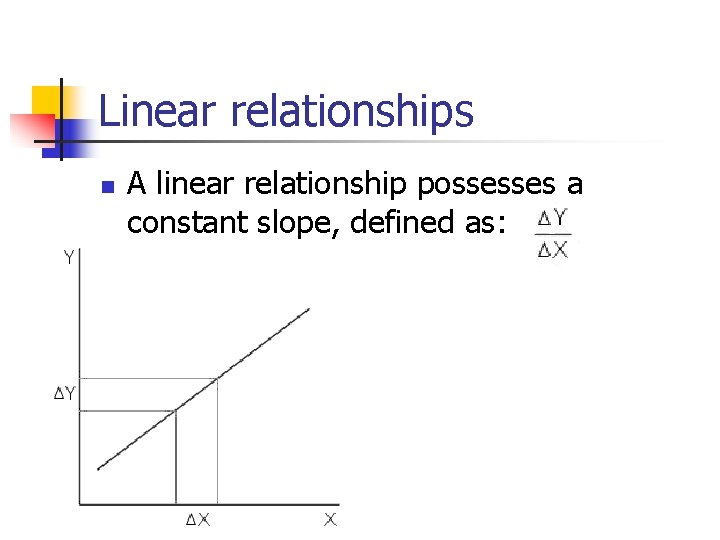
Linear relationships n A linear relationship possesses a constant slope, defined as:
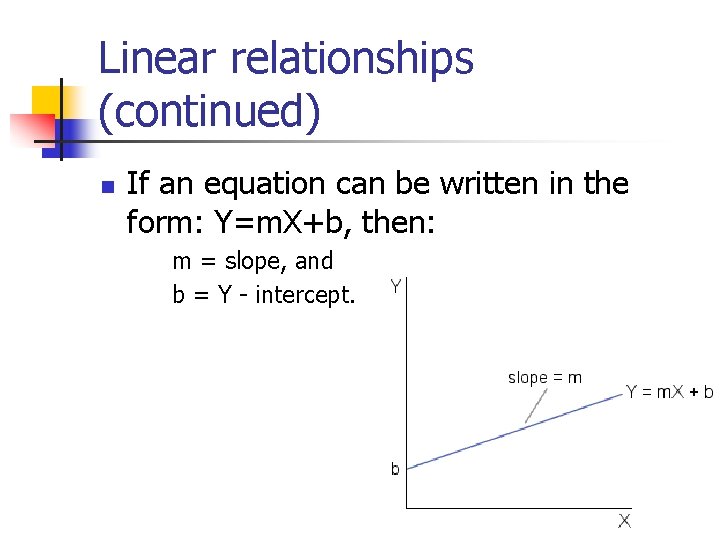
Linear relationships (continued) n If an equation can be written in the form: Y=m. X+b, then: m = slope, and b = Y - intercept.