
Eclectic Approaches to Decision Making Harrison Ch 5
- Slides: 7
Eclectic Approaches to Decision Making Harrison, Ch. 5 Fred Wenstøp
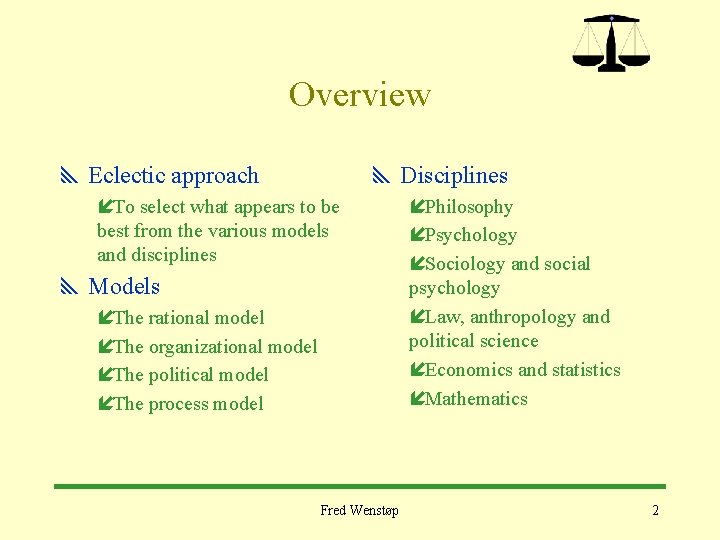
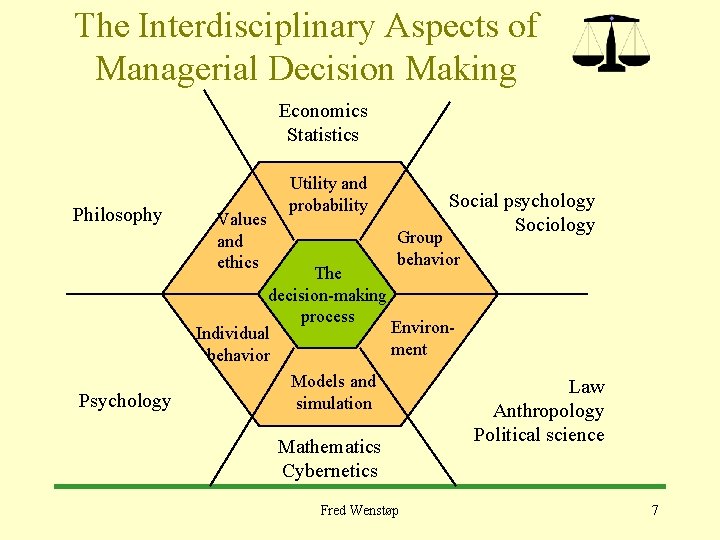
Overview y Eclectic approach y Disciplines íTo select what appears to be best from the various models and disciplines y Models íThe rational model íThe organizational model íThe political model íThe process model Fred Wenstøp íPhilosophy íPsychology íSociology and social psychology íLaw, anthropology and political science íEconomics and statistics íMathematics 2
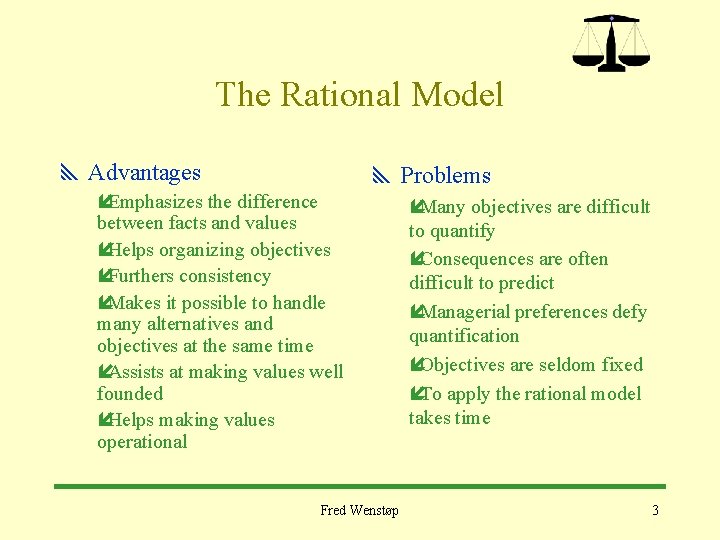
The Rational Model y Advantages íEmphasizes the difference between facts and values íHelps organizing objectives íFurthers consistency íMakes it possible to handle many alternatives and objectives at the same time íAssists at making values well founded íHelps making values operational y Problems Fred Wenstøp íMany objectives are difficult to quantify íConsequences are often difficult to predict íManagerial preferences defy quantification íObjectives are seldom fixed íTo apply the rational model takes time 3
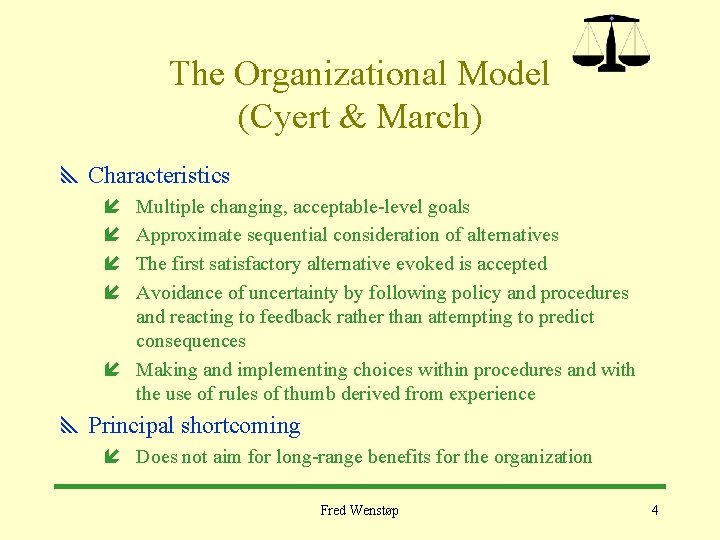
The Organizational Model (Cyert & March) y Characteristics í í Multiple changing, acceptable-level goals Approximate sequential consideration of alternatives The first satisfactory alternative evoked is accepted Avoidance of uncertainty by following policy and procedures and reacting to feedback rather than attempting to predict consequences í Making and implementing choices within procedures and with the use of rules of thumb derived from experience y Principal shortcoming í Does not aim for long-range benefits for the organization Fred Wenstøp 4
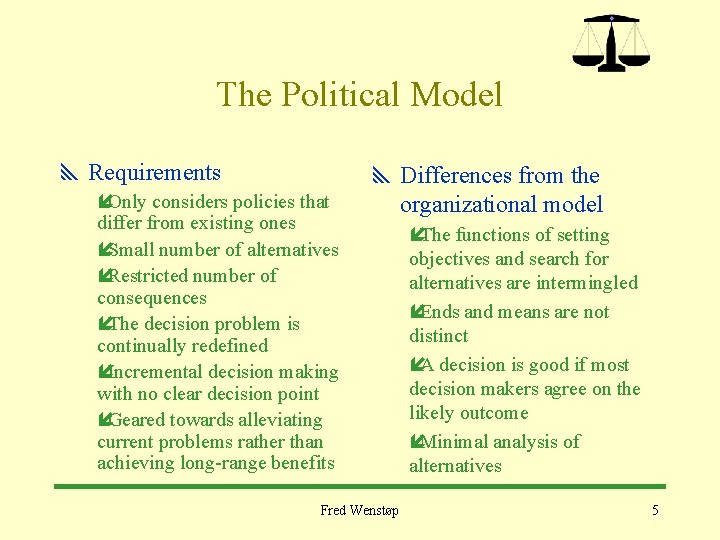
The Political Model y Requirements íOnly considers policies that differ from existing ones íSmall number of alternatives íRestricted number of consequences íThe decision problem is continually redefined íIncremental decision making with no clear decision point íGeared towards alleviating current problems rather than achieving long-range benefits y Differences from the organizational model Fred Wenstøp íThe functions of setting objectives and search for alternatives are intermingled íEnds and means are not distinct íA decision is good if most decision makers agree on the likely outcome íMinimal analysis of alternatives 5
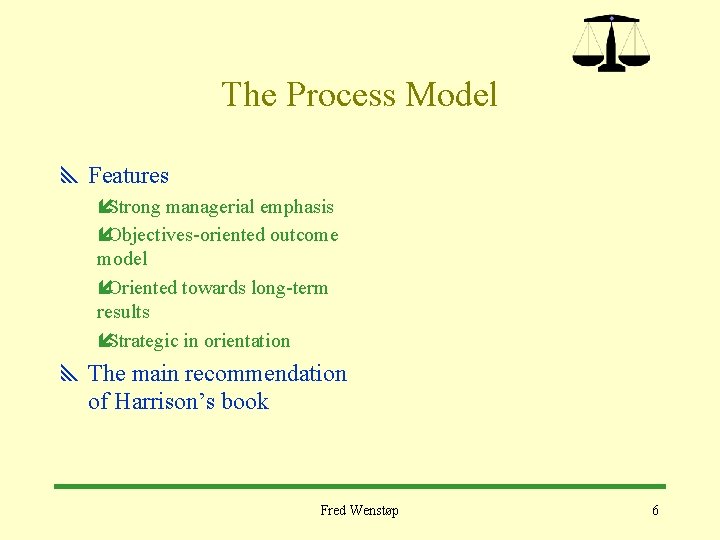
The Process Model y Features íStrong managerial emphasis íObjectives-oriented outcome model íOriented towards long-term results íStrategic in orientation y The main recommendation of Harrison’s book Fred Wenstøp 6
The Interdisciplinary Aspects of Managerial Decision Making Economics Statistics Philosophy Psychology Values and ethics Utility and probability Social psychology Sociology Group behavior The decision-making process Environ. Individual ment behavior Models and simulation Mathematics Cybernetics Fred Wenstøp Law Anthropology Political science 7