
Echoes of Crab Pulsar Giant Radio Pulses Jared
Echoes of Crab Pulsar Giant Radio Pulses Jared Crossley Tim Hankins Jean Eilek 10 February 2005 Special thanks to Chris Jordan of Jodrell Bank Observatory
Talk Outline • • • Introduction to pulsars and the Crab What is known about Crab echoes Our new data Analysis Interpretation Conclusions
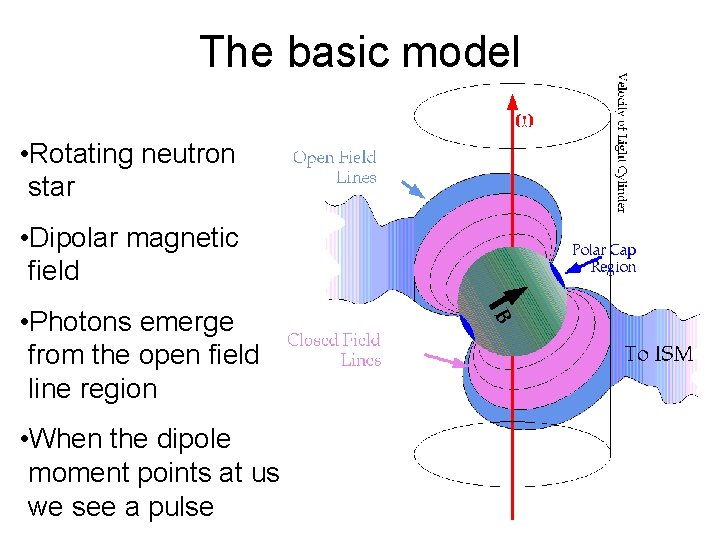
The basic model • Rotating neutron star • Dipolar magnetic field • Photons emerge from the open field line region • When the dipole moment points at us we see a pulse
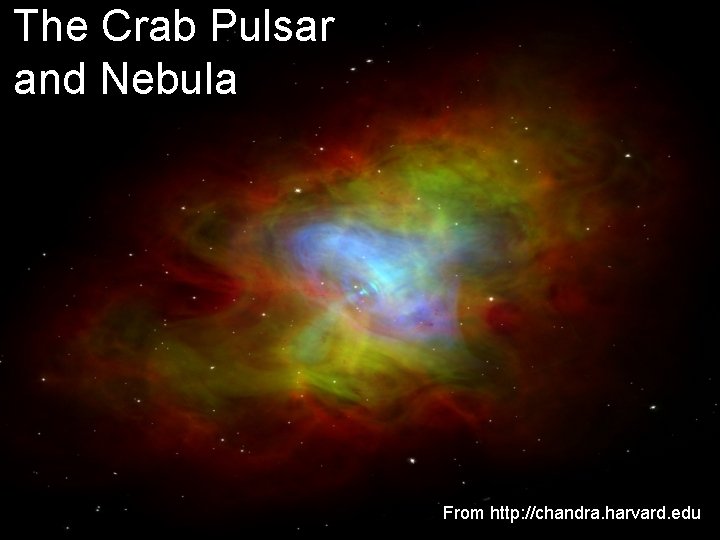
The Crab Pulsar and Nebula From http: //chandra. harvard. edu
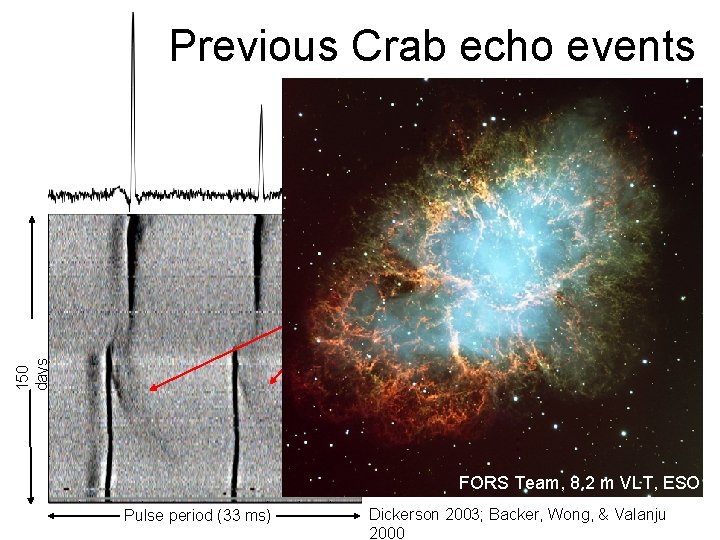
Previous Crab echo events 150 days echo FORS Team, 8. 2 m VLT, ESO Pulse period (33 ms) Dickerson 2003; Backer, Wong, & Valanju 2000
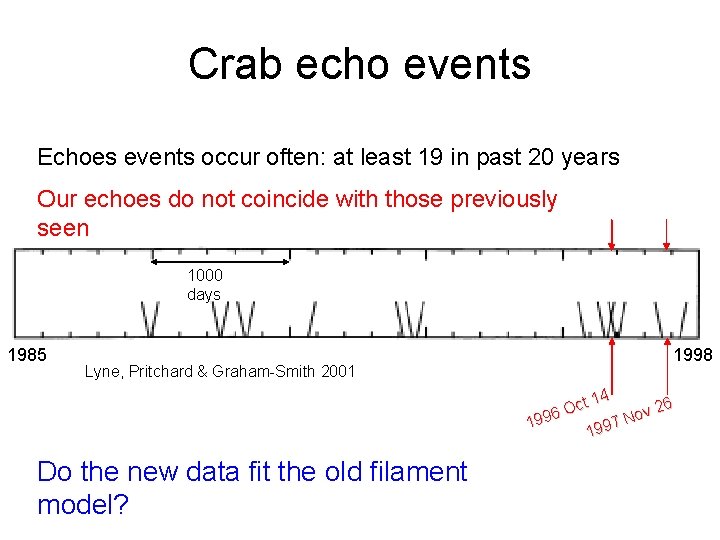
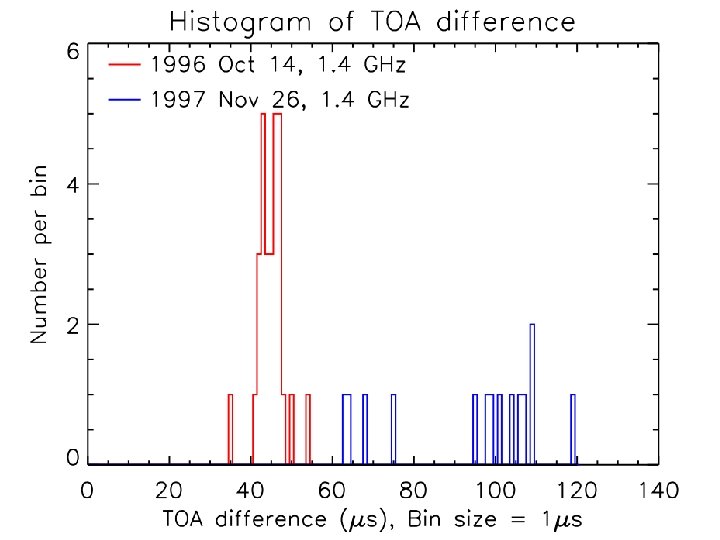
Crab echo events Echoes events occur often: at least 19 in past 20 years Our echoes do not coincide with those previously seen 1000 days 1985 Lyne, Pritchard & Graham-Smith 2001 1998 4 ct 1 26 O v 6 o 9 19 7 N 199 Do the new data fit the old filament model?
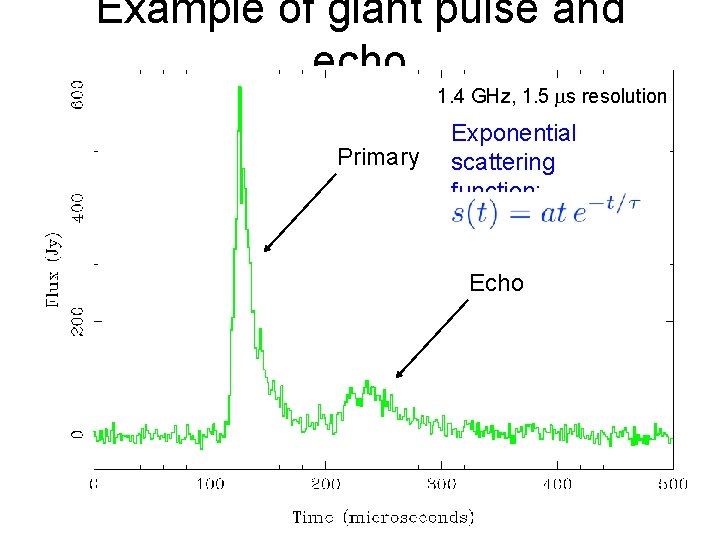
Example of giant pulse and echo 1. 4 GHz, 1. 5 s resolution Primary Exponential scattering function: Echo
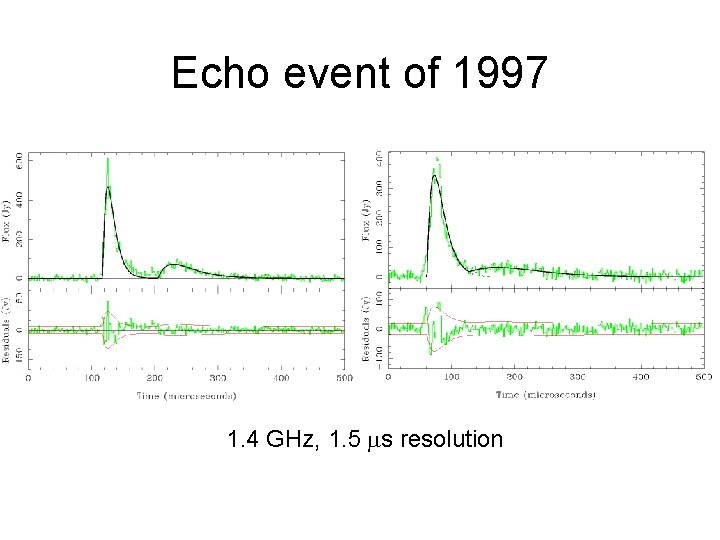
Echo event of 1997 1. 4 GHz, 1. 5 s resolution
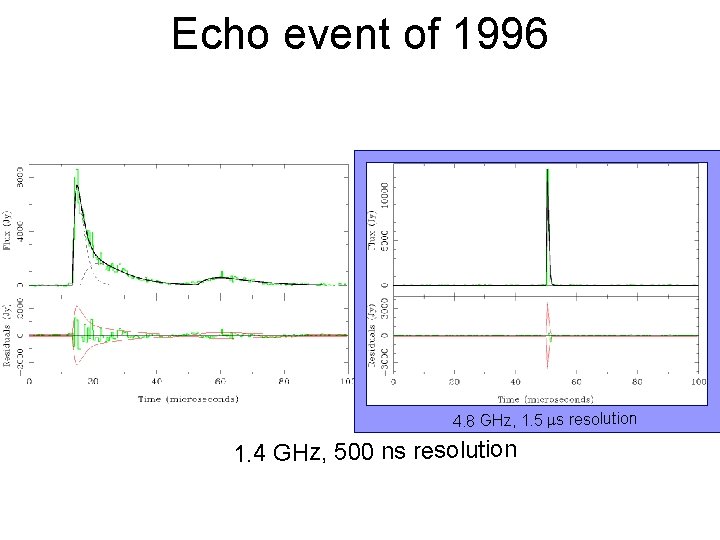
Echo event of 1996 4. 8 GHz, 1. 5 s resolution 1. 4 GHz, 500 ns resolution
Data Summary • Of 38 data sets, only 2 have echoes. • 45 of 77 pulses have clearly visible echoes at 1. 4 GHz. § The other pulses had low signal to noise, complex microstructure, and/or weak or absent echo component • For the 1996 event § Observations 2 days before and after show no echoes. § No echo is visible in simultaneous 4. 8 GHz data • Further analysis was performed using fits of the exponential scattering function…
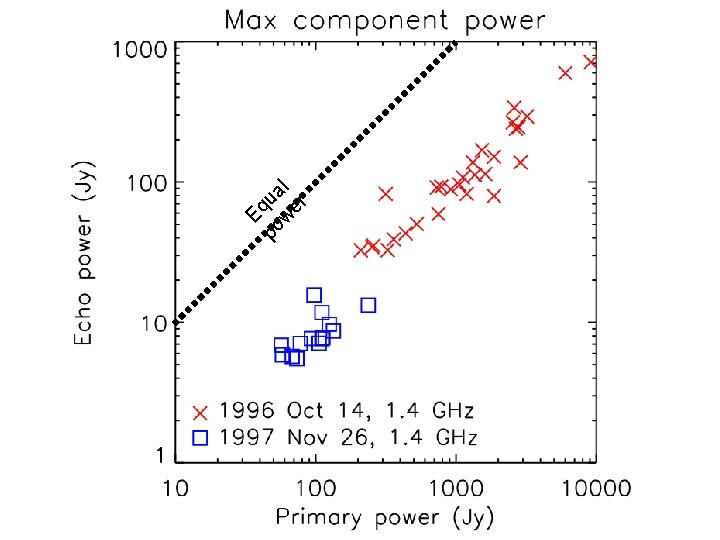
po ua w l er Eq
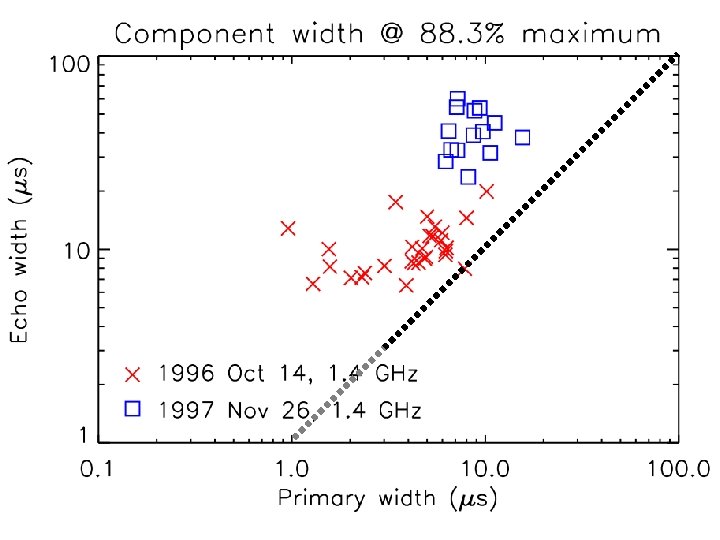
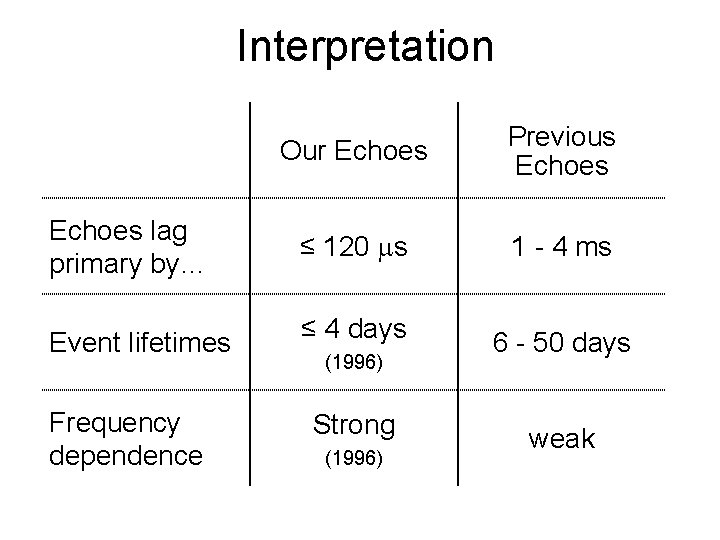
Interpretation Echoes lag primary by… Event lifetimes Frequency dependence Our Echoes Previous Echoes ≤ 120 s 1 - 4 ms ≤ 4 days (1996) Strong (1996) 6 - 50 days weak
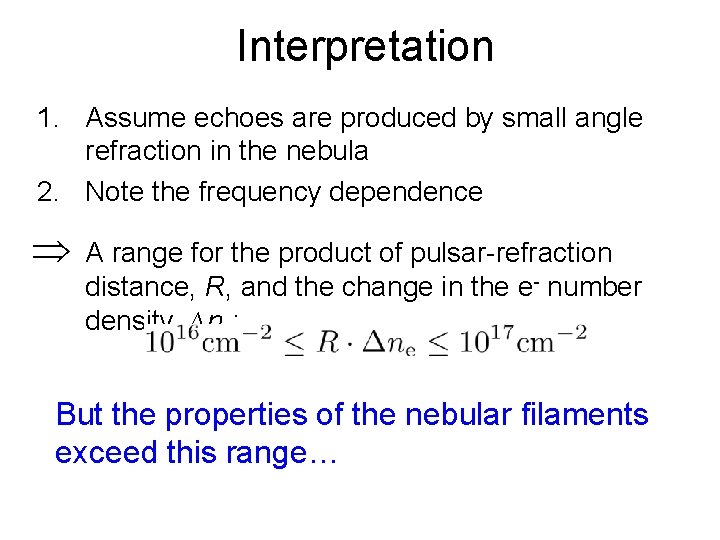
Interpretation 1. Assume echoes are produced by small angle refraction in the nebula 2. Note the frequency dependence Þ A range for the product of pulsar-refraction distance, R, and the change in the e- number density, ∆ne: But the properties of the nebular filaments exceed this range…
Refraction from wisps? We seek a smaller pulsar-refraction distance and a rapidly variable refracting medium… One possibility is the wisp-like region associated with the pulsar wind shock
Conclusions • Crab data from 1996 and 1997 show an echo-like pulse component following the normal component. • This echo emission differs from other echo emission reported previously. • It is improbable that our refraction events occurred in the nebular filaments. We propose refraction may be caused by the wisp-like structures associated with the pulsar wind.
- Slides: 17