
Echocardiography 2 Department of Ultrasound the Second Affiliated





- Slides: 47
Echocardiography 2 Department of Ultrasound, the Second Affiliated Hospital , Chongqing Medical University REN Jianli L. O. G. O
Content Ø Echocardiographic manifestation of pericardial effusion (心包 积液),dilated cardiomyopathy (扩张型心肌病),left atrial myxoma (左房粘液瘤) and atrial septal defect (房间隔缺损) Ø Typical case analysis. www. themegallery. com
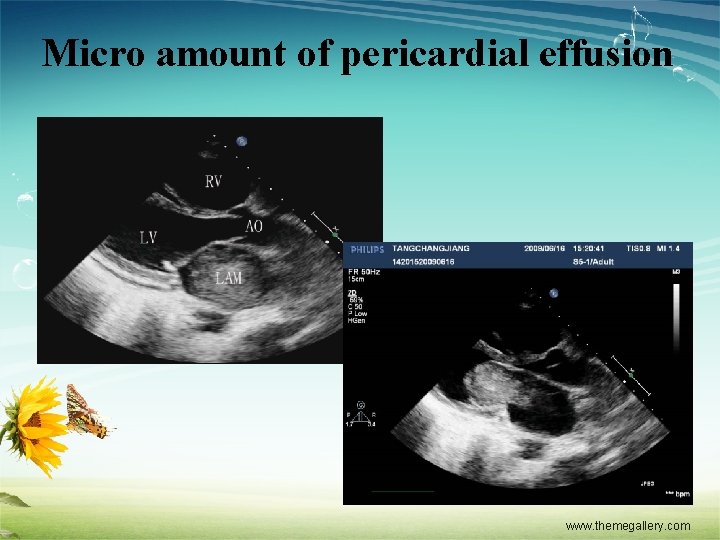
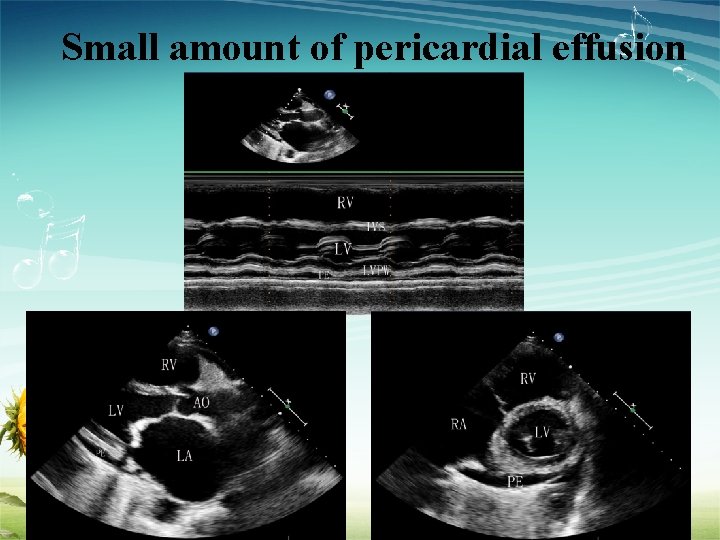
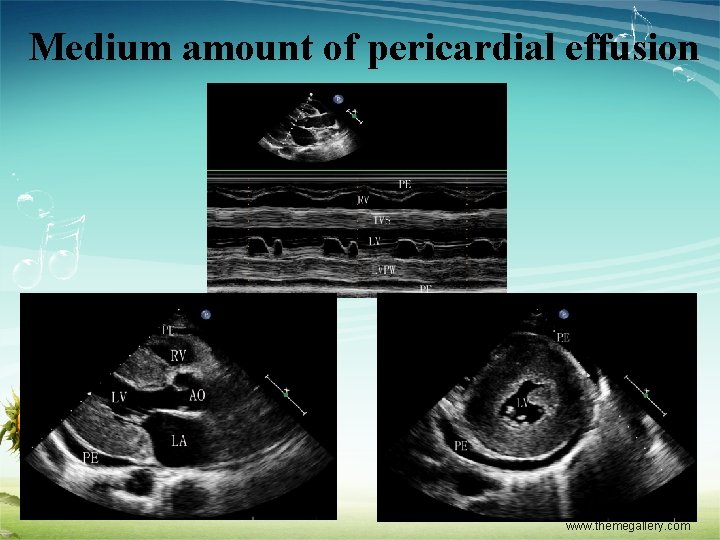
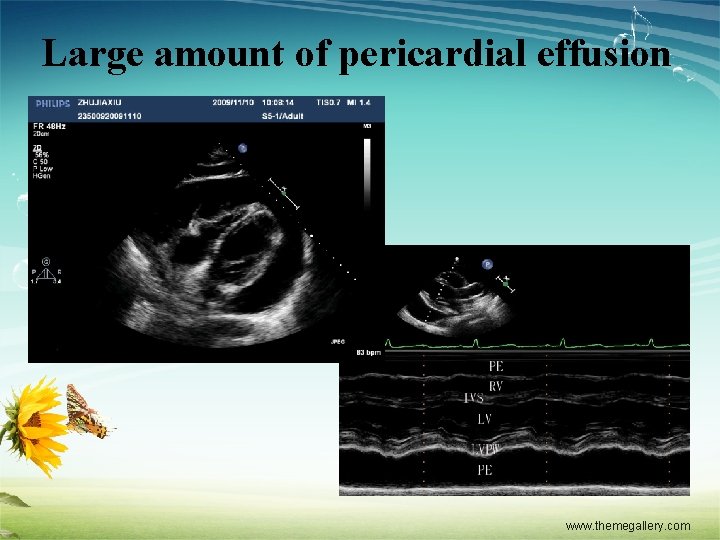
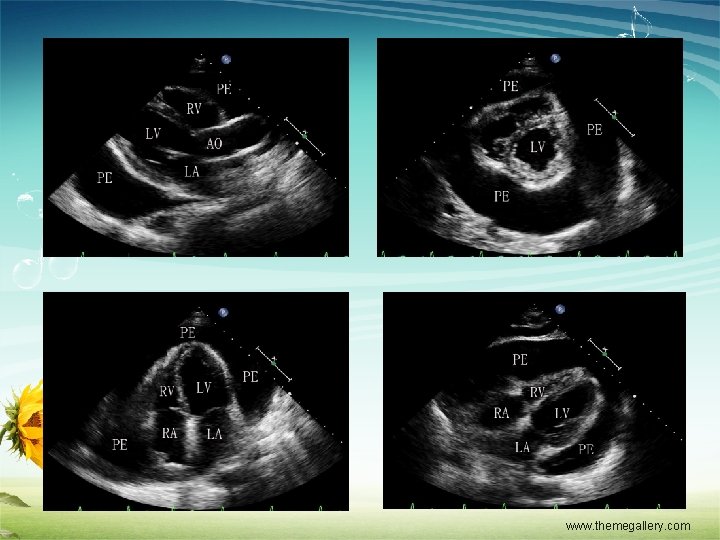
pericardial effusion A small amount (15– 35 m. L) of pericardial fluid separates the two layers and serves a physiological lubricating function. The amount of pericardial fluid is more than 50 m. L, which is called pericardial effusion(PE) According to the region and thickness of pericardial effusion in echocardiography, pericardial effusion were divided into four grades, including micro amount, small amount, medium amount and large www. themegallery. com amount
Micro amount of pericardial effusion www. themegallery. com
Small amount of pericardial effusion www. themegallery. com
Medium amount of pericardial effusion www. themegallery. com
Large amount of pericardial effusion www. themegallery. com
www. themegallery. com
Cardiomyopathy Ø Cardiomyopathy is associated with heart dysfunction and divided into dilated cardiomyopathy (DCM, 扩张型心肌病), hypertrophic cardiomyopathy (HCM, 肥 厚 型 心 肌 病 ), restrictive cardiomyopathy (RCM, 限 制 型 心 肌 病 ), and arrhythmogenic right ventricular cardiomyopathy (ARVC, 致心律失常性右室心肌病). www. themegallery. com
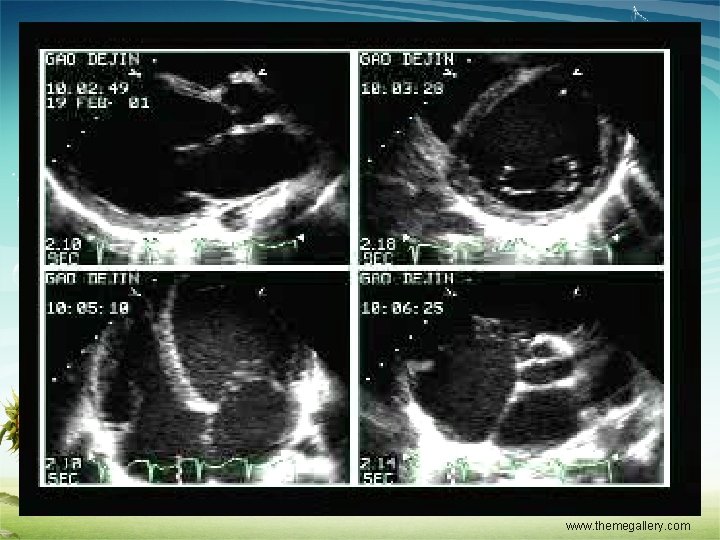
Dilated cardiomyopathy (DCM) Ø DCM is primary myocardial disease, the etiology (病 因) and pathogenesis (发病机制) of DCM is unclear and remains to be elucidated. Echocardiography has important significance in diagnosis of DCM. Ø The characters of DCM are expansion of the heart chambers, generally weakness of wall motion, and reduction of ventricular systolic function. www. themegallery. com
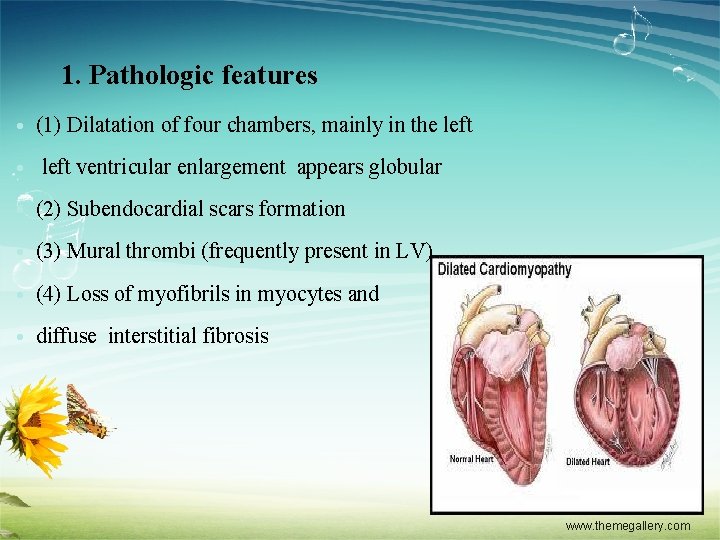
1. Pathologic features • (1) Dilatation of four chambers, mainly in the left • left ventricular enlargement appears globular • (2) Subendocardial scars formation • (3) Mural thrombi (frequently present in LV) • (4) Loss of myofibrils in myocytes and • diffuse interstitial fibrosis www. themegallery. com
2. Clinical manifestation • (1) Congestive heart failure: fatigue, shortness of breath, dilatation of the heart, jugular venous distension, enlarged liver, swelling of the legs and feet • (2) Arrhythmia (心律失常) • (3) Embolism (栓塞) www. themegallery. com
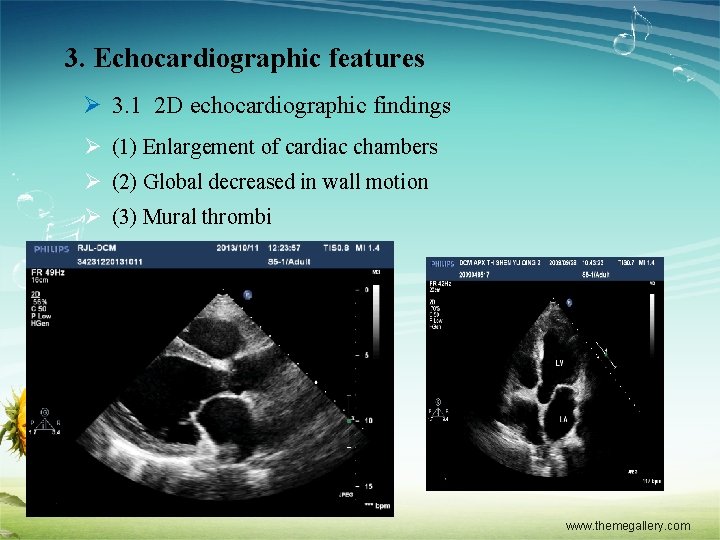
3. Echocardiographic features Ø 3. 1 2 D echocardiographic findings Ø (1) Enlargement of cardiac chambers Ø (2) Global decreased in wall motion Ø (3) Mural thrombi www. themegallery. com
www. themegallery. com
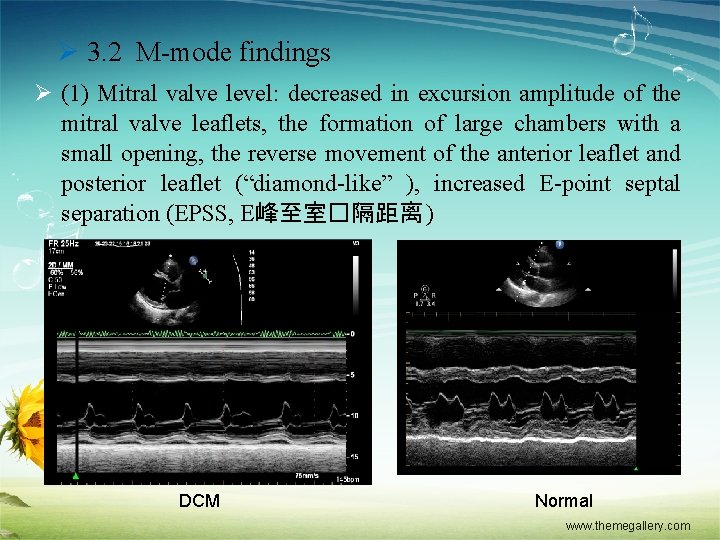
Ø 3. 2 M-mode findings Ø (1) Mitral valve level: decreased in excursion amplitude of the mitral valve leaflets, the formation of large chambers with a small opening, the reverse movement of the anterior leaflet and posterior leaflet (“diamond-like” ), increased E-point septal separation (EPSS, E峰至室�隔距离 ) DCM Normal www. themegallery. com
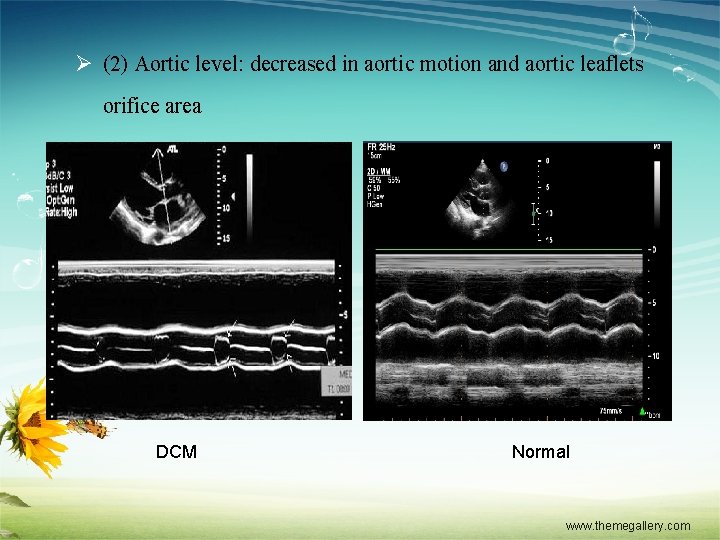
Ø (2) Aortic level: decreased in aortic motion and aortic leaflets orifice area DCM Normal www. themegallery. com
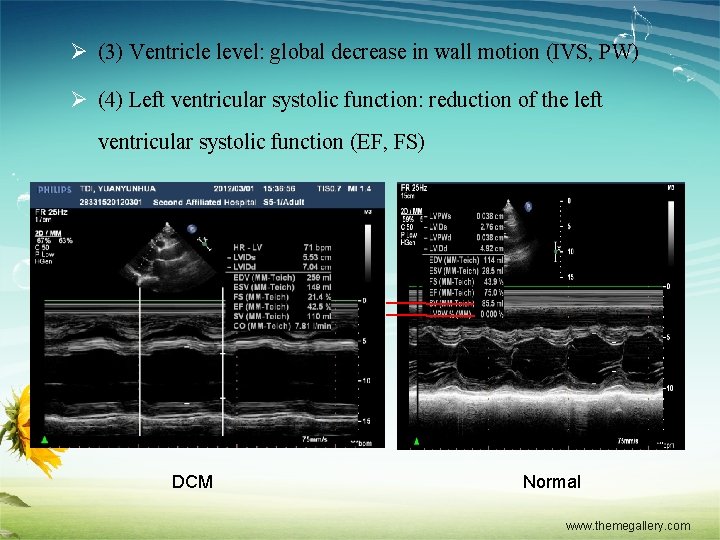
Ø (3) Ventricle level: global decrease in wall motion (IVS, PW) Ø (4) Left ventricular systolic function: reduction of the left ventricular systolic function (EF, FS) DCM Normal www. themegallery. com
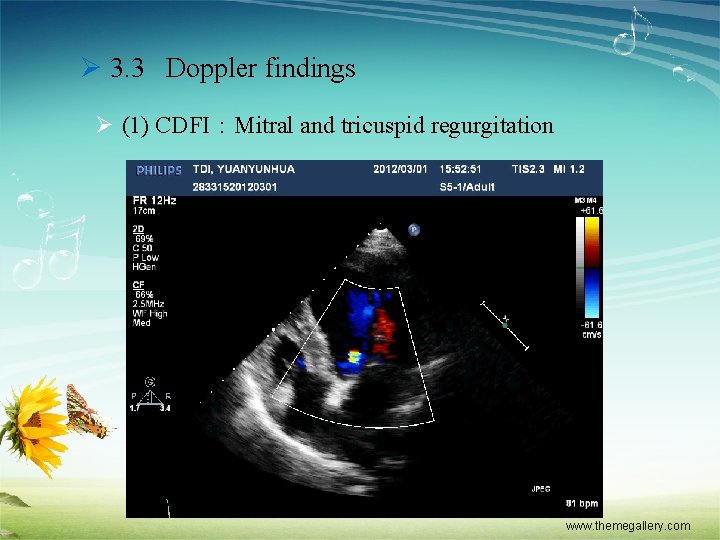
Ø 3. 3 Doppler findings Ø (1) CDFI:Mitral and tricuspid regurgitation www. themegallery. com
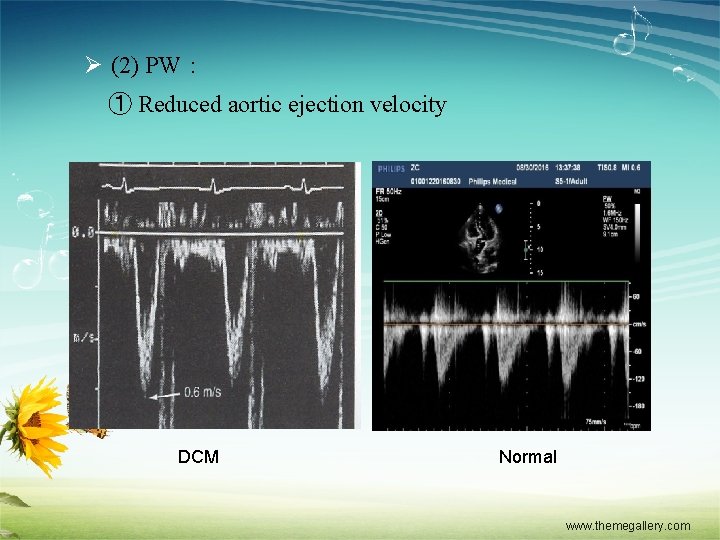
Ø (2) PW: ① Reduced aortic ejection velocity DCM Normal www. themegallery. com
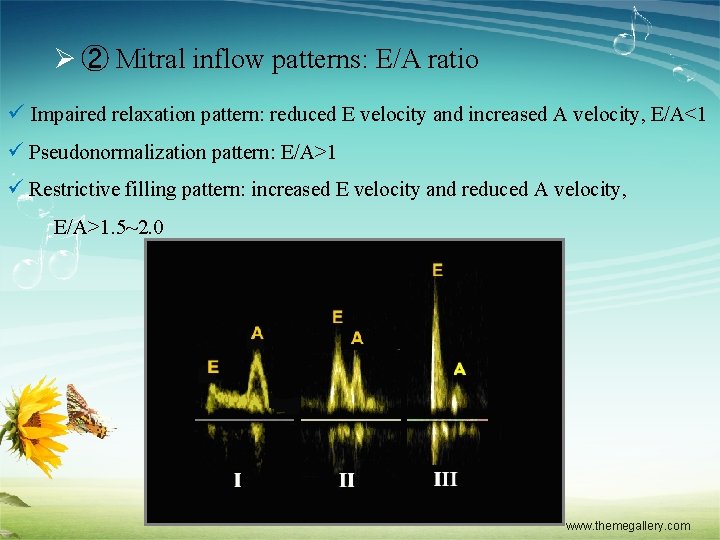
Ø ② Mitral inflow patterns: E/A ratio ü Impaired relaxation pattern: reduced E velocity and increased A velocity, E/A<1 ü Pseudonormalization pattern: E/A>1 ü Restrictive filling pattern: increased E velocity and reduced A velocity, E/A>1. 5~2. 0 www. themegallery. com
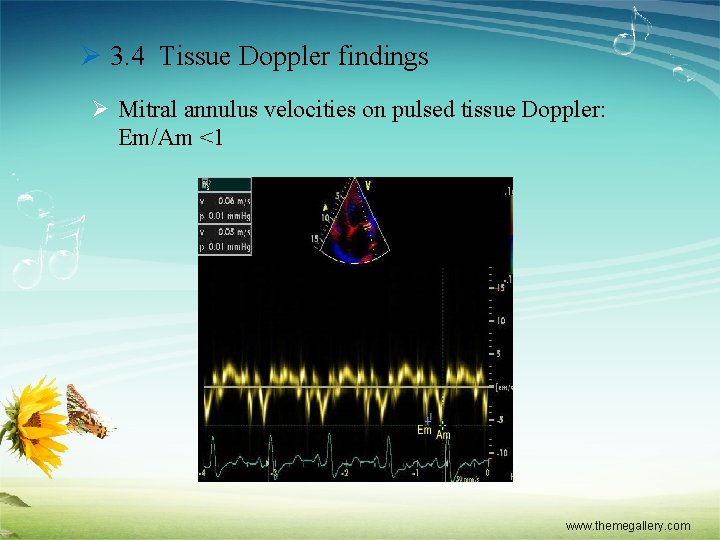
Ø 3. 4 Tissue Doppler findings Ø Mitral annulus velocities on pulsed tissue Doppler: Em/Am <1 www. themegallery. com
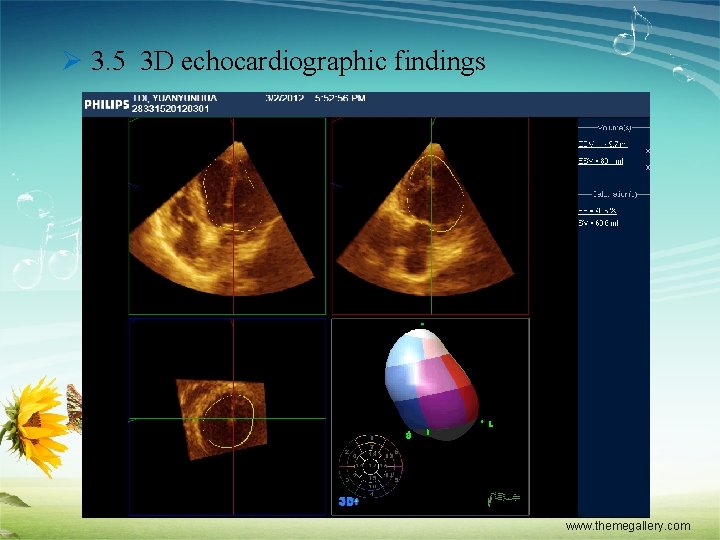
Ø 3. 5 3 D echocardiographic findings www. themegallery. com
Conclusion Ø 2 D and M-mode echocardiographic findings • “Large”大: Enlargement of cardiac chambers • “Small”小: Large chambers with a small opening of mitral valve, EPSS> 10 mm • “Thin”薄: Absolute or relative wall thinning compared with enlarged cardiac chamber • “Weak”弱: Reduction of the left ventricular systolic function, FS<25%, EF<50% • Others: Mural thrombi, multi-valve regurgitation, pulmonary hypertension www. themegallery. com
Cardiac myxoma 1. General Ø (1) Constitute nearly 50% of all primary benign cardiac tumors Ø (2) Approximately 75% of myxomas occur in the left atrium Ø (3) Usually attached by a stalk to the interatrial septum near the fossa ovalis Ø (4) Mostly solitary www. themegallery. com
2. Pathologic features Ø (1) Cardiac myxomas are polypoid, round, or oval. They are gelatinous with a smooth or lobulated surface and usually are white, pale-gray, or brown Ø (2) They are soft and friable Ø (3) On cut section, they often have a variegated appearance by patchy hemorrhage, necrosis, or calcification www. themegallery. com
3. Clinical manifestations of LA myxoma Ø (1) Symptoms of intracardiac flow obstruction Ø (2) Embolization (30% - 40%) Ø (3) Nonspecific constitutional symptoms: fatigue, fever, weight loss, and anemia Ø (4) Increased erythrocyte sedimentation rate ( ESR, 血沉 ) www. themegallery. com
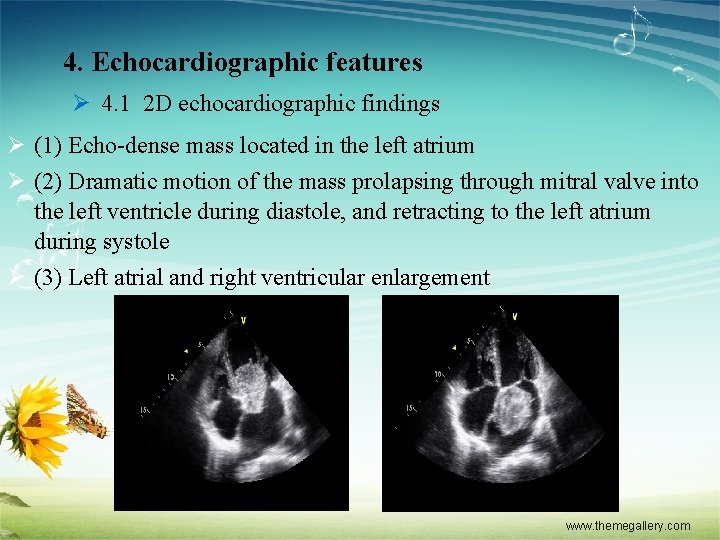
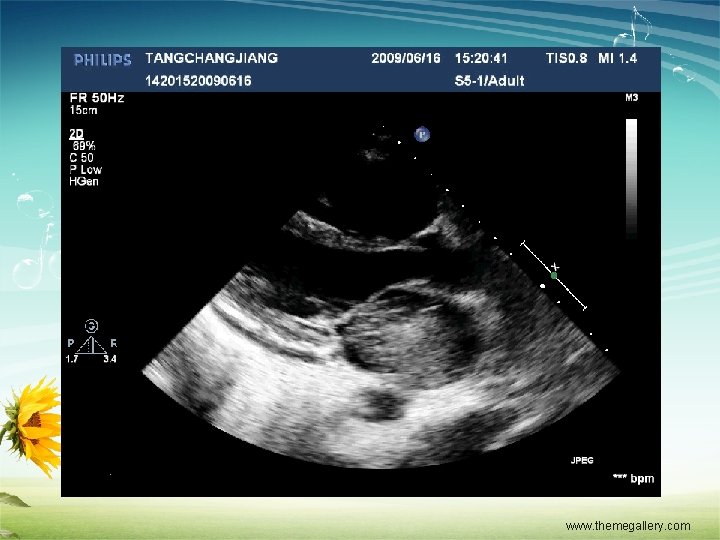
4. Echocardiographic features Ø 4. 1 2 D echocardiographic findings Ø (1) Echo-dense mass located in the left atrium Ø (2) Dramatic motion of the mass prolapsing through mitral valve into the left ventricle during diastole, and retracting to the left atrium during systole Ø (3) Left atrial and right ventricular enlargement www. themegallery. com
www. themegallery. com
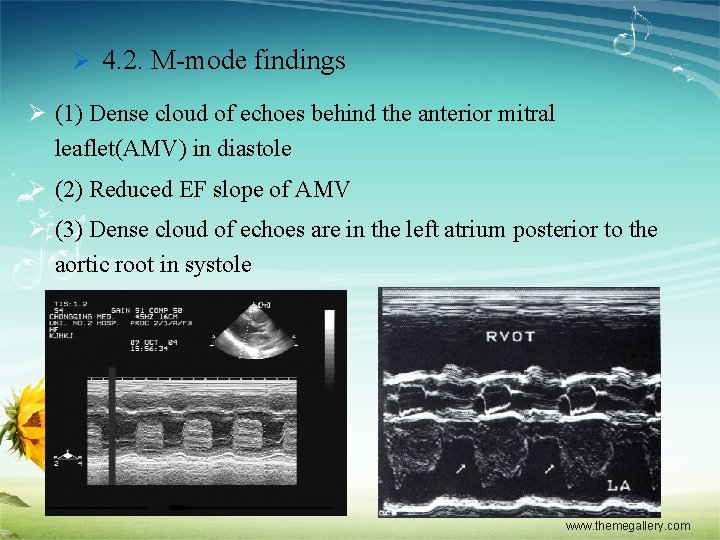
Ø 4. 2. M-mode findings Ø (1) Dense cloud of echoes behind the anterior mitral leaflet(AMV) in diastole Ø (2) Reduced EF slope of AMV Ø (3) Dense cloud of echoes are in the left atrium posterior to the aortic root in systole www. themegallery. com
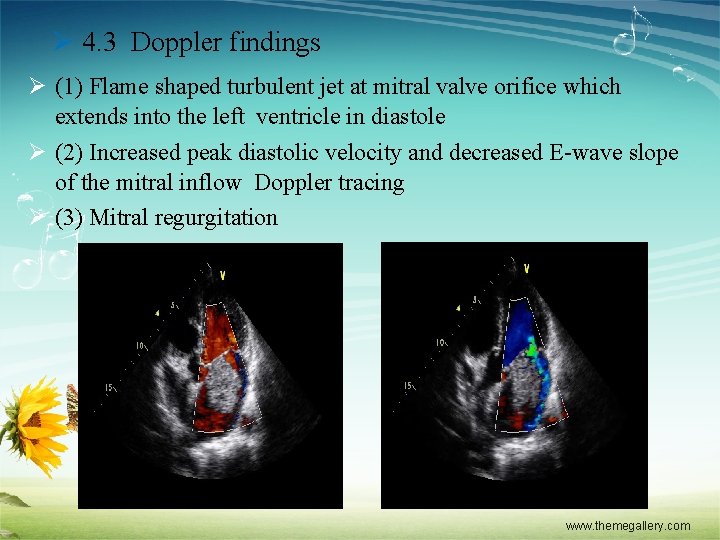
Ø 4. 3 Doppler findings Ø (1) Flame shaped turbulent jet at mitral valve orifice which extends into the left ventricle in diastole Ø (2) Increased peak diastolic velocity and decreased E-wave slope of the mitral inflow Doppler tracing Ø (3) Mitral regurgitation www. themegallery. com
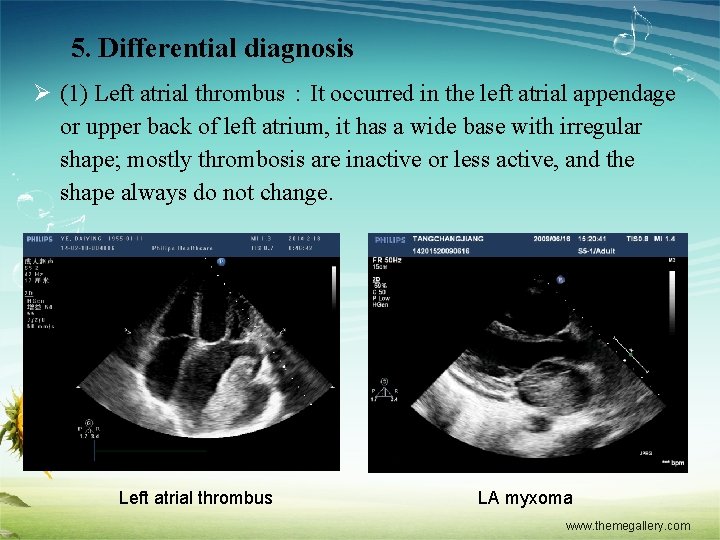
5. Differential diagnosis Ø (1) Left atrial thrombus:It occurred in the left atrial appendage or upper back of left atrium, it has a wide base with irregular shape; mostly thrombosis are inactive or less active, and the shape always do not change. Left atrial thrombus LA myxoma www. themegallery. com
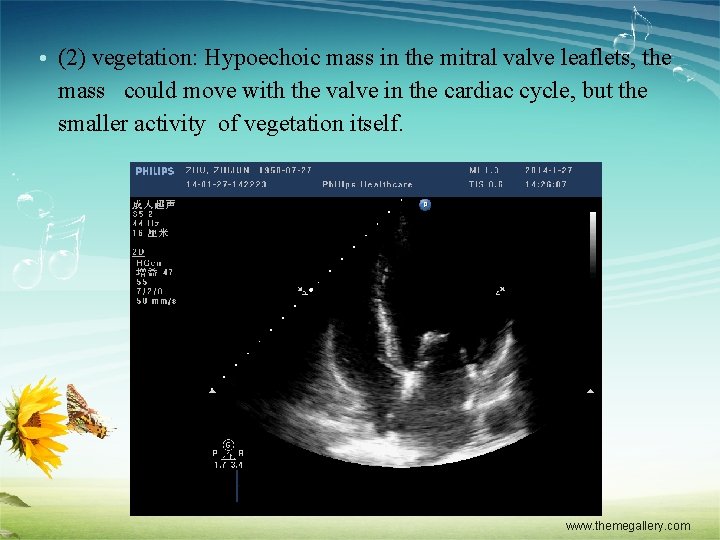
• (2) vegetation: Hypoechoic mass in the mitral valve leaflets, the mass could move with the valve in the cardiac cycle, but the smaller activity of vegetation itself. www. themegallery. com
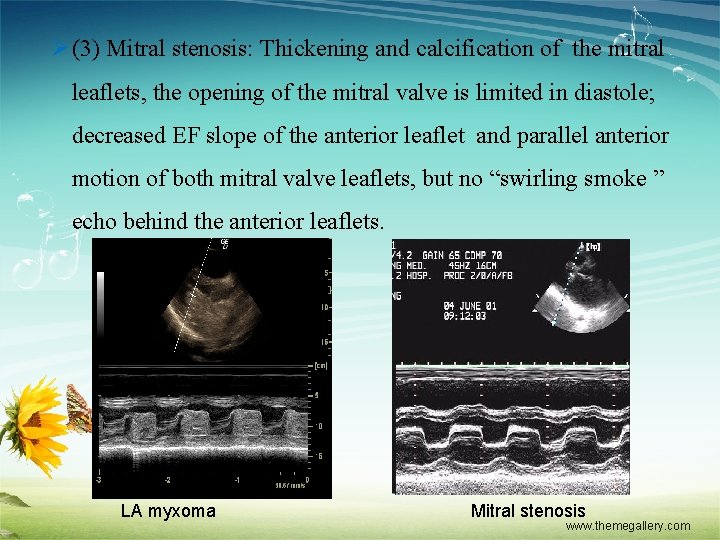
Ø(3) Mitral stenosis: Thickening and calcification of the mitral leaflets, the opening of the mitral valve is limited in diastole; decreased EF slope of the anterior leaflet and parallel anterior motion of both mitral valve leaflets, but no “swirling smoke ” echo behind the anterior leaflets. LA myxoma Mitral stenosis www. themegallery. com
Part Ⅳ Congenital Heart Disease www. themegallery. com
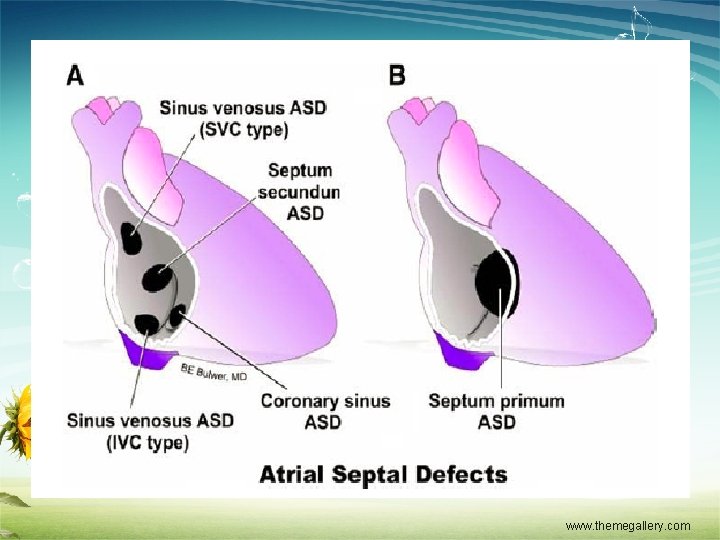
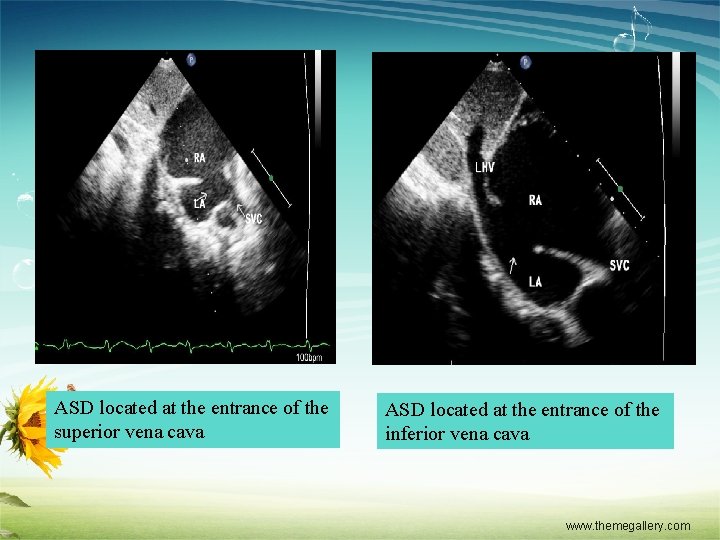
Atrial septal defect (ASD) 1. Classification (1) Ostium primum: defect in the anteroinferior aspect of the septum (2) Ostium secumdum (75%) : defect in the fossa ovalis (3) Sinus venosus (5– 10 %) : defect in the posterior aspect of the septum, near the superior vena cava or inferior vena cava —Superior vena caval defect —Inferior vena caval defect (4)coronary sinus www. themegallery. com
www. themegallery. com
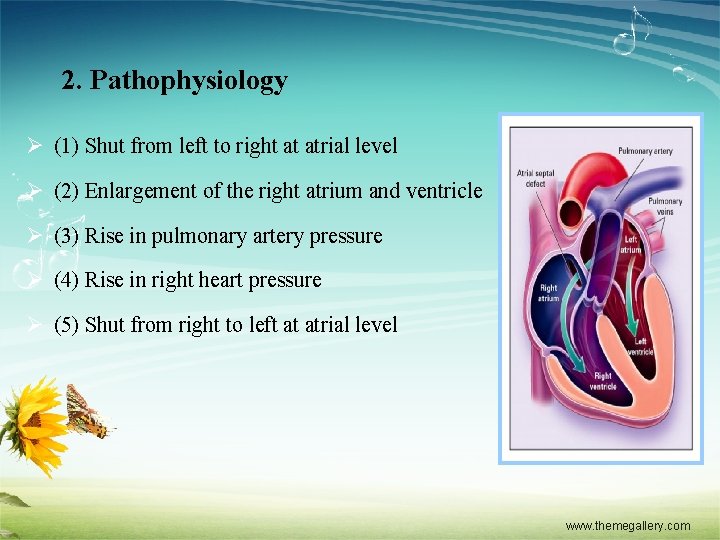
2. Pathophysiology Ø (1) Shut from left to right at atrial level Ø (2) Enlargement of the right atrium and ventricle Ø (3) Rise in pulmonary artery pressure Ø (4) Rise in right heart pressure Ø (5) Shut from right to left at atrial level www. themegallery. com
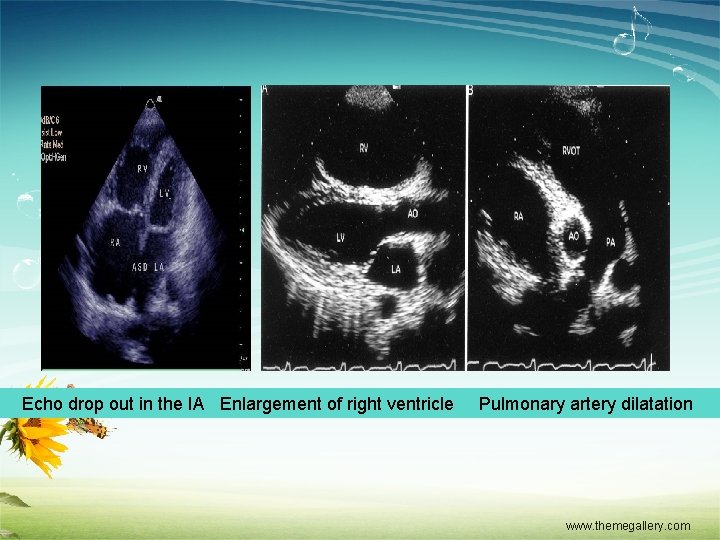
3. Echocardiographic features Ø 3. 1 2 D echocardiographic findings Ø (1) Echo drop out in the interatrial septum(IAS) is imaged from several views Ø (2) Right atrial and right ventricular enlargement Ø (3) Flattened interventricular septum Ø (4) Pulmonary artery dilatation www. themegallery. com
Echo drop out in the IA Enlargement of right ventricle Pulmonary artery dilatation www. themegallery. com
ASD located at the entrance of the superior vena cava ASD located at the entrance of the inferior vena cava www. themegallery. com
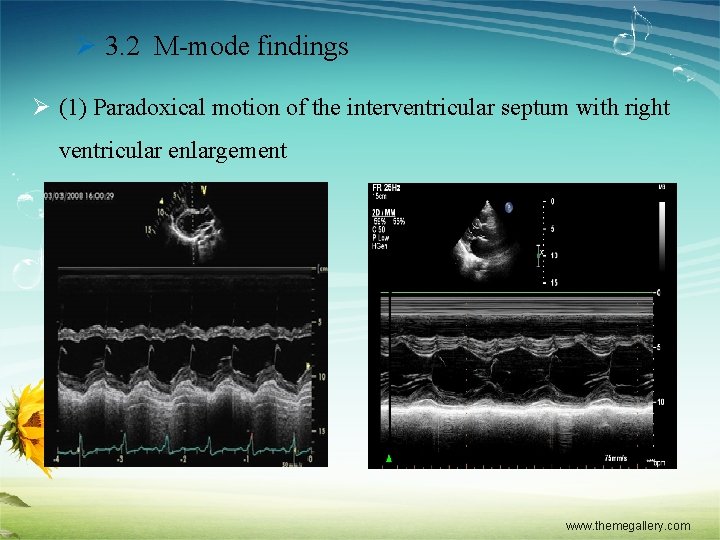
Ø 3. 2 M-mode findings Ø (1) Paradoxical motion of the interventricular septum with right ventricular enlargement www. themegallery. com
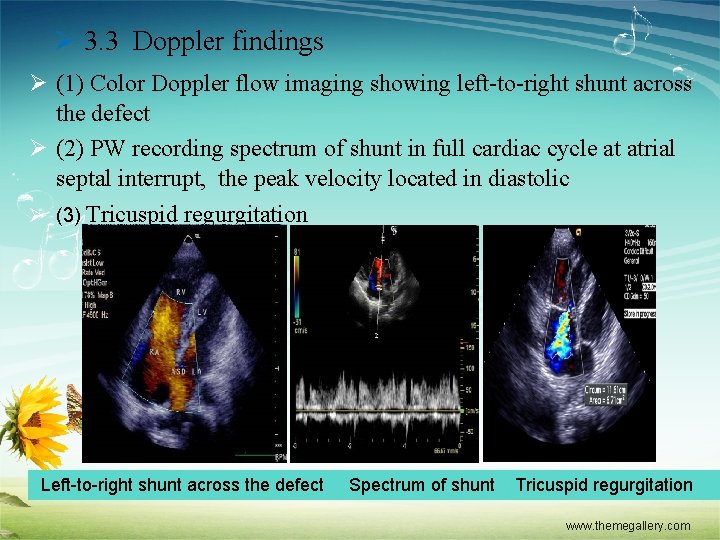
Ø 3. 3 Doppler findings Ø (1) Color Doppler flow imaging showing left-to-right shunt across the defect Ø (2) PW recording spectrum of shunt in full cardiac cycle at atrial septal interrupt, the peak velocity located in diastolic Ø (3) Tricuspid regurgitation Left-to-right shunt across the defect Spectrum of shunt Tricuspid regurgitation www. themegallery. com
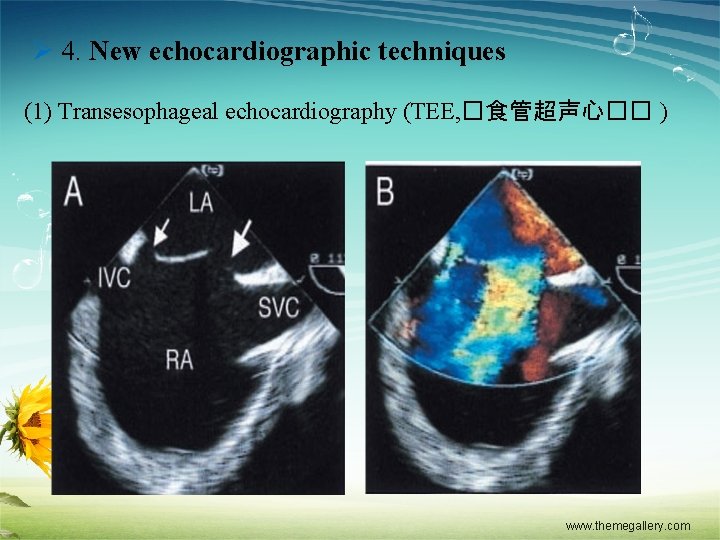
Ø 4. New echocardiographic techniques (1) Transesophageal echocardiography (TEE, �食管超声心�� ) www. themegallery. com
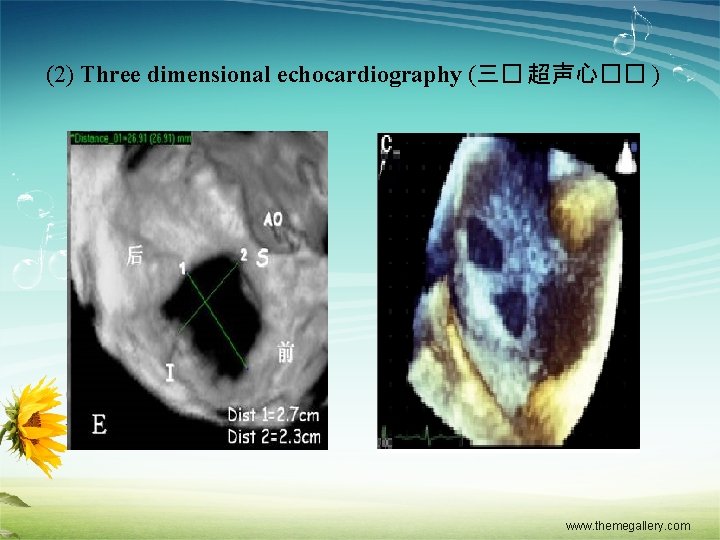
(2) Three dimensional echocardiography (三� 超声心�� ) www. themegallery. com
Part Ⅴ Typical case analysis www. themegallery. com
www. themegallery. com L. O. G. O