
Echinoderms Early Chordates Second major branch of animal
Echinoderms & Early Chordates • • Second major branch of animal evolution Present in Cambrian period * Crinoids (sea lilies) dominant at end of Paleozoic • Deuterostomes * During development, mouth develops second * Coelomate
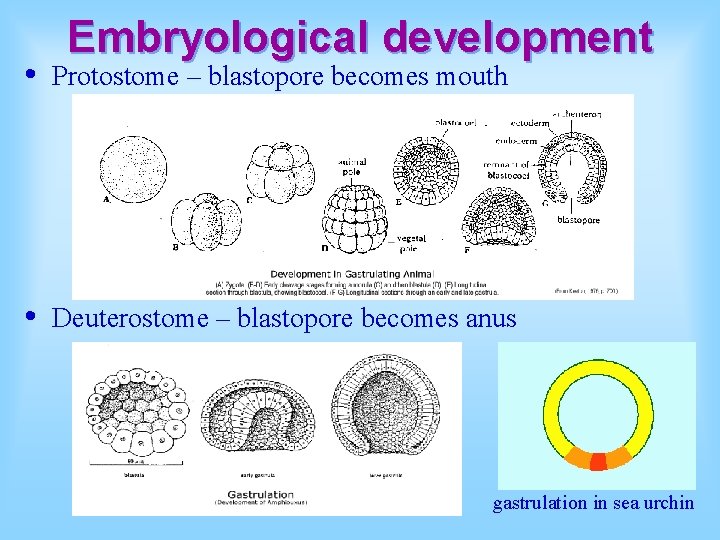
Embryological development • Protostome – blastopore becomes mouth • Deuterostome – blastopore becomes anus gastrulation in sea urchin
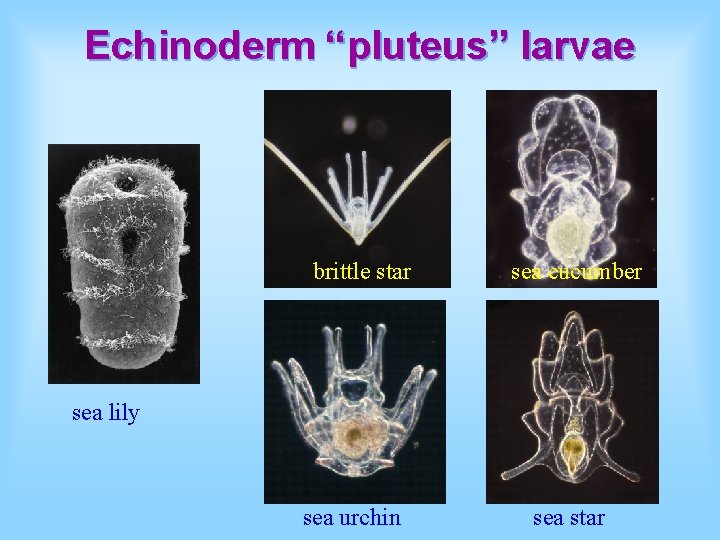
Echinoderm “pluteus” larvae brittle star sea cucumber sea lily sea urchin sea star
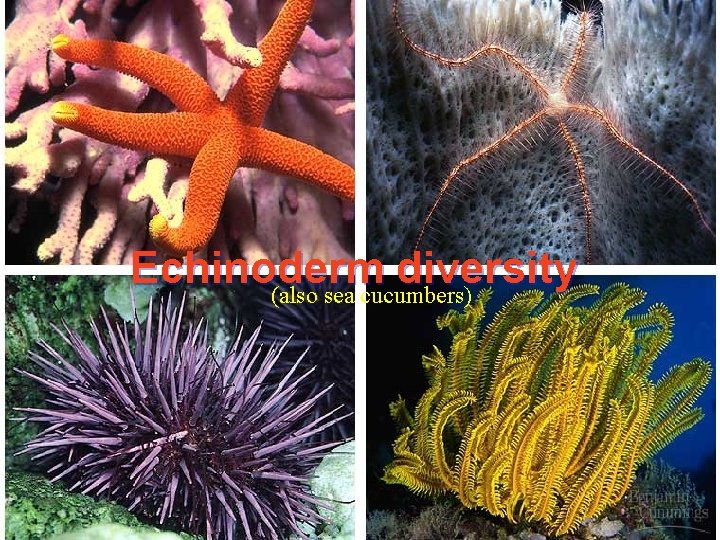
Echinoderm diversity (also sea cucumbers)

Echinoderm characteristics • • • adults have secondary radial symmetry spiny “skin” (calcium plates below skin) water vascular system * movement * circulation • • complete gut entirely marine * only phylum
Lower Chordates • • Phylum Chordata includes us Several subphyla are invertebrate (i. e. lack a skeleton) * Urochordates * Cephalochordates
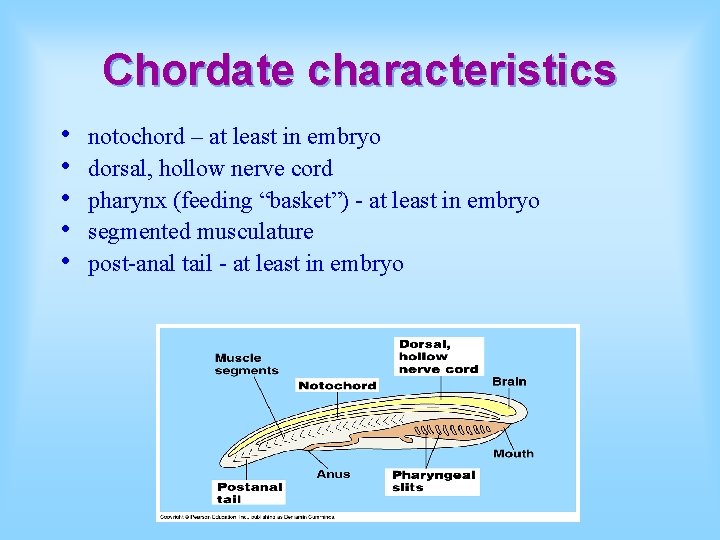
Chordate characteristics • • • notochord – at least in embryo dorsal, hollow nerve cord pharynx (feeding “basket”) - at least in embryo segmented musculature post-anal tail - at least in embryo
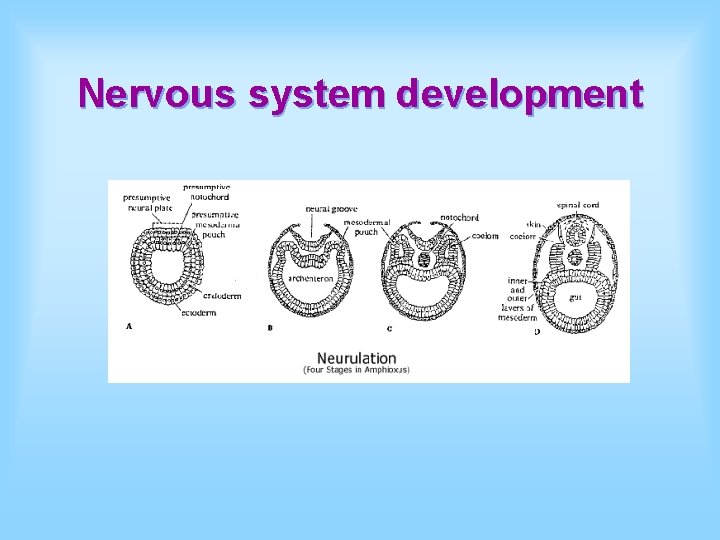
Nervous system development
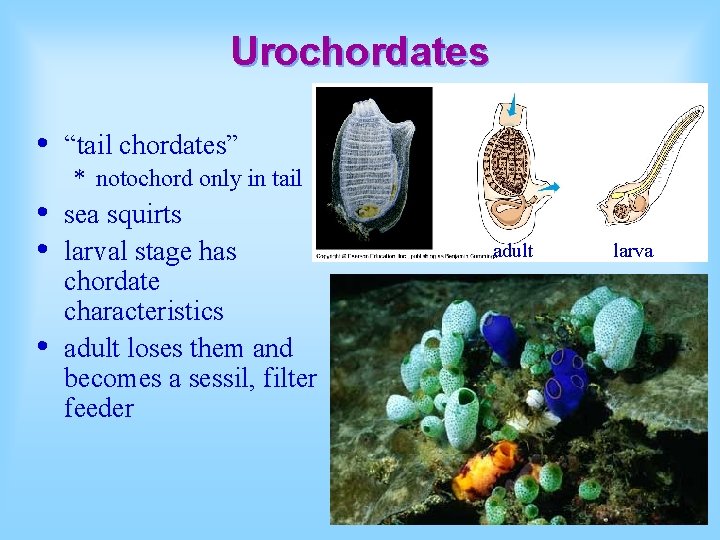
Urochordates • • “tail chordates” * notochord only in tail sea squirts larval stage has chordate characteristics adult loses them and becomes a sessil, filter feeder adult larva
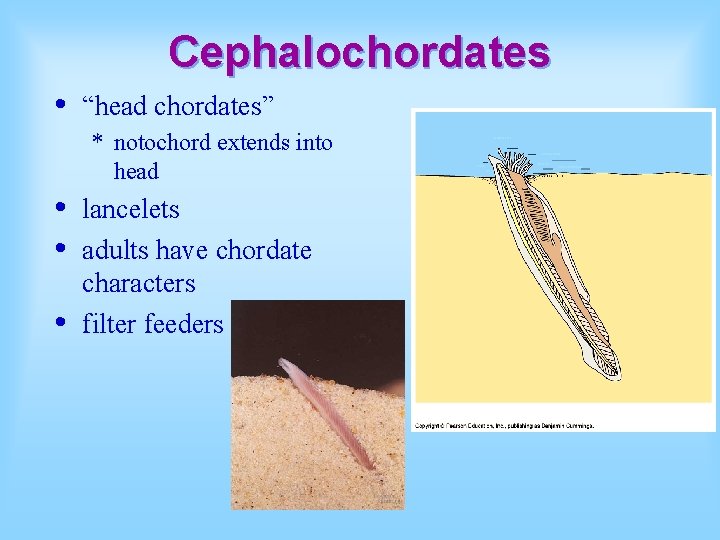
Cephalochordates • “head chordates” * notochord extends into head • • • lancelets adults have chordate characters filter feeders
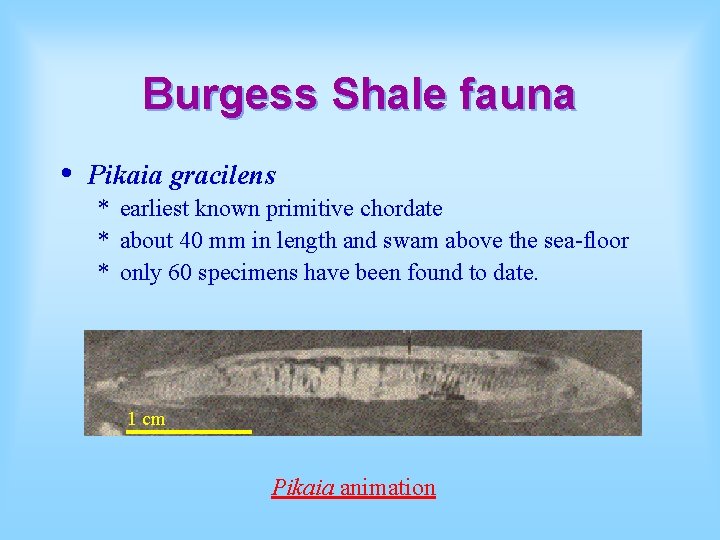
Burgess Shale fauna • Pikaia gracilens * earliest known primitive chordate * about 40 mm in length and swam above the sea-floor * only 60 specimens have been found to date. 1 cm Pikaia animation
- Slides: 11