
Echinococcus granulosus Echinococcus granulosus ADULT MORPHOLOGY small tapeworm



- Slides: 44
Echinococcus granulosus
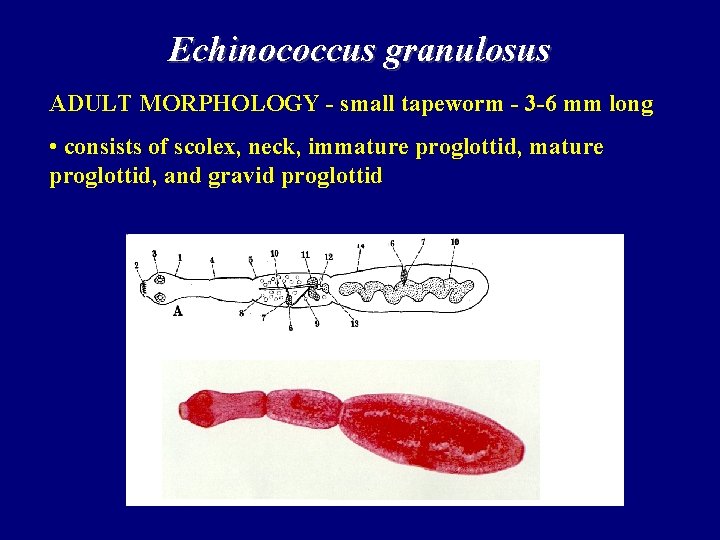
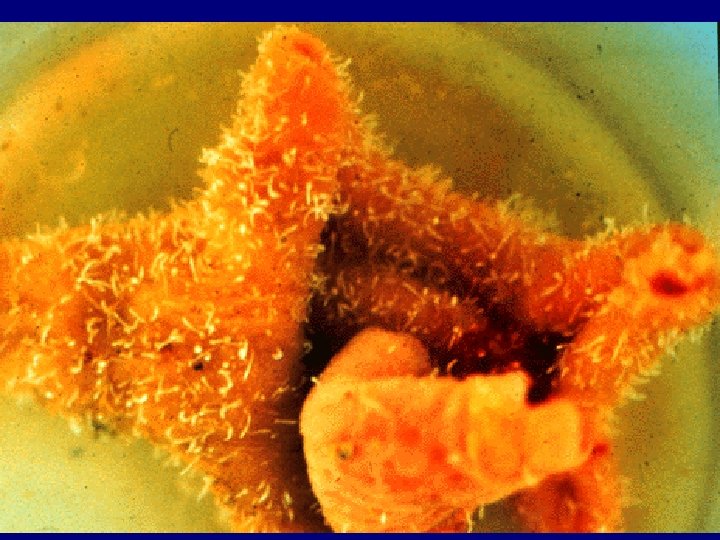
Echinococcus granulosus ADULT MORPHOLOGY - small tapeworm - 3 -6 mm long • consists of scolex, neck, immature proglottid, and gravid proglottid
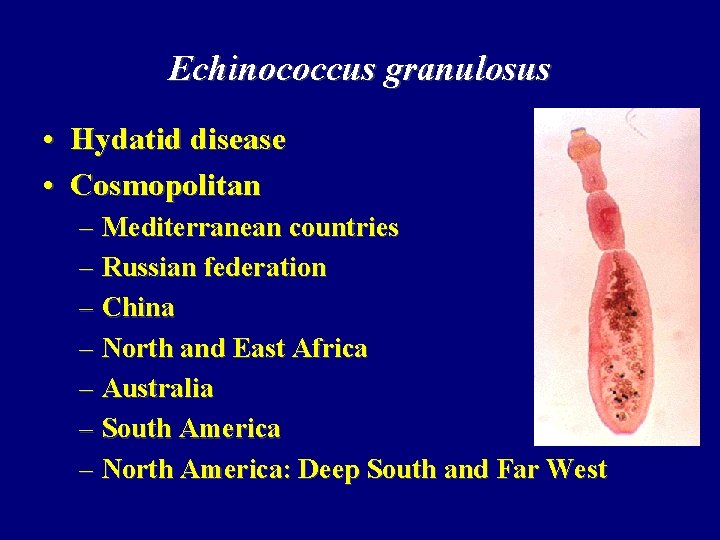
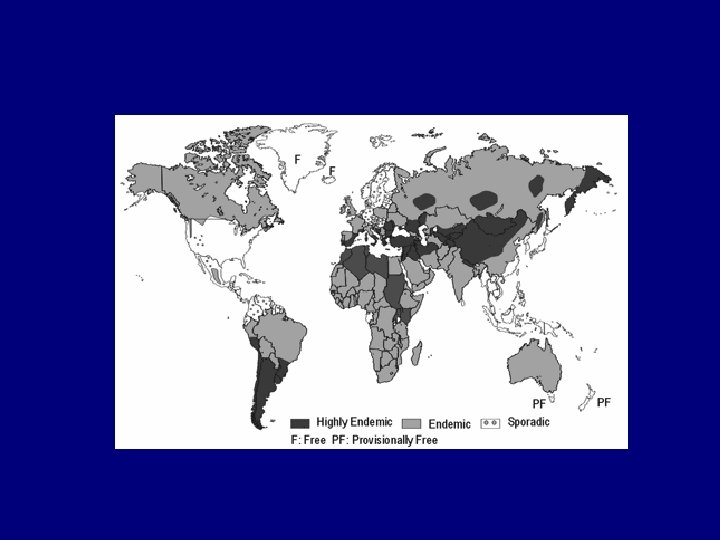
Echinococcus granulosus • Hydatid disease • Cosmopolitan – Mediterranean countries – Russian federation – China – North and East Africa – Australia – South America – North America: Deep South and Far West
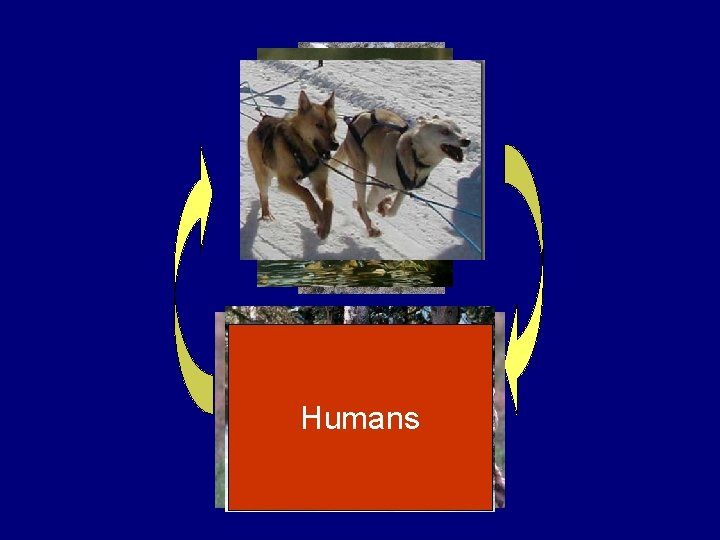
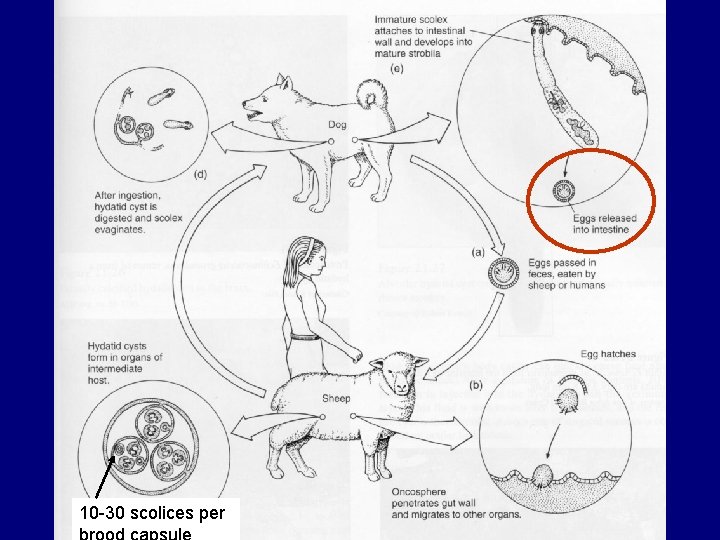
Carnivore Herbivore Humans
10 -30 scolices per
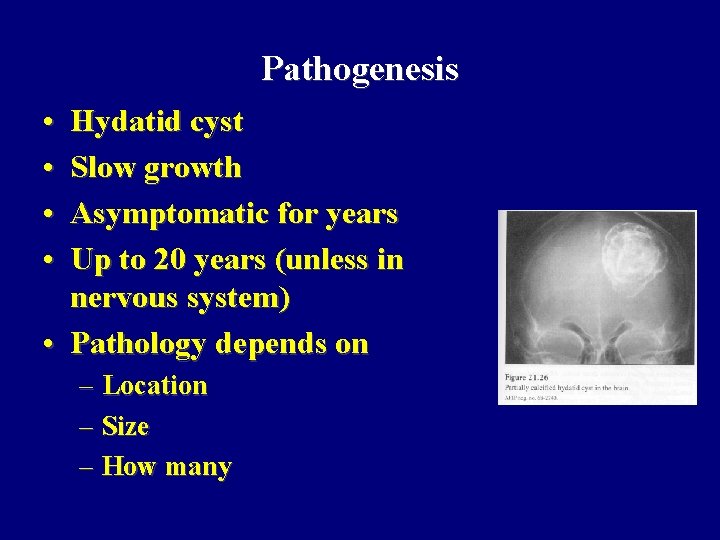
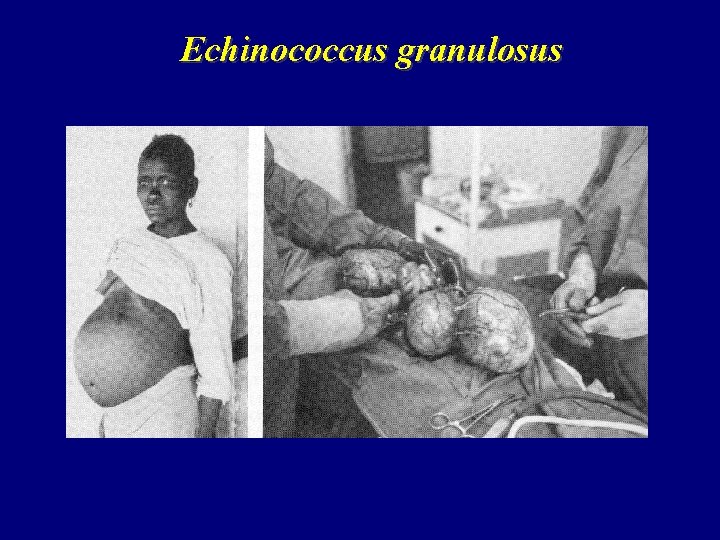
Pathogenesis • • Hydatid cyst Slow growth Asymptomatic for years Up to 20 years (unless in nervous system) • Pathology depends on – Location – Size – How many
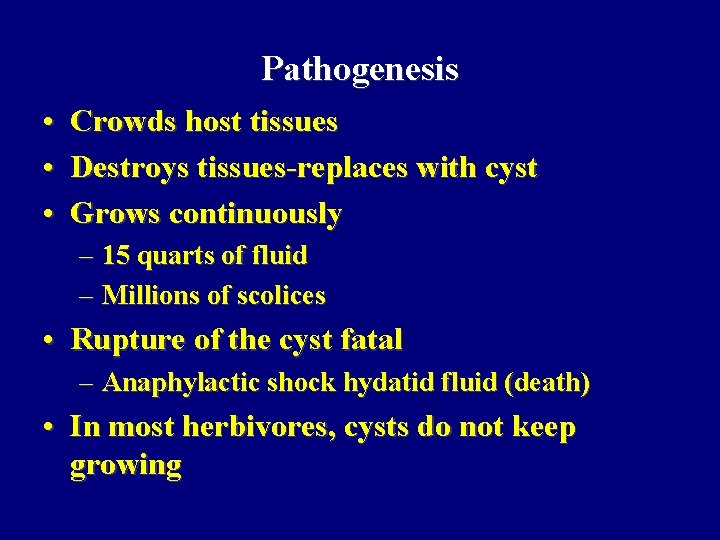
Pathogenesis • Crowds host tissues • Destroys tissues-replaces with cyst • Grows continuously – 15 quarts of fluid – Millions of scolices • Rupture of the cyst fatal – Anaphylactic shock hydatid fluid (death) • In most herbivores, cysts do not keep growing
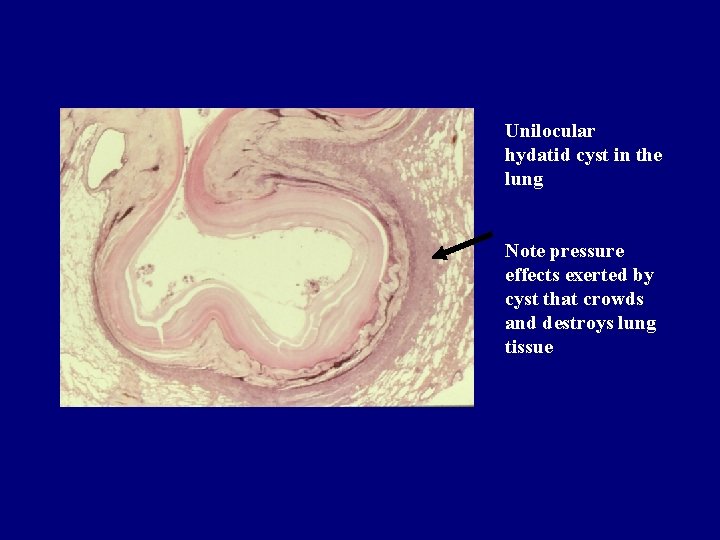
Unilocular hydatid cyst in the lung Note pressure effects exerted by cyst that crowds and destroys lung tissue
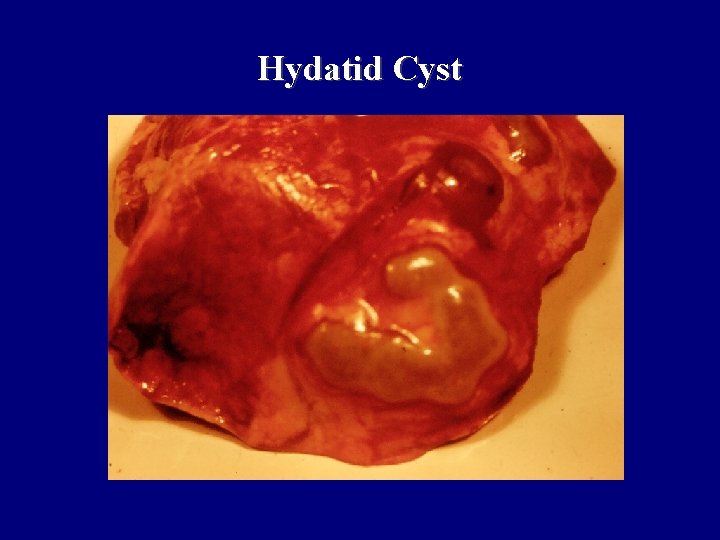
Hydatid Cyst
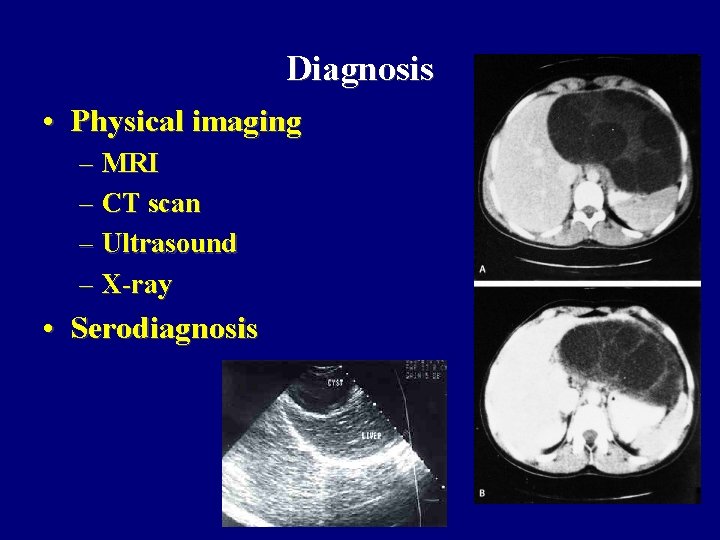
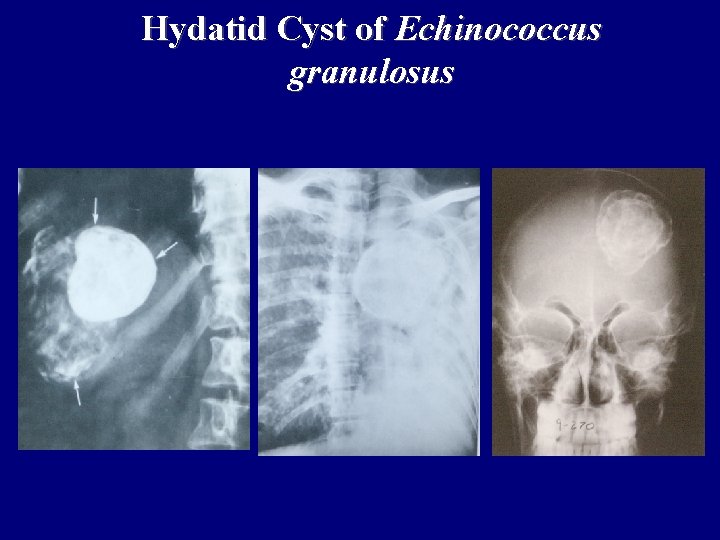
Diagnosis • Physical imaging – MRI – CT scan – Ultrasound – X-ray • Serodiagnosis
Hydatid Cyst of Echinococcus granulosus
Treatment • Surgery – Preoperative chemotherapy-albendazole – Protoscolicidal compounds • Ethanol • Saline • Formalin • Recurrence – – – 50% Undetected cysts Inadequate removal • Mebendazole – 48% of cysts
Epidemiology • How do people get infected? • How do eggs get into environment? • How do we ingest them?
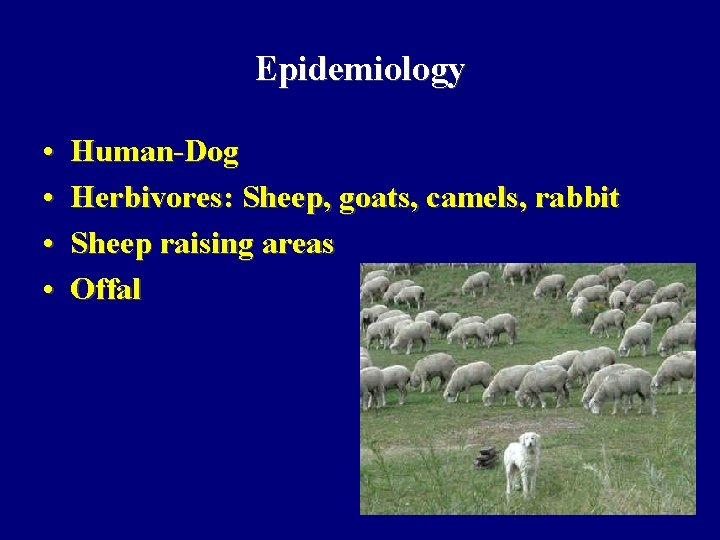
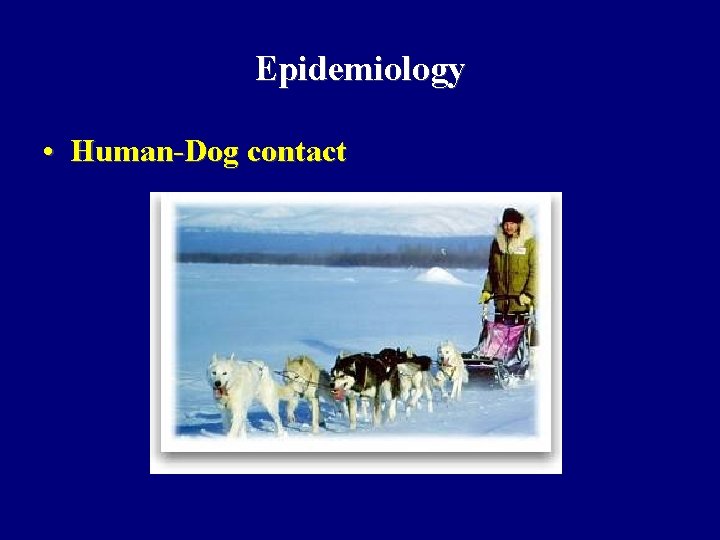
Epidemiology • • Human-Dog Herbivores: Sheep, goats, camels, rabbit Sheep raising areas Offal
Epidemiology • Human-Dog contact
Epidemiology • Human-wildlife contact
Echinococcus granulosus
Complex • Echinococcus granulosus comprises multiple species – Life cycle patterns – Host specificity – Development Rate – Antigenicity – Transmission dynamics – Chemotherapeutic drug response – Pathology
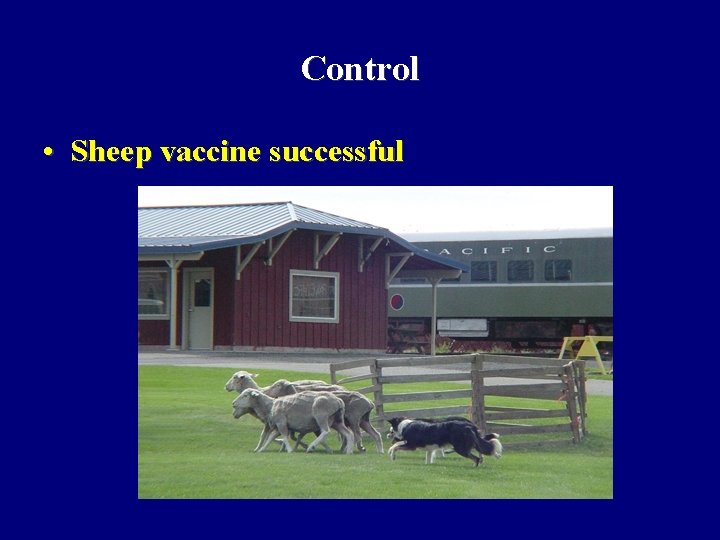
Control • Sheep vaccine successful
Echinococcus multilocularis
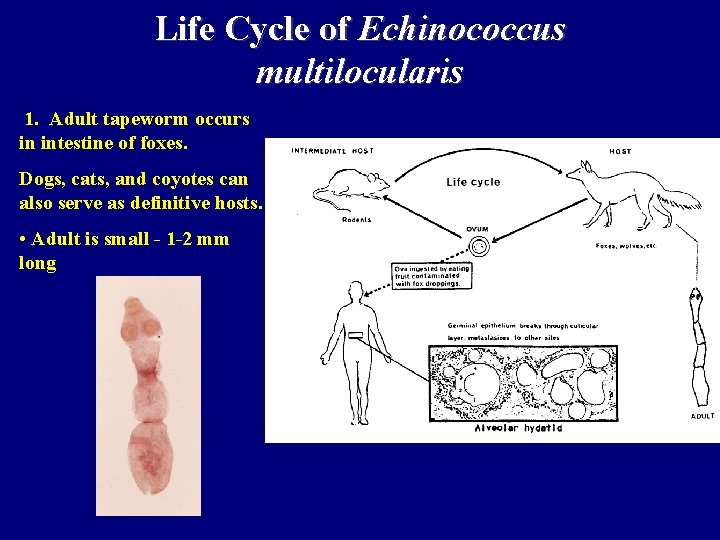
Life Cycle of Echinococcus multilocularis 1. Adult tapeworm occurs in intestine of foxes. Dogs, cats, and coyotes can also serve as definitive hosts. • Adult is small - 1 -2 mm long
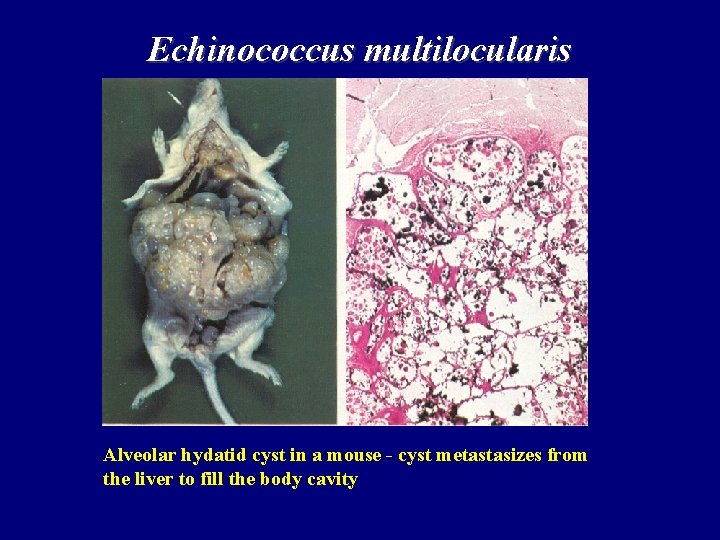
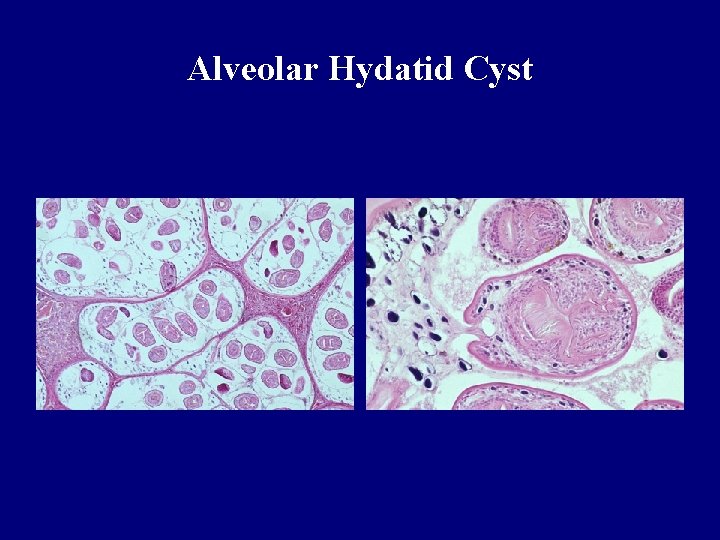
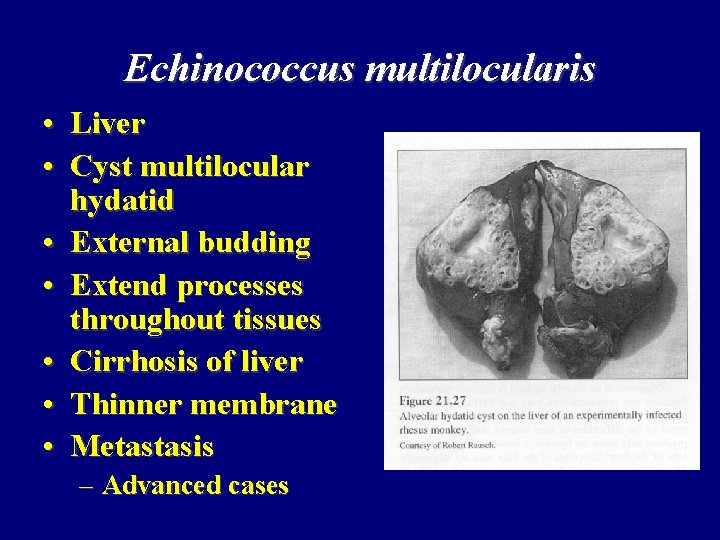
Echinococcus multilocularis Alveolar hydatid cyst in a mouse - cyst metastasizes from the liver to fill the body cavity
Alveolar Hydatid Cyst
Echinococcus multilocularis • Liver • Cyst multilocular hydatid • External budding • Extend processes throughout tissues • Cirrhosis of liver • Thinner membrane • Metastasis – Advanced cases
Echinococcus multilocularis • Not easily operable – timing • Chemotherapy – Praziquantel can increase growth – Mebendazole and albendazole given throughout the life of the patient. • retards growth • Not easily treatable
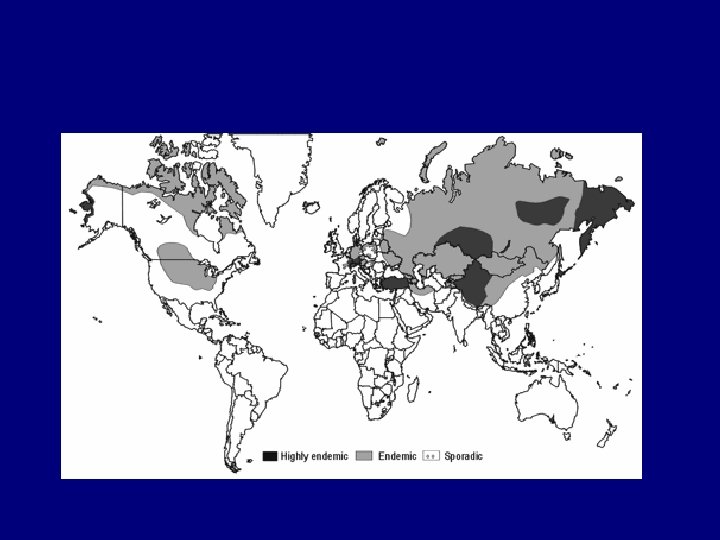
Echinococcus multilocularis • Fox tapeworm • Europe, Asia, Americas, New Zealand
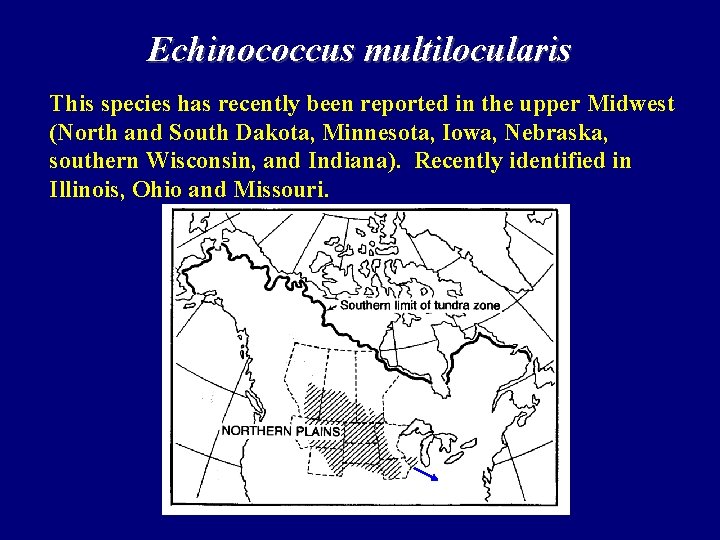
Echinococcus multilocularis This species has recently been reported in the upper Midwest (North and South Dakota, Minnesota, Iowa, Nebraska, southern Wisconsin, and Indiana). Recently identified in Illinois, Ohio and Missouri.
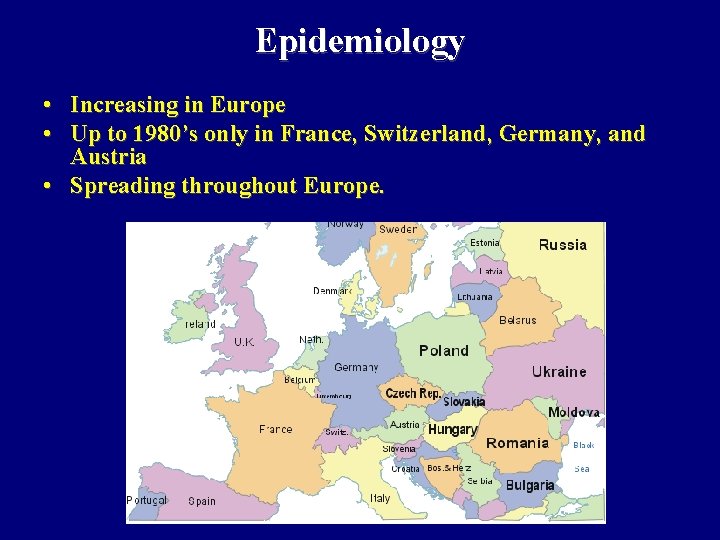
Epidemiology • Increasing in Europe • Up to 1980’s only in France, Switzerland, Germany, and Austria • Spreading throughout Europe.
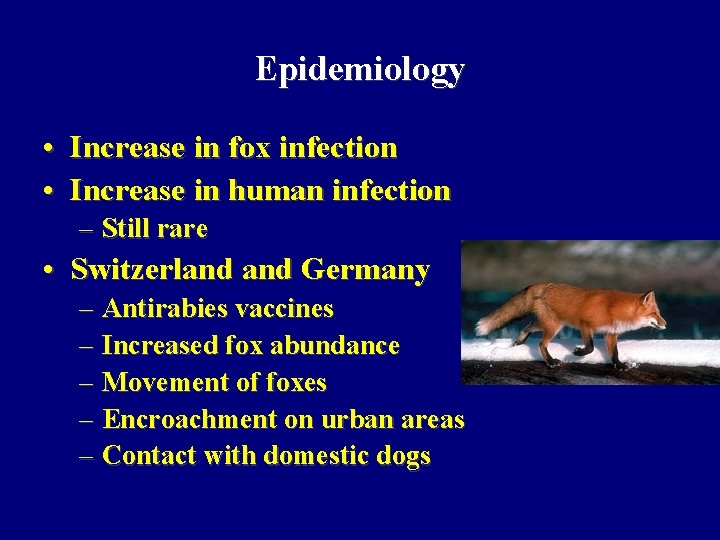
Epidemiology • Increase in fox infection • Increase in human infection – Still rare • Switzerland Germany – Antirabies vaccines – Increased fox abundance – Movement of foxes – Encroachment on urban areas – Contact with domestic dogs
Hymenolepis
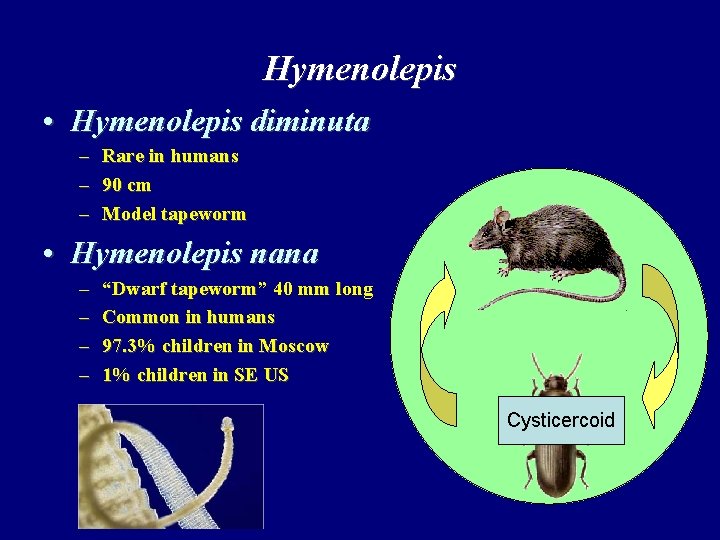
Hymenolepis • Hymenolepis diminuta – – – Rare in humans 90 cm Model tapeworm • Hymenolepis nana – – “Dwarf tapeworm” 40 mm long Common in humans 97. 3% children in Moscow 1% children in SE US Cysticercoid
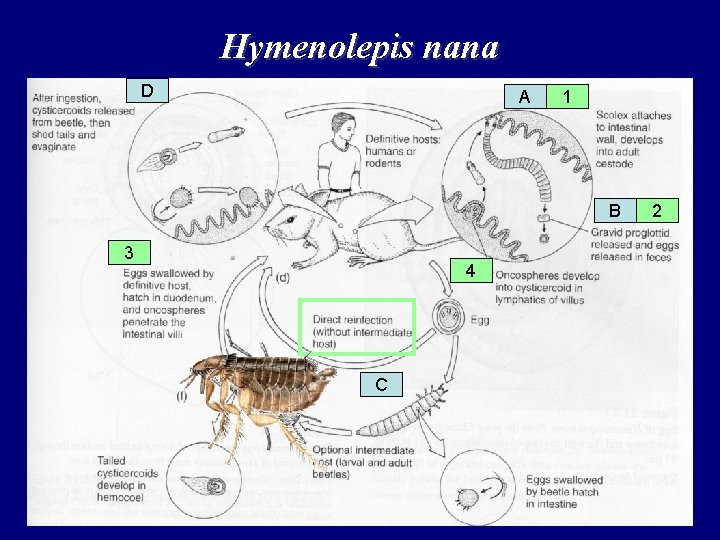
Hymenolepis nana D A 1 B 3 4 C 2
Pathogenesis and Treatment • Similar to Adult species of Taenia • Praziquantel
Dipylidium caninum
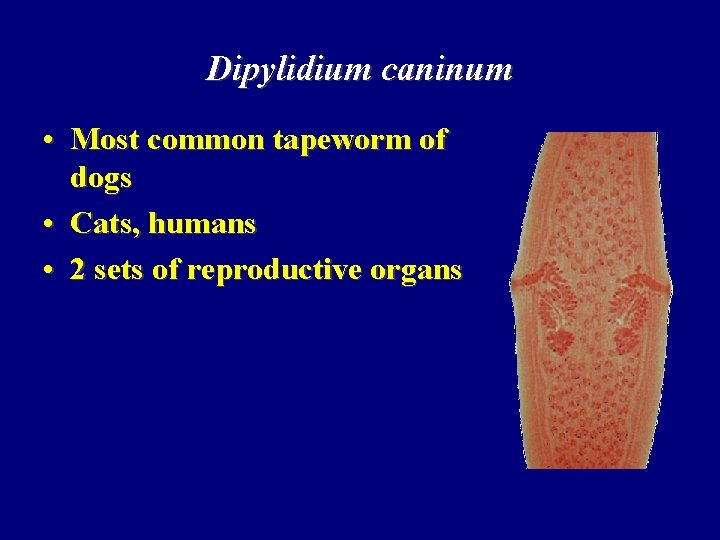
Dipylidium caninum • Most common tapeworm of dogs • Cats, humans • 2 sets of reproductive organs
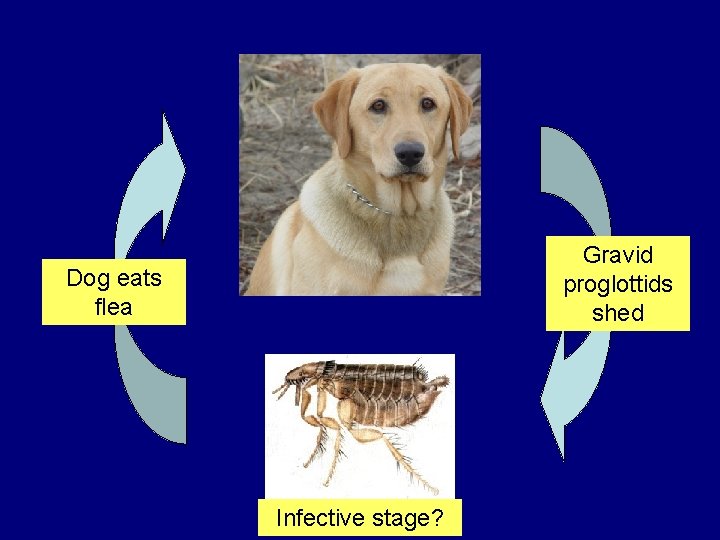
Gravid proglottids shed Dog eats flea Infective stage?
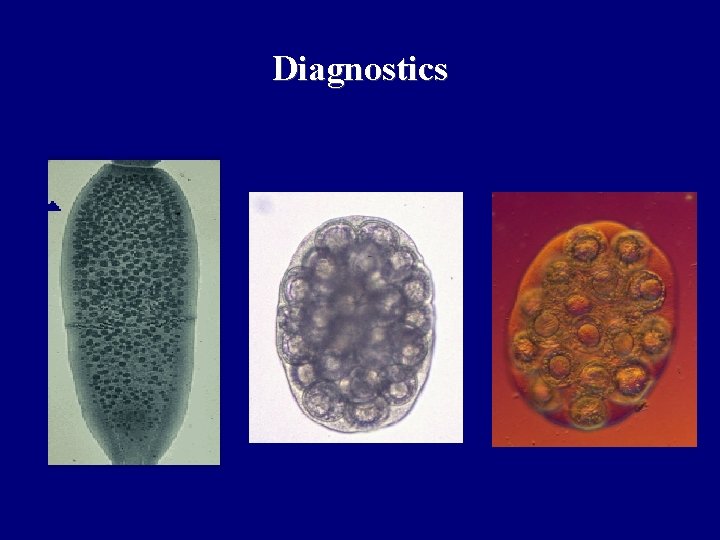
Diagnostics
Pathogenesis and Treatment • Similar to Adult species of Taenia • Praziquantel