
Echinococcus By T Moudy Bin Saleh Classification Kingdom
Echinococcus By : T. Moudy Bin Saleh
Classification Kingdom: Animalia Phylum: Platyhelminthes Class: Cestoda Order: Cyclophyllidea Family: Taeniidae Genus: Echinococcus
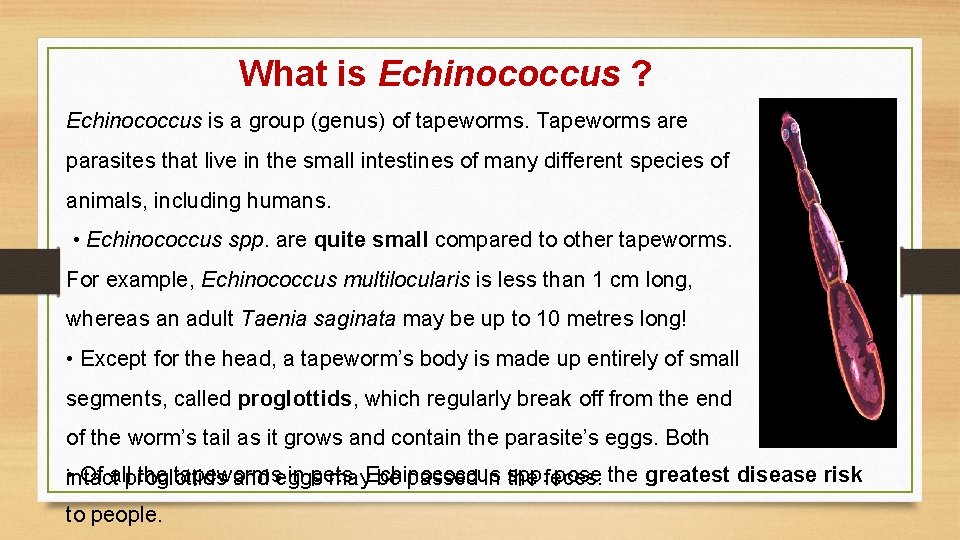
What is Echinococcus ? Echinococcus is a group (genus) of tapeworms. Tapeworms are parasites that live in the small intestines of many different species of animals, including humans. • Echinococcus spp. are quite small compared to other tapeworms. For example, Echinococcus multilocularis is less than 1 cm long, whereas an adult Taenia saginata may be up to 10 metres long! • Except for the head, a tapeworm’s body is made up entirely of small segments, called proglottids, which regularly break off from the end of the worm’s tail as it grows and contain the parasite’s eggs. Both • intact Of allproglottids the tapeworms in pets, pose the greatest disease risk and eggs may. Echinococcus be passed in spp. the feces. to people.
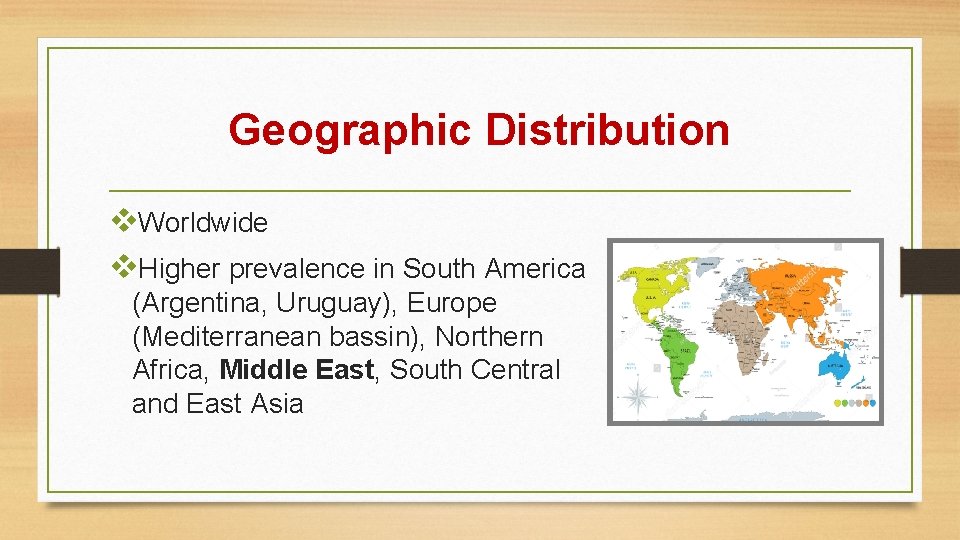
Geographic Distribution v. Worldwide v. Higher prevalence in South America (Argentina, Uruguay), Europe (Mediterranean bassin), Northern Africa, Middle East, South Central and East Asia
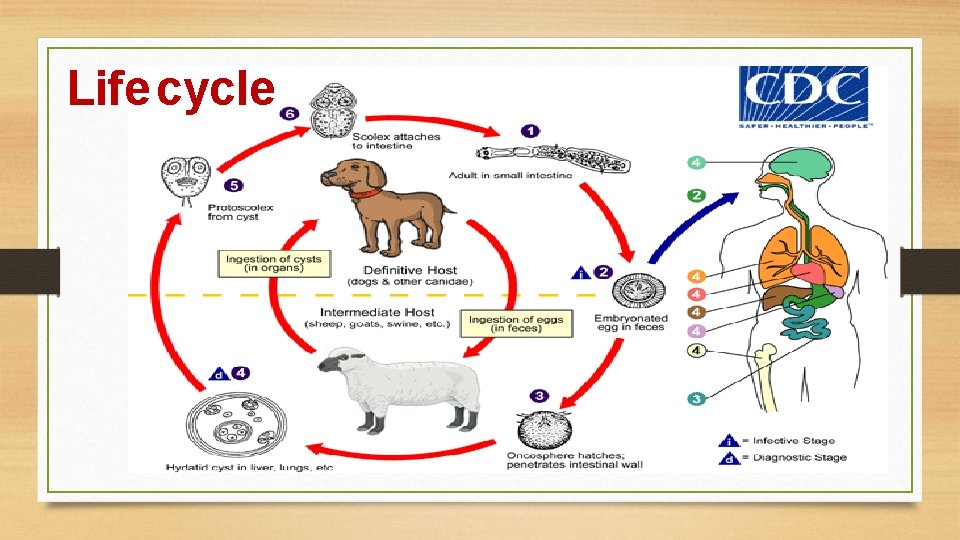
Life cycle
Echinococcus in Human There are Three Species causing disease in Human : Ø Echinococcus granulosus : causing hydatid disease Ø Echinococcus vogeli: causing hydatid disease Ø Echinococcus multilocularis : causing alveolar hydatid disease
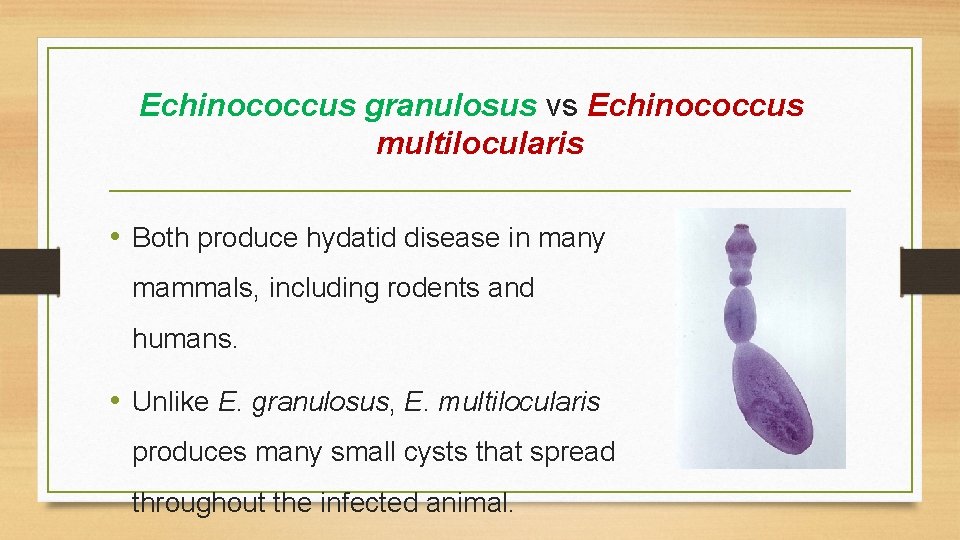
Echinococcus granulosus vs Echinococcus multilocularis • Both produce hydatid disease in many mammals, including rodents and humans. • Unlike E. granulosus, E. multilocularis produces many small cysts that spread throughout the infected animal.
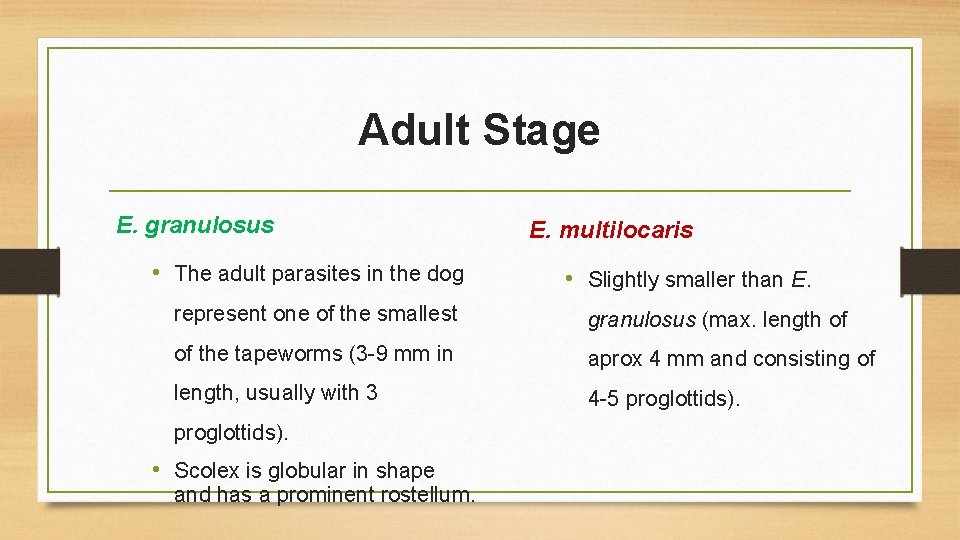
Adult Stage E. granulosus • The adult parasites in the dog E. multilocaris • Slightly smaller than E. represent one of the smallest granulosus (max. length of of the tapeworms (3 -9 mm in aprox 4 mm and consisting of length, usually with 3 4 -5 proglottids). • Scolex is globular in shape and has a prominent rostellum.
Larvae Stage E. granulosus • Hydatid cysts are large, roughly spherical, fluid filled hollow bladders containing numerous protoscolices. • They vary in size; those found in the liver are aprox. 20 cm in diameter, but those found in the peritoneal cavity are usually larger. E. multilocularis • The cyst grows invasively by external budding, forming a diffuse growth through the infected organ, replacing that organs tissues. In contrast to E. Granulosus this growth is very rapid, infective protsocialises being present only 2 to 3 months.
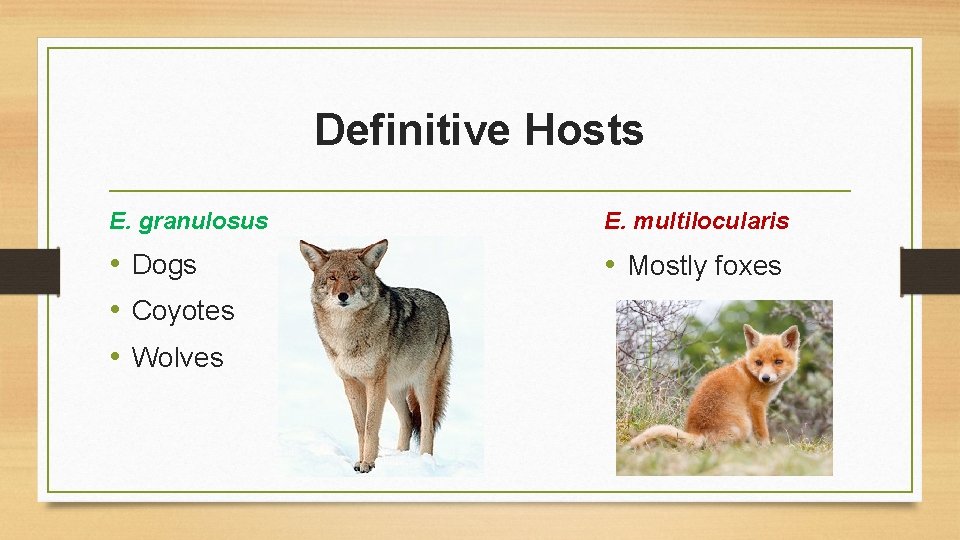
Definitive Hosts E. granulosus E. multilocularis • Dogs • Coyotes • Wolves • Mostly foxes
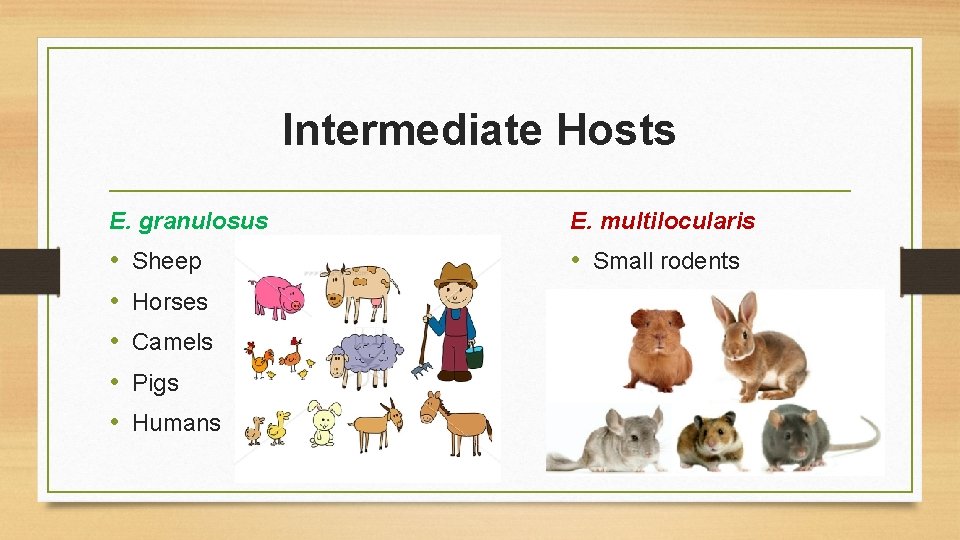
Intermediate Hosts E. granulosus E. multilocularis • • • Small rodents Sheep Horses Camels Pigs Humans
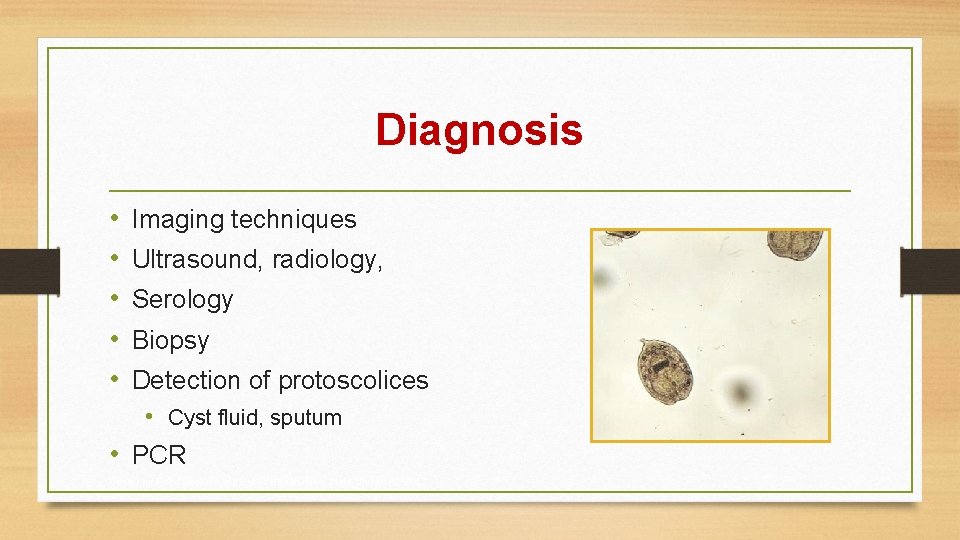
Diagnosis • • • Imaging techniques Ultrasound, radiology, Serology Biopsy Detection of protoscolices • Cyst fluid, sputum • PCR Center for Food Security and Public Health, Iowa State University, 2012
ü Your symptoms will vary depending on which organs are affected. ü The infection affects the liver in about 75 percent of people who contract it. Symptoms may include pain in your abdomen and the formation of cysts on your liver. ü The infection affects the lungs in about 22 percent of people who contract it. Respiratory symptoms may include chest pain and coughing up bloody mucus. ü Other areas of your body can also be affected, including Center for Food Security and Public Health, Iowa University, 2012 your skin, spleen, or. Statekidneys.

Treatment • Surgical removal of cysts. • May not be possible to remove entire cyst depending on size and location • Anti-parasitics. • Wait-and-see. • Small, inactive cysts • Liver transplant. Center for Food Security and Public Health, Iowa State University, 2012
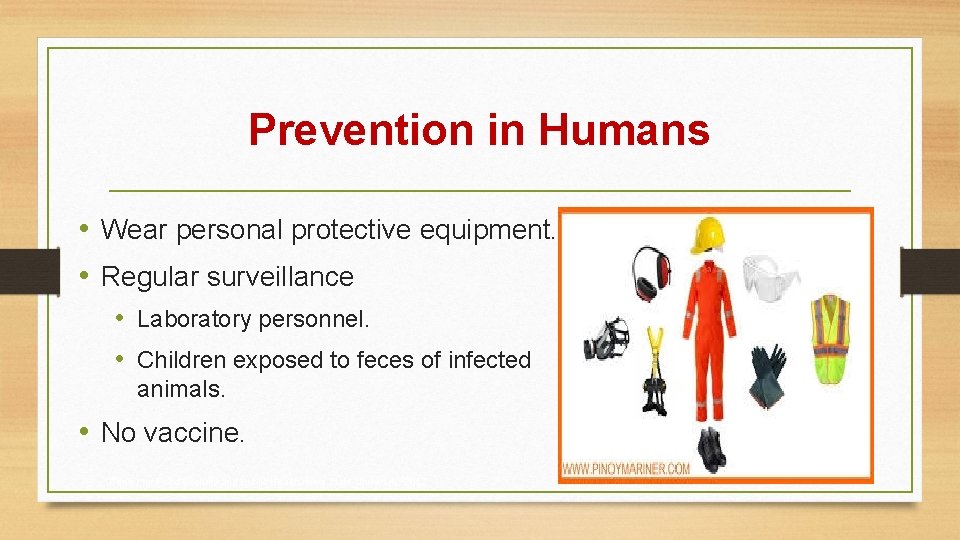
Prevention in Humans • Wear personal protective equipment. • Regular surveillance • Laboratory personnel. • Children exposed to feces of infected animals. • No vaccine. Center for Food Security and Public Health, Iowa State University, 2012

- Slides: 16