
ECHELON1 Phase III Trial of Firstline Brentuximab Vedotin


ECHELON-1: Phase III Trial of First-line Brentuximab Vedotin + AVD Chemotherapy in Advanced Classical Hodgkin Lymphoma Integrating New Hematology Findings Into Practice: Independent Conference Coverage of ASH 2017, * December 9 -12, Atlanta, Georgia
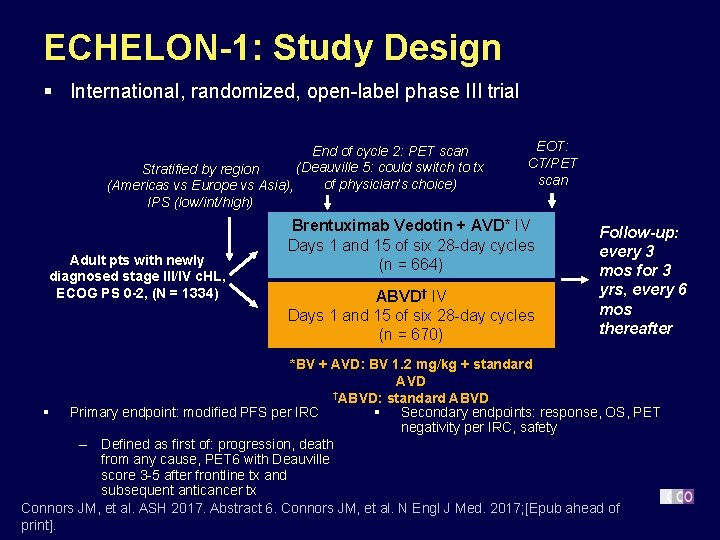
ECHELON-1: Study Design § International, randomized, open-label phase III trial End of cycle 2: PET scan (Deauville 5: could switch to tx Stratified by region of physician’s choice) (Americas vs Europe vs Asia), IPS (low/int/high) Adult pts with newly diagnosed stage III/IV c. HL, ECOG PS 0 -2, (N = 1334) EOT: CT/PET scan Brentuximab Vedotin + AVD* IV Days 1 and 15 of six 28 -day cycles (n = 664) ABVD† IV Days 1 and 15 of six 28 -day cycles (n = 670) Follow-up: every 3 mos for 3 yrs, every 6 mos thereafter *BV + AVD: BV 1. 2 mg/kg + standard AVD †ABVD: standard ABVD § Primary endpoint: modified PFS per IRC § Secondary endpoints: response, OS, PET negativity per IRC, safety – Defined as first of: progression, death from any cause, PET 6 with Deauville score 3 -5 after frontline tx and subsequent anticancer tx Connors JM, et al. ASH 2017. Abstract 6. Connors JM, et al. N Engl J Med. 2017; [Epub ahead of print].
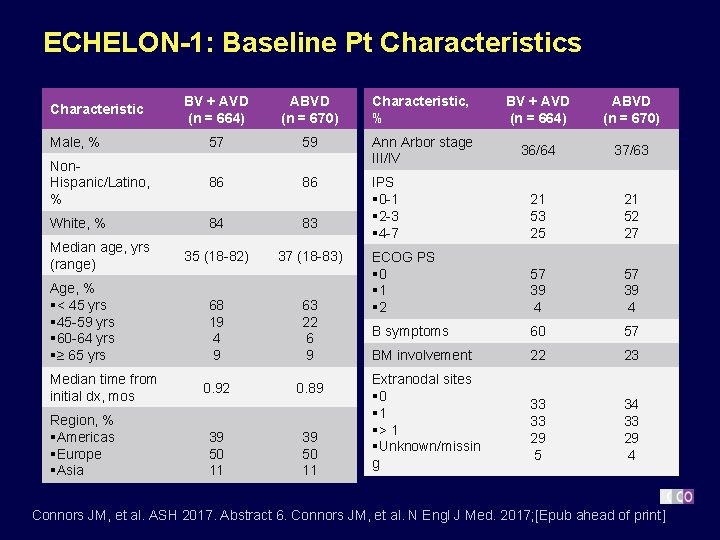
ECHELON-1: Baseline Pt Characteristics BV + AVD (n = 664) ABVD (n = 670) Characteristic, % BV + AVD (n = 664) ABVD (n = 670) Male, % 57 59 Non. Hispanic/Latino, % Ann Arbor stage III/IV 36/64 37/63 86 86 White, % 84 83 IPS § 0 -1 § 2 -3 § 4 -7 21 53 25 21 52 27 35 (18 -82) 37 (18 -83) ECOG PS § 0 § 1 § 2 57 39 4 B symptoms 60 57 BM involvement 22 23 33 33 29 5 34 33 29 4 Characteristic Median age, yrs (range) Age, % §< 45 yrs § 45 -59 yrs § 60 -64 yrs §≥ 65 yrs Median time from initial dx, mos Region, % §Americas §Europe §Asia 68 19 4 9 63 22 6 9 0. 92 0. 89 39 50 11 Extranodal sites § 0 § 1 §> 1 §Unknown/missin g Connors JM, et al. ASH 2017. Abstract 6. Connors JM, et al. N Engl J Med. 2017; [Epub ahead of print]
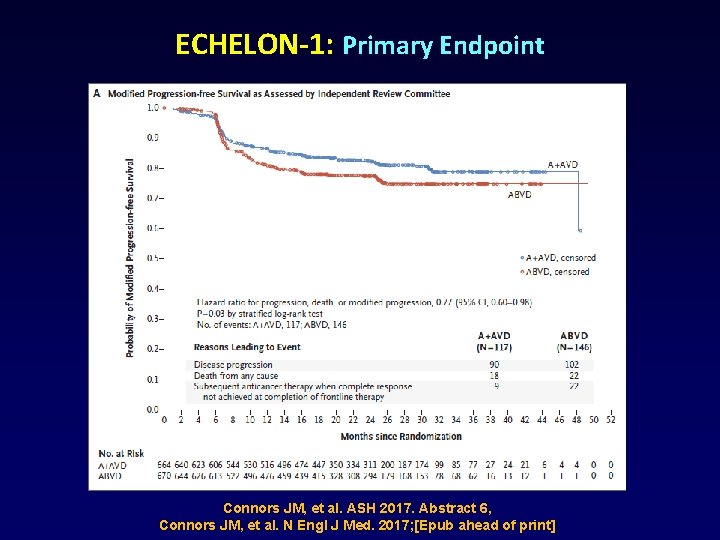
ECHELON-1: Primary Endpoint Connors JM, et al. ASH 2017. Abstract 6, Connors JM, et al. N Engl J Med. 2017; [Epub ahead of print]
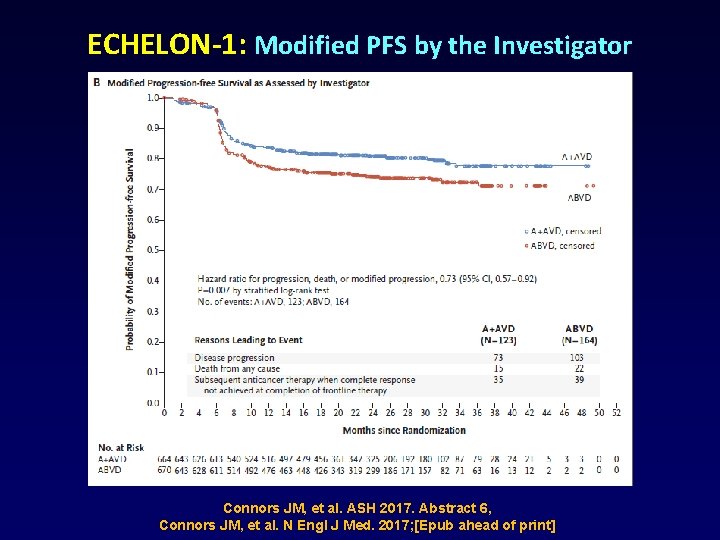
ECHELON-1: Modified PFS by the Investigator Connors JM, et al. ASH 2017. Abstract 6, Connors JM, et al. N Engl J Med. 2017; [Epub ahead of print]
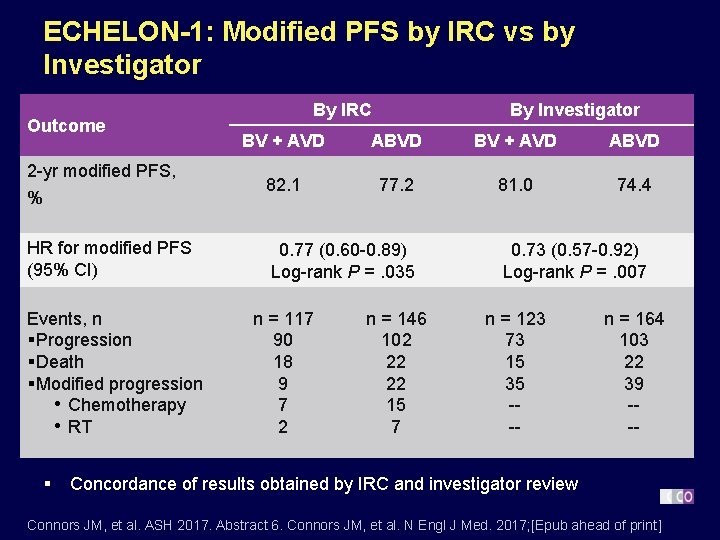
ECHELON-1: Modified PFS by IRC vs by Investigator Outcome 2 -yr modified PFS, % HR for modified PFS (95% CI) Events, n §Progression §Death §Modified progression • Chemotherapy • RT § By IRC By Investigator BV + AVD ABVD 82. 1 77. 2 81. 0 74. 4 0. 77 (0. 60 -0. 89) Log-rank P =. 035 n = 117 90 18 9 7 2 n = 146 102 22 22 15 7 0. 73 (0. 57 -0. 92) Log-rank P =. 007 n = 123 73 15 35 --- n = 164 103 22 39 --- Concordance of results obtained by IRC and investigator review Connors JM, et al. ASH 2017. Abstract 6. Connors JM, et al. N Engl J Med. 2017; [Epub ahead of print]
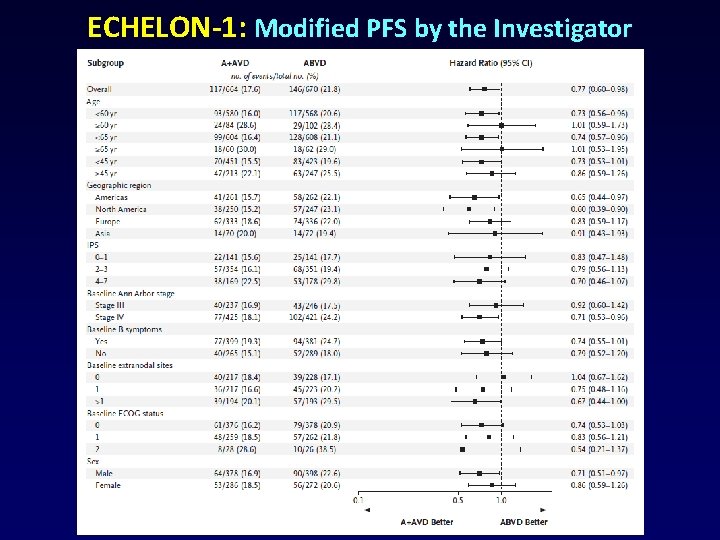
ECHELON-1: Modified PFS by the Investigator

ECHELON-1: Secondary Efficacy and Survival Outcomes Endpoint, n (%) BV + AVD (n = 664) ABVD (n = 670) CR* rate at end of randomized regimen 488 (73) 472 (70) ORR* at end of randomized regimen 569 (86) 553 (83) PET Deauville score 1 -2 after completing first-line tx 563 (85)† 537 (80)† 588 (89) 26 (4) 21 (3) 29 (4) 577 (86) 28 (4) 30 (4) 35 (5) PET Deauville score 4 -5 after completing cycle 2 § 1 -3 § 4 § 5 §Unavailable *Per IWG 2007 criteria. †P =. 03 per chi-square test. § Interim OS calculated with 67 out of 112 planned deaths for analysis – HR for BV + AVD vs ABVD: 0. 72 (95% CI: 0. 44 -1. 17; P =. 19) Connors JM, et al. ASH 2017. Abstract 6. Connors JM, et al. N Engl J Med. 2017; [Epub ahead of print]
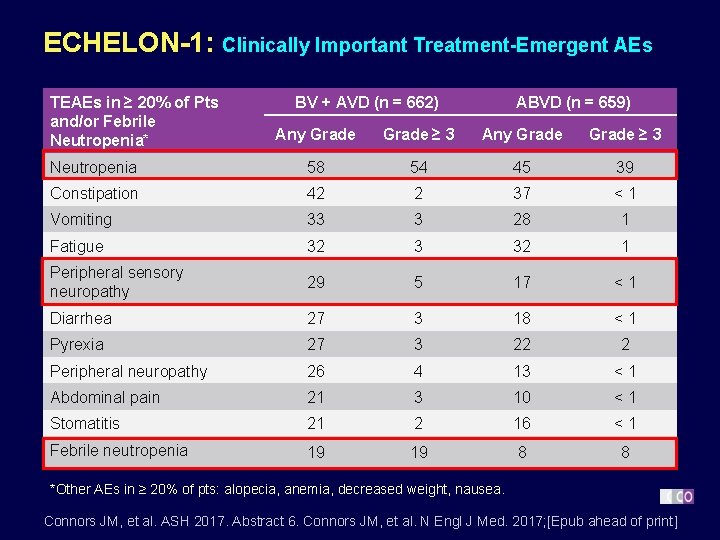
ECHELON-1: Clinically Important Treatment-Emergent AEs TEAEs in ≥ 20% of Pts and/or Febrile Neutropenia* BV + AVD (n = 662) ABVD (n = 659) Any Grade ≥ 3 Neutropenia 58 54 45 39 Constipation 42 2 37 <1 Vomiting 33 3 28 1 Fatigue 32 3 32 1 Peripheral sensory neuropathy 29 5 17 <1 Diarrhea 27 3 18 <1 Pyrexia 27 3 22 2 Peripheral neuropathy 26 4 13 <1 Abdominal pain 21 3 10 <1 Stomatitis 21 2 16 <1 Febrile neutropenia 19 19 8 8 *Other AEs in ≥ 20% of pts: alopecia, anemia, decreased weight, nausea. Connors JM, et al. ASH 2017. Abstract 6. Connors JM, et al. N Engl J Med. 2017; [Epub ahead of print]
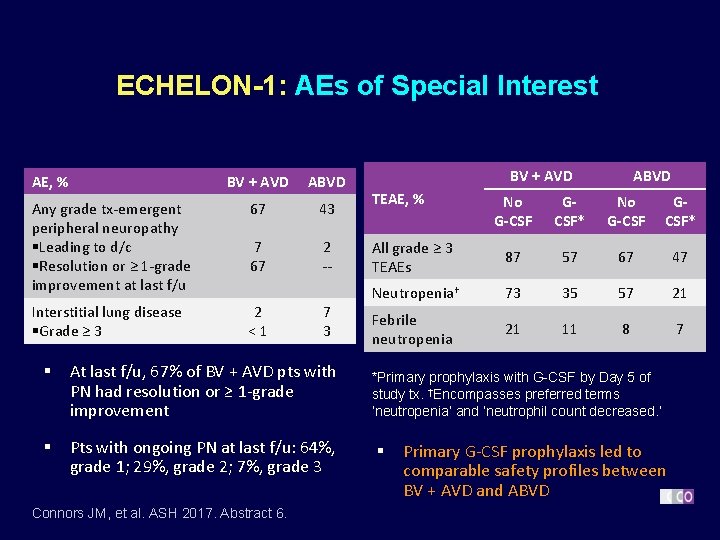
ECHELON-1: AEs of Special Interest AE, % BV + AVD ABVD Any grade tx-emergent peripheral neuropathy §Leading to d/c §Resolution or ≥ 1 -grade improvement at last f/u 67 43 7 67 2 -- Interstitial lung disease §Grade ≥ 3 2 < 1 7 3 § At last f/u, 67% of BV + AVD pts with PN had resolution or ≥ 1 -grade improvement § Pts with ongoing PN at last f/u: 64%, grade 1; 29%, grade 2; 7%, grade 3 Connors JM, et al. ASH 2017. Abstract 6. BV + AVD TEAE, % ABVD No G-CSF GCSF* All grade ≥ 3 TEAEs 87 57 67 47 Neutropenia† 73 35 57 21 Febrile neutropenia 21 11 8 7 *Primary prophylaxis with G-CSF by Day 5 of study tx. †Encompasses preferred terms ‘neutropenia’ and ‘neutrophil count decreased. ’ § Primary G-CSF prophylaxis led to comparable safety profiles between BV + AVD and ABVD
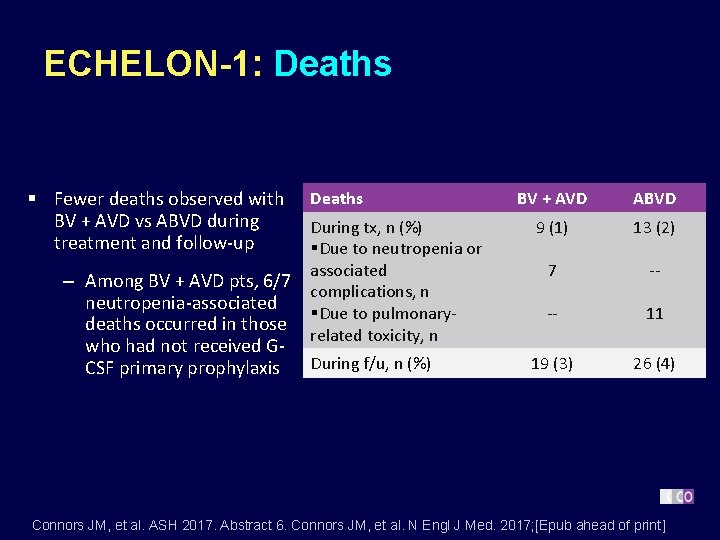
ECHELON-1: Deaths § Fewer deaths observed with BV + AVD vs ABVD during treatment and follow-up Deaths During tx, n (%) §Due to neutropenia or associated – Among BV + AVD pts, 6/7 complications, n neutropenia-associated §Due to pulmonarydeaths occurred in those related toxicity, n who had not received GCSF primary prophylaxis During f/u, n (%) BV + AVD ABVD 9 (1) 13 (2) 7 -- -- 11 19 (3) 26 (4) Connors JM, et al. ASH 2017. Abstract 6. Connors JM, et al. N Engl J Med. 2017; [Epub ahead of print]
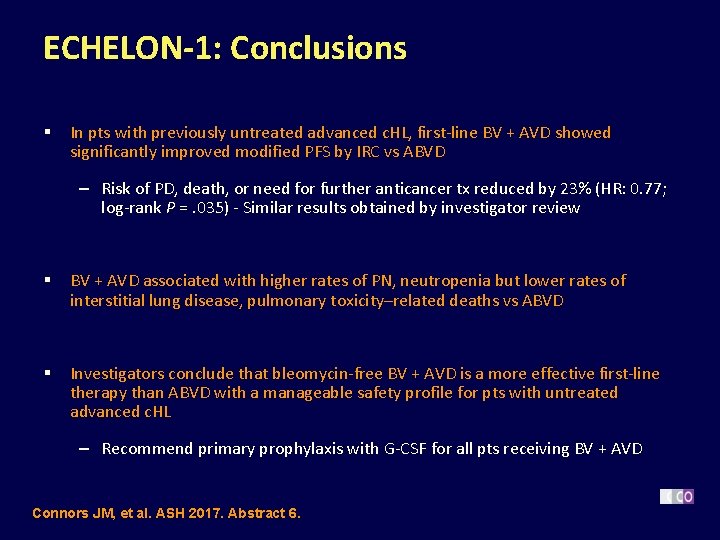
ECHELON-1: Conclusions § In pts with previously untreated advanced c. HL, first-line BV + AVD showed significantly improved modified PFS by IRC vs ABVD – Risk of PD, death, or need for further anticancer tx reduced by 23% (HR: 0. 77; log-rank P =. 035) - Similar results obtained by investigator review § BV + AVD associated with higher rates of PN, neutropenia but lower rates of interstitial lung disease, pulmonary toxicity–related deaths vs ABVD § Investigators conclude that bleomycin-free BV + AVD is a more effective first-line therapy than ABVD with a manageable safety profile for pts with untreated advanced c. HL – Recommend primary prophylaxis with G-CSF for all pts receiving BV + AVD Connors JM, et al. ASH 2017. Abstract 6.
Analysis of Nivolumab Continued Beyond Progression in Patients With R/R Classical Hodgkin Lymphoma Outcomes from the Phase 2, Checkmate 205 Study Integrating New Hematology Findings Into Practice: Independent Conference Coverage of ASH 2017, * December 9 -12, Atlanta, Georgia Jonathon B Cohen, Andreas Engert, Stephen Ansell, Anas Younes, Marek Trneny, Kerry J Savage, Radhakrishnan. Ramchandren, Graham Collins, Michelle A. Fanale, Philippe Armand, Pier Luigi Zinzani, Jan Paul De Boer, Margaret A. Shipp, Armando Santoro, John M Timmerman, Mariana Sacchi, Oumar Sy and John Kuruvilla Blood 2017; 130: 650
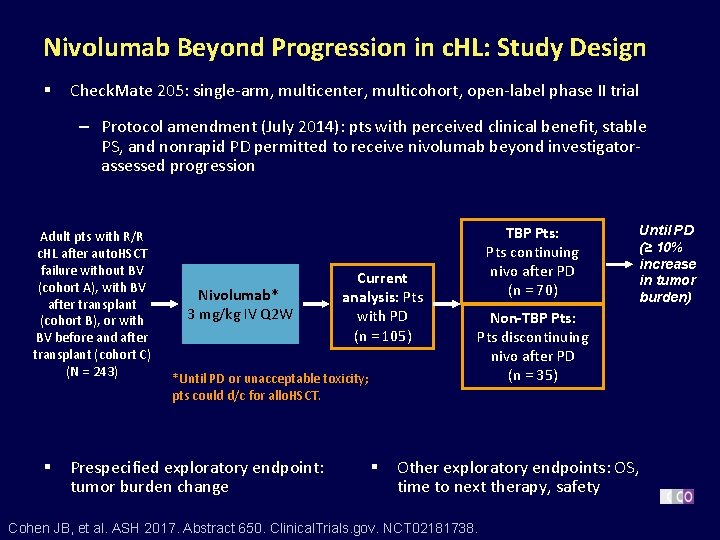
Nivolumab Beyond Progression in c. HL: Study Design § Check. Mate 205: single-arm, multicenter, multicohort, open-label phase II trial – Protocol amendment (July 2014): pts with perceived clinical benefit, stable PS, and nonrapid PD permitted to receive nivolumab beyond investigatorassessed progression Adult pts with R/R c. HL after auto. HSCT failure without BV (cohort A), with BV after transplant (cohort B), or with BV before and after transplant (cohort C) (N = 243) § Nivolumab* 3 mg/kg IV Q 2 W Current analysis: Pts with PD (n = 105) *Until PD or unacceptable toxicity; pts could d/c for allo. HSCT. Prespecified exploratory endpoint: tumor burden change § TBP Pts: Pts continuing nivo after PD (n = 70) Until PD (≥ 10% increase in tumor burden) Non-TBP Pts: Pts discontinuing nivo after PD (n = 35) Other exploratory endpoints: OS, time to next therapy, safety Cohen JB, et al. ASH 2017. Abstract 650. Clinical. Trials. gov. NCT 02181738.
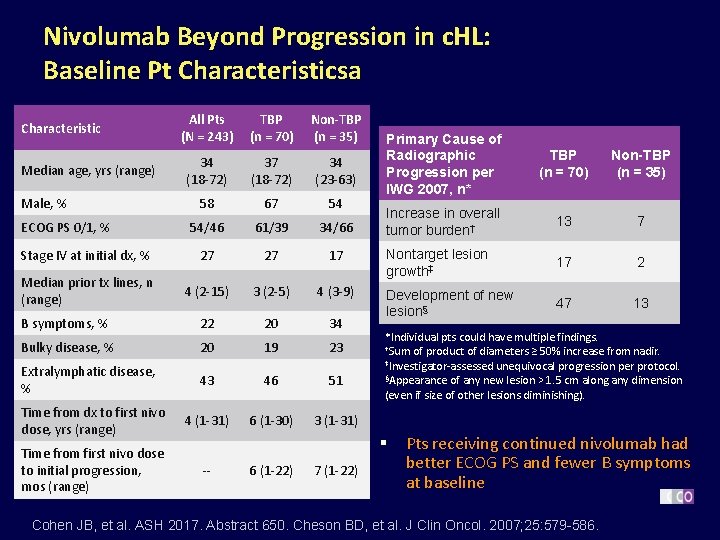
Nivolumab Beyond Progression in c. HL: Baseline Pt Characteristicsa All Pts (N = 243) TBP (n = 70) Non-TBP (n = 35) 34 (18 -72) 37 (18 -72) 34 (23 -63) 58 67 54 54/46 61/39 34/66 Stage IV at initial dx, % 27 27 17 Median prior tx lines, n (range) 4 (2 -15) 3 (2 -5) 4 (3 -9) B symptoms, % 22 20 34 Bulky disease, % 20 19 23 Extralymphatic disease, % 43 46 51 Time from dx to first nivo dose, yrs (range) 4 (1 -31) 6 (1 -30) 3 (1 -31) Time from first nivo dose to initial progression, mos (range) -- Characteristic Median age, yrs (range) Male, % ECOG PS 0/1, % Primary Cause of Radiographic Progression per IWG 2007, n* TBP (n = 70) Non-TBP (n = 35) Increase in overall tumor burden† 13 7 Nontarget lesion growth‡ 17 2 Development of new lesion§ 47 13 *Individual pts could have multiple findings. †Sum of product of diameters ≥ 50% increase from nadir. ‡Investigator-assessed unequivocal progression per protocol. §Appearance of any new lesion > 1. 5 cm along any dimension (even if size of other lesions diminishing). § 6 (1 -22) 7 (1 -22) Pts receiving continued nivolumab had better ECOG PS and fewer B symptoms at baseline Cohen JB, et al. ASH 2017. Abstract 650. Cheson BD, et al. J Clin Oncol. 2007; 25: 579 -586.
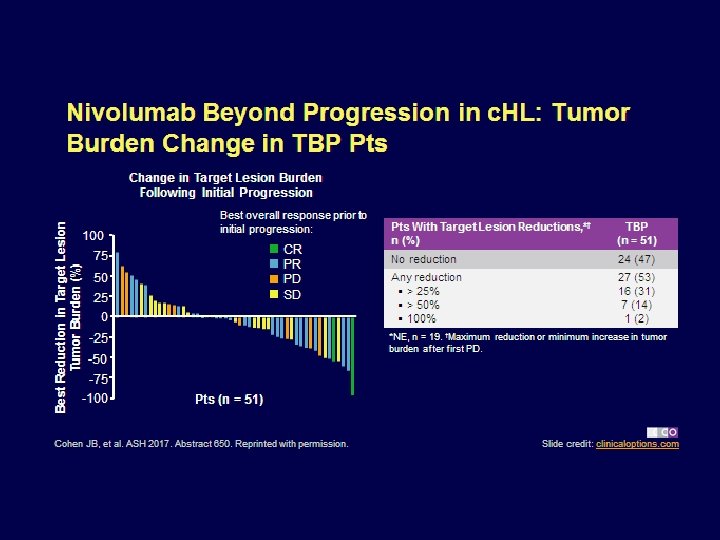
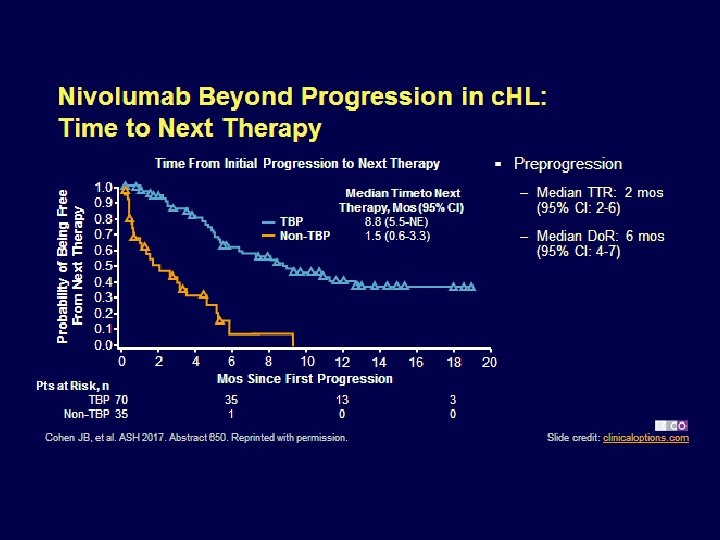
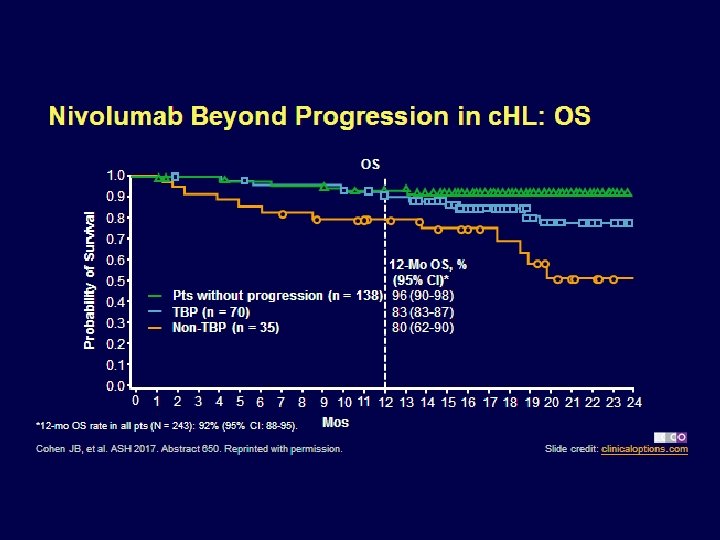
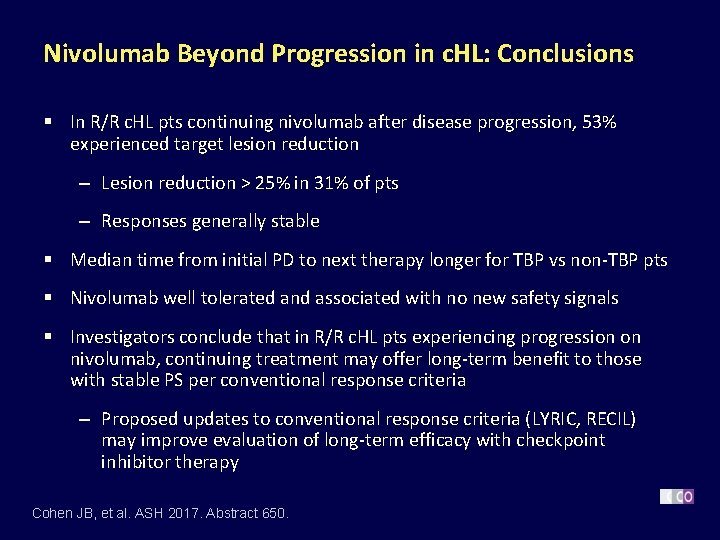
Nivolumab Beyond Progression in c. HL: Conclusions § In R/R c. HL pts continuing nivolumab after disease progression, 53% experienced target lesion reduction – Lesion reduction > 25% in 31% of pts – Responses generally stable § Median time from initial PD to next therapy longer for TBP vs non-TBP pts § Nivolumab well tolerated and associated with no new safety signals § Investigators conclude that in R/R c. HL pts experiencing progression on nivolumab, continuing treatment may offer long-term benefit to those with stable PS per conventional response criteria – Proposed updates to conventional response criteria (LYRIC, RECIL) may improve evaluation of long-term efficacy with checkpoint inhibitor therapy Cohen JB, et al. ASH 2017. Abstract 650.
Phase I/II Study of Brentuximab Vedotin + Nivolumab for Patients With R/R Classical Hodgkin Lymphoma Integrating New Hematology Findings Into Practice: Independent Conference Coverage of ASH 2017, * December 9 -12, Atlanta, Georgia Alex F. Herrera, Alison J. Moskowitz, Nancy L. Bartlett, Julie M Vose, Radhakrishnan Ramchandren, Tatyana AFeldman, Ann S La. Casce, Stephen M Ansell, Craig H. Moskowitz, Keenan Fenton, Carol Anne Ogden, David Taft, Qu Zhang, Kazunobu Kato, Mary Campbell and Ranjana H. Advani Blood 2017; 130: 649
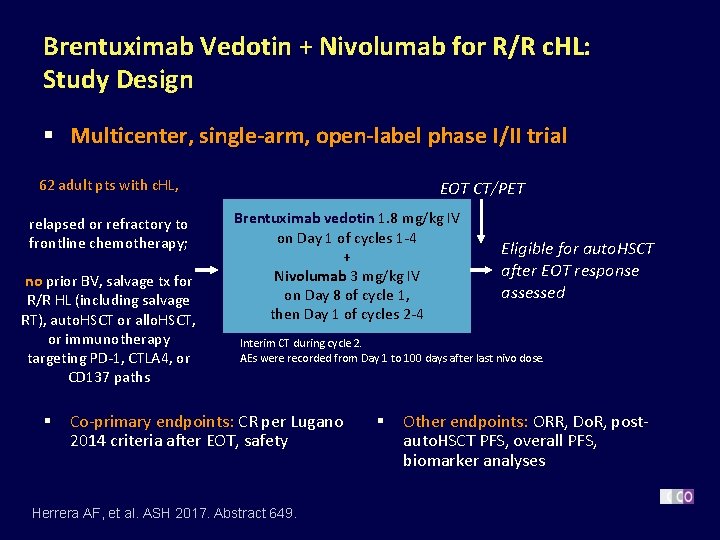
Brentuximab Vedotin + Nivolumab for R/R c. HL: Study Design § Multicenter, single-arm, open-label phase I/II trial 62 adult pts with c. HL, relapsed or refractory to frontline chemotherapy; no prior BV, salvage tx for R/R HL (including salvage RT), auto. HSCT or allo. HSCT, or immunotherapy targeting PD-1, CTLA 4, or CD 137 paths § EOT CT/PET Brentuximab vedotin 1. 8 mg/kg IV on Day 1 of cycles 1 -4 + Nivolumab 3 mg/kg IV on Day 8 of cycle 1, then Day 1 of cycles 2 -4 Eligible for auto. HSCT after EOT response assessed Interim CT during cycle 2. AEs were recorded from Day 1 to 100 days after last nivo dose. Co-primary endpoints: CR per Lugano 2014 criteria after EOT, safety Herrera AF, et al. ASH 2017. Abstract 649. § Other endpoints: ORR, Do. R, postauto. HSCT PFS, overall PFS, biomarker analyses
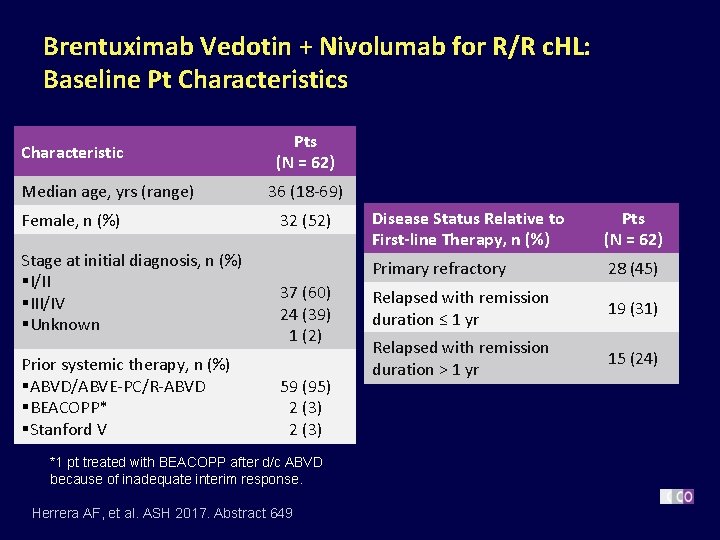
Brentuximab Vedotin + Nivolumab for R/R c. HL: Baseline Pt Characteristics Characteristic Median age, yrs (range) Female, n (%) Stage at initial diagnosis, n (%) §I/II §III/IV §Unknown Prior systemic therapy, n (%) §ABVD/ABVE-PC/R-ABVD §BEACOPP* §Stanford V Pts (N = 62) 36 (18 -69) 32 (52) 37 (60) 24 (39) 1 (2) 59 (95) 2 (3) *1 pt treated with BEACOPP after d/c ABVD because of inadequate interim response. Herrera AF, et al. ASH 2017. Abstract 649 Disease Status Relative to First-line Therapy, n (%) Pts (N = 62) Primary refractory 28 (45) Relapsed with remission duration ≤ 1 yr 19 (31) Relapsed with remission duration > 1 yr 15 (24)
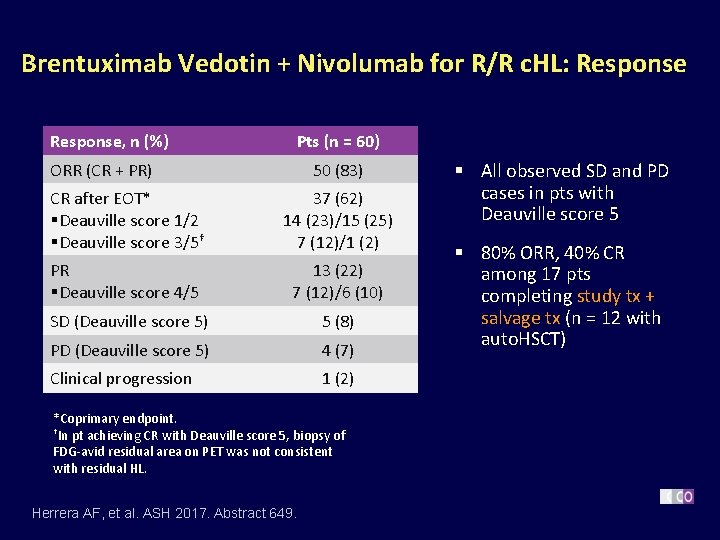
Brentuximab Vedotin + Nivolumab for R/R c. HL: Response, n (%) Pts (n = 60) ORR (CR + PR) 50 (83) CR after EOT* §Deauville score 1/2 §Deauville score 3/5† 37 (62) 14 (23)/15 (25) 7 (12)/1 (2) PR §Deauville score 4/5 13 (22) 7 (12)/6 (10) SD (Deauville score 5) 5 (8) PD (Deauville score 5) 4 (7) Clinical progression 1 (2) *Coprimary endpoint. †In pt achieving CR with Deauville score 5, biopsy of FDG-avid residual area on PET was not consistent with residual HL. Herrera AF, et al. ASH 2017. Abstract 649. § All observed SD and PD cases in pts with Deauville score 5 § 80% ORR, 40% CR among 17 pts completing study tx + salvage tx (n = 12 with auto. HSCT)
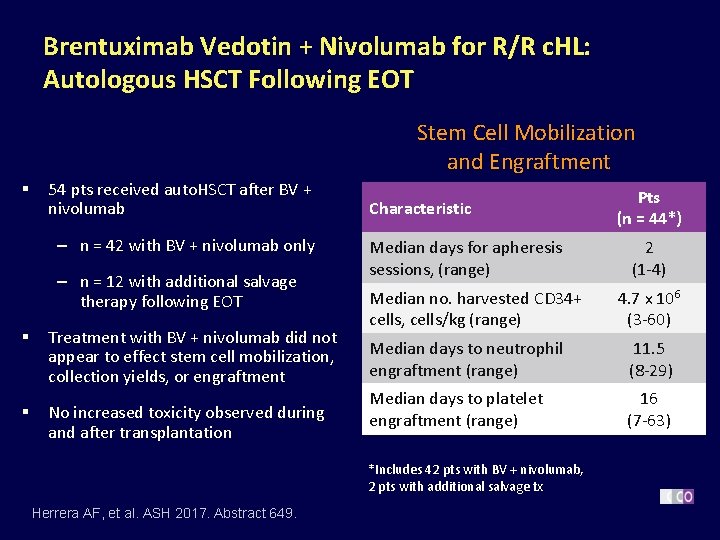
Brentuximab Vedotin + Nivolumab for R/R c. HL: Autologous HSCT Following EOT Stem Cell Mobilization and Engraftment § 54 pts received auto. HSCT after BV + nivolumab – n = 42 with BV + nivolumab only – n = 12 with additional salvage therapy following EOT § Treatment with BV + nivolumab did not appear to effect stem cell mobilization, collection yields, or engraftment § No increased toxicity observed during and after transplantation Characteristic Median days for apheresis sessions, (range) Median no. harvested CD 34+ cells, cells/kg (range) 2 (1 -4) 4. 7 x 10⁶ (3 -60) Median days to neutrophil engraftment (range) 11. 5 (8 -29) Median days to platelet engraftment (range) 16 (7 -63) *Includes 42 pts with BV + nivolumab, 2 pts with additional salvage tx Herrera AF, et al. ASH 2017. Abstract 649. Pts (n = 44*)
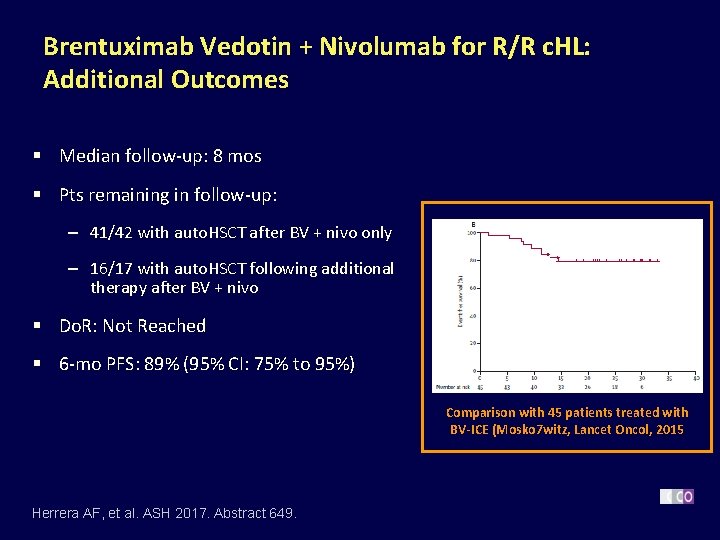
Brentuximab Vedotin + Nivolumab for R/R c. HL: Additional Outcomes § Median follow-up: 8 mos § Pts remaining in follow-up: – 41/42 with auto. HSCT after BV + nivo only – 16/17 with auto. HSCT following additional salvage therapy after BV + nivo § Do. R: Not Reached § 6 -mo PFS: 89% (95% CI: 75% to 95%) Comparison with 45 patients treated with BV-ICE (Mosko 7 witz, Lancet Oncol, 2015 Herrera AF, et al. ASH 2017. Abstract 649.
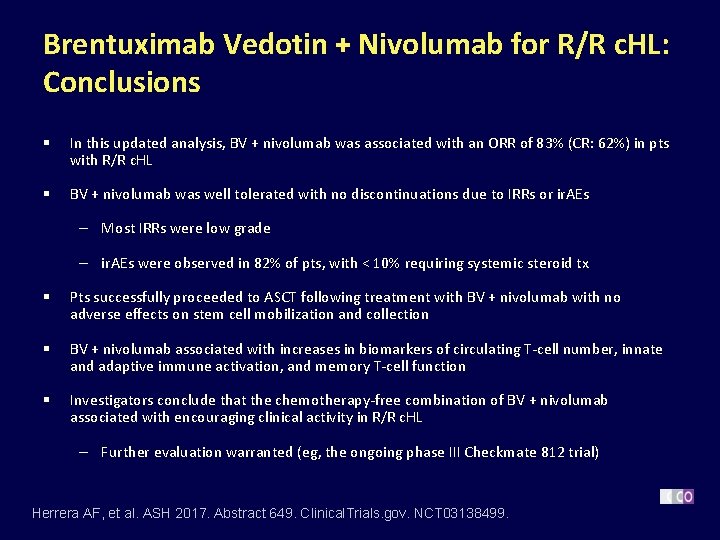
Brentuximab Vedotin + Nivolumab for R/R c. HL: Conclusions § In this updated analysis, BV + nivolumab was associated with an ORR of 83% (CR: 62%) in pts with R/R c. HL § BV + nivolumab was well tolerated with no discontinuations due to IRRs or ir. AEs – Most IRRs were low grade – ir. AEs were observed in 82% of pts, with < 10% requiring systemic steroid tx § Pts successfully proceeded to ASCT following treatment with BV + nivolumab with no adverse effects on stem cell mobilization and collection § BV + nivolumab associated with increases in biomarkers of circulating T-cell number, innate and adaptive immune activation, and memory T-cell function § Investigators conclude that the chemotherapy-free combination of BV + nivolumab associated with encouraging clinical activity in R/R c. HL – Further evaluation warranted (eg, the ongoing phase III Checkmate 812 trial) Herrera AF, et al. ASH 2017. Abstract 649. Clinical. Trials. gov. NCT 03138499.

JULIET: Phase II Primary Analysis of CAR T-Cell Therapy Tisagenlecleucel (CTL 019) in Adult Patients With Relapsed/Refractory DLBCL Integrating New Hematology Findings Into Practice: Independent Conference Coverage of ASH 2017, * December 9 -12, Atlanta, Georgia Stephen J. Schuster, Michael R. Bishop, Constantine S. Tam, Edmund K. Waller, Peter Borchmann, Joseph P. Mc. Guirk, Ulrich Jaeger, Samantha Jaglowski, Charalambos Andreadis, Jason R. Westin, Isabelle Fleury, Veronika. Bachanova, Stephen Ronan Foley, P. Joy Ho, Stephan Mielke, John M. Magenau, Harald Holte, Koen Van Besien, Marie Jose Kersten, Takanori Teshima, Kensei Tobinai, Paolo Corradini, Oezlem Anak, Lida Bubuteishvili Pacaud, Christopher del Corral, Rakesh Awasthi, Feng Tai, Gilles Salles and Richard Thomas Maziarz Blood 2017; 130: 577
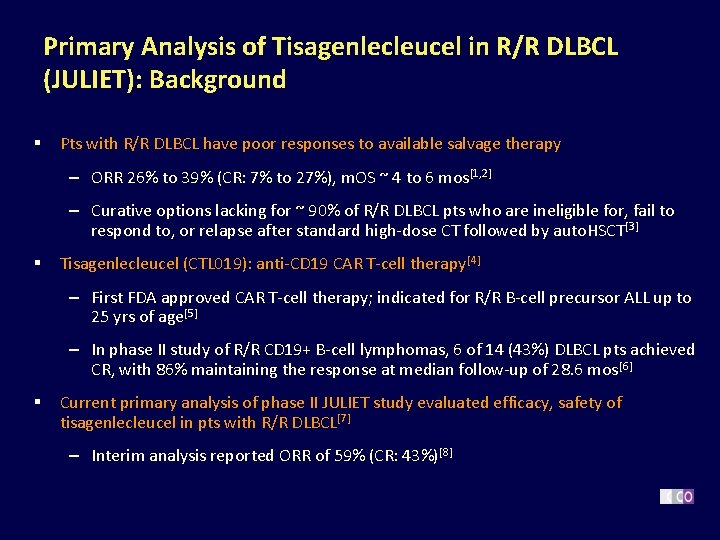
Primary Analysis of Tisagenlecleucel in R/R DLBCL (JULIET): Background § Pts with R/R DLBCL have poor responses to available salvage therapy – ORR 26% to 39% (CR: 7% to 27%), m. OS ~ 4 to 6 mos[1, 2] – Curative options lacking for ~ 90% of R/R DLBCL pts who are ineligible for, fail to respond to, or relapse after standard high-dose CT followed by auto. HSCT[3] § Tisagenlecleucel (CTL 019): anti-CD 19 CAR T-cell therapy[4] – First FDA approved CAR T-cell therapy; indicated for R/R B-cell precursor ALL up to 25 yrs of age[5] – In phase II study of R/R CD 19+ B-cell lymphomas, 6 of 14 (43%) DLBCL pts achieved CR, with 86% maintaining the response at median follow-up of 28. 6 mos[6] § Current primary analysis of phase II JULIET study evaluated efficacy, safety of tisagenlecleucel in pts with R/R DLBCL[7] – Interim analysis reported ORR of 59% (CR: 43%)[8]
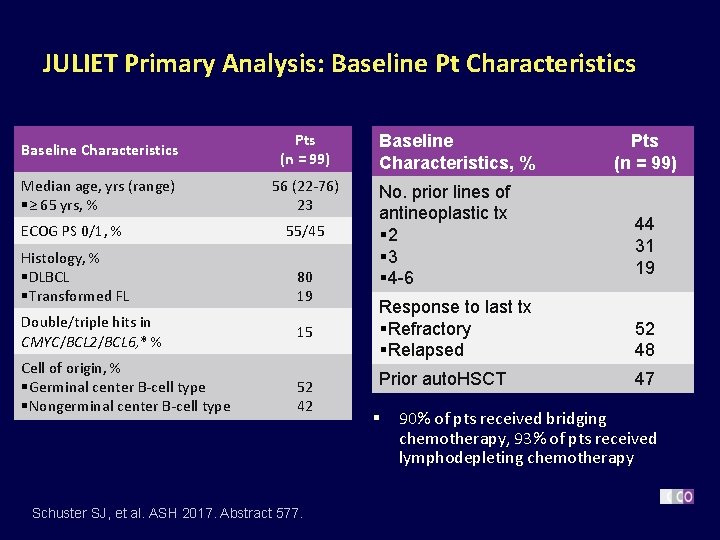
JULIET Primary Analysis: Baseline Pt Characteristics Baseline Characteristics Pts (n = 99) Median age, yrs (range) §≥ 65 yrs, % 56 (22 -76) 23 ECOG PS 0/1, % 55/45 Histology, % §DLBCL §Transformed FL 80 19 Double/triple hits in CMYC/BCL 2/BCL 6, * % Cell of origin, % §Germinal center B-cell type §Nongerminal center B-cell type 15 52 42 Schuster SJ, et al. ASH 2017. Abstract 577. Baseline Characteristics, % No. prior lines of antineoplastic tx § 2 § 3 § 4 -6 Pts (n = 99) 44 31 19 Response to last tx §Refractory §Relapsed 52 48 Prior auto. HSCT 47 § 90% of pts received bridging chemotherapy, 93% of pts received lymphodepleting chemotherapy
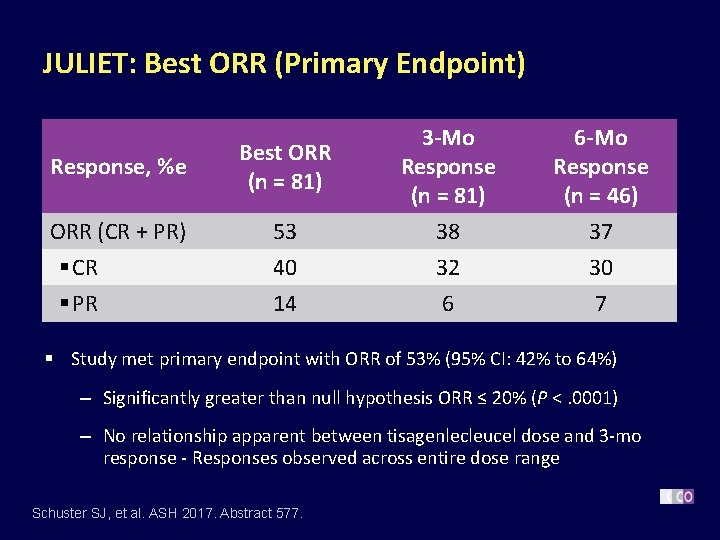
JULIET: Best ORR (Primary Endpoint) Response, %e Best ORR (n = 81) 3 -Mo Response (n = 81) 6 -Mo Response (n = 46) ORR (CR + PR) § CR § PR 53 40 14 38 32 6 37 30 7 § Study met primary endpoint with ORR of 53% (95% CI: 42% to 64%) – Significantly greater than null hypothesis ORR ≤ 20% (P <. 0001) – No relationship apparent between tisagenlecleucel dose and 3 -mo response - Responses observed across entire dose range Schuster SJ, et al. ASH 2017. Abstract 577.
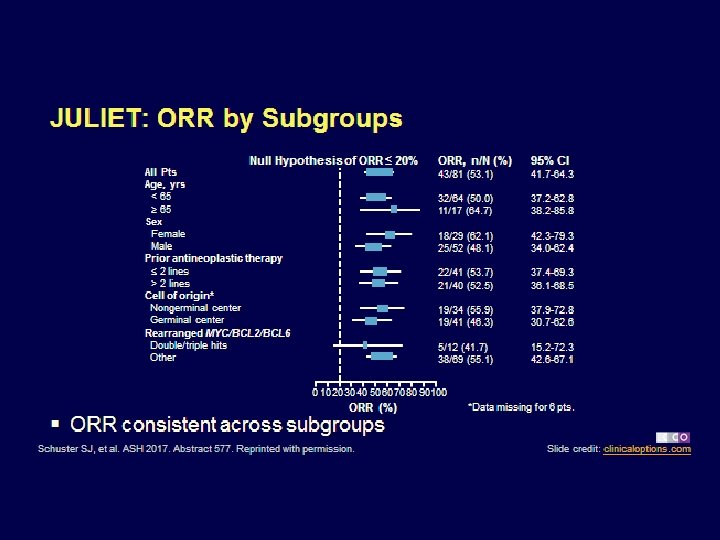
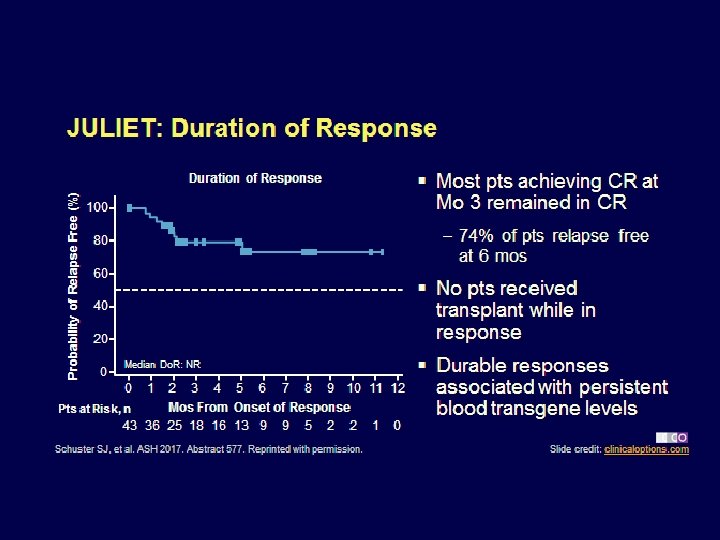
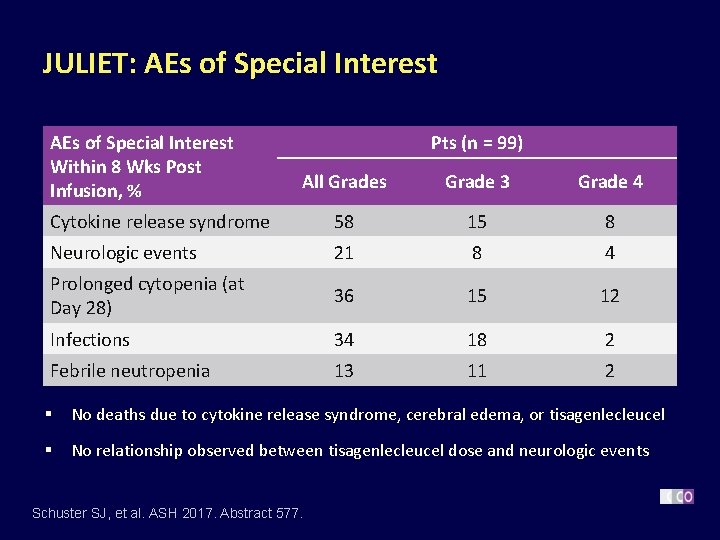
JULIET: AEs of Special Interest Within 8 Wks Post Infusion, % Pts (n = 99) All Grades Grade 3 Grade 4 Cytokine release syndrome 58 15 8 Neurologic events 21 8 4 Prolonged cytopenia (at Day 28) 36 15 12 Infections 34 18 2 Febrile neutropenia 13 11 2 § No deaths due to cytokine release syndrome, cerebral edema, or tisagenlecleucel § No relationship observed between tisagenlecleucel dose and neurologic events Schuster SJ, et al. ASH 2017. Abstract 577.
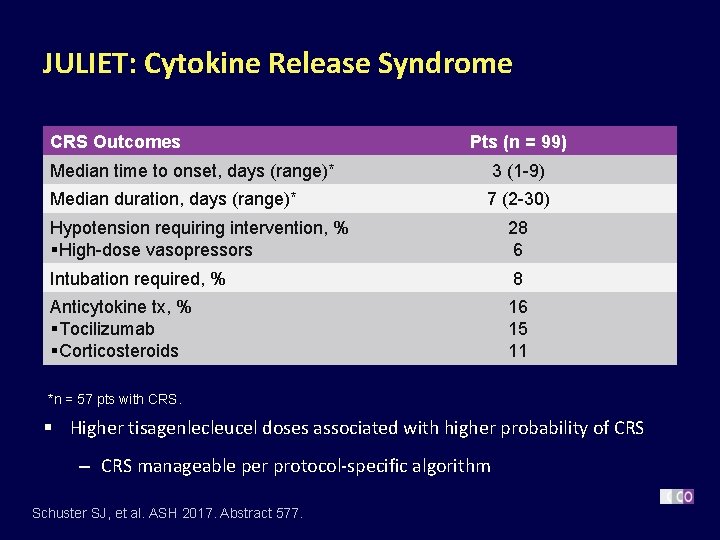
JULIET: Cytokine Release Syndrome CRS Outcomes Pts (n = 99) Median time to onset, days (range)* 3 (1 -9) Median duration, days (range)* 7 (2 -30) Hypotension requiring intervention, % §High-dose vasopressors 28 6 Intubation required, % 8 Anticytokine tx, % §Tocilizumab §Corticosteroids 16 15 11 *n = 57 pts with CRS. § Higher tisagenlecleucel doses associated with higher probability of CRS – CRS manageable per protocol-specific algorithm Schuster SJ, et al. ASH 2017. Abstract 577.
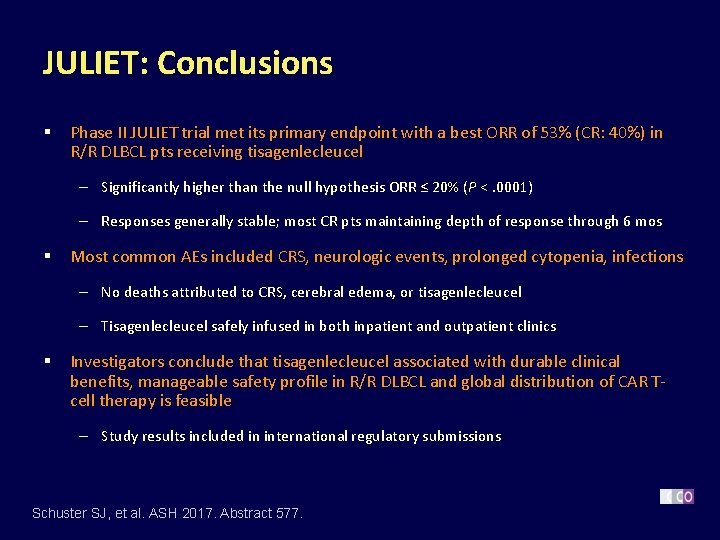
JULIET: Conclusions § Phase II JULIET trial met its primary endpoint with a best ORR of 53% (CR: 40%) in R/R DLBCL pts receiving tisagenlecleucel – Significantly higher than the null hypothesis ORR ≤ 20% (P <. 0001) – Responses generally stable; most CR pts maintaining depth of response through 6 mos § Most common AEs included CRS, neurologic events, prolonged cytopenia, infections – No deaths attributed to CRS, cerebral edema, or tisagenlecleucel – Tisagenlecleucel safely infused in both inpatient and outpatient clinics § Investigators conclude that tisagenlecleucel associated with durable clinical benefits, manageable safety profile in R/R DLBCL and global distribution of CAR Tcell therapy is feasible – Study results included in international regulatory submissions Schuster SJ, et al. ASH 2017. Abstract 577.
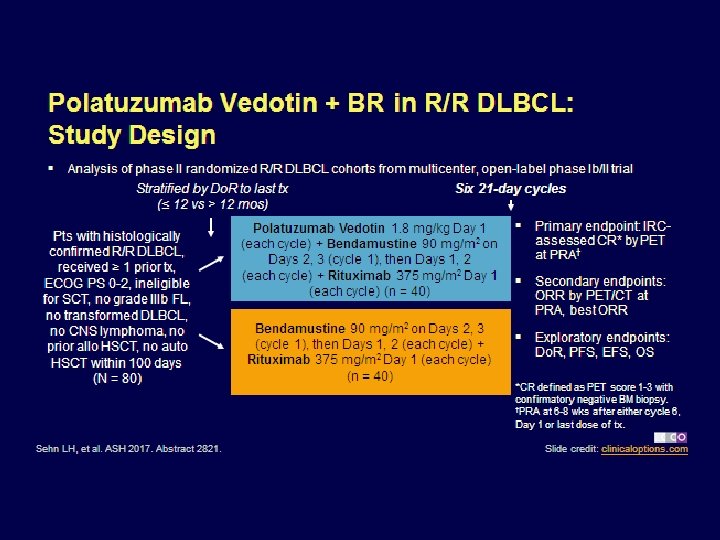
Randomized Phase II Trial of Polatuzumab Vedotin Addition to Bendamustine + Rituximab in Patients With Transplant-Ineligible Patients with R/R DLBCL Integrating New Hematology Findings Into Practice: Independent Conference Coverage of ASH 2017, * December 9 -12, Atlanta, Georgia Laurie H. Sehn, Alex F. Herrera, Matthew J. Matasar, Manali Kamdar, Andrew K. Mc. Millan, Tae Min Kim, Won Seog Kim, Mark Hertzberg, Muhit Ozcan, Elicia Penuel, Ji Cheng, Jamie M. Hirata, Grace Ku and Christopher Flowers Blood 2017; 130: 2821
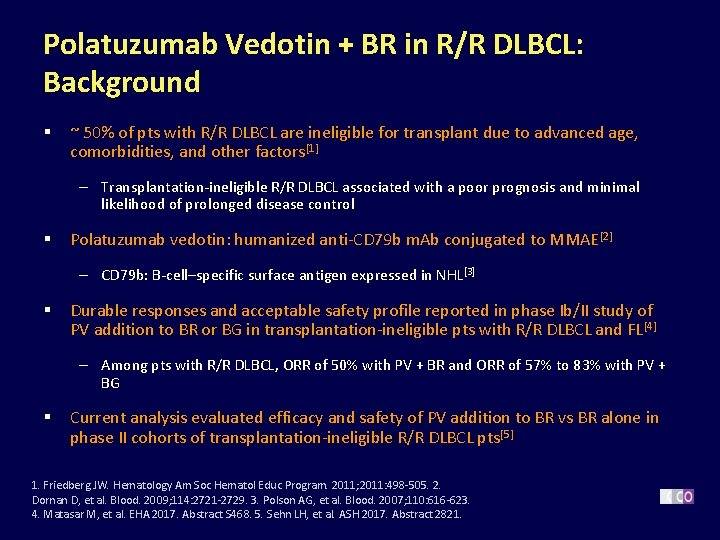
Polatuzumab Vedotin + BR in R/R DLBCL: Background § ~ 50% of pts with R/R DLBCL are ineligible for transplant due to advanced age, comorbidities, and other factors[1] – Transplantation-ineligible R/R DLBCL associated with a poor prognosis and minimal likelihood of prolonged disease control § Polatuzumab vedotin: humanized anti-CD 79 b m. Ab conjugated to MMAE[2] – CD 79 b: B-cell–specific surface antigen expressed in NHL[3] § Durable responses and acceptable safety profile reported in phase Ib/II study of PV addition to BR or BG in transplantation-ineligible pts with R/R DLBCL and FL [4] – Among pts with R/R DLBCL, ORR of 50% with PV + BR and ORR of 57% to 83% with PV + BG § Current analysis evaluated efficacy and safety of PV addition to BR vs BR alone in phase II cohorts of transplantation-ineligible R/R DLBCL pts[5] 1. Friedberg JW. Hematology Am Soc Hematol Educ Program. 2011; 2011: 498 -505. 2. Dornan D, et al. Blood. 2009; 114: 2721 -2729. 3. Polson AG, et al. Blood. 2007; 110: 616 -623. 4. Matasar M, et al. EHA 2017. Abstract S 468. 5. Sehn LH, et al. ASH 2017. Abstract 2821.
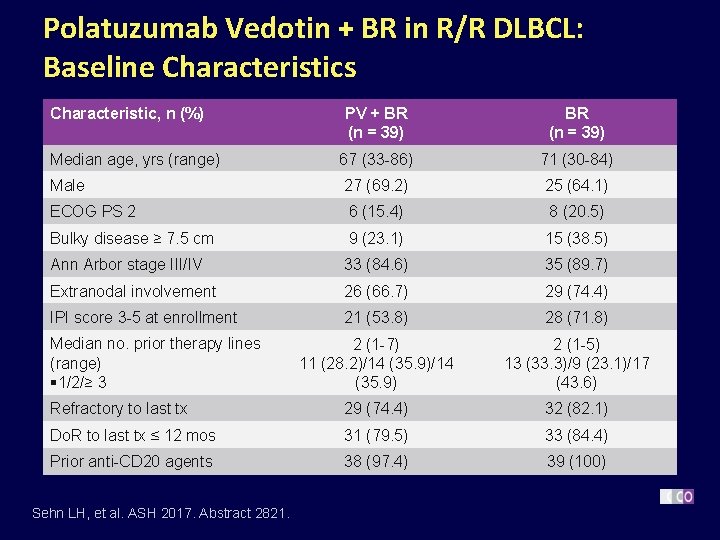
Polatuzumab Vedotin + BR in R/R DLBCL: Baseline Characteristics Characteristic, n (%) PV + BR (n = 39) 67 (33 -86) 71 (30 -84) Male 27 (69. 2) 25 (64. 1) ECOG PS 2 6 (15. 4) 8 (20. 5) Bulky disease ≥ 7. 5 cm 9 (23. 1) 15 (38. 5) Ann Arbor stage III/IV 33 (84. 6) 35 (89. 7) Extranodal involvement 26 (66. 7) 29 (74. 4) IPI score 3 -5 at enrollment 21 (53. 8) 28 (71. 8) 2 (1 -7) 11 (28. 2)/14 (35. 9) 2 (1 -5) 13 (33. 3)/9 (23. 1)/17 (43. 6) Refractory to last tx 29 (74. 4) 32 (82. 1) Do. R to last tx ≤ 12 mos 31 (79. 5) 33 (84. 4) Prior anti-CD 20 agents 38 (97. 4) 39 (100) Median age, yrs (range) Median no. prior therapy lines (range) § 1/2/≥ 3 Sehn LH, et al. ASH 2017. Abstract 2821.
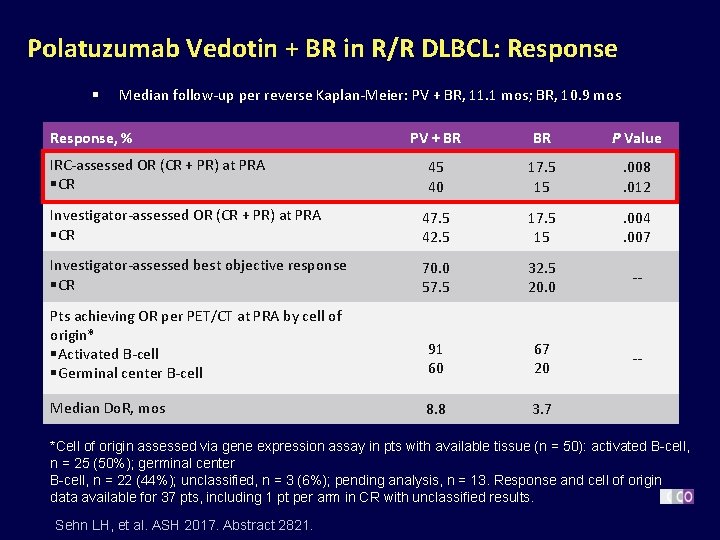
Polatuzumab Vedotin + BR in R/R DLBCL: Response § Median follow-up per reverse Kaplan-Meier: PV + BR, 11. 1 mos; BR, 10. 9 mos Response, % PV + BR BR P Value 45 40 17. 5 15 . 008. 012 Investigator-assessed OR (CR + PR) at PRA §CR 47. 5 42. 5 17. 5 15 . 004. 007 Investigator-assessed best objective response §CR 70. 0 57. 5 32. 5 20. 0 -- Pts achieving OR per PET/CT at PRA by cell of origin* §Activated B-cell §Germinal center B-cell 91 60 67 20 -- Median Do. R, mos 8. 8 3. 7 IRC-assessed OR (CR + PR) at PRA §CR *Cell of origin assessed via gene expression assay in pts with available tissue (n = 50): activated B-cell, n = 25 (50%); germinal center B-cell, n = 22 (44%); unclassified, n = 3 (6%); pending analysis, n = 13. Response and cell of origin data available for 37 pts, including 1 pt per arm in CR with unclassified results. Sehn LH, et al. ASH 2017. Abstract 2821.
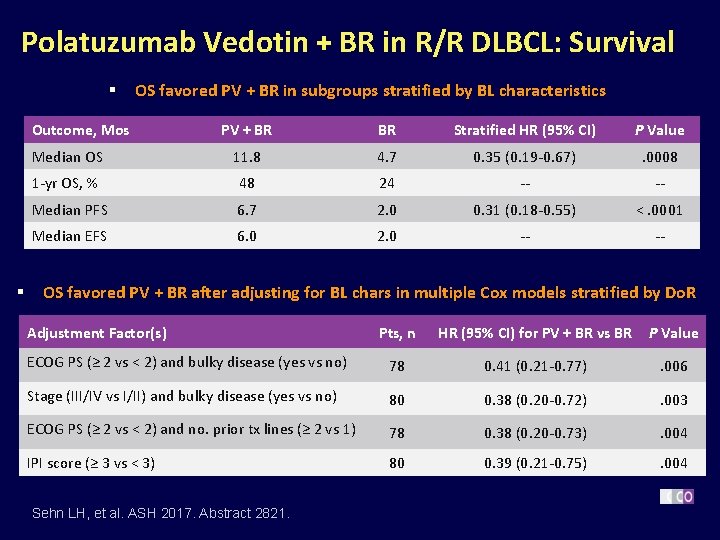
Polatuzumab Vedotin + BR in R/R DLBCL: Survival § OS favored PV + BR in subgroups stratified by BL characteristics Outcome, Mos § PV + BR BR Stratified HR (95% CI) P Value Median OS 11. 8 4. 7 0. 35 (0. 19 -0. 67) . 0008 1 -yr OS, % 48 24 -- -- Median PFS 6. 7 2. 0 0. 31 (0. 18 -0. 55) <. 0001 Median EFS 6. 0 2. 0 -- -- OS favored PV + BR after adjusting for BL chars in multiple Cox models stratified by Do. R Adjustment Factor(s) Pts, n HR (95% CI) for PV + BR vs BR P Value ECOG PS (≥ 2 vs < 2) and bulky disease (yes vs no) 78 0. 41 (0. 21 -0. 77) . 006 Stage (III/IV vs I/II) and bulky disease (yes vs no) 80 0. 38 (0. 20 -0. 72) . 003 ECOG PS (≥ 2 vs < 2) and no. prior tx lines (≥ 2 vs 1) 78 0. 38 (0. 20 -0. 73) . 004 IPI score (≥ 3 vs < 3) 80 0. 39 (0. 21 -0. 75) . 004 Sehn LH, et al. ASH 2017. Abstract 2821.
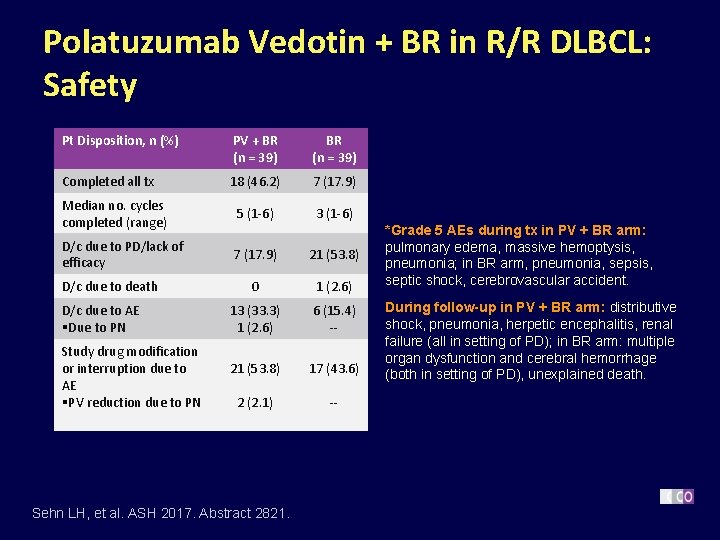
Polatuzumab Vedotin + BR in R/R DLBCL: Safety Pt Disposition, n (%) PV + BR (n = 39) Completed all tx 18 (46. 2) 7 (17. 9) Median no. cycles completed (range) 5 (1 -6) 3 (1 -6) D/c due to PD/lack of efficacy 7 (17. 9) 21 (53. 8) 0 1 (2. 6) 13 (33. 3) 1 (2. 6) 6 (15. 4) -- 21 (53. 8) 17 (43. 6) 2 (2. 1) -- D/c due to death D/c due to AE §Due to PN Study drug modification or interruption due to AE §PV reduction due to PN Sehn LH, et al. ASH 2017. Abstract 2821. *Grade 5 AEs during tx in PV + BR arm: pulmonary edema, massive hemoptysis, pneumonia; in BR arm, pneumonia, sepsis, septic shock, cerebrovascular accident. During follow-up in PV + BR arm: distributive shock, pneumonia, herpetic encephalitis, renal failure (all in setting of PD); in BR arm: multiple organ dysfunction and cerebral hemorrhage (both in setting of PD), unexplained death.
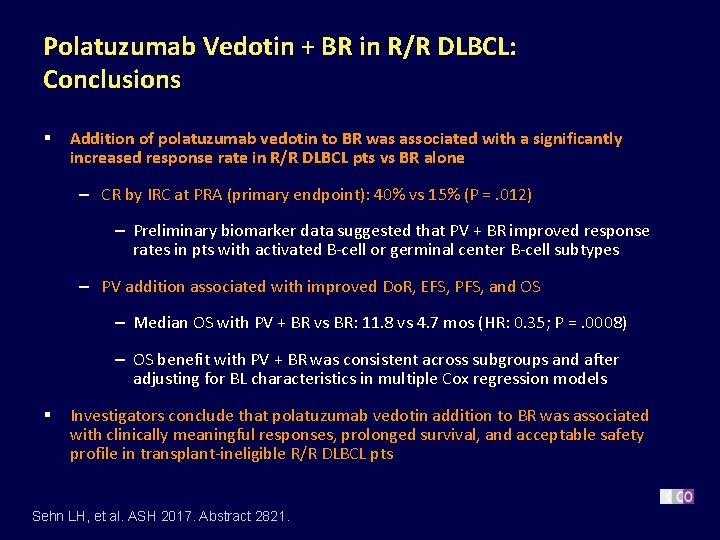
Polatuzumab Vedotin + BR in R/R DLBCL: Conclusions § Addition of polatuzumab vedotin to BR was associated with a significantly increased response rate in R/R DLBCL pts vs BR alone – CR by IRC at PRA (primary endpoint): 40% vs 15% (P =. 012) – Preliminary biomarker data suggested that PV + BR improved response rates in pts with activated B-cell or germinal center B-cell subtypes – PV addition associated with improved Do. R, EFS, PFS, and OS – Median OS with PV + BR vs BR: 11. 8 vs 4. 7 mos (HR: 0. 35; P =. 0008) – OS benefit with PV + BR was consistent across subgroups and after adjusting for BL characteristics in multiple Cox regression models § Investigators conclude that polatuzumab vedotin addition to BR was associated with clinically meaningful responses, prolonged survival, and acceptable safety profile in transplant-ineligible R/R DLBCL pts Sehn LH, et al. ASH 2017. Abstract 2821.
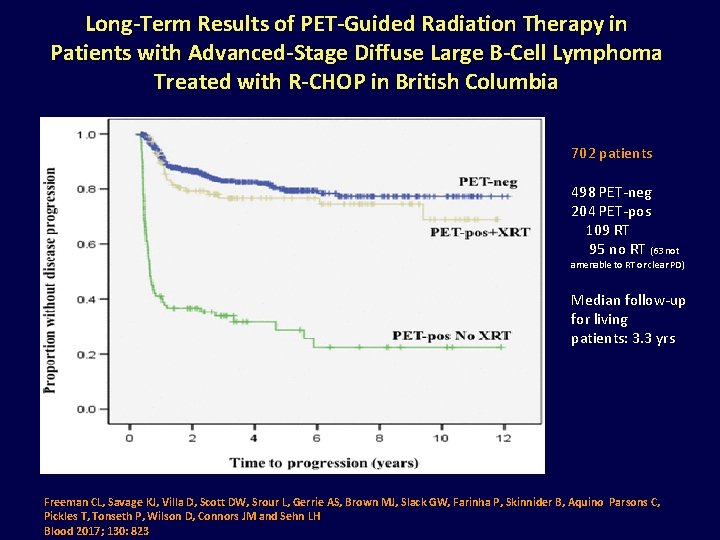
Long-Term Results of PET-Guided Radiation Therapy in Patients with Advanced-Stage Diffuse Large B-Cell Lymphoma Treated with R-CHOP in British Columbia 702 patients 498 PET-neg 204 PET-pos 109 RT 95 no RT (63 not amenable to RT or clear PD) Median follow-up for living patients: 3. 3 yrs Freeman CL, Savage KJ, Villa D, Scott DW, Srour L, Gerrie AS, Brown MJ, Slack GW, Farinha P, Skinnider B, Aquino Parsons C, Pickles T, Tonseth P, Wilson D, Connors JM and Sehn LH Blood 2017; 130: 823

Extended Follow-up of Mantle Cell Lymphoma Patients Treated With Firstline Lenalidomide + Rituximab Integrating New Hematology Findings Into Practice: Independent Conference Coverage of ASH 2017, * December 9 -12, Atlanta, Georgia Jia Ruan, Peter Martin, Paul. Christos, Leandro Cerchietti, Bijal D. Shah, Stephen J. Schuster, Wayne Tam, Amelyn Rodriguez, David Hyman, Maria Nieves Calvo Vidal, Lidia Roman Gonzalez, Sonali M. Smith, Jakub Svoboda, Richard R. Furman, Morton Coleman and John P. Leonard Blood 2017 130: 154
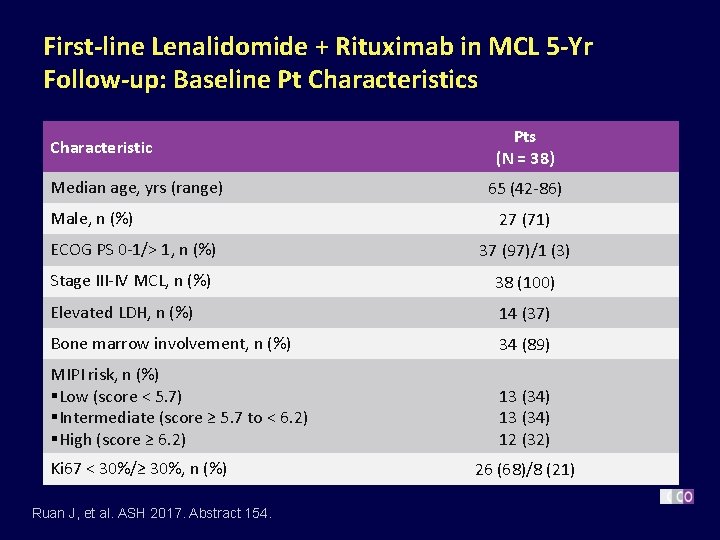
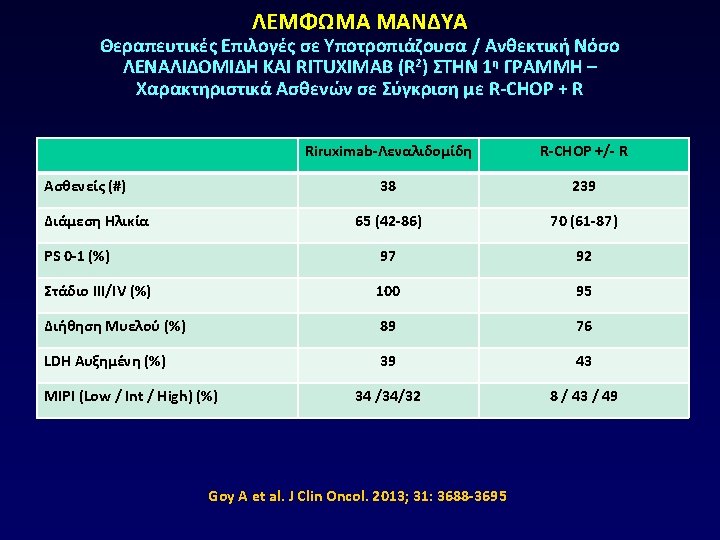
First-line Lenalidomide + Rituximab in MCL 5 -Yr Follow-up: Baseline Pt Characteristics Characteristic Median age, yrs (range) Male, n (%) Pts (N = 38) 65 (42 -86) 27 (71) ECOG PS 0 -1/> 1, n (%) 37 (97)/1 (3) Stage III-IV MCL, n (%) 38 (100) Elevated LDH, n (%) 14 (37) Bone marrow involvement, n (%) 34 (89) MIPI risk, n (%) §Low (score < 5. 7) §Intermediate (score ≥ 5. 7 to < 6. 2) §High (score ≥ 6. 2) 13 (34) 12 (32) Ki 67 < 30%/≥ 30%, n (%) Ruan J, et al. ASH 2017. Abstract 154. 26 (68)/8 (21)
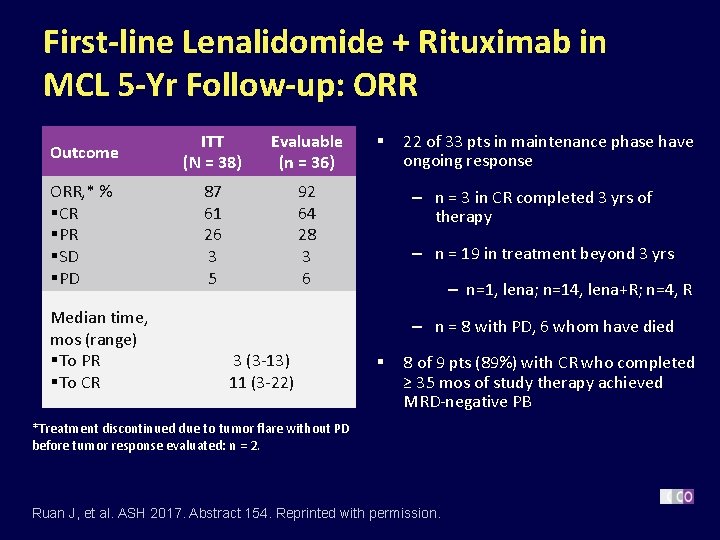
First-line Lenalidomide + Rituximab in MCL 5 -Yr Follow-up: ORR Outcome ITT (N = 38) Evaluable (n = 36) ORR, * % §CR §PR §SD §PD 87 61 26 3 5 92 64 28 3 6 Median time, mos (range) §To PR §To CR § 22 of 33 pts in maintenance phase have ongoing response – n = 3 in CR completed 3 yrs of therapy – n = 19 in treatment beyond 3 yrs – n=1, lena; n=14, lena+R; n=4, R – n = 8 with PD, 6 whom have died 3 (3 -13) 11 (3 -22) § 8 of 9 pts (89%) with CR who completed ≥ 35 mos of study therapy achieved MRD-negative PB *Treatment discontinued due to tumor flare without PD before tumor response evaluated: n = 2. Ruan J, et al. ASH 2017. Abstract 154. Reprinted with permission.
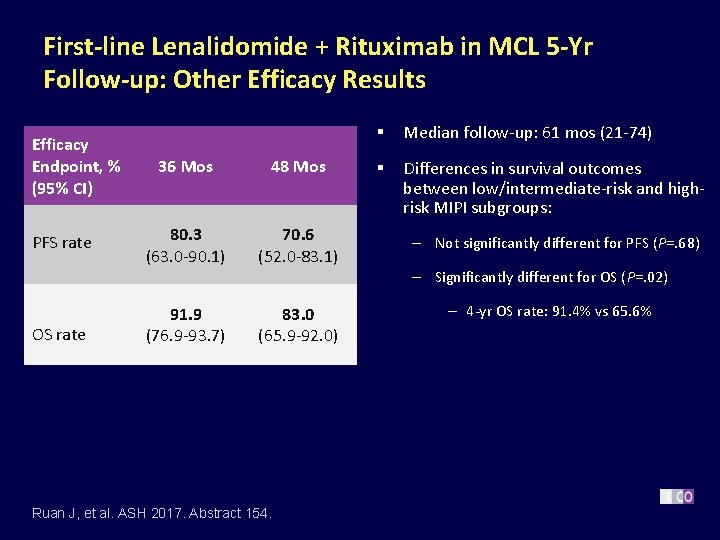
First-line Lenalidomide + Rituximab in MCL 5 -Yr Follow-up: Other Efficacy Results Efficacy Endpoint, % (95% CI) PFS rate OS rate 36 Mos 48 Mos 80. 3 (63. 0 -90. 1) 70. 6 (52. 0 -83. 1) 91. 9 (76. 9 -93. 7) 83. 0 (65. 9 -92. 0) Ruan J, et al. ASH 2017. Abstract 154. § Median follow-up: 61 mos (21 -74) § Differences in survival outcomes between low/intermediate-risk and highrisk MIPI subgroups: – Not significantly different for PFS (P=. 68) – Significantly different for OS (P=. 02) – 4 -yr OS rate: 91. 4% vs 65. 6%
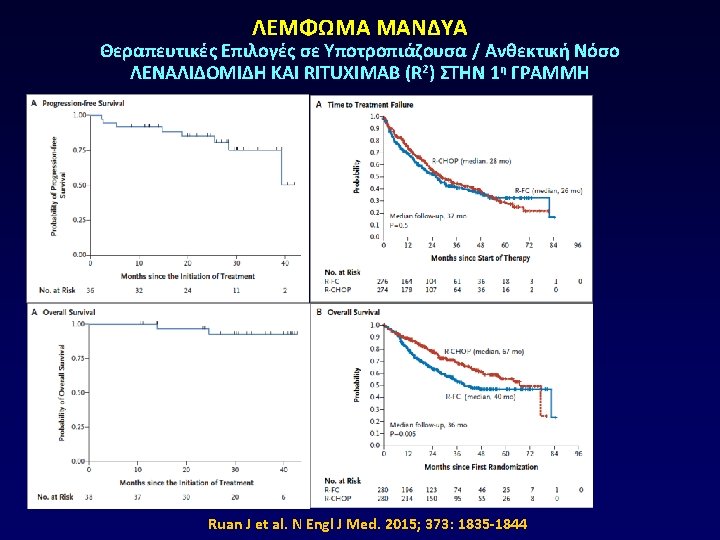
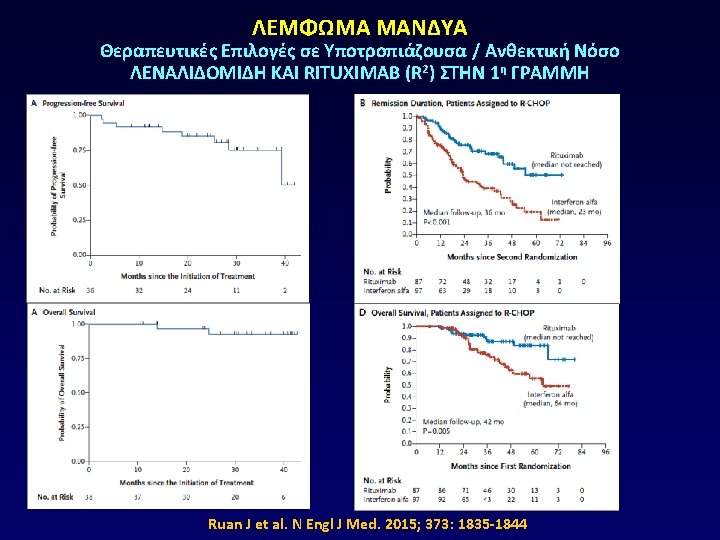
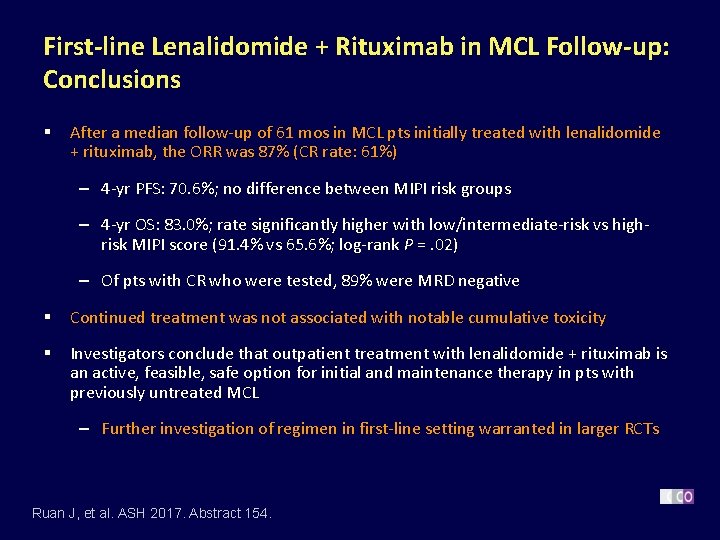
First-line Lenalidomide + Rituximab in MCL Follow-up: Conclusions § After a median follow-up of 61 mos in MCL pts initially treated with lenalidomide + rituximab, the ORR was 87% (CR rate: 61%) – 4 -yr PFS: 70. 6%; no difference between MIPI risk groups – 4 -yr OS: 83. 0%; rate significantly higher with low/intermediate-risk vs highrisk MIPI score (91. 4% vs 65. 6%; log-rank P =. 02) – Of pts with CR who were tested, 89% were MRD negative § Continued treatment was not associated with notable cumulative toxicity § Investigators conclude that outpatient treatment with lenalidomide + rituximab is an active, feasible, safe option for initial and maintenance therapy in pts with previously untreated MCL – Further investigation of regimen in first-line setting warranted in larger RCTs Ruan J, et al. ASH 2017. Abstract 154.
ACE-LY-004: Phase II Trial of BTK Inhibitor Acalabrutinib in Patients With Relapsed/ Refractory Mantle Cell Lymphoma Integrating New Hematology Findings Into Practice: Independent Conference Coverage of ASH 2017, * December 9 -12, Atlanta, Georgia The Lancet
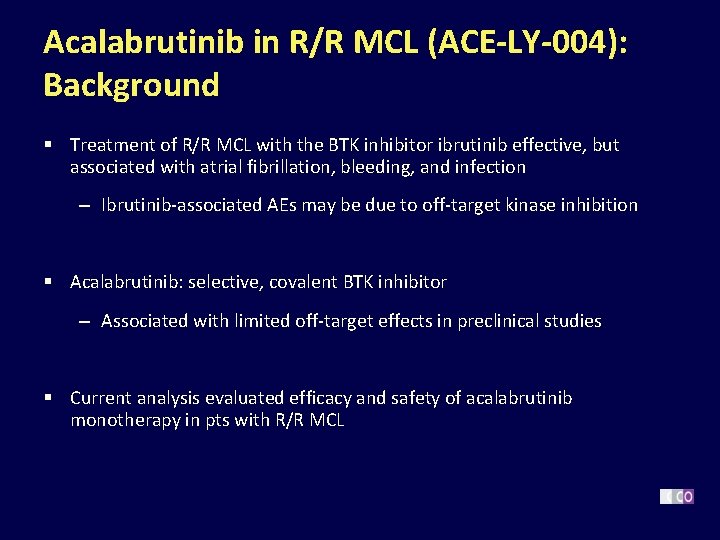
Acalabrutinib in R/R MCL (ACE-LY-004): Background § Treatment of R/R MCL with the BTK inhibitor ibrutinib effective, but associated with atrial fibrillation, bleeding, and infection – Ibrutinib-associated AEs may be due to off-target kinase inhibition § Acalabrutinib: selective, covalent BTK inhibitor – Associated with limited off-target effects in preclinical studies § Current analysis evaluated efficacy and safety of acalabrutinib monotherapy in pts with R/R MCL
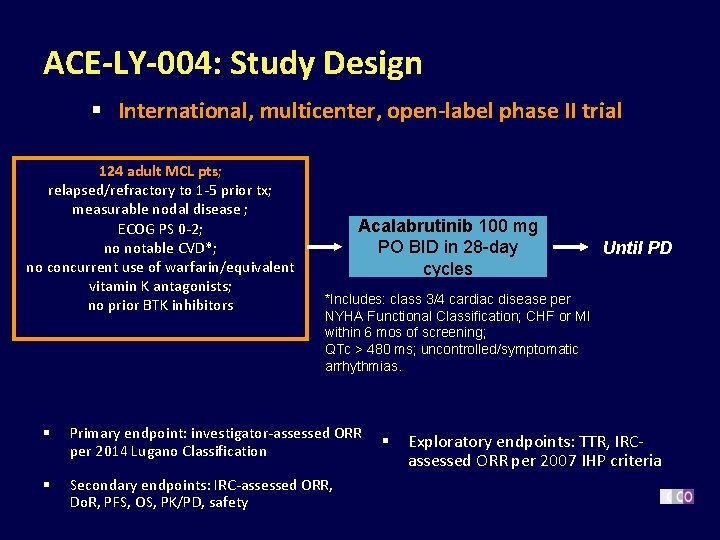
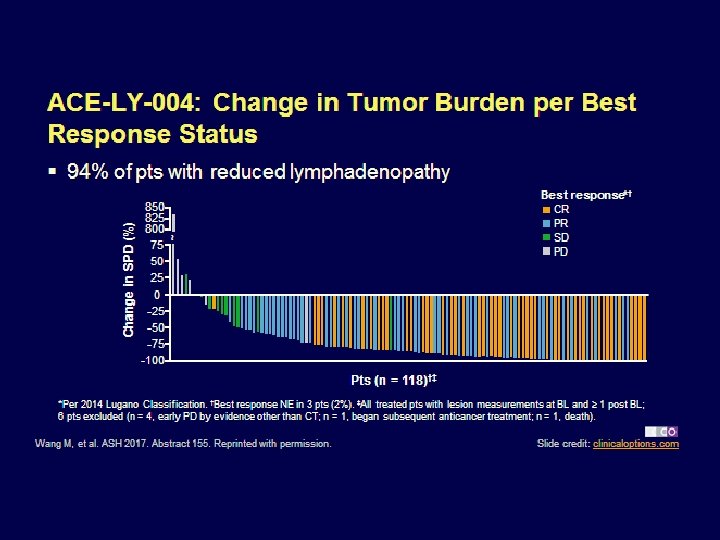
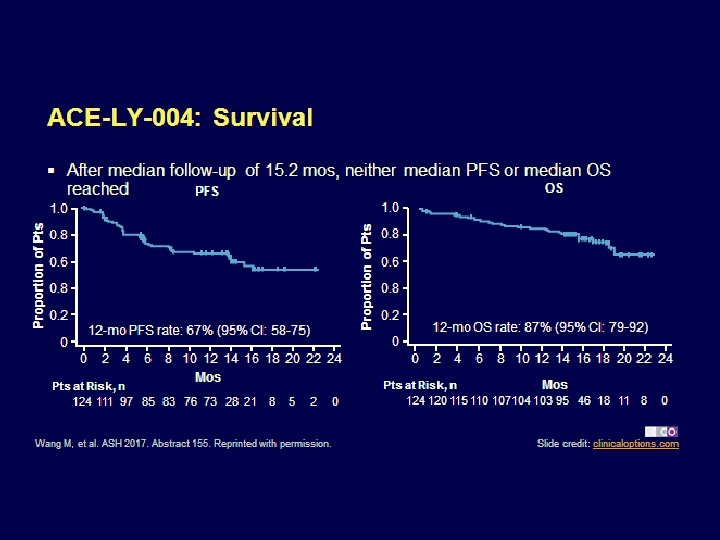
ACE-LY-004: Study Design § International, multicenter, open-label phase II trial 124 adult MCL pts; relapsed/refractory to 1 -5 prior tx; measurable nodal disease ; ECOG PS 0 -2; no notable CVD*; no concurrent use of warfarin/equivalent vitamin K antagonists; no prior BTK inhibitors Acalabrutinib 100 mg PO BID in 28 -day cycles Until PD *Includes: class 3/4 cardiac disease per NYHA Functional Classification; CHF or MI within 6 mos of screening; QTc > 480 ms; uncontrolled/symptomatic arrhythmias. § Primary endpoint: investigator-assessed ORR § per 2014 Lugano Classification § Secondary endpoints: IRC-assessed ORR, Do. R, PFS, OS, PK/PD, safety Exploratory endpoints: TTR, IRCassessed ORR per 2007 IHP criteria
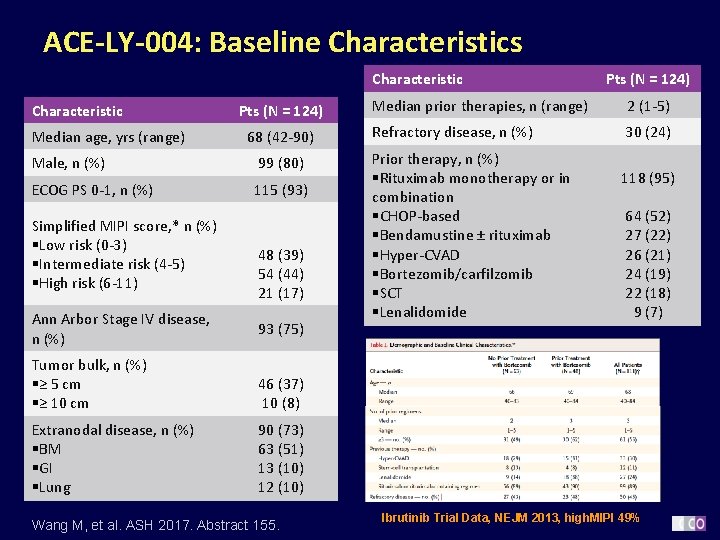
ACE-LY-004: Baseline Characteristics Characteristic Median age, yrs (range) Pts (N = 124) 68 (42 -90) Male, n (%) 99 (80) ECOG PS 0 -1, n (%) 115 (93) Simplified MIPI score, * n (%) §Low risk (0 -3) §Intermediate risk (4 -5) §High risk (6 -11) Ann Arbor Stage IV disease, n (%) 48 (39) 54 (44) 21 (17) 93 (75) Tumor bulk, n (%) §≥ 5 cm §≥ 10 cm 46 (37) 10 (8) Extranodal disease, n (%) §BM §GI §Lung 90 (73) 63 (51) 13 (10) 12 (10) Wang M, et al. ASH 2017. Abstract 155. Pts (N = 124) Median prior therapies, n (range) 2 (1 -5) Refractory disease, n (%) 30 (24) Prior therapy, n (%) §Rituximab monotherapy or in combination §CHOP-based §Bendamustine ± rituximab §Hyper-CVAD §Bortezomib/carfilzomib §SCT §Lenalidomide 118 (95) 64 (52) 27 (22) 26 (21) 24 (19) 22 (18) 9 (7) Ibrutinib Trial Data, NEJM 2013, high. MIPI 49%
ACE-LY-004: Investigator-Assessed ORR (Primary Endpoint) Response, * n (%) Investigator Assessed IRC Assessed ORR (CR + PR) 100 (81) 99 (80) Best response §CR 49 (40) §PR 51 (41) 50 (40) §SD 11 (9) 9 (7) §PD 10 (8) 11 (9) *Data cutoff: February 28, 2017. Median 5 (4) follow§Not evaluable 3 (2) up: 15. 2 mos (range: 0. 3 -23. 7). Wang M, et al. ASH 2017. Abstract 155. § Investigator-assessed ORR concordant with IRC-assessed ORR (91%) and CR (94%) § ORR consistent across prespecified subgroups § Median TTR: 1. 9 mos (range: 1. 54. 4) § Median Do. R: NR (12 -mo Do. R rate: 72%)
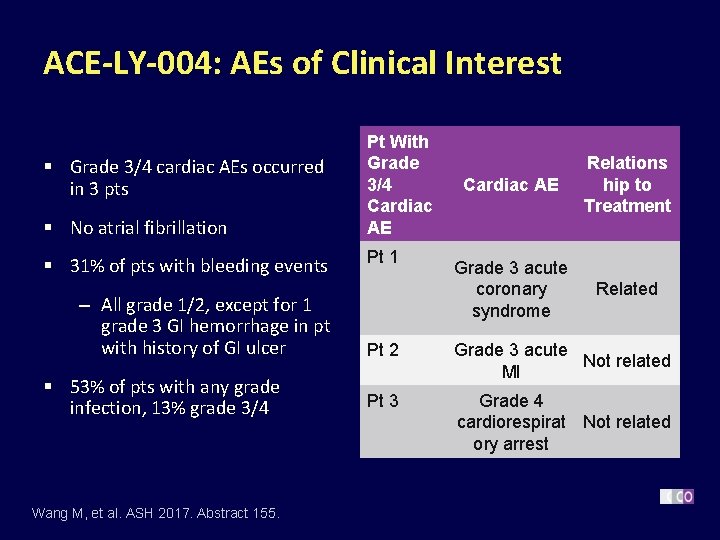
ACE-LY-004: AEs of Clinical Interest § Grade 3/4 cardiac AEs occurred in 3 pts § No atrial fibrillation § 31% of pts with bleeding events – All grade 1/2, except for 1 grade 3 GI hemorrhage in pt with history of GI ulcer § 53% of pts with any grade infection, 13% grade 3/4 Wang M, et al. ASH 2017. Abstract 155. Pt With Grade 3/4 Cardiac AE Pt 1 Cardiac AE Relations hip to Treatment Grade 3 acute coronary syndrome Related Pt 2 Grade 3 acute Not related MI Pt 3 Grade 4 cardiorespirat Not related ory arrest
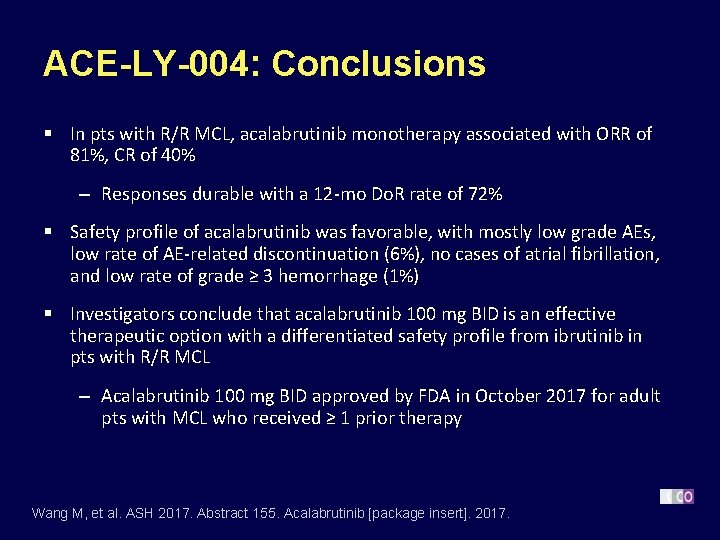
ACE-LY-004: Conclusions § In pts with R/R MCL, acalabrutinib monotherapy associated with ORR of 81%, CR of 40% – Responses durable with a 12 -mo Do. R rate of 72% § Safety profile of acalabrutinib was favorable, with mostly low grade AEs, low rate of AE-related discontinuation (6%), no cases of atrial fibrillation, and low rate of grade ≥ 3 hemorrhage (1%) § Investigators conclude that acalabrutinib 100 mg BID is an effective therapeutic option with a differentiated safety profile from ibrutinib in pts with R/R MCL – Acalabrutinib 100 mg BID approved by FDA in October 2017 for adult pts with MCL who received ≥ 1 prior therapy Wang M, et al. ASH 2017. Abstract 155. Acalabrutinib [package insert]. 2017.

Prognostic Role of NPM 1/FLT 3 -ITD Genotypes in AML: Analysis of the RATIFY Trial Integrating New Hematology Findings Into Practice: Independent Conference Coverage of ASH 2017, * December 9 -12, Atlanta, Georgia
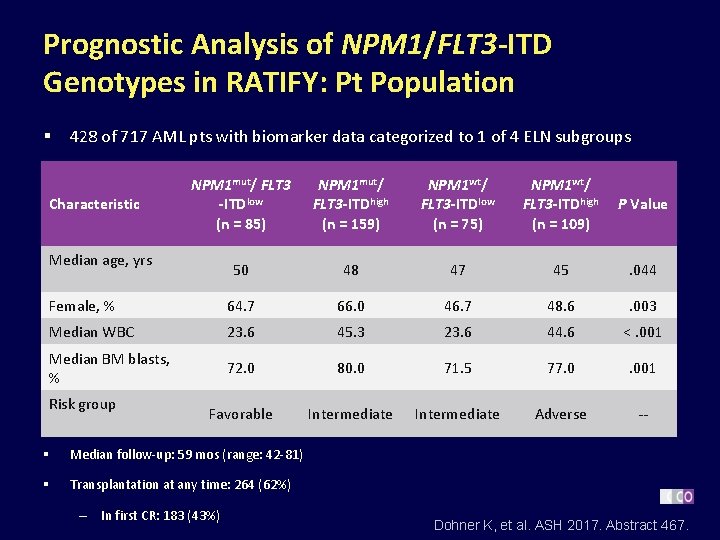
Prognostic Analysis of NPM 1/FLT 3 -ITD Genotypes in RATIFY: Pt Population § 428 of 717 AML pts with biomarker data categorized to 1 of 4 ELN subgroups NPM 1 mut/ FLT 3 -ITDlow (n = 85) NPM 1 mut/ FLT 3 -ITDhigh (n = 159) NPM 1 wt/ FLT 3 -ITDlow (n = 75) 50 48 47 45 . 044 Female, % 64. 7 66. 0 46. 7 48. 6 . 003 Median WBC 23. 6 45. 3 23. 6 44. 6 <. 001 Median BM blasts, % 72. 0 80. 0 71. 5 77. 0 . 001 Favorable Intermediate Adverse -- Characteristic Median age, yrs Risk group § Median follow-up: 59 mos (range: 42 -81) § Transplantation at any time: 264 (62%) – In first CR: 183 (43%) NPM 1 wt/ FLT 3 -ITDhigh P Value (n = 109) Dohner K, et al. ASH 2017. Abstract 467.
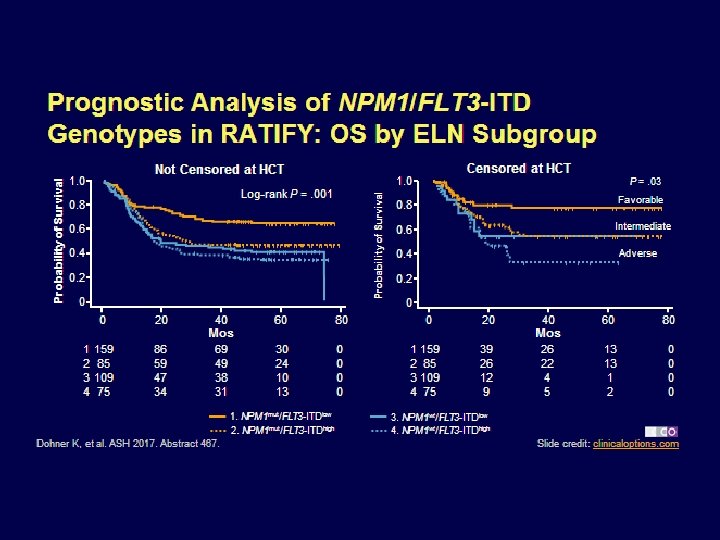
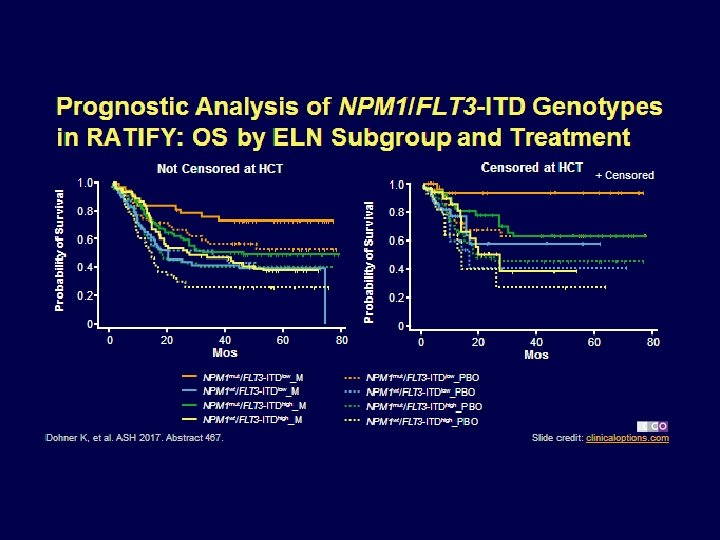
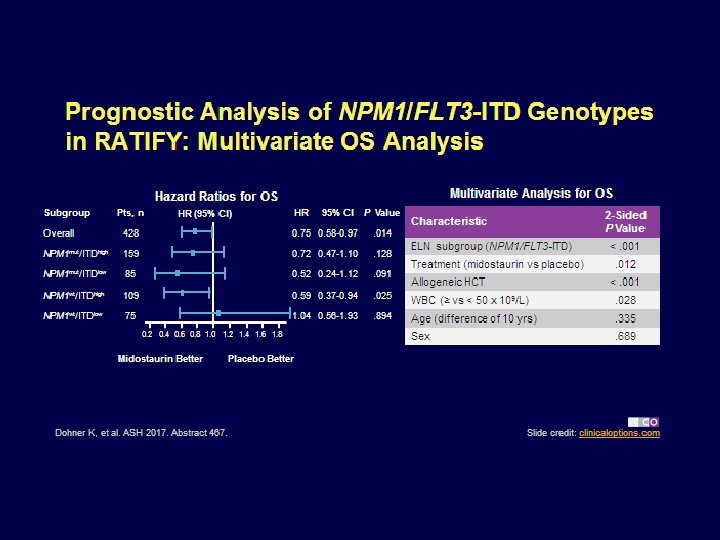
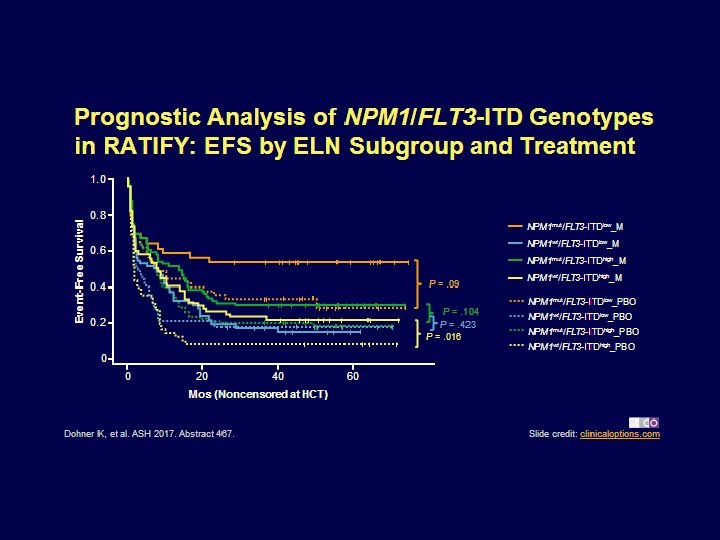
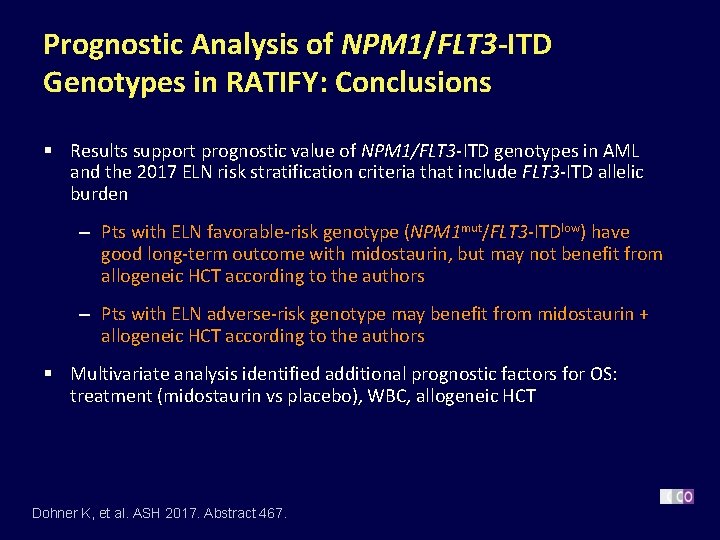
Prognostic Analysis of NPM 1/FLT 3 -ITD Genotypes in RATIFY: Conclusions § Results support prognostic value of NPM 1/FLT 3 -ITD genotypes in AML and the 2017 ELN risk stratification criteria that include FLT 3 -ITD allelic burden – Pts with ELN favorable-risk genotype (NPM 1 mut/FLT 3 -ITDlow) have good long-term outcome with midostaurin, but may not benefit from allogeneic HCT according to the authors – Pts with ELN adverse-risk genotype may benefit from midostaurin + allogeneic HCT according to the authors § Multivariate analysis identified additional prognostic factors for OS: treatment (midostaurin vs placebo), WBC, allogeneic HCT Dohner K, et al. ASH 2017. Abstract 467.
CPX-351 in Patients With Newly Diagnosed AML at High Risk for Induction Mortality: Initial Phase II Results Integrating New Hematology Findings Into Practice: Independent Conference Coverage of ASH 2017, * December 9 -12, Atlanta, Georgia
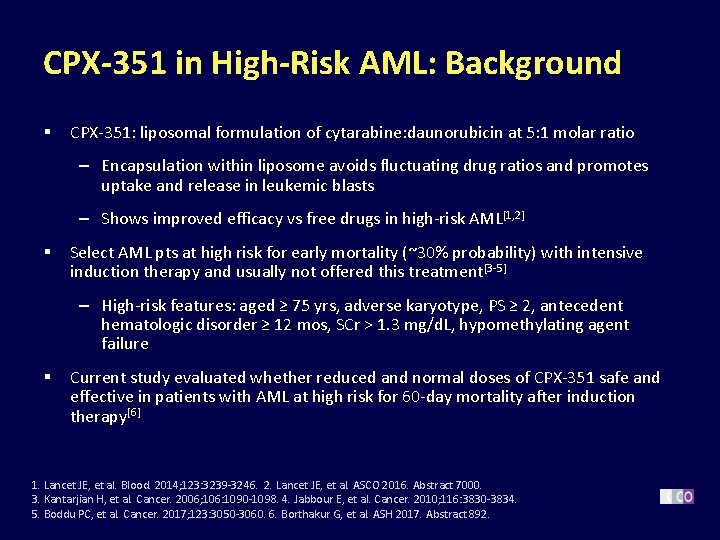
CPX-351 in High-Risk AML: Background § CPX-351: liposomal formulation of cytarabine: daunorubicin at 5: 1 molar ratio – Encapsulation within liposome avoids fluctuating drug ratios and promotes uptake and release in leukemic blasts – Shows improved efficacy vs free drugs in high-risk AML[1, 2] § Select AML pts at high risk for early mortality (~30% probability) with intensive induction therapy and usually not offered this treatment[3 -5] – High-risk features: aged ≥ 75 yrs, adverse karyotype, PS ≥ 2, antecedent hematologic disorder ≥ 12 mos, SCr > 1. 3 mg/d. L, hypomethylating agent failure § Current study evaluated whether reduced and normal doses of CPX-351 safe and effective in patients with AML at high risk for 60 -day mortality after induction therapy[6] 1. Lancet JE, et al. Blood. 2014; 123: 3239 -3246. 2. Lancet JE, et al. ASCO 2016. Abstract 7000. 3. Kantarjian H, et al. Cancer. 2006; 106: 1090 -1098. 4. Jabbour E, et al. Cancer. 2010; 116: 3830 -3834. 5. Boddu PC, et al. Cancer. 2017; 123: 3050 -3060. 6. Borthakur G, et al. ASH 2017. Abstract 892.
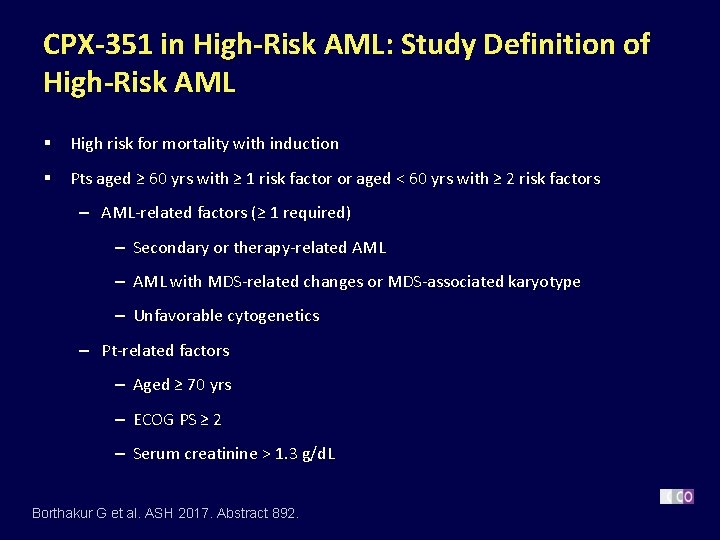
CPX-351 in High-Risk AML: Study Definition of High-Risk AML § High risk for mortality with induction § Pts aged ≥ 60 yrs with ≥ 1 risk factor or aged < 60 yrs with ≥ 2 risk factors – AML-related factors (≥ 1 required) – Secondary or therapy-related AML – AML with MDS-related changes or MDS-associated karyotype – Unfavorable cytogenetics – Pt-related factors – Aged ≥ 70 yrs – ECOG PS ≥ 2 – Serum creatinine > 1. 3 g/d. L Borthakur G et al. ASH 2017. Abstract 892.
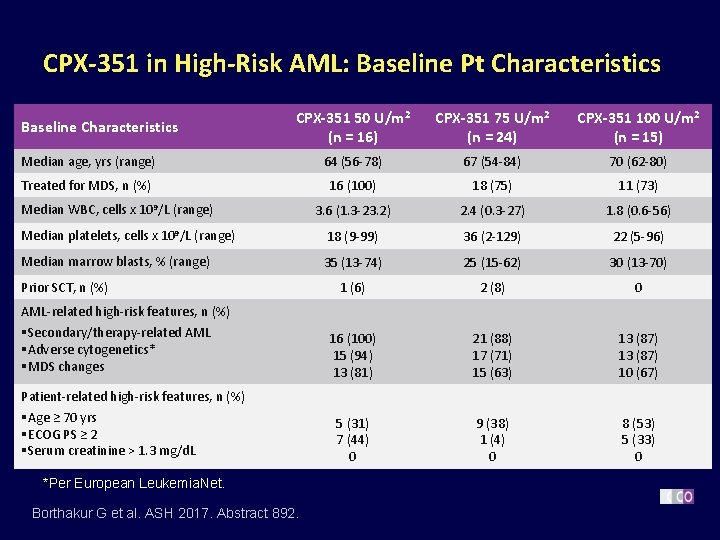
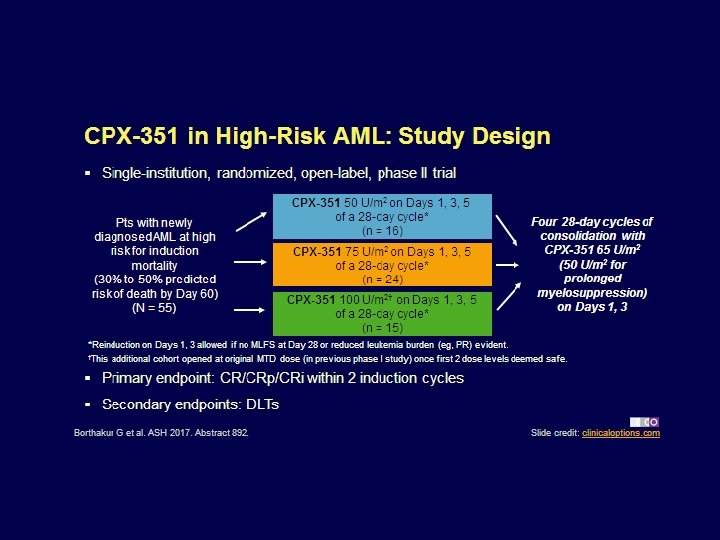
CPX-351 in High-Risk AML: Baseline Pt Characteristics CPX-351 50 U/m 2 (n = 16) CPX-351 75 U/m 2 (n = 24) CPX-351 100 U/m 2 (n = 15) Median age, yrs (range) 64 (56 -78) 67 (54 -84) 70 (62 -80) Treated for MDS, n (%) 16 (100) 18 (75) 11 (73) 3. 6 (1. 3 -23. 2) 2. 4 (0. 3 -27) 1. 8 (0. 6 -56) Median platelets, cells x 109/L (range) 18 (9 -99) 36 (2 -129) 22 (5 -96) Median marrow blasts, % (range) 35 (13 -74) 25 (15 -62) 30 (13 -70) 1 (6) 2 (8) 0 16 (100) 15 (94) 13 (81) 21 (88) 17 (71) 15 (63) 13 (87) 10 (67) 5 (31) 7 (44) 0 9 (38) 1 (4) 0 8 (53) 5 (33) 0 Baseline Characteristics Median WBC, cells x 109/L (range) Prior SCT, n (%) AML-related high-risk features, n (%) §Secondary/therapy-related AML §Adverse cytogenetics* §MDS changes Patient-related high-risk features, n (%) §Age ≥ 70 yrs §ECOG PS ≥ 2 §Serum creatinine > 1. 3 mg/d. L *Per European Leukemia. Net. Borthakur G et al. ASH 2017. Abstract 892.
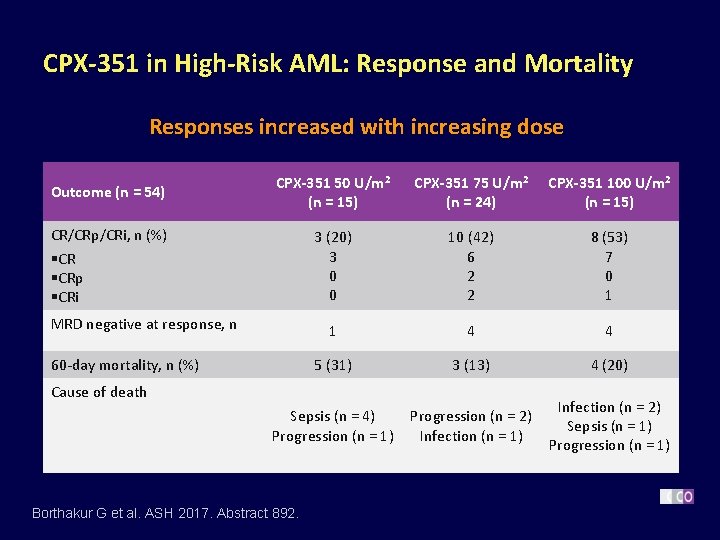
CPX-351 in High-Risk AML: Response and Mortality Responses increased with increasing dose Outcome (n = 54) CPX-351 50 U/m 2 (n = 15) CPX-351 75 U/m 2 (n = 24) CPX-351 100 U/m 2 (n = 15) 3 (20) 3 0 0 10 (42) 6 2 2 8 (53) 7 0 1 1 4 4 5 (31) 3 (13) 4 (20) Sepsis (n = 4) Progression (n = 1) Progression (n = 2) Infection (n = 1) Infection (n = 2) Sepsis (n = 1) Progression (n = 1) CR/CRp/CRi, n (%) §CRp §CRi MRD negative at response, n 60 -day mortality, n (%) Cause of death Borthakur G et al. ASH 2017. Abstract 892.
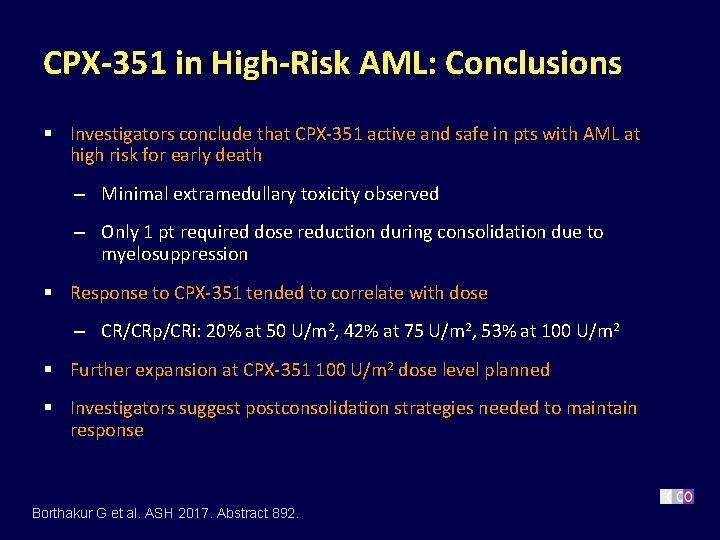
CPX-351 in High-Risk AML: Conclusions § Investigators conclude that CPX-351 active and safe in pts with AML at high risk for early death ‒ Minimal extramedullary toxicity observed ‒ Only 1 pt required dose reduction during consolidation due to myelosuppression § Response to CPX-351 tended to correlate with dose ‒ CR/CRp/CRi: 20% at 50 U/m 2, 42% at 75 U/m 2, 53% at 100 U/m 2 § Further expansion at CPX-351 100 U/m 2 dose level planned § Investigators suggest postconsolidation strategies needed to maintain response Borthakur G et al. ASH 2017. Abstract 892.
Phase I/II Study of Venetoclax + Low-Dose Cytarabine in Untreated, Elderly Patients With AML: Outcomes at 1 Yr Integrating New Hematology Findings Into Practice: Independent Conference Coverage of ASH 2017, * December 9 -12, Atlanta, Georgia Andrew Wei, Stephen A. Strickland, Gail J. Roboz, Jing-Zhou Hou, Walter Fiedler, Tara L. Lin, Roland B. Walter, Anoop Enjeti, Brenda Chyla, Relja Popovic, Kaffa Fakouhi, Pooja Shah, Martin Dunbar, Tu Xu, Mack Mabry and John Hayslip Blood 2017; 130: 890
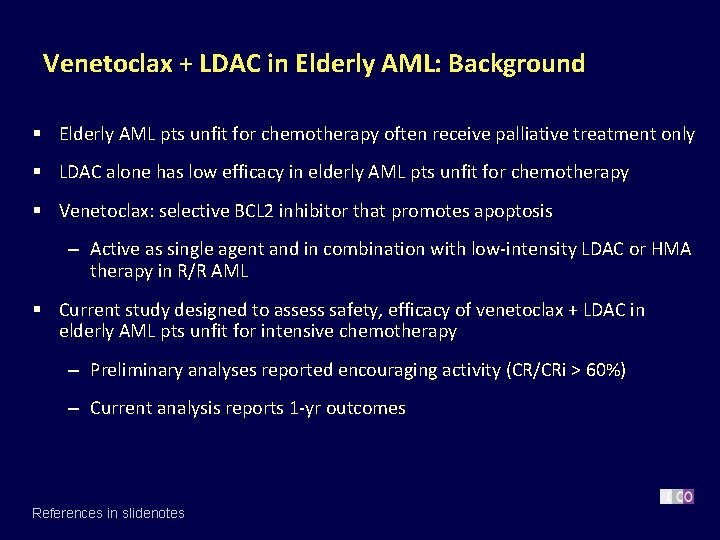
Venetoclax + LDAC in Elderly AML: Background § Elderly AML pts unfit for chemotherapy often receive palliative treatment only § LDAC alone has low efficacy in elderly AML pts unfit for chemotherapy § Venetoclax: selective BCL 2 inhibitor that promotes apoptosis – Active as single agent and in combination with low-intensity LDAC or HMA therapy in R/R AML § Current study designed to assess safety, efficacy of venetoclax + LDAC in elderly AML pts unfit for intensive chemotherapy – Preliminary analyses reported encouraging activity (CR/CRi > 60%) – Current analysis reports 1 -yr outcomes References in slidenotes
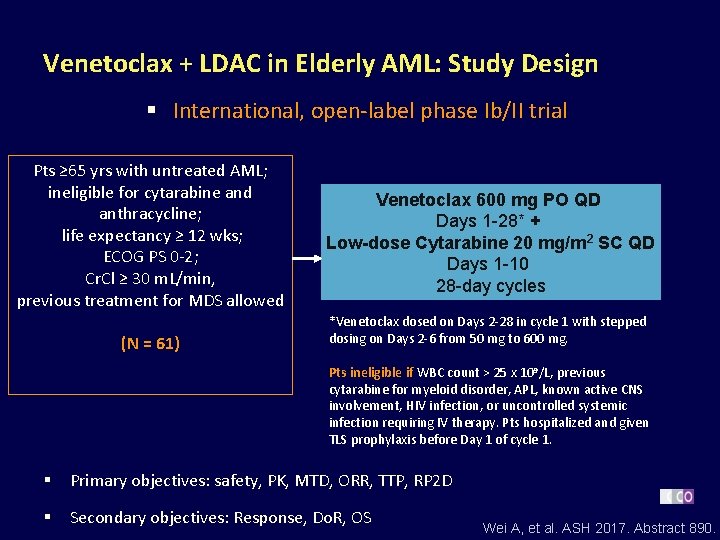
Venetoclax + LDAC in Elderly AML: Study Design § International, open-label phase Ib/II trial Pts ≥ 65 yrs with untreated AML; ineligible for cytarabine and anthracycline; life expectancy ≥ 12 wks; ECOG PS 0 -2; Cr. Cl ≥ 30 m. L/min, previous treatment for MDS allowed (N = 61) Venetoclax 600 mg PO QD Days 1 -28* + Low-dose Cytarabine 20 mg/m 2 SC QD Days 1 -10 28 -day cycles *Venetoclax dosed on Days 2 -28 in cycle 1 with stepped dosing on Days 2 -6 from 50 mg to 600 mg. Pts ineligible if WBC count > 25 x 109/L, previous cytarabine for myeloid disorder, APL, known active CNS involvement, HIV infection, or uncontrolled systemic infection requiring IV therapy. Pts hospitalized and given TLS prophylaxis before Day 1 of cycle 1. § Primary objectives: safety, PK, MTD, ORR, TTP, RP 2 D § Secondary objectives: Response, Do. R, OS Wei A, et al. ASH 2017. Abstract 890.
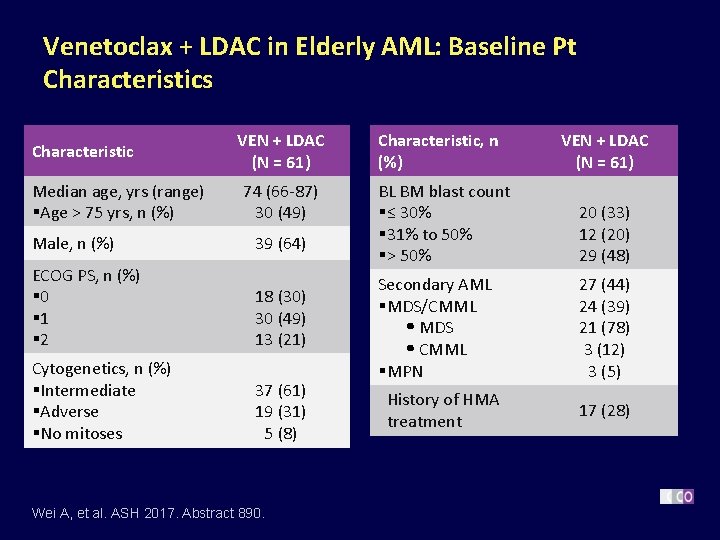
Venetoclax + LDAC in Elderly AML: Baseline Pt Characteristics Characteristic Median age, yrs (range) §Age > 75 yrs, n (%) VEN + LDAC (N = 61) Characteristic, n (%) VEN + LDAC (N = 61) 74 (66 -87) 30 (49) BL BM blast count §≤ 30% § 31% to 50% §> 50% 20 (33) 12 (20) 29 (48) Secondary AML §MDS/CMML • MDS • CMML §MPN 27 (44) 24 (39) 21 (78) 3 (12) 3 (5) Male, n (%) 39 (64) ECOG PS, n (%) § 0 § 1 § 2 18 (30) 30 (49) 13 (21) Cytogenetics, n (%) §Intermediate §Adverse §No mitoses 37 (61) 19 (31) 5 (8) Wei A, et al. ASH 2017. Abstract 890. History of HMA treatment 17 (28)
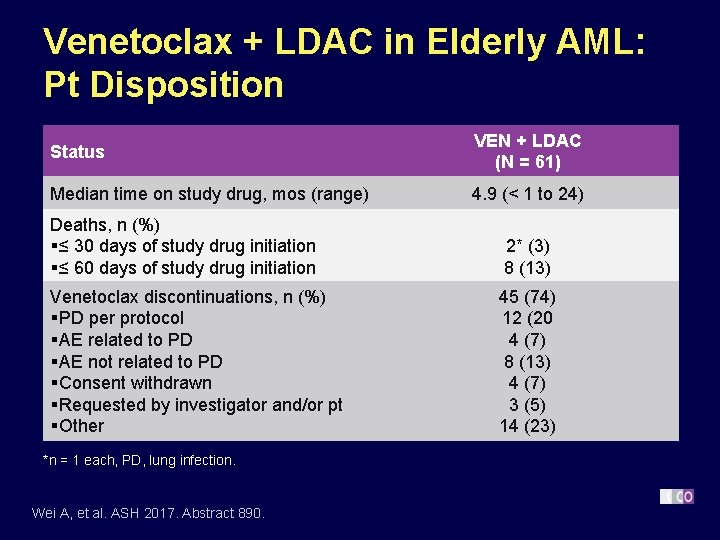
Venetoclax + LDAC in Elderly AML: Pt Disposition Status VEN + LDAC (N = 61) Median time on study drug, mos (range) 4. 9 (< 1 to 24) Deaths, n (%) §≤ 30 days of study drug initiation §≤ 60 days of study drug initiation 2* (3) 8 (13) Venetoclax discontinuations, n (%) §PD per protocol §AE related to PD §AE not related to PD §Consent withdrawn §Requested by investigator and/or pt §Other 45 (74) 12 (20 4 (7) 8 (13) 4 (7) 3 (5) 14 (23) *n = 1 each, PD, lung infection. Wei A, et al. ASH 2017. Abstract 890.
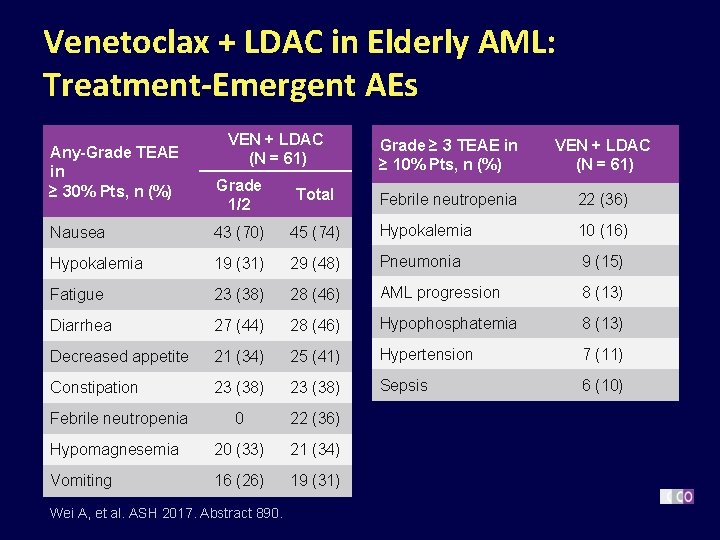
Venetoclax + LDAC in Elderly AML: Treatment-Emergent AEs Any-Grade TEAE in ≥ 30% Pts, n (%) VEN + LDAC (N = 61) Grade ≥ 3 TEAE in ≥ 10% Pts, n (%) VEN + LDAC (N = 61) Febrile neutropenia 22 (36) Grade 1/2 Total Nausea 43 (70) 45 (74) Hypokalemia 10 (16) Hypokalemia 19 (31) 29 (48) Pneumonia 9 (15) Fatigue 23 (38) 28 (46) AML progression 8 (13) Diarrhea 27 (44) 28 (46) Hypophosphatemia 8 (13) Decreased appetite 21 (34) 25 (41) Hypertension 7 (11) Constipation 23 (38) Sepsis 6 (10) Febrile neutropenia 0 22 (36) Hypomagnesemia 20 (33) 21 (34) Vomiting 16 (26) 19 (31) Wei A, et al. ASH 2017. Abstract 890.
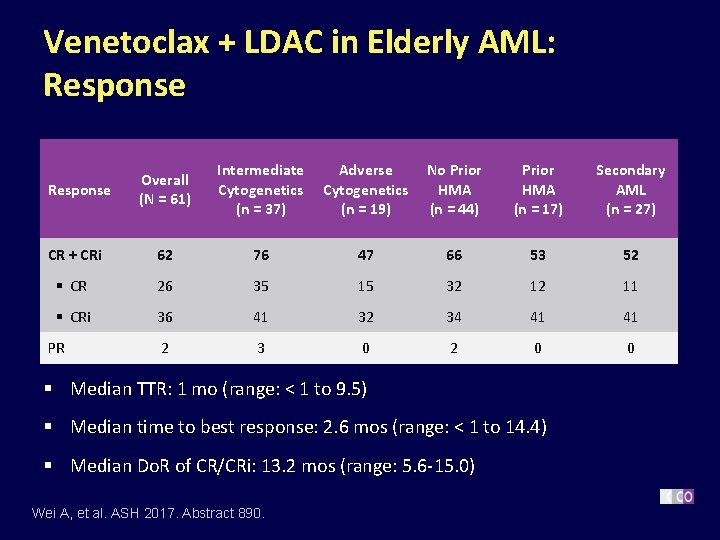
Venetoclax + LDAC in Elderly AML: Response Overall (N = 61) Intermediate Cytogenetics (n = 37) Adverse Cytogenetics (n = 19) No Prior HMA (n = 44) Prior HMA (n = 17) Secondary AML (n = 27) CR + CRi 62 76 47 66 53 52 § CR 26 35 15 32 12 11 § CRi 36 41 32 34 41 41 2 3 0 2 0 0 PR § Median TTR: 1 mo (range: < 1 to 9. 5) § Median time to best response: 2. 6 mos (range: < 1 to 14. 4) § Median Do. R of CR/CRi: 13. 2 mos (range: 5. 6 -15. 0) Wei A, et al. ASH 2017. Abstract 890.
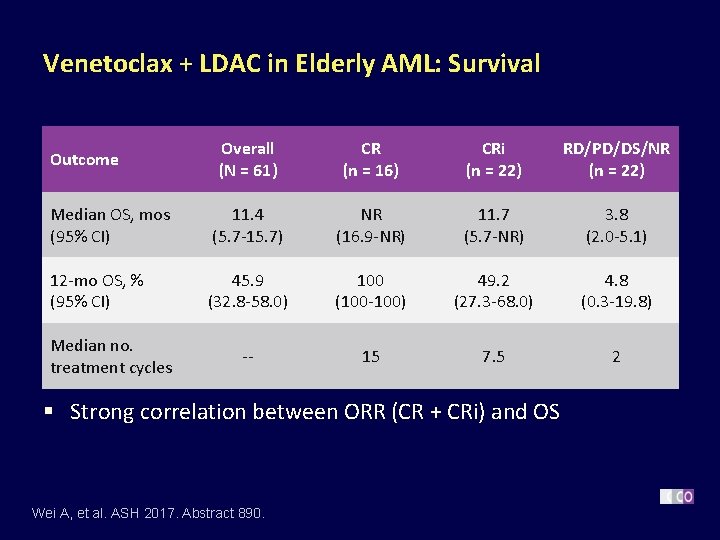
Venetoclax + LDAC in Elderly AML: Survival Overall (N = 61) CR (n = 16) CRi (n = 22) RD/PD/DS/NR (n = 22) Median OS, mos (95% CI) 11. 4 (5. 7 -15. 7) NR (16. 9 -NR) 11. 7 (5. 7 -NR) 3. 8 (2. 0 -5. 1) 12 -mo OS, % (95% CI) 45. 9 (32. 8 -58. 0) 100 (100 -100) 49. 2 (27. 3 -68. 0) 4. 8 (0. 3 -19. 8) -- 15 7. 5 2 Outcome Median no. treatment cycles § Strong correlation between ORR (CR + CRi) and OS Wei A, et al. ASH 2017. Abstract 890.
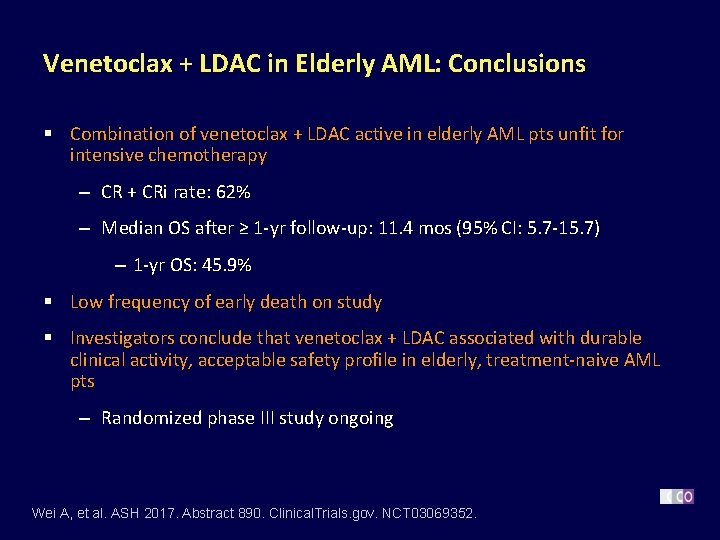
Venetoclax + LDAC in Elderly AML: Conclusions § Combination of venetoclax + LDAC active in elderly AML pts unfit for intensive chemotherapy – CR + CRi rate: 62% – Median OS after ≥ 1 -yr follow-up: 11. 4 mos (95% CI: 5. 7 -15. 7) – 1 -yr OS: 45. 9% § Low frequency of early death on study § Investigators conclude that venetoclax + LDAC associated with durable clinical activity, acceptable safety profile in elderly, treatment-naive AML pts – Randomized phase III study ongoing Wei A, et al. ASH 2017. Abstract 890. Clinical. Trials. gov. NCT 03069352.
Gilteritinib With Induction and Consolidation Chemotherapy for Newly Diagnosed AML: Preliminary Phase I Results Integrating New Hematology Findings Into Practice: Independent Conference Coverage of ASH 2017, * December 9 -12, Atlanta, Georgia
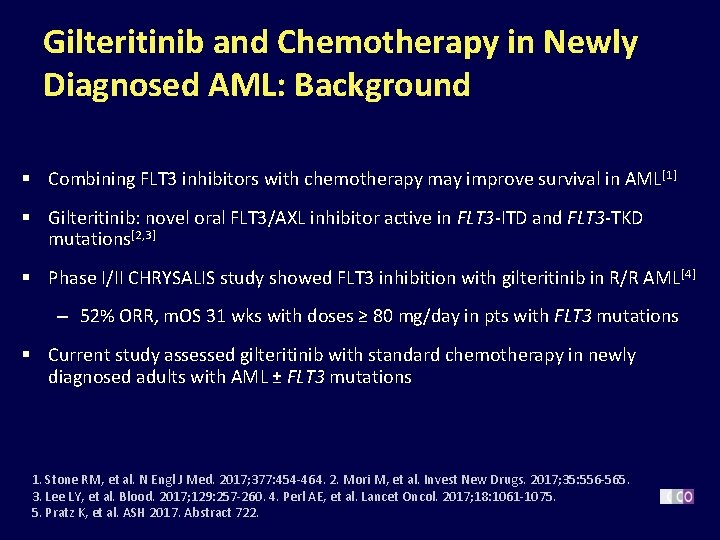
Gilteritinib and Chemotherapy in Newly Diagnosed AML: Background § Combining FLT 3 inhibitors with chemotherapy may improve survival in AML [1] § Gilteritinib: novel oral FLT 3/AXL inhibitor active in FLT 3 -ITD and FLT 3 -TKD mutations[2, 3] § Phase I/II CHRYSALIS study showed FLT 3 inhibition with gilteritinib in R/R AML [4] – 52% ORR, m. OS 31 wks with doses ≥ 80 mg/day in pts with FLT 3 mutations § Current study assessed gilteritinib with standard chemotherapy in newly diagnosed adults with AML ± FLT 3 mutations 1. Stone RM, et al. N Engl J Med. 2017; 377: 454 -464. 2. Mori M, et al. Invest New Drugs. 2017; 35: 556 -565. 3. Lee LY, et al. Blood. 2017; 129: 257 -260. 4. Perl AE, et al. Lancet Oncol. 2017; 18: 1061 -1075. 5. Pratz K, et al. ASH 2017. Abstract 722.
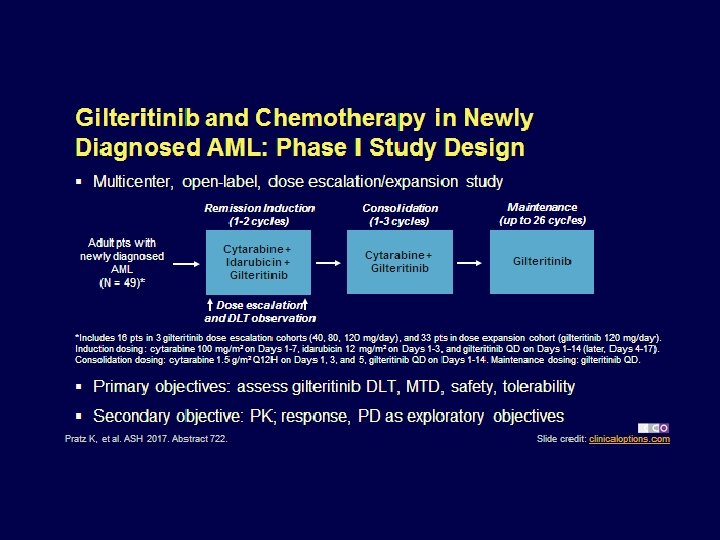
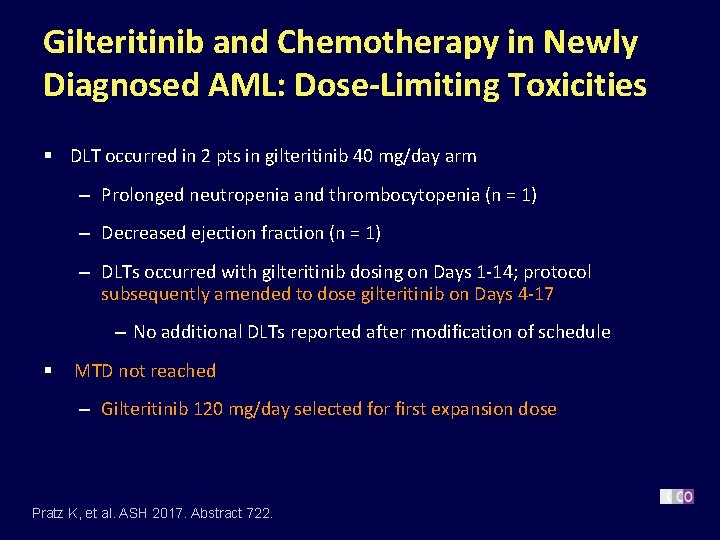
Gilteritinib and Chemotherapy in Newly Diagnosed AML: Dose-Limiting Toxicities § DLT occurred in 2 pts in gilteritinib 40 mg/day arm – Prolonged neutropenia and thrombocytopenia (n = 1) – Decreased ejection fraction (n = 1) – DLTs occurred with gilteritinib dosing on Days 1 -14; protocol subsequently amended to dose gilteritinib on Days 4 -17 – No additional DLTs reported after modification of schedule § MTD not reached – Gilteritinib 120 mg/day selected for first expansion dose Pratz K, et al. ASH 2017. Abstract 722.
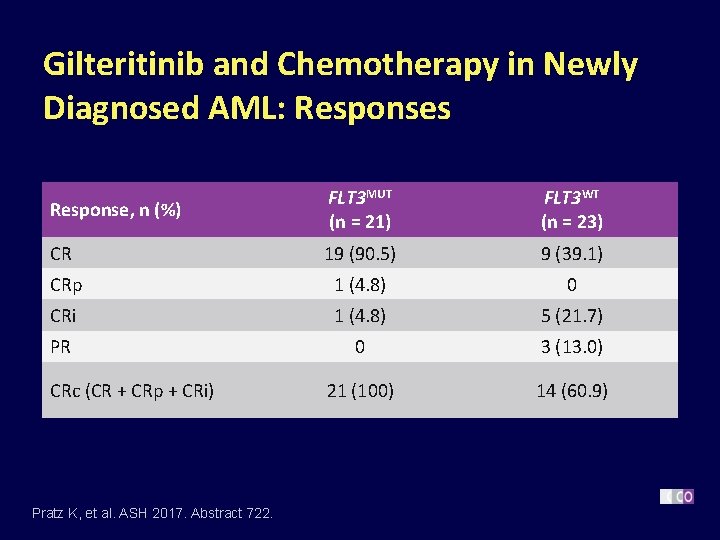
Gilteritinib and Chemotherapy in Newly Diagnosed AML: Responses Response, n (%) FLT 3 MUT (n = 21) FLT 3 WT (n = 23) CR 19 (90. 5) 9 (39. 1) CRp 1 (4. 8) 0 CRi 1 (4. 8) 5 (21. 7) PR 0 3 (13. 0) 21 (100) 14 (60. 9) CRc (CR + CRp + CRi) Pratz K, et al. ASH 2017. Abstract 722.
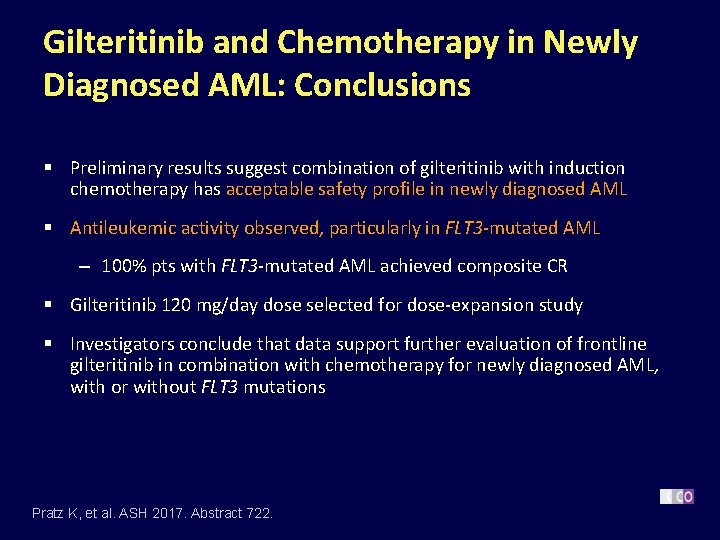
Gilteritinib and Chemotherapy in Newly Diagnosed AML: Conclusions § Preliminary results suggest combination of gilteritinib with induction chemotherapy has acceptable safety profile in newly diagnosed AML § Antileukemic activity observed, particularly in FLT 3 -mutated AML – 100% pts with FLT 3 -mutated AML achieved composite CR § Gilteritinib 120 mg/day dose selected for dose-expansion study § Investigators conclude that data support further evaluation of frontline gilteritinib in combination with chemotherapy for newly diagnosed AML, with or without FLT 3 mutations Pratz K, et al. ASH 2017. Abstract 722.
Phase I Study: Ivosidenib or Enasidenib + Induction Chemotherapy in Newly Diagnosed AML With IDH 1/IDH 2 Mutations Integrating New Hematology Findings Into Practice: Independent Conference Coverage of ASH 2017, * December 9 -12, Atlanta, Georgia
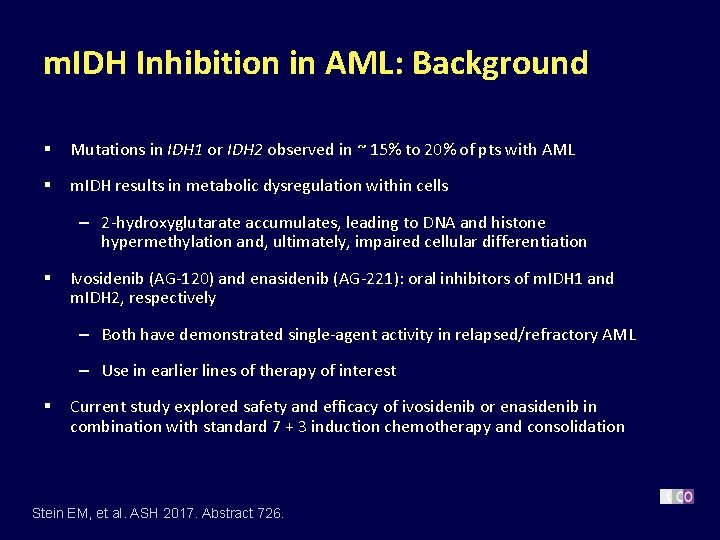
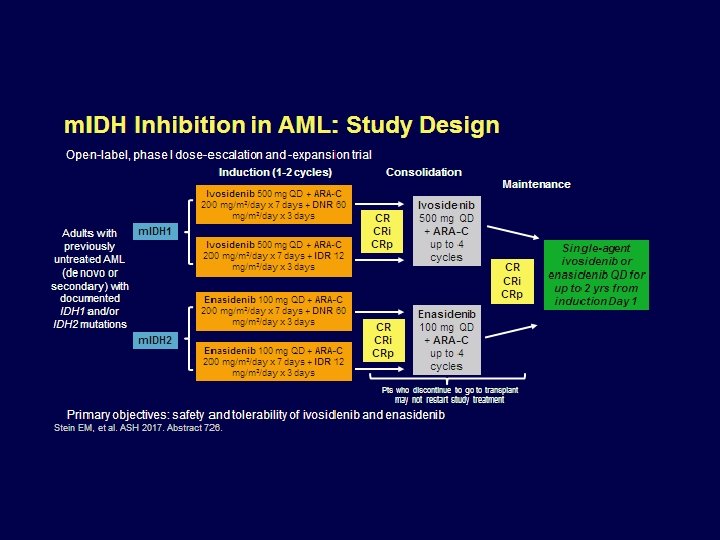
m. IDH Inhibition in AML: Background § Mutations in IDH 1 or IDH 2 observed in ~ 15% to 20% of pts with AML § m. IDH results in metabolic dysregulation within cells – 2 -hydroxyglutarate accumulates, leading to DNA and histone hypermethylation and, ultimately, impaired cellular differentiation § Ivosidenib (AG-120) and enasidenib (AG-221): oral inhibitors of m. IDH 1 and m. IDH 2, respectively – Both have demonstrated single-agent activity in relapsed/refractory AML – Use in earlier lines of therapy of interest § Current study explored safety and efficacy of ivosidenib or enasidenib in combination with standard 7 + 3 induction chemotherapy and consolidation Stein EM, et al. ASH 2017. Abstract 726.
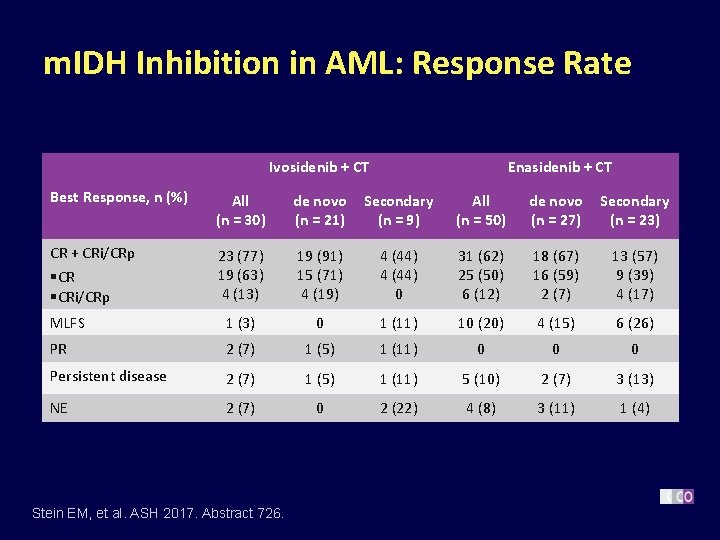
m. IDH Inhibition in AML: Response Rate Ivosidenib + CT Enasidenib + CT Best Response, n (%) All (n = 30) de novo (n = 21) Secondary (n = 9) All (n = 50) de novo (n = 27) Secondary (n = 23) CR + CRi/CRp 23 (77) 19 (63) 4 (13) 19 (91) 15 (71) 4 (19) 4 (44) 0 31 (62) 25 (50) 6 (12) 18 (67) 16 (59) 2 (7) 13 (57) 9 (39) 4 (17) MLFS 1 (3) 0 1 (11) 10 (20) 4 (15) 6 (26) PR 2 (7) 1 (5) 1 (11) 0 0 0 Persistent disease 2 (7) 1 (5) 1 (11) 5 (10) 2 (7) 3 (13) NE 2 (7) 0 2 (22) 4 (8) 3 (11) 1 (4) §CRi/CRp Stein EM, et al. ASH 2017. Abstract 726.
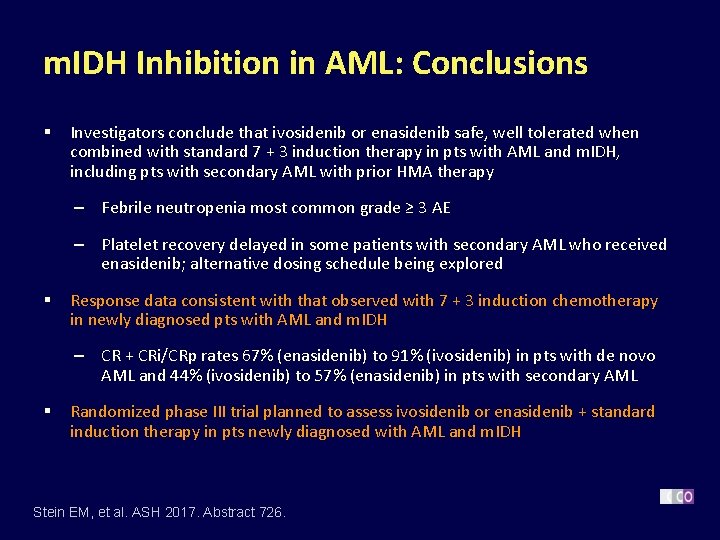
m. IDH Inhibition in AML: Conclusions § Investigators conclude that ivosidenib or enasidenib safe, well tolerated when combined with standard 7 + 3 induction therapy in pts with AML and m. IDH, including pts with secondary AML with prior HMA therapy ‒ Febrile neutropenia most common grade ≥ 3 AE ‒ Platelet recovery delayed in some patients with secondary AML who received enasidenib; alternative dosing schedule being explored § Response data consistent with that observed with 7 + 3 induction chemotherapy in newly diagnosed pts with AML and m. IDH ‒ CR + CRi/CRp rates 67% (enasidenib) to 91% (ivosidenib) in pts with de novo AML and 44% (ivosidenib) to 57% (enasidenib) in pts with secondary AML § Randomized phase III trial planned to assess ivosidenib or enasidenib + standard induction therapy in pts newly diagnosed with AML and m. IDH Stein EM, et al. ASH 2017. Abstract 726.
Phase II Study: Frontline Cytarabine and Idarubicin + Nivolumab in Newly Diagnosed AML Integrating New Hematology Findings Into Practice: Independent Conference Coverage of ASH 2017, * December 9 -12, Atlanta, Georgia Farhad Ravandi, Naval Daver, Guillermo Garcia-Manero, Christopher B Benton, Philip A Thompson, Gautam. Borthakur, Tapan Kadia, Prajwal C Boddu, Yesid Alvarado, Elias J. Jabbour, Marina Konopleva, Koichi Takahashi, Steven Kornblau, Courtney D. Di. Nardo, Zeev Estrov, Wilmer Flores, Sreyashi Basu, James Allison, Padmanee. Sharma, Sherry Pierce, Mark Brandt, Allison Pike, Jorge E. Cortes and Hagop M. Kantarjian Blood 2017; 130: 815
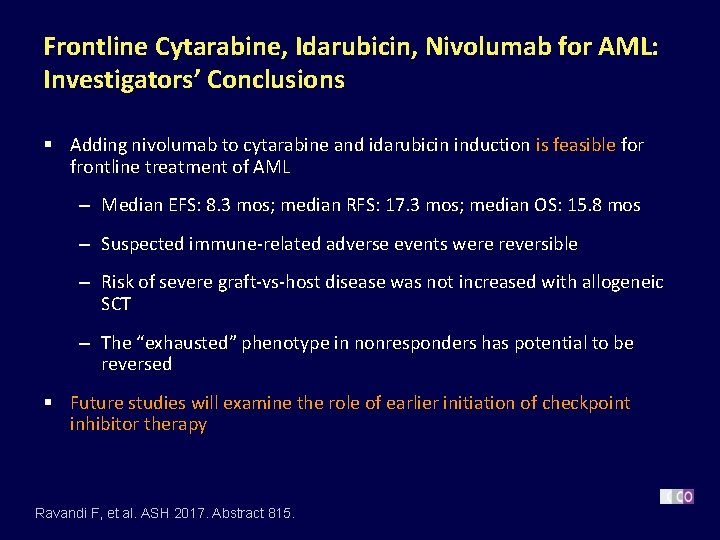
Frontline Cytarabine, Idarubicin, Nivolumab for AML: Investigators’ Conclusions § Adding nivolumab to cytarabine and idarubicin induction is feasible for frontline treatment of AML – Median EFS: 8. 3 mos; median RFS: 17. 3 mos; median OS: 15. 8 mos – Suspected immune-related adverse events were reversible – Risk of severe graft-vs-host disease was not increased with allogeneic SCT – The “exhausted” phenotype in nonresponders has potential to be reversed § Future studies will examine the role of earlier initiation of checkpoint inhibitor therapy Ravandi F, et al. ASH 2017. Abstract 815.
- Slides: 105