
ECG Rhythm Interpretation Module V Acute Myocardial Infarction













- Slides: 25
ECG Rhythm Interpretation Module V Acute Myocardial Infarction
Course Objectives • To recognize the normal rhythm of the heart - “Normal Sinus Rhythm. ” • To recognize the 13 most common heart arrhythmias. • To recognize an acute myocardial infarction on a 12 -lead ECG.
Learning Modules • • • ECG Basics How to Analyze a Rhythm Normal Sinus Rhythm Heart Arrhythmias Diagnosing a Myocardial Infarction Advanced 12 -Lead Interpretation
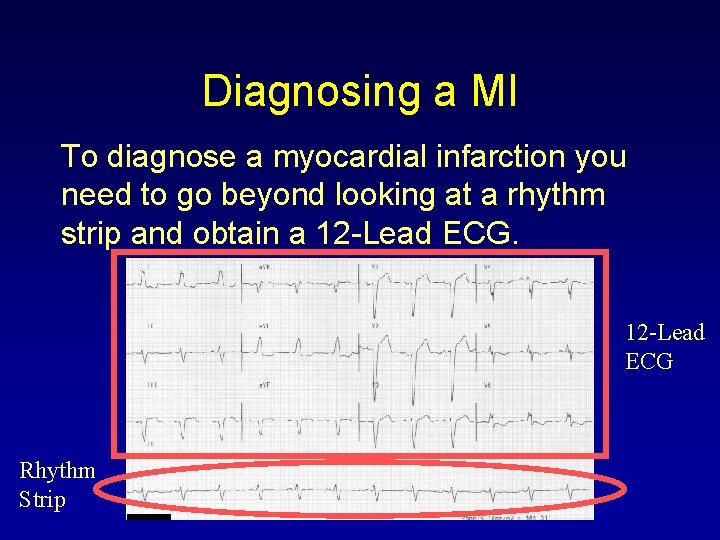
Diagnosing a MI To diagnose a myocardial infarction you need to go beyond looking at a rhythm strip and obtain a 12 -Lead ECG Rhythm Strip
The 12 -Lead ECG • The 12 -Lead ECG sees the heart from 12 different views. • Therefore, the 12 -Lead ECG helps you see what is happening in different portions of the heart. • The rhythm strip is only 1 of these 12 views.
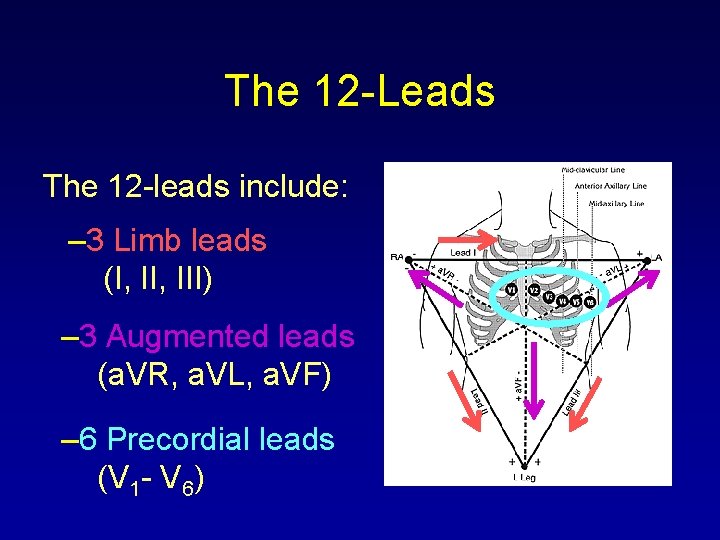
The 12 -Leads The 12 -leads include: – 3 Limb leads (I, III) – 3 Augmented leads (a. VR, a. VL, a. VF) – 6 Precordial leads (V 1 - V 6)
Views of the Heart Some leads get a good view of the: Anterior portion of the heart Inferior portion of the heart Lateral portion of the heart
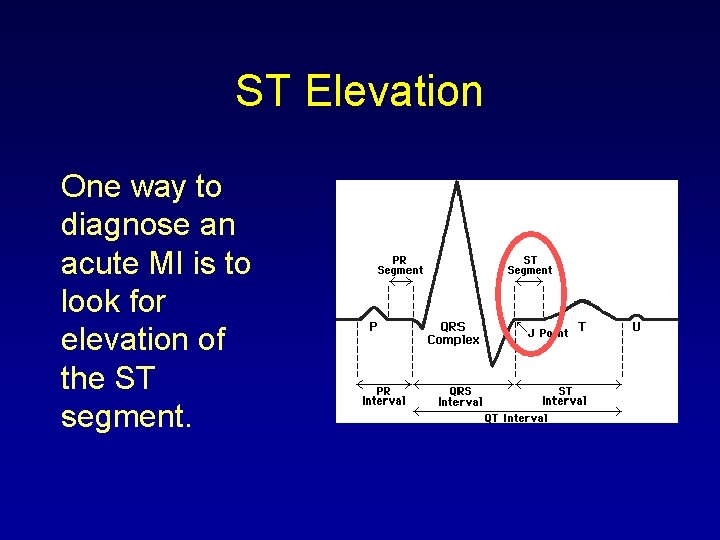
ST Elevation One way to diagnose an acute MI is to look for elevation of the ST segment.
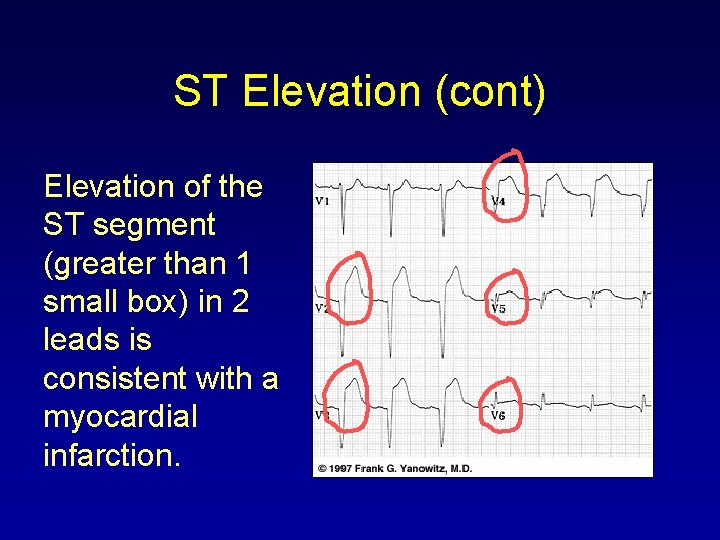
ST Elevation (cont) Elevation of the ST segment (greater than 1 small box) in 2 leads is consistent with a myocardial infarction.
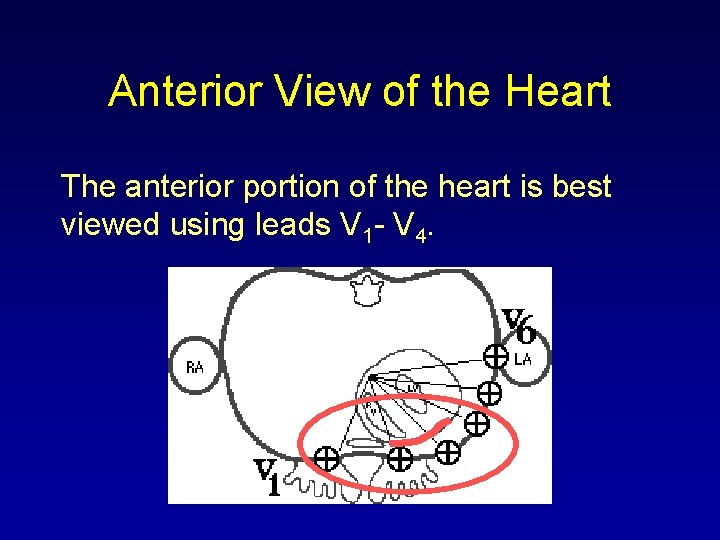
Anterior View of the Heart The anterior portion of the heart is best viewed using leads V 1 - V 4.
Anterior Myocardial Infarction If you see changes in leads V 1 - V 4 that are consistent with a myocardial infarction, you can conclude that it is an anterior wall myocardial infarction.
Putting it all Together Do you think this person is having a myocardial infarction. If so, where?
Interpretation Yes, this person is having an acute anterior wall myocardial infarction.
Other MI Locations Now that you know where to look for an anterior wall myocardial infarction let’s look at how you would determine if the MI involves the lateral wall or the inferior wall of the heart.
Other MI Locations First, take a look again at this picture of the heart. Anterior portion of the heart Inferior portion of the heart Lateral portion of the heart
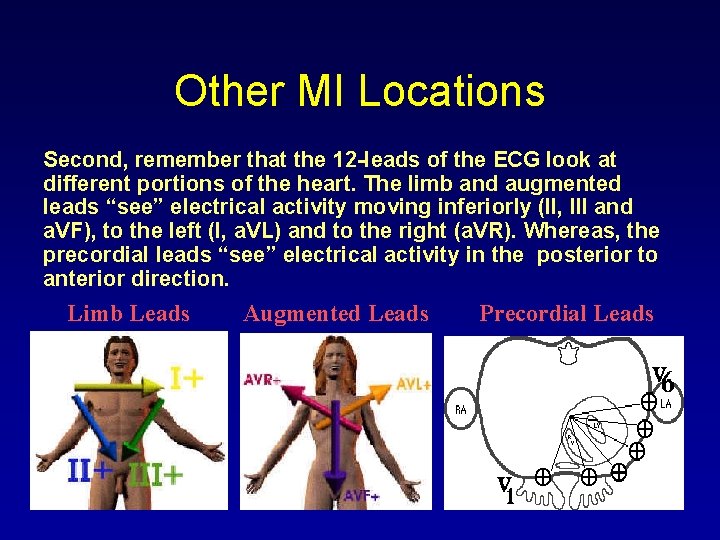
Other MI Locations Second, remember that the 12 -leads of the ECG look at different portions of the heart. The limb and augmented leads “see” electrical activity moving inferiorly (II, III and a. VF), to the left (I, a. VL) and to the right (a. VR). Whereas, the precordial leads “see” electrical activity in the posterior to anterior direction. Limb Leads Augmented Leads Precordial Leads
Other MI Locations Now, using these 3 diagrams let’s figure where to look for a lateral wall and inferior wall MI. Limb Leads Augmented Leads Precordial Leads
Anterior MI Remember the anterior portion of the heart is best viewed using leads V 1 - V 4. Limb Leads Augmented Leads Precordial Leads
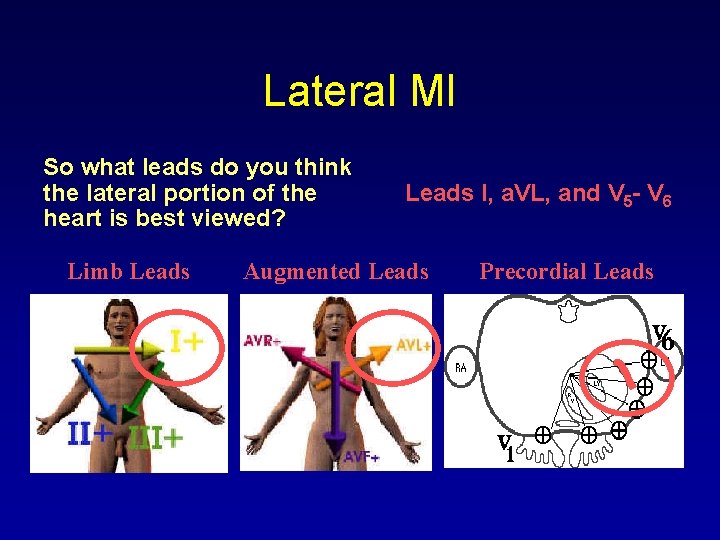
Lateral MI So what leads do you think the lateral portion of the heart is best viewed? Limb Leads I, a. VL, and V 5 - V 6 Augmented Leads Precordial Leads
Inferior MI Now how about the inferior portion of the heart? Limb Leads II, III and a. VF Augmented Leads Precordial Leads
Putting it all Together Now, where do you think this person is having a myocardial infarction?
Inferior Wall MI This is an inferior MI. Note the ST elevation in leads II, III and a. VF.
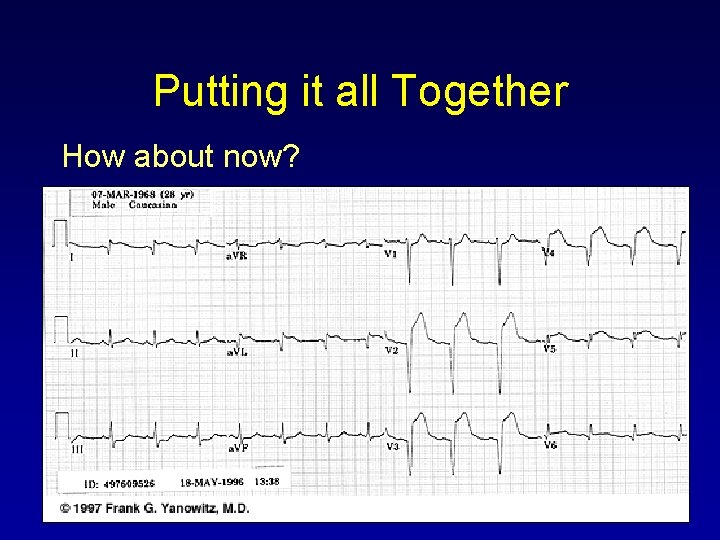
Putting it all Together How about now?
Anterolateral MI This person’s MI involves both the anterior wall (V 2 -V 4) and the lateral wall (V 5 -V 6, I, and a. VL)!
End of Module V Acute Myocardial Infarction Proceed to Module V Practice Quiz on Web. CT