
ECG LEADS introduction The heart produces electrical currents


- Slides: 25
ECG LEADS
introduction The heart produces electrical currents The body acts as a conductor of electricity Electrodes are able to measure the voltages of the cardiac current
introduction An ECG is a recording of the electrical activity of the heart Different “views” of the heart can be recorded with different electrodes
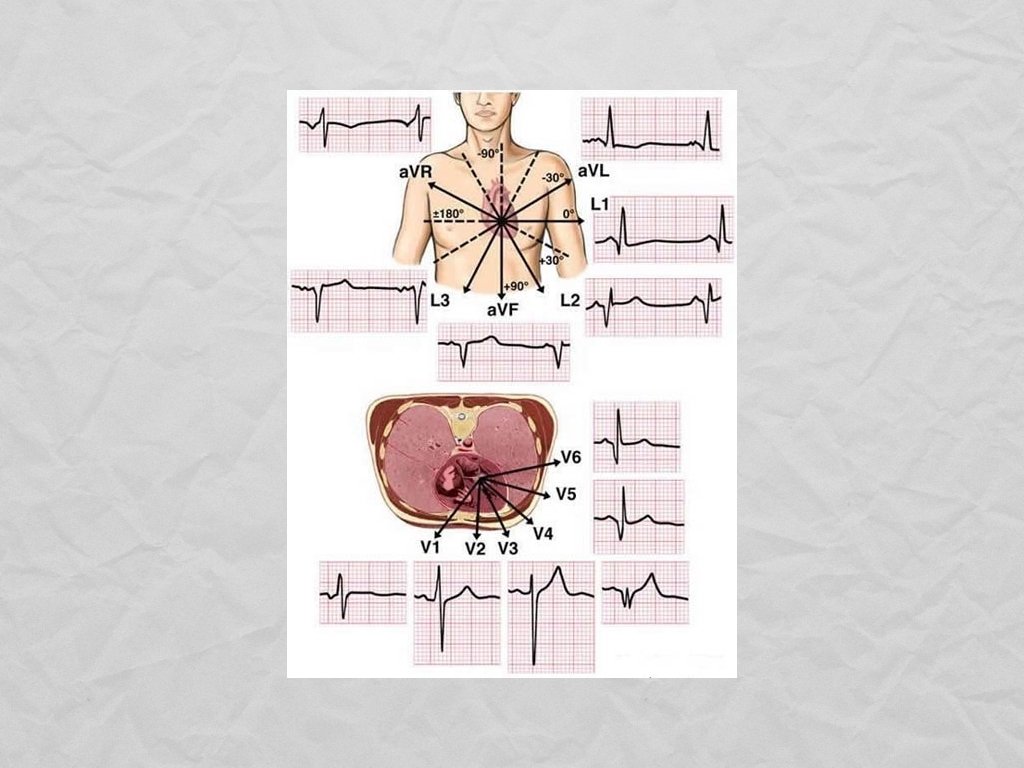
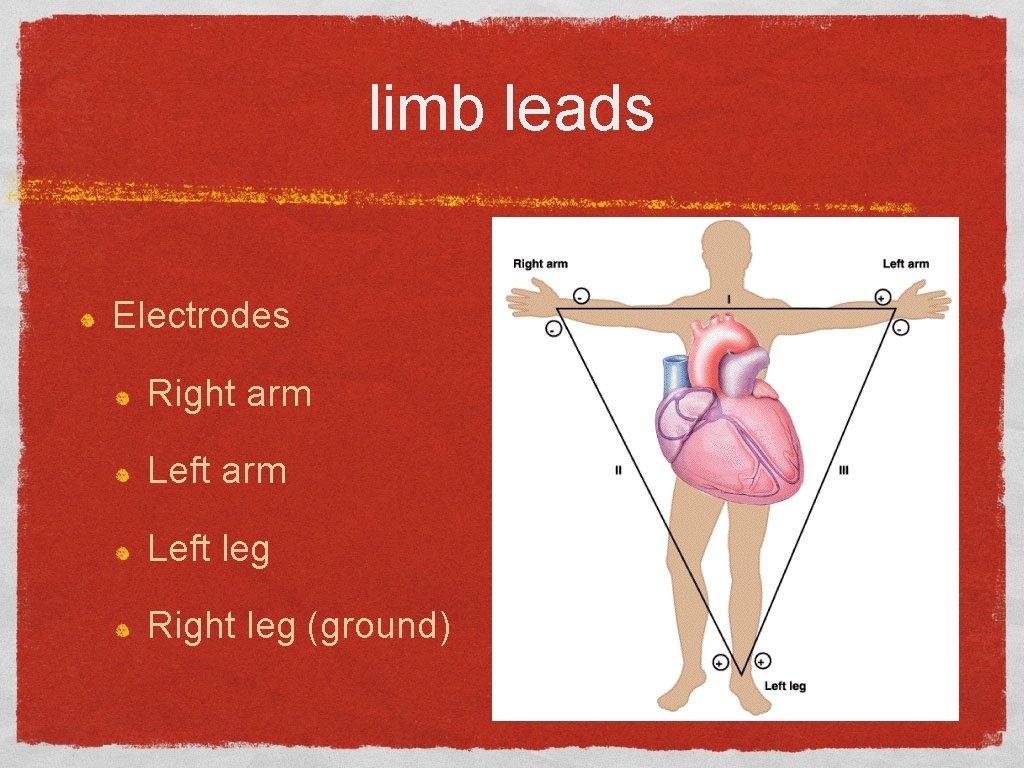
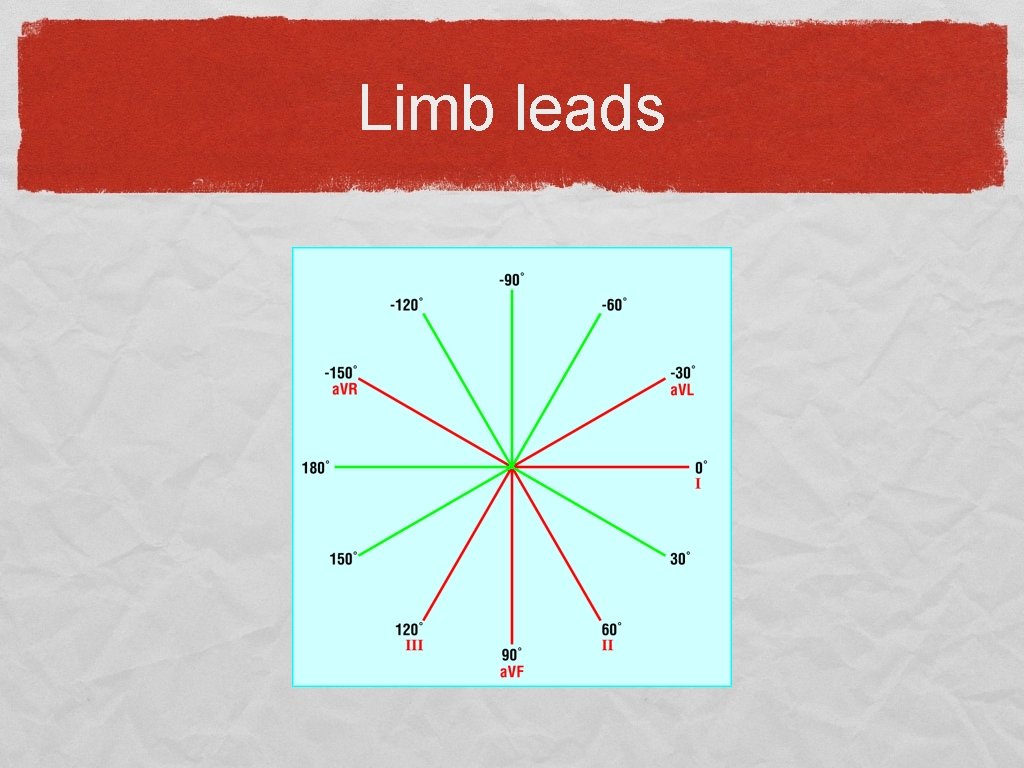
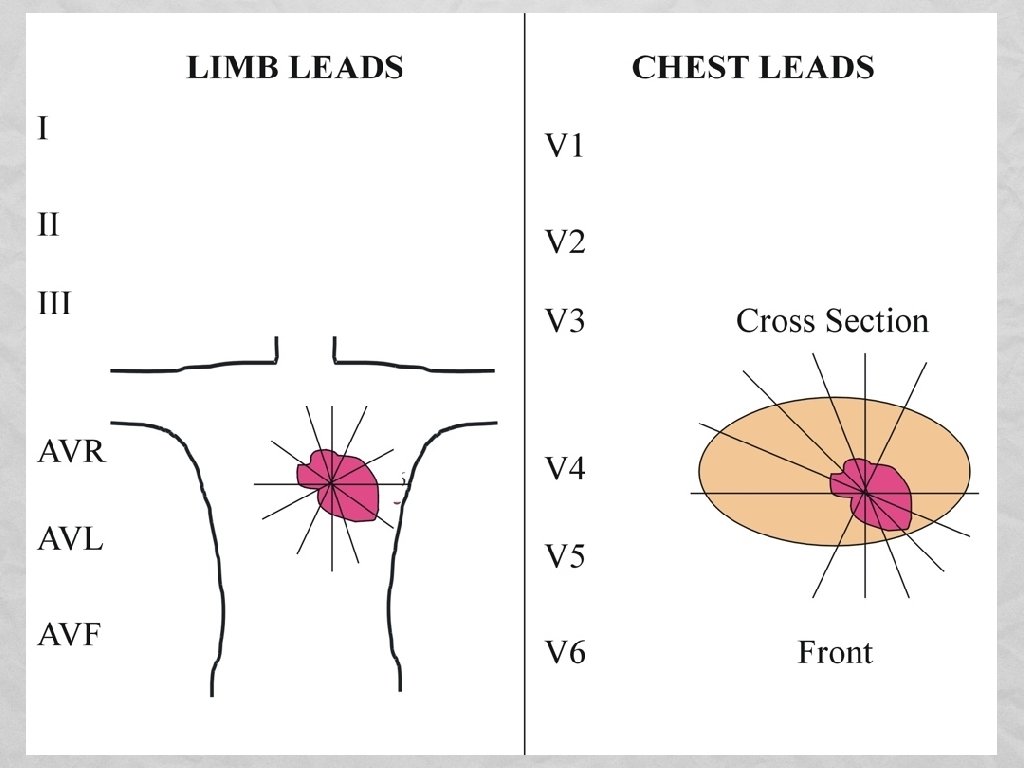
Inroduction 12 possible leads Six limb (extremity) leads Bipolar leads: I, II, and III Unipolar leads: a. VR, a. VL, a. VF Six chest (precordial) leads
Limb leads I + III = ?
limb leads Electrodes Right arm Left leg Right leg (ground)
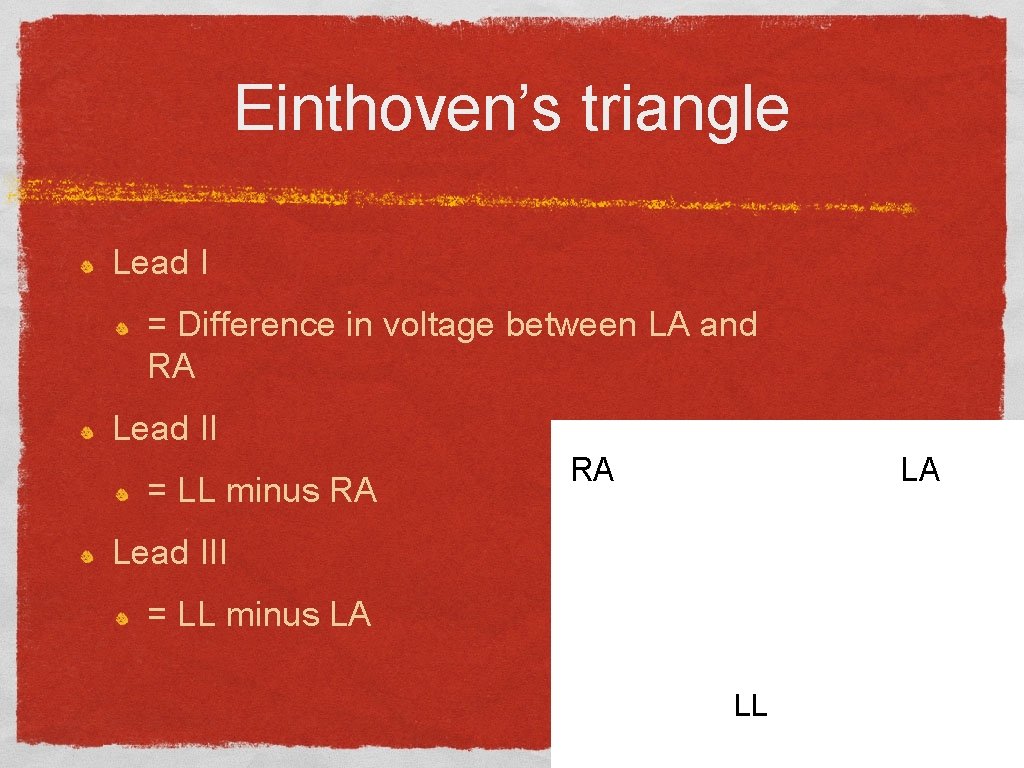
Einthoven’s triangle Lead I = Difference in voltage between LA and RA Lead II = LL minus RA RA LA Lead III = LL minus LA LL
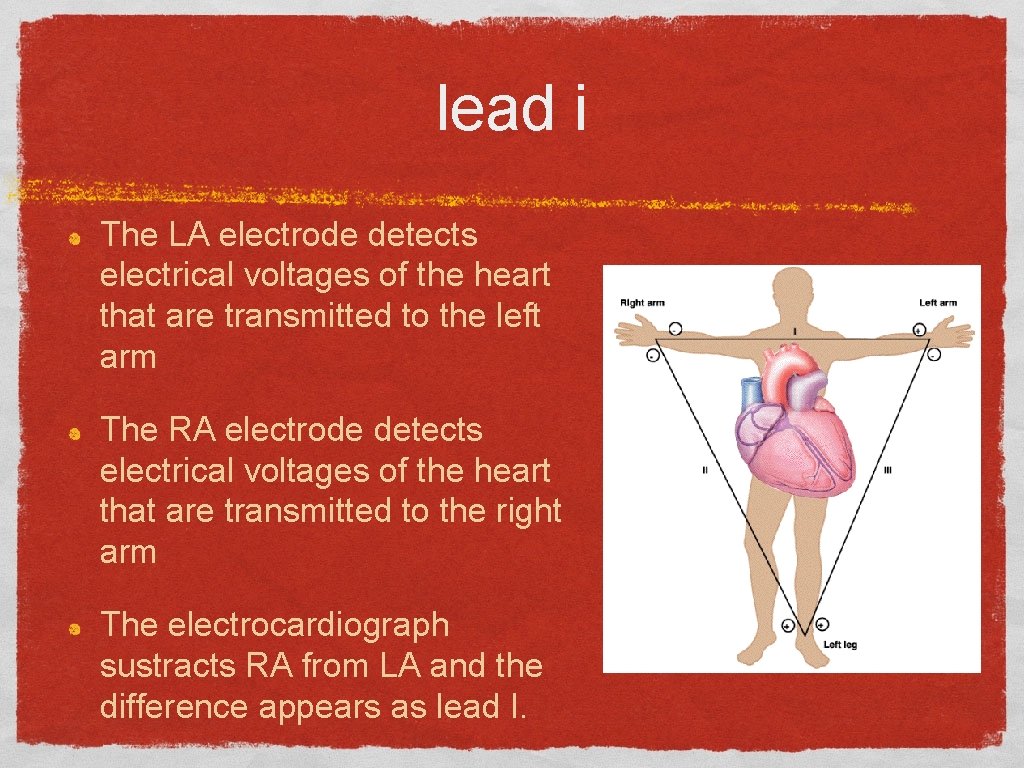
lead i The LA electrode detects electrical voltages of the heart that are transmitted to the left arm The RA electrode detects electrical voltages of the heart that are transmitted to the right arm The electrocardiograph sustracts RA from LA and the difference appears as lead I.
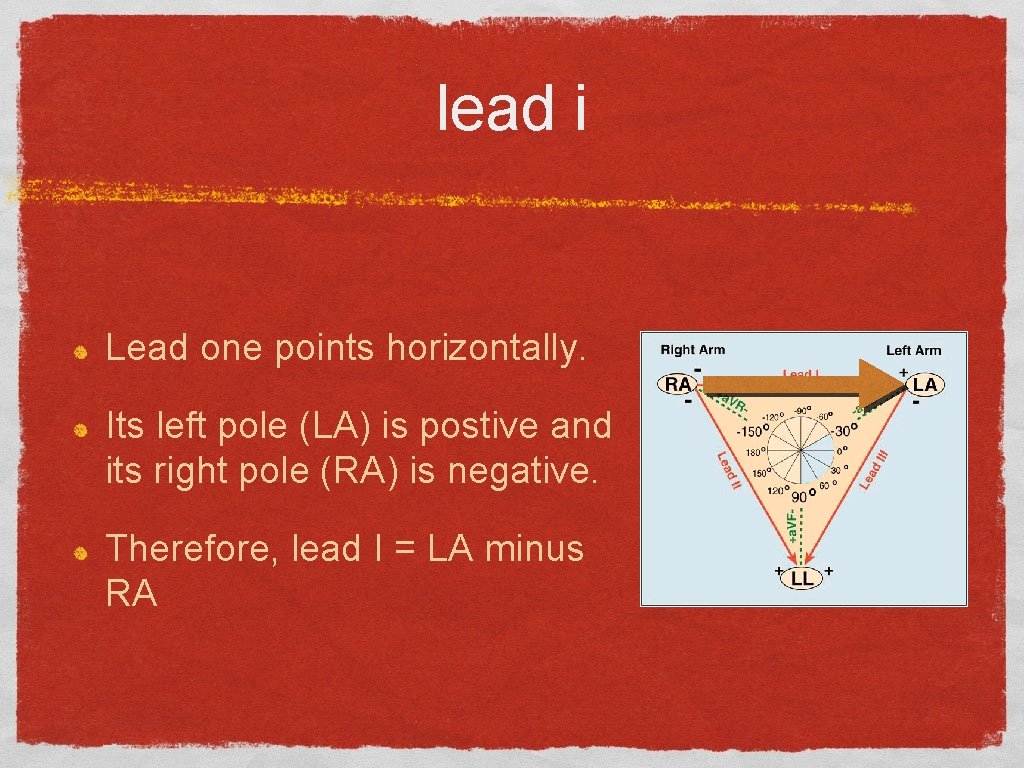
lead i Lead one points horizontally. Its left pole (LA) is postive and its right pole (RA) is negative. Therefore, lead I = LA minus RA
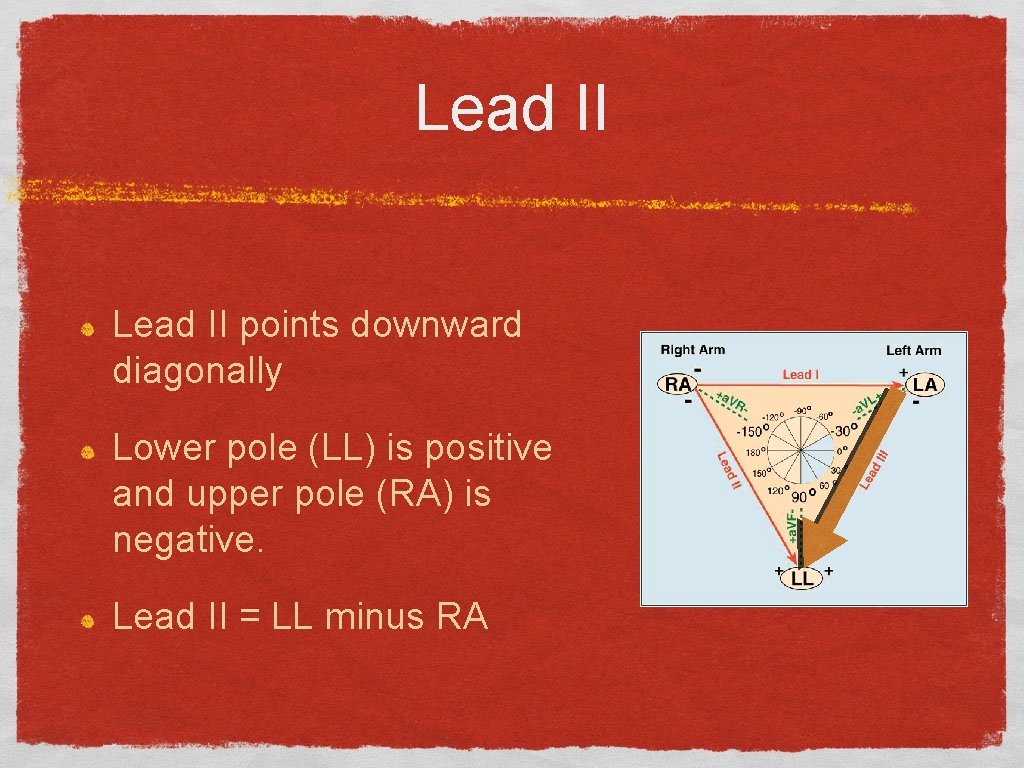
Lead II points downward diagonally Lower pole (LL) is positive and upper pole (RA) is negative. Lead II = LL minus RA
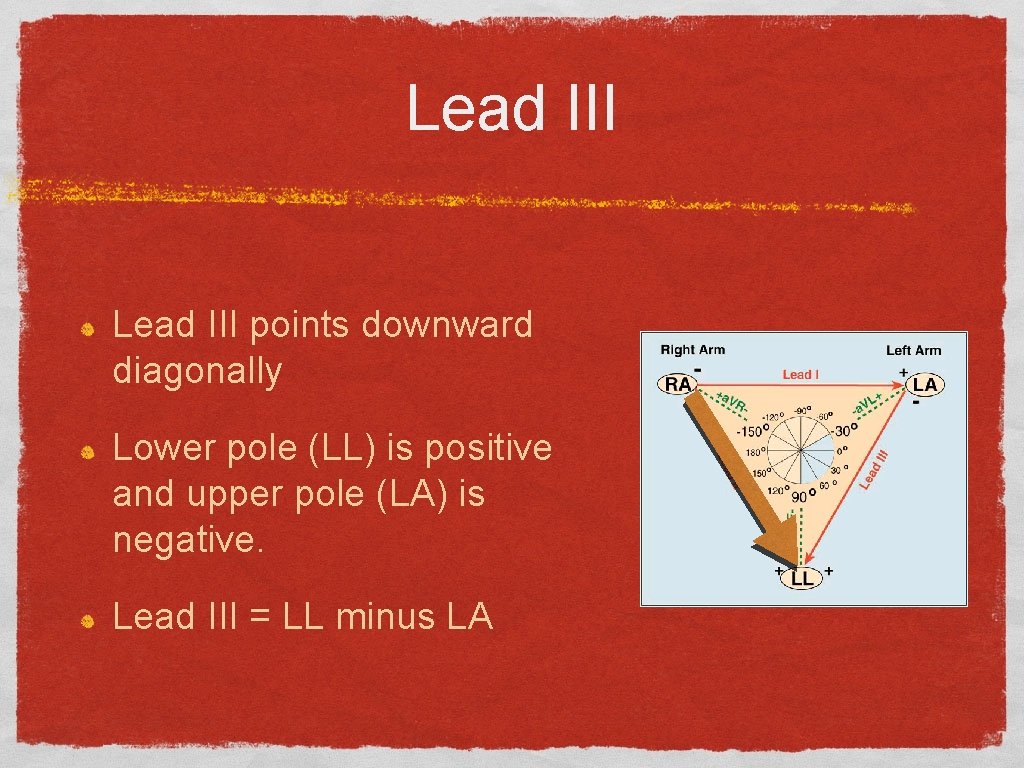
Lead III points downward diagonally Lower pole (LL) is positive and upper pole (LA) is negative. Lead III = LL minus LA
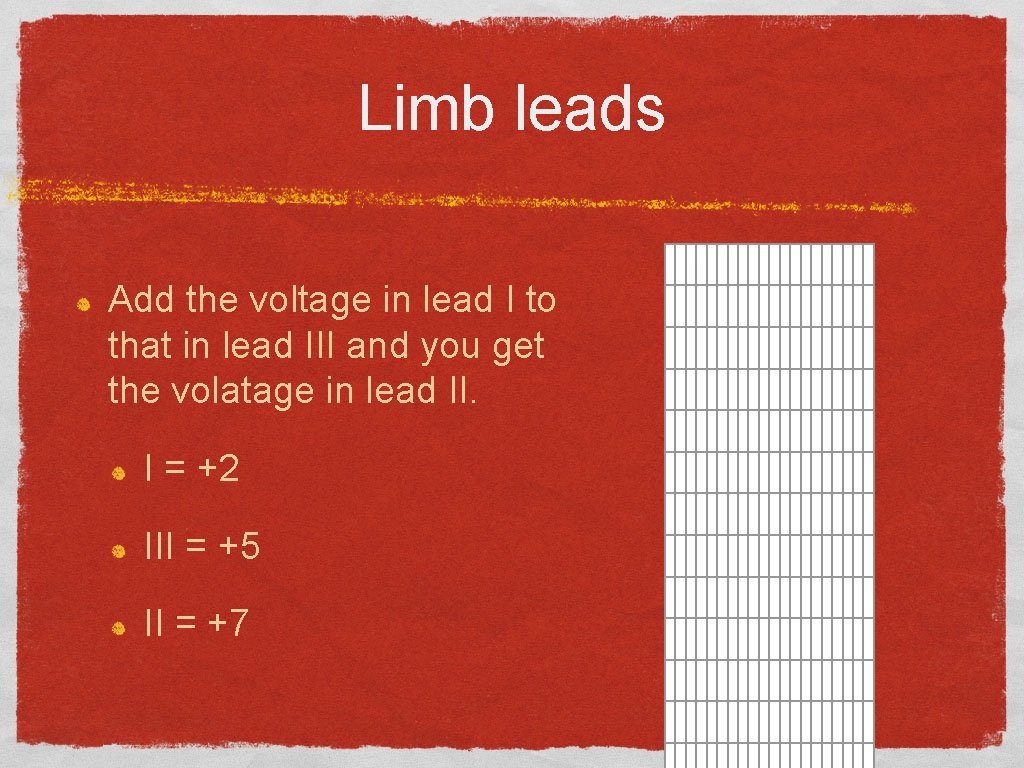
Limb leads Add the voltage in lead I to that in lead III and you get the volatage in lead II. I = +2 III = +5 II = +7
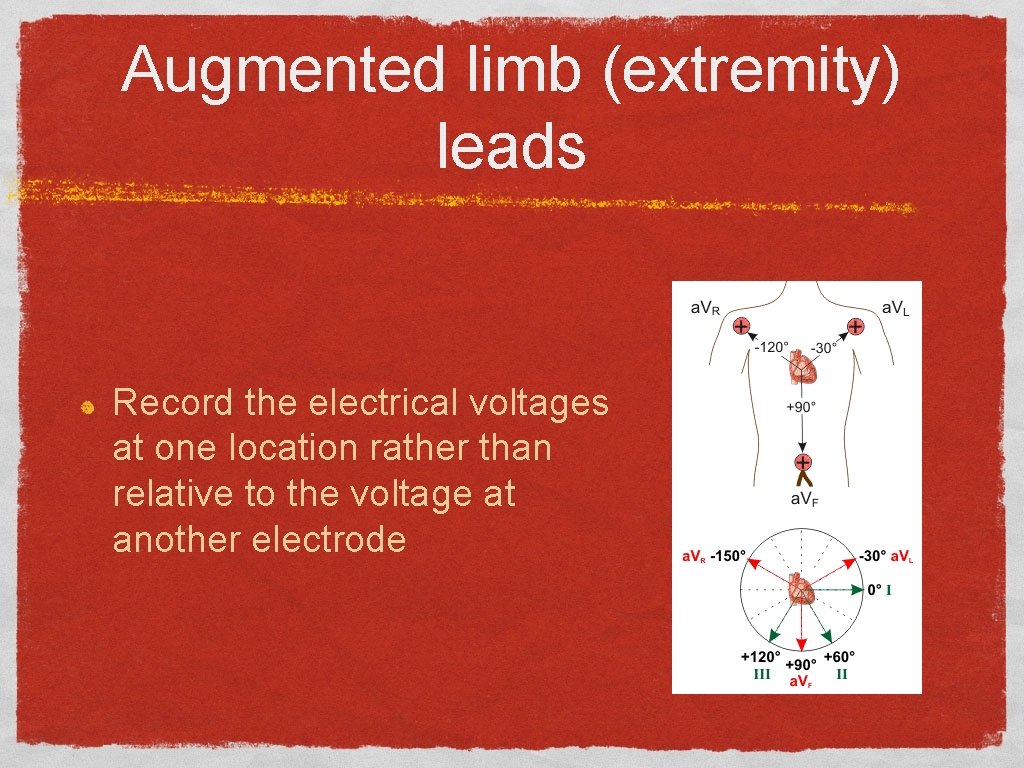
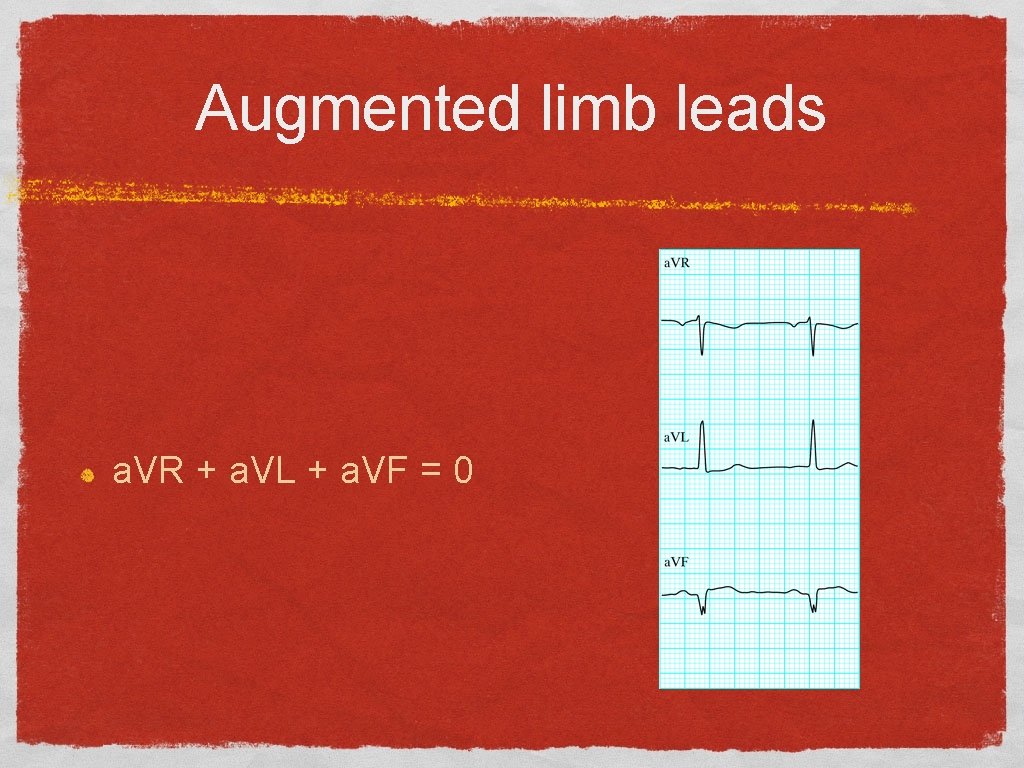
Augmented limb (extremity) leads Record the electrical voltages at one location rather than relative to the voltage at another electrode
Augmented limb leads a. VR + a. VL + a. VF = 0
Limb leads
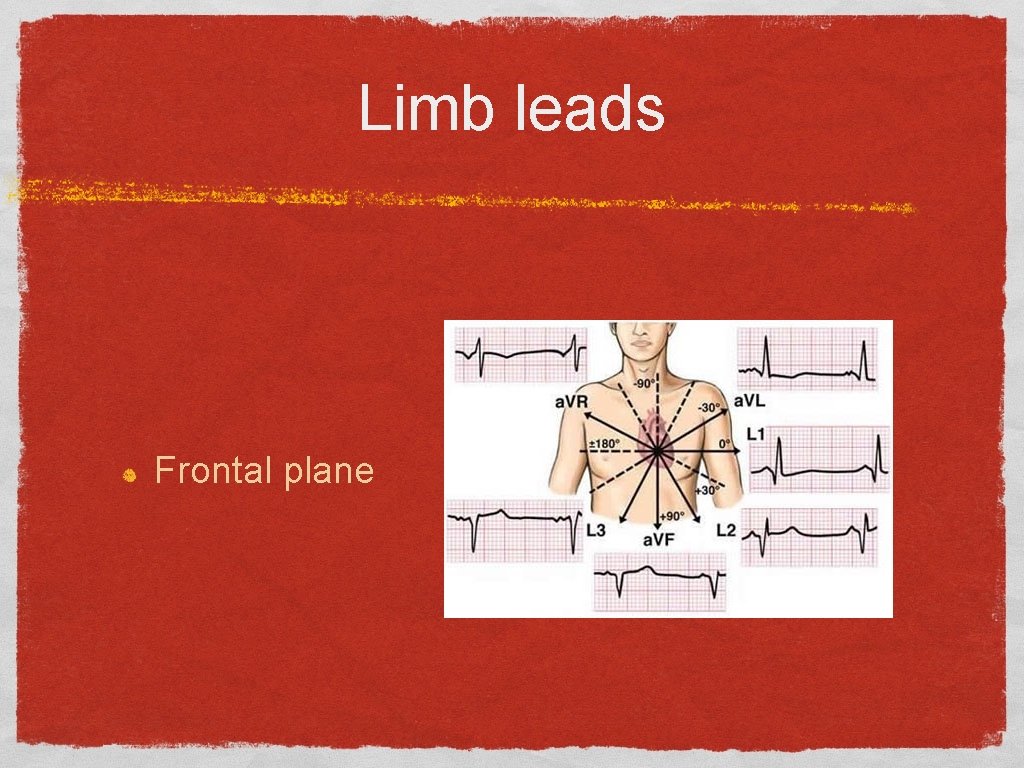
Limb leads Frontal plane
Electrode and Lead are not the same thing.
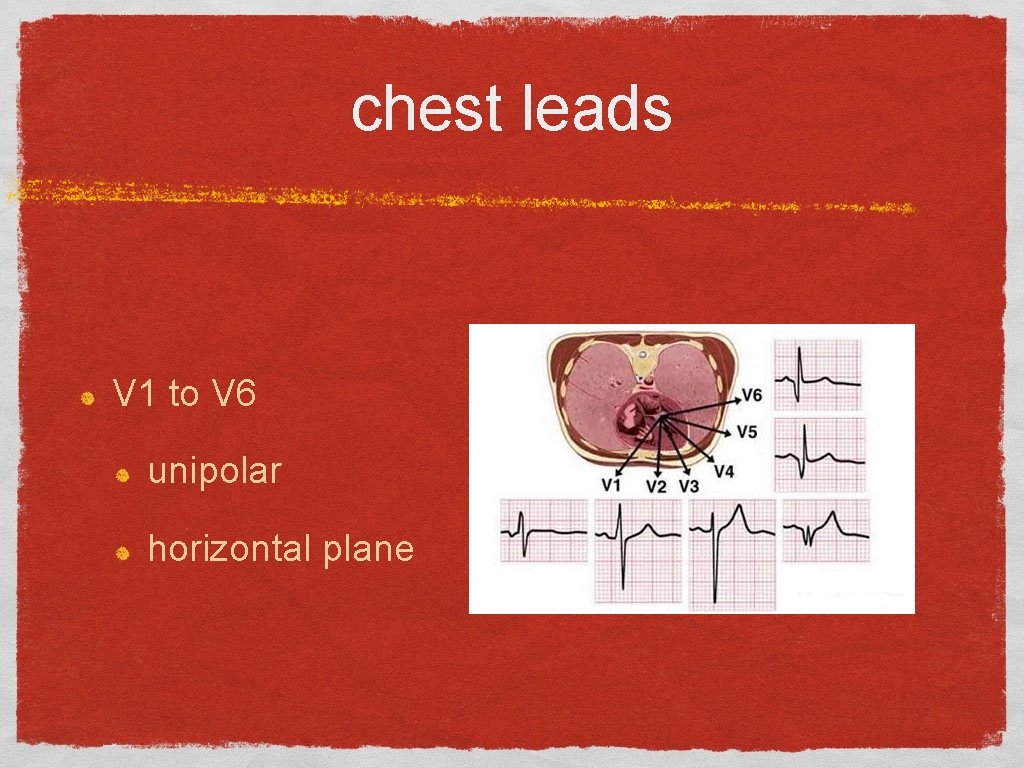
chest leads V 1 to V 6 unipolar horizontal plane
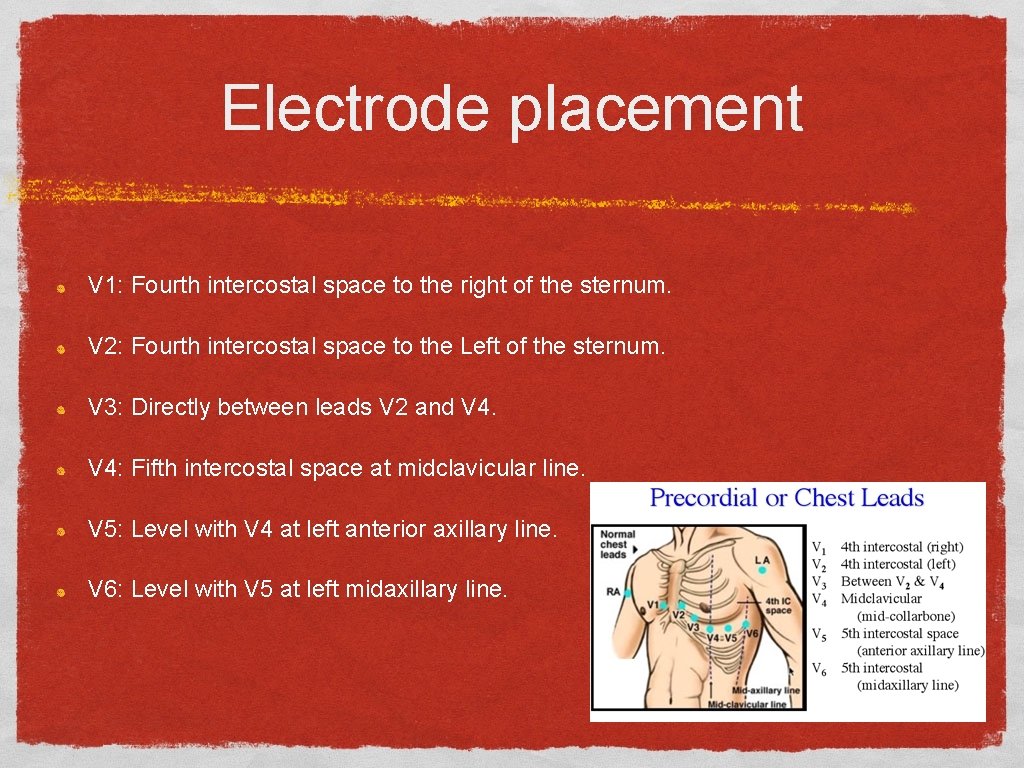
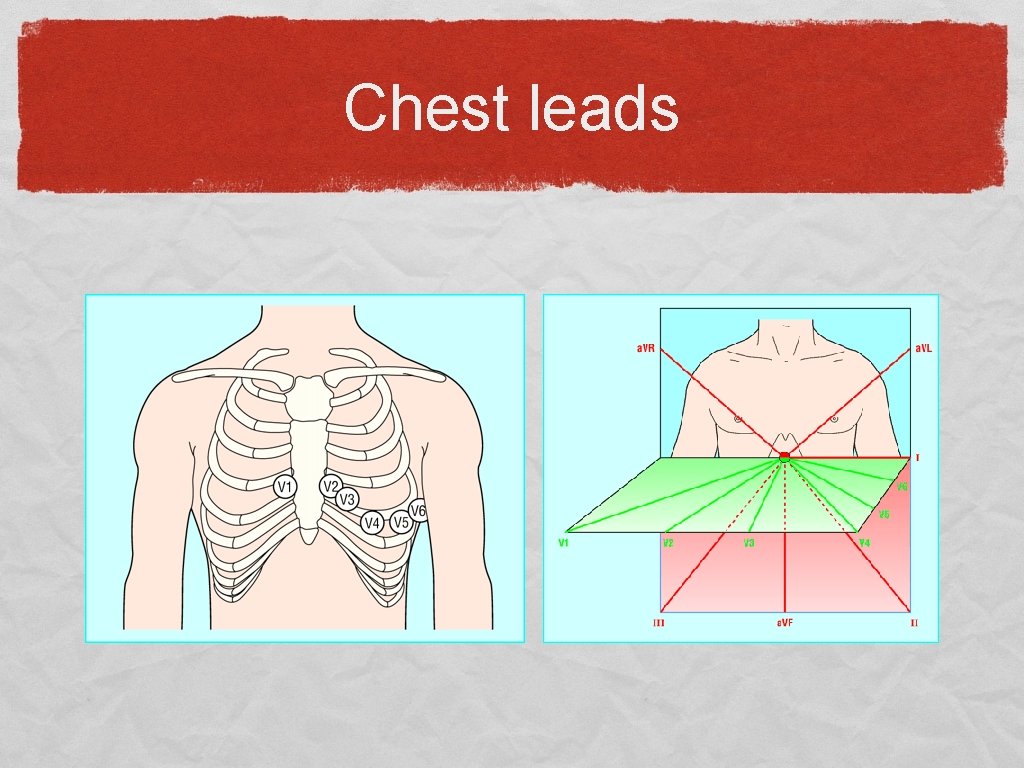
Electrode placement V 1: Fourth intercostal space to the right of the sternum. V 2: Fourth intercostal space to the Left of the sternum. V 3: Directly between leads V 2 and V 4: Fifth intercostal space at midclavicular line. V 5: Level with V 4 at left anterior axillary line. V 6: Level with V 5 at left midaxillary line.
Chest leads
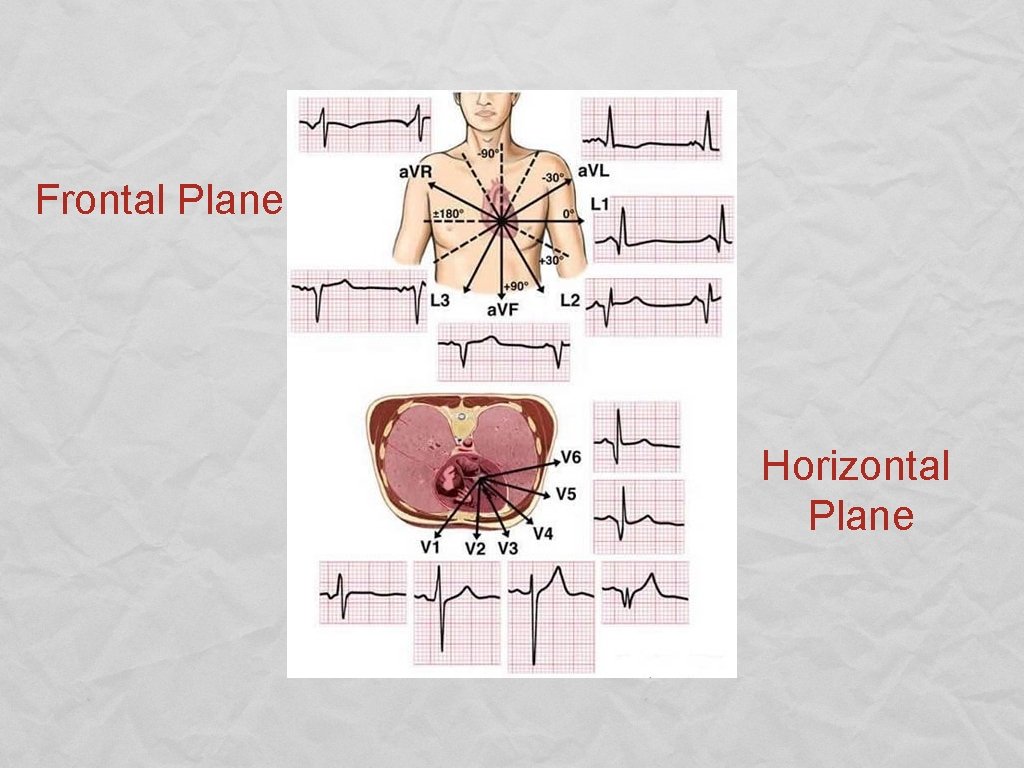
Frontal Plane Horizontal Plane
Monitor leads 12 leads are not always necessary Sample of a monitor lead V 1 (positive) Right shoulder (negative) Left shoulder (ground)
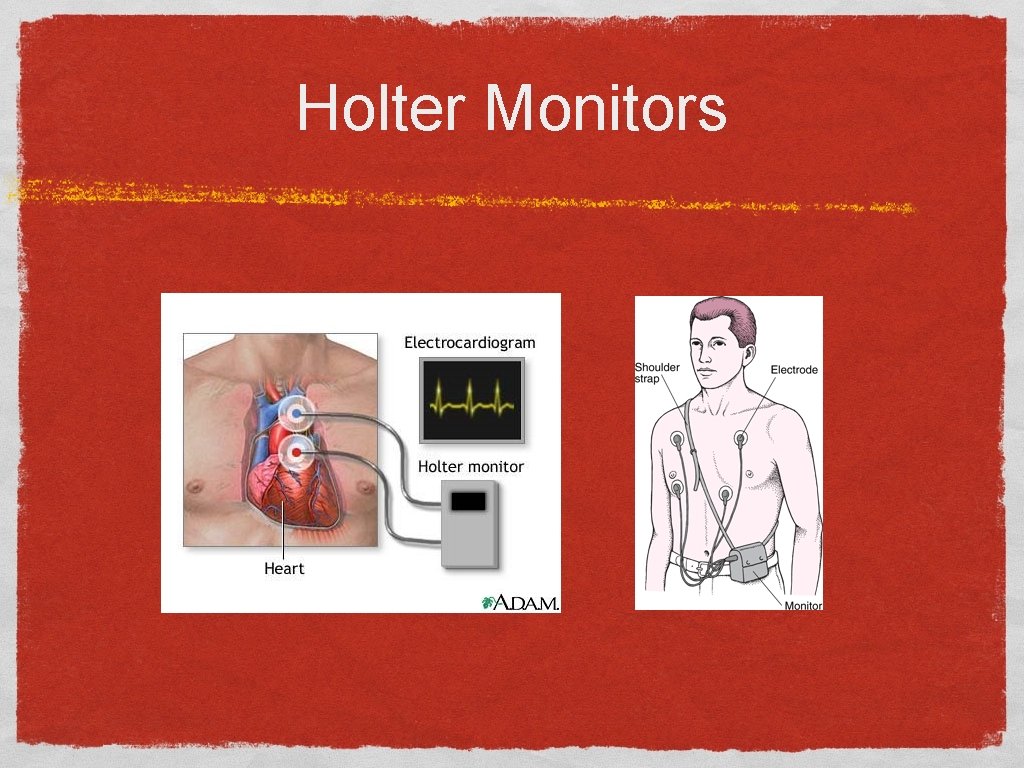
Holter Monitors