
ECG Electrocardiography It is a voltage difference record

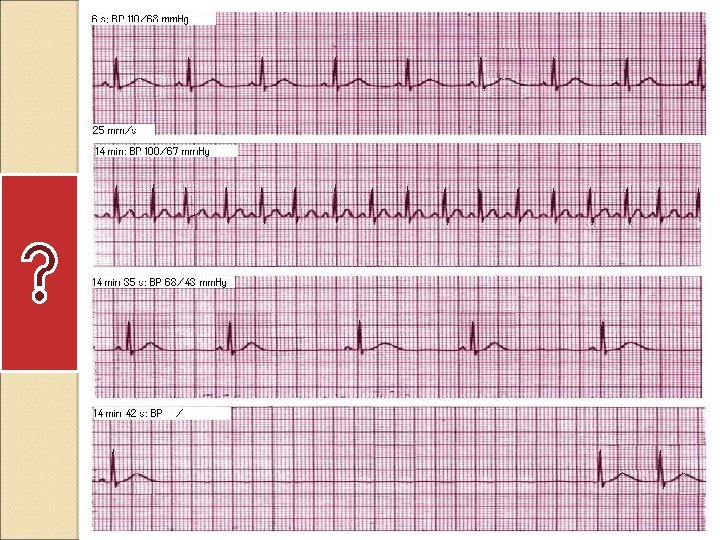


- Slides: 65
ECG
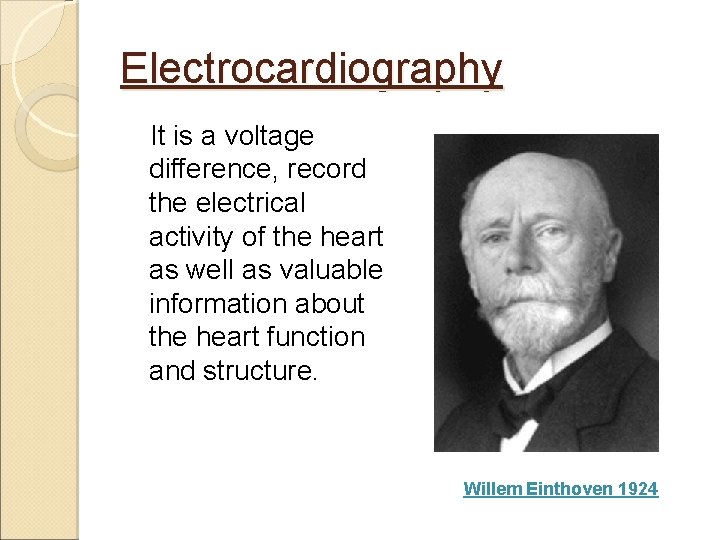
Electrocardiography It is a voltage difference, record the electrical activity of the heart as well as valuable information about the heart function and structure. Willem Einthoven 1924
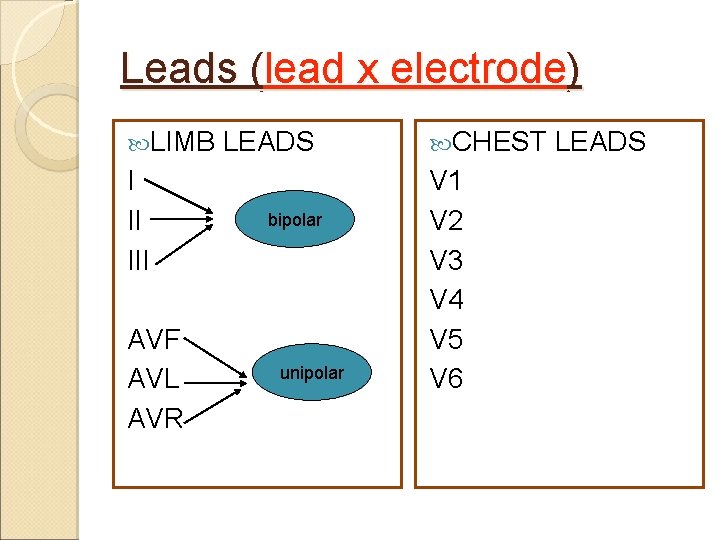
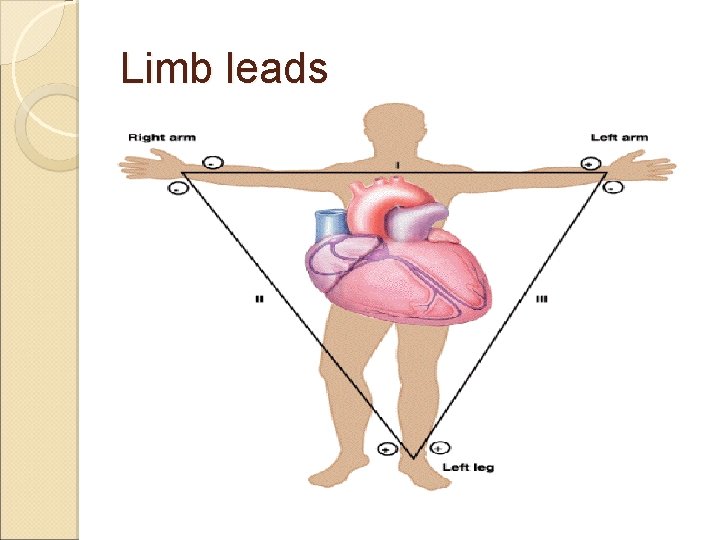
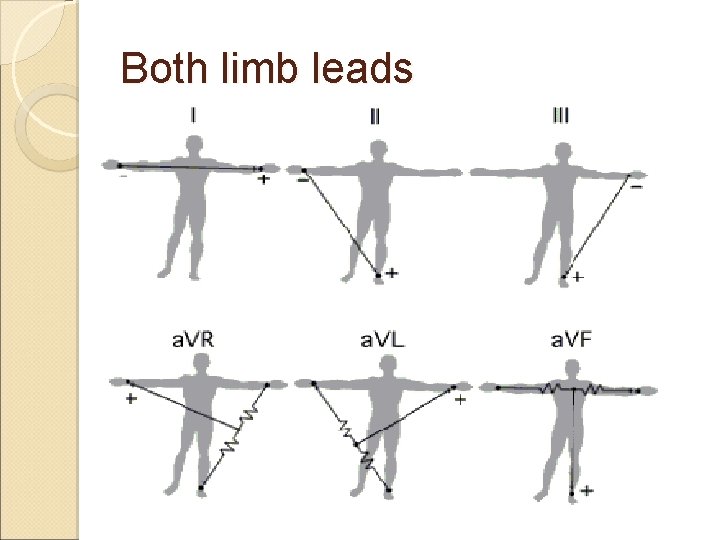
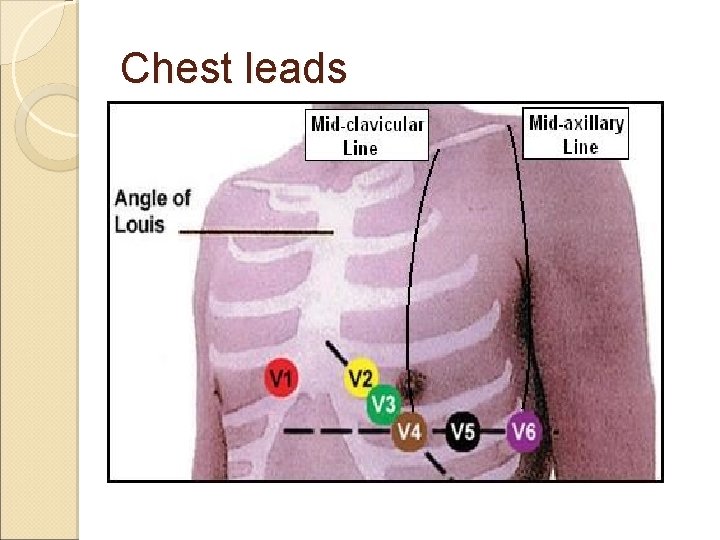
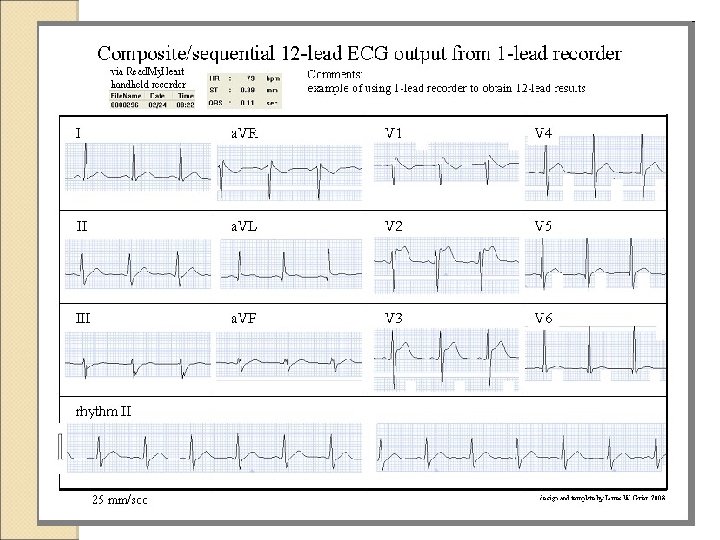
Leads (lead x electrode) LIMB I II III AVF AVL AVR LEADS bipolar unipolar CHEST V 1 V 2 V 3 V 4 V 5 V 6 LEADS
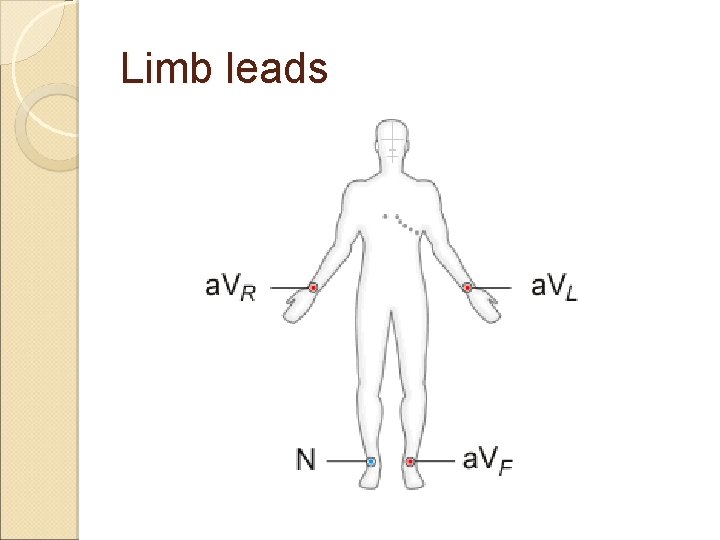
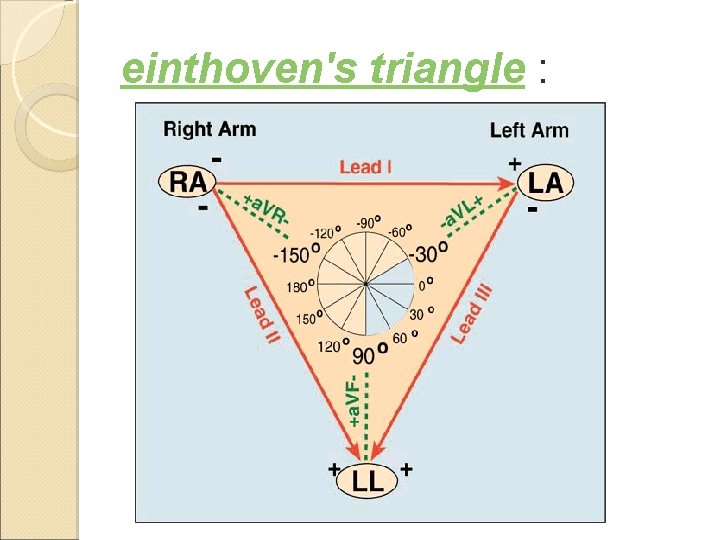
Limb leads
Limb leads
Both limb leads
Chest leads
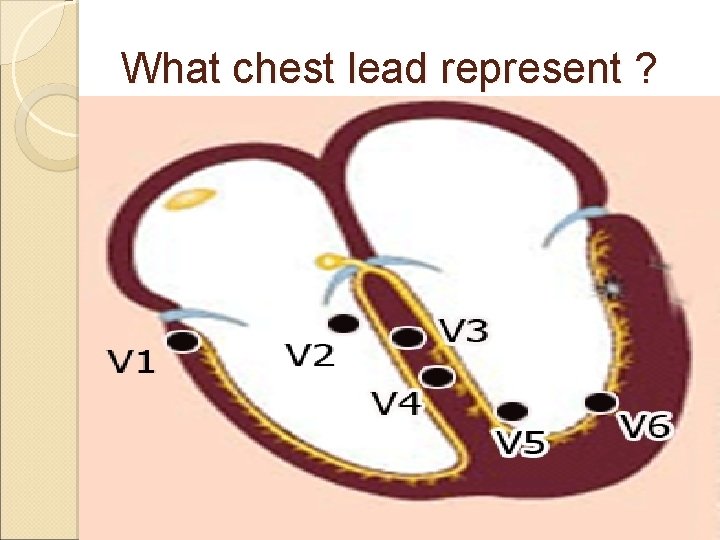
What chest lead represent ?
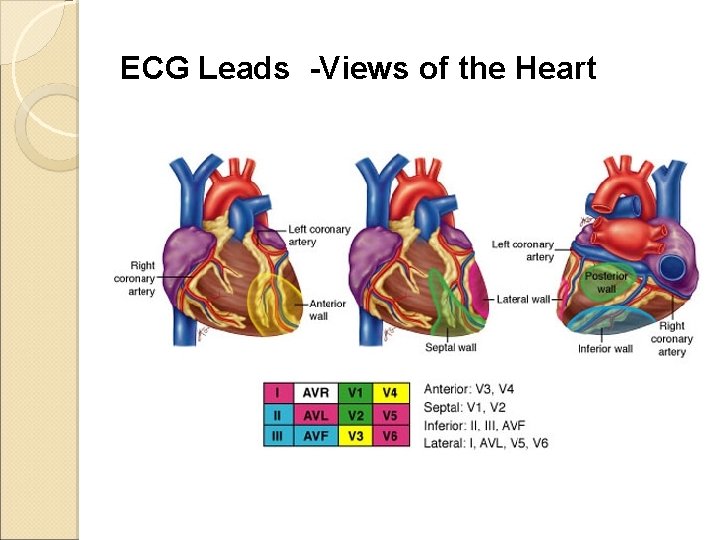
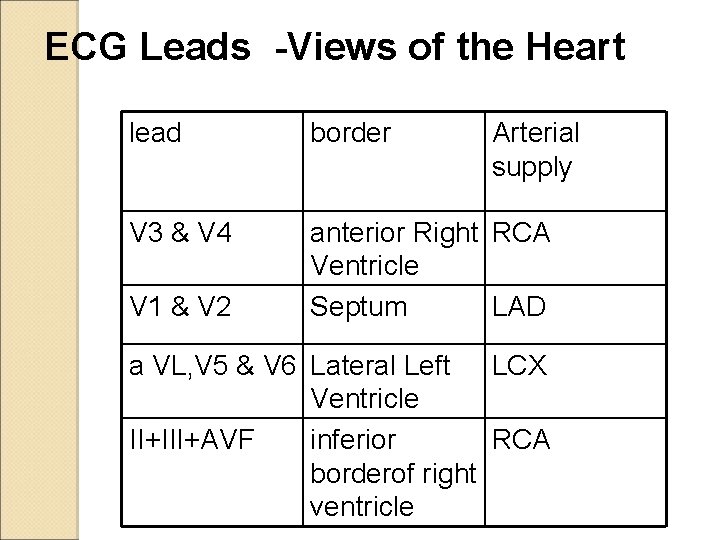
ECG Leads -Views of the Heart
einthoven's triangle :
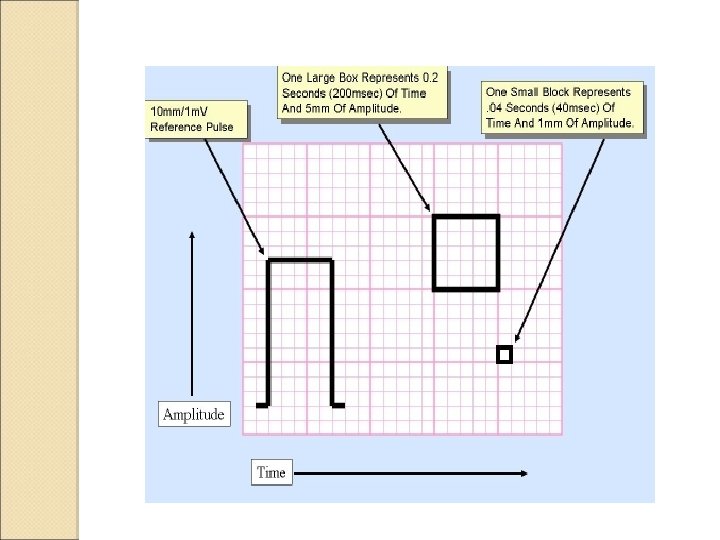
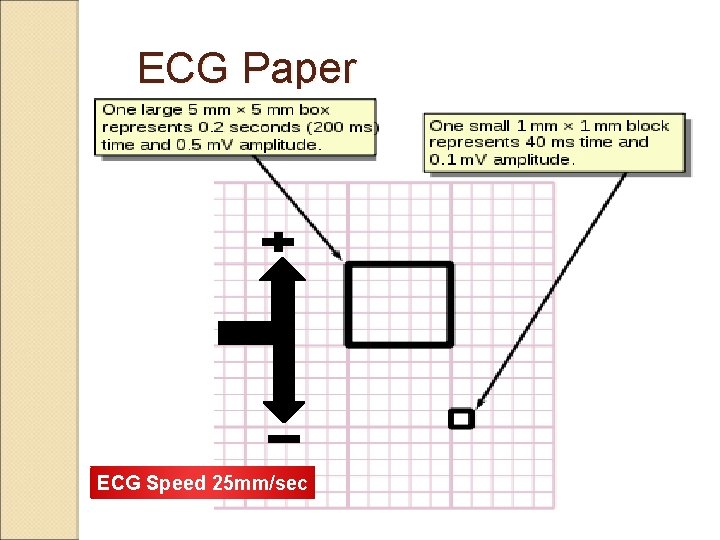
ECG Paper ECG Speed 25 mm/sec
�See video
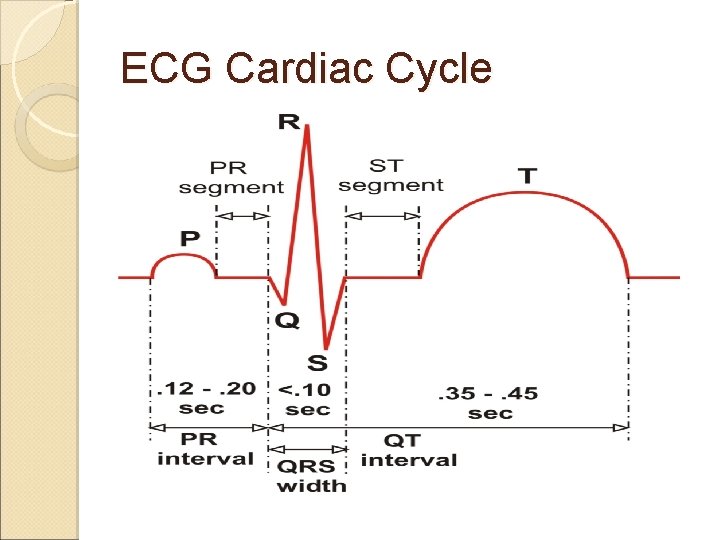
ECG Cardiac Cycle
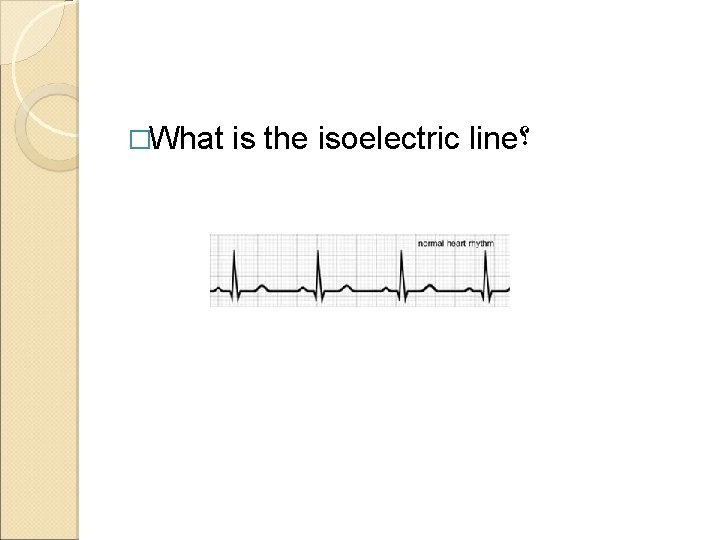
�What is the isoelectric line ؟
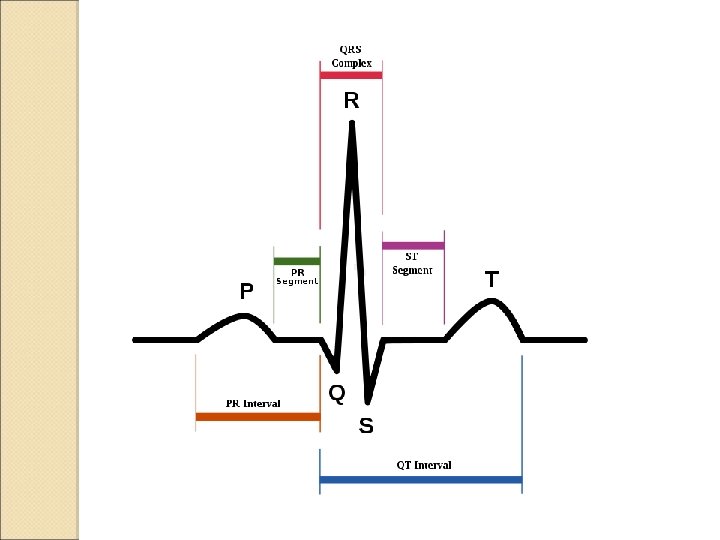
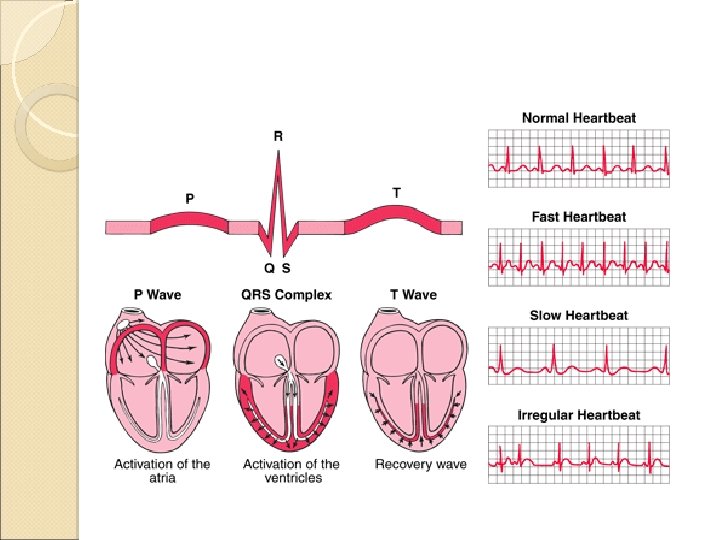
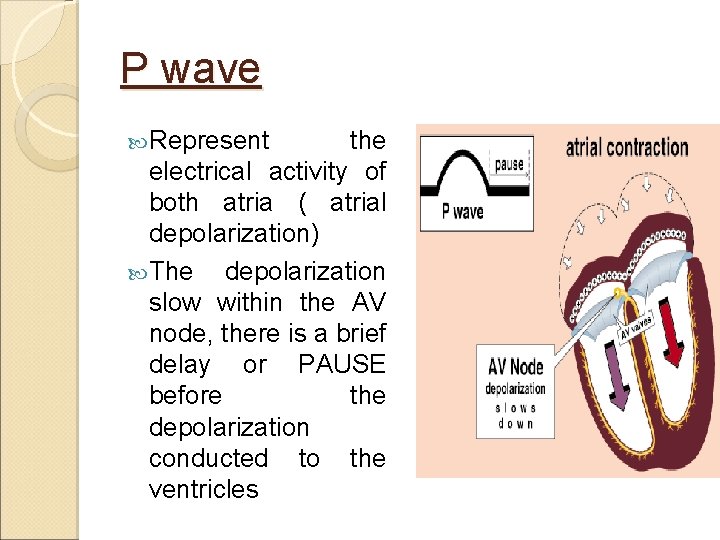
P wave Represent the electrical activity of both atria ( atrial depolarization) The depolarization slow within the AV node, there is a brief delay or PAUSE before the depolarization conducted to the ventricles
1. Normal duration <0. 12 sec Absent P wave: Atrial fibrillation SA Block AV Rhythm Peak P wave: Atrial hypertrophy
PR interval �Normally : 0. 12 -0. 2 sec �Prolonged �Short in : heart block. in : W-P-W syndrome.
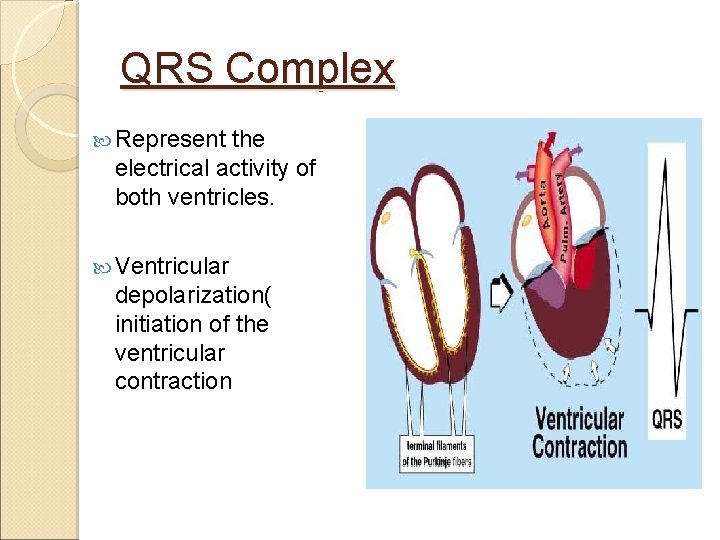
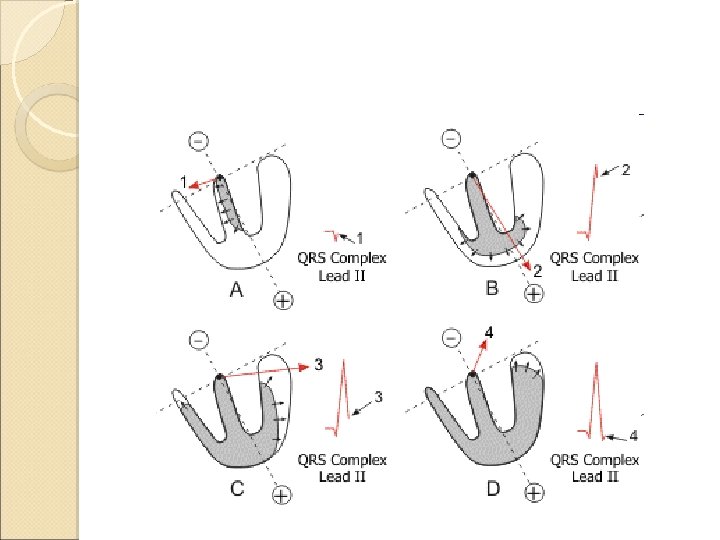
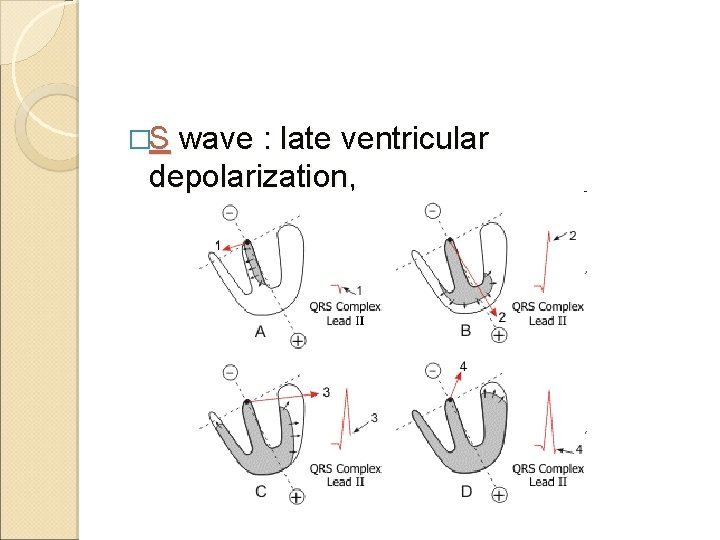
QRS Complex Represent the electrical activity of both ventricles. Ventricular depolarization( initiation of the ventricular contraction
QRS Complex �Q wave �R wave: �S wave : � : Normal QRS duration < 0. 12 sec
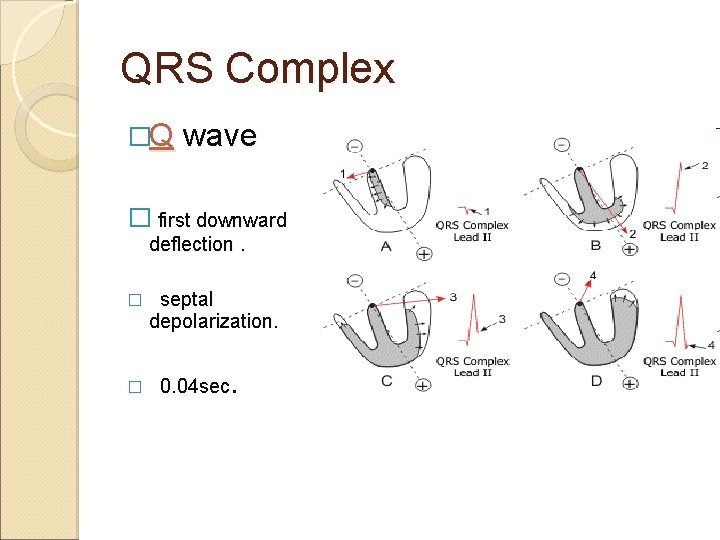
QRS Complex �Q wave � first downward deflection. � � septal depolarization. . 0. 04 sec
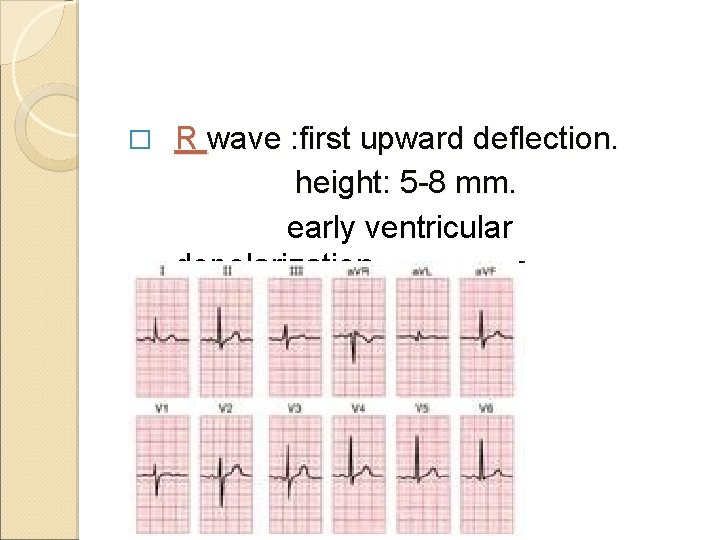
� R wave : first upward deflection. height: 5 -8 mm. early ventricular depolarization
�S wave : late ventricular depolarization,
Large QRS indicate Ventricular hypertrophy.
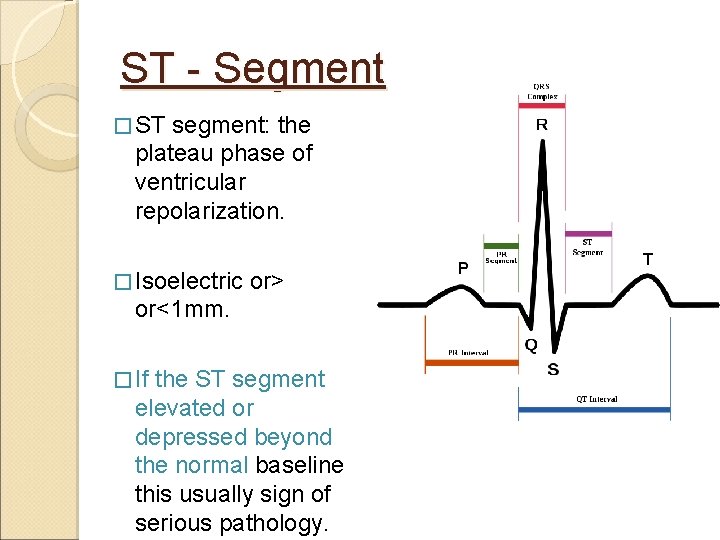
ST - Segment � ST segment: the plateau phase of ventricular repolarization. � Isoelectric or> or<1 mm. � If the ST segment elevated or depressed beyond the normal baseline this usually sign of serious pathology.
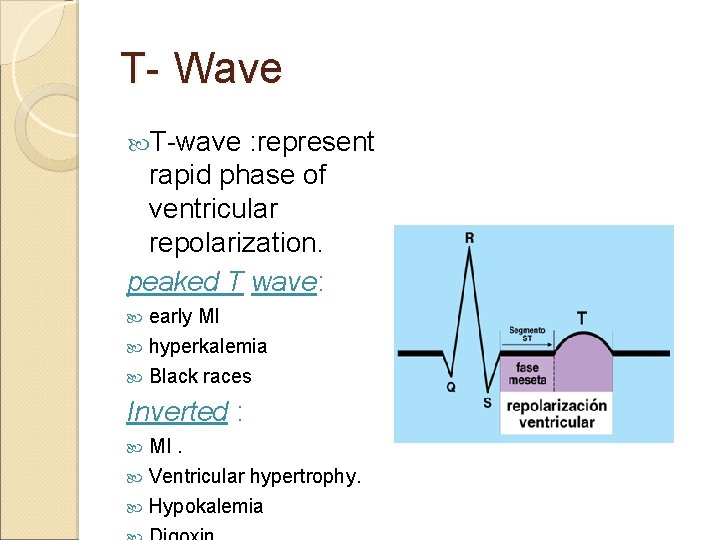
T- Wave T-wave : represent rapid phase of ventricular repolarization. peaked T wave: early MI hyperkalemia Black races Inverted : MI. Ventricular hypertrophy. Hypokalemia
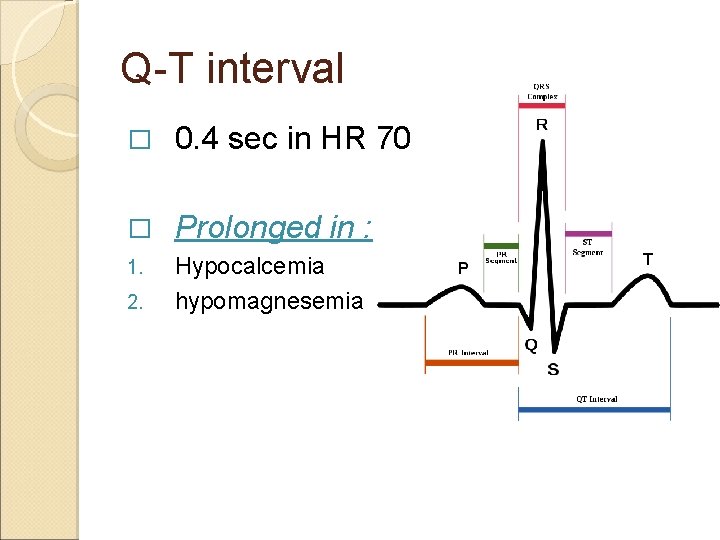
Q-T interval � 0. 4 sec in HR 70 � Prolonged in : 1. Hypocalcemia hypomagnesemia 2.
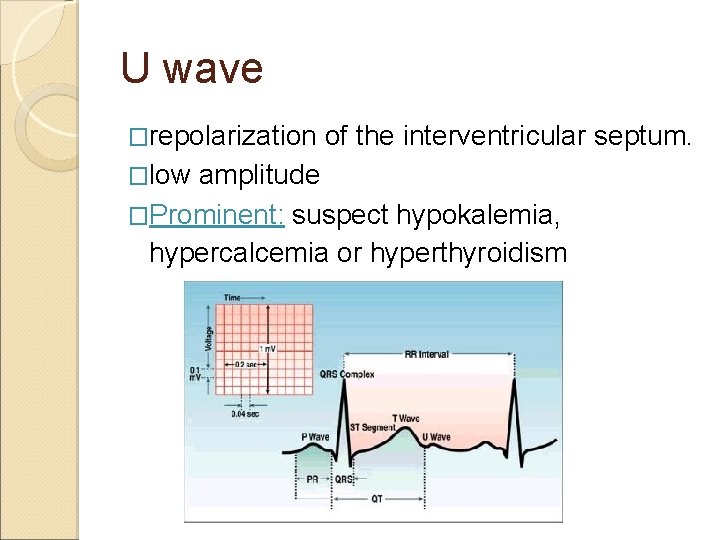
U wave �repolarization �low of the interventricular septum. amplitude �Prominent: suspect hypokalemia, hypercalcemia or hyperthyroidism
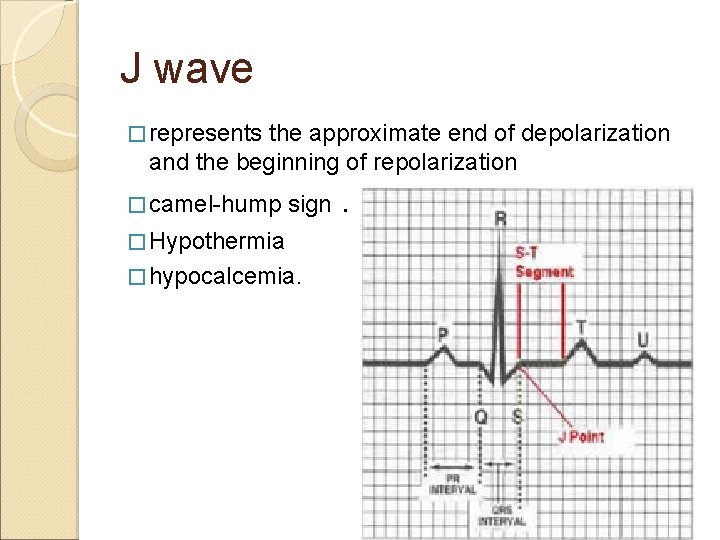
J wave � represents the approximate end of depolarization and the beginning of repolarization � camel-hump sign � Hypothermia � hypocalcemia. .
Low voltage ECG �Obesity �Emphysema �COPD �Severe hypothyroidism
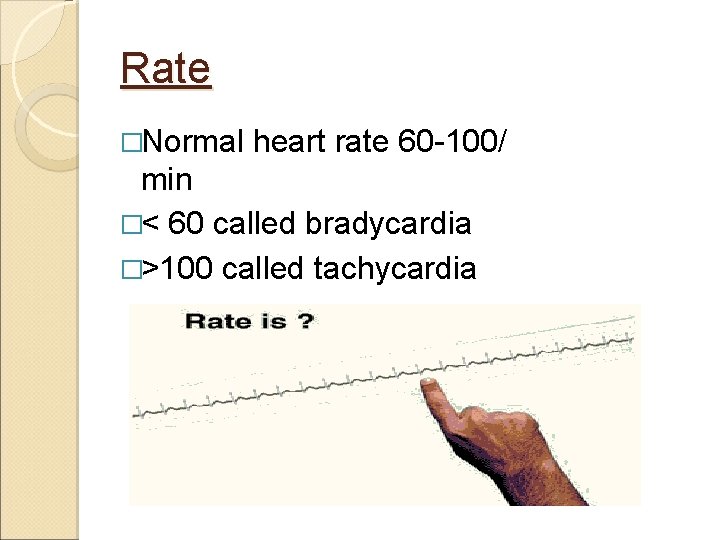
Rate �Normal heart rate 60 -100/ min �< 60 called bradycardia �>100 called tachycardia
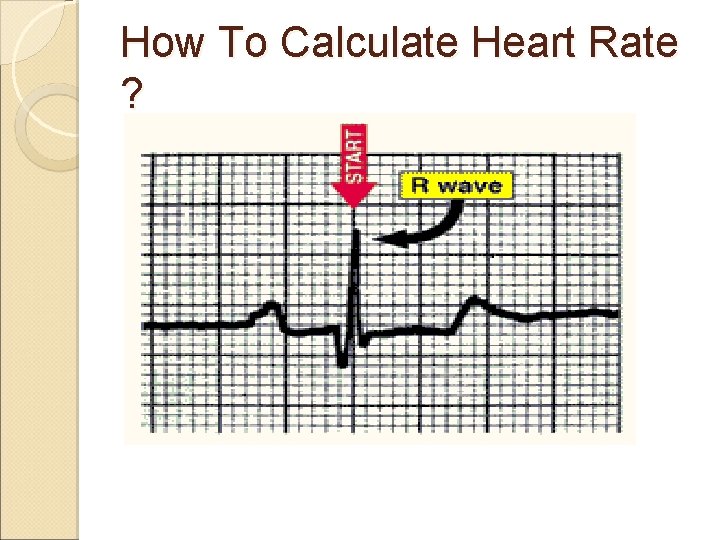
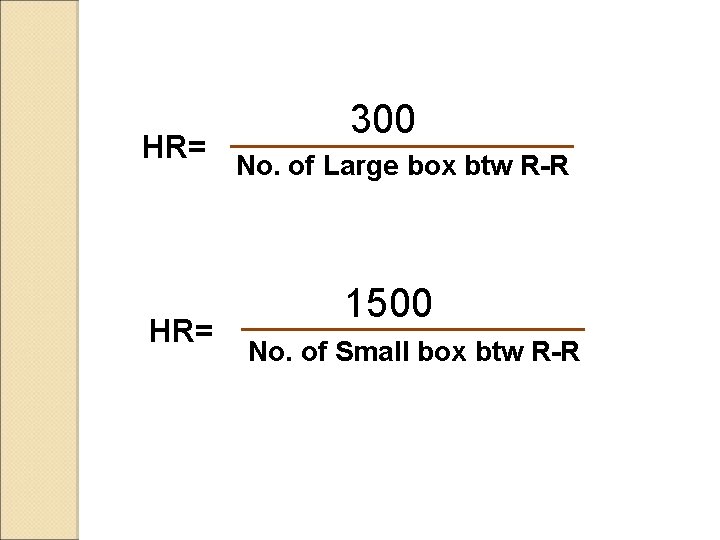
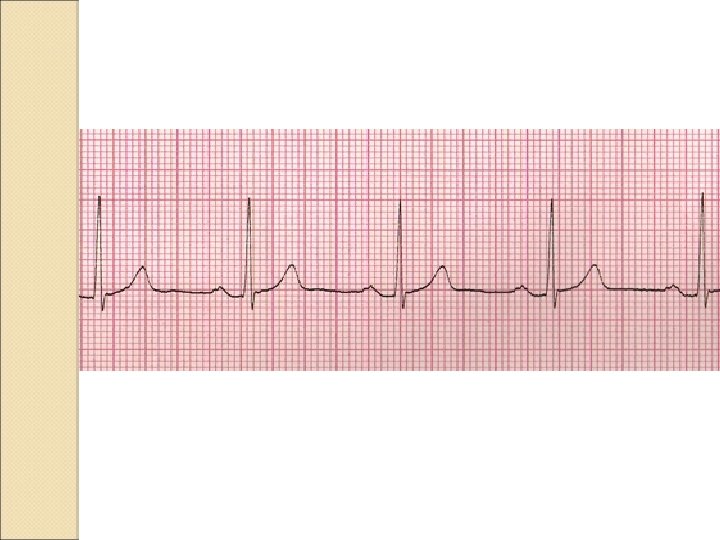
How To Calculate Heart Rate ?
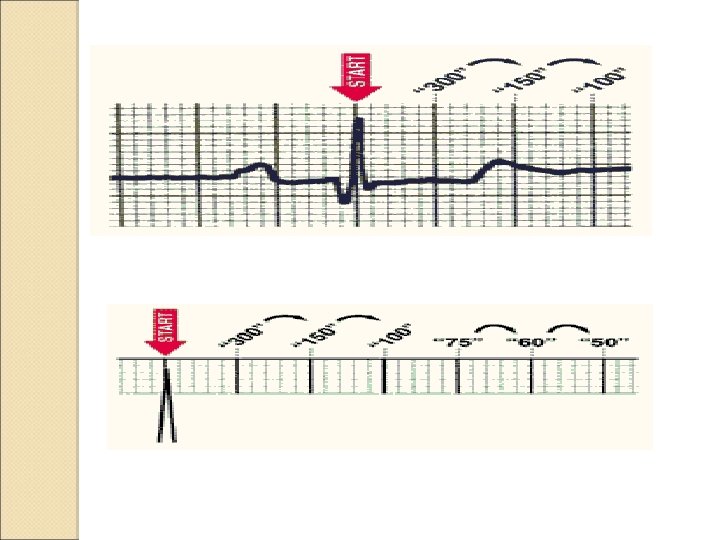
HR= 300 No. of Large box btw R-R 1500 No. of Small box btw R-R
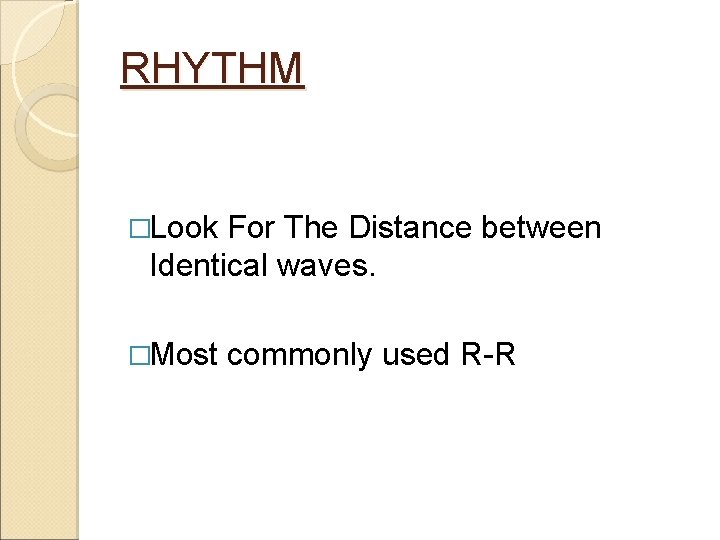
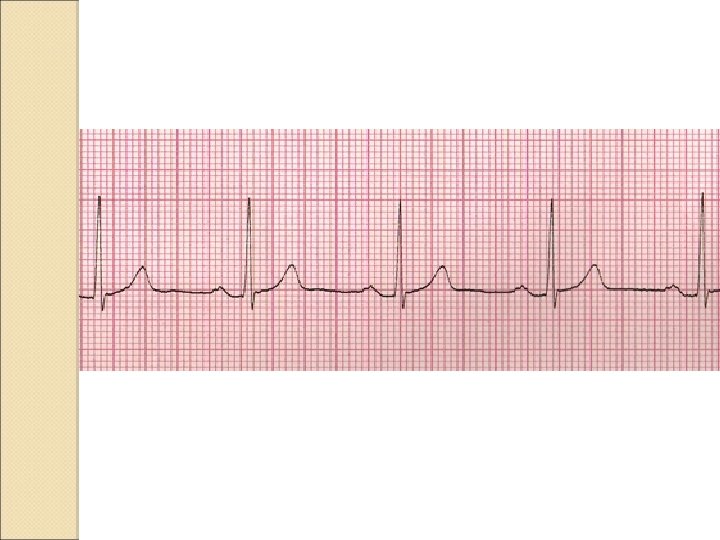
RHYTHM �Look For The Distance between Identical waves. �Most commonly used R-R
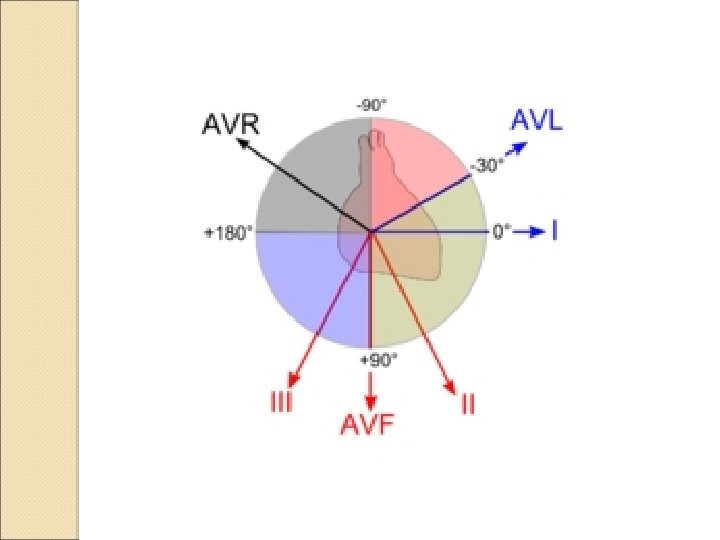
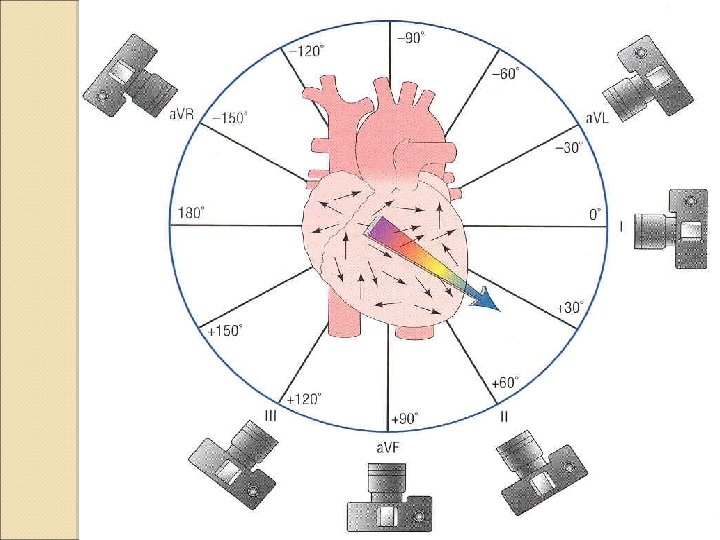
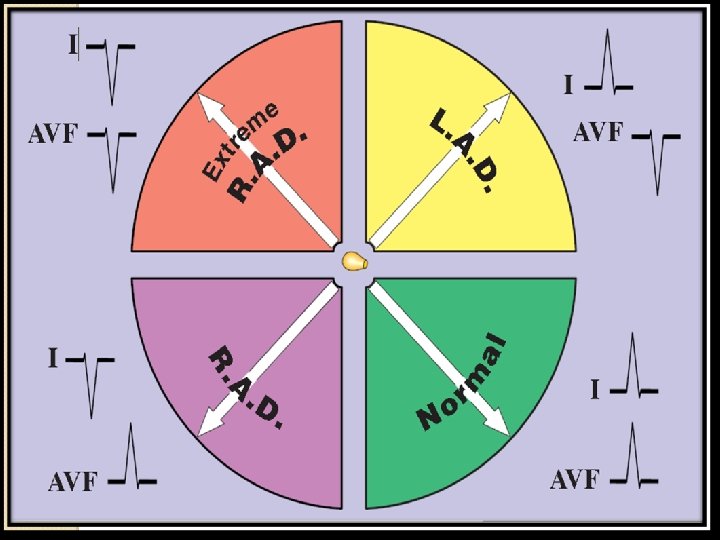
AXIS At any point during depolarization and repolarization electrical potential are being propagated in different directions. Most of these cancel each other out and only the net force is recorded. This net is called AXIS or cardiac VECTOR
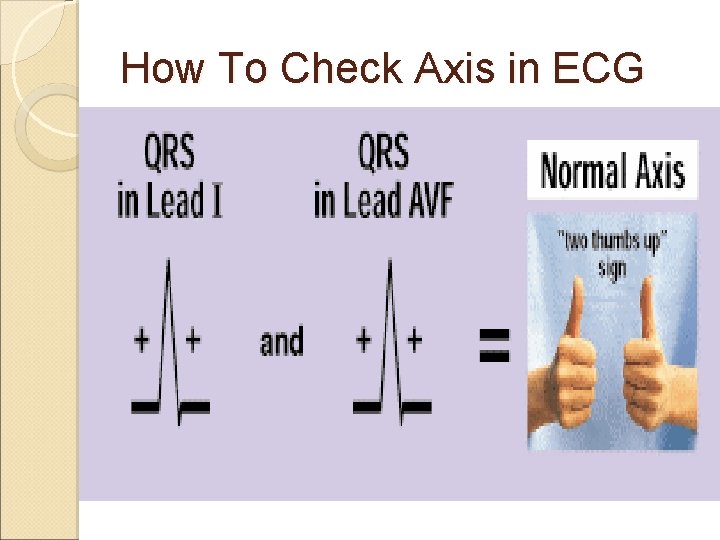
How To Check Axis in ECG
Principles of ECG recording � Explain the indication and the procedure for the patient. (assurance ) � Ask the patient to take off any metals he/she wears. � Expose the wanted sites. � Cleaning of skin and shaving if necessary. � Place the electrodes in the correct positions. � Instruct the patient to remain still (should not talk during the test ) and relax their shoulders and legs while the recording takes place (1 min)
�See video
How to comment on ECG �Name. Age , Date and time. �Calibration and Speed of paper �RAWIHI :
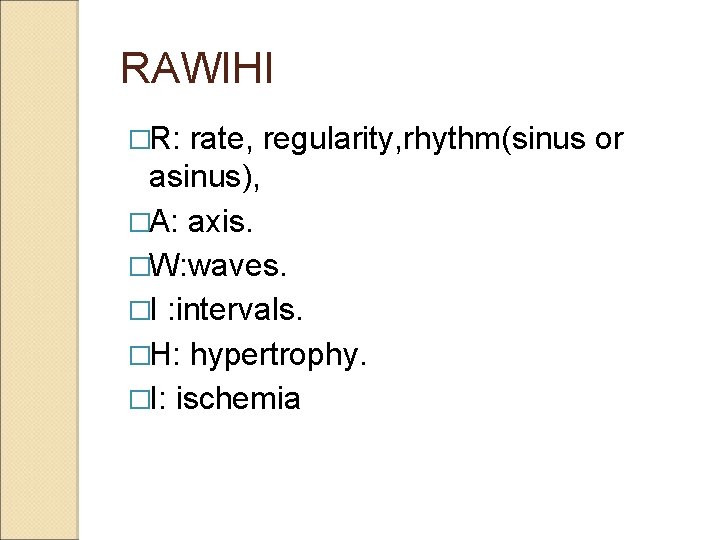
RAWIHI �R: rate, regularity, rhythm(sinus or asinus), �A: axis. �W: waves. �I : intervals. �H: hypertrophy. �I: ischemia
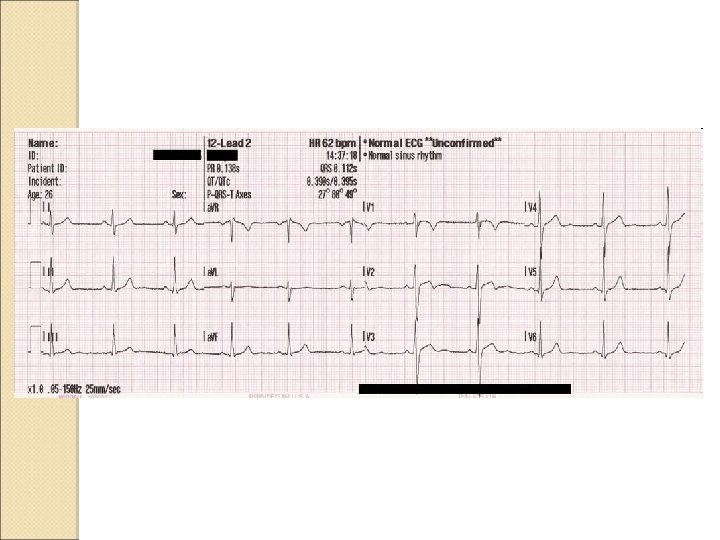
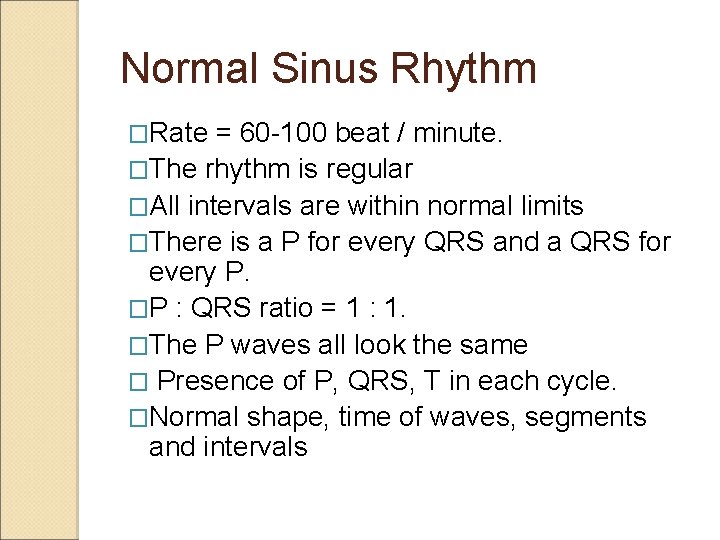
Normal Sinus Rhythm �Rate = 60 -100 beat / minute. �The rhythm is regular �All intervals are within normal limits �There is a P for every QRS and a QRS for every P. �P : QRS ratio = 1 : 1. �The P waves all look the same � Presence of P, QRS, T in each cycle. �Normal shape, time of waves, segments and intervals
Interfering factors Inaccurate placement of the electrodes Electrolyte imbalances Poor contact between the skin and the electrodes Movement Drugs or muscle twitching during the test that can affect results include digitalis, quinidine, and barbiturates
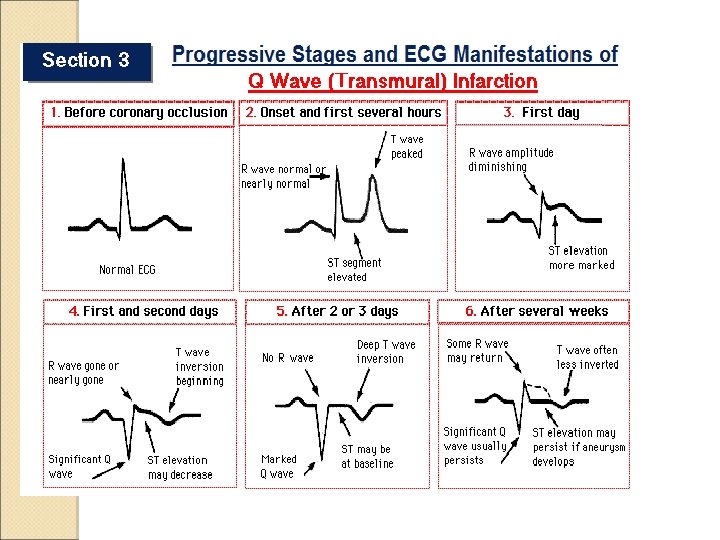
MI When myocardial blood supply is abruptly reduced to a region of the heart, a sequence of injurious events occur : �Ischemia ( subendocardial or transmural) �Injury �Necrosis, and eventual fibrosis (scarring) if the blood supply isn't restored in an appropriate period of time
�Hyperacute T wave is the earliest sign of acute myocardial infarction
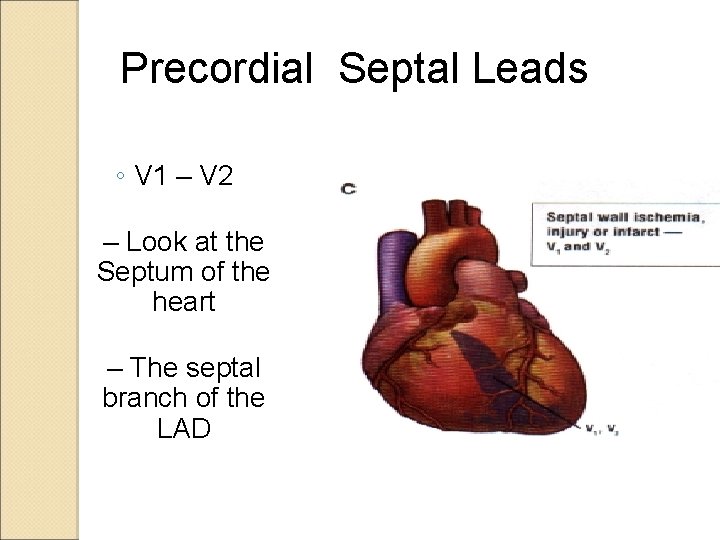
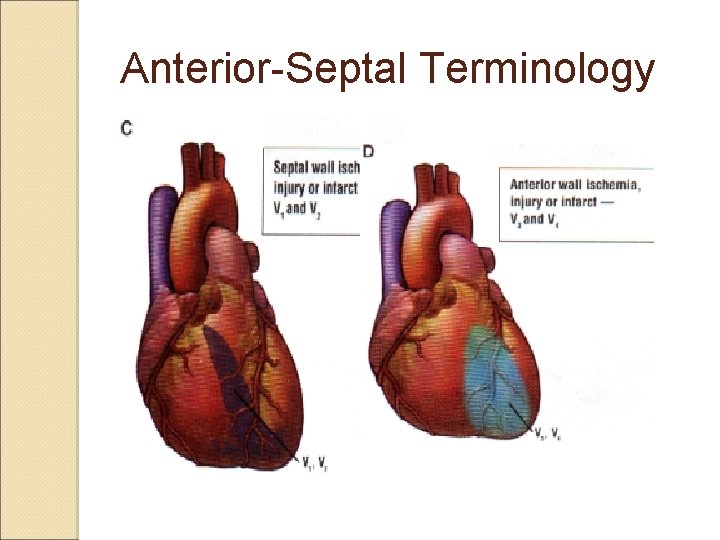
Precordial Septal Leads ◦ V 1 – V 2 – Look at the Septum of the heart – The septal branch of the LAD
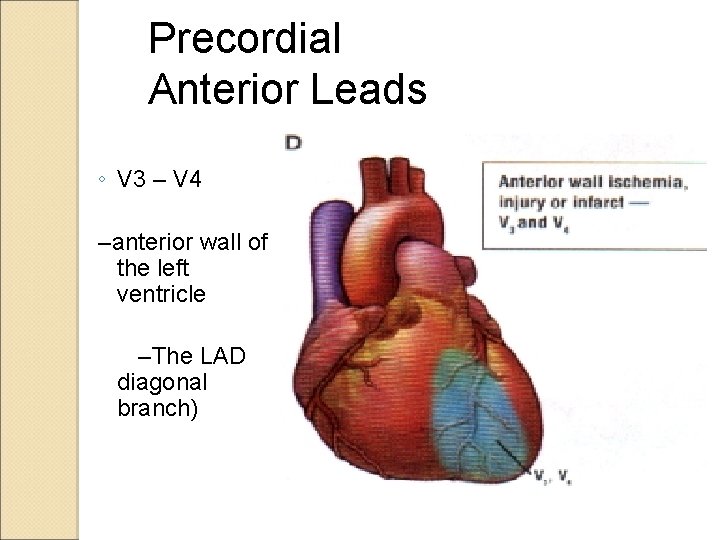
Precordial Anterior Leads ◦ V 3 – V 4 –anterior wall of the left ventricle –The LAD diagonal branch)
Anterior-Septal Terminology
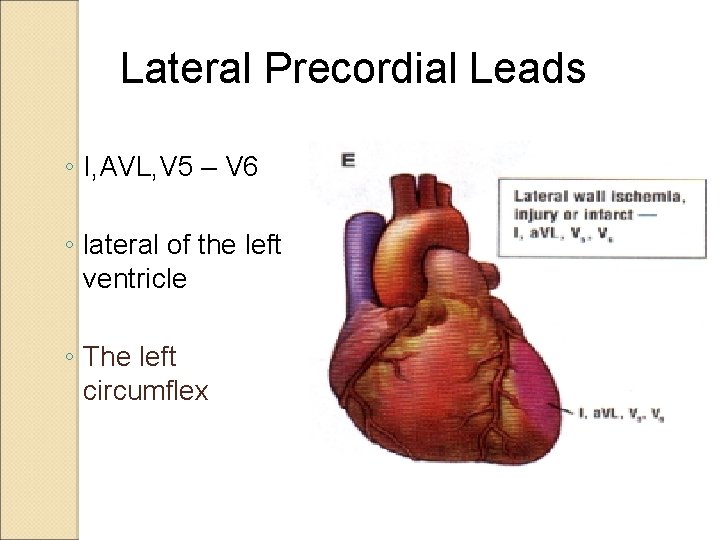
Lateral Precordial Leads ◦ I, AVL, V 5 – V 6 ◦ lateral of the left ventricle ◦ The left circumflex
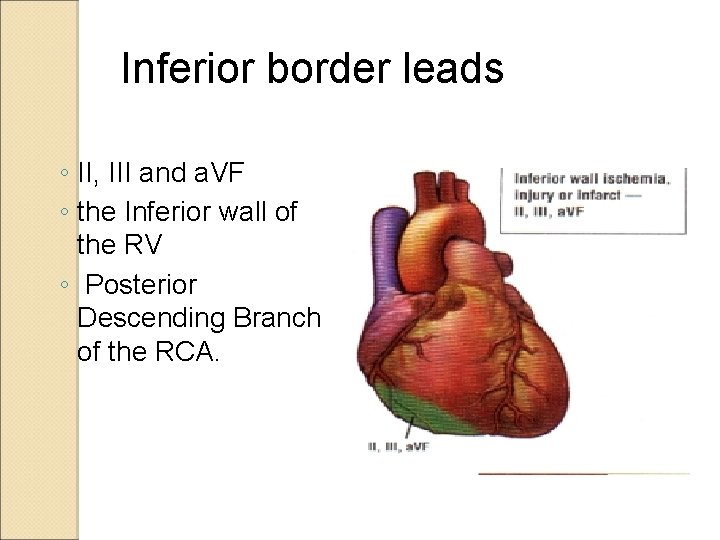
Inferior border leads ◦ II, III and a. VF ◦ the Inferior wall of the RV ◦ Posterior Descending Branch of the RCA.
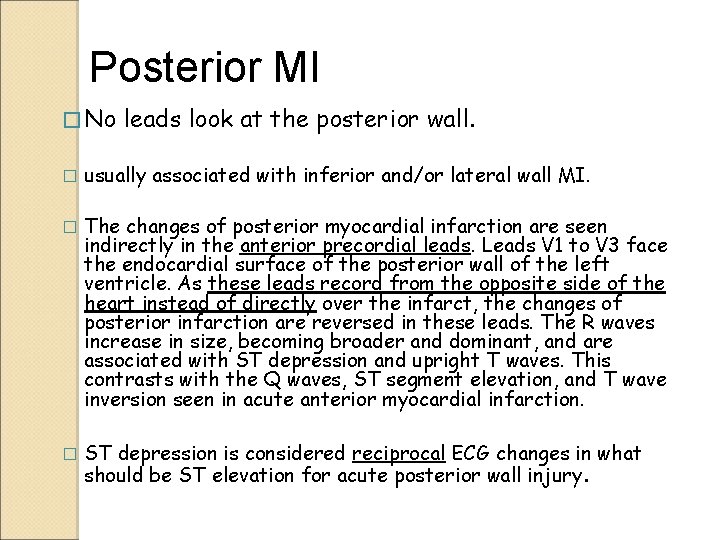
Posterior MI � No leads look at the posterior wall. � usually associated with inferior and/or lateral wall MI. � The changes of posterior myocardial infarction are seen indirectly in the anterior precordial leads. Leads V 1 to V 3 face the endocardial surface of the posterior wall of the left ventricle. As these leads record from the opposite side of the heart instead of directly over the infarct, the changes of posterior infarction are reversed in these leads. The R waves increase in size, becoming broader and dominant, and are associated with ST depression and upright T waves. This contrasts with the Q waves, ST segment elevation, and T wave inversion seen in acute anterior myocardial infarction. � ST depression is considered reciprocal ECG changes in what should be ST elevation for acute posterior wall injury.
ECG Leads -Views of the Heart lead border V 3 & V 4 anterior Right RCA Ventricle Septum LAD V 1 & V 2 Arterial supply a VL, V 5 & V 6 Lateral Left LCX Ventricle II+III+AVF inferior RCA borderof right ventricle
THANKS