
ECEN 615 Methods of Electric Power Systems Analysis

- Slides: 48
ECEN 615 Methods of Electric Power Systems Analysis Lecture 3: Per Unit, Ybus, Power Flow Prof. Tom Overbye Dept. of Electrical and Computer Engineering Texas A&M University overbye@tamu. edu
Announcements • Start reading Chapter 6 from the book • Homework 1 is assigned today. It is due on Thursday Sept. 13 2
Load Models (Omitted from Lecture 2) • Ultimate goal is to supply loads with electricity at constant frequency and voltage • Electrical characteristics of individual loads matter, but usually they can only be estimated • • actual loads are constantly changing, consisting of a large number of individual devices only limited network observability of load characteristics • Aggregate models are typically used for analysis The ZIP model • Two common models • • constant power: Si = Pi + j. Qi constant impedance: Si = |V|2 / Zi combines constant impedance, current and power (P) 3
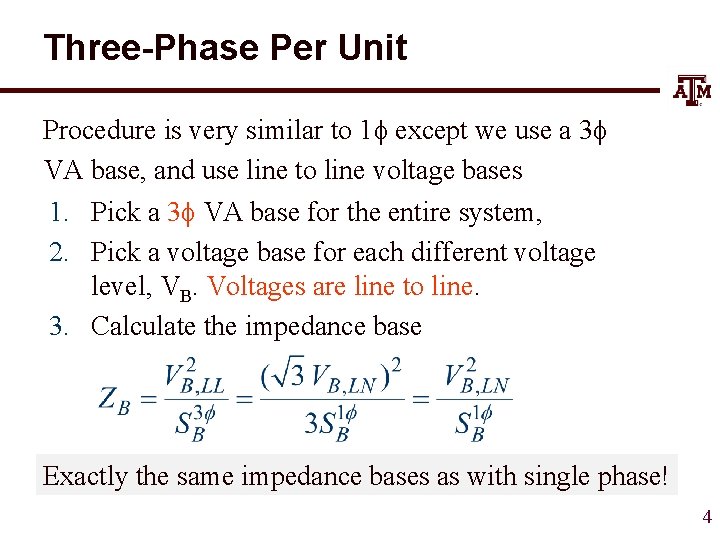
Three-Phase Per Unit Procedure is very similar to 1 f except we use a 3 f VA base, and use line to line voltage bases 1. Pick a 3 f VA base for the entire system, 2. Pick a voltage base for each different voltage level, VB. Voltages are line to line. 3. Calculate the impedance base Exactly the same impedance bases as with single phase! 4
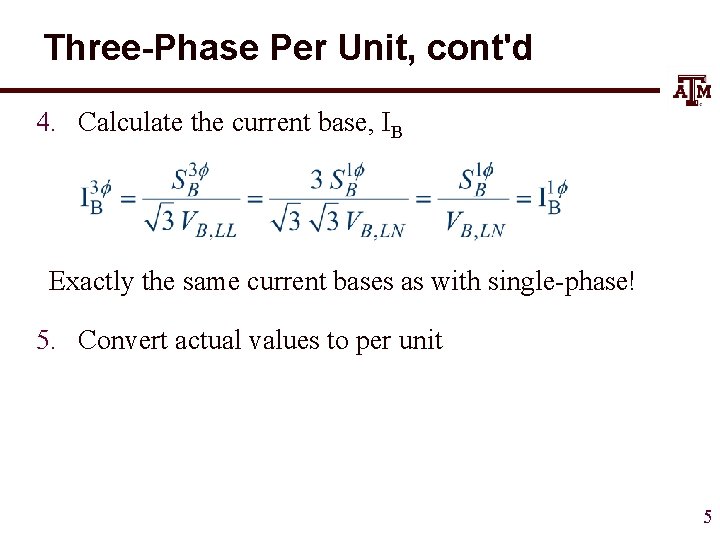
Three-Phase Per Unit, cont'd 4. Calculate the current base, IB Exactly the same current bases as with single-phase! 5. Convert actual values to per unit 5
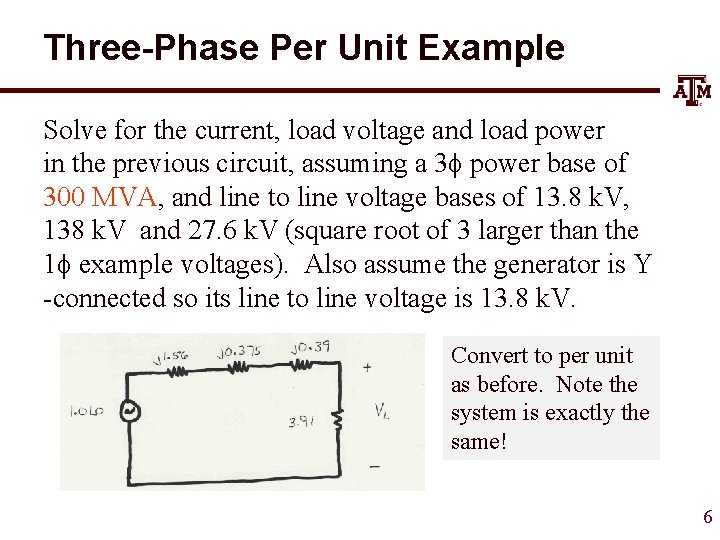
Three-Phase Per Unit Example Solve for the current, load voltage and load power in the previous circuit, assuming a 3 f power base of 300 MVA, and line to line voltage bases of 13. 8 k. V, 138 k. V and 27. 6 k. V (square root of 3 larger than the 1 f example voltages). Also assume the generator is Y -connected so its line to line voltage is 13. 8 k. V. Convert to per unit as before. Note the system is exactly the same! 6
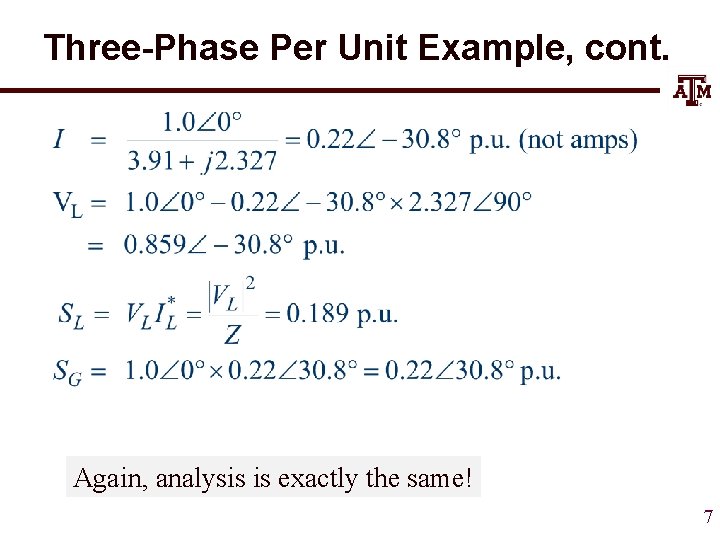
Three-Phase Per Unit Example, cont. Again, analysis is exactly the same! 7
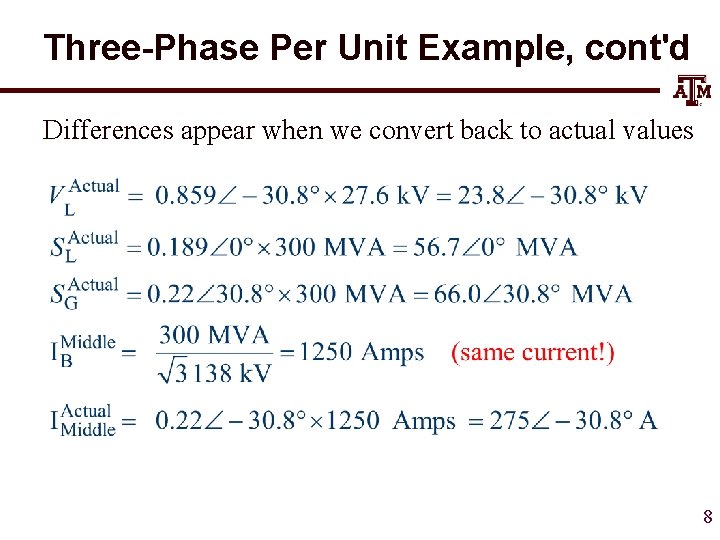
Three-Phase Per Unit Example, cont'd Differences appear when we convert back to actual values 8
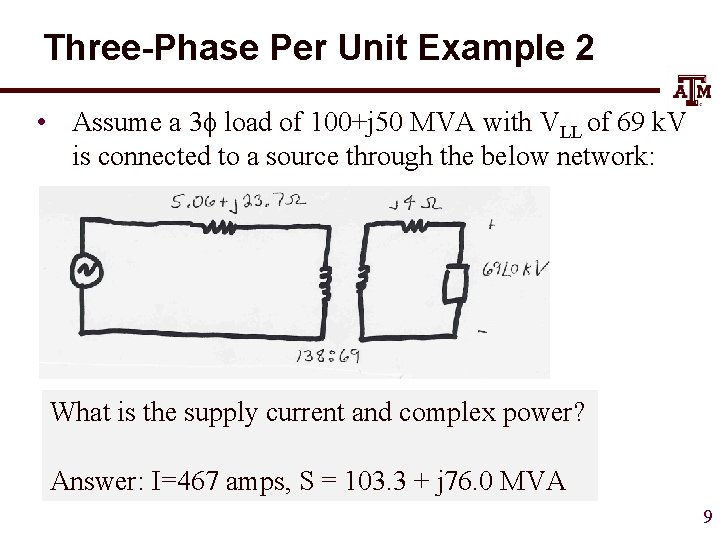
Three-Phase Per Unit Example 2 • Assume a 3 f load of 100+j 50 MVA with VLL of 69 k. V is connected to a source through the below network: What is the supply current and complex power? Answer: I=467 amps, S = 103. 3 + j 76. 0 MVA 9
Power Flow Analysis • We now have the necessary models to start to develop the power system analysis tools • The most common power system analysis tool is the power flow (also known sometimes as the load flow) • • power flow determines how the power flows in a network also used to determine all bus voltages and all currents because of constant power models, power flow is a nonlinear analysis technique power flow is a steady-state analysis tool 10
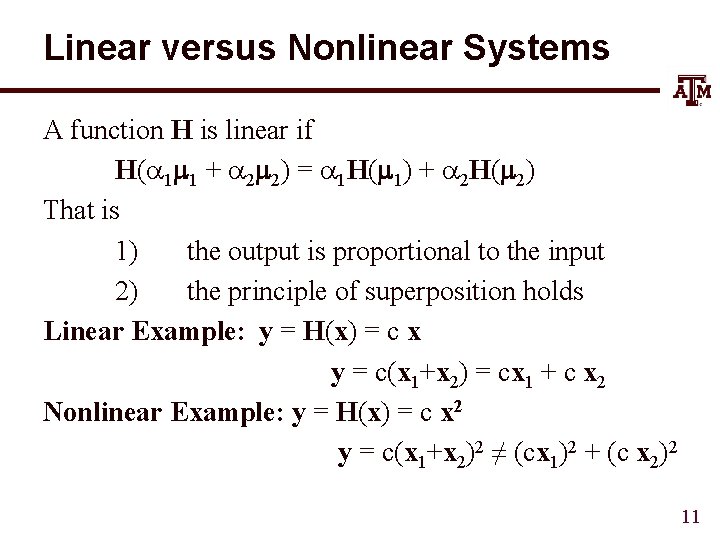
Linear versus Nonlinear Systems A function H is linear if H(a 1 m 1 + a 2 m 2) = a 1 H(m 1) + a 2 H(m 2) That is 1) the output is proportional to the input 2) the principle of superposition holds Linear Example: y = H(x) = c x y = c(x 1+x 2) = cx 1 + c x 2 Nonlinear Example: y = H(x) = c x 2 y = c(x 1+x 2)2 ≠ (cx 1)2 + (c x 2)2 11
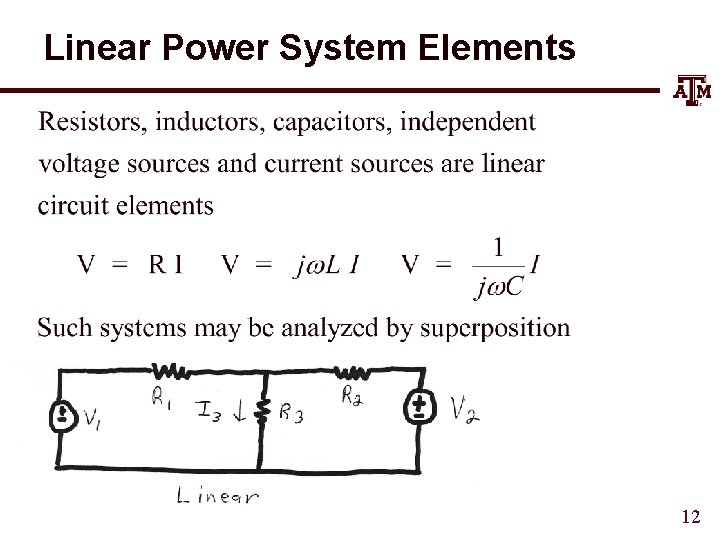
Linear Power System Elements 12
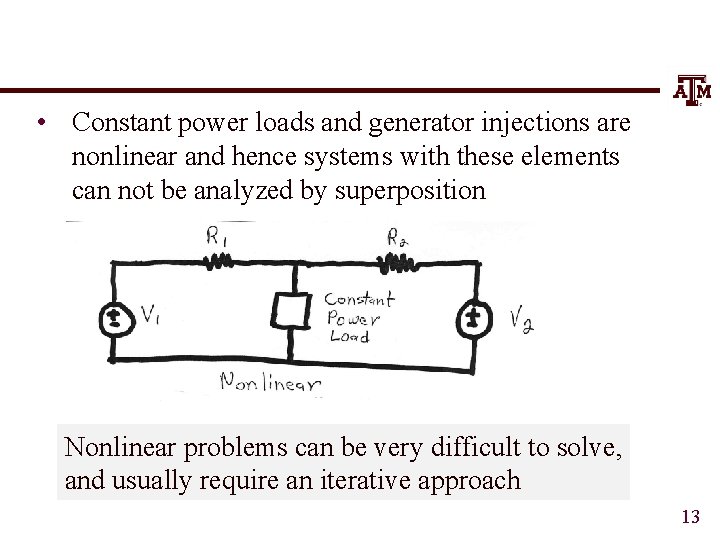
• Constant power loads and generator injections are nonlinear and hence systems with these elements can not be analyzed by superposition Nonlinear problems can be very difficult to solve, and usually require an iterative approach 13
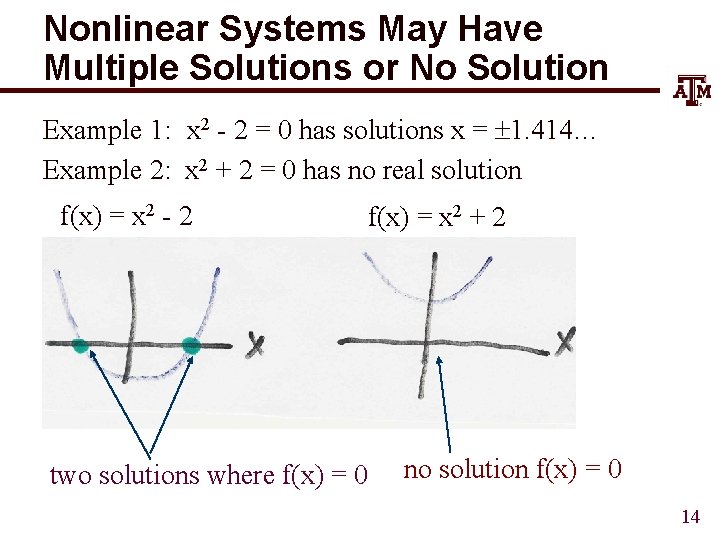
Nonlinear Systems May Have Multiple Solutions or No Solution Example 1: x 2 - 2 = 0 has solutions x = 1. 414… Example 2: x 2 + 2 = 0 has no real solution f(x) = x 2 - 2 f(x) = x 2 + 2 two solutions where f(x) = 0 no solution f(x) = 0 14
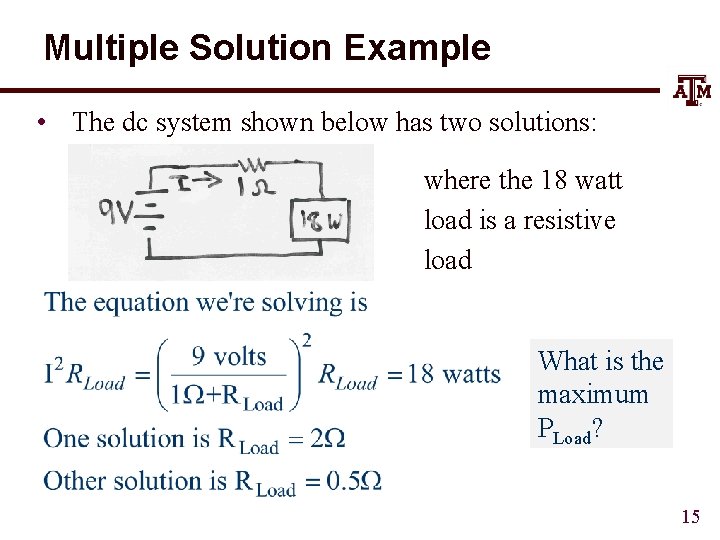
Multiple Solution Example • The dc system shown below has two solutions: where the 18 watt load is a resistive load What is the maximum PLoad? 15
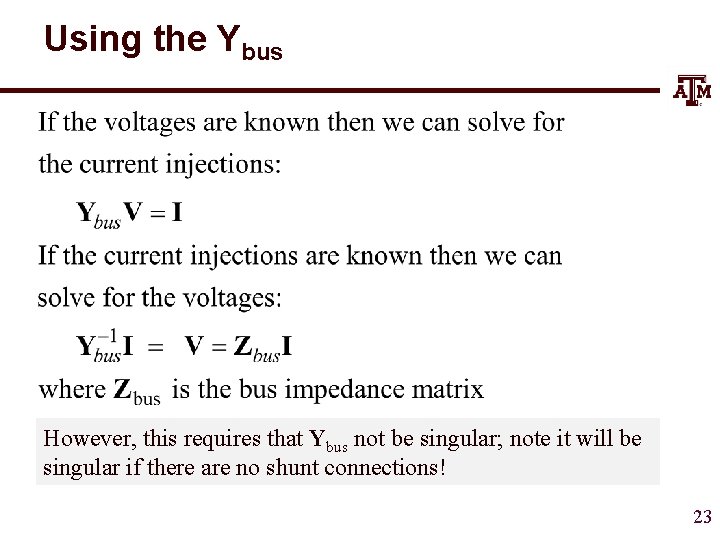
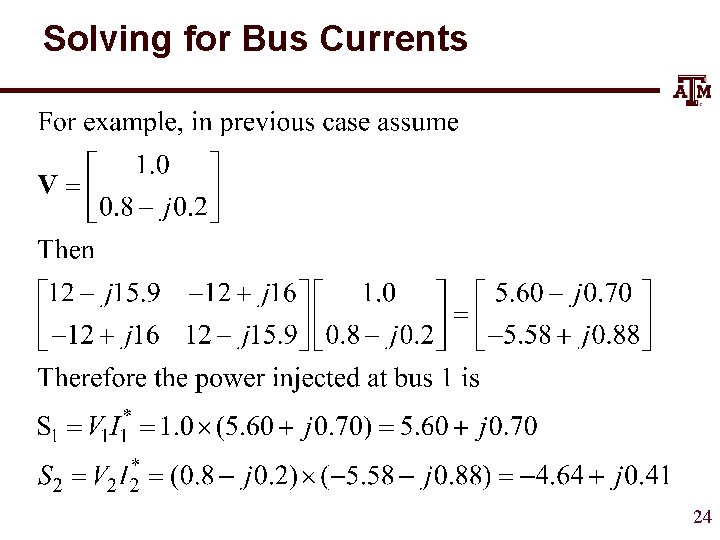
Bus Admittance Matrix or Ybus • First step in solving the power flow is to create what is known as the bus admittance matrix, often call the Ybus. • The Ybus gives the relationships between all the bus current injections, I, and all the bus voltages, V, I = Ybus V • The Ybus is developed by applying KCL at each bus in the system to relate the bus current injections, the bus voltages, and the branch impedances and admittances 16
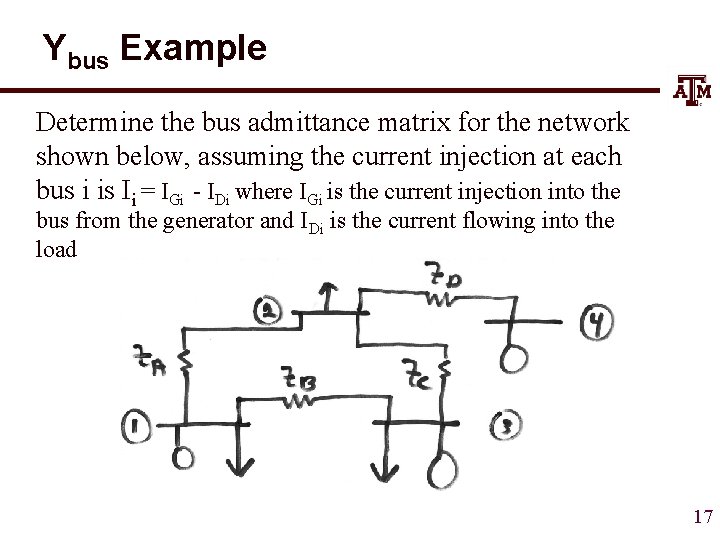
Ybus Example Determine the bus admittance matrix for the network shown below, assuming the current injection at each bus i is Ii = IGi - IDi where IGi is the current injection into the bus from the generator and IDi is the current flowing into the load 17
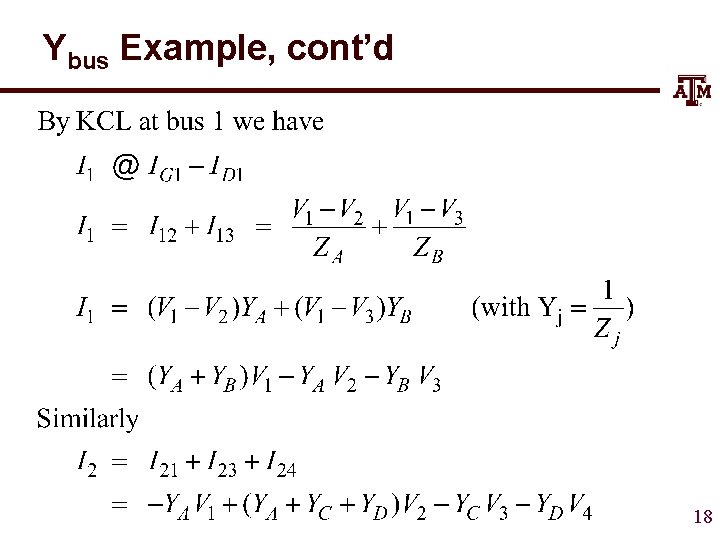
Ybus Example, cont’d 18
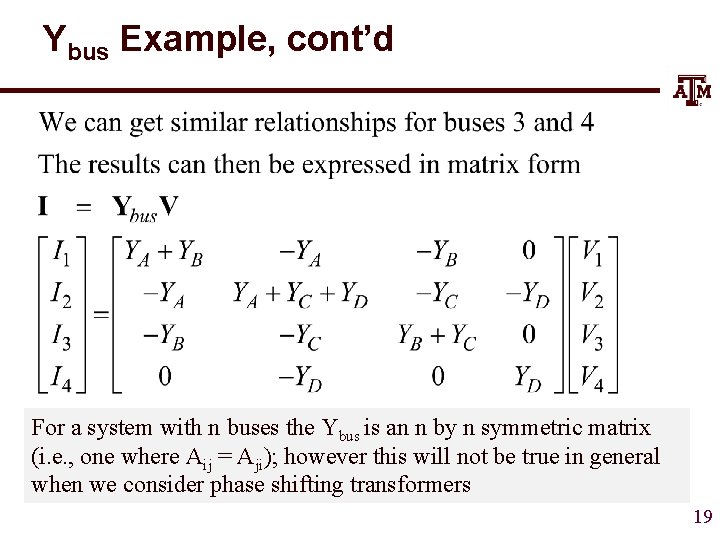
Ybus Example, cont’d For a system with n buses the Ybus is an n by n symmetric matrix (i. e. , one where Aij = Aji); however this will not be true in general when we consider phase shifting transformers 19
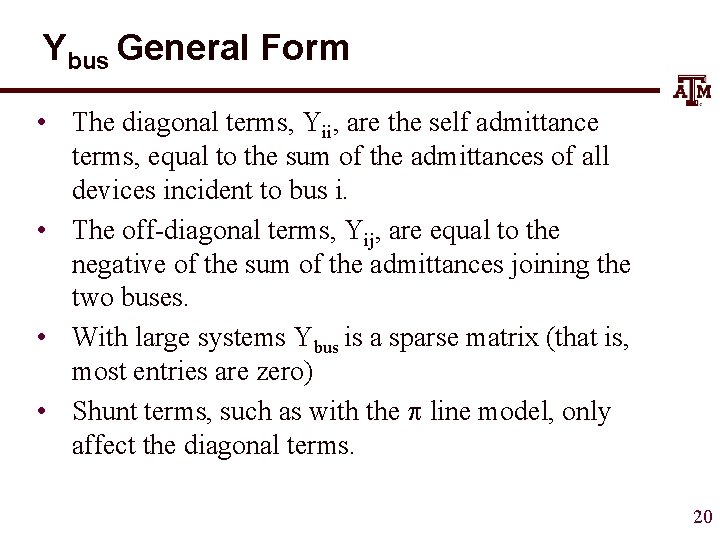
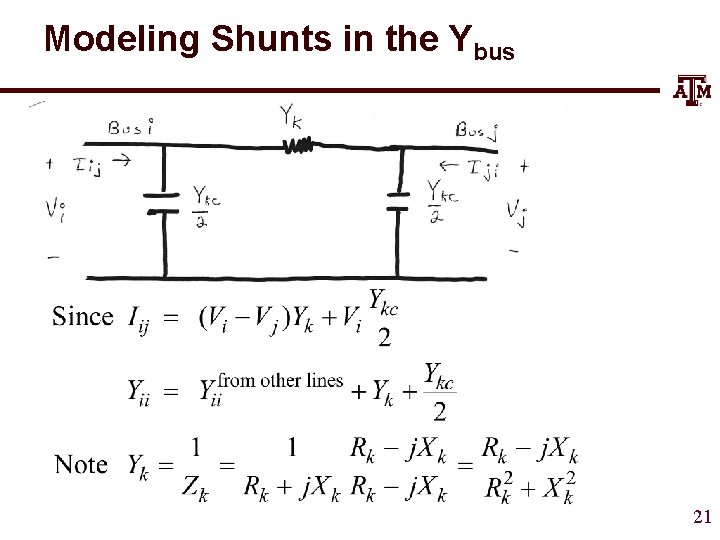
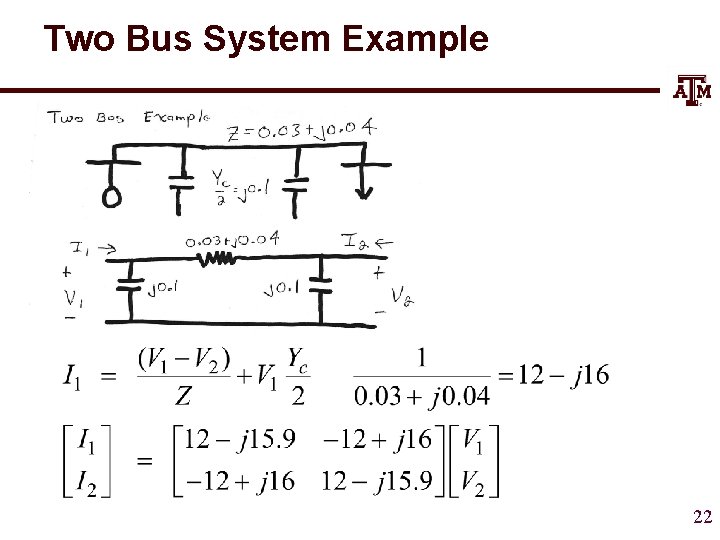
Ybus General Form • The diagonal terms, Yii, are the self admittance terms, equal to the sum of the admittances of all devices incident to bus i. • The off-diagonal terms, Yij, are equal to the negative of the sum of the admittances joining the two buses. • With large systems Ybus is a sparse matrix (that is, most entries are zero) • Shunt terms, such as with the p line model, only affect the diagonal terms. 20
Modeling Shunts in the Ybus 21
Two Bus System Example 22
Using the Ybus However, this requires that Ybus not be singular; note it will be singular if there are no shunt connections! 23
Solving for Bus Currents 24
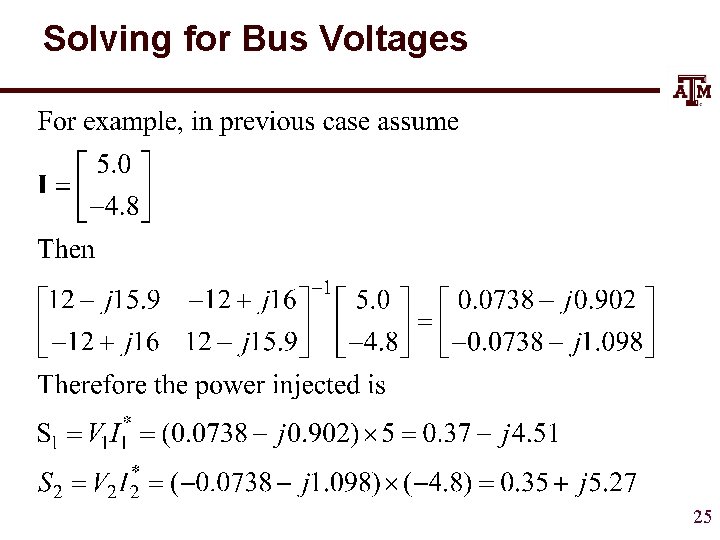
Solving for Bus Voltages 25
Power Flow Analysis • When analyzing power systems we know neither the complex bus voltages nor the complex current injections • Rather, we know the complex power being consumed by the load, and the power being injected by the generators plus their voltage magnitudes • Therefore we can not directly use the Ybus equations, but rather must use the power balance equations 26
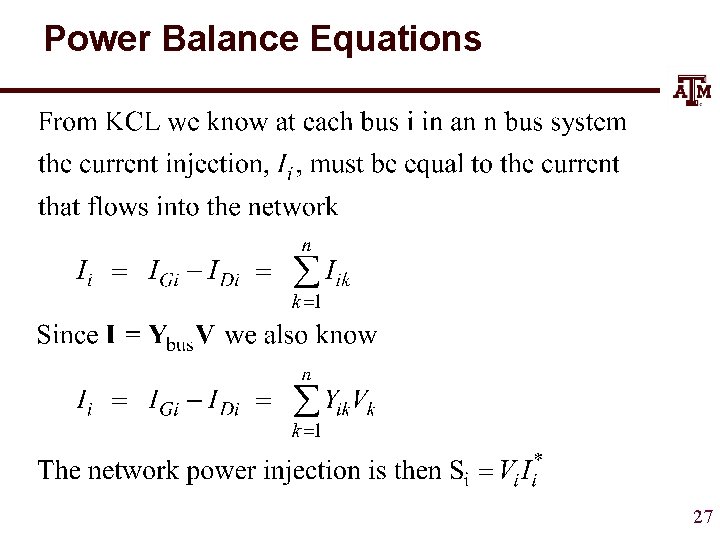
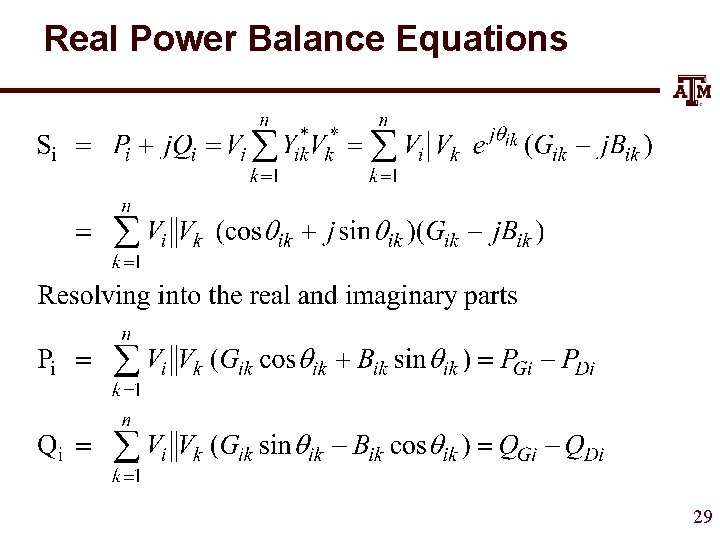
Power Balance Equations 27
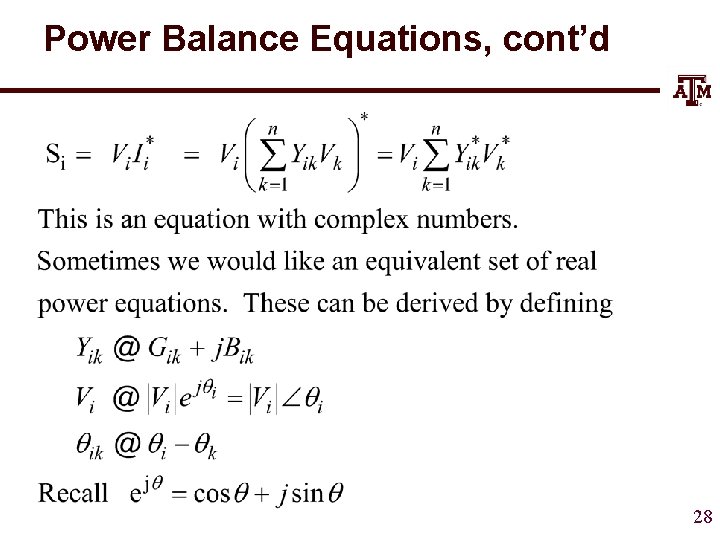
Power Balance Equations, cont’d 28
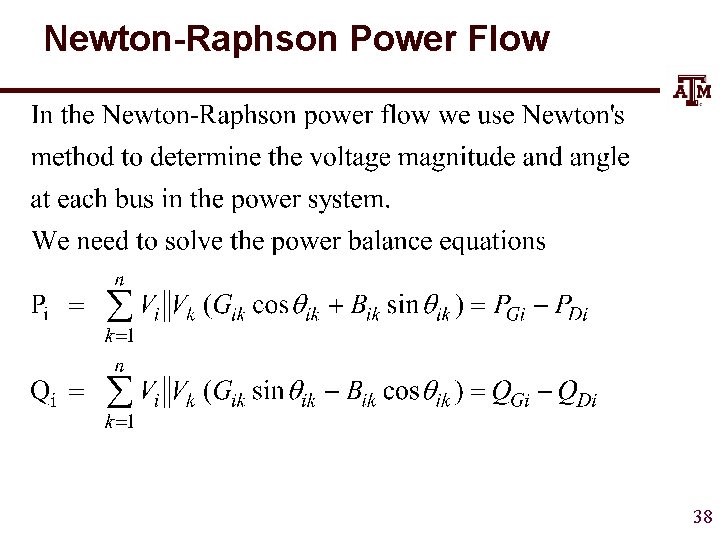
Real Power Balance Equations 29
Power Flow Analysis • When analyzing power systems we know neither the complex bus voltages nor the complex current injections • Rather, we know the complex power being consumed by the load, and the power being injected by the generators plus their voltage magnitudes • Therefore we can not directly use the Ybus equations, but rather must use the power balance equations 30
Power Flow Analysis • Classic paper for this lecture is W. F. Tinney and C. E. Hart, “Power Flow Solution by Newton’s Method, ” IEEE Power App System, Nov 1967 • Basic power flow is also covered in essentially power system analysis textbooks. • We use the term “power flow” not “load flow” since power flows not load. Also, the power flow usage is not new (see title of Tinney’s 1967 paper, and note Tinney references Ward’s 1956 paper) • A nice history of the power flow is given in an insert by Alvarado and Thomas in T. J. Overbye, J. D. Weber, “Visualizing the Electric Grid, ” IEEE Spectrum, Feb 2001. 31
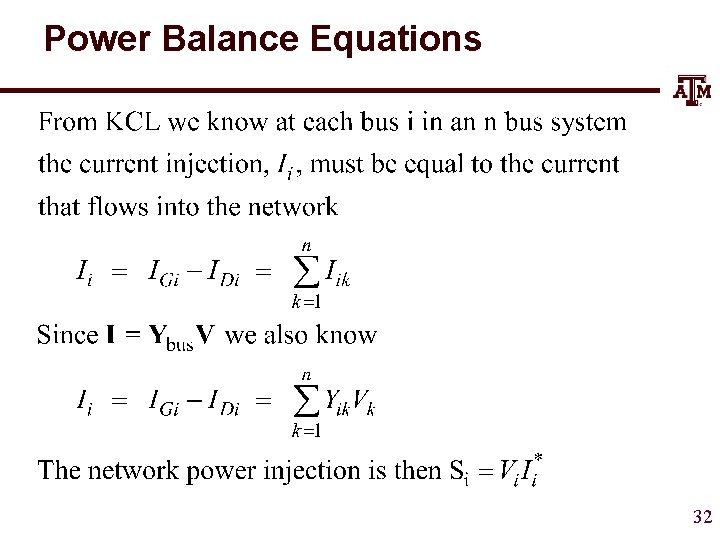
Power Balance Equations 32
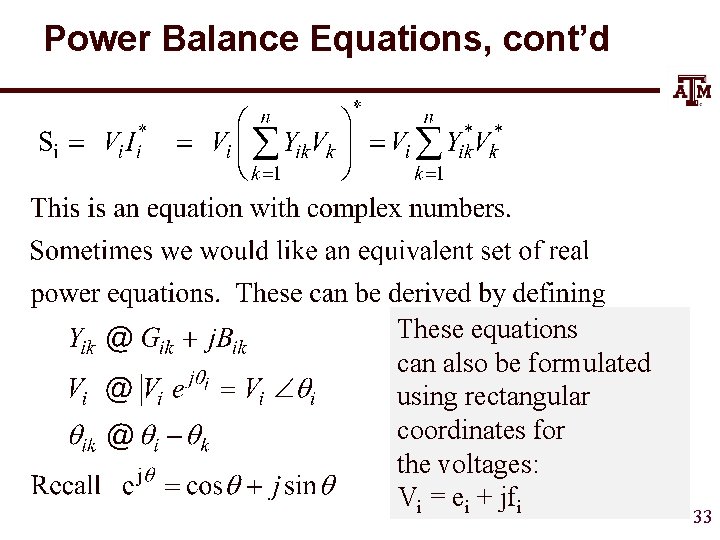
Power Balance Equations, cont’d These equations can also be formulated using rectangular coordinates for the voltages: Vi = ei + jfi 33
Real Power Balance Equations 34
Slack Bus • We can not arbitrarily specify S at all buses because total generation must equal total load + total losses • We also need an angle reference bus. • To solve these problems we define one bus as the "slack" bus. This bus has a fixed voltage magnitude and angle, and a varying real/reactive power injection. • In an actual power system the slack bus does not really exist; frequency changes locally when the power supplied does not match the power consumed 35
Three Types of Power Flow Buses • There are three main types of power flow buses • • • Load (PQ) at which P/Q are fixed; iteration solves for voltage magnitude and angle. Slack at which the voltage magnitude and angle are fixed; iteration solves for P/Q injections Generator (PV) at which P and |V| are fixed; iteration solves for voltage angle and Q injection 36
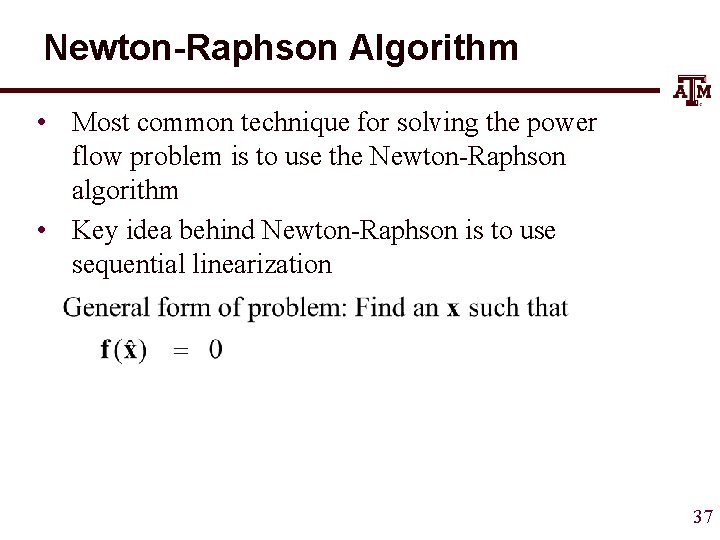
Newton-Raphson Algorithm • Most common technique for solving the power flow problem is to use the Newton-Raphson algorithm • Key idea behind Newton-Raphson is to use sequential linearization 37
Newton-Raphson Power Flow 38
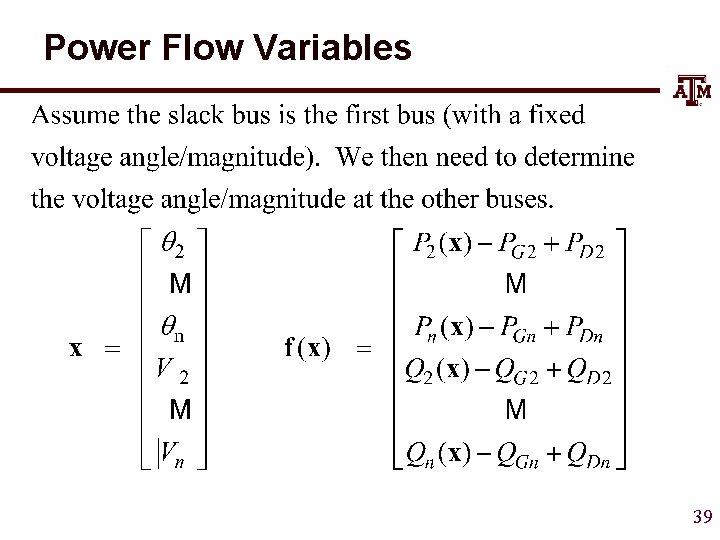
Power Flow Variables 39
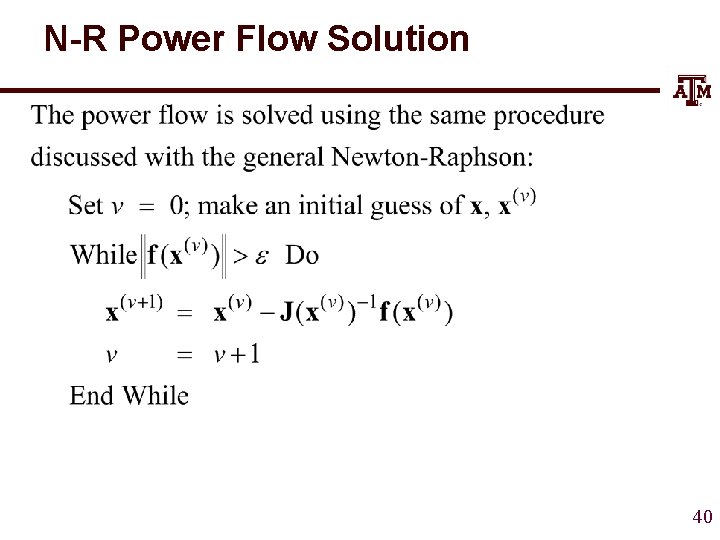
N-R Power Flow Solution 40
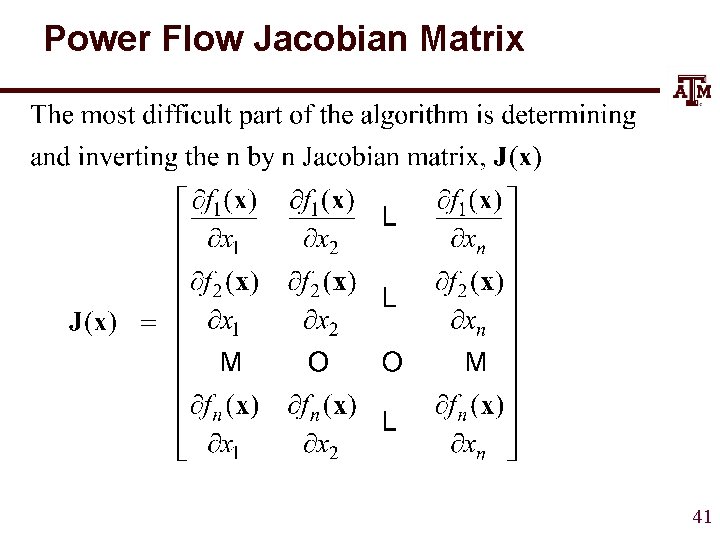
Power Flow Jacobian Matrix 41
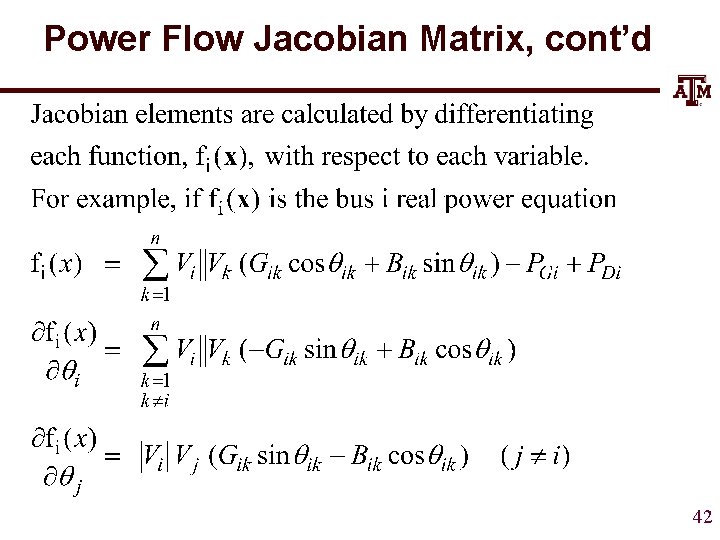
Power Flow Jacobian Matrix, cont’d 42
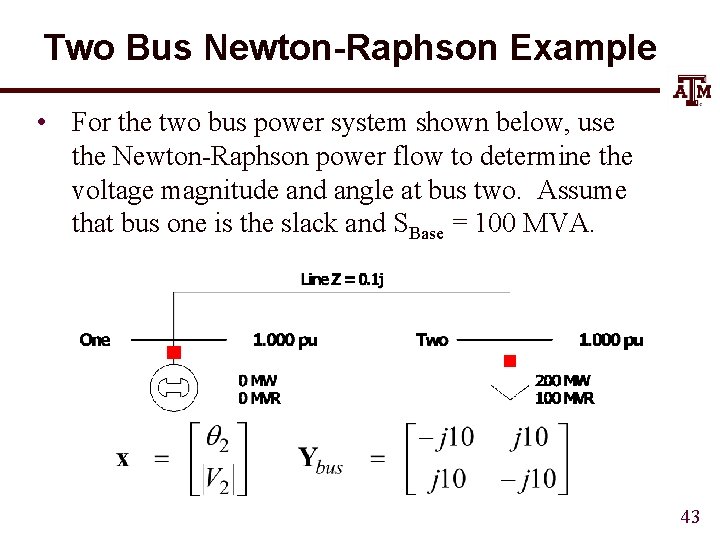
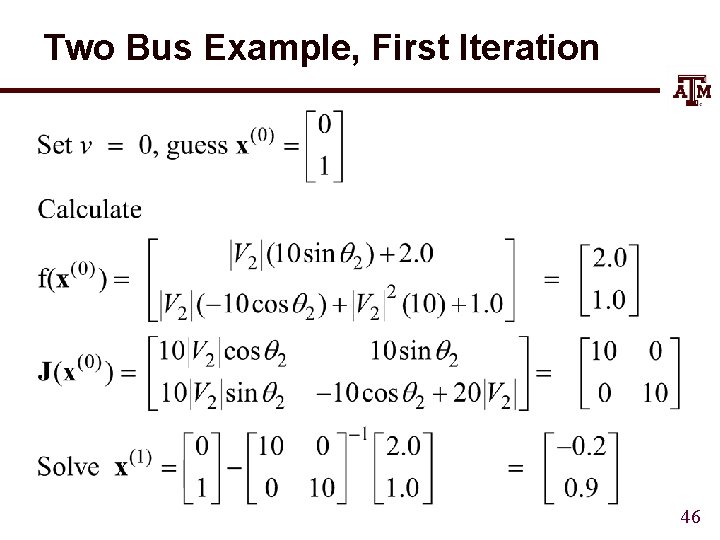
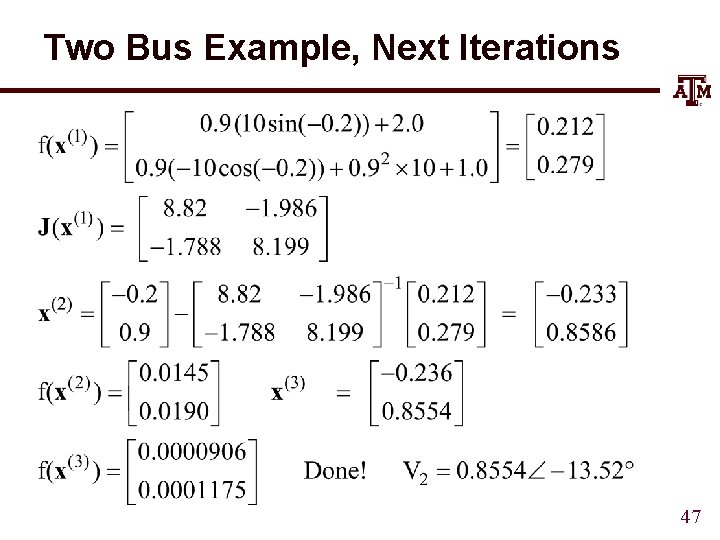
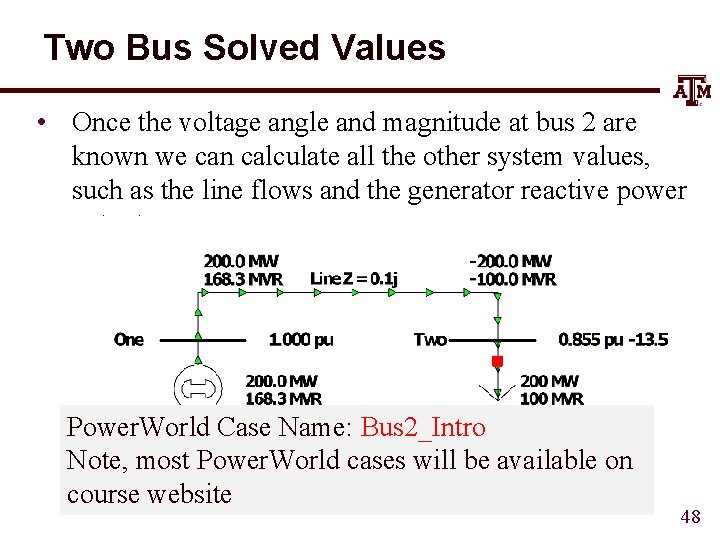
Two Bus Newton-Raphson Example • For the two bus power system shown below, use the Newton-Raphson power flow to determine the voltage magnitude and angle at bus two. Assume that bus one is the slack and SBase = 100 MVA. 43
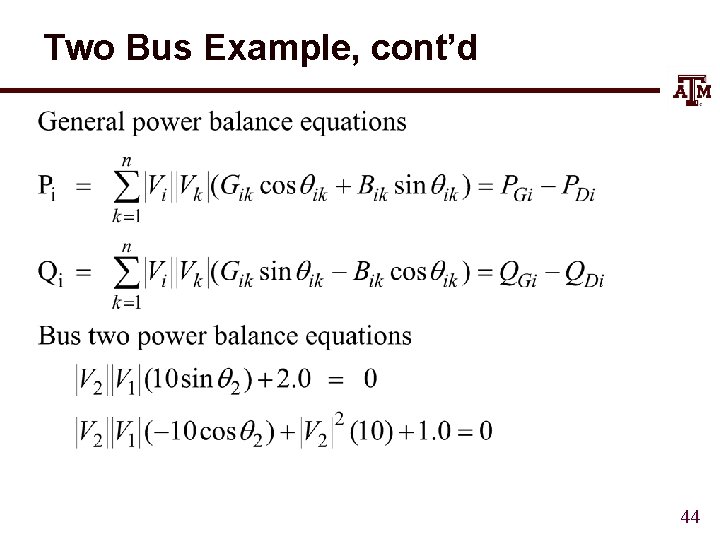
Two Bus Example, cont’d 44
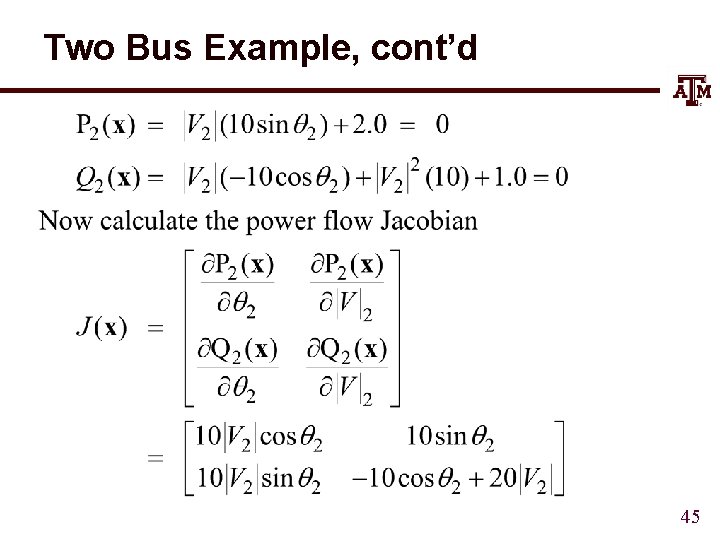
Two Bus Example, cont’d 45
Two Bus Example, First Iteration 46
Two Bus Example, Next Iterations 47
Two Bus Solved Values • Once the voltage angle and magnitude at bus 2 are known we can calculate all the other system values, such as the line flows and the generator reactive power output Power. World Case Name: Bus 2_Intro Note, most Power. World cases will be available on course website 48