
ECE 480 Team 6 How to ChooseUse Capacitive



- Slides: 21
ECE 480 – Team 6 How to Choose/Use Capacitive Sensors for Various Applications In Order of Presentation: Ishaan Sandhu Danny Kang Anuar Tazabekov Arslan Qaiser Eric Otte
Background • Three Main Types: • Displacement • Touch Sensor and i. Pod Click Wheel • Accelerometer • Automobile Suspension System, Air Bag System, ABS • Pressure • Tire Pressure
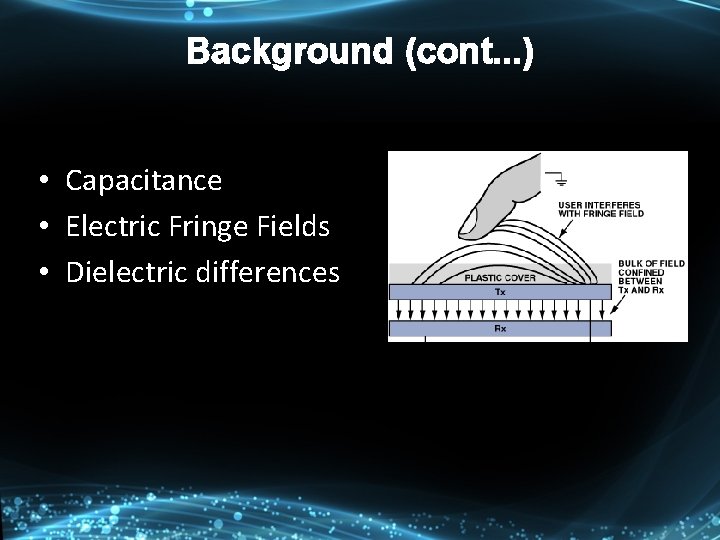
Background (cont. . . ) • Capacitance • Electric Fringe Fields • Dielectric differences
Background (cont. . . ) • Advantages of Capacitive Sensor • Higher accuracy • Smaller size • More reliable (compared to mechanical) • No moving parts (more durable) • No direct contact with the sensor • Sealed from dirt • Cheaper
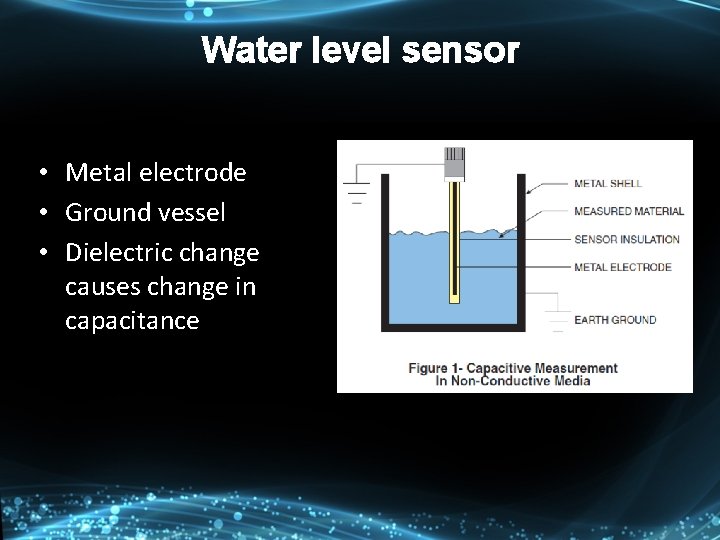
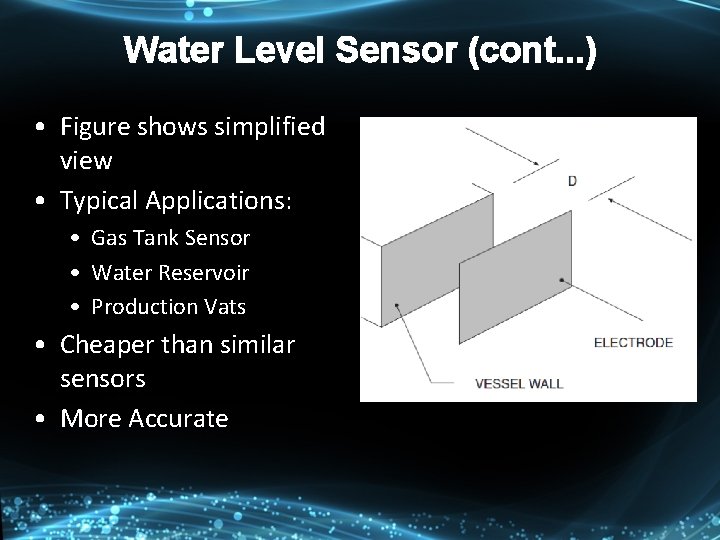
Water level sensor • Metal electrode • Ground vessel • Dielectric change causes change in capacitance
Water Level Sensor (cont. . . ) • Figure shows simplified view • Typical Applications: • Gas Tank Sensor • Water Reservoir • Production Vats • Cheaper than similar sensors • More Accurate
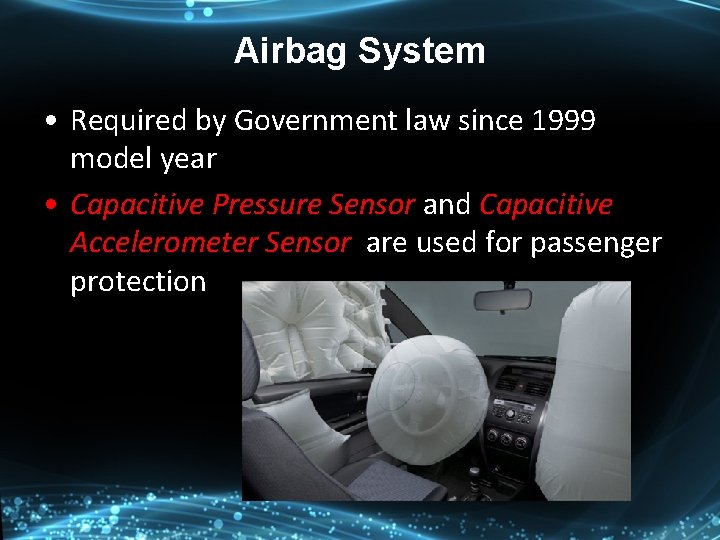
Airbag System • Required by Government law since 1999 model year • Capacitive Pressure Sensor and Capacitive Accelerometer Sensor are used for passenger protection
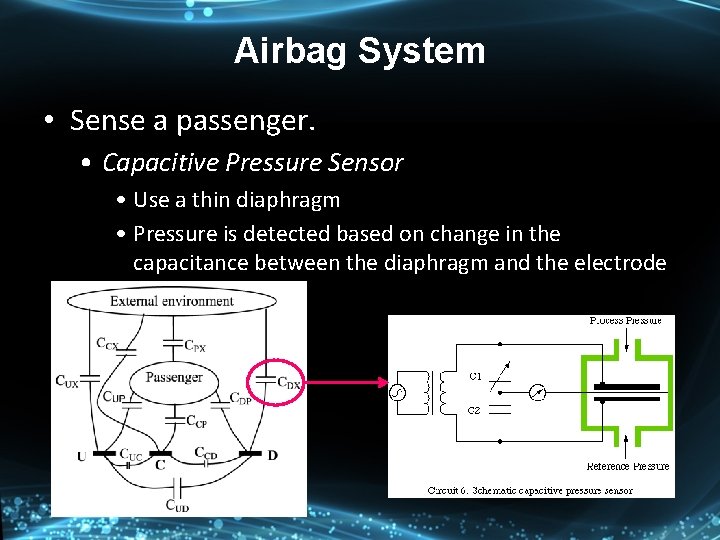
Airbag System • Sense a passenger. • Capacitive Pressure Sensor • Use a thin diaphragm • Pressure is detected based on change in the capacitance between the diaphragm and the electrode
Airbag System • Sense a crash • Capacitive Accelerometer Sensor • A change in electrical capacitance with respect to acceleration
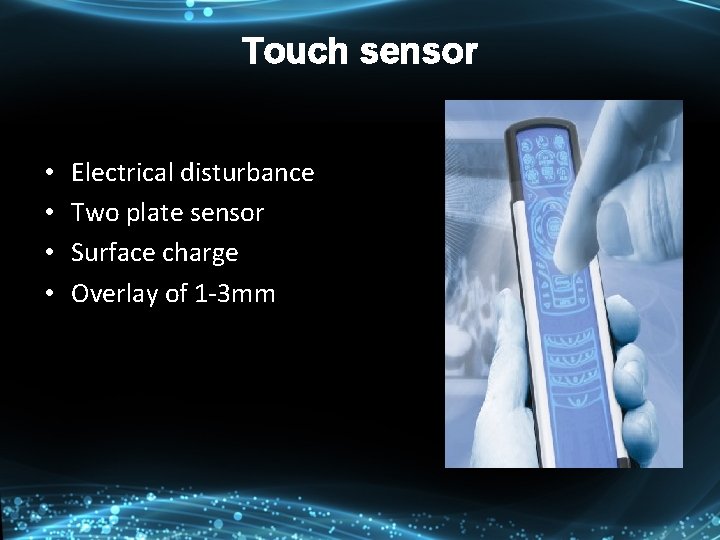
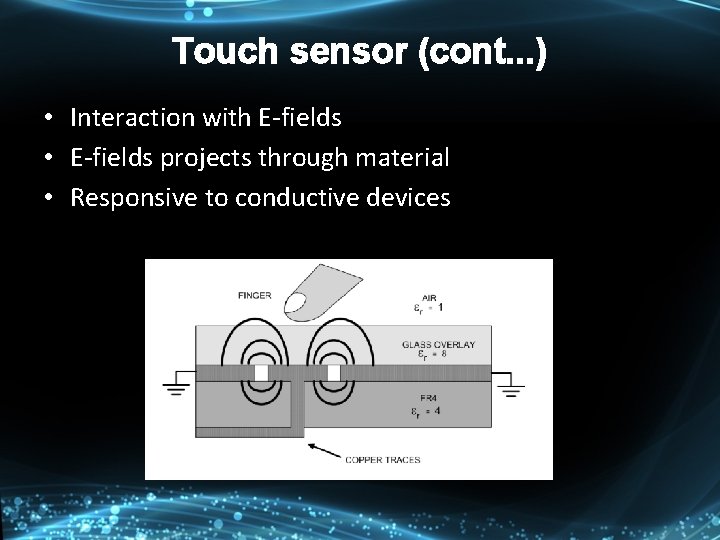
Touch sensor • • Electrical disturbance Two plate sensor Surface charge Overlay of 1 -3 mm
Touch sensor (cont. . . ) • Interaction with E-fields • E-fields projects through material • Responsive to conductive devices
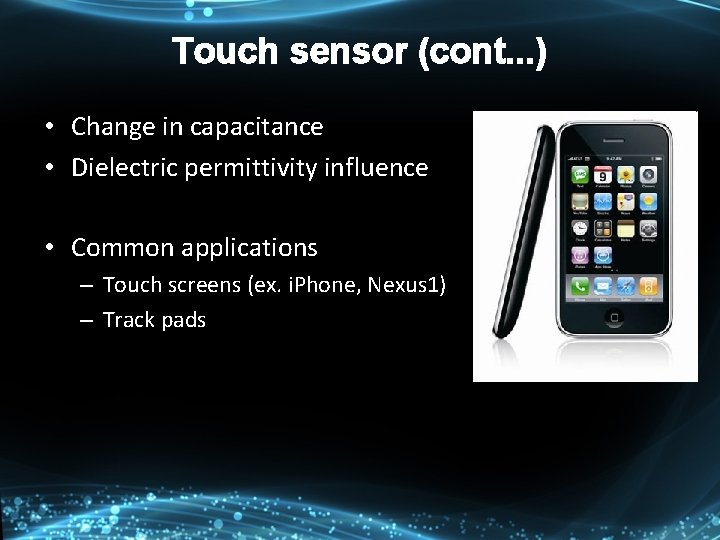
Touch sensor (cont. . . ) • Change in capacitance • Dielectric permittivity influence • Common applications – Touch screens (ex. i. Phone, Nexus 1) – Track pads
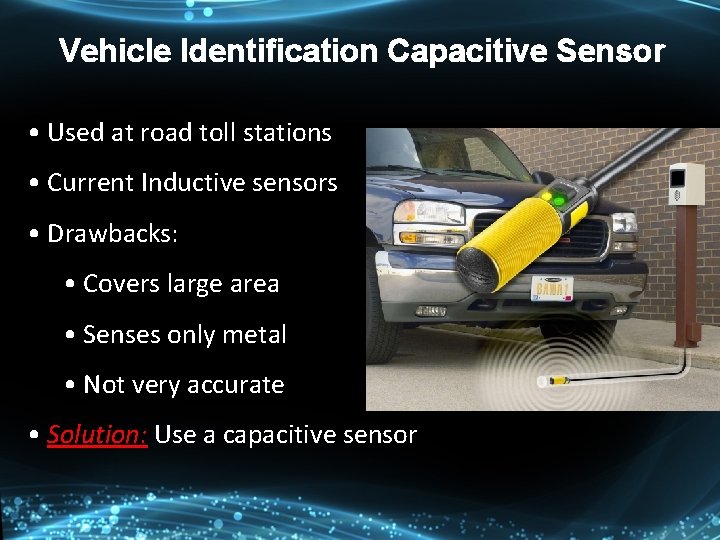
Vehicle Identification Capacitive Sensor • Used at road toll stations • Current Inductive sensors • Drawbacks: • Covers large area • Senses only metal • Not very accurate • Solution: Use a capacitive sensor
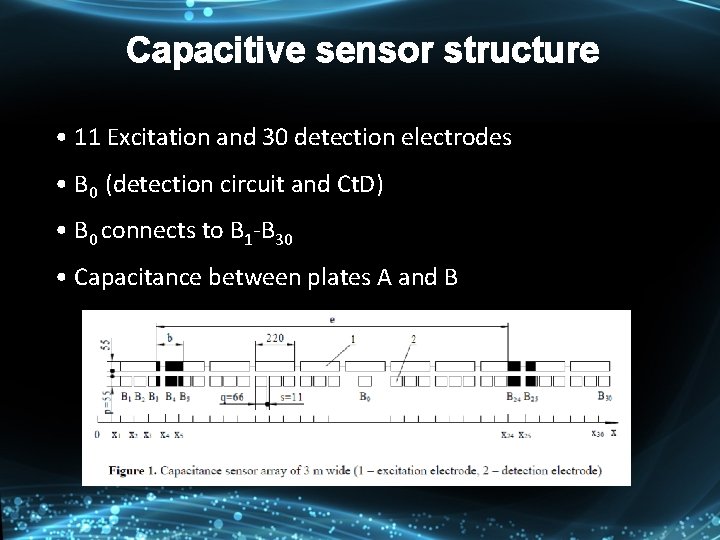
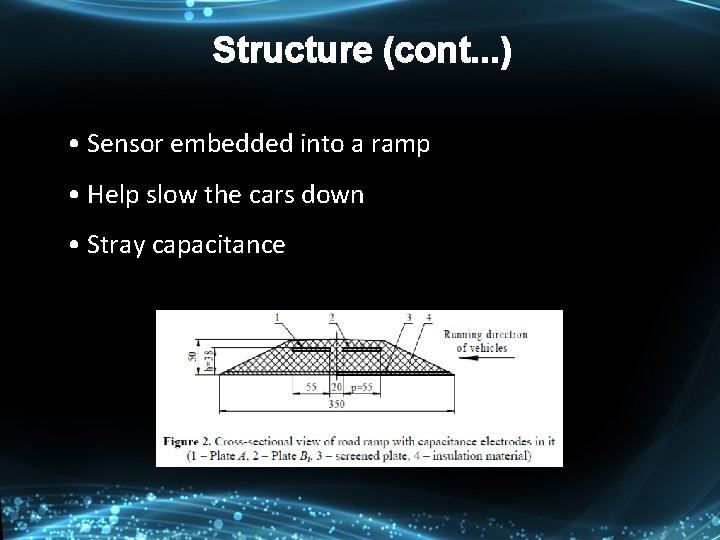
Capacitive sensor structure • 11 Excitation and 30 detection electrodes • B 0 (detection circuit and Ct. D) • B 0 connects to B 1 -B 30 • Capacitance between plates A and B
Structure (cont. . . ) • Sensor embedded into a ramp • Help slow the cars down • Stray capacitance
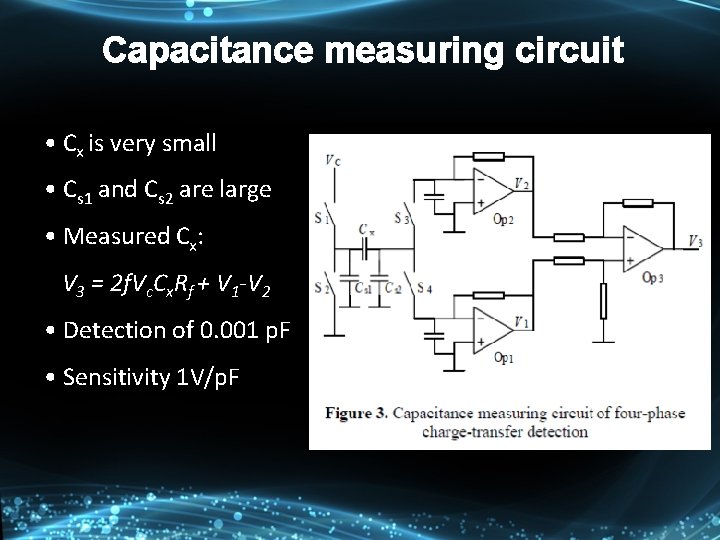
Capacitance measuring circuit • Cx is very small • Cs 1 and Cs 2 are large • Measured Cx: V 3 = 2 f. Vc. Cx. Rf + V 1 -V 2 • Detection of 0. 001 p. F • Sensitivity 1 V/p. F
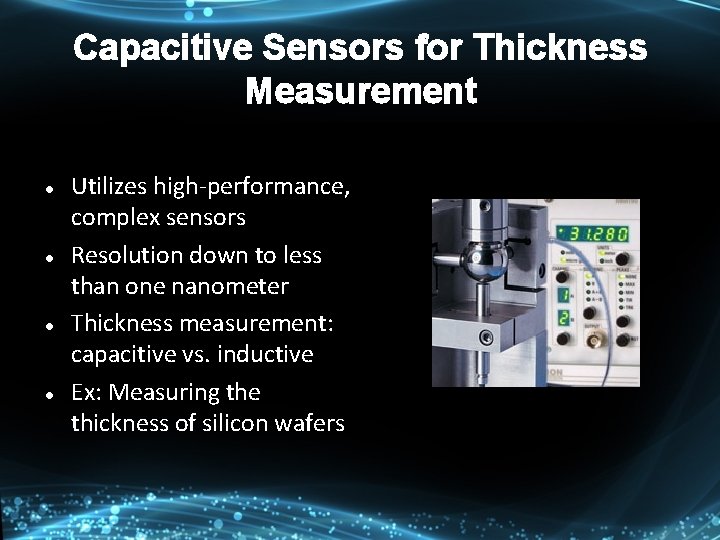
Capacitive Sensors for Thickness Measurement Utilizes high-performance, complex sensors Resolution down to less than one nanometer Thickness measurement: capacitive vs. inductive Ex: Measuring the thickness of silicon wafers
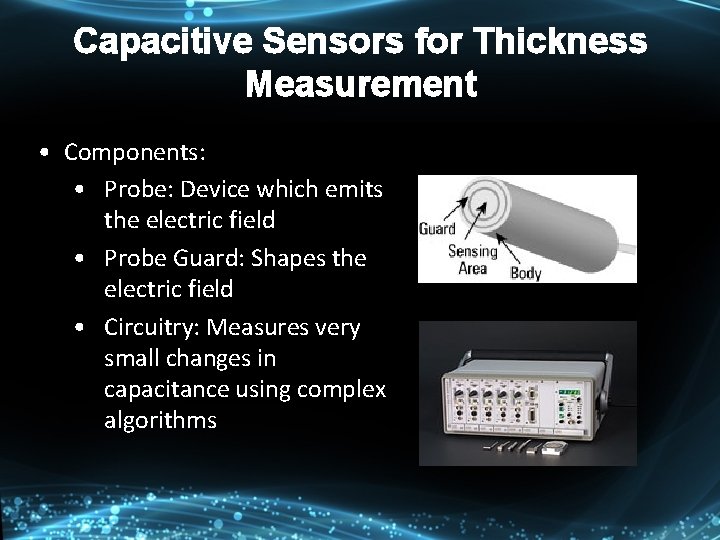
Capacitive Sensors for Thickness Measurement • Components: • Probe: Device which emits the electric field • Probe Guard: Shapes the electric field • Circuitry: Measures very small changes in capacitance using complex algorithms
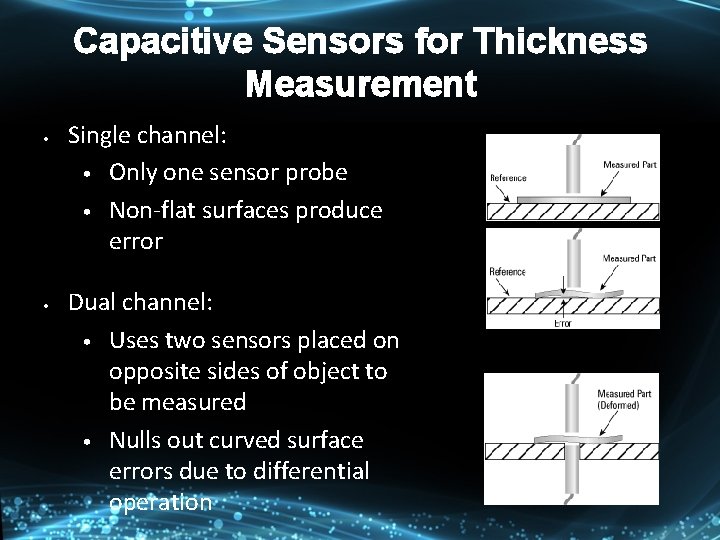
Capacitive Sensors for Thickness Measurement • • Single channel: • Only one sensor probe • Non-flat surfaces produce error Dual channel: • Uses two sensors placed on opposite sides of object to be measured • Nulls out curved surface errors due to differential operation
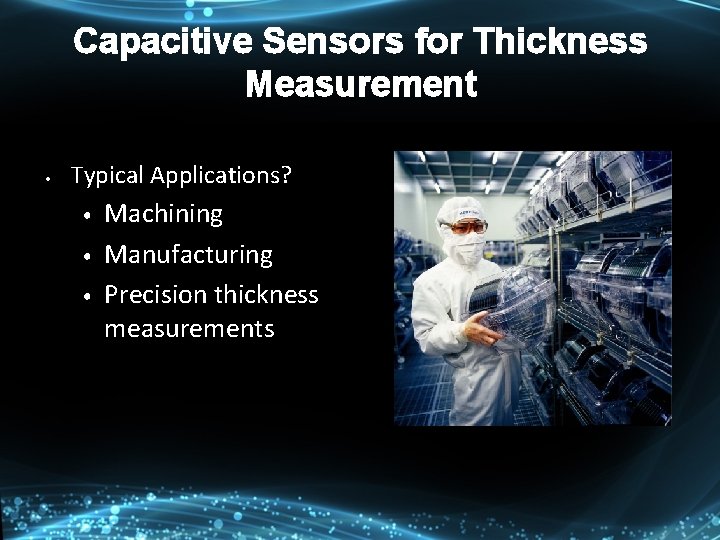
Capacitive Sensors for Thickness Measurement • Typical Applications? • • • Machining Manufacturing Precision thickness measurements
Conclusion • • Background Water Level Air Bag deployment systems Touch sensors Vehicle detection system Thickness Measurement Questions?