
ECE 477 Design Review Team 2 Spring 2015


- Slides: 23
ECE 477 Design Review Team 2 - Spring 2015 R. I. S. K. Colin Graber Jason Kohl Jacob Cameron Varnau Young
Outline ● ● ● ● ● Project overview Project-specific success criteria Block diagram Component selection rationale Packaging design Schematic and theory of operation PCB layout Software design/development status Project completion timeline Questions / discussion
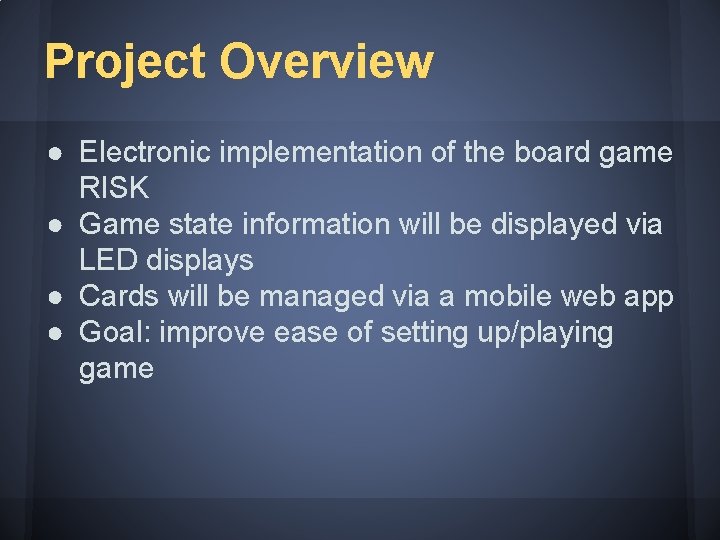
Project Overview ● Electronic implementation of the board game RISK ● Game state information will be displayed via LED displays ● Cards will be managed via a mobile web app ● Goal: improve ease of setting up/playing game
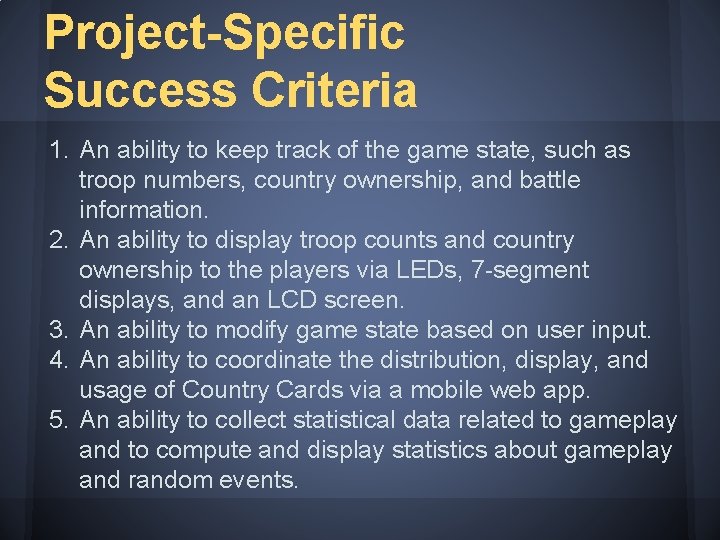
Project-Specific Success Criteria 1. An ability to keep track of the game state, such as troop numbers, country ownership, and battle information. 2. An ability to display troop counts and country ownership to the players via LEDs, 7 -segment displays, and an LCD screen. 3. An ability to modify game state based on user input. 4. An ability to coordinate the distribution, display, and usage of Country Cards via a mobile web app. 5. An ability to collect statistical data related to gameplay and to compute and display statistics about gameplay and random events.
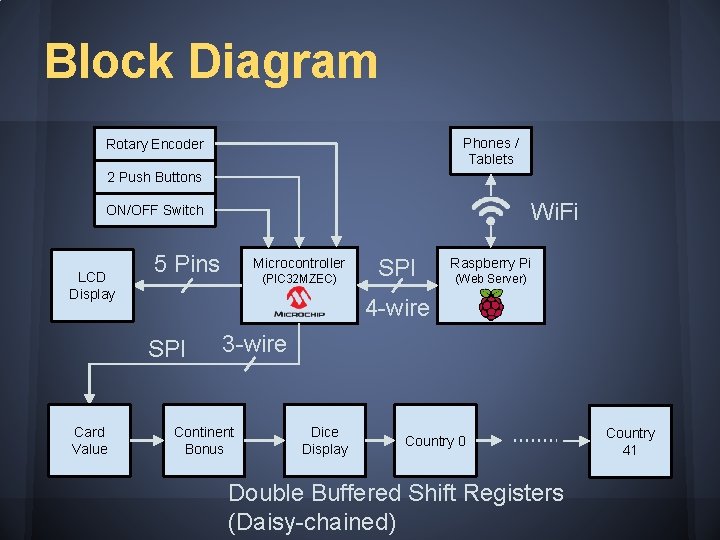
Block Diagram Phones / Tablets Rotary Encoder 2 Push Buttons Wi. Fi ON/OFF Switch LCD Display 5 Pins (PIC 32 MZEC) SPI Raspberry Pi (Web Server) 4 -wire SPI Card Value Microcontroller 3 -wire Continent Bonus Dice Display Country 0 Double Buffered Shift Registers (Daisy-chained) Country 41
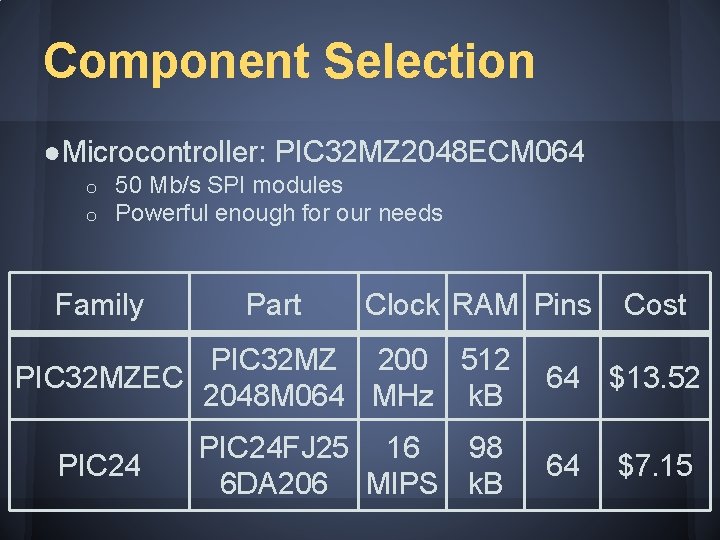
Component Selection ●Microcontroller: PIC 32 MZ 2048 ECM 064 o o 50 Mb/s SPI modules Powerful enough for our needs Family Part Clock RAM Pins Cost PIC 32 MZ 200 512 PIC 32 MZEC 2048 M 064 MHz k. B 64 $13. 52 PIC 24 FJ 25 16 98 6 DA 206 MIPS k. B 64 $7. 15 PIC 24
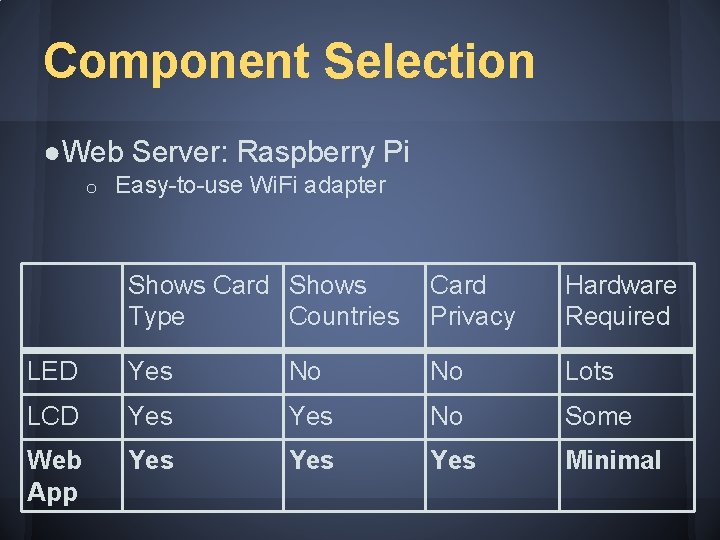
Component Selection ●Web Server: Raspberry Pi o Easy-to-use Wi. Fi adapter Shows Card Shows Type Countries Card Privacy Hardware Required LED Yes No No Lots LCD Yes No Some Web App Yes Yes Minimal
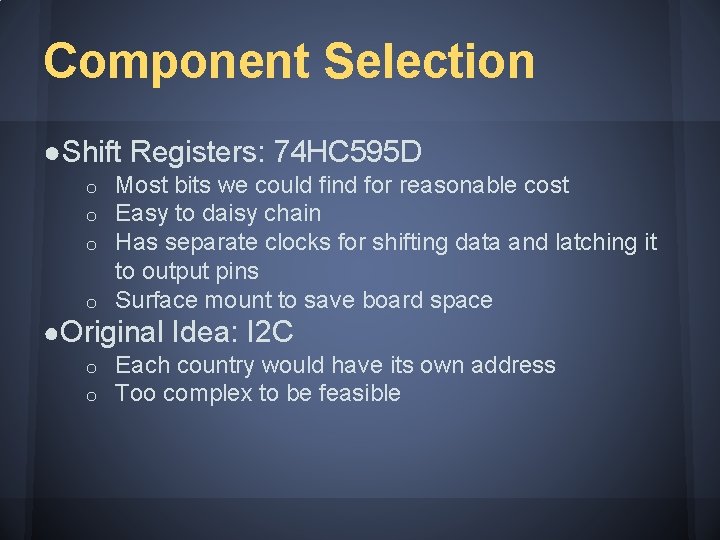
Component Selection ●Shift Registers: 74 HC 595 D Most bits we could find for reasonable cost Easy to daisy chain Has separate clocks for shifting data and latching it to output pins o Surface mount to save board space o o o ●Original Idea: I 2 C o o Each country would have its own address Too complex to be feasible
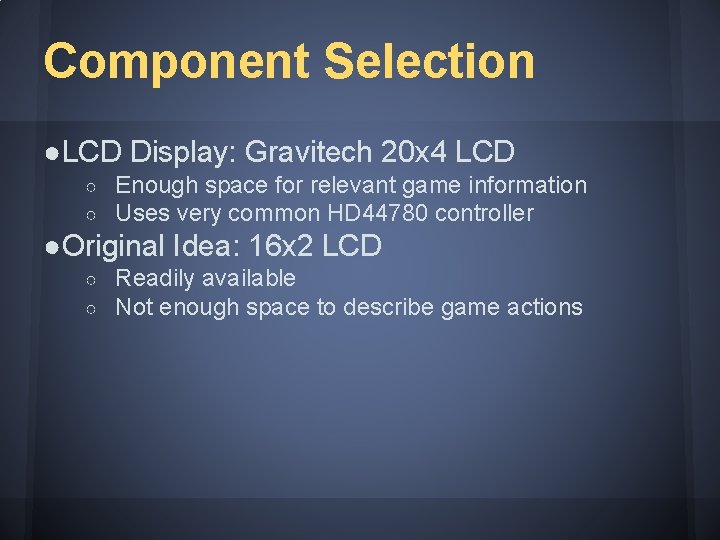
Component Selection ●LCD Display: Gravitech 20 x 4 LCD ○ ○ Enough space for relevant game information Uses very common HD 44780 controller ●Original Idea: 16 x 2 LCD ○ ○ Readily available Not enough space to describe game actions
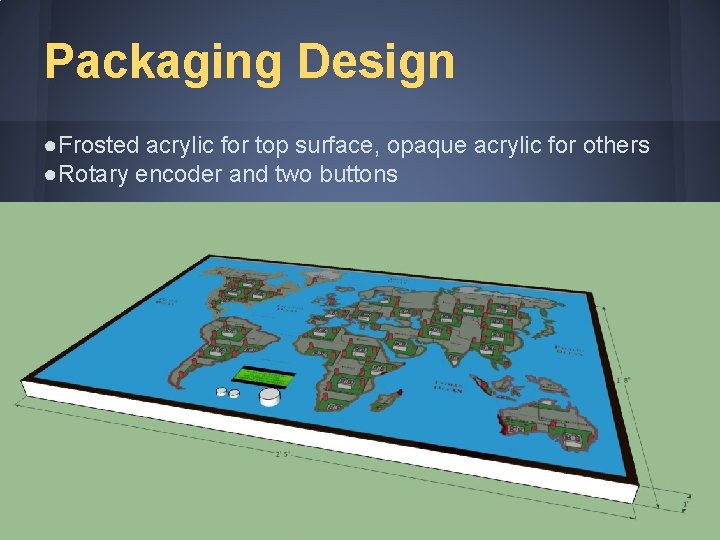
Packaging Design ●Frosted acrylic for top surface, opaque acrylic for others ●Rotary encoder and two buttons
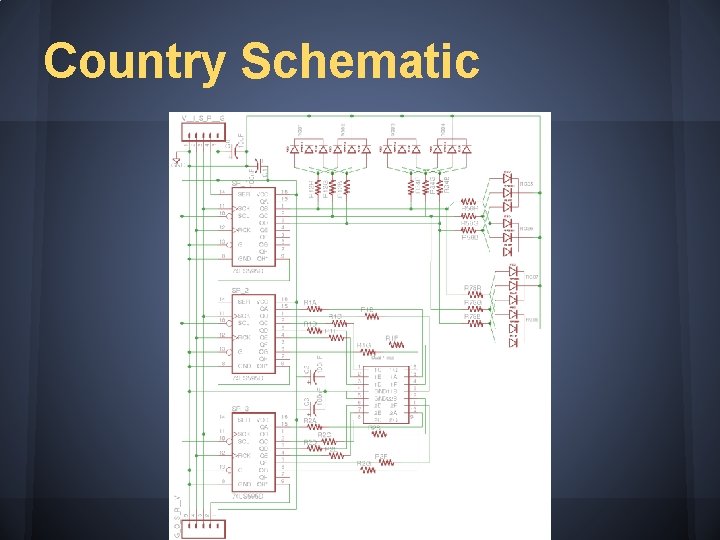
Country Schematic
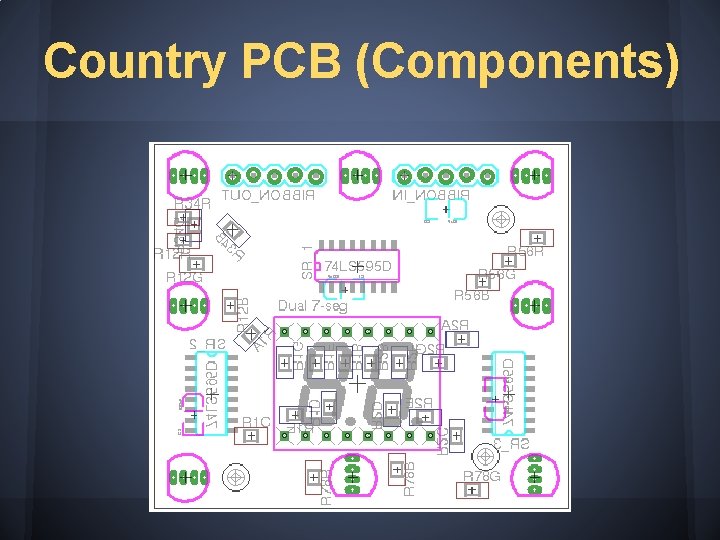
Country PCB (Components)
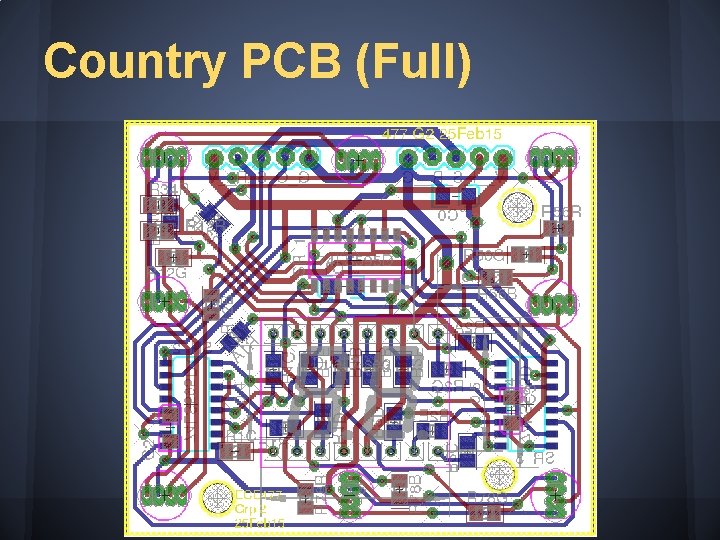
Country PCB (Full)
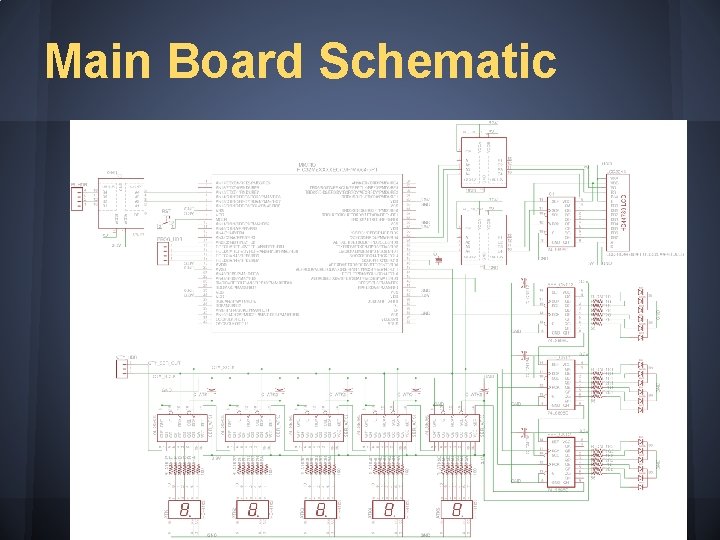
Main Board Schematic
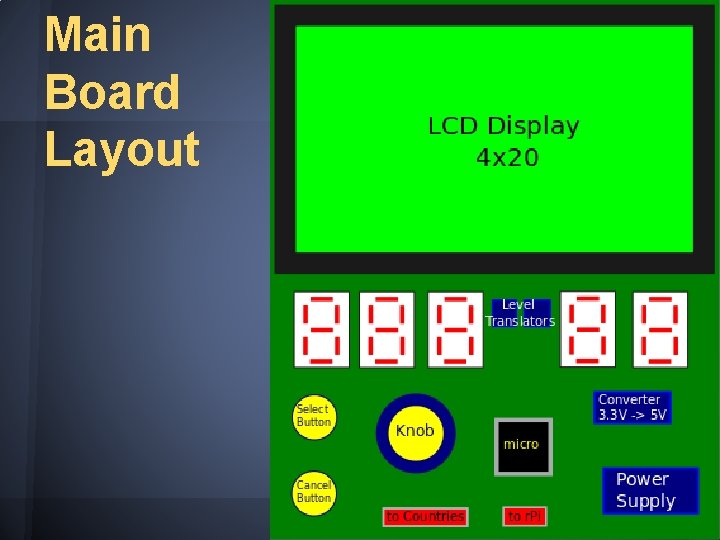
Main Board Layout
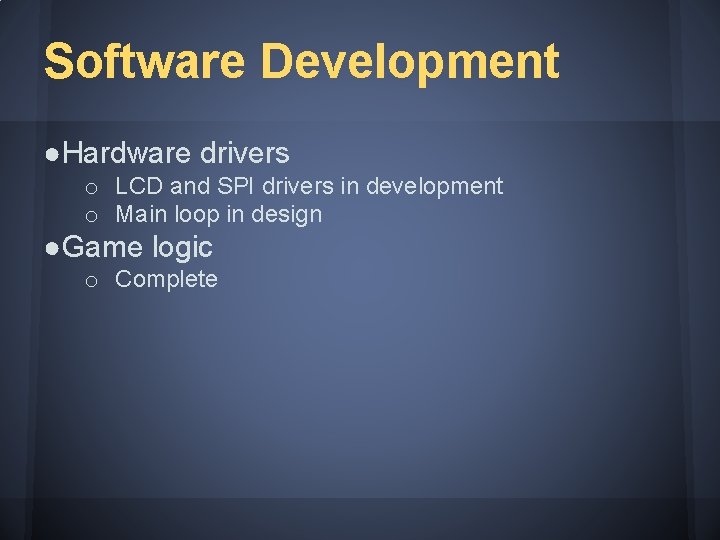
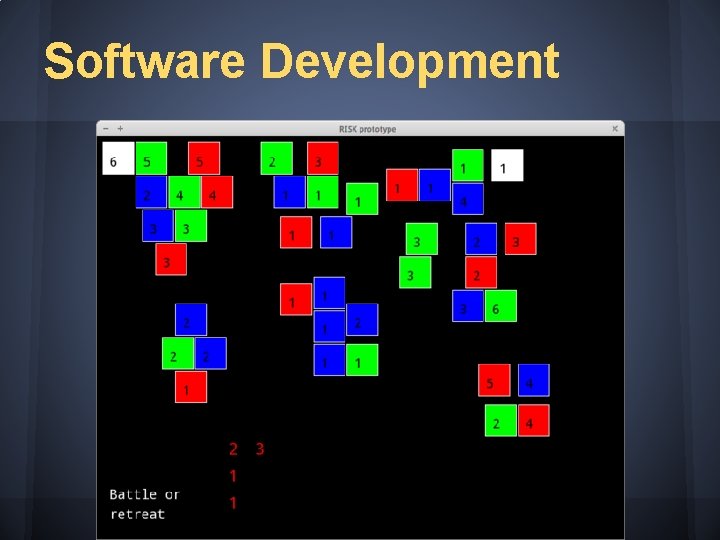
Software Development ●Hardware drivers o LCD and SPI drivers in development o Main loop in design ●Game logic o Complete
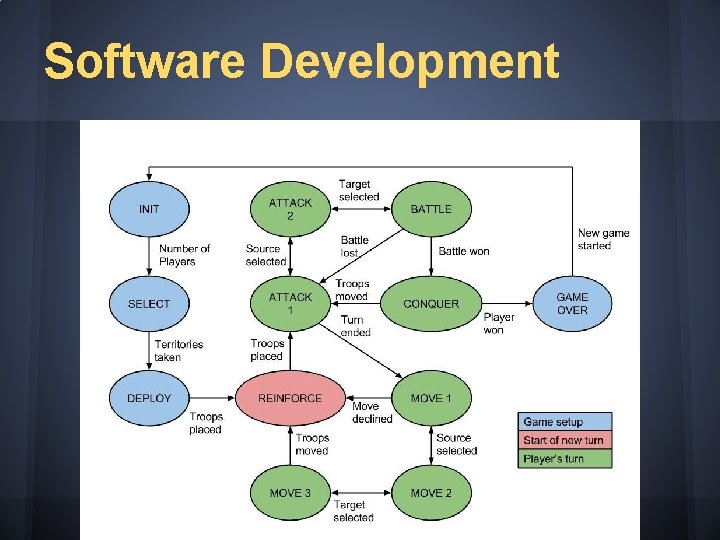
Software Development
Software Development
Software Development ●Raspberry Pi o Ad-hoc network setup complete o SPI commands in development § Must be master o Websockets are in development
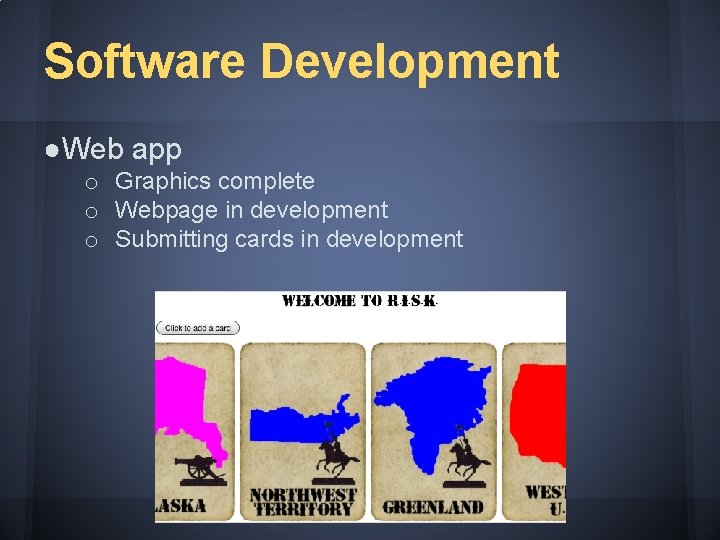
Software Development ●Web app o Graphics complete o Webpage in development o Submitting cards in development
Project Timeline ●Week 8: o Finalize Country PCB revisions, submit o Finish Main PCB Schematic o Start Main PCB Layout ●Week 9: o Finish designing and order Main PCB o Start Microcontroller IO (SPI) programming o Continue Web app: fetch card info from Pi (server) ●Week 10 / 11: o Solder parts onto country PCBs o Connect Raspberry Pi and microcontroller over SPI
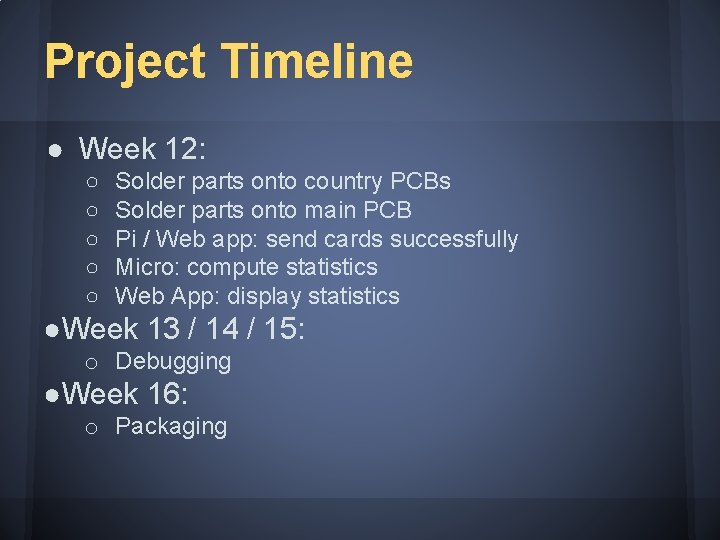
Project Timeline ● Week 12: ○ ○ ○ Solder parts onto country PCBs Solder parts onto main PCB Pi / Web app: send cards successfully Micro: compute statistics Web App: display statistics ●Week 13 / 14 / 15: o Debugging ●Week 16: o Packaging
Questions?