
ECE 448 FPGA and ASIC Design with VHDL


- Slides: 49
ECE 448 FPGA and ASIC Design with VHDL Spring 2018
Kris Gaj Research and teaching interests: • reconfigurable computing • cryptography • computer arithmetic • network security Contact: The Engineering Building, room 3225 kgaj@gmu. edu
Course Web Page Google “Kris Gaj” ECE 448 FPGA and ASIC Design with VHDL
TA Farnoud Farahmand Ph. D. Student of Dr. Gaj Member of the Cryptographic Engineering Research Group (CERG) http: //cryptography. gmu. edu since Fall 2014. MS Thesis in Nov. 2016. Internship as a Hardware Engineer in the Crypto Group of Google in Summer 2017.
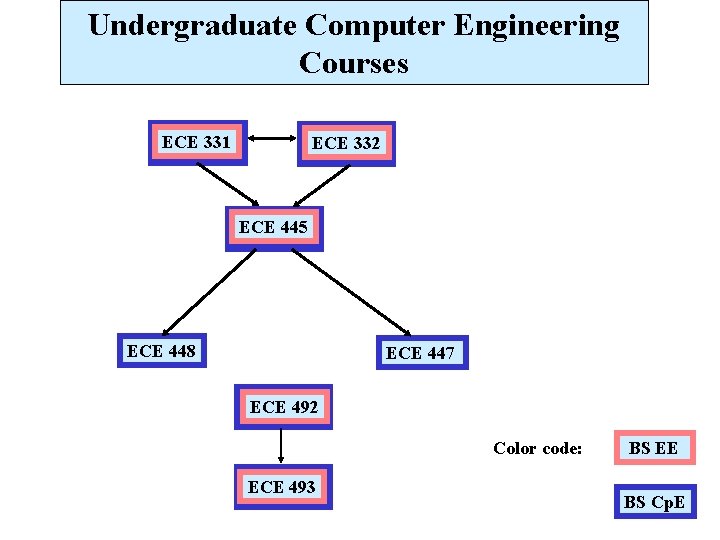
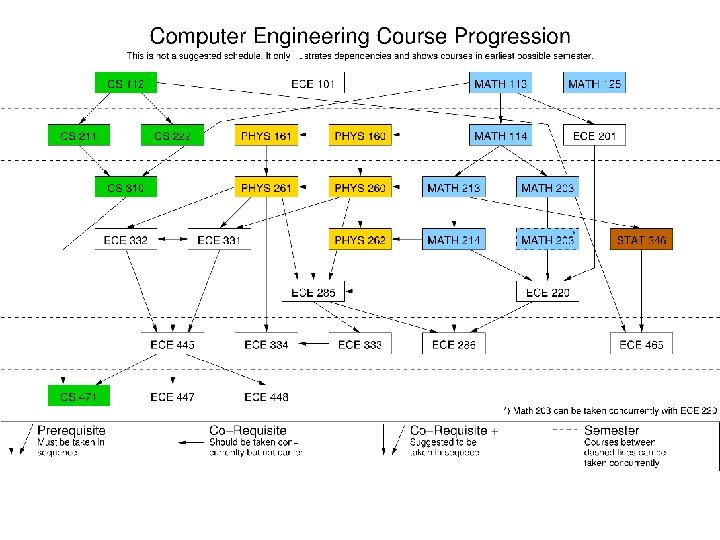
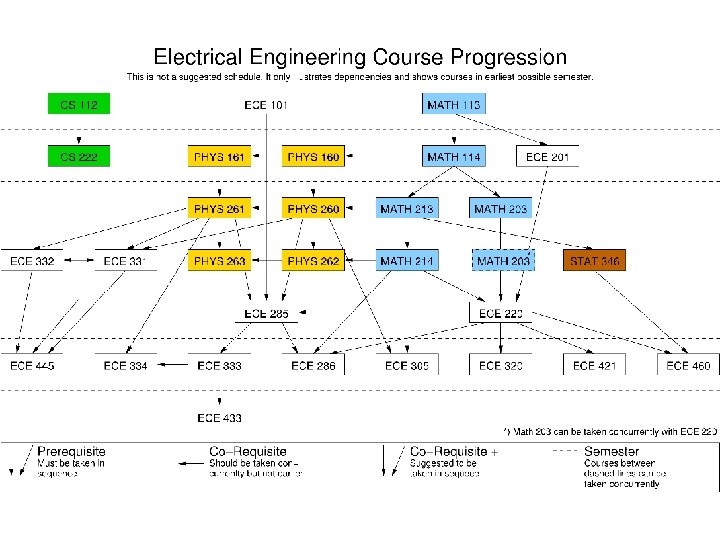
Undergraduate Computer Engineering Courses ECE 331 ECE 332 ECE 445 ECE 448 ECE 447 ECE 492 Color code: ECE 493 BS EE BS Cp. E
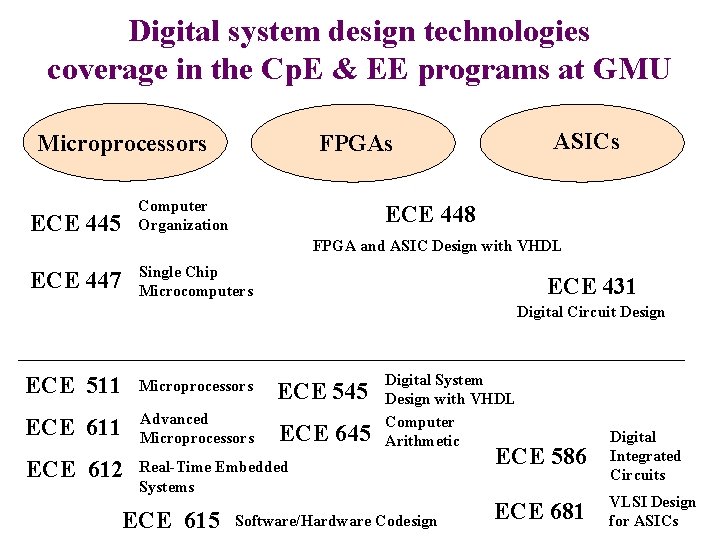
Digital system design technologies coverage in the Cp. E & EE programs at GMU Microprocessors Computer Organization ECE 445 ASICs FPGAs ECE 448 FPGA and ASIC Design with VHDL Single Chip Microcomputers ECE 447 ECE 431 Digital Circuit Design ECE 511 Microprocessors ECE 545 ECE 611 Advanced Microprocessors ECE 645 ECE 612 Real-Time Embedded Systems ECE 615 Digital System Design with VHDL Computer Arithmetic Software/Hardware Codesign ECE 586 Digital Integrated Circuits ECE 681 VLSI Design for ASICs
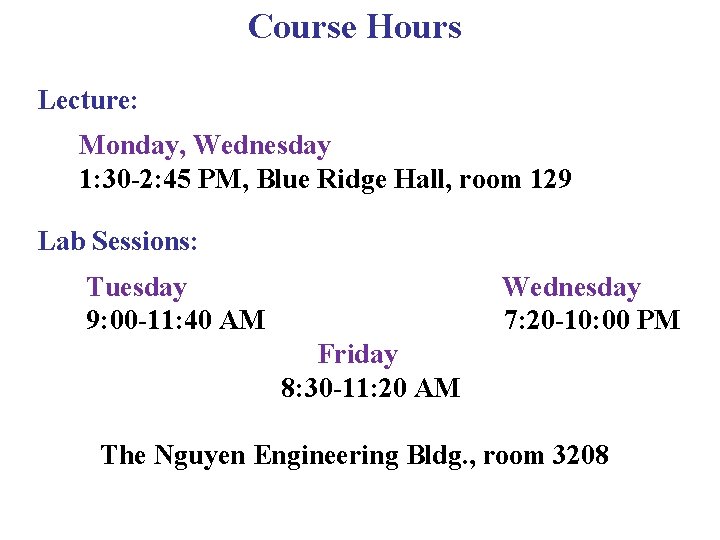
Course Hours Lecture: Monday, Wednesday 1: 30 -2: 45 PM, Blue Ridge Hall, room 129 Lab Sessions: Tuesday 9: 00 -11: 40 AM Wednesday 7: 20 -10: 00 PM Friday 8: 30 -11: 20 AM The Nguyen Engineering Bldg. , room 3208
General Section Assignment Rules • You should do your best to attend all lab meetings of the section you are registered for • If you have missed a meeting of your section please attend a meetings of another section, but give preference in access to the lab computers to the students attending their own lab section • All lab assignment demos should be normally done exclusively during the class time of your section • Any requests for exceptions to these rules (due to illness, accident, etc. ) should be well documented and presented to the TA & primary instructor for approval
Office Hours You are welcome to attend all office hour sessions! You can direct your questions regarding lab assignments to the TA and the instructor. Do your best to avoid “chasing” the TA outside of his office hours! He has other important and often urgent work to do! Farnoud Farahmand • Monday, 12: 00 -1: 00 pm, ENGR 3204 • Tuesday, 5: 30 -7: 00 pm, ENGR 3204 • Thursday, 12: 00 -1: 30 pm, ENGR 3204 Kris Gaj • Monday, 3: 00 -4: 00 pm, ENGR 3225 • Wednesday, 3: 00 -4: 00 pm, ENGR 3225
Getting Help Outside of Office Hours • System for asking questions 24/7 • Answers can be given by students and instructors • Student answers endorsed (or corrected) by instructors • Average response time in Spring 2016 = 48 minutes • You can submit your questions anonymously • You can ask private questions visible only to the instructors
Lab Access Rules and Behavior Code Please refer to ECE Labs website and in particular to Access rules & behavior code
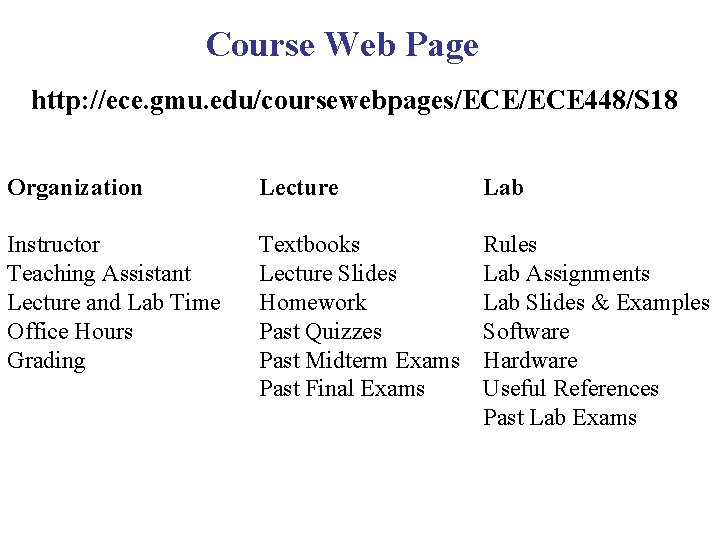
Course Web Page http: //ece. gmu. edu/coursewebpages/ECE 448/S 18 Organization Lecture Lab Instructor Teaching Assistant Lecture and Lab Time Office Hours Grading Textbooks Lecture Slides Homework Past Quizzes Past Midterm Exams Past Final Exams Rules Lab Assignments Lab Slides & Examples Software Hardware Useful References Past Lab Exams
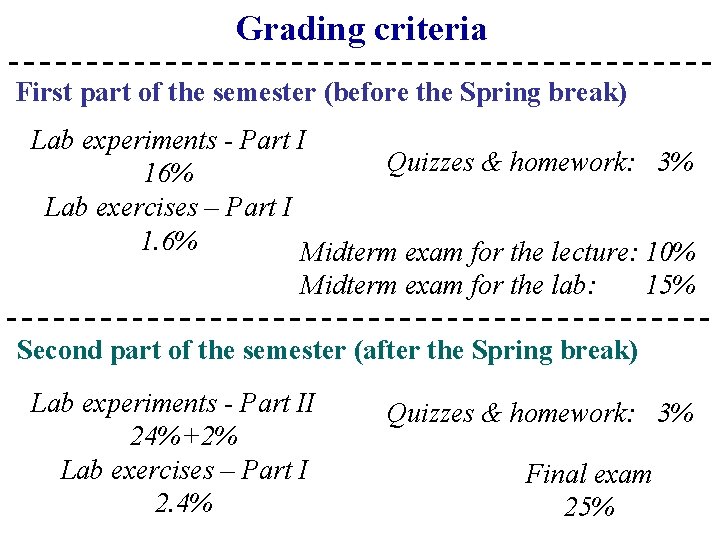
Grading criteria First part of the semester (before the Spring break) Lab experiments - Part I Quizzes & homework: 3% 16% Lab exercises – Part I 1. 6% Midterm exam for the lecture: 10% Midterm exam for the lab: 15% Second part of the semester (after the Spring break) Lab experiments - Part II 24%+2% Lab exercises – Part I 2. 4% Quizzes & homework: 3% Final exam 25%
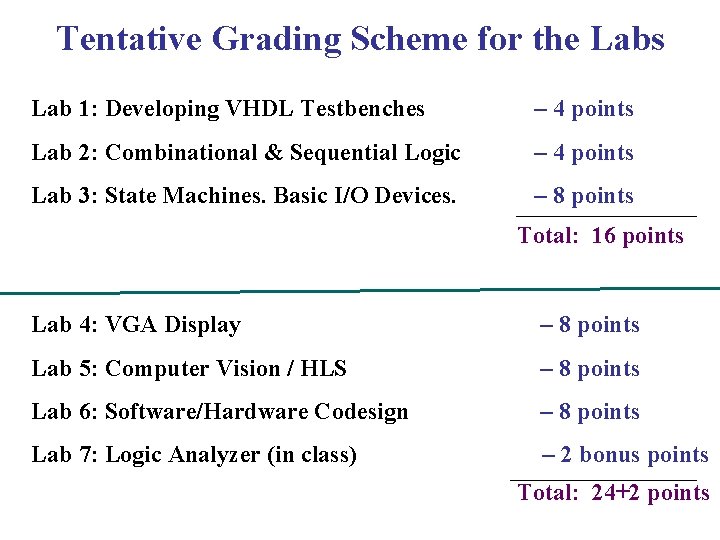
Tentative Grading Scheme for the Labs Lab 1: Developing VHDL Testbenches – 4 points Lab 2: Combinational & Sequential Logic – 4 points Lab 3: State Machines. Basic I/O Devices. – 8 points Total: 16 points Lab 4: VGA Display – 8 points Lab 5: Computer Vision / HLS – 8 points Lab 6: Software/Hardware Codesign – 8 points Lab 7: Logic Analyzer (in class) – 2 bonus points Total: 24+2 points
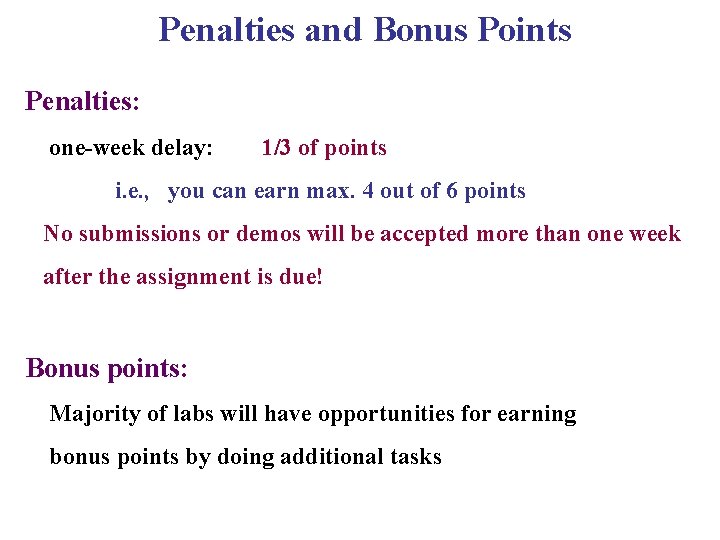
Penalties and Bonus Points Penalties: one-week delay: 1/3 of points i. e. , you can earn max. 4 out of 6 points No submissions or demos will be accepted more than one week after the assignment is due! Bonus points: Majority of labs will have opportunities for earning bonus points by doing additional tasks
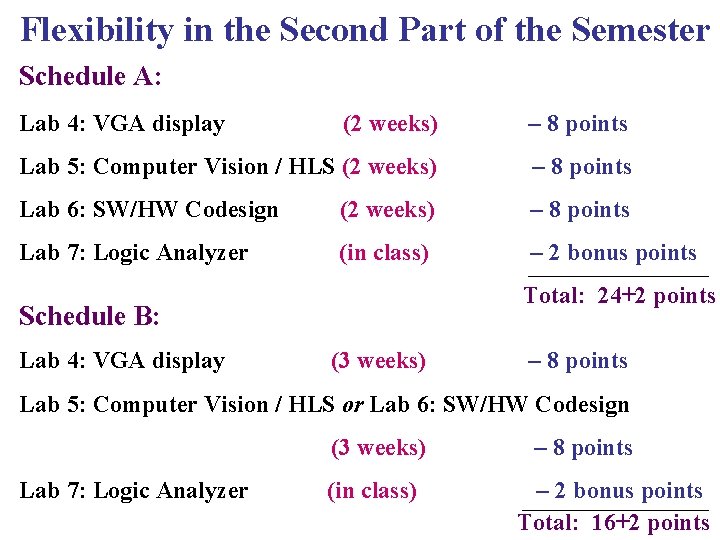
Flexibility in the Second Part of the Semester Schedule A: Lab 4: VGA display (2 weeks) – 8 points Lab 5: Computer Vision / HLS (2 weeks) – 8 points Lab 6: SW/HW Codesign (2 weeks) – 8 points Lab 7: Logic Analyzer (in class) – 2 bonus points Total: 24+2 points Schedule B: Lab 4: VGA display (3 weeks) – 8 points Lab 5: Computer Vision / HLS or Lab 6: SW/HW Codesign (3 weeks) Lab 7: Logic Analyzer (in class) – 8 points – 2 bonus points Total: 16+2 points
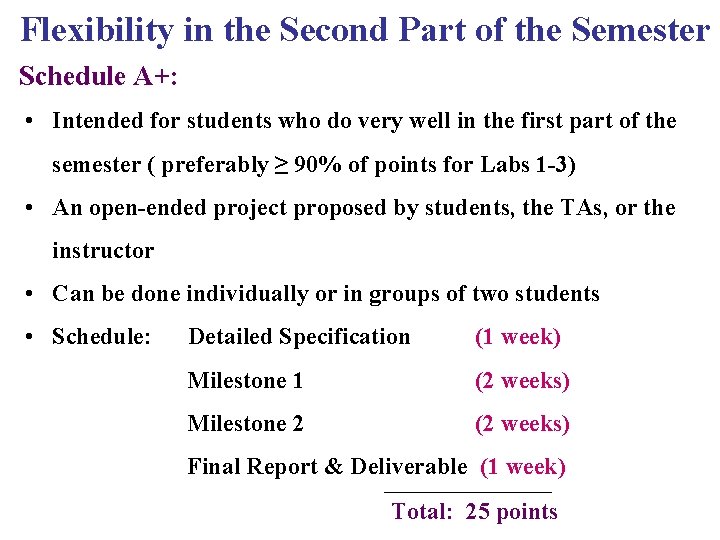
Flexibility in the Second Part of the Semester Schedule A+: • Intended for students who do very well in the first part of the semester ( preferably ≥ 90% of points for Labs 1 -3) • An open-ended project proposed by students, the TAs, or the instructor • Can be done individually or in groups of two students • Schedule: Detailed Specification (1 week) Milestone 1 (2 weeks) Milestone 2 (2 weeks) Final Report & Deliverable (1 week) Total: 25 points
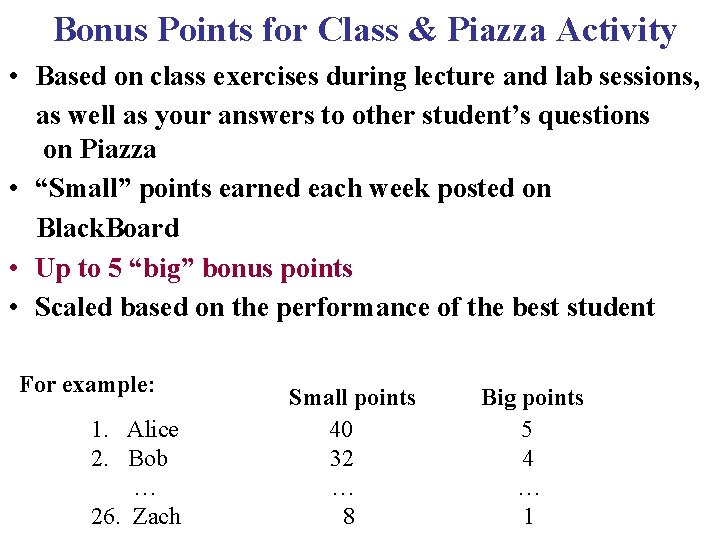
Bonus Points for Class & Piazza Activity • Based on class exercises during lecture and lab sessions, as well as your answers to other student’s questions on Piazza • “Small” points earned each week posted on Black. Board • Up to 5 “big” bonus points • Scaled based on the performance of the best student For example: 1. Alice 2. Bob … 26. Zach Small points 40 32 … 8 Big points 5 4 … 1
Linked. In Accounts • Linked. In Accounts with photos encouraged • Facilitate associating name with the face during class exercises • Endorsements and recommendation letters available at the end of the class (per your request)
Exams • Midterm Exam for the Lecture – 10 points Wednesday, February 28 • Midterm Exam for the Lab (hands-on) – 15 point Tuesday, March 6 Wednesday, March 7 Friday, March 9 • Final Exam – 25 points Wednesday, May 9, 1: 30 -4: 15 pm (first day of the exam session)
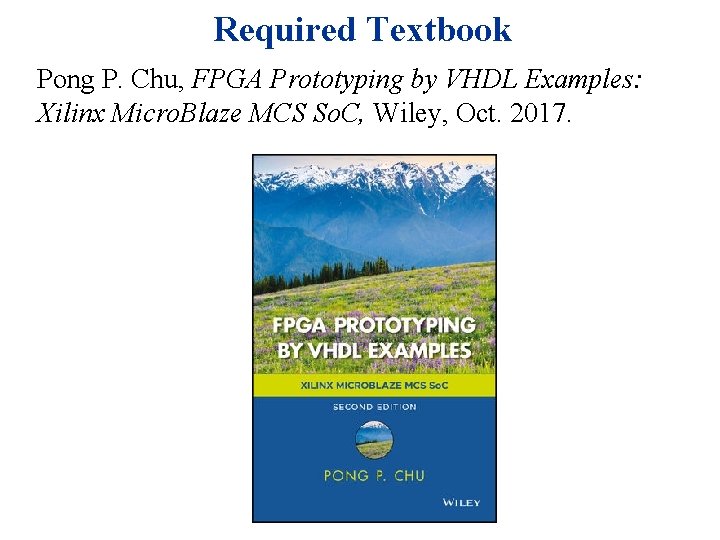
Required Textbook Pong P. Chu, FPGA Prototyping by VHDL Examples: Xilinx Micro. Blaze MCS So. C, Wiley, Oct. 2017.
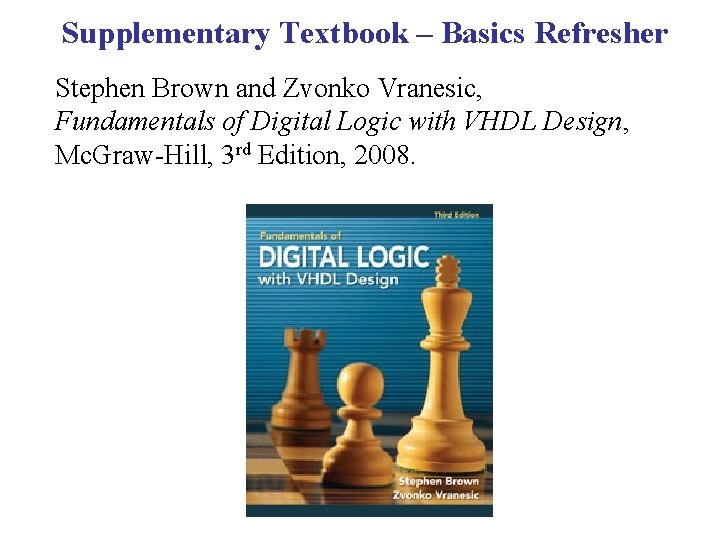
Supplementary Textbook – Basics Refresher Stephen Brown and Zvonko Vranesic, Fundamentals of Digital Logic with VHDL Design, Mc. Graw-Hill, 3 rd Edition, 2008.
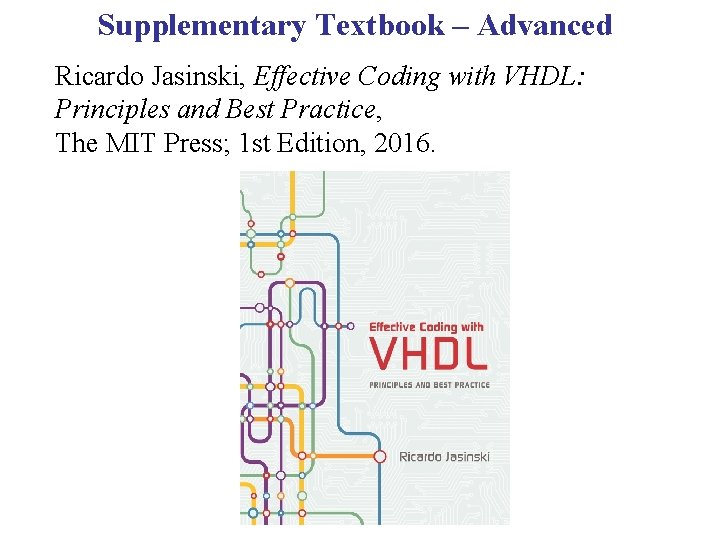
Supplementary Textbook – Advanced Ricardo Jasinski, Effective Coding with VHDL: Principles and Best Practice, The MIT Press; 1 st Edition, 2016.
ECE 448, FPGA and ASIC Design with VHDL Topics VHDL: - writing testbenches - writing synthesizable RTL level code in VHDL FPGAs: - architecture of FPGA devices - embedded resources (memories, DSP units) - tools for the computer-aided design with FPGAs - current FPGA families & future trends
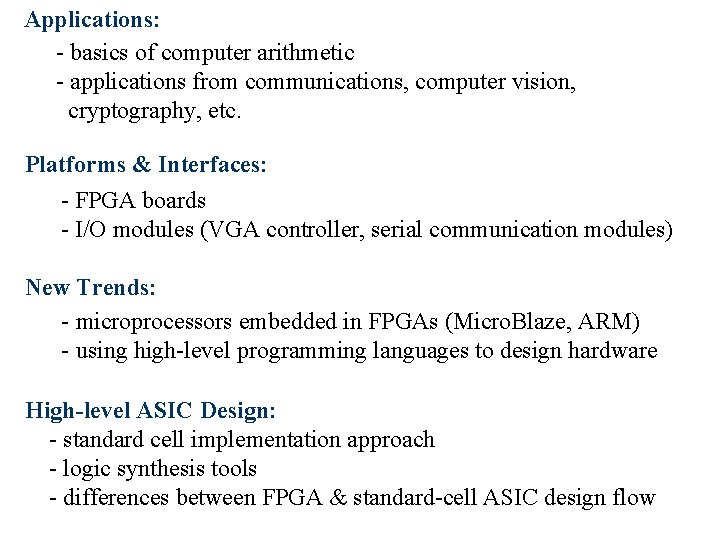
Applications: - basics of computer arithmetic - applications from communications, computer vision, cryptography, etc. Platforms & Interfaces: - FPGA boards - I/O modules (VGA controller, serial communication modules) New Trends: - microprocessors embedded in FPGAs (Micro. Blaze, ARM) - using high-level programming languages to design hardware High-level ASIC Design: - standard cell implementation approach - logic synthesis tools - differences between FPGA & standard-cell ASIC design flow
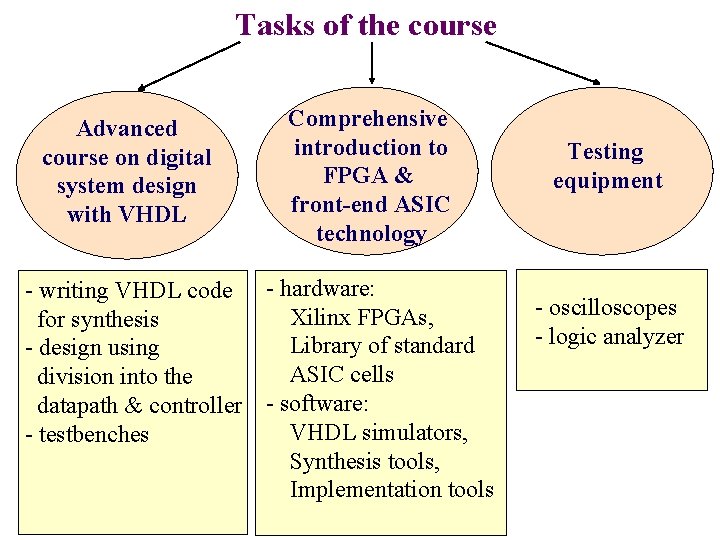
Tasks of the course Advanced course on digital system design with VHDL Comprehensive introduction to FPGA & front-end ASIC technology - writing VHDL code - hardware: Xilinx FPGAs, for synthesis Library of standard - design using ASIC cells division into the datapath & controller - software: VHDL simulators, - testbenches Synthesis tools, Implementation tools Testing equipment - oscilloscopes - logic analyzer
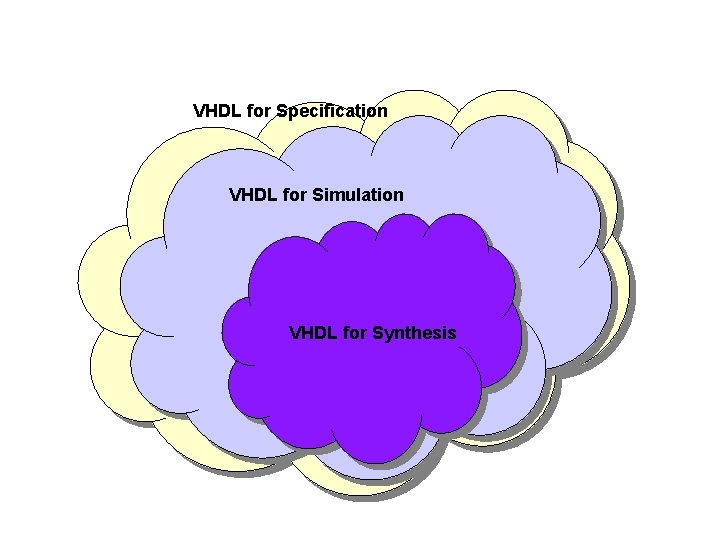
VHDL for Specification VHDL for Simulation VHDL for Synthesis
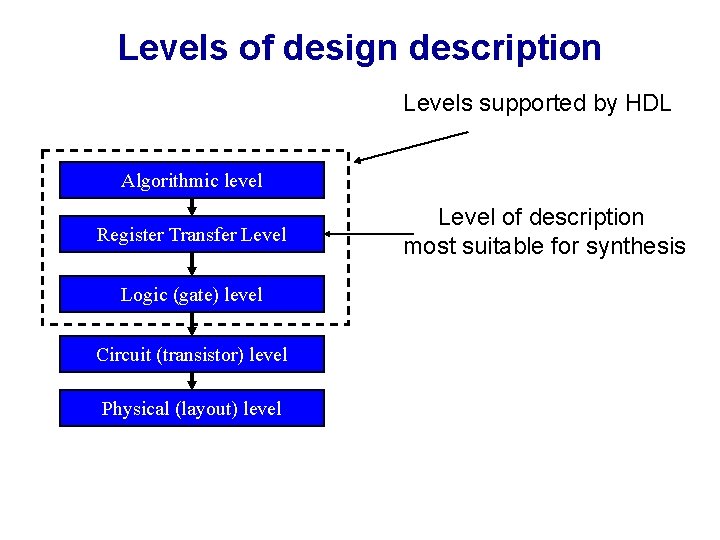
Levels of design description Levels supported by HDL Algorithmic level Register Transfer Level Logic (gate) level Circuit (transistor) level Physical (layout) level Level of description most suitable for synthesis
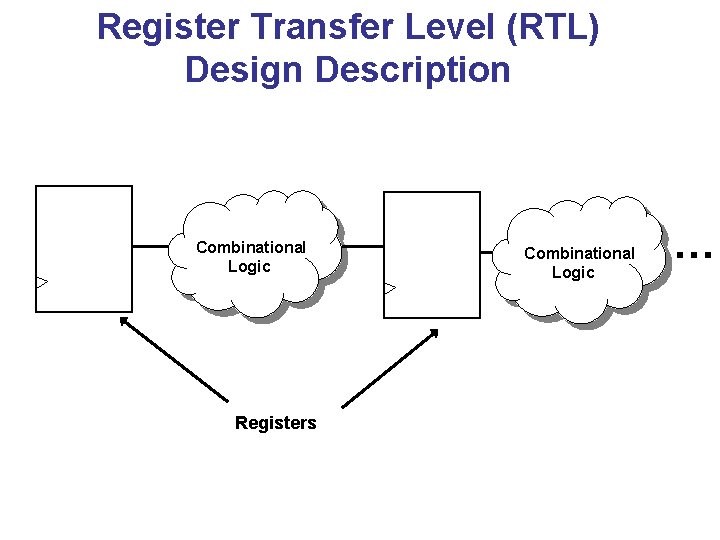
Register Transfer Level (RTL) Design Description Combinational Logic Registers Combinational Logic …
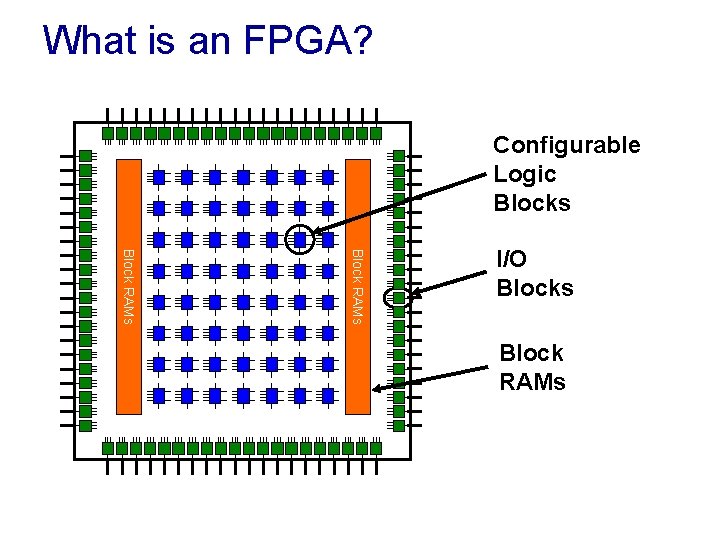
What is an FPGA? Configurable Logic Blocks Block RAMs I/O Blocks Block RAMs
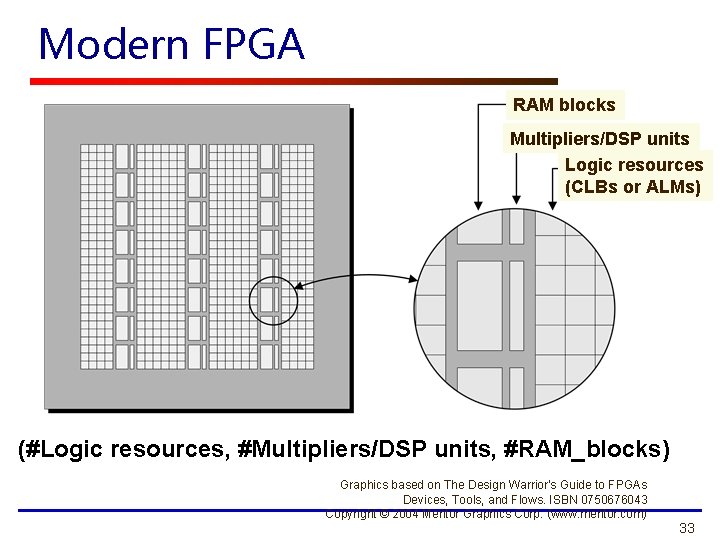
Modern FPGA RAM blocks Multipliers/DSP units Logic resources (CLBs or ALMs) (#Logic resources, #Multipliers/DSP units, #RAM_blocks) Graphics based on The Design Warrior’s Guide to FPGAs Devices, Tools, and Flows. ISBN 0750676043 Copyright © 2004 Mentor Graphics Corp. (www. mentor. com) 33
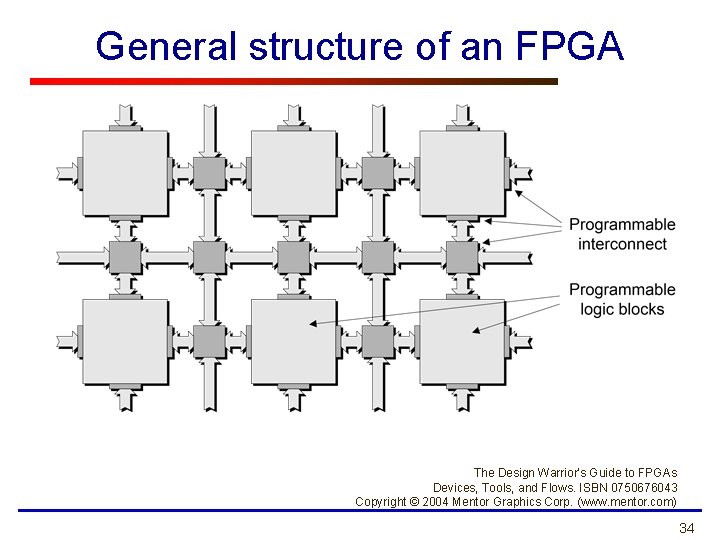
General structure of an FPGA The Design Warrior’s Guide to FPGAs Devices, Tools, and Flows. ISBN 0750676043 Copyright © 2004 Mentor Graphics Corp. (www. mentor. com) 34
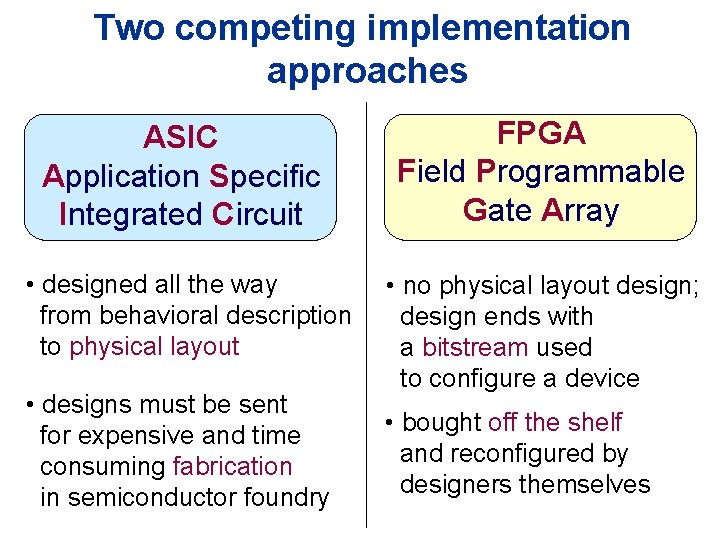
Two competing implementation approaches ASIC Application Specific Integrated Circuit FPGA Field Programmable Gate Array • designed all the way from behavioral description to physical layout • no physical layout design; design ends with a bitstream used to configure a device • designs must be sent for expensive and time consuming fabrication in semiconductor foundry • bought off the shelf and reconfigured by designers themselves
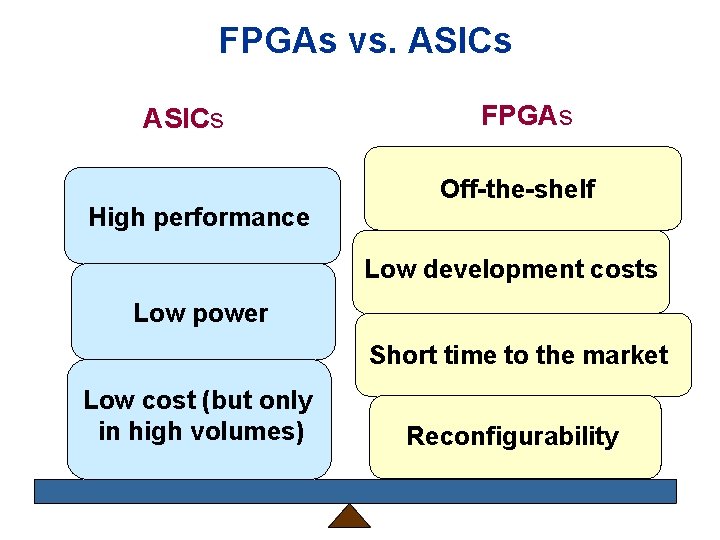
FPGAs vs. ASICs High performance FPGAs Off-the-shelf Low development costs Low power Short time to the market Low cost (but only in high volumes) Reconfigurability
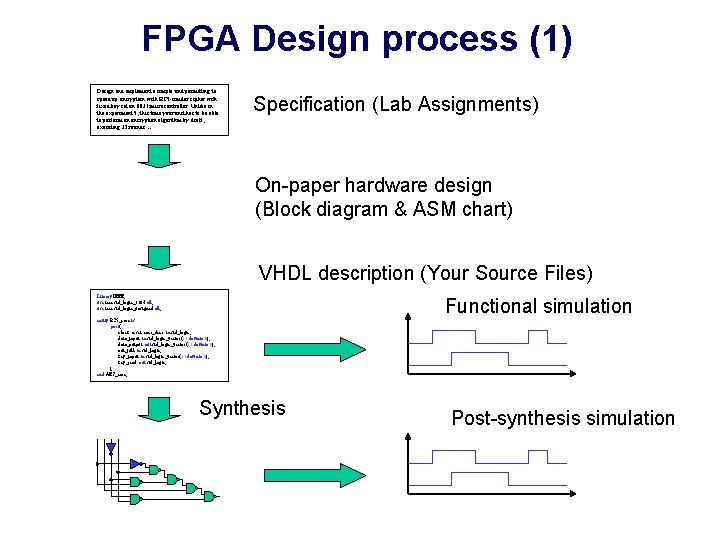
FPGA Design process (1) Design and implement a simple unit permitting to speed up encryption with RC 5 -similar cipher with fixed key set on 8031 microcontroller. Unlike in the experiment 5, this time your unit has to be able to perform an encryption algorithm by itself, executing 32 rounds…. . Specification (Lab Assignments) On-paper hardware design (Block diagram & ASM chart) VHDL description (Your Source Files) Library IEEE; use ieee. std_logic_1164. all; use ieee. std_logic_unsigned. all; Functional simulation entity RC 5_core is port( clock, reset, encr_decr: in std_logic; data_input: in std_logic_vector(31 downto 0); data_output: out std_logic_vector(31 downto 0); out_full: in std_logic; key_input: in std_logic_vector(31 downto 0); key_read: out std_logic; ); end AES_core; Synthesis Post-synthesis simulation
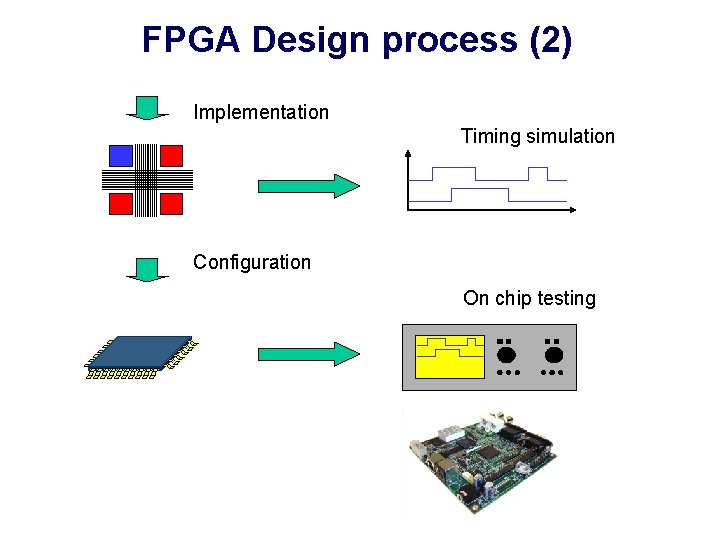
FPGA Design process (2) Implementation Timing simulation Configuration On chip testing
FPGA Tools 39
Xilinx ISE Integrated Software Environment (not used this semester) • Older development environment • Frozen at version 14. 7 in 2012 (although new releases of v 14. 7 still posted periodically) • Replaced by Xilinx Vivado for the new FPGA families, starting at Series-7 FPGAs (Artix-7, Kintex-7, Virtex-7) • Used in all previous offerings of ECE 448
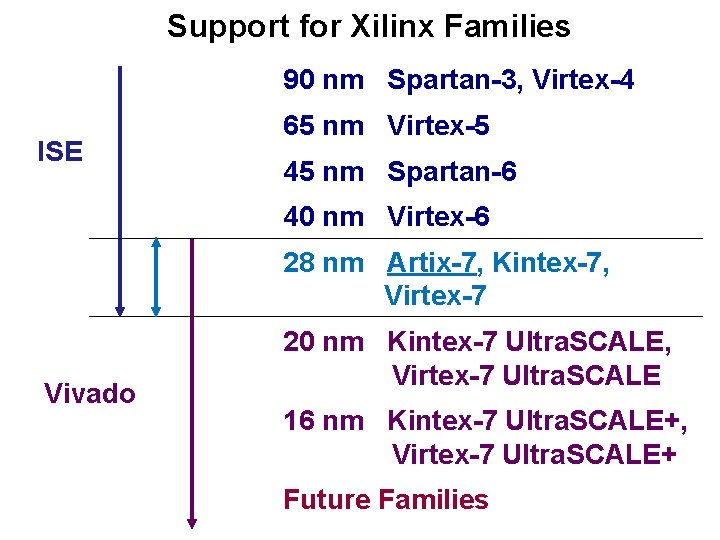
Support for Xilinx Families 90 nm Spartan-3, Virtex-4 ISE 65 nm Virtex-5 45 nm Spartan-6 40 nm Virtex-6 28 nm Artix-7, Kintex-7, Virtex-7 Vivado 20 nm Kintex-7 Ultra. SCALE, Virtex-7 Ultra. SCALE 16 nm Kintex-7 Ultra. SCALE+, Virtex-7 Ultra. SCALE+ Future Families
Vivado Design Suite (used for the first time this year) • 4 years of development and 1 year of beta testing • first version released in Summer 2012 we will use version 2017. 2 • scalable data model, supporting designs with up to 100 million ASIC gate equivalents (GEs) • Support for VHDL-2008 • Support for High-Level Synthesis
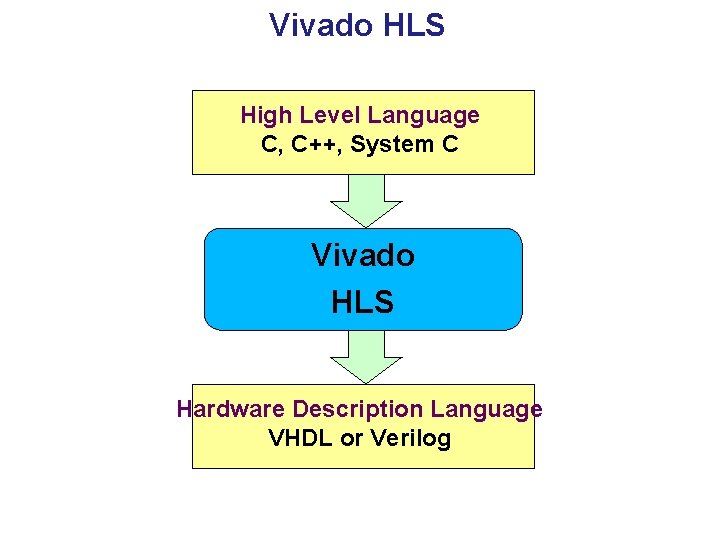
Vivado HLS High Level Language C, C++, System C Vivado HLS Hardware Description Language VHDL or Verilog
Productivity Gains • Vivado Simulator 3 x faster than ISim • Synthesis 3 x faster than Xilinx XST (part of ISE) • Substantial improvement in runtime and maximum design size compared to Xilinx ISE • Much better visibility into key design metrics, such as timing, power, resource utilization, and routing congestion much earlier during the design process • Estimates becomes progressively more accurate
Additional Simulation Tool Model. Sim-Intel FPGA Starter Edition Model. Sim: • Industry standard for simulation • Significantly faster than Vivado Simulator • Windows, Linux OS • Mixed-language support: VHDL, Verilog, System Verilog • Recommended for advanced users Features of the Starter Edition: • Free, no license required • 10, 000 executable line limit
Why ECE 448 is a challenging course? • need to refresh and strengthen your VHDL skills • need to learn new tools • need to perform practical experiments • time needed to complete experiments
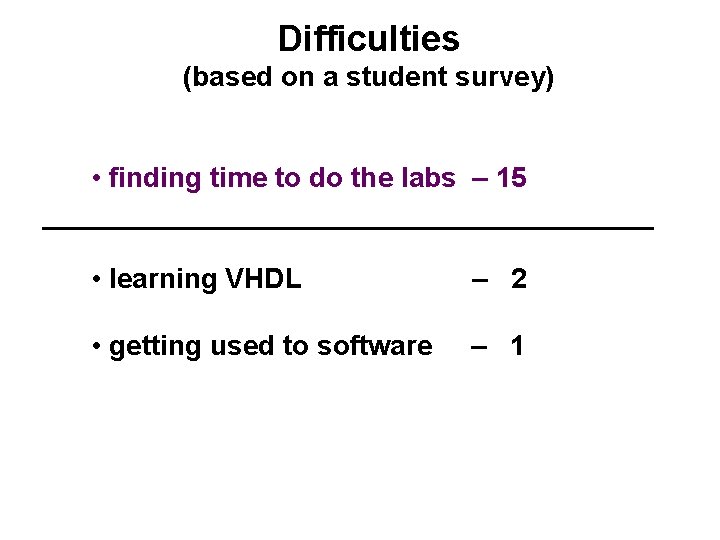
Difficulties (based on a student survey) • finding time to do the labs – 15 • learning VHDL – 2 • getting used to software – 1
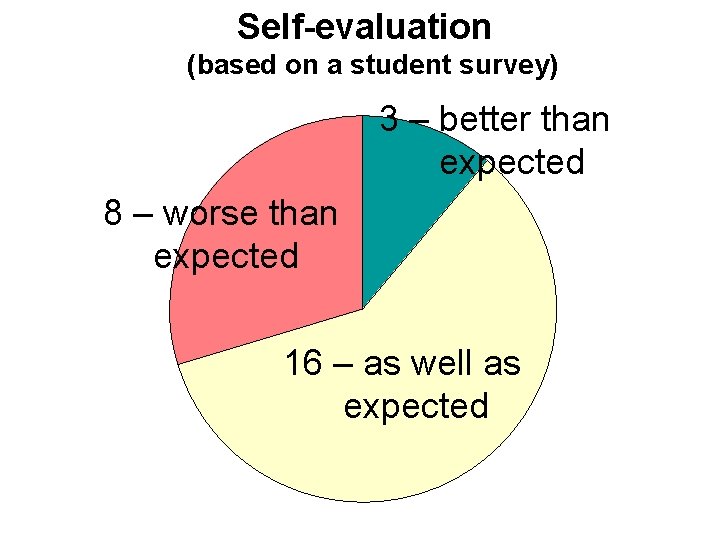
Self-evaluation (based on a student survey) 3 – better than expected 8 – worse than expected 16 – as well as expected
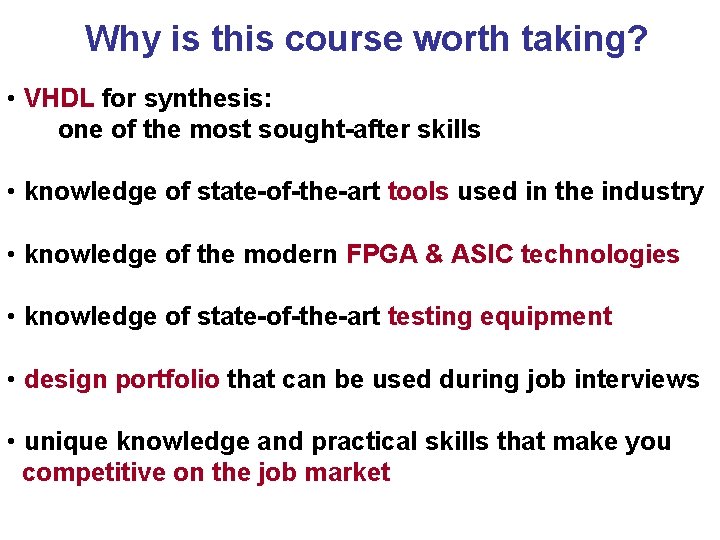
Why is this course worth taking? • VHDL for synthesis: one of the most sought-after skills • knowledge of state-of-the-art tools used in the industry • knowledge of the modern FPGA & ASIC technologies • knowledge of state-of-the-art testing equipment • design portfolio that can be used during job interviews • unique knowledge and practical skills that make you competitive on the job market