
ECE 374 Computer Networks Internet Introduction Spring 2015

- Slides: 18
ECE 374: Computer Networks & Internet Introduction Spring 2015 Prof. Michael Zink
Overview § § § Logistics Course Requirements Reading Material Course Organization Web Site Course Overview ECE Department 2
Logistics § Schedule: Monday, Wednesday, Friday 12: 20 AM – 1: 10 PM § Elab 303 § Office hours: Thursday 4: 00 PM – 5: 00 PM, Knowles Engineering Building 209 F, Phone: 5 -4465, zink@ecs. umass. edu § TAs: Ye Xu, KEB 310 Divyashri Bhat, KEB XXX Office hours: Monday’s 4 PM – 6 PM Wednesday’s 3 PM – 5 PM yxu@ecs. umass. edu divyashri. bhat@gmail. com ECE Department 3
Course Requirements § E&C-ENG 122 (or CMPSCI 121) & § E&C-ENG 242 (or CMPSCI 187) ECE Department 4
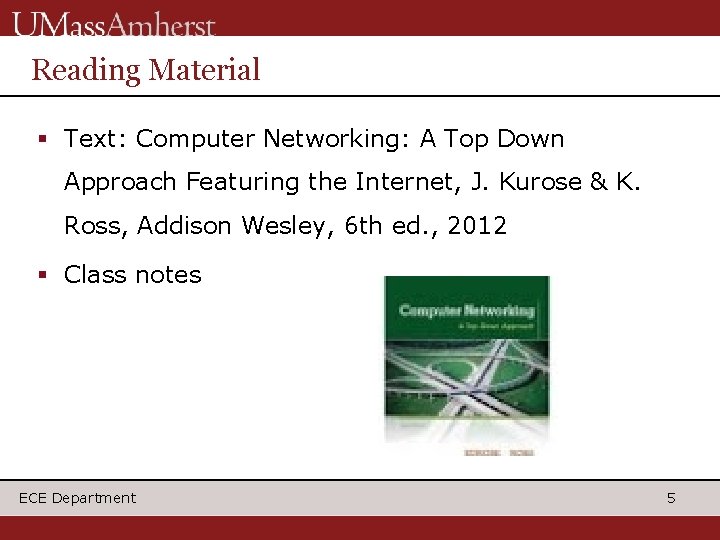
Reading Material § Text: Computer Networking: A Top Down Approach Featuring the Internet, J. Kurose & K. Ross, Addison Wesley, 6 th ed. , 2012 § Class notes ECE Department 5
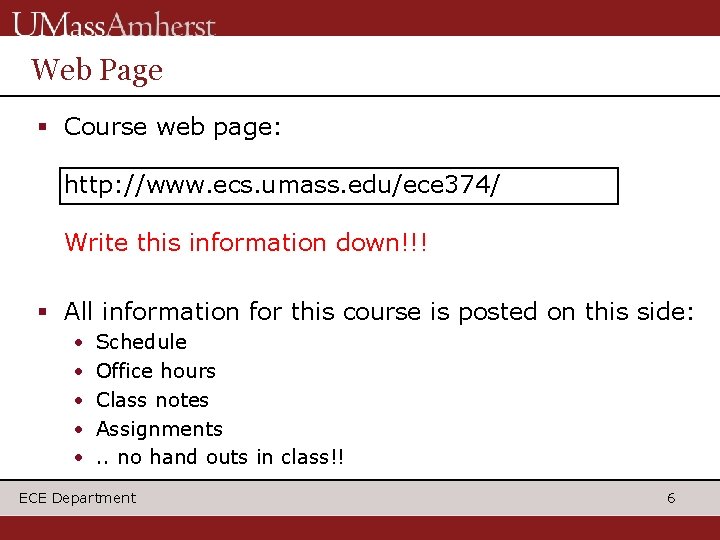
Web Page § Course web page: http: //www. ecs. umass. edu/ece 374/ Write this information down!!! § All information for this course is posted on this side: • • • Schedule Office hours Class notes Assignments. . no hand outs in class!! ECE Department 6
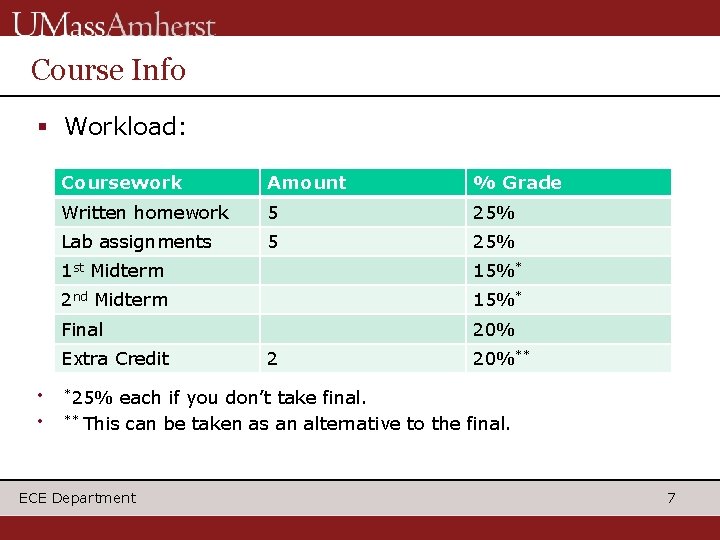
Course Info § Workload: Coursework Amount % Grade Written homework 5 25% Lab assignments 5 25% 1 st Midterm 15%* 2 nd Midterm 15%* Final 20% Extra Credit • • 2 20%** *25% each if you don’t take final. ** This can be taken as an alternative to the final. ECE Department 7
Course Info § ASK QUESTIONS!!!! • Let us be interactive! • Chime in if you have something interesting to add. § Incomplete policy § Academic honesty ECE Department 8
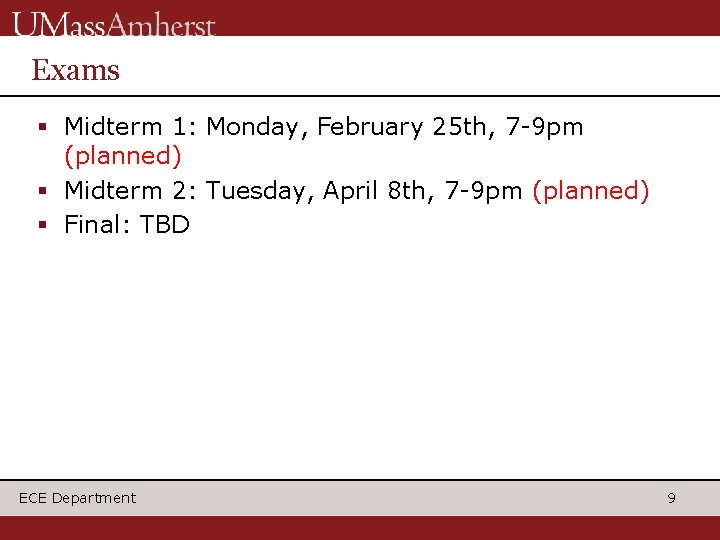
Exams § Midterm 1: Monday, February 25 th, 7 -9 pm (planned) § Midterm 2: Tuesday, April 8 th, 7 -9 pm (planned) § Final: TBD ECE Department 9
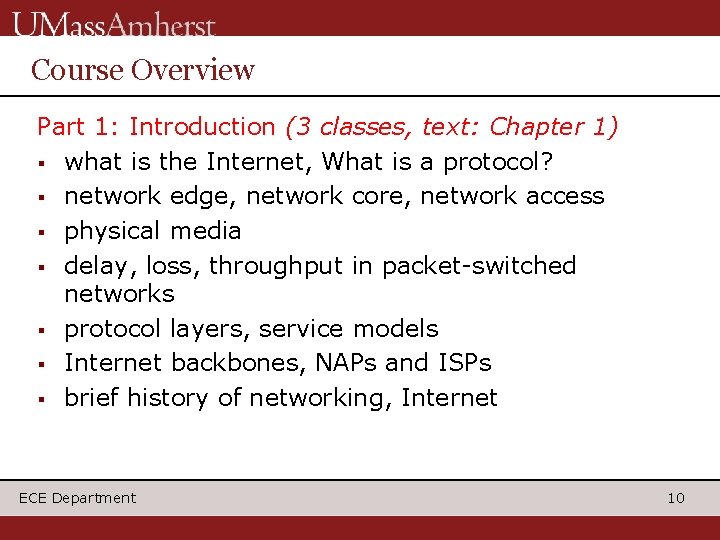
Course Overview Part 1: Introduction (3 classes, text: Chapter 1) § what is the Internet, What is a protocol? § network edge, network core, network access § physical media § delay, loss, throughput in packet-switched networks § protocol layers, service models § Internet backbones, NAPs and ISPs § brief history of networking, Internet ECE Department 10
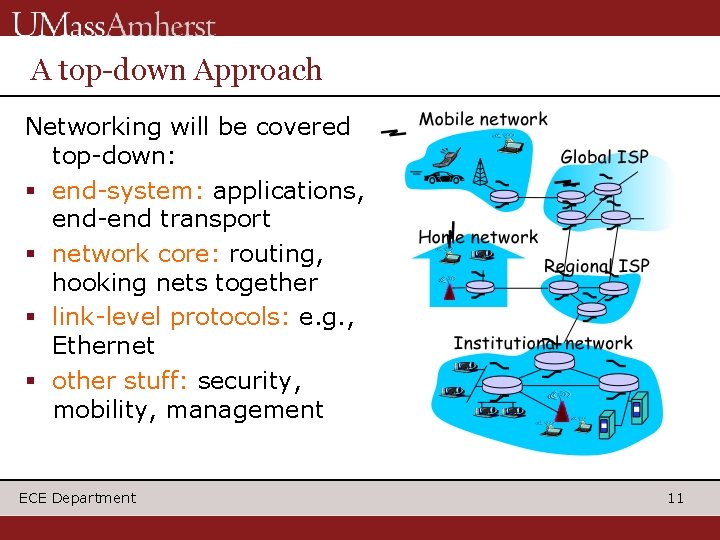
A top-down Approach Networking will be covered top-down: § end-system: applications, end-end transport § network core: routing, hooking nets together § link-level protocols: e. g. , Ethernet § other stuff: security, mobility, management ECE Department 11
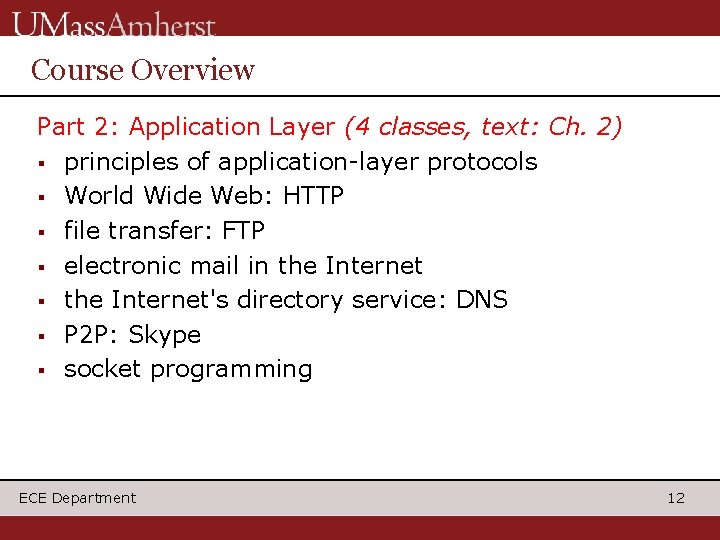
Course Overview Part 2: Application Layer (4 classes, text: Ch. 2) § principles of application-layer protocols § World Wide Web: HTTP § file transfer: FTP § electronic mail in the Internet § the Internet's directory service: DNS § P 2 P: Skype § socket programming ECE Department 12
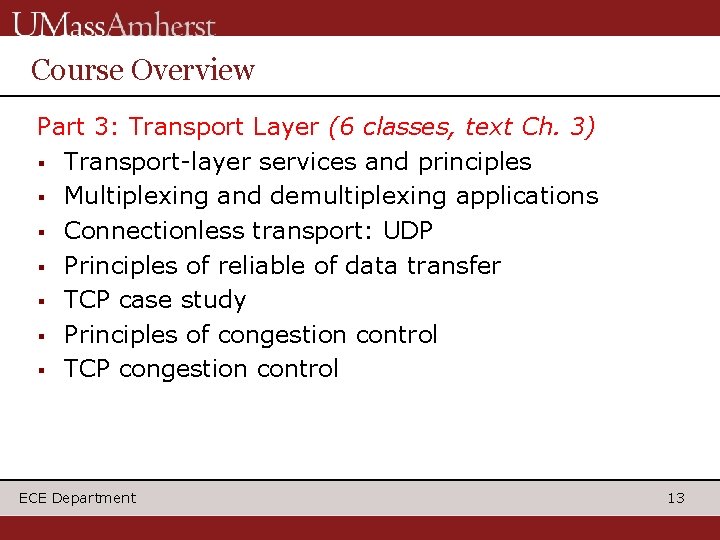
Course Overview Part 3: Transport Layer (6 classes, text Ch. 3) § Transport-layer services and principles § Multiplexing and demultiplexing applications § Connectionless transport: UDP § Principles of reliable of data transfer § TCP case study § Principles of congestion control § TCP congestion control ECE Department 13
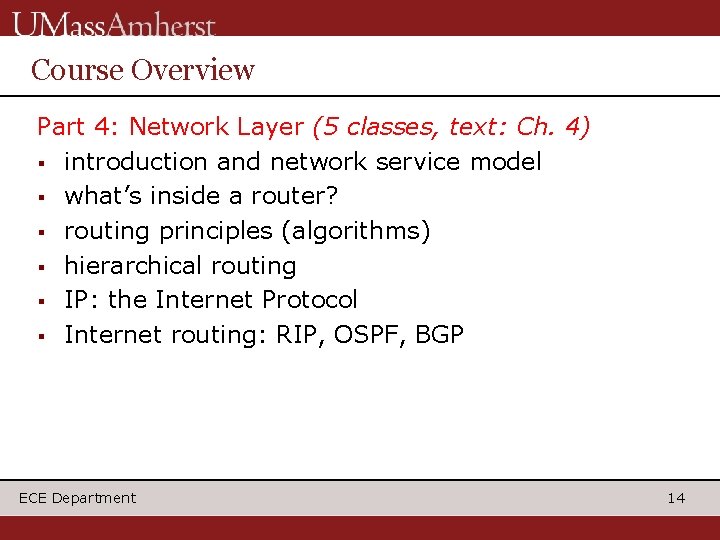
Course Overview Part 4: Network Layer (5 classes, text: Ch. 4) § introduction and network service model § what’s inside a router? § routing principles (algorithms) § hierarchical routing § IP: the Internet Protocol § Internet routing: RIP, OSPF, BGP ECE Department 14
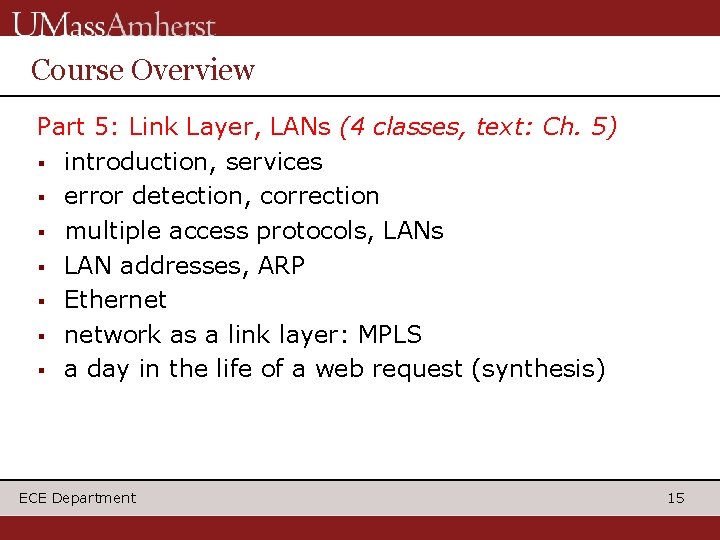
Course Overview Part 5: Link Layer, LANs (4 classes, text: Ch. 5) § introduction, services § error detection, correction § multiple access protocols, LANs § LAN addresses, ARP § Ethernet § network as a link layer: MPLS § a day in the life of a web request (synthesis) ECE Department 15
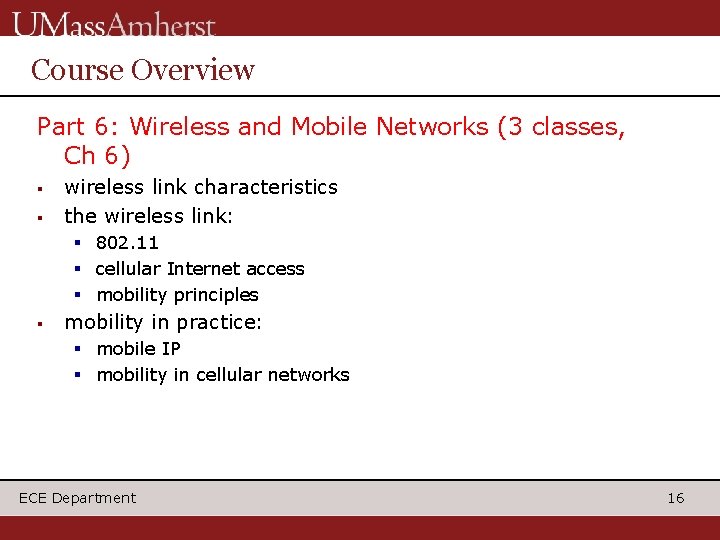
Course Overview Part 6: Wireless and Mobile Networks (3 classes, Ch 6) § § wireless link characteristics the wireless link: § 802. 11 § cellular Internet access § mobility principles § mobility in practice: § mobile IP § mobility in cellular networks ECE Department 16
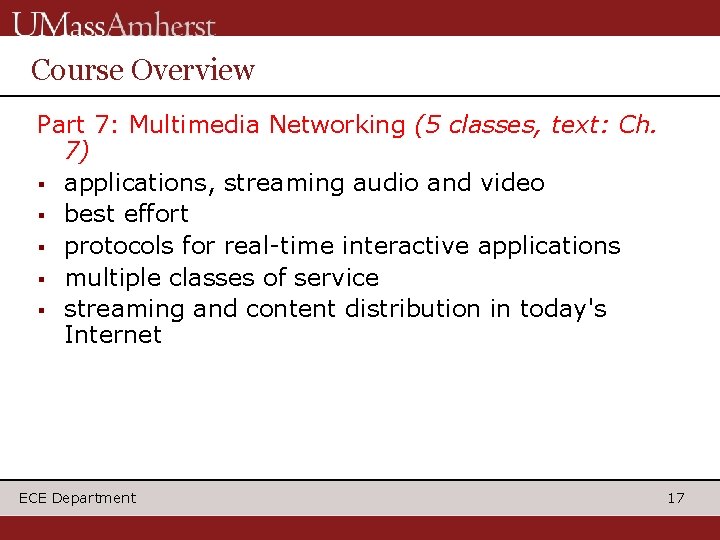
Course Overview Part 7: Multimedia Networking (5 classes, text: Ch. 7) § applications, streaming audio and video § best effort § protocols for real-time interactive applications § multiple classes of service § streaming and content distribution in today's Internet ECE Department 17
Course Overview Part 8: Network Security (3 classes, text: Ch. 7) § what is network security? § principles of cryptography § authentication: Who are you? § integrity § key distribution, certification § firewalls § attacks, countermeasures § case studies: secure e-mail, SSL, IPsec, 802. 11 ECE Department 18