
ECE 3318 Applied Electricity and Magnetism Spring 2020
- Slides: 21
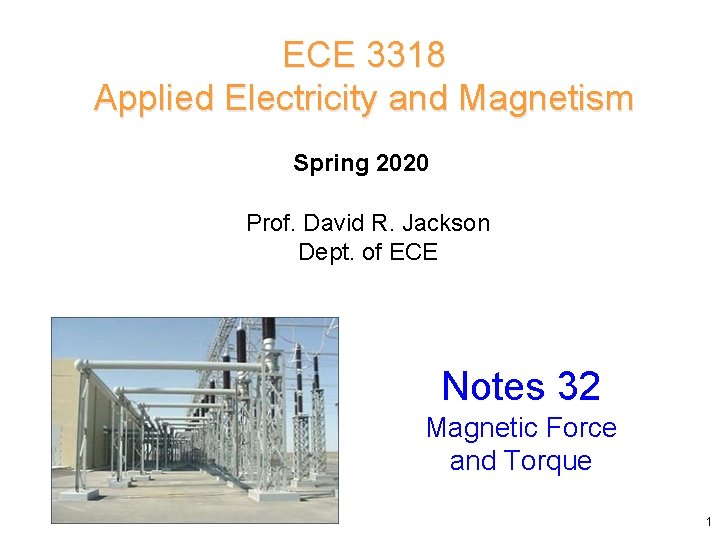
ECE 3318 Applied Electricity and Magnetism Spring 2020 Prof. David R. Jackson Dept. of ECE Notes 32 Magnetic Force and Torque 1
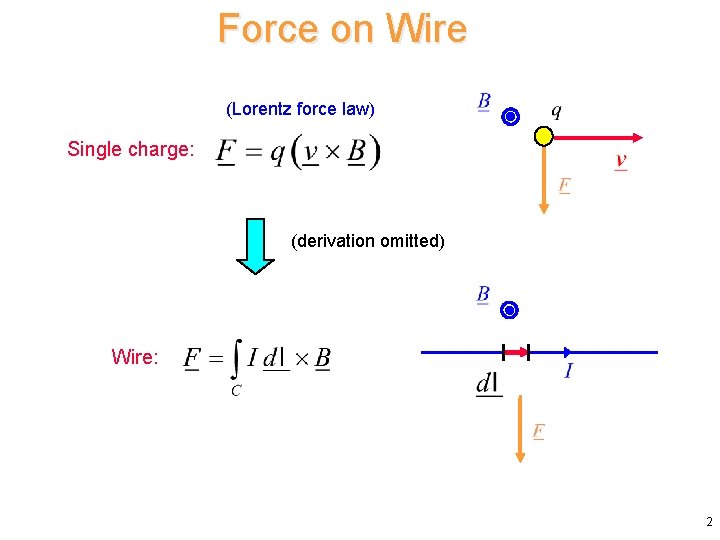
Force on Wire (Lorentz force law) Single charge: (derivation omitted) Wire: 2
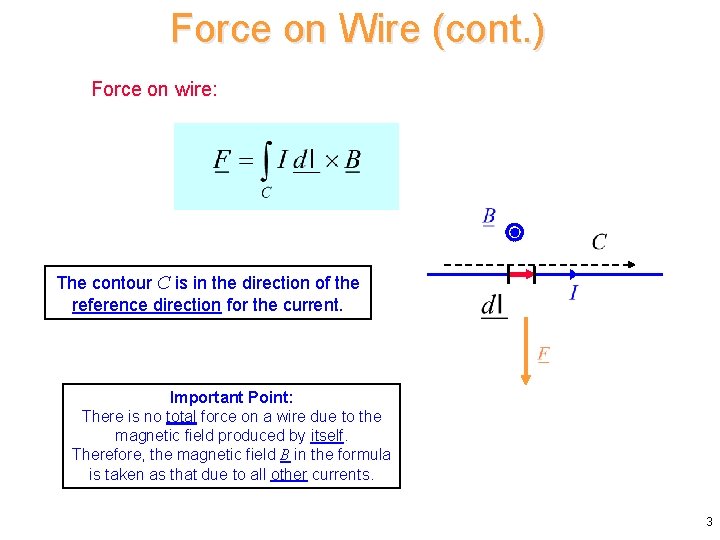
Force on Wire (cont. ) Force on wire: The contour C is in the direction of the reference direction for the current. Important Point: There is no total force on a wire due to the magnetic field produced by itself. Therefore, the magnetic field B in the formula is taken as that due to all other currents. 3
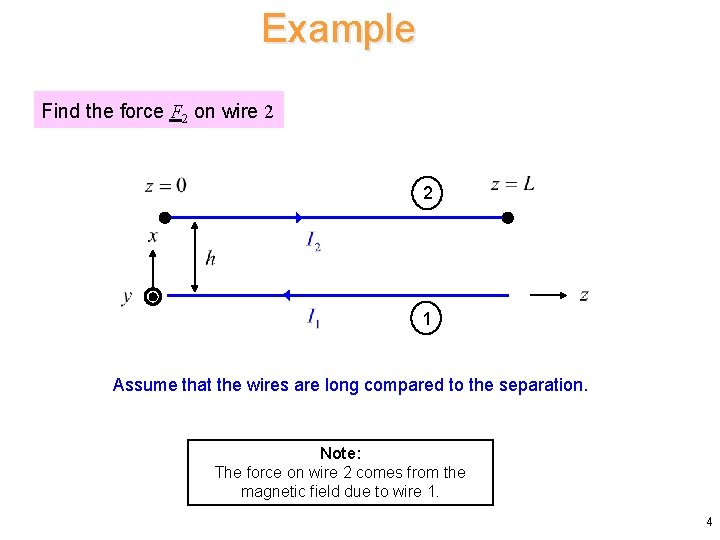
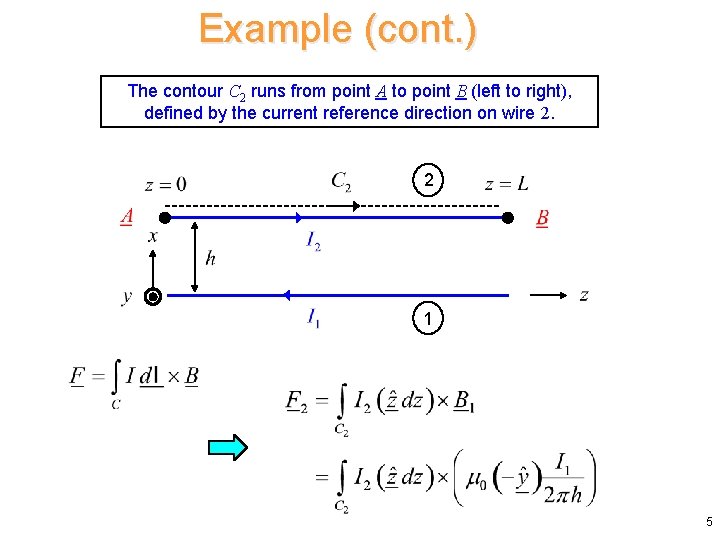
Example Find the force F 2 on wire 2 2 1 Assume that the wires are long compared to the separation. Note: The force on wire 2 comes from the magnetic field due to wire 1. 4
Example (cont. ) The contour C 2 runs from point A to point B (left to right), defined by the current reference direction on wire 2. 2 1 5
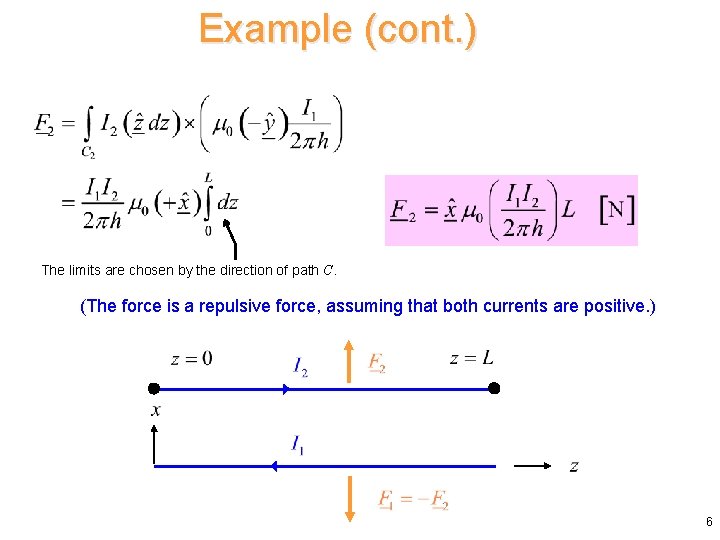
Example (cont. ) The limits are chosen by the direction of path C. (The force is a repulsive force, assuming that both currents are positive. ) 6
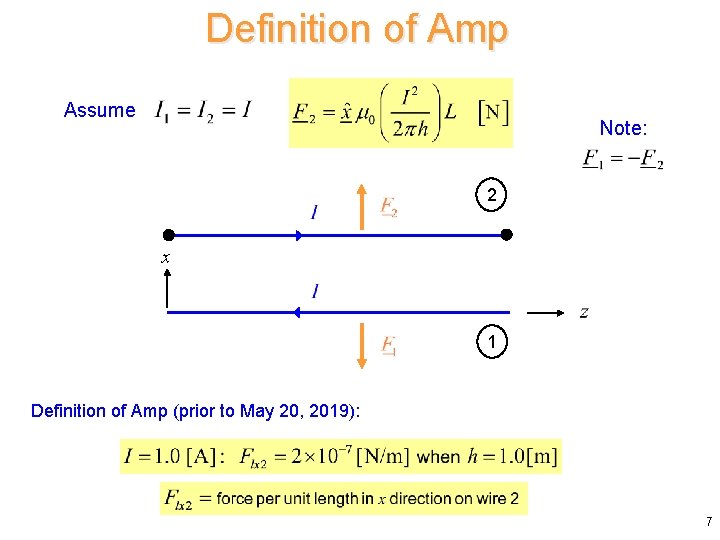
Definition of Amp Assume Note: 2 x 1 Definition of Amp (prior to May 20, 2019): 7
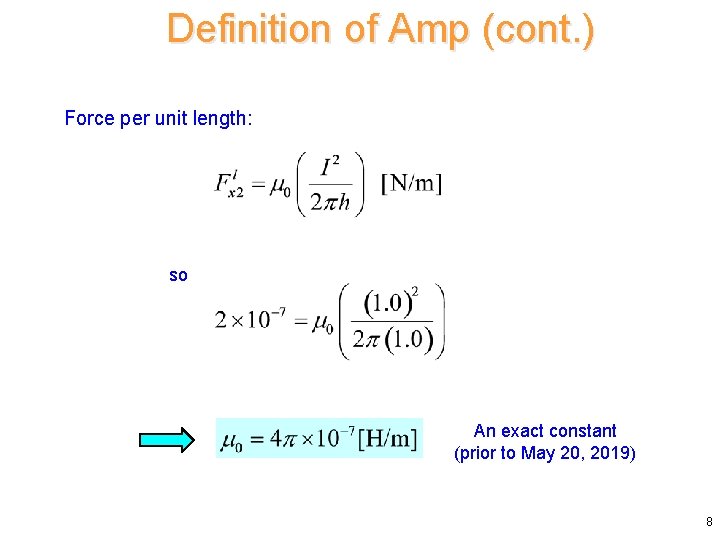
Definition of Amp (cont. ) Force per unit length: so An exact constant (prior to May 20, 2019) 8
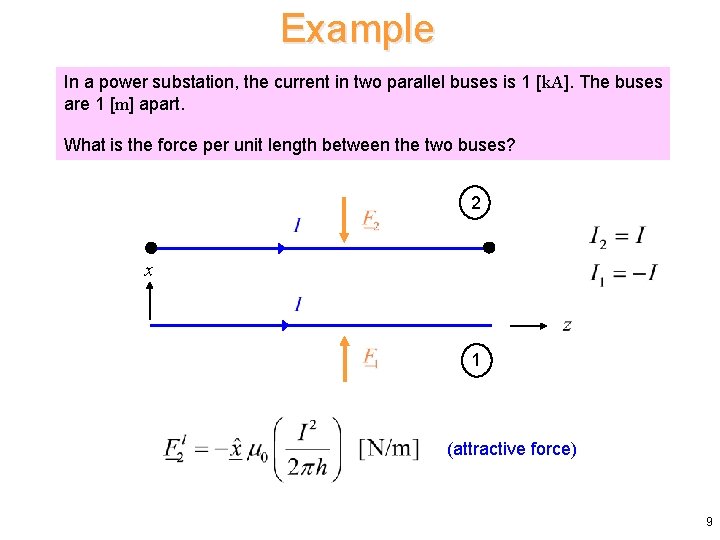
Example In a power substation, the current in two parallel buses is 1 [k. A]. The buses are 1 [m] apart. What is the force per unit length between the two buses? 2 x 1 (attractive force) 9
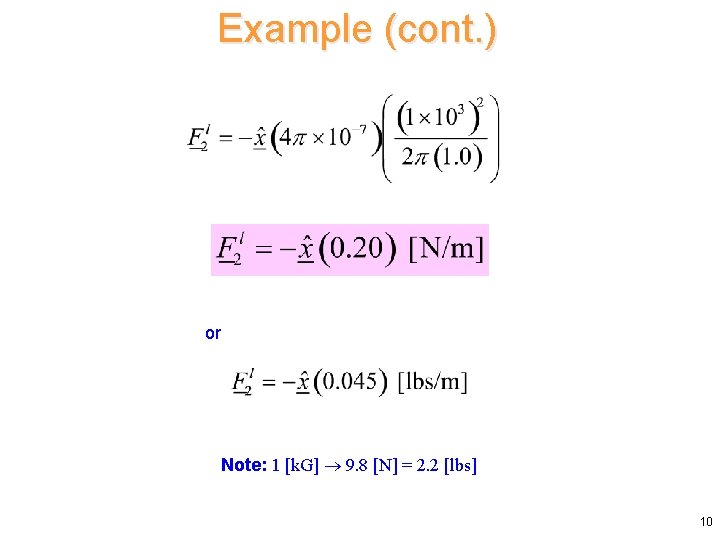
Example (cont. ) or Note: 1 [k. G] 9. 8 [N] = 2. 2 [lbs] 10
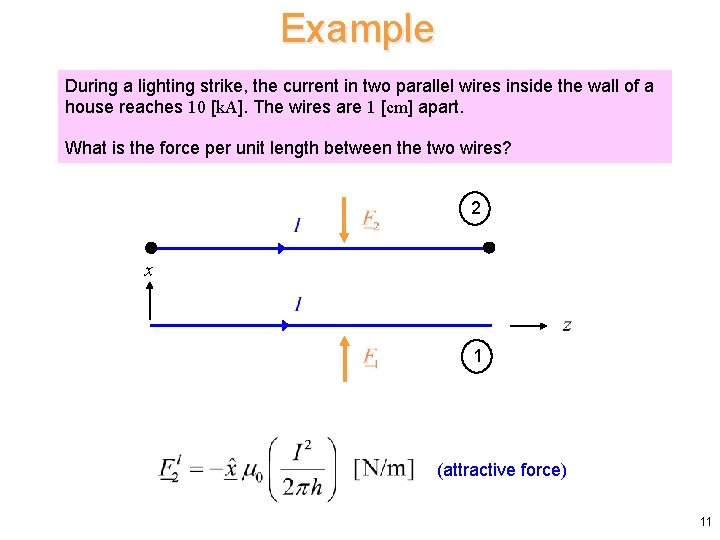
Example During a lighting strike, the current in two parallel wires inside the wall of a house reaches 10 [k. A]. The wires are 1 [cm] apart. What is the force per unit length between the two wires? 2 x 1 (attractive force) 11
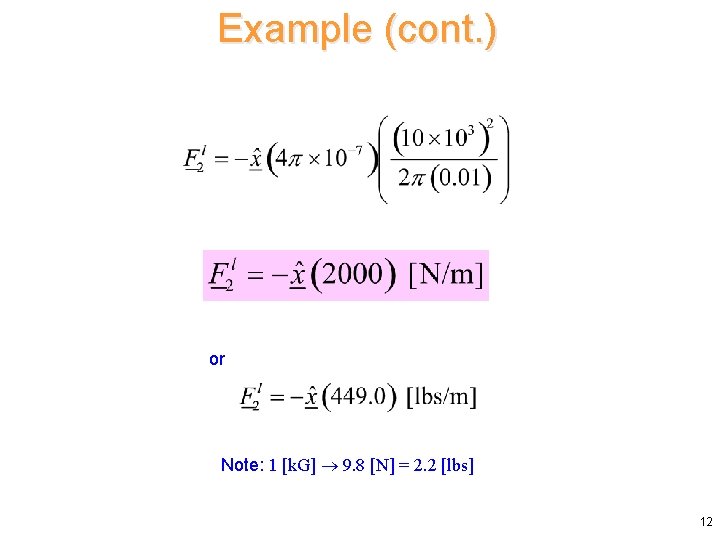
Example (cont. ) or Note: 1 [k. G] 9. 8 [N] = 2. 2 [lbs] 12
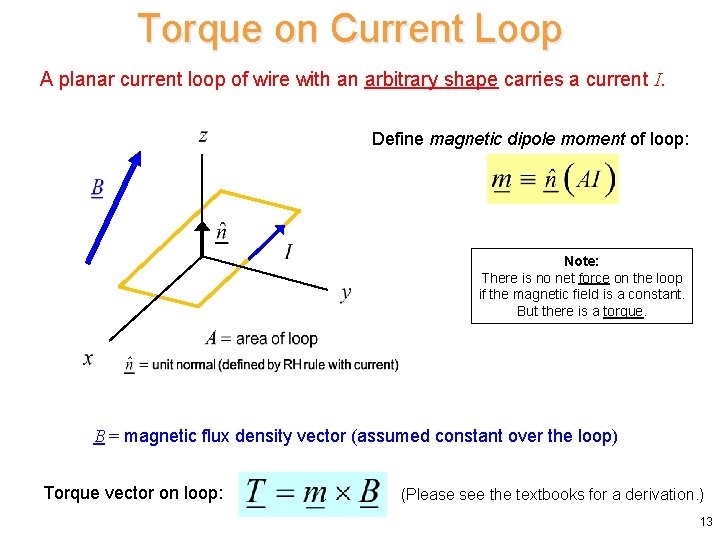
Torque on Current Loop A planar current loop of wire with an arbitrary shape carries a current I. Define magnetic dipole moment of loop: Note: There is no net force on the loop if the magnetic field is a constant. But there is a torque. B = magnetic flux density vector (assumed constant over the loop) Torque vector on loop: (Please see the textbooks for a derivation. ) 13
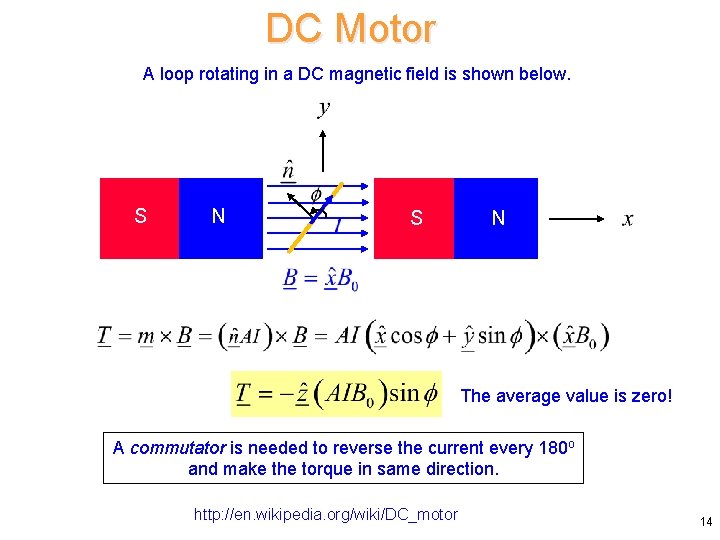
DC Motor A loop rotating in a DC magnetic field is shown below. S NN r N S N The average value is zero! A commutator is needed to reverse the current every 180 o and make the torque in same direction. http: //en. wikipedia. org/wiki/DC_motor 14
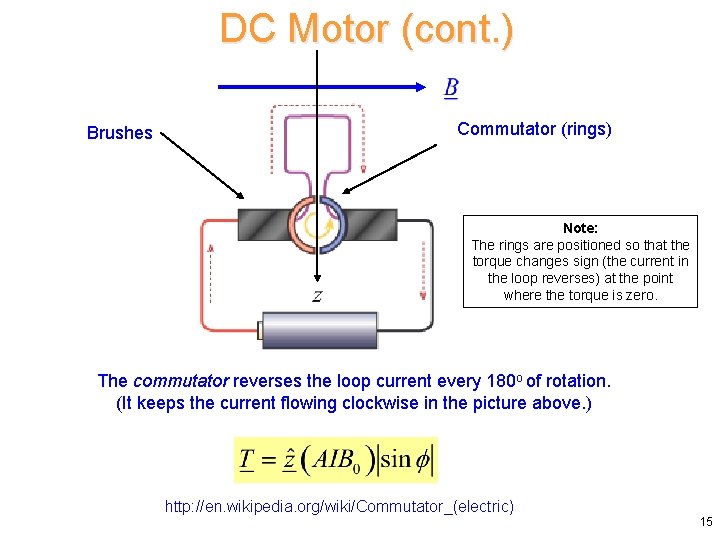
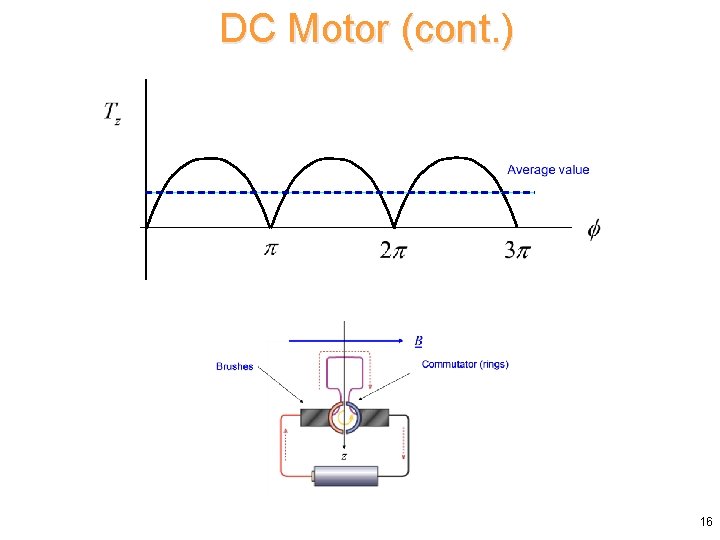
DC Motor (cont. ) Brushes Commutator (rings) Note: The rings are positioned so that the torque changes sign (the current in the loop reverses) at the point where the torque is zero. The commutator reverses the loop current every 180 o of rotation. (It keeps the current flowing clockwise in the picture above. ) http: //en. wikipedia. org/wiki/Commutator_(electric) 15
DC Motor (cont. ) 16
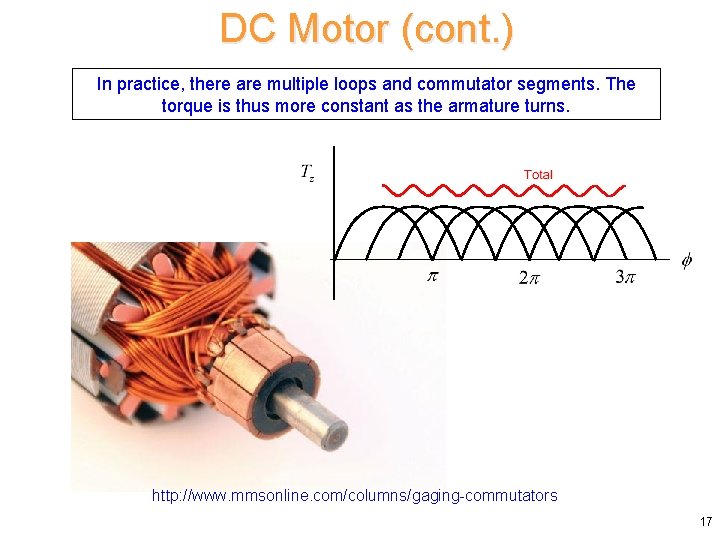
DC Motor (cont. ) In practice, there are multiple loops and commutator segments. The torque is thus more constant as the armature turns. http: //www. mmsonline. com/columns/gaging-commutators 17
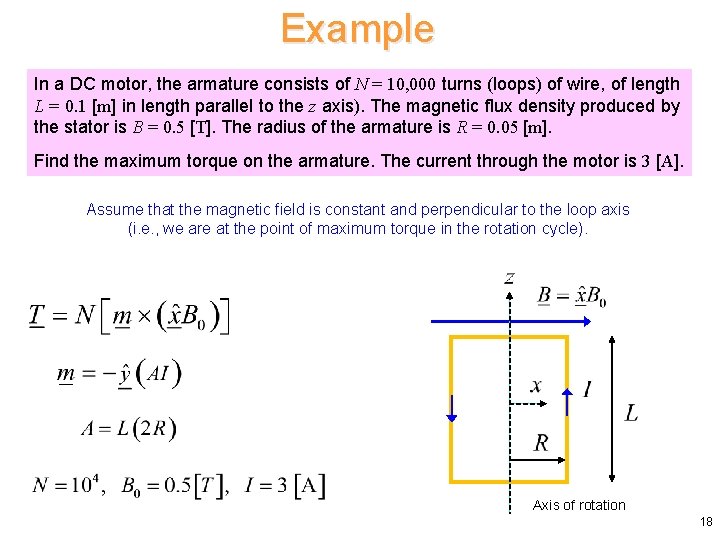
Example In a DC motor, the armature consists of N = 10, 000 turns (loops) of wire, of length L = 0. 1 [m] in length parallel to the z axis). The magnetic flux density produced by the stator is B = 0. 5 [T]. The radius of the armature is R = 0. 05 [m]. Find the maximum torque on the armature. The current through the motor is 3 [A]. Assume that the magnetic field is constant and perpendicular to the loop axis (i. e. , we are at the point of maximum torque in the rotation cycle). Axis of rotation 18
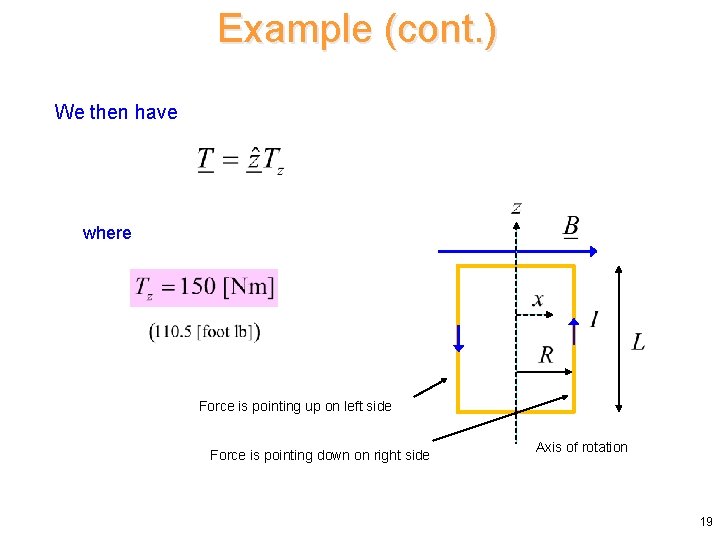
Example (cont. ) We then have where Force is pointing up on left side Force is pointing down on right side Axis of rotation 19
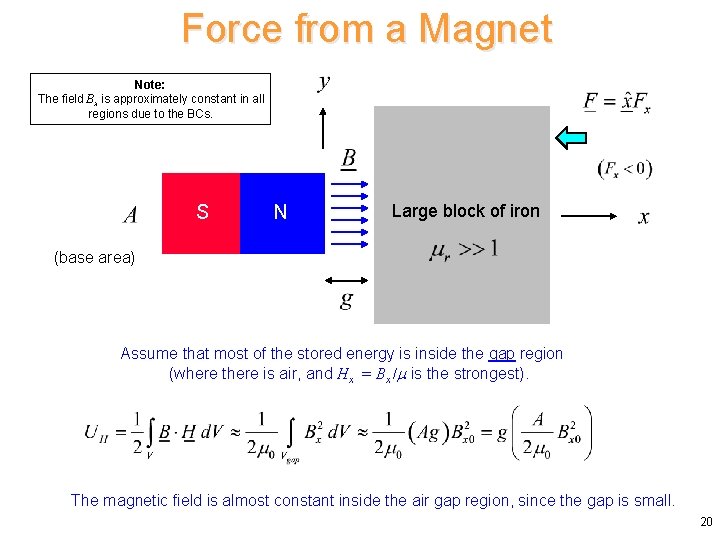
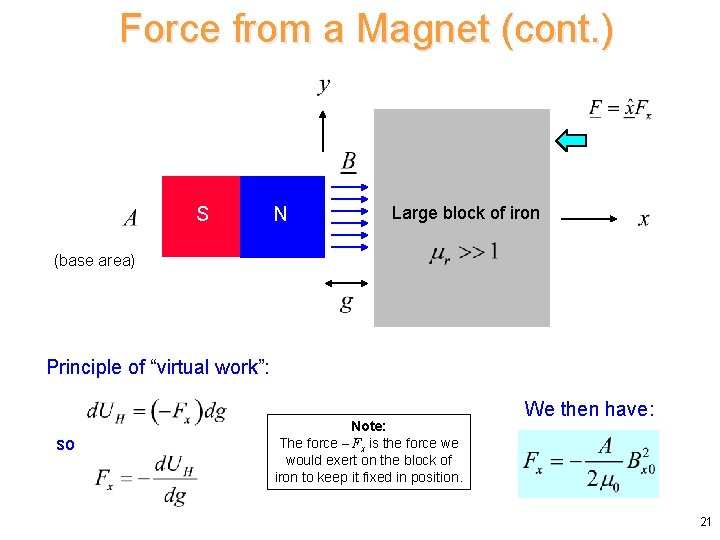
Force from a Magnet Note: The field Bx is approximately constant in all regions due to the BCs. S NN r N Large block of iron (base area) Assume that most of the stored energy is inside the gap region (where there is air, and Hx = Bx / is the strongest). The magnetic field is almost constant inside the air gap region, since the gap is small. 20
Force from a Magnet (cont. ) S NN r N Large block of iron (base area) Principle of “virtual work”: so Note: The force – Fx is the force we would exert on the block of iron to keep it fixed in position. We then have: 21