
ECE 3318 Applied Electricity and Magnetism Spring 2020

- Slides: 26
ECE 3318 Applied Electricity and Magnetism Spring 2020 Prof. David R. Jackson Dept. of ECE Notes 31 Inductance 1
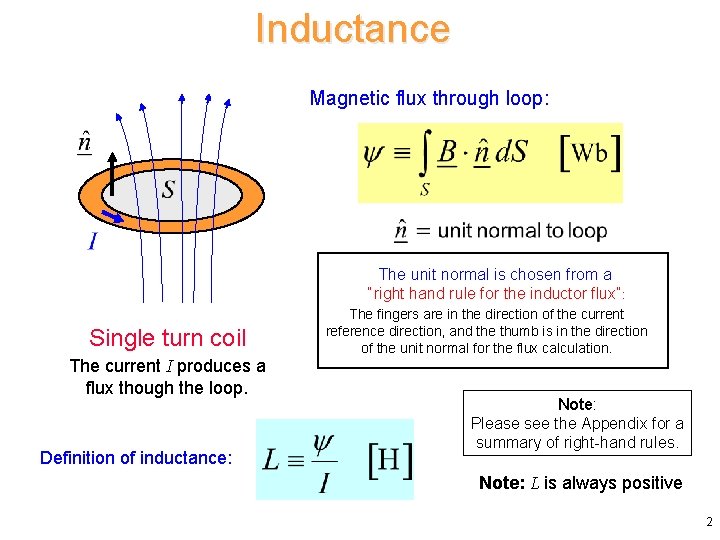
Inductance Magnetic flux through loop: The unit normal is chosen from a “right hand rule for the inductor flux”: Single turn coil The current I produces a flux though the loop. Definition of inductance: The fingers are in the direction of the current reference direction, and the thumb is in the direction of the unit normal for the flux calculation. Note: Please see the Appendix for a summary of right-hand rules. Note: L is always positive 2
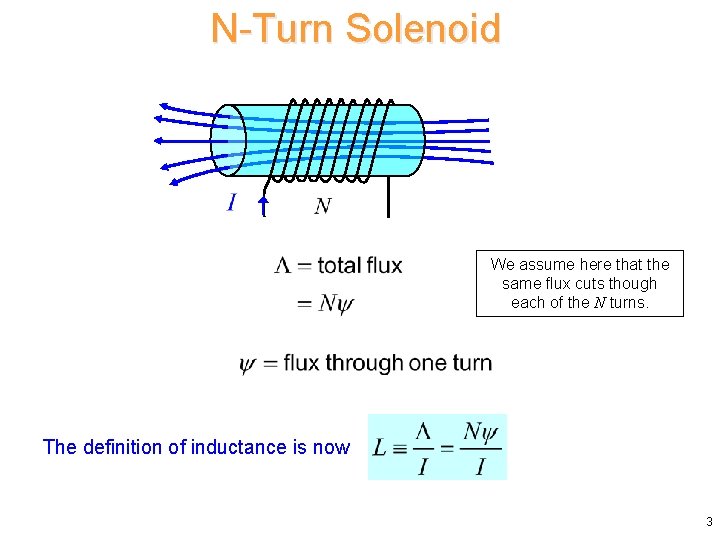
N-Turn Solenoid We assume here that the same flux cuts though each of the N turns. The definition of inductance is now 3
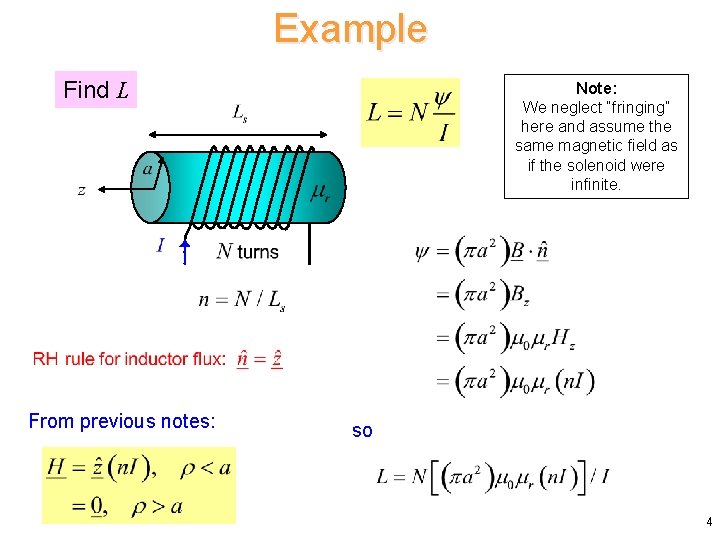
Example Find L From previous notes: Note: We neglect “fringing” here and assume the same magnetic field as if the solenoid were infinite. so 4
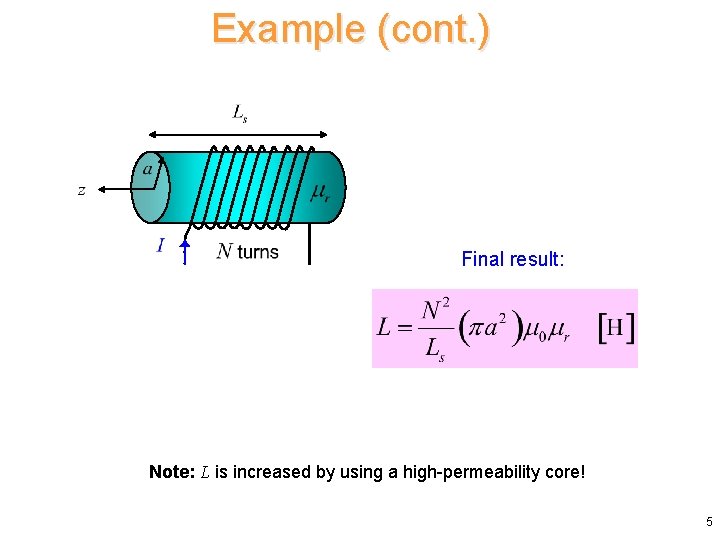
Example (cont. ) Final result: Note: L is increased by using a high-permeability core! 5
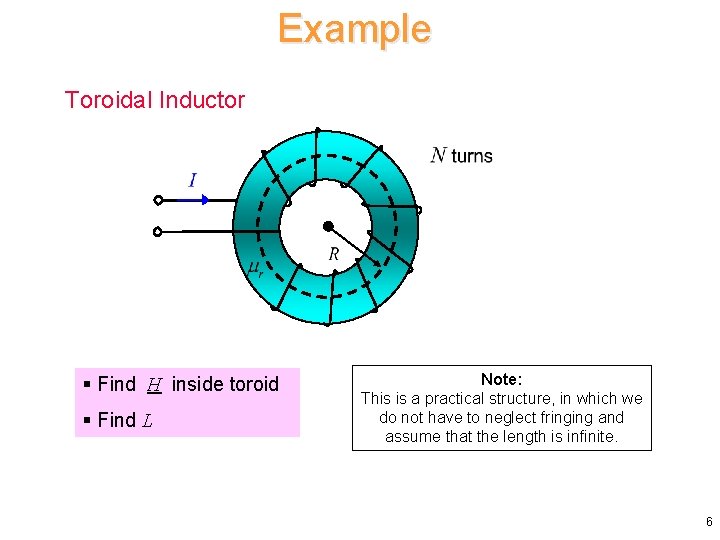
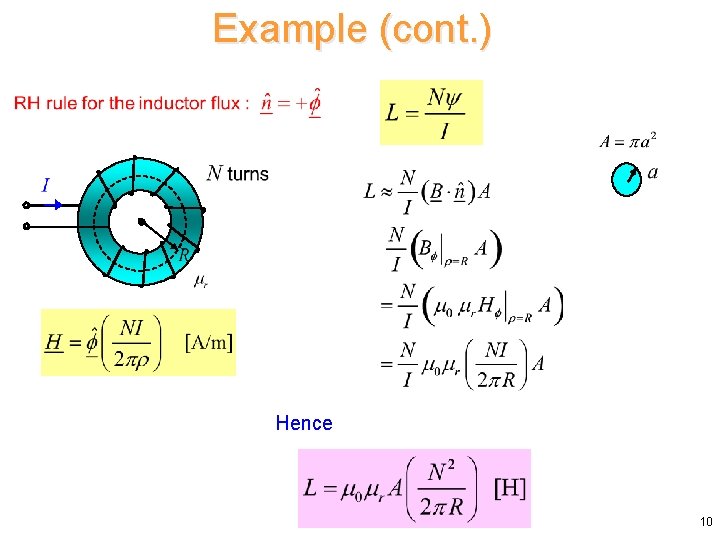
Example Toroidal Inductor § Find H inside toroid § Find L Note: This is a practical structure, in which we do not have to neglect fringing and assume that the length is infinite. 6
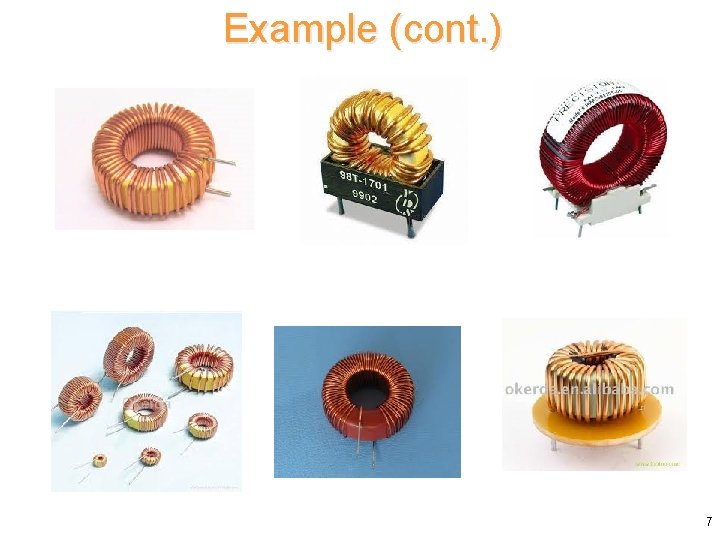
Example (cont. ) 7
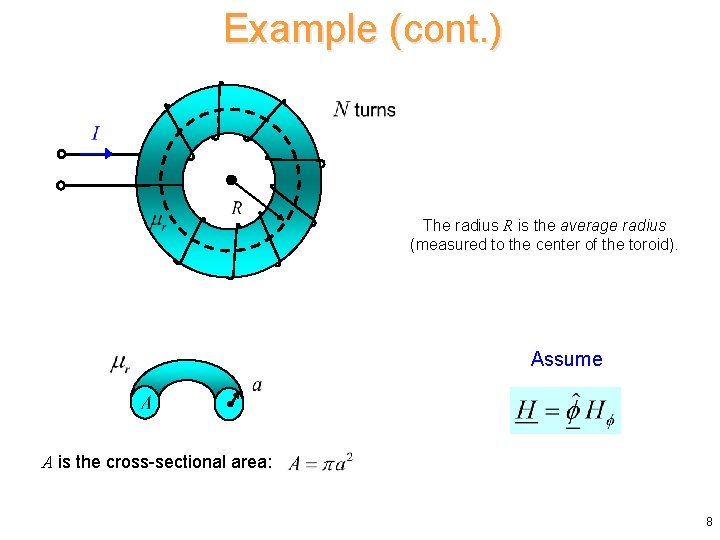
Example (cont. ) The radius R is the average radius (measured to the center of the toroid). Assume A is the cross-sectional area: 8
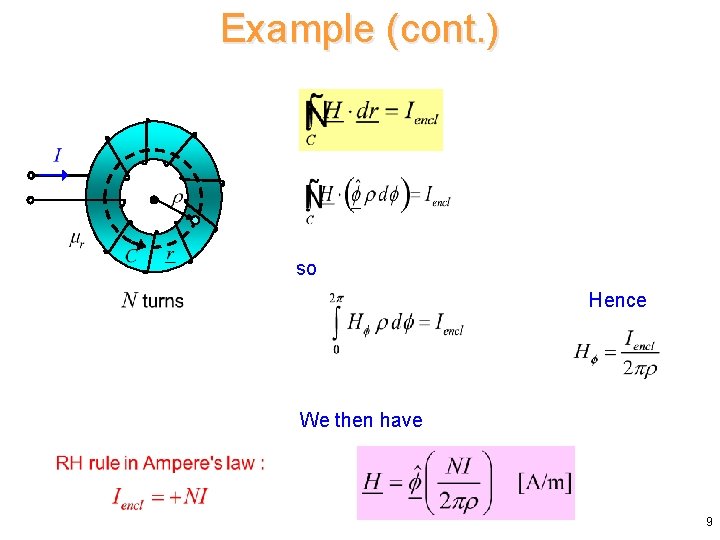
Example (cont. ) so Hence We then have 9
Example (cont. ) Hence 10
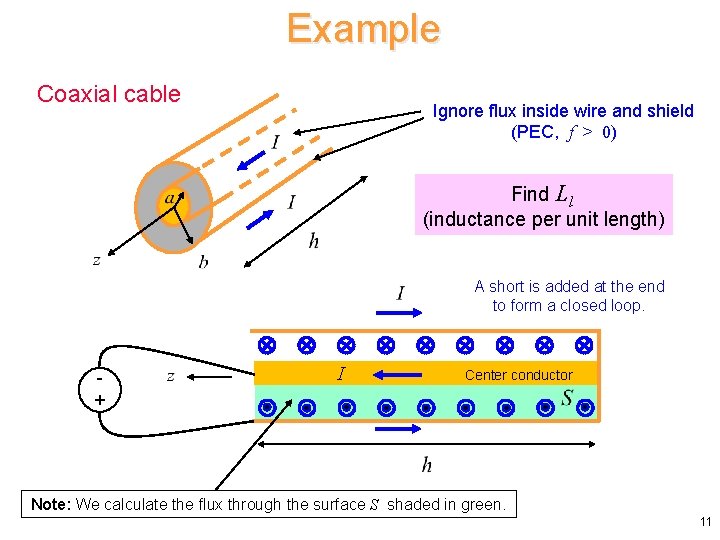
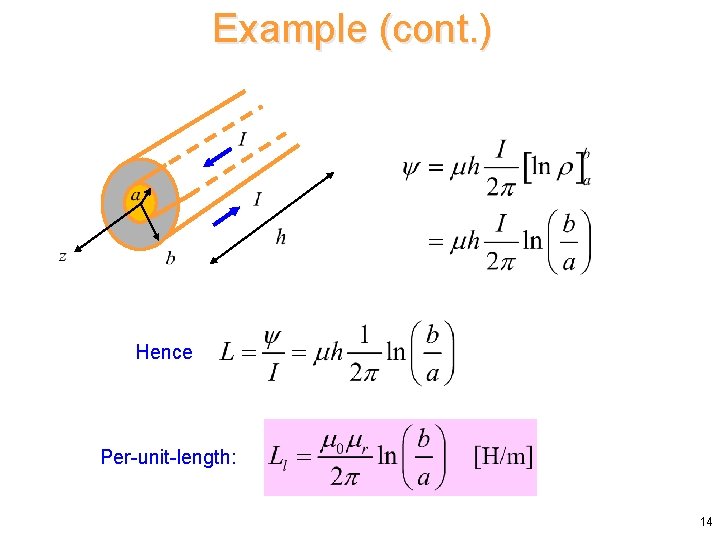
Example Coaxial cable Ignore flux inside wire and shield (PEC, f > 0) Find Ll (inductance per unit length) A short is added at the end to form a closed loop. + I Center conductor Note: We calculate the flux through the surface S shaded in green. 11
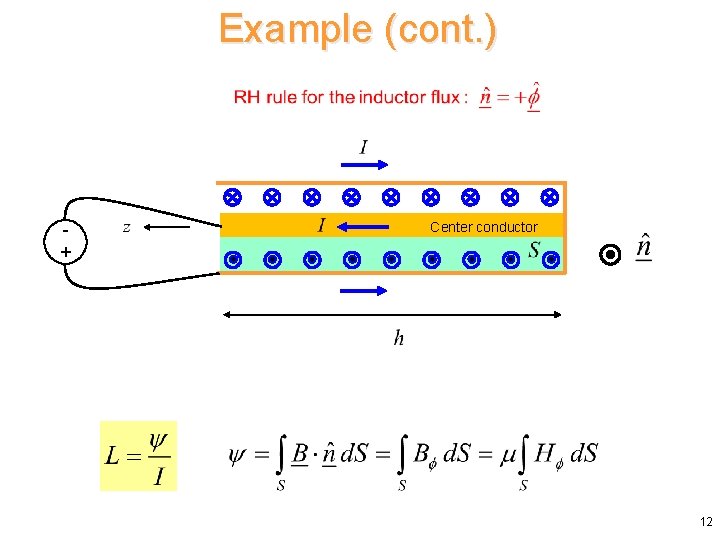
Example (cont. ) + Center conductor 12
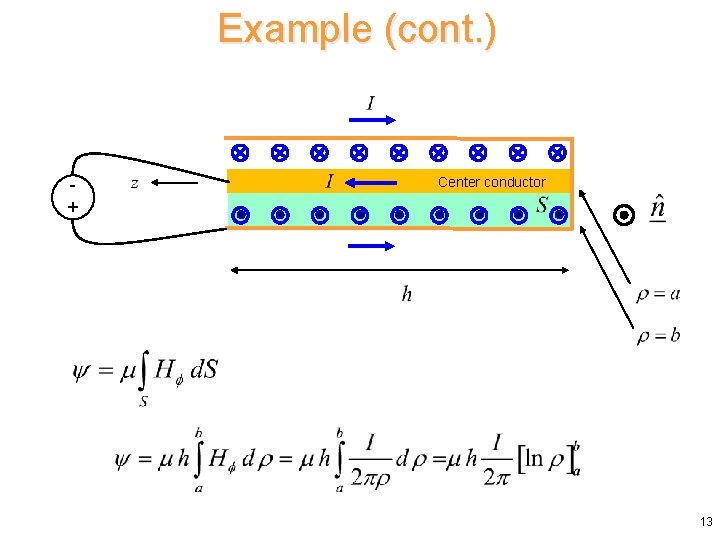
Example (cont. ) + Center conductor 13
Example (cont. ) Hence Per-unit-length: 14
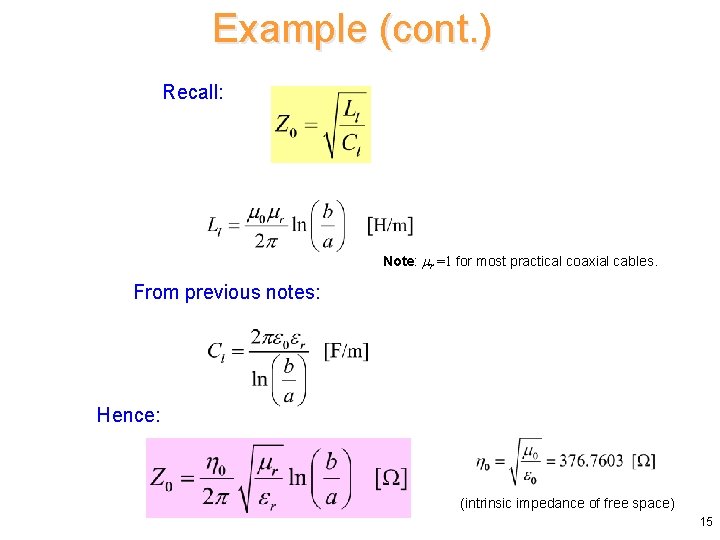
Example (cont. ) Recall: Note: r =1 for most practical coaxial cables. From previous notes: Hence: (intrinsic impedance of free space) 15
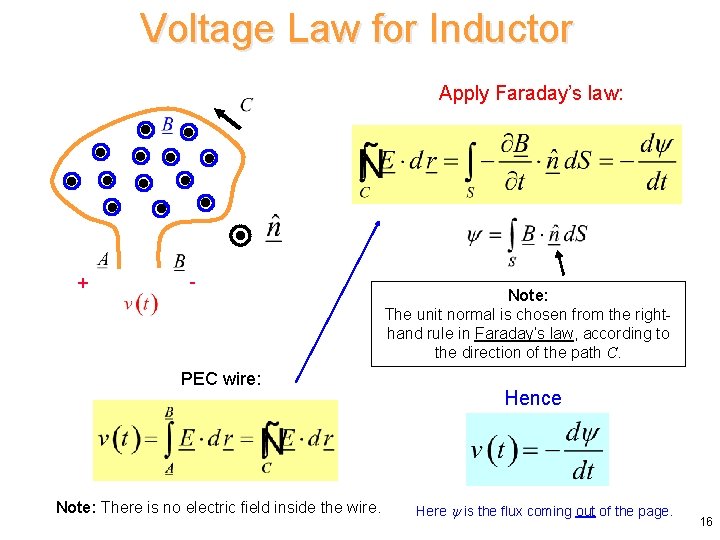
Voltage Law for Inductor Apply Faraday’s law: + - PEC wire: Note: There is no electric field inside the wire. Note: The unit normal is chosen from the righthand rule in Faraday’s law, according to the direction of the path C. Hence Here is the flux coming out of the page. 16
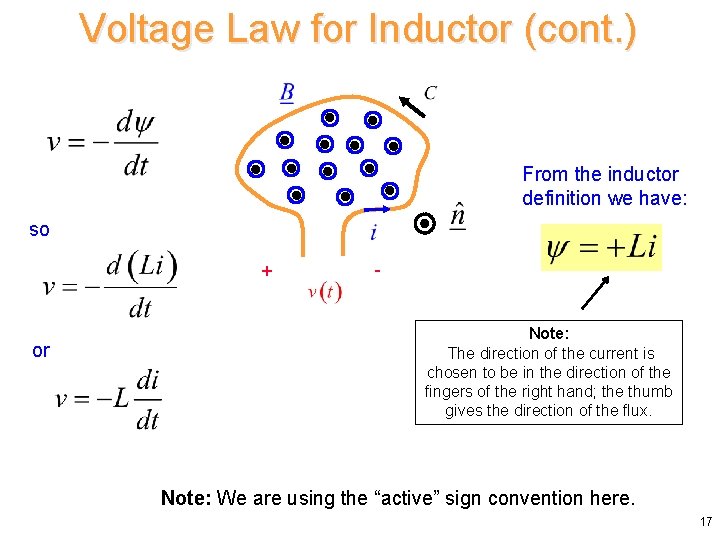
Voltage Law for Inductor (cont. ) From the inductor definition we have: so + or Note: The direction of the current is chosen to be in the direction of the fingers of the right hand; the thumb gives the direction of the flux. Note: We are using the “active” sign convention here. 17
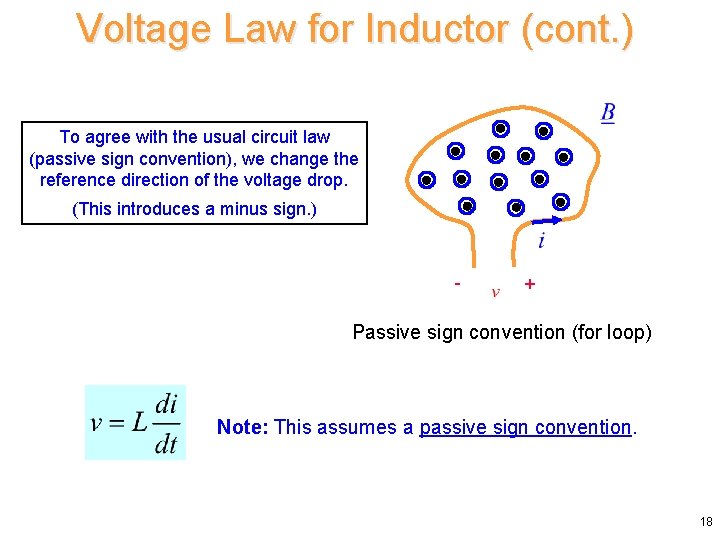
Voltage Law for Inductor (cont. ) To agree with the usual circuit law (passive sign convention), we change the reference direction of the voltage drop. (This introduces a minus sign. ) - + Passive sign convention (for loop) Note: This assumes a passive sign convention. 18
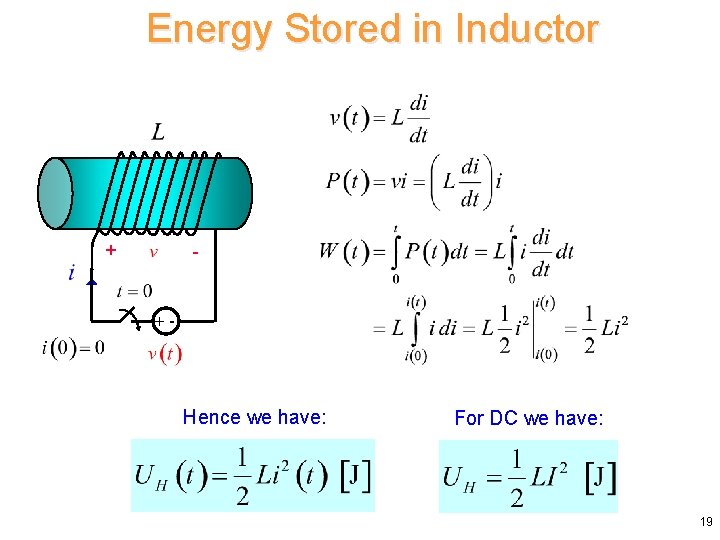
Energy Stored in Inductor + - +- Hence we have: For DC we have: 19
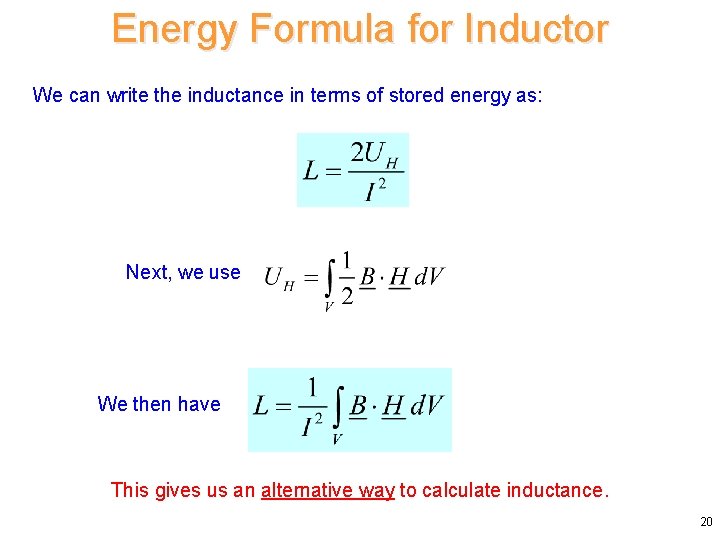
Energy Formula for Inductor We can write the inductance in terms of stored energy as: Next, we use We then have This gives us an alternative way to calculate inductance. 20
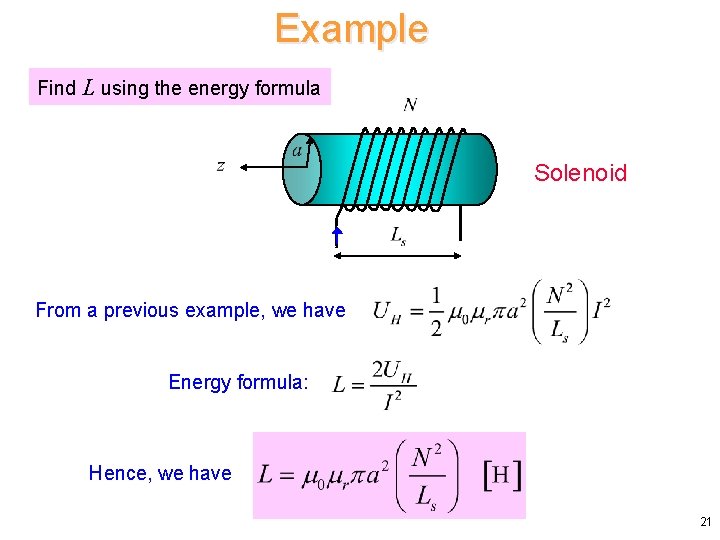
Example Find L using the energy formula Solenoid From a previous example, we have Energy formula: Hence, we have 21
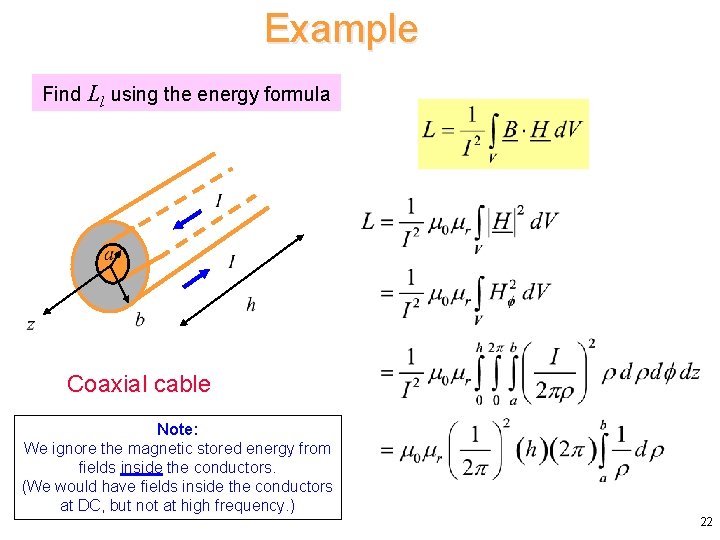
Example Find Ll using the energy formula Coaxial cable Note: We ignore the magnetic stored energy from fields inside the conductors. (We would have fields inside the conductors at DC, but not at high frequency. ) 22
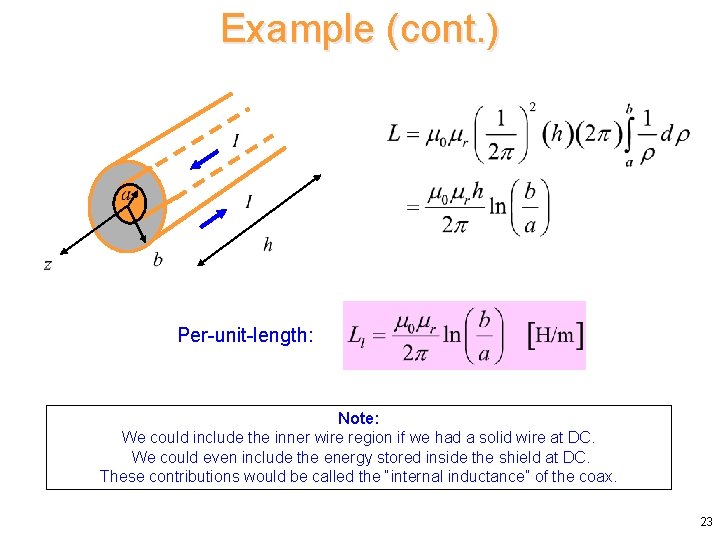
Example (cont. ) Per-unit-length: Note: We could include the inner wire region if we had a solid wire at DC. We could even include the energy stored inside the shield at DC. These contributions would be called the “internal inductance” of the coax. 23
Appendix In this appendix we summarize the various right-hand rules that we have seen so far in electromagnetics. 24
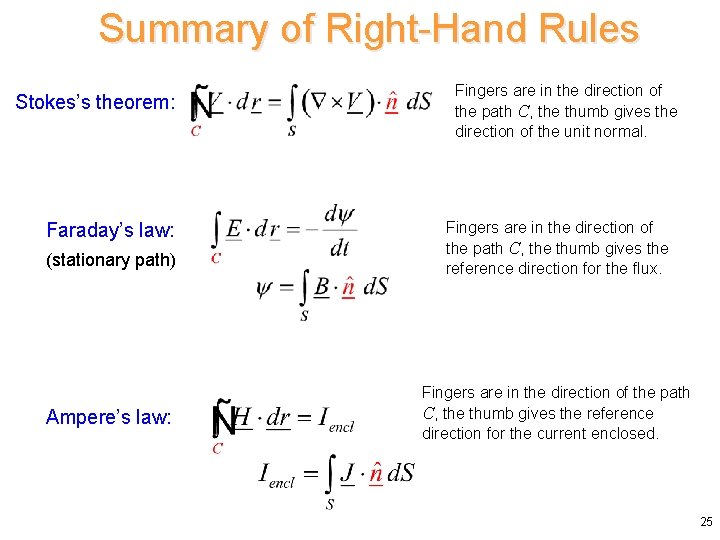
Summary of Right-Hand Rules Stokes’s theorem: Faraday’s law: (stationary path) Ampere’s law: Fingers are in the direction of the path C, the thumb gives the direction of the unit normal. Fingers are in the direction of the path C, the thumb gives the reference direction for the flux. Fingers are in the direction of the path C, the thumb gives the reference direction for the current enclosed. 25
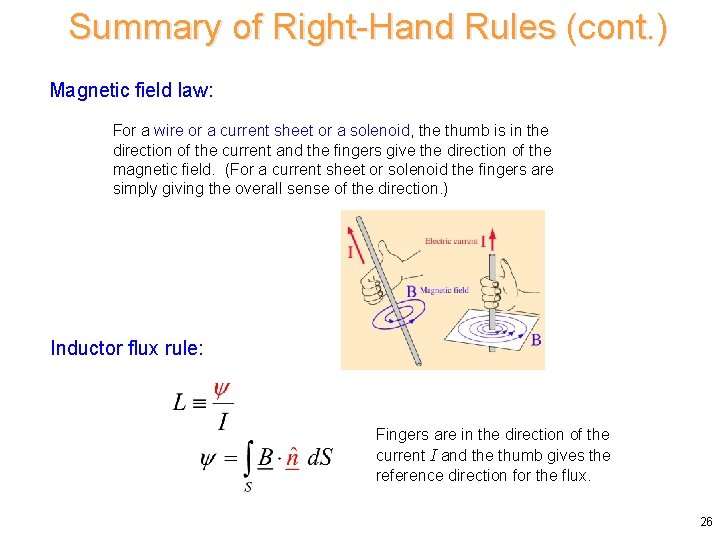
Summary of Right-Hand Rules (cont. ) Magnetic field law: For a wire or a current sheet or a solenoid, the thumb is in the direction of the current and the fingers give the direction of the magnetic field. (For a current sheet or solenoid the fingers are simply giving the overall sense of the direction. ) Inductor flux rule: Fingers are in the direction of the current I and the thumb gives the reference direction for the flux. 26