
EBusiness Ebusiness strategy Dr Lana Sularto 1 1

E-Business E-business strategy Dr. Lana Sularto 1 1 1
E-business strategy Learning objectives • Follow an appropriate strategy process model for e-business; • Apply tools to generate and select e-business strategies; • Outline alternative strategic approaches to achieve ebusiness. 2 2
E-business strategy Issues for managers • How does e-business strategy differ from traditional business strategy? • How should we integrate e-business strategy with existing business and IS strategy? • How should we evaluate our investment priorities and returns from e-business? 3 3

E-business strategy What is e-business strategy? 4 4
E-business strategy Michael Porter on the Internet ‘The key question is not whether to deploy Internet technology – companies have no choice if they want to stay competitive – but how to deploy it. ’ Porter, M. (2001) Strategy and the Internet, Harvard Business Review, March 2001, 62– 78. 5 5
E-business strategy Alternative definitions of strategy What is strategy? – “Defines how we will meet our objectives” – “Sets allocation of resources to meet goals” – “Selects preferred strategic options to compete within a market” – “Provides a long-term plan for the development of the organization”. 05/06/2021 6 6
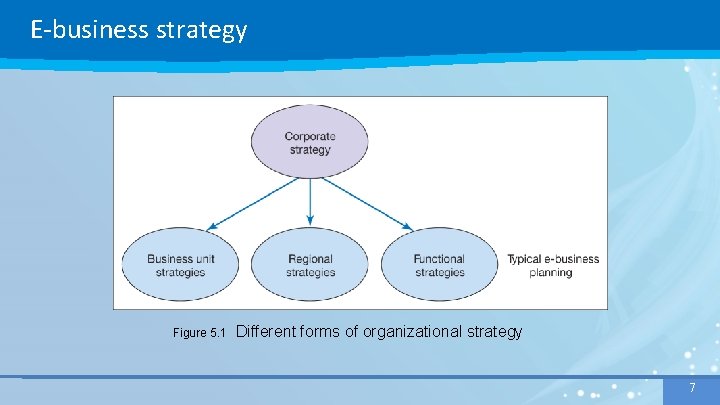
E-business strategy Figure 5. 1 Different forms of organizational strategy 7 7
E-business strategy • For me, an IS strategy or change management strategy (Chapter 10) which ensures resources are managed effectively to achieve opportunities from Buy-side and Sell-side e-commerce. Also involves deploying IS to manage administrative internal process and employee knowledge • Involves management of information systems resources (ebusiness applications, infrastructure/hardware and people/change/ knowledge management). 05/06/2021 8 8
E-business strategy Implications if e-business strategy is not clearly defined : • Missed opportunities from lack of evaluation of opportunities or insufficient resourcing of e-business initiatives. • Inappropriate direction of e-business strategy; • Limited integration of e-business at a technical level; • Resource wastage through duplication of e-business development in different functions and limited sharing of best practice. 05/06/2021 9 9
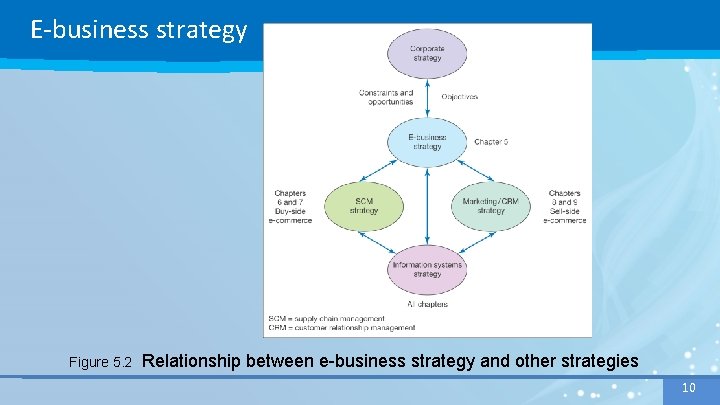
E-business strategy Figure 5. 2 Relationship between e-business strategy and other strategies 10 10
E-business strategy What happens where there is no e-business strategy? • Missed opportunities for additional sales on the sell-side and more efficient purchasing on the buy-side • Fall-behind competitors in delivering online services – may become difficult to catch-up, e. g. Tesco, Dell • Poor customer experience from poorly integrated channels. 05/06/2021 11 11
E-business strategy E-Channel Strategies Define how a company should set specific objectives and develop specific differential strategies for communicating with its customers and partners through electronic media such as the Internet, e-mail and wireless media. • Multi-channel e-business strategy : Defines how different marketing and supply chain channels should integrate and support each other to drive business efficiency and effectiveness. 05/06/2021 12 12
E-business strategy Right Channeling : Selective adoption of e-channels by business according to product or stakeholder preference in a sell-side e-commerce context. Right-channelling : – Reaching the right customer – Using the right channel – With the right message or offering – At the right time; 05/06/2021 13 13
E-business strategy Strategy Process Models 14 14
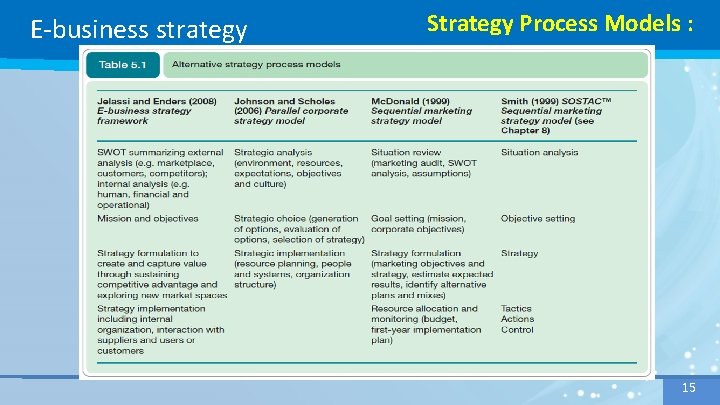
E-business strategy Strategy Process Models : 15 15
E-business strategy From Table 5. 1, common elements are apparent: 1. Internal and external environment scanning or analysis is needed. 2. A clear statement of vision and objectives is required. 3. Strategy development : strategy option generation, evaluation and selection. 4. After strategy development --> strategy implementation. 5. Control is required 16 16 16
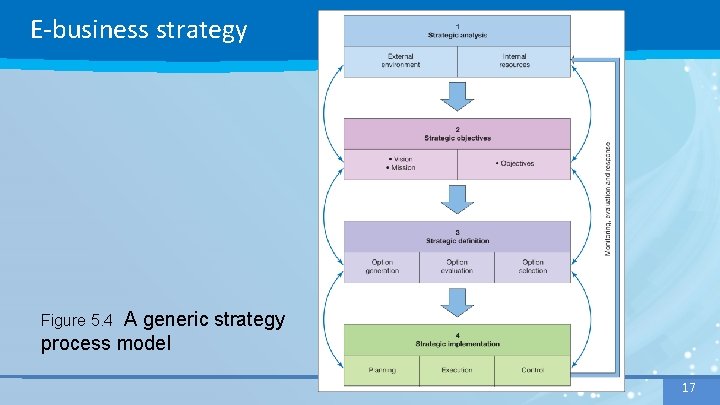
E-business strategy A generic strategy process model Figure 5. 4 17 17
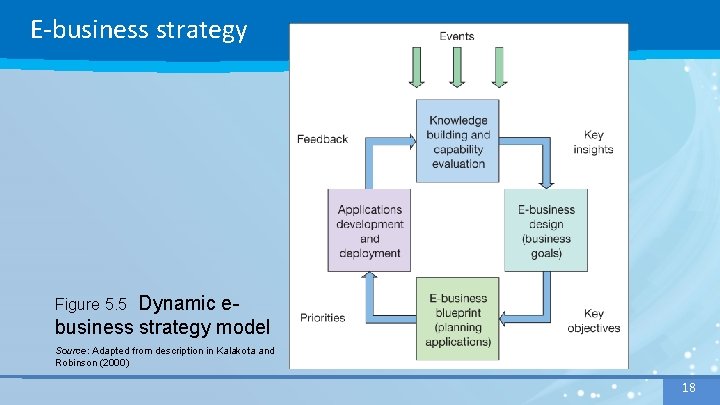
E-business strategy Dynamic ebusiness strategy model Figure 5. 5 Source: Adapted from description in Kalakota and Robinson (2000) 18 18

E-business strategy Strategic analysis 19 19
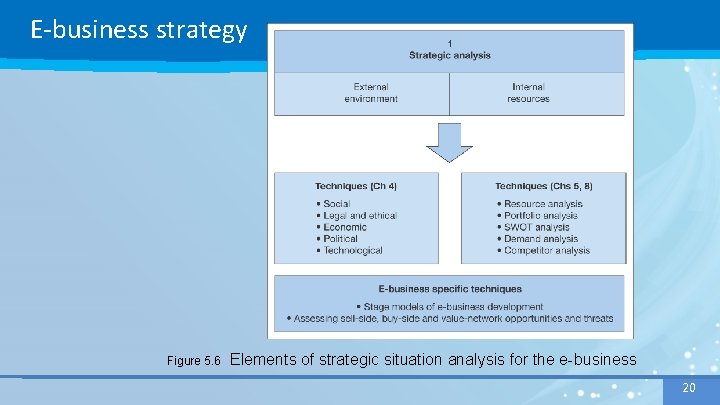
E-business strategy Figure 5. 6 Elements of strategic situation analysis for the e-business 20 20
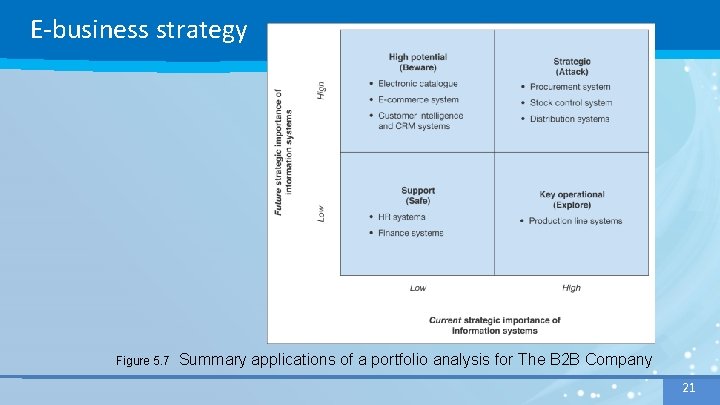
E-business strategy Figure 5. 7 Summary applications of a portfolio analysis for The B 2 B Company 21 21

E-business strategy Figure 5. 8 SWOT analysis for The B 2 B Company 22 22
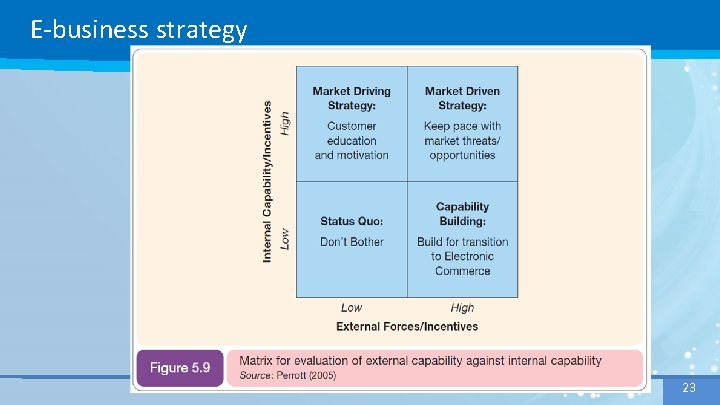
E-business strategy 23 23
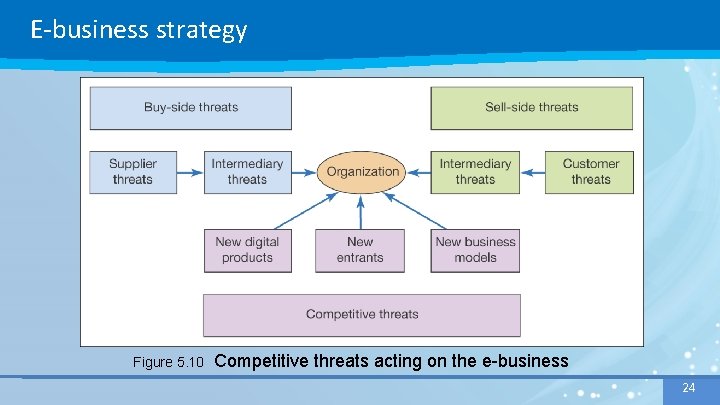
E-business strategy Figure 5. 10 Competitive threats acting on the e-business 24 24
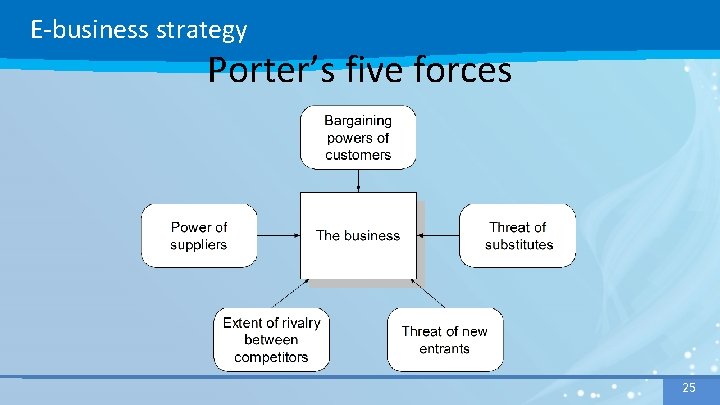
E-business strategy Porter’s five forces 25 25

E-business strategy Strategic objectives 26 26
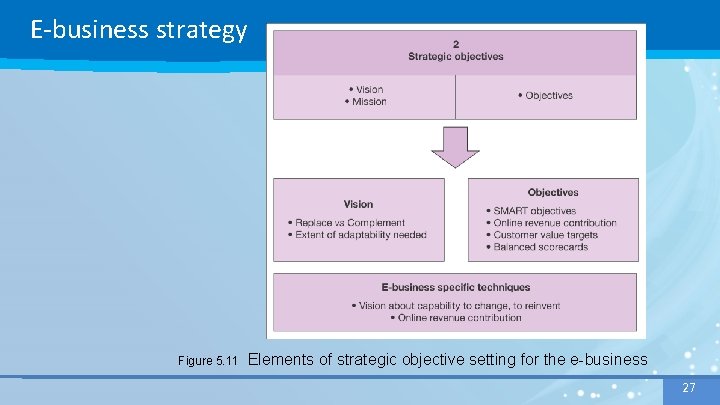
E-business strategy Figure 5. 11 Elements of strategic objective setting for the e-business 27 27
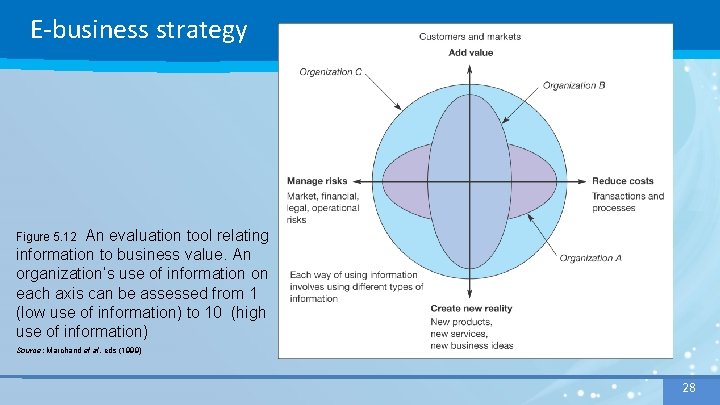
E-business strategy An evaluation tool relating information to business value. An organization’s use of information on each axis can be assessed from 1 (low use of information) to 10 (high use of information) Figure 5. 12 Source: Marchand et al. eds (1999) 28 28
E-business strategy 29 29
E-business strategy Strategy Definition 30 30
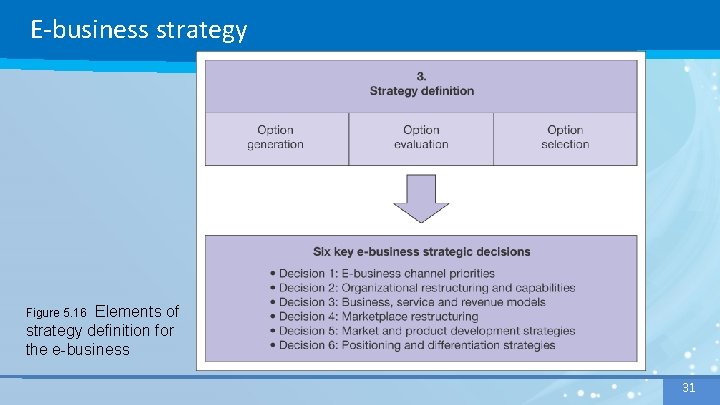
E-business strategy Elements of strategy definition for the e-business Figure 5. 16 31 31
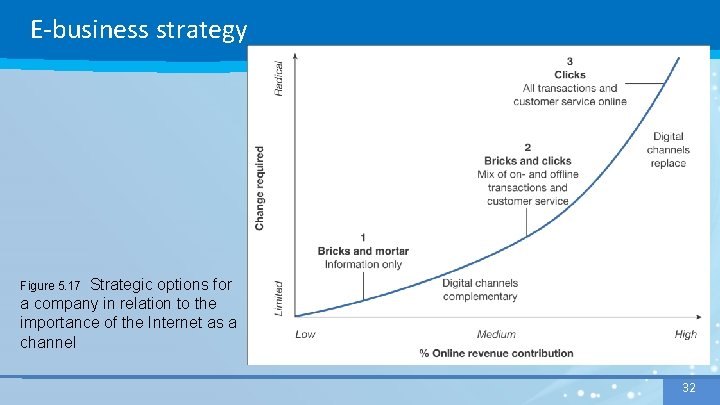
E-business strategy Strategic options for a company in relation to the importance of the Internet as a channel Figure 5. 17 32 32
E-business strategy • Right Channelling Right channelling can be summarized as: – Reaching the right customer – Using the right channel – With the right message or offering – At the right time • Examples: – B 2 B serve SMEs through e-channels and larger clients through personal service – Encourage consumers to buy and serve through lower cost electronic channels – Encourage offline fulfillment/conversion as appropriate – Different levels of service/promotion for different customers. 05/06/2021 33 33
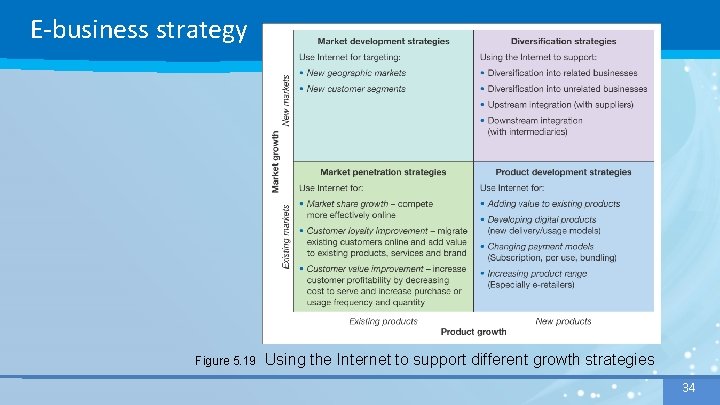
E-business strategy Figure 5. 19 Using the Internet to support different growth strategies 34 34
E-business strategy Strategy Implementation 35 35
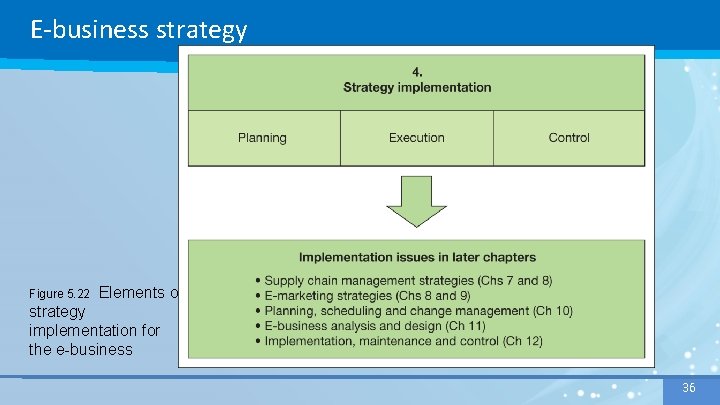
E-business strategy Figure 5. 22 Elements of strategy implementation for the e-business 36 36
E-business strategy Failed e-business strategies 1. massively overestimate the speed at which the marketplace would adopt dot com innovations 2. Timing errors 3. Lack of creativity 4. Offering free services 5. Over-ambition. 37 37
E-business strategy Success factors for e-business strategy implementation in SMEs : 1. 2. 3. 4. 5. 6. Content. Convenience. Control. Interaction. Community. Price sensitivity. 7. 8. 9. 10. 11. Brand image. Commitment. Partnership. Process improvement. Integration. 38 38

E-business strategy Referensi : Chaffey, D. (2011). E-Business and E-Commerce Management : Strategy, Implementation, and Practice (5 th). Pearson Education 39 39 39
- Slides: 39