
EBP What constitutes evidence four important types of
EBP What constitutes evidence
• four important types of clinical questions: ü questions about the effects of intervention, ü Experiences ü prognosis ü diagnostic tests.
Effect of Intervention • Randomized Clinical trials • Clinical observation • Some physiotherapists supplement their clinical observations with careful measures of outcomes using validated measurement tools. • Over time, experienced practitioners accumulate large numbers of such observations.
• Distillation of clinical observation > Practice knowledge • Should be shared in workshops to novice • If there is improvement with one particular Rx method to majority Pts > general understanding > effective tool • If designated method is to prevent adverse outcomes >if there are no adverse effects>considered effective
• Confusion of outcomes , reinforced by Pts q this way of reasoning is effective , but, with serious effects…………. q. Sometimes your interpretation regarding clinical observation > misleading b/c there are others factors too
Ø natural recovery Acute low back pain, post surgical respiratory distress. Difficult to judge in clinical practice with the help of clinical observation > Effect was d/t intervention OR
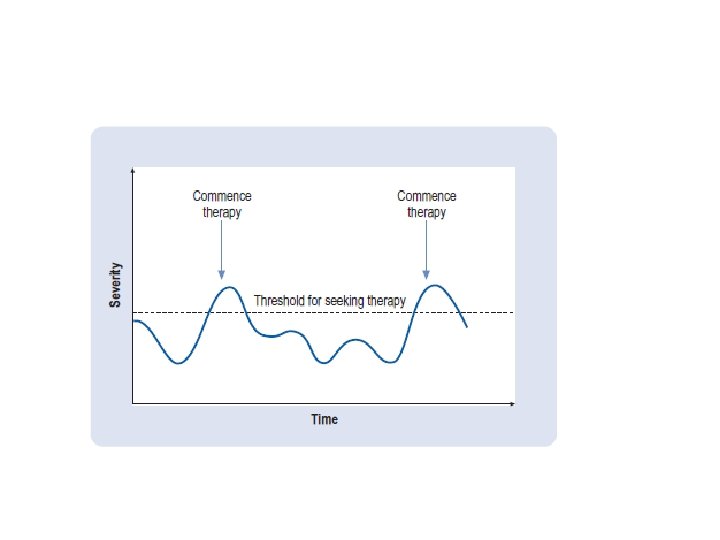
• Natural recovery • Chronic conditions , episodic nature / tend to fluctuate in intensity • Example Arthritic pain & respiratory infections • Nature of episodic condition is tend to resolve by itself & recurrance
Statistical point of view • Statistics spontaneous resolution of a disease > statistical regression Disease has random components of its severity When symptoms are more worse , driven to take medical attention …………….
Main source of Outcome in clinical observation…… Patient rather than Physiotherapist Asking about pain severity and function • self-reports of outcomes are potentially misleading because patients’ responses to questioning about outcomes can be distorted by the social mores that guide interactions between therapists and patients (Kienle & Kiene 1997)
Polite & sensitive Pt : difficult to assess outcomes Hawthorne effect • refers to the fact that participants in research may change their behaviours as a result of knowing that their behaviours are under study

**Effects of intervention • Randomized clinical trials • Clinical observation
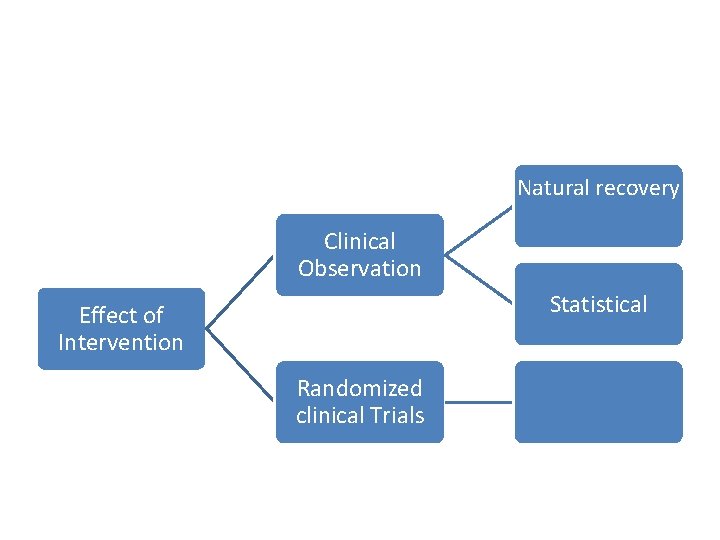
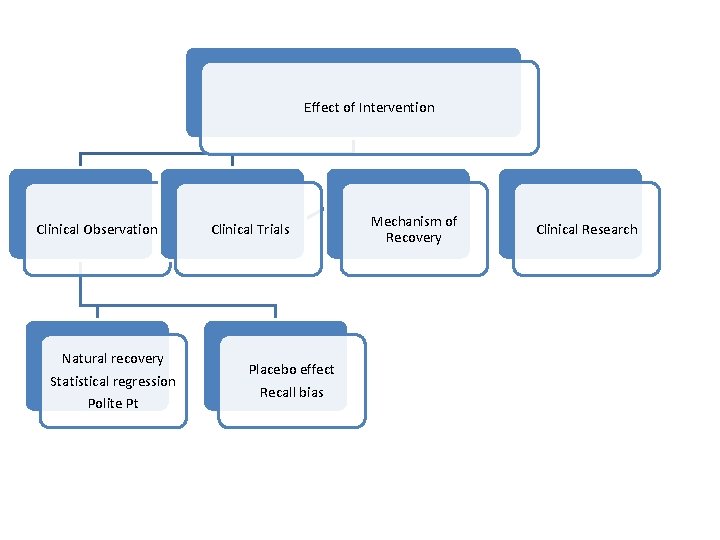
Major potential cause of bias in clinical observation while seeking effects of intervention § Natural recovery § Statistical regression § Polite Patients
• Placebo effect ?
• placebo is a substance or other kind of treatment that looks just like a regular treatment or medicine, but it’s not. It’s actually an inactive “look-alike” treatment or substance • A change in a person’s symptoms as a result of getting a placebo is called the placebo effect
• a survey showed that many Australian physiotherapists believe that the apparent effects of ultrasound are due largely to placebo effects (Chipchase & Trinkle 2003). § as ultrasound exerts placebo effects, there must be powerful mechanisms that convert the psychological phenomenon of an expectation of effective therapy into the bio psychosocial phenomenon of recovery
• review of spinal manipulative therapy states: "This review of 39 trials found that spinal manipulation was more effective in reducing pain and improving the ability to perform everyday activities than sham (fake) therapy and therapies already known to be unhelpful. However, it was no more or less effective than medication for pain, physical therapy, exercises, back school or the care given by a general practitioner. • Ref(Assendelft, WJJ; Morton, SC; Yu, EI; Suttorp, MJ; Shekelle, PG (2004). Assendelft, Willem JJ. ed. "Spinal manipulative therapy for low-back pain". Cochrane Database of Systematic Reviews 2004 (1): CD 000447. doi: 10. 1002/14651858. CD 000447. pub 2. PMID 14973958. Art. No. : CD 000447. Retrieved 2009 -03 -19)
• Biased in recalling outcomes To keep track of clinical observation is difficult Two extremes? Cause & effect in clinical observation.
Major potential cause of bias in clinical observation while seeking effects of intervention § § § Natural recovery Statistical regression Polite Patients Placebo effects Recall biase
Effects of interventions Ø clinical observation Ø Theories about mechanism • In some areas of physiotherapy practice the primary justification for intervention is provided not by clinical observations but by theory. • The justification is not that the intervention has been observed to be effective but that we know about the mechanisms of the intervention leads us to believe that intervention should be effective
• physiotherapists began to use ultrasound to treat musculoskeletal lesions back in the 1950 s because they believed that ultrasound increased the permeability of cell membranes, which was thought to facilitate healing (Wedlick 1954)
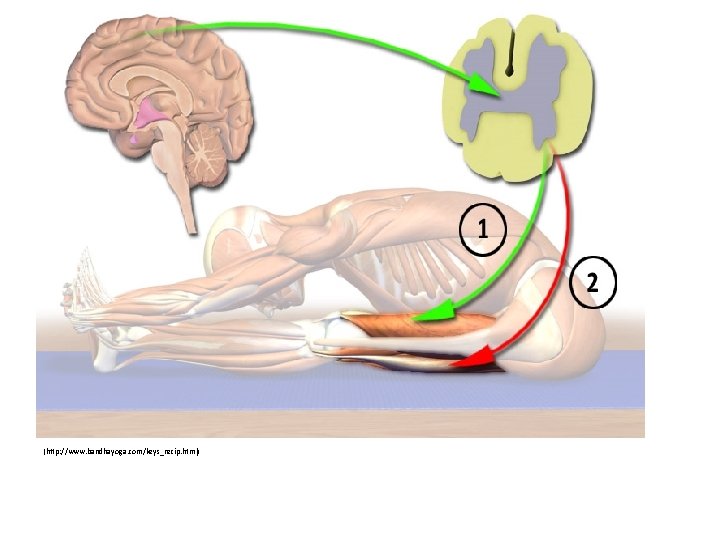
(http: //www. bandhayoga. com/keys_recip. html)
• many people stretch after sport because they have been told that stretching reduces muscle spasm which causes delayed onset muscle soreness (de Vries 1961)
• Theories about mechanisms usually have the status of working hypothesis rather than comprehensive and accurate representations of the truth. Theories should be, and usually are, subject to frequent revision. We can rarely know, with any certainty, that theories about intervention are true.
• Theories might tell us about the direction of effects of interventions, but they can never tell us about the size of effects of interventions. • Laboratory studies of the effects of ultrasound • that ultrasound hastens ligament healing, • ultrasound will bring about clinically useful effects such as returning subjects to sport faster than would otherwise occur. But how much faster?
Theories can not differentiate b/w two procedures regarding speedy recovery , than other intervention • Theories of mechanisms can help us develop and refine interventions , but they provide a very poor source of information about the effects of intervention. ü We need more than theory.
• Randomized clinical trials • Clinical observation – – – Natural recovery Statistical regression Polite Patients Placebo Effects Recall biased – Mechanism of Recovery
Natural recovery Clinical Observation Statistical Effect of Intervention Randomized clinical Trials
ü Effects of intervention, ü Experiences ü prognosis ü diagnostic tests.
Effect of Intervention Clinical Observation Natural recovery Statistical regression Polite Pt Clinical Trials Placebo effect Recall bias Mechanism of Recovery Clinical Research
• Clinical research potentially provides us with a better source of information about the effects of intervention than clinical observation or theories about mechanisms. • What sorts of clinical research give us the best answers about effects of intervention?
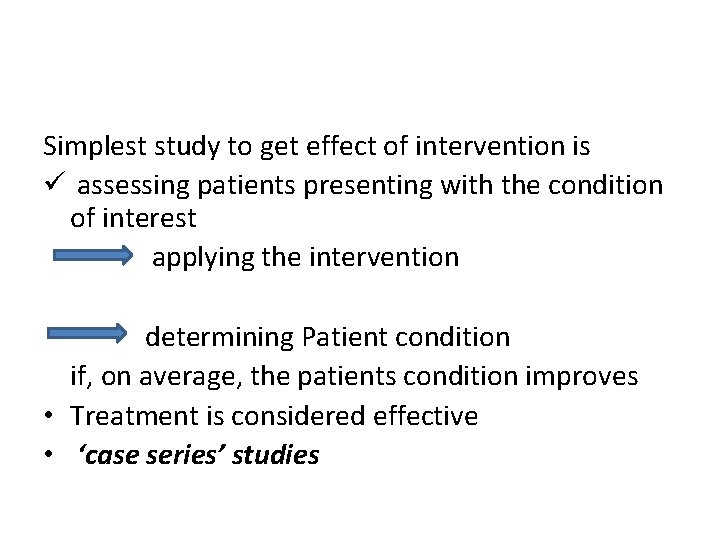
Simplest study to get effect of intervention is ü assessing patients presenting with the condition of interest applying the intervention determining Patient condition if, on average, the patients condition improves • Treatment is considered effective • ‘case series’ studies
• Weak evidence of the effect of intervention ü Natural recovery ü Statistical regression ü Polite patients ü Placebo effects • So weak evidence of the effects of intervention.
• You have a patient that has a condition that you are unfamiliar with. You would search for case reports that could help you decide on a direction of treatment or to assist on a diagnosis • Case series/reports have no control group (one to compare outcomes), so they have no statistical validity
ü compare outcomes in people who do and do not receive the intervention of interest. ü focus is on whether people who receive the intervention of interest have better outcomes than patients who do not receive the intervention. Comparison of outcomes in people who do and do not receive the intervention of interest is thought to provide better ‘control’ of bias than case series controlled trials.
• Controlled trials potentially provide control of bias because both groups (the group that receives the intervention of interest and the group that does not) experience natural recovery and both groups experience statistical regression
• Case series • Control trials
- Slides: 38