
Ebola patient care in UZ Leuven experience issues
Ebola: patient care in UZ Leuven: experience, issues and questions Dr. Paul De Munter Algemene inwendige ziekten/infectieziekten
Contents • Balance transmission risk <-> care/cure • Restrictions to care • Use of diagnostic and supportive equipment • Use of experimental treatments • Questions for the discussion
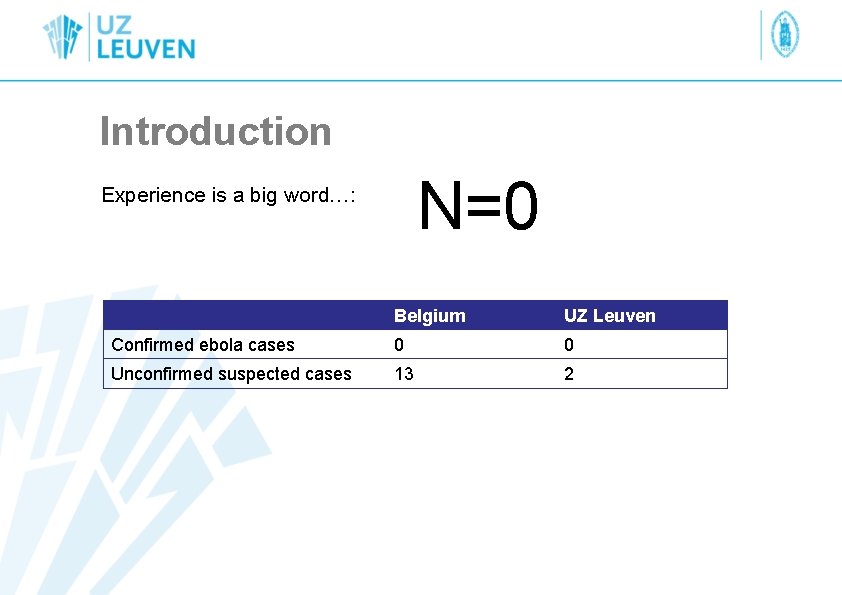
Introduction N=0 Experience is a big word…: Belgium UZ Leuven Confirmed ebola cases 0 0 Unconfirmed suspected cases 13 2
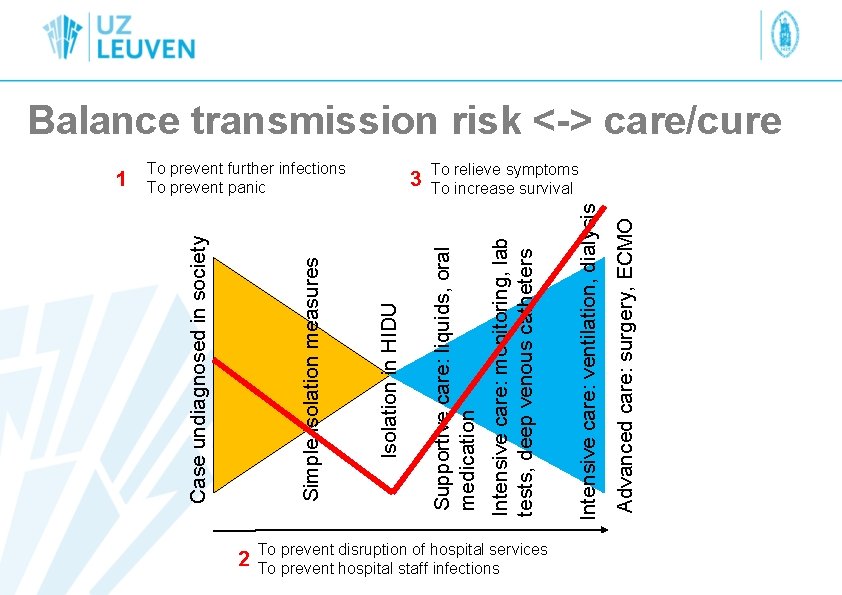
2 To prevent disruption of hospital services To prevent hospital staff infections Advanced care: surgery, ECMO Intensive care: ventilation, dialysis 3 Intensive care: monitoring, lab tests, deep venous catheters To prevent further infections To prevent panic Supportive care: liquids, oral medication Isolation in HIDU Simple isolation measures 1 Case undiagnosed in society Balance transmission risk <-> care/cure To relieve symptoms To increase survival
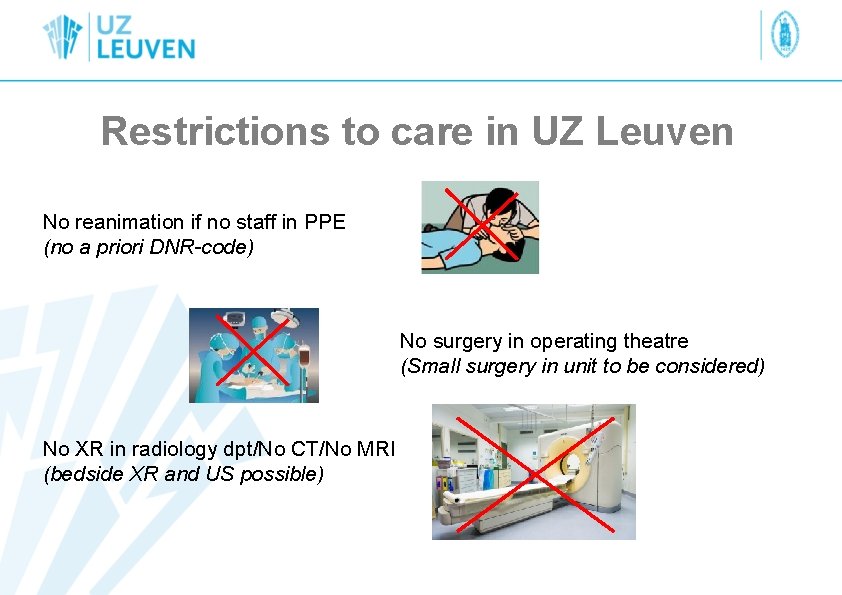
Restrictions to care in UZ Leuven No reanimation if no staff in PPE (no a priori DNR-code) No surgery in operating theatre (Small surgery in unit to be considered) No XR in radiology dpt/No CT/No MRI (bedside XR and US possible)
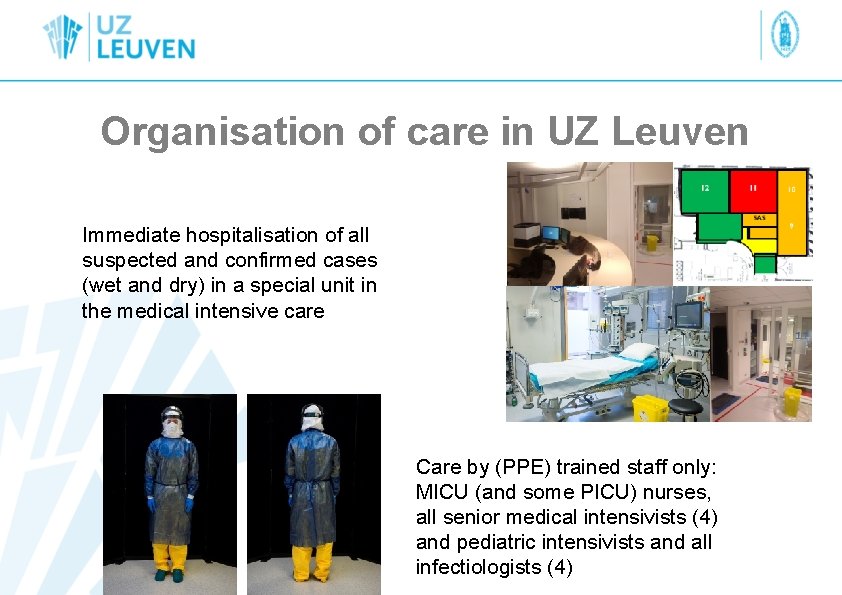
Organisation of care in UZ Leuven Immediate hospitalisation of all suspected and confirmed cases (wet and dry) in a special unit in the medical intensive care Care by (PPE) trained staff only: MICU (and some PICU) nurses, all senior medical intensivists (4) and pediatric intensivists and all infectiologists (4)
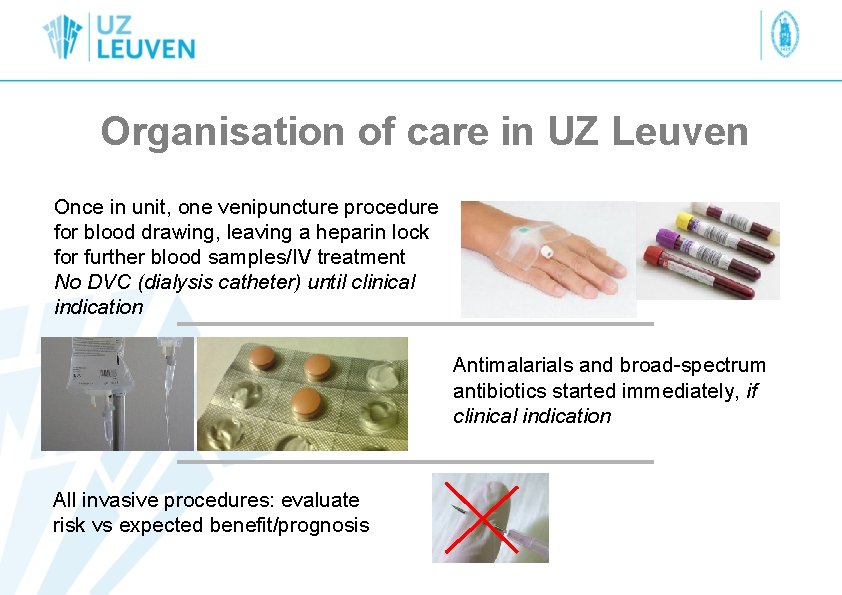
Organisation of care in UZ Leuven Once in unit, one venipuncture procedure for blood drawing, leaving a heparin lock for further blood samples/IV treatment No DVC (dialysis catheter) until clinical indication Antimalarials and broad-spectrum antibiotics started immediately, if clinical indication All invasive procedures: evaluate risk vs expected benefit/prognosis
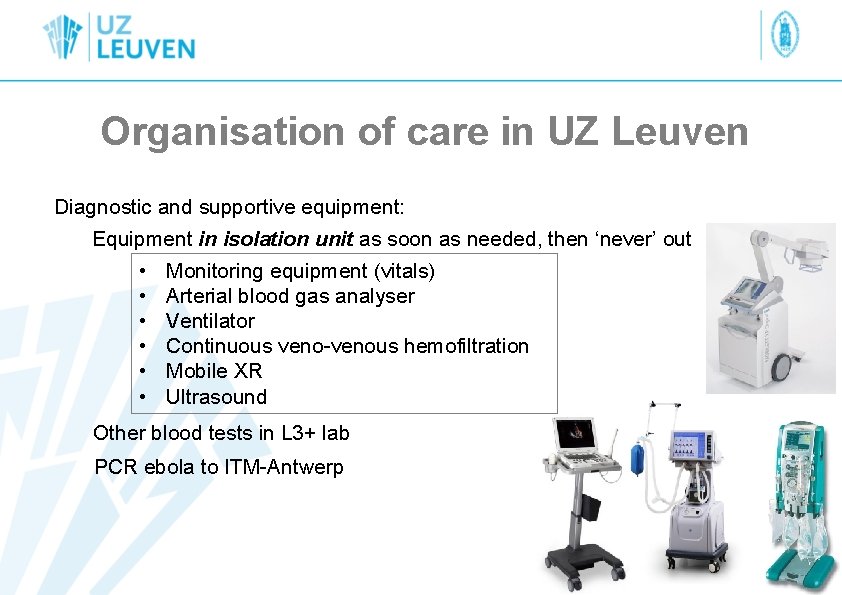
Organisation of care in UZ Leuven Diagnostic and supportive equipment: Equipment in isolation unit as soon as needed, then ‘never’ out • Monitoring equipment (vitals) • Arterial blood gas analyser • Ventilator • Continuous veno-venous hemofiltration • Mobile XR • Ultrasound Other blood tests in L 3+ lab PCR ebola to ITM-Antwerp
Experimental drugs experimental = benefits/risks unknown • “Very high mortality => benefit/risk drug less relevant”? • Most patients in Europe received one or more experimental drugs (pressure to do ‘something’ enormous) • Prepare availability of drugs: – Working group with FAGG – Ministerial decree – Connections with WHO and pharmaceutical companies • Which drugs: – Of those that are available/obtainable: those with most evidence for activity/evidence for least toxicity
Questions: • How many reference hospitals do we need? • Isolate in ICU or non ICU? • Ebola suspicion not confirmed: use formal criteria or clinical judgement? • How far should we go with intensive care? • Should we use experimental drugs? Which ones?
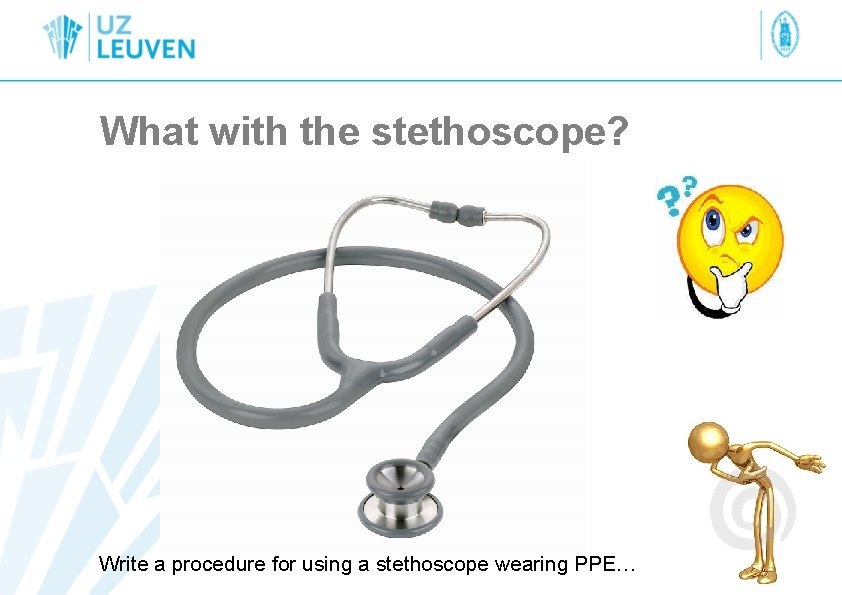
What with the stethoscope? Write a procedure for using a stethoscope wearing PPE…
- Slides: 11