
EBC improving water services by learning from peer
EBC: improving water services by learning from peer utilities Brussels 9 September 2014
Personal introduction Peter Dane MSc • 30 year in the water industry (utilities) • managing director EBC Foundation • management team member IWA’s Specialist Group on Benchmarking & Performance Assessment Improving water services by learning from peer utilities - 2 - 9 September 2014
Contents • About EBC Foundation • The benchmarking rationale • EBC’s benchmarking programme • The network • To conclude Improving water services by learning from peer utilities - 3 - 9 September 2014
About EBC Foundation European Benchmarking Co-operation (EBC): • not-for-profit benchmarking initiative for water- & wastewater utilities, initiated by Dutch & Nordic water utility associations • mission: to facilitate (European) water utilities in their continuous efforts to improve performance and transparency • annual exercises for water- & wastewater services > 2007 • as of July 2014: EBC Foundation - governed by a Board (DANVA, DWP, Eur. Eau, Norsk Vann, Vewin) and an Advisory Board (stakeholders) • selected as EIP Water Action Group Improving water services by learning from peer utilities - 4 - 9 September 2014
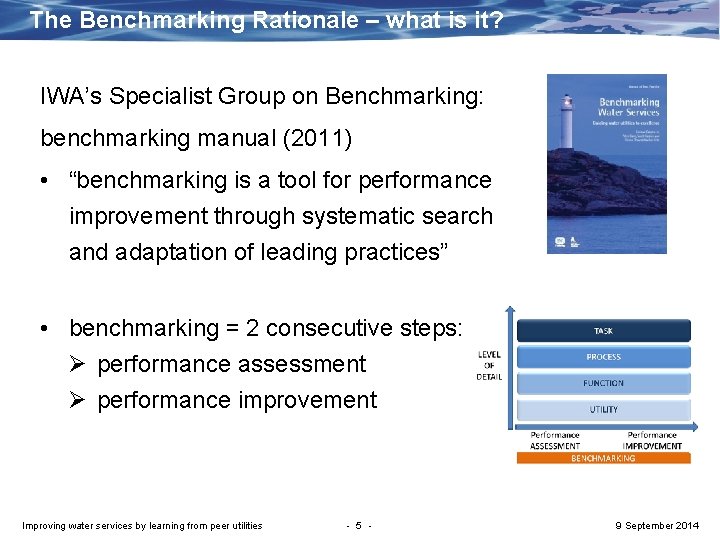
The Benchmarking Rationale – what is it? IWA’s Specialist Group on Benchmarking: benchmarking manual (2011) • “benchmarking is a tool for performance improvement through systematic search and adaptation of leading practices” • benchmarking = 2 consecutive steps: Ø performance assessment Ø performance improvement Improving water services by learning from peer utilities - 5 - 9 September 2014
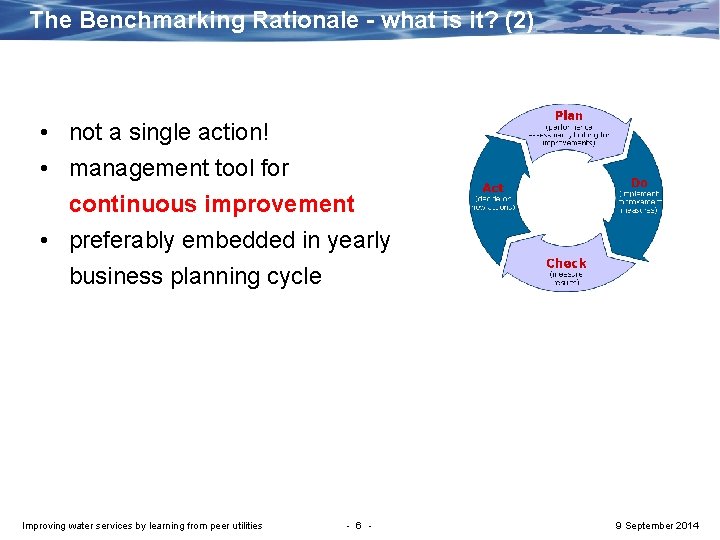
The Benchmarking Rationale - what is it? (2) • not a single action! • management tool for continuous improvement • preferably embedded in yearly business planning cycle Improving water services by learning from peer utilities - 6 - 9 September 2014
The Benchmarking Rationale – why should you? Benefits of benchmarking for utilities: provides new view on your utility’s performance access to peer utility network to learn from best practices & innovations - encourages improvement actions shows stakeholders your drive for improvement Benefits for governments/EU: stimulates compliance with national standards raises transparency, reduces need for tight, costly regulation accelerates reaching EU-objectives (resource efficiency) Improving water services by learning from peer utilities - 7 - 9 September 2014
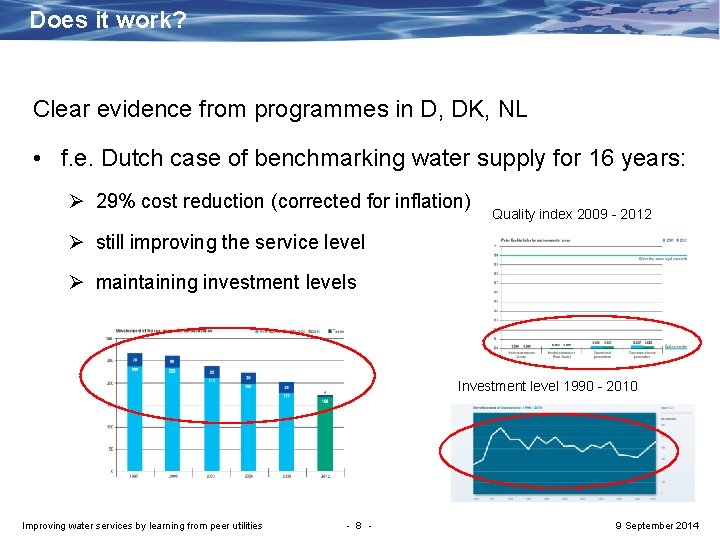
Does it work? Clear evidence from programmes in D, DK, NL • f. e. Dutch case of benchmarking water supply for 16 years: Ø 29% cost reduction (corrected for inflation) Quality index 2009 - 2012 Ø still improving the service level Ø maintaining investment levels Investment level 1990 - 2010 Improving water services by learning from peer utilities - 8 - 9 September 2014
Prerequisites to successful benchmarking • alignment with strategic utility objectives • commitment of senior management • stable situation • good data quality • sufficient resources • willingness to share knowledge and experiences/best practices Improving water services by learning from peer utilities - 9 September 2014
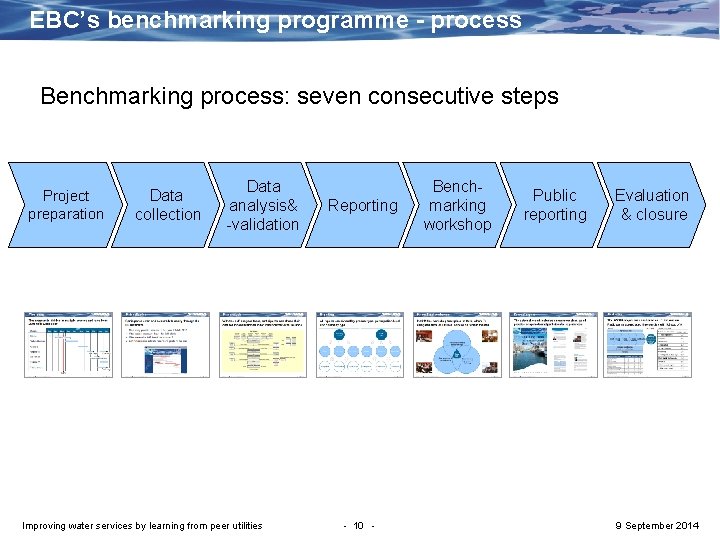
EBC’s benchmarking programme - process Benchmarking process: seven consecutive steps Project preparation Data collection Data analysis& -validation Improving water services by learning from peer utilities Reporting - 10 - Benchmarking workshop Public reporting Evaluation & closure 9 September 2014
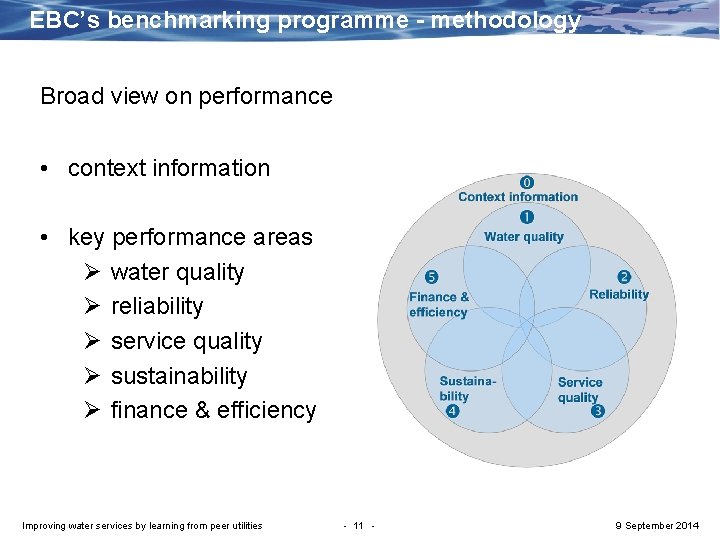
EBC’s benchmarking programme - methodology Broad view on performance • context information • key performance areas Ø water quality Ø reliability Ø service quality Ø sustainability Ø finance & efficiency Improving water services by learning from peer utilities - 11 - 9 September 2014
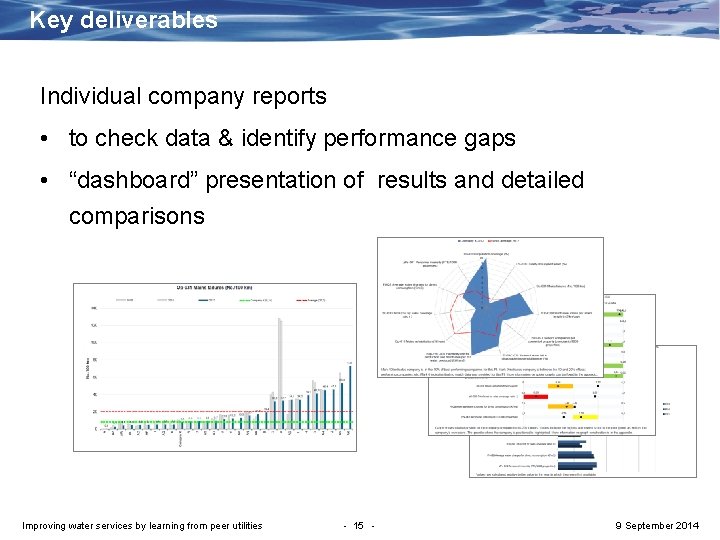
Key deliverables Individual company reports • to check data & identify performance gaps • “dashboard” presentation of results and detailed comparisons Improving water services by learning from peer utilities - 15 - 9 September 2014
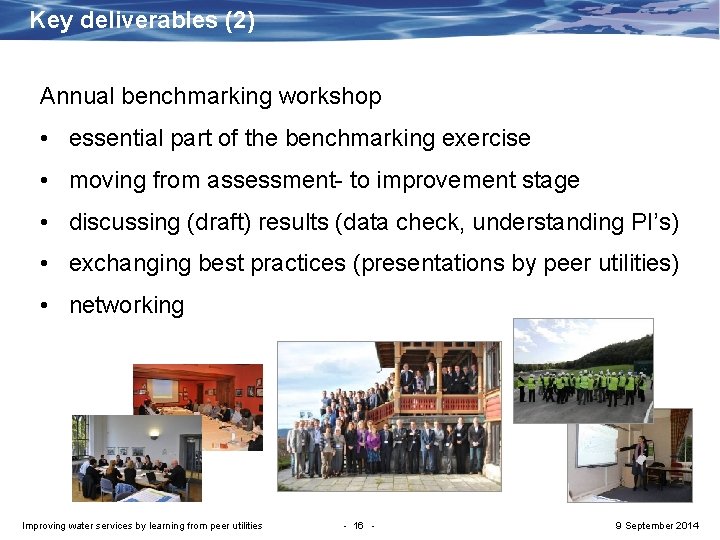
Key deliverables (2) Annual benchmarking workshop • essential part of the benchmarking exercise • moving from assessment- to improvement stage • discussing (draft) results (data check, understanding PI’s) • exchanging best practices (presentations by peer utilities) • networking Improving water services by learning from peer utilities - 16 - 9 September 2014
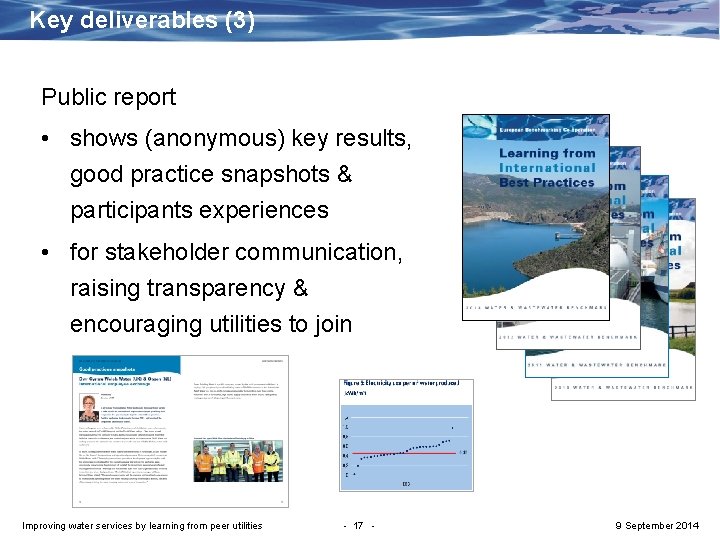
Key deliverables (3) Public report • shows (anonymous) key results, good practice snapshots & participants experiences • for stakeholder communication, raising transparency & encouraging utilities to join Improving water services by learning from peer utilities - 17 - 9 September 2014
Intermezzo: data confidentiality vs. transparency Why not disclosing all data in the public domain? • utilities require confidentiality of data (EFQM Code of Conduct) • offering a safe learning environment leads to best results (classroom) • not all data relevant for all stakeholders (information pyramid) • too detailed information: loss of overview, risk of misinterpretation • challenge: providing the relevant information to different stakeholders Improving water services by learning from peer utilities - 18 - 9 September 2014
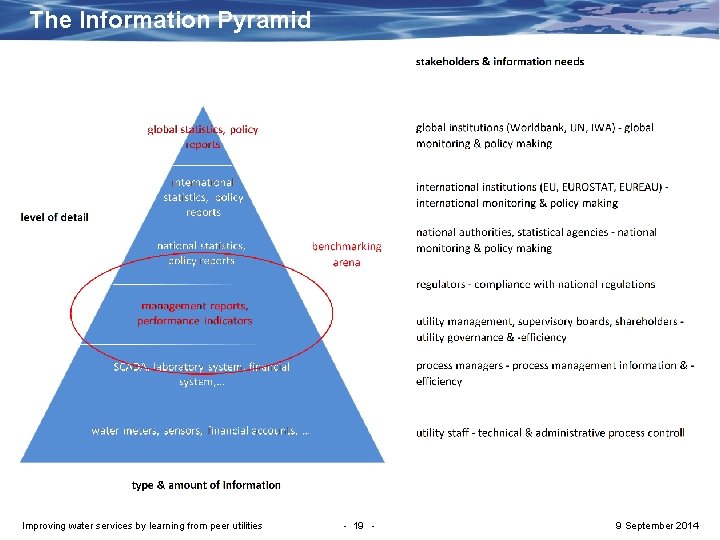
The Information Pyramid Improving water services by learning from peer utilities - 19 - 9 September 2014
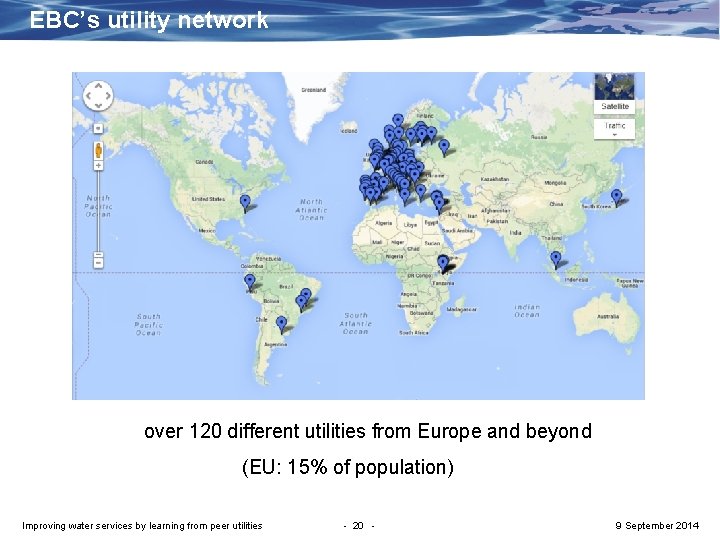
EBC’s utility network over 120 different utilities from Europe and beyond (EU: 15% of population) Improving water services by learning from peer utilities - 20 - 9 September 2014
EBC’s utility network (2) • EU: in total about 70. 000 utilities • at present only “frontrunners” participate in EBC programme • the larger the network, the more to learn from • challenges to further increase participation: Ø language barriers Ø large performance differences Ø cost barriers Ø how to reach smaller utilities? Improving water services by learning from peer utilities - 21 - 9 September 2014
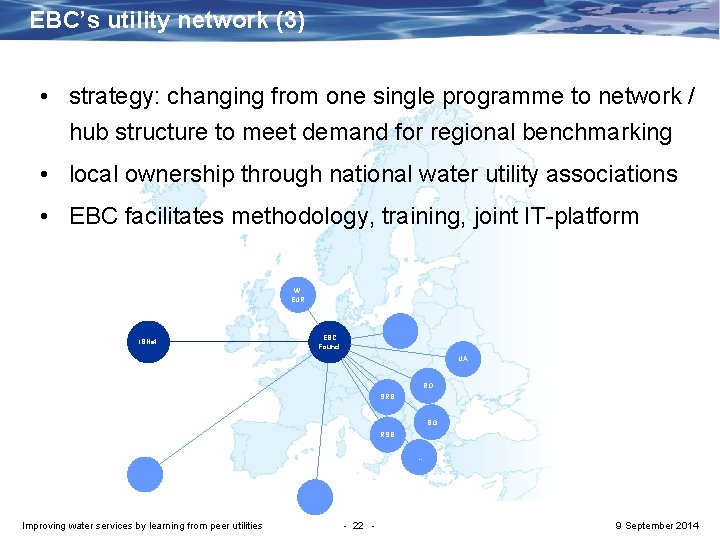
EBC’s utility network (3) • strategy: changing from one single programme to network / hub structure to meet demand for regional benchmarking • local ownership through national water utility associations • EBC facilitates methodology, training, joint IT-platform W. EUR . . . EBC Found. IBNet UA RO SRB BG RSB …. . . Improving water services by learning from peer utilities - 22 - 9 September 2014
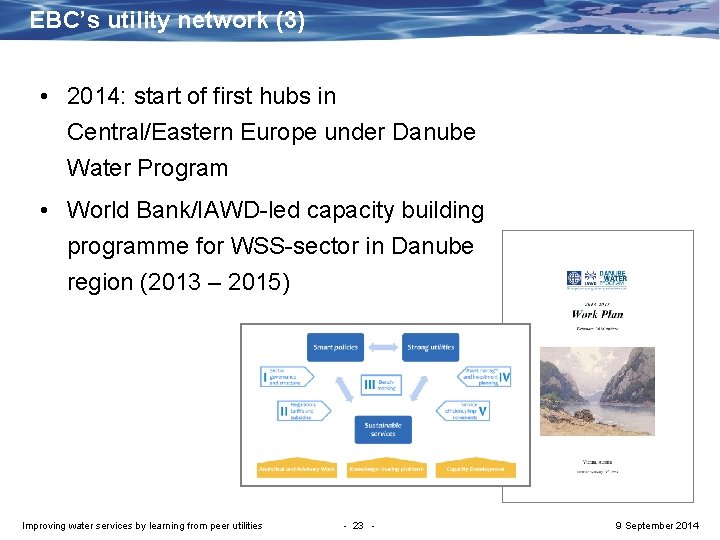
EBC’s utility network (3) • 2014: start of first hubs in Central/Eastern Europe under Danube Water Program • World Bank/IAWD-led capacity building programme for WSS-sector in Danube region (2013 – 2015) Improving water services by learning from peer utilities - 23 - 9 September 2014
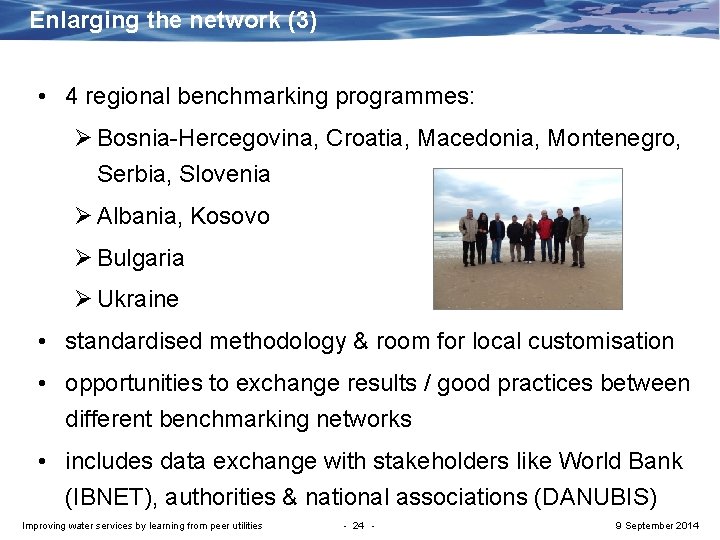
Enlarging the network (3) • 4 regional benchmarking programmes: Ø Bosnia-Hercegovina, Croatia, Macedonia, Montenegro, Serbia, Slovenia Ø Albania, Kosovo Ø Bulgaria Ø Ukraine • standardised methodology & room for local customisation • opportunities to exchange results / good practices between different benchmarking networks • includes data exchange with stakeholders like World Bank (IBNET), authorities & national associations (DANUBIS) Improving water services by learning from peer utilities - 24 - 9 September 2014
Conclusions after 7 years of EBC • benchmarking is not an easy job – but efforts clearly pay off • benchmarking by the industry itself best motivates utility management to improve the service • clear demand for coordinating/facilitating role by the national water utility associations • EBC’s new hub concept: Ø enables local ownership ánd learning from best practices in a wider network Ø keeps the network manageable & sustainable Improving water services by learning from peer utilities - 25 - 9 September 2014
Conclusions in Right 2 Water context EBC Foundation: • quality based, proven track record in water utility benchmarking • large, European wide network of utilities and stakeholders • EIP Water AG - available as a partner for the European Commission and other stakeholders for a dialogue on transparency & benchmarking water quality and quality of water services Improving water services by learning from peer utilities - 26 - 9 September 2014
Thank you for your attention! EBC Foundation Peter Dane peter. dane@waterbenchmark. org www. waterbenchmark. org Improving water services by learning from peer utilities - 27 - 9 September 2014
- Slides: 24