
Eating Well with Canadas Food Guide First Nations

- Slides: 30
Eating Well with Canada’s Food Guide First Nations, Inuit and Métis Introducing Canada’s Food Guide
What is inside this presentation? § § Why do we have a food guide? How was this food guide developed? A walking tour through the food guide Where you can find more information about Canada’s Food Guides
Why do we have a food guide? § § § The food guide describes healthy eating for Canadians over the age of 2 It describes the amount and type of food to eat in a day It emphasizes the importance of both healthy eating and physical activity
Why eat healthy? § The food guide shows the amount and types of food needed: • for children and teens to grow and be healthy • for people to meet their nutrient needs • to promote health • to lower the risk of obesity, type 2 diabetes, heart disease, certain types of cancer and osteoporosis
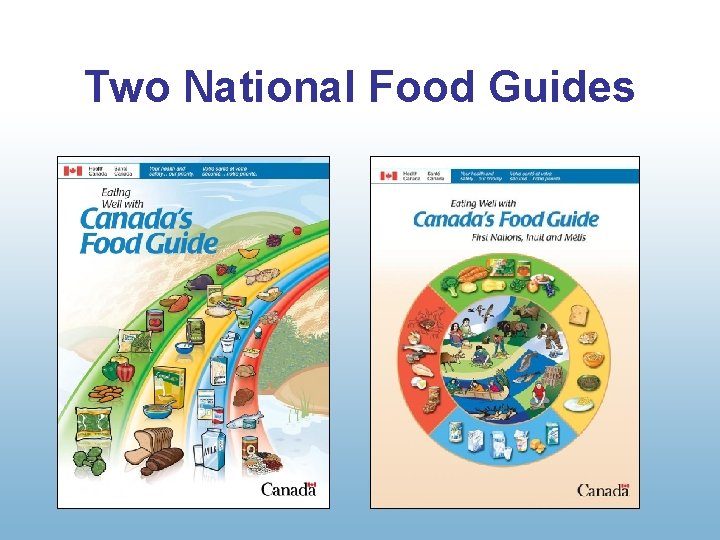
Two National Food Guides
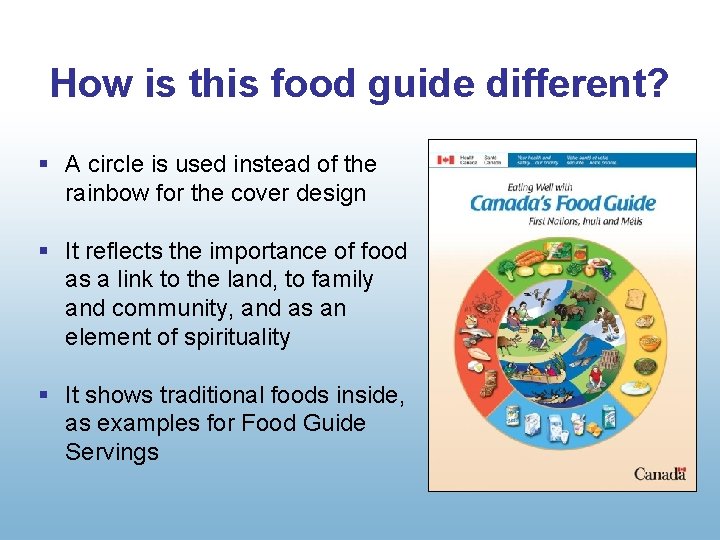
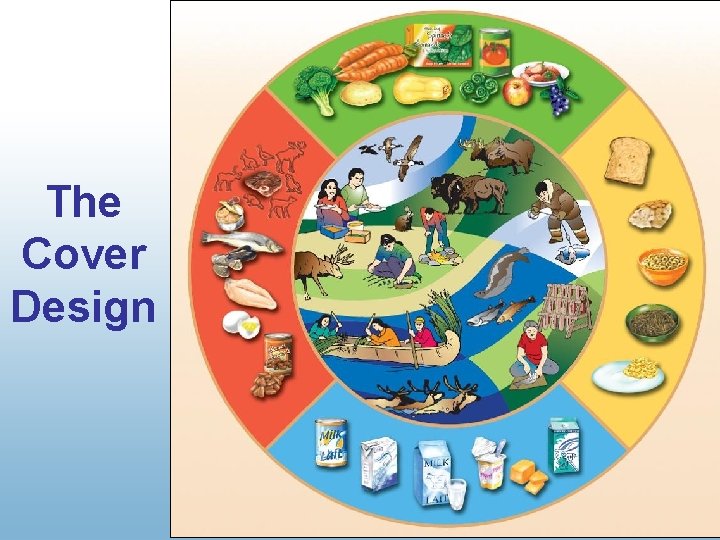
How is this food guide different? § A circle is used instead of the rainbow for the cover design § It reflects the importance of food as a link to the land, to family and community, and as an element of spirituality § It shows traditional foods inside, as examples for Food Guide Servings
How was this food guide developed? § The recommendations are based on science which tells us about the relationship between the food we eat and our health § Feedback was provided from health experts, an advisory group, and First Nations, Inuit and Métis people
The Cover Design
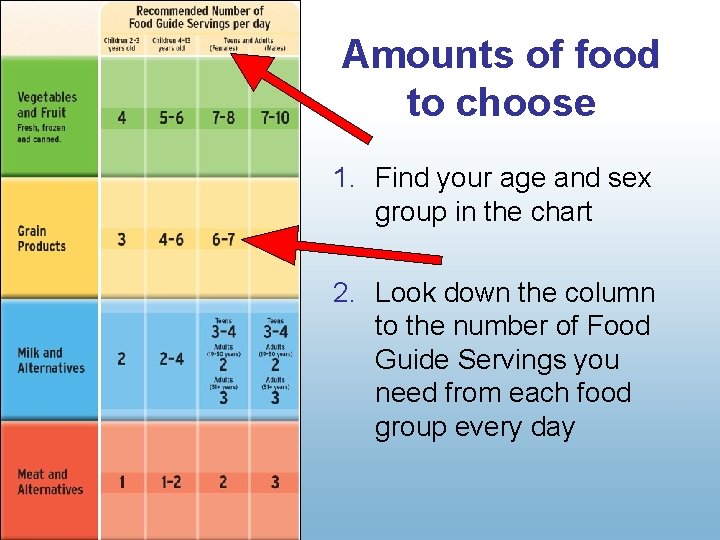
Amounts of food to choose 1. Find your age and sex group in the chart 2. Look down the column to the number of Food Guide Servings you need from each food group every day
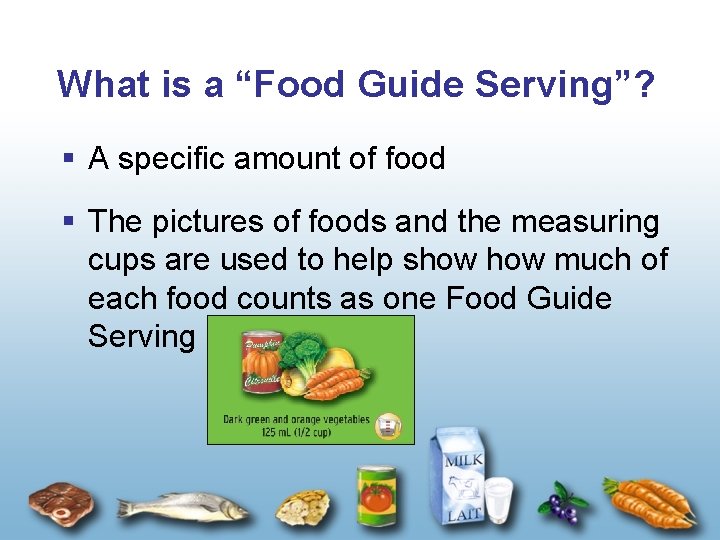
What is a “Food Guide Serving”? § A specific amount of food § The pictures of foods and the measuring cups are used to help show much of each food counts as one Food Guide Serving
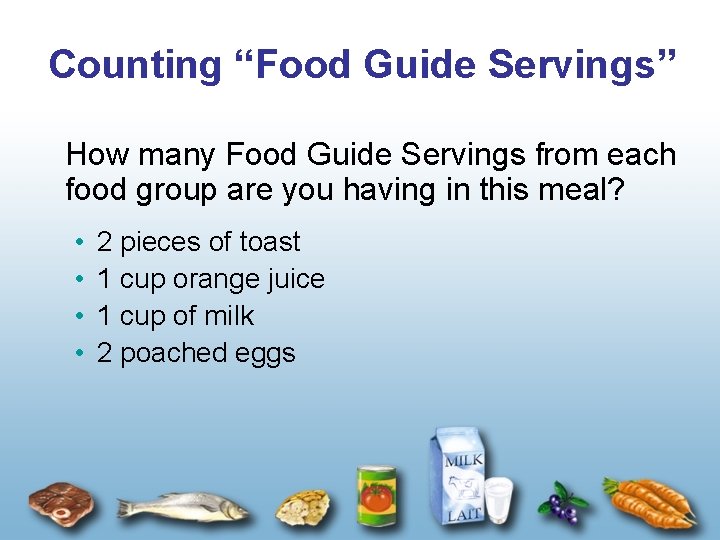
Counting “Food Guide Servings” How many Food Guide Servings from each food group are you having in this meal? • • 2 pieces of toast 1 cup orange juice 1 cup of milk 2 poached eggs
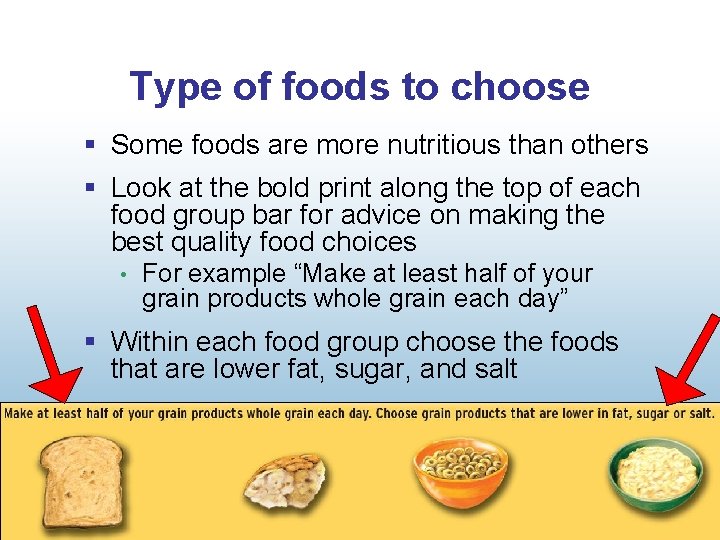
Type of foods to choose § Some foods are more nutritious than others § Look at the bold print along the top of each food group bar for advice on making the best quality food choices • For example “Make at least half of your grain products whole grain each day” § Within each food group choose the foods that are lower fat, sugar, and salt
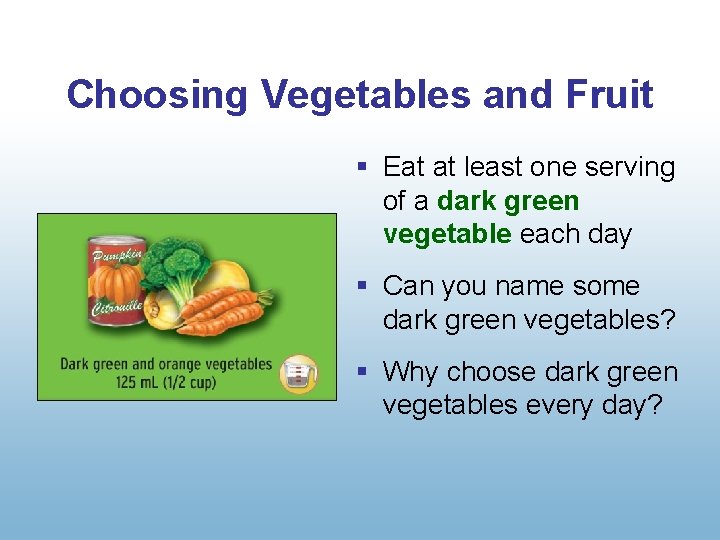
Choosing Vegetables and Fruit § Eat at least one serving of a dark green vegetable each day § Can you name some dark green vegetables? § Why choose dark green vegetables every day?
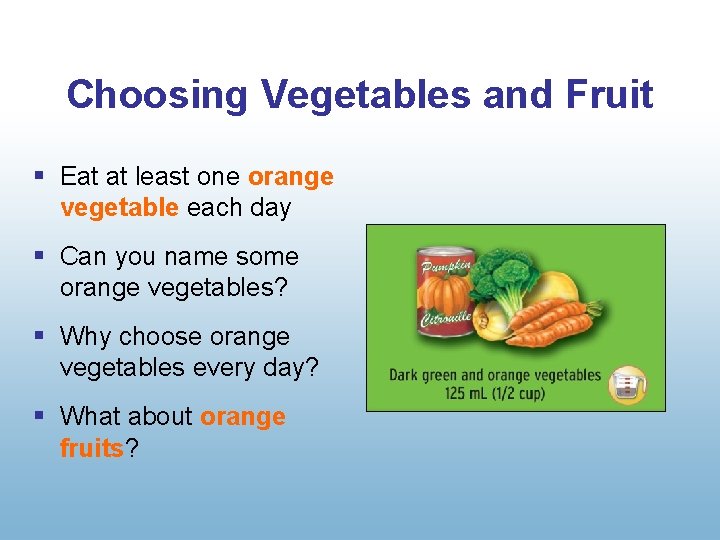
Choosing Vegetables and Fruit § Eat at least one orange vegetable each day § Can you name some orange vegetables? § Why choose orange vegetables every day? § What about orange fruits?
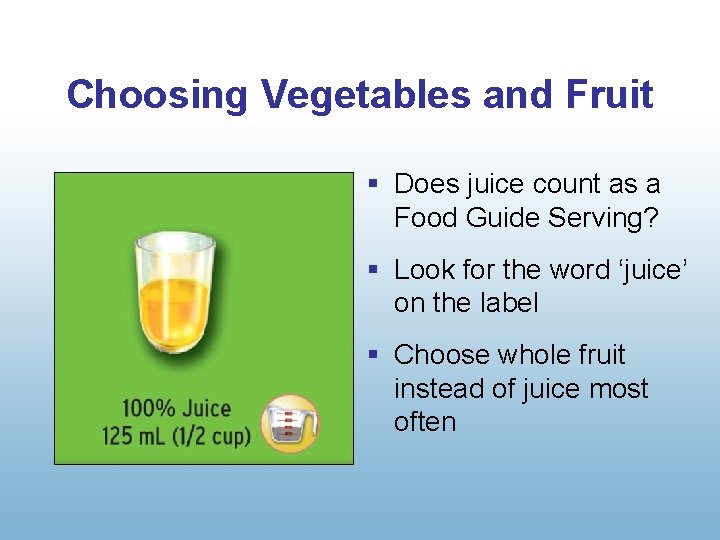
Choosing Vegetables and Fruit § Does juice count as a Food Guide Serving? § Look for the word ‘juice’ on the label § Choose whole fruit instead of juice most often
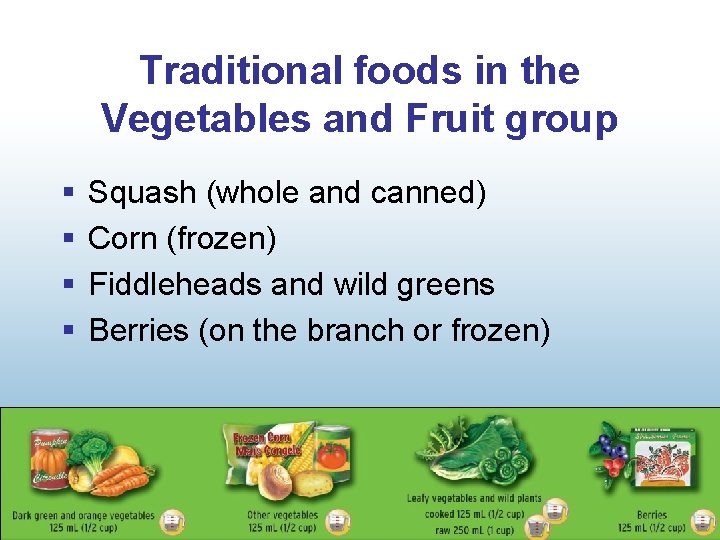
Traditional foods in the Vegetables and Fruit group § § Squash (whole and canned) Corn (frozen) Fiddleheads and wild greens Berries (on the branch or frozen)
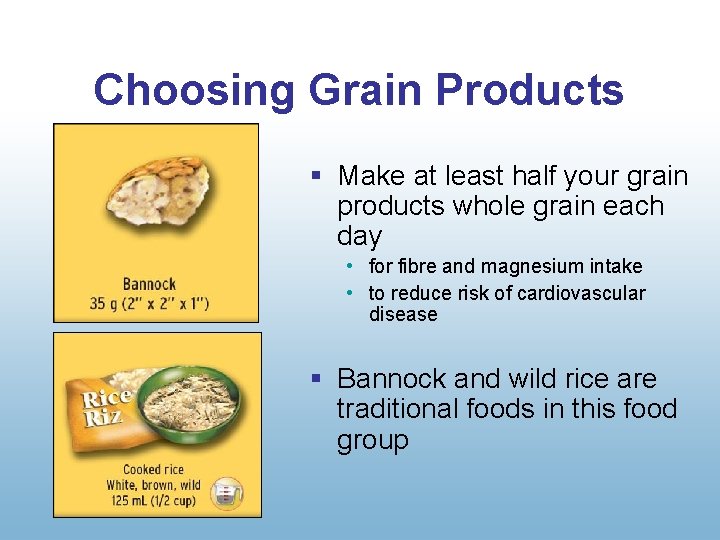
Choosing Grain Products § Make at least half your grain products whole grain each day • for fibre and magnesium intake • to reduce risk of cardiovascular disease § Bannock and wild rice are traditional foods in this food group
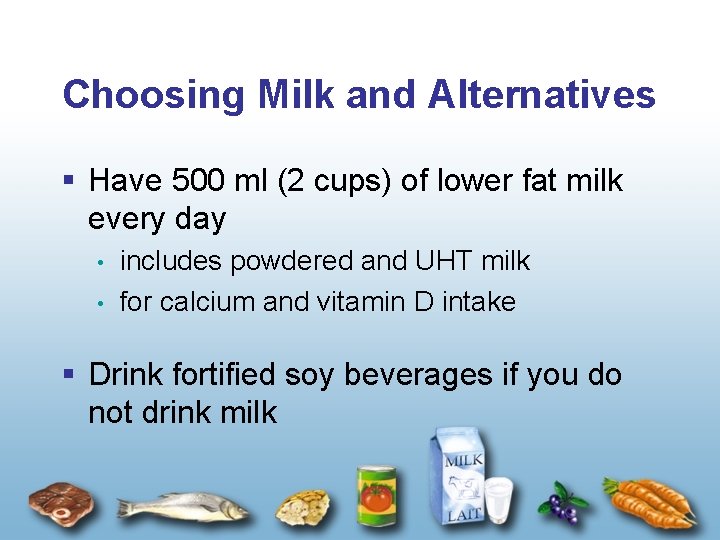
Choosing Milk and Alternatives § Have 500 ml (2 cups) of lower fat milk every day • • includes powdered and UHT milk for calcium and vitamin D intake § Drink fortified soy beverages if you do not drink milk
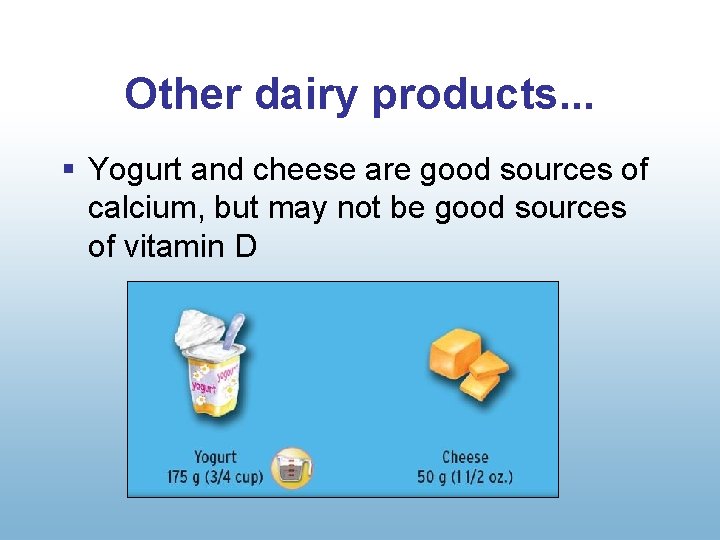
Other dairy products. . . § Yogurt and cheese are good sources of calcium, but may not be good sources of vitamin D
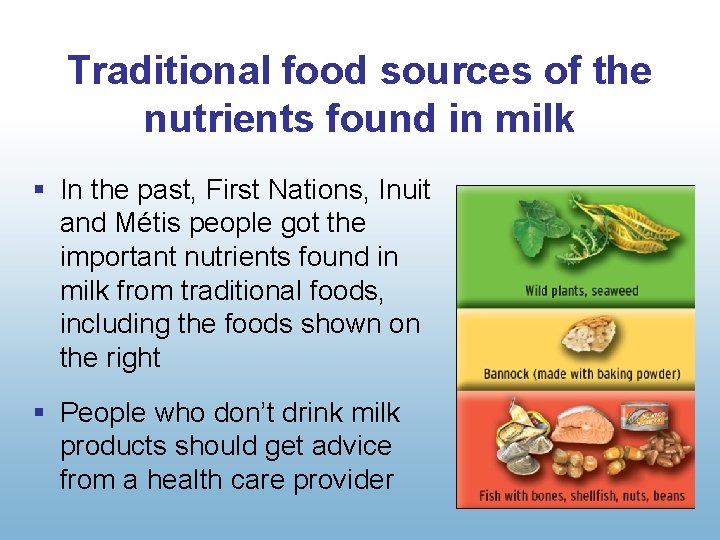
Traditional food sources of the nutrients found in milk § In the past, First Nations, Inuit and Métis people got the important nutrients found in milk from traditional foods, including the foods shown on the right § People who don’t drink milk products should get advice from a health care provider
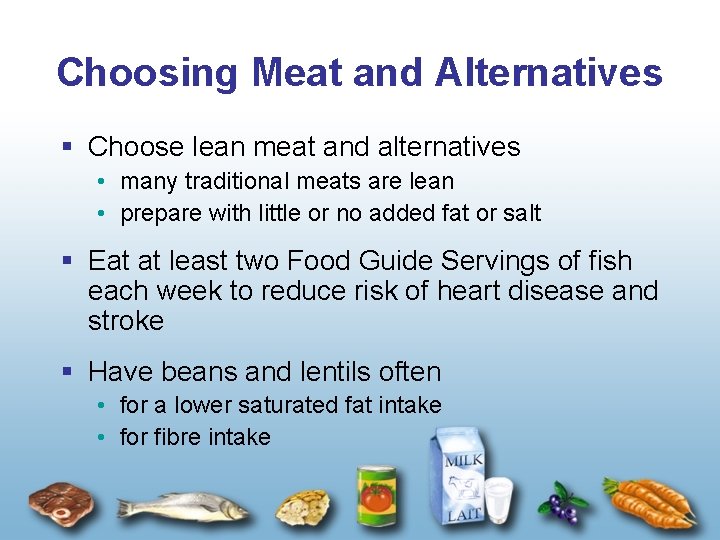
Choosing Meat and Alternatives § Choose lean meat and alternatives • many traditional meats are lean • prepare with little or no added fat or salt § Eat at least two Food Guide Servings of fish each week to reduce risk of heart disease and stroke § Have beans and lentils often • for a lower saturated fat intake • for fibre intake
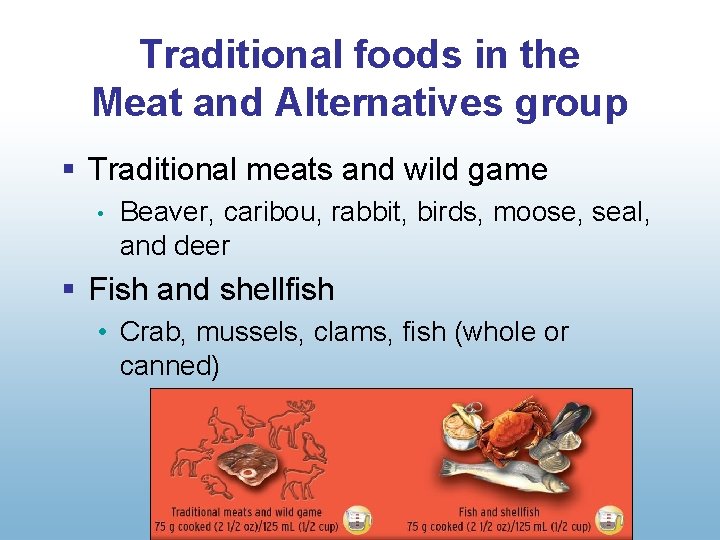
Traditional foods in the Meat and Alternatives group § Traditional meats and wild game • Beaver, caribou, rabbit, birds, moose, seal, and deer § Fish and shellfish • Crab, mussels, clams, fish (whole or canned)
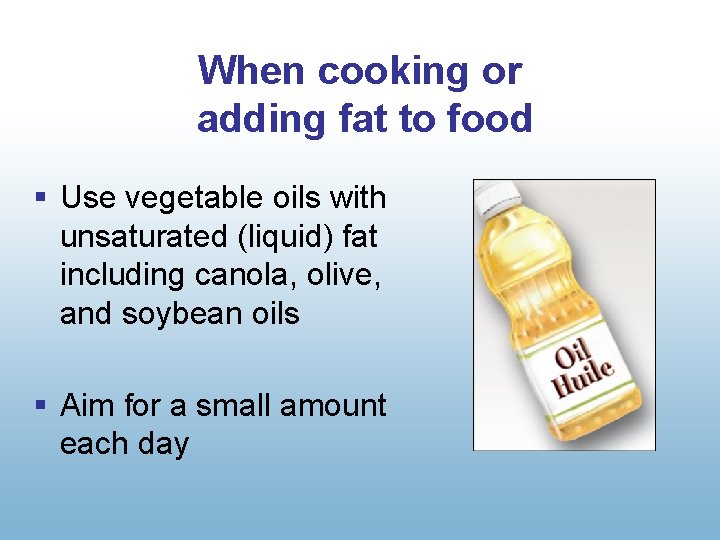
When cooking or adding fat to food § Use vegetable oils with unsaturated (liquid) fat including canola, olive, and soybean oils § Aim for a small amount each day
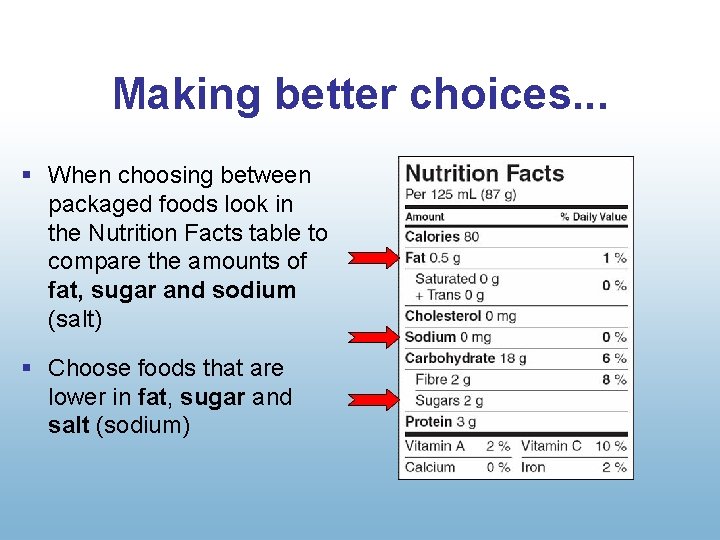
Making better choices. . . § When choosing between packaged foods look in the Nutrition Facts table to compare the amounts of fat, sugar and sodium (salt) § Choose foods that are lower in fat, sugar and salt (sodium)
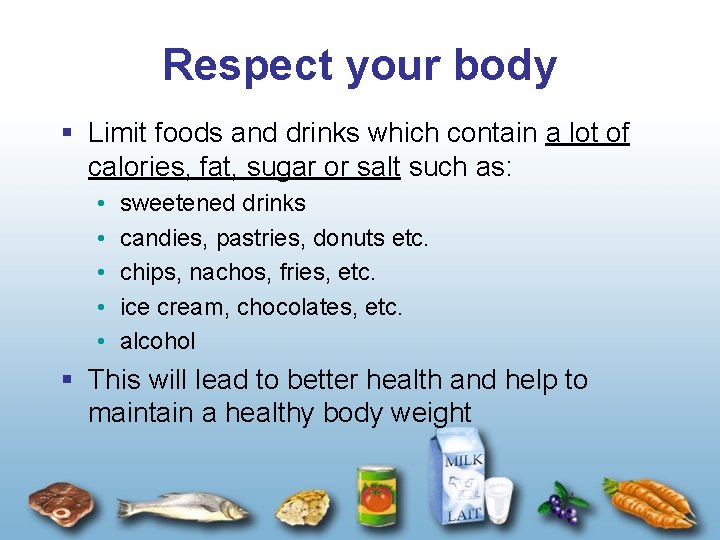
Respect your body § Limit foods and drinks which contain a lot of calories, fat, sugar or salt such as: • • • sweetened drinks candies, pastries, donuts etc. chips, nachos, fries, etc. ice cream, chocolates, etc. alcohol § This will lead to better health and help to maintain a healthy body weight
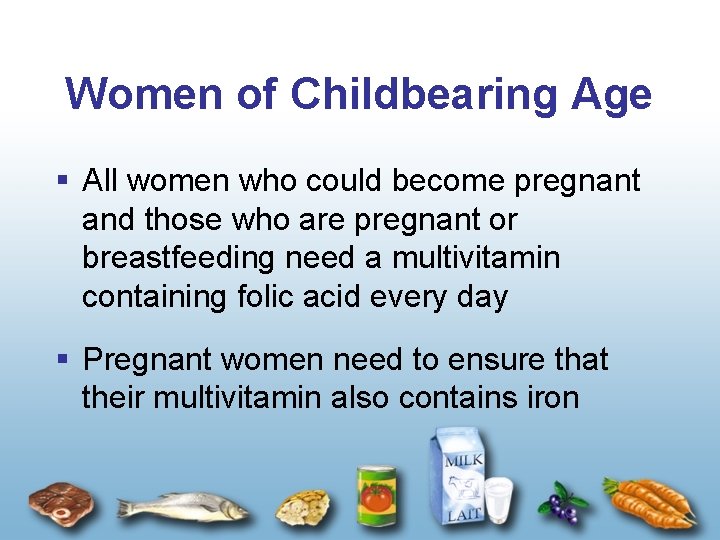
Women of Childbearing Age § All women who could become pregnant and those who are pregnant or breastfeeding need a multivitamin containing folic acid every day § Pregnant women need to ensure that their multivitamin also contains iron
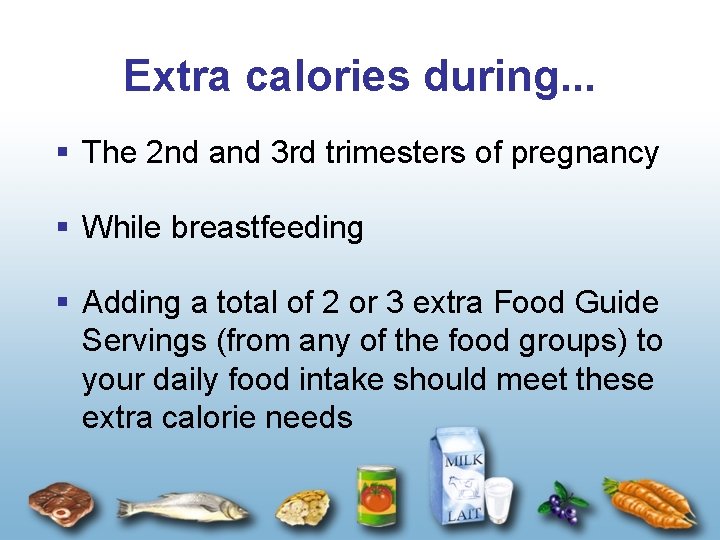
Extra calories during. . . § The 2 nd and 3 rd trimesters of pregnancy § While breastfeeding § Adding a total of 2 or 3 extra Food Guide Servings (from any of the food groups) to your daily food intake should meet these extra calorie needs
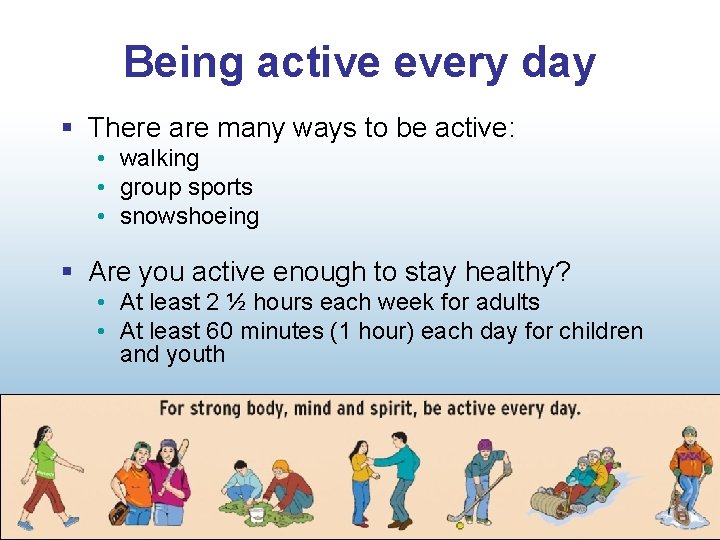
Being active every day § There are many ways to be active: • walking • group sports • snowshoeing § Are you active enough to stay healthy? • At least 2 ½ hours each week for adults • At least 60 minutes (1 hour) each day for children and youth
For more information Visit Canada’s Food Guide online: www. healthcanada. gc. ca/foodguide You will find: § More information about eating well § Interactive tools on using Canada’s Food Guide § How to order a copy of the food guide