
Eating Disorders Oct 2014 Dr Irene Yi Specialist
- Slides: 25
Eating Disorders Oct 2014 Dr Irene Yi Specialist EDS for Children and Adolescents
Types of Eating Disorders Ø Ø Ø Anorexia Bulimia EDNOS Selective Eating Food avoidance emotional disorder Ø Restrictive Eating
Developmental Perspective Lack of reserve in children and young people Rapid rate of weight loss Medical compromises • Pulse rate / blood pressure / dehydration • Re-feeding syndrome Growth
Overview Manifestations Assessment Stages of Change Management psychological medical
NICE Guidelines The majority should be managed on an OP basis by a service with expertise in both the psychological aspects and in assessing the physical risk associated with ED Assessment and treatment should be provided at the earliest opportunity When IP tr is required this should be provided in a unit with specific skills in treating ED For BN as a first step encourage pts to follow an evidence-based selfhelp programme BN pts may be treated with CBT adapted as needed to suit age and specific circumstances and include the family as appropriate
Anorexia Nervosa Characterized by: Self starvation Excessive weight loss Intense fear of fatness Unrelenting pursuit of thinness
Anorexia Nervosa Excessive weight loss (15%) Severe diets – odd food behaviours and rituals Hyperactivity Investment in perfectionism Denial of hunger Preoccupation with food, weight and/or body image thoughts
Emotional Manifestation of AN Inability to express or cope with emotional situations Increasingly diminished social and inter-personal functioning – isolation Feelings of inadequacy, low or no self-esteem Extreme moodiness Intense remorse and shame regarding eating behaviours and their body
Physical Manifestations of AN Inability to express or cope with emotional situations Increasingly diminished social and inter-personal functioning – isolation Feelings of inadequacy, low or no self-esteem Extreme moodiness Intense remorse and shame regarding eating behaviours and their body
Bulimia Nervosa Characterized by: A secretive cycle of binge eating and self – induced purging • Rapid consumption of large amounts of food • A sense of loss of control • Compensatory purging to get rid of food or calories consumed
Behavioural Manifestations of BN Secretive and impulsive behaviours Purging Large weight variations Food hoarding, stealing Often associated behaviours Preoccupation with food, weight and body image thoughts Aware of hunger, but eating behaviour not connected to hunger cues
Emotional Manifestations of BN Frequent sense of shame and guilt connected to behaviours Intense fear of fatness Suicide thoughts and attempts Frequent mood swings Low self esteem, ongoing feelings of unworthiness
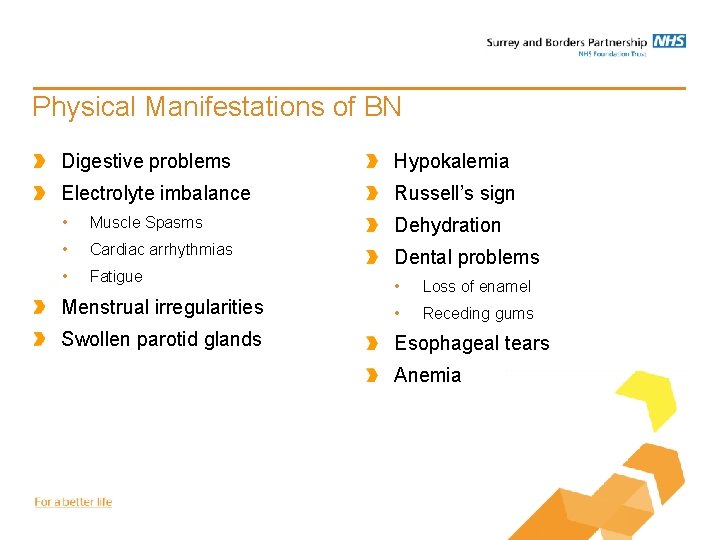
Physical Manifestations of BN Digestive problems Hypokalemia Electrolyte imbalance Russell’s sign • Muscle Spasms Dehydration • Cardiac arrhythmias • Fatigue Dental problems Menstrual irregularities Swollen parotid glands • Loss of enamel • Receding gums Esophageal tears Anemia
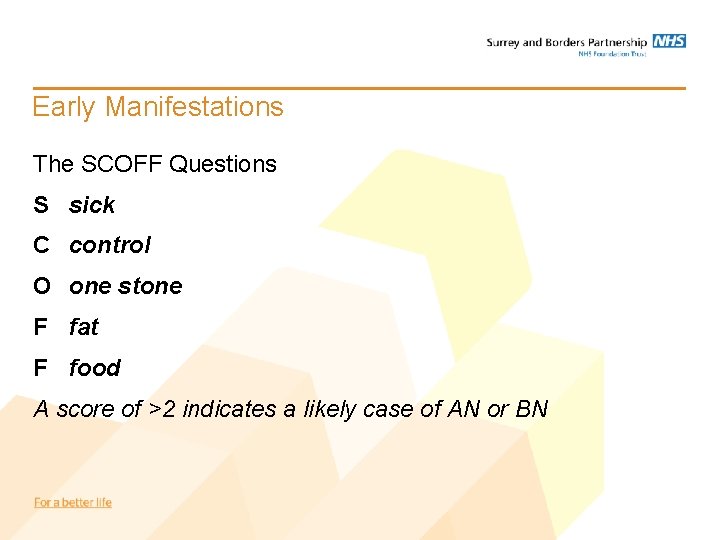
Early Manifestations The SCOFF Questions S sick C control O one stone F fat F food A score of >2 indicates a likely case of AN or BN
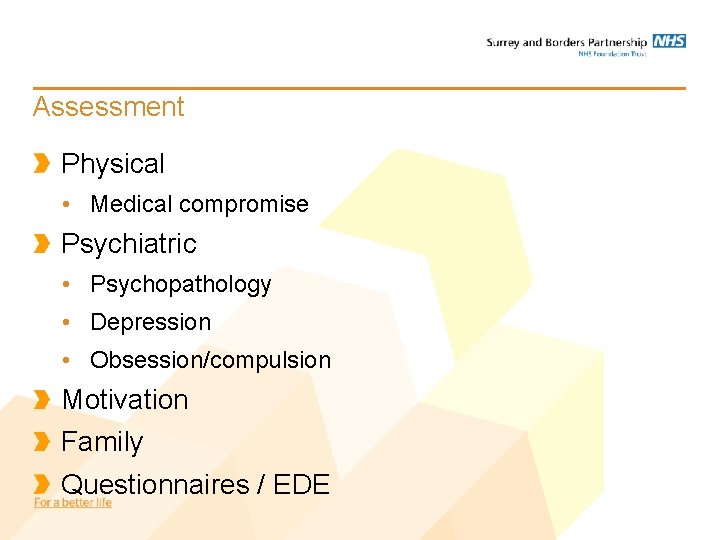
Assessment Physical • Medical compromise Psychiatric • Psychopathology • Depression • Obsession/compulsion Motivation Family Questionnaires / EDE
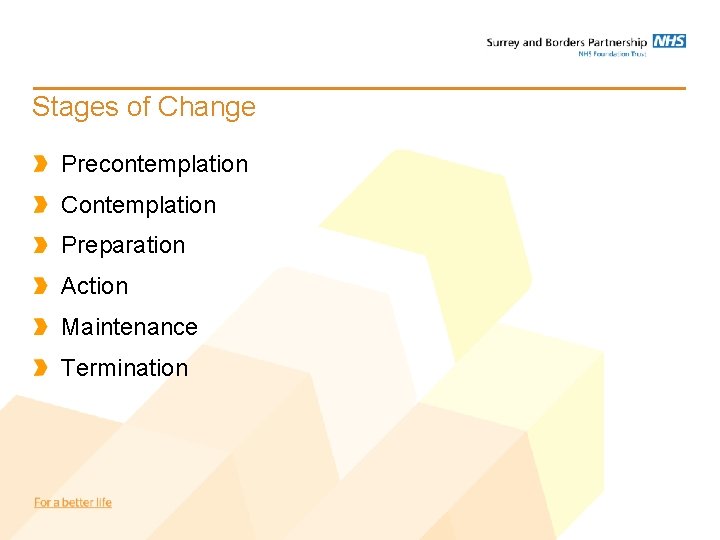
Stages of Change Precontemplation Contemplation Preparation Action Maintenance Termination
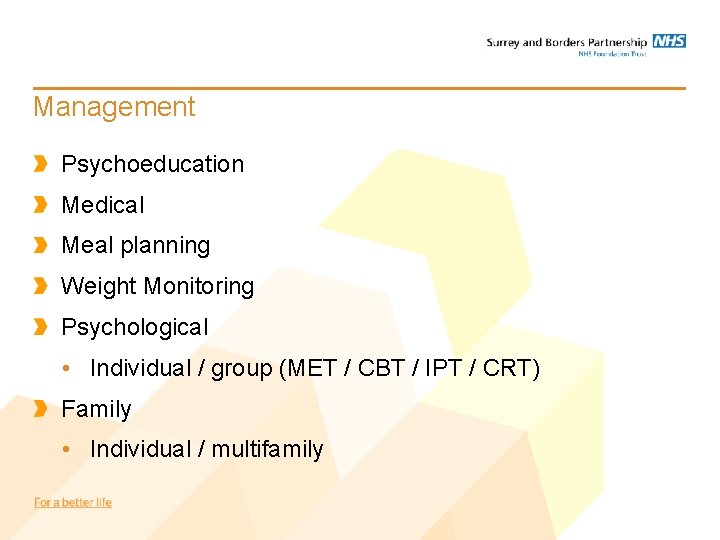
Management Psychoeducation Medical Meal planning Weight Monitoring Psychological • Individual / group (MET / CBT / IPT / CRT) Family • Individual / multifamily
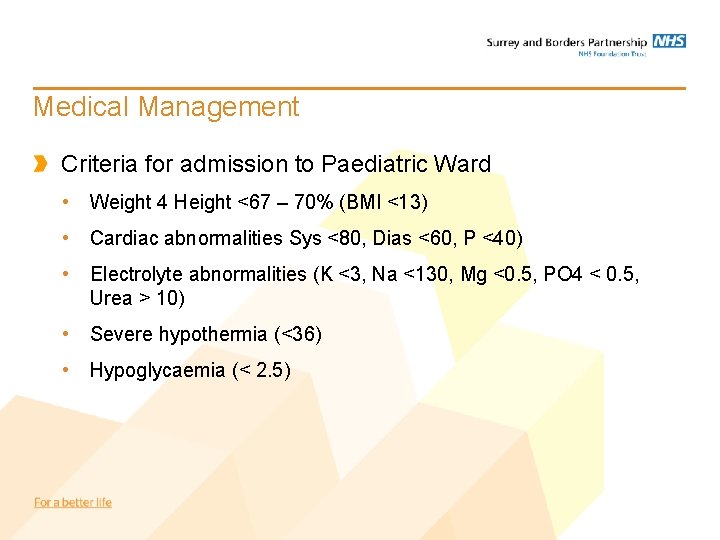
Medical Management Criteria for admission to Paediatric Ward • Weight 4 Height <67 – 70% (BMI <13) • Cardiac abnormalities Sys <80, Dias <60, P <40) • Electrolyte abnormalities (K <3, Na <130, Mg <0. 5, PO 4 < 0. 5, Urea > 10) • Severe hypothermia (<36) • Hypoglycaemia (< 2. 5)
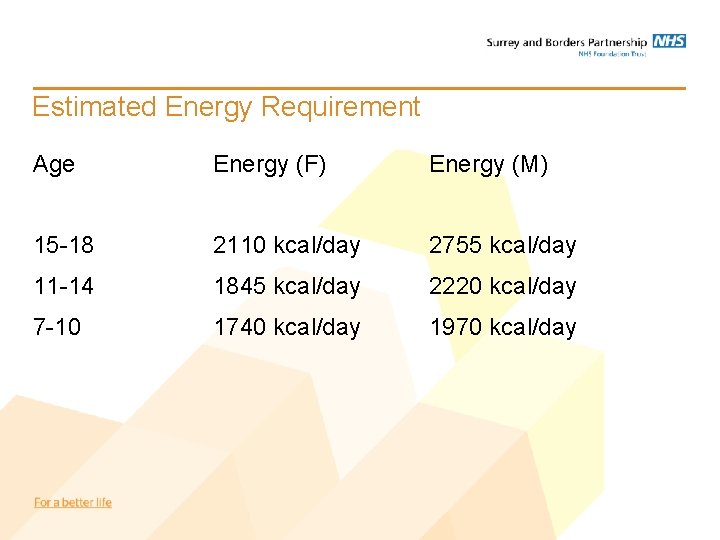
Estimated Energy Requirement Age Energy (F) Energy (M) 15 -18 2110 kcal/day 2755 kcal/day 11 -14 1845 kcal/day 2220 kcal/day 7 -10 1740 kcal/day 1970 kcal/day
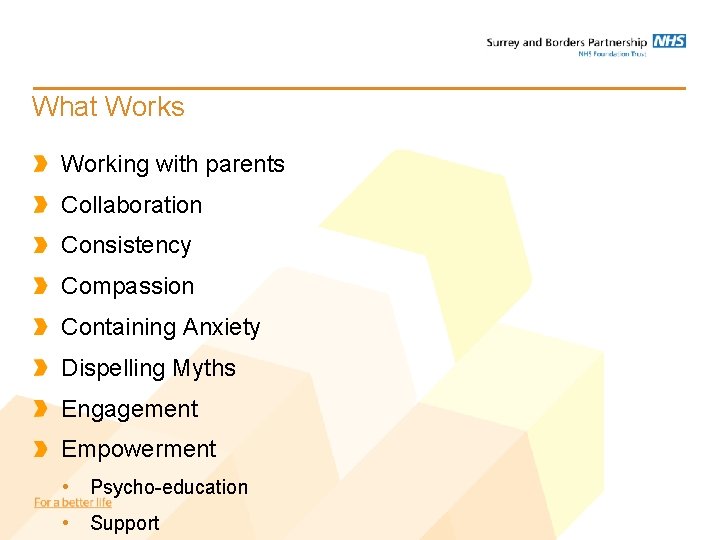
What Works Working with parents Collaboration Consistency Compassion Containing Anxiety Dispelling Myths Engagement Empowerment • Psycho-education • Support
What works Dispelling Myths Engagement Empowerment • Psycho-education • Support Research Evidence Family based treatments Current Interest in Neuropsychology
Competence Fraser (Gillick) Competence Capacity to consent
Helping People with Anorexia Assume mixed feelings (not antagonism) Fear of changing and fear of staying the same Few people want to be anorexic Provide ladders not cranes Traps • Battling • Colluding • Scare tactics Most adolescents get better
My Friend In a way you have made my life much easier. Instead of having lots of thoughts and worries I just concentrate on you. You determine whether I am happy or sad and you make everything less complicated. You’ve made me much happier about the way I look and you make most of my decisions for me. I wish people would understand how you feel and what you’re thinking.
My Enemy I wish you wouldn’t hurt my friends and family, they don’t deserve this. I don’t want you to prevent me from doing things I enjoy. You are deceitful in that you don’t show me what I really look like. I know this because I’m starting to believe some of the things people tell me. It hurts most when I see people I love suffer because of you.