
Eating Disorders in Job Corps Gary Strokosch MD
Eating Disorders in Job Corps Gary Strokosch, MD Suzanne Martin, Psy. D, MPH Clay Purswell, DDS
--1994 -- Reference --2000 -Diagnostic and Statistical Manual of Mental Disorders
DSM Publication Dates • • DSM-III-R DSM-IV-TR DSM-V* *www. dsm 5. org 1952 1968 1980 1987 1994 2000 2013 (May)
Eating Disorders in Job Corps • Anorexia Nervosa • Bulimia Nervosa • Eating Disorder NOS
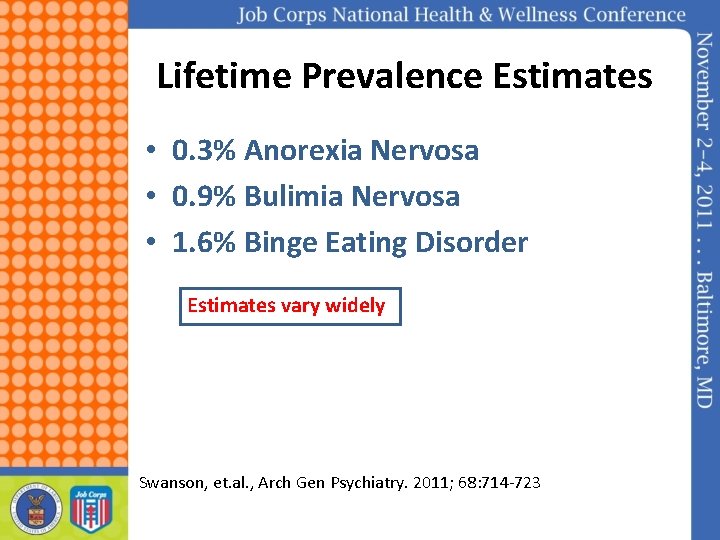
Lifetime Prevalence Estimates • 0. 3% Anorexia Nervosa • 0. 9% Bulimia Nervosa • 1. 6% Binge Eating Disorder Estimates vary widely Swanson, et. al. , Arch Gen Psychiatry. 2011; 68: 714 -723
Feeding and Eating Disorders of Infancy and Early Childhood Conditions Often Confused with Eating Disorders • Feeding Disorders (307. 59) • Pica (307. 52) • Rumination Disorder (307. 53)
Feeding Disorder of Infancy or Early Childhood • Persistent failure to eat adequately with significant failure to gain weight or significant loss of weight
Pica • Persistent eating of nonnutritive substances
Rumination Disorder • Repeated regurgitation and rechewing of food
Other Disorders Conditions Often Confused with Eating Disorders • Obesity (278. 00)
Obesity Simple obesity is included in the International Classification of Diseases as a general medical condition, but does not appear in the DSM-IV because it has not been established that it is consistently associated with a psychological or behavioral syndrome
International Classification of Diseases • • • ICD-1 ICD-2 ICD-3 ICD-4 ICD-5 ICD-6 ICD-7 ICD-9* ICD-10 1909 1920 1929 1938 1948 1955 1975 (in common use) 1989 (in use since 1995) *http: //en. wikipedia. org/wiki/list_of_ICD-9_codes
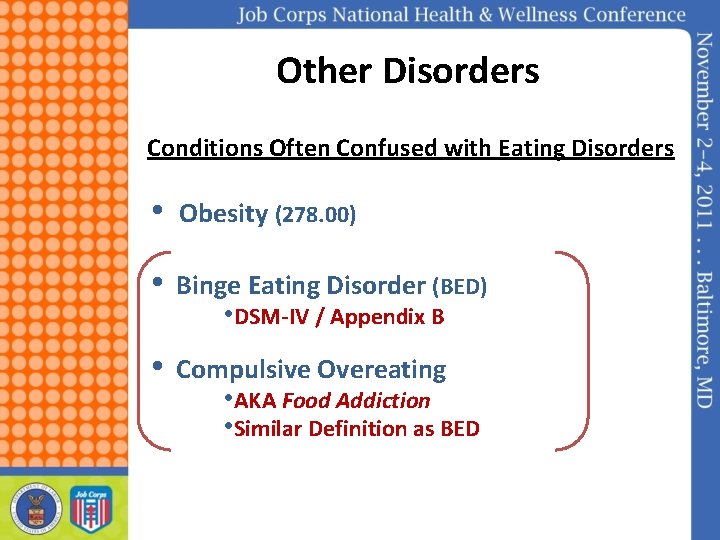
Other Disorders Conditions Often Confused with Eating Disorders • Obesity (278. 00) • Binge Eating Disorder (BED) • DSM-IV / Appendix B • Compulsive Overeating • AKA Food Addiction • Similar Definition as BED
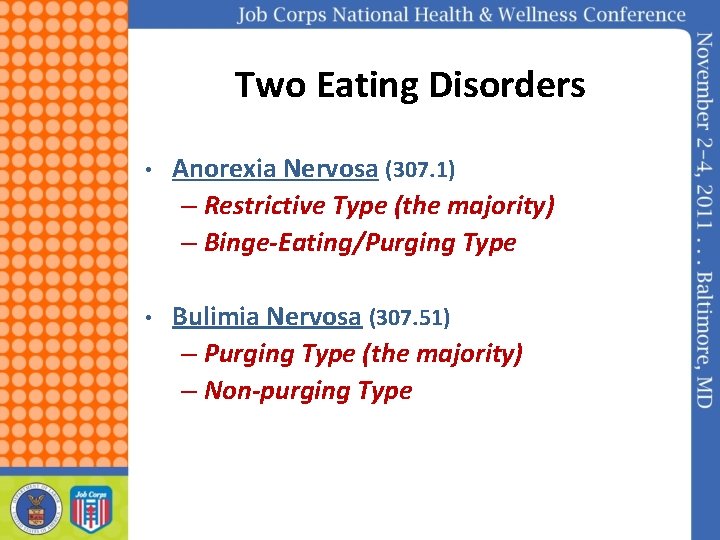
Two Eating Disorders • Anorexia Nervosa (307. 1) – Restrictive Type (the majority) – Binge-Eating/Purging Type • Bulimia Nervosa (307. 51) – Purging Type (the majority) – Non-purging Type
Anorexia Nervosa • Anorexia Nervosa is characterized by a refusal to maintain a minimally normal body weight
Bulimia Nervosa • Bulimia Nervosa is characterized by repeated episodes of binge eating followed by inappropriate compensatory behaviors
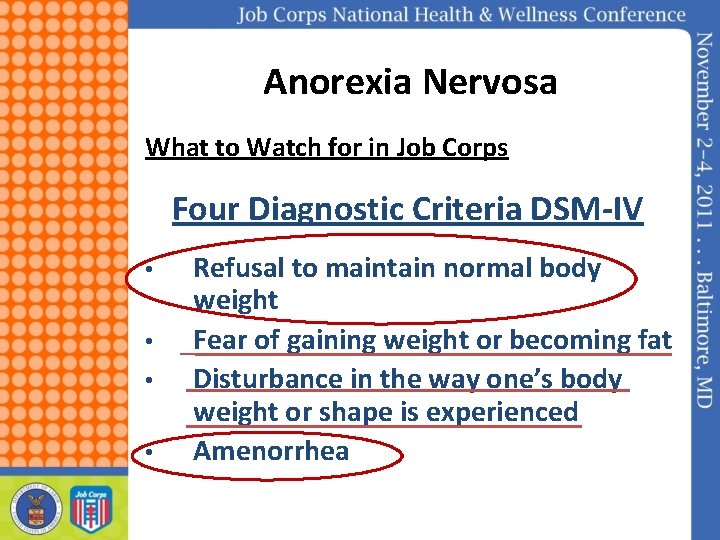
Anorexia Nervosa What to Watch for in Job Corps Four Diagnostic Criteria DSM-IV • • Refusal to maintain normal body weight Fear of gaining weight or becoming fat Disturbance in the way one’s body weight or shape is experienced Amenorrhea
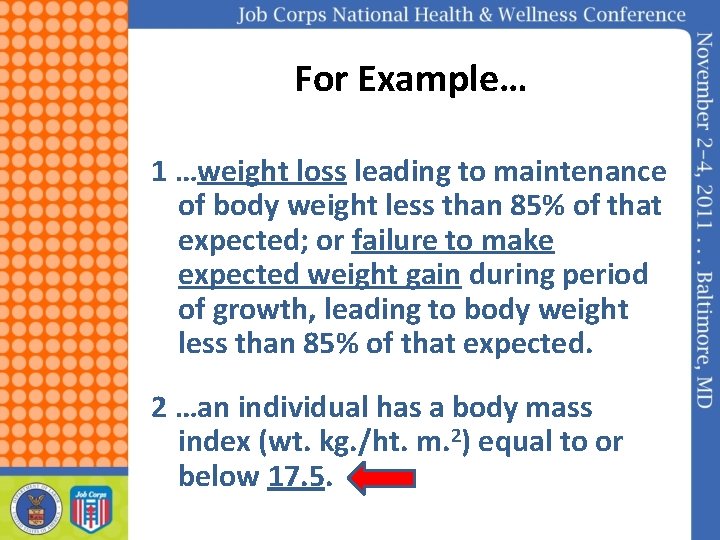
For Example… 1 …weight loss leading to maintenance of body weight less than 85% of that expected; or failure to make expected weight gain during period of growth, leading to body weight less than 85% of that expected. 2 …an individual has a body mass index (wt. kg. /ht. m. 2) equal to or below 17. 5.
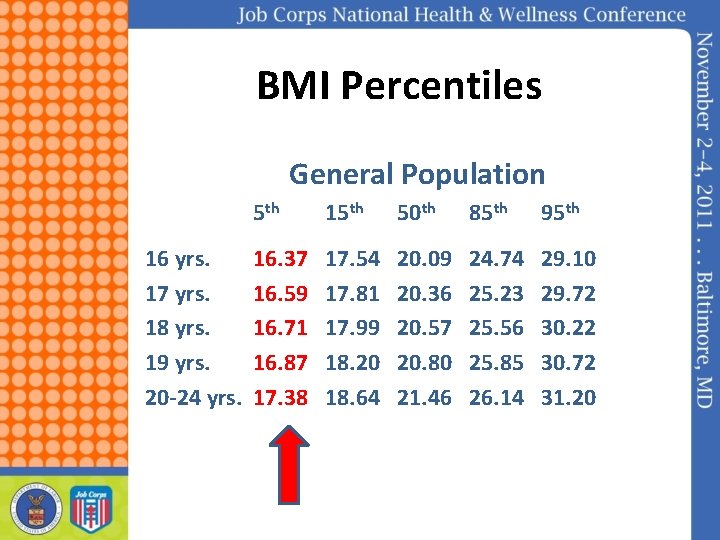
BMI Percentiles General Population 16 yrs. 17 yrs. 18 yrs. 19 yrs. 20 -24 yrs. 5 th 15 th 50 th 85 th 95 th 16. 37 16. 59 16. 71 16. 87 17. 38 17. 54 17. 81 17. 99 18. 20 18. 64 20. 09 20. 36 20. 57 20. 80 21. 46 24. 74 25. 23 25. 56 25. 85 26. 14 29. 10 29. 72 30. 22 30. 72 31. 20
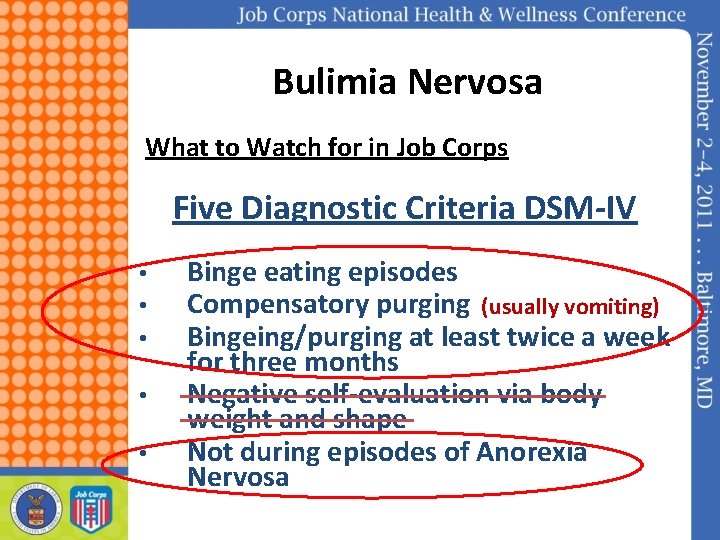
Bulimia Nervosa What to Watch for in Job Corps Five Diagnostic Criteria DSM-IV • • • Binge eating episodes Compensatory purging (usually vomiting) Bingeing/purging at least twice a week for three months Negative self-evaluation via body weight and shape Not during episodes of Anorexia Nervosa
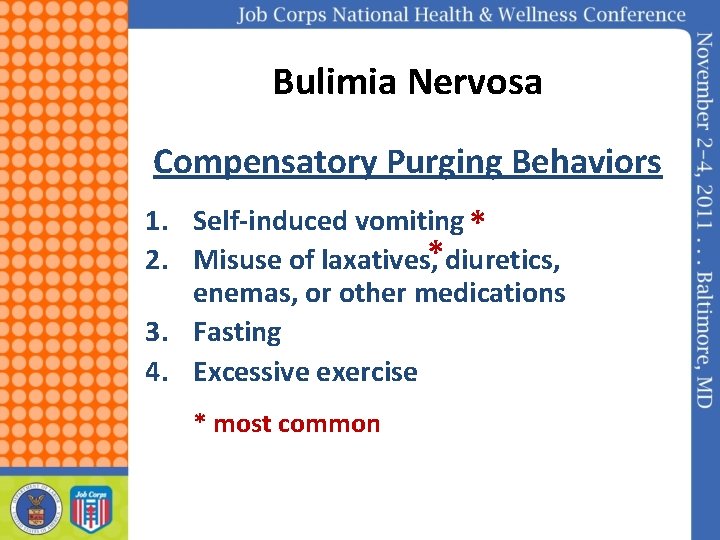
Bulimia Nervosa Compensatory Purging Behaviors 1. Self-induced vomiting * * 2. Misuse of laxatives, diuretics, enemas, or other medications 3. Fasting 4. Excessive exercise * most common
Eating Disorder NOS • If a person is struggling with eating disorder thoughts, feelings or behaviors, but does not have all the symptoms of anorexia or bulimia, that person may be diagnosed with eating disorder not otherwise specified (ED-NOS). • For example: – A person could meet all of the diagnostic criteria for bulimia nervosa are met except that the binge eating and inappropriate compensatory mechanisms occur at a frequency of less than twice a week or for duration of less than 3 months. – Binge-eating disorder is also officially an ED-NOS category (see separate fact sheet for BED): recurrent episodes of binge eating in the absence if the regular use of inappropriate compensatory behaviors characteristic of bulimia nervosa.
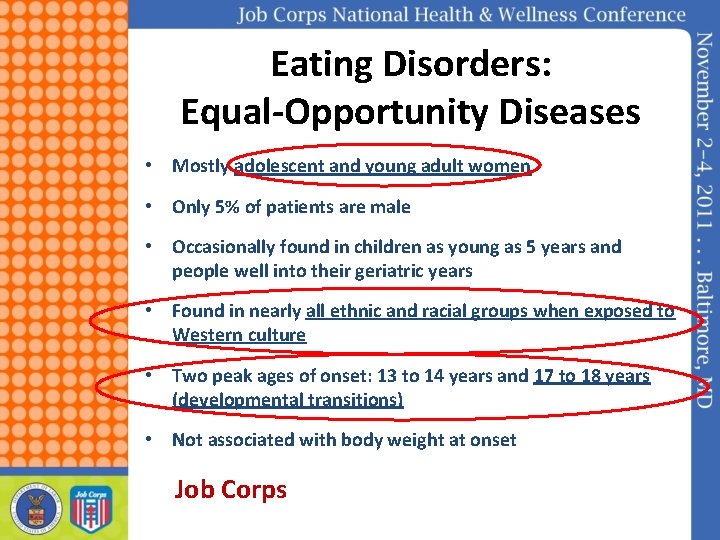
Eating Disorders: Equal-Opportunity Diseases • Mostly adolescent and young adult women • Only 5% of patients are male • Occasionally found in children as young as 5 years and people well into their geriatric years • Found in nearly all ethnic and racial groups when exposed to Western culture • Two peak ages of onset: 13 to 14 years and 17 to 18 years (developmental transitions) • Not associated with body weight at onset Job Corps
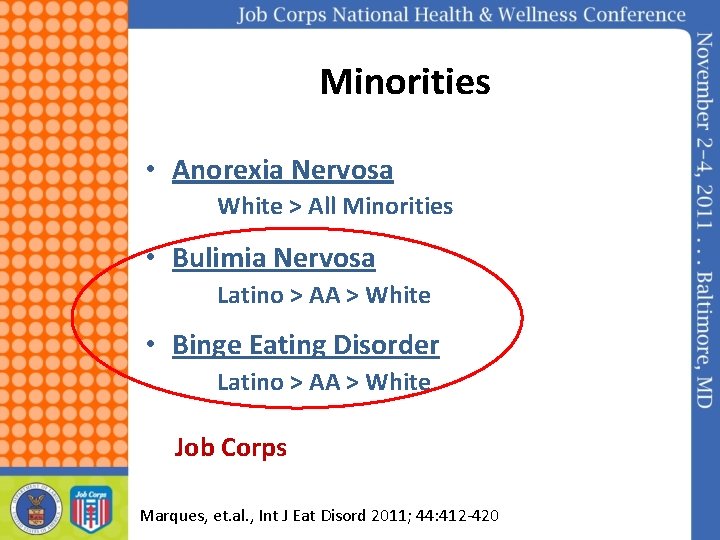
Minorities • Anorexia Nervosa White > All Minorities • Bulimia Nervosa Latino > AA > White • Binge Eating Disorder Latino > AA > White Job Corps Marques, et. al. , Int J Eat Disord 2011; 44: 412 -420
Eating Disorders Pose a Medical & Psychological Dilemma • Unexplained weight loss or involuntary vomiting is usually a sign of a serious medical illness • EDs are classified as a mental disorder but often present as a medical disorder • EDs have the highest mortality of all mental health conditions • Over half of these deaths are due to medical complications • Effective management of an eating disorder requires well informed multidisciplinary care
Mortality • NIH reports a wide range of 5 -15% life time mortality for anorexia • Others estimate 0. 5% annual death rate for anorexia and 0. 2% annual death rate for bulimia • Approximately 1 in 5 deaths in anorexia & bulimia are due to suicide Crow, et. al. , Am J Psychiatry 2009; 166: 1342 -1346 Arcelus, et. al. , Arch Gen Psychiatry. 2011; 68(7): 724 -731
Comorbidities as possible presenting symptoms • Anxiety • Obsessive-compulsive symptoms, especially related to eating and weight • Depression
Hurdles to Detection and Effective Treatment • Patients hide their problem out of fear and embarrassment • Patients rarely seek help on their own • There is a mistaken notion that patients must want help to get help
Key Concept • Eating disorders are more about body weight than eating! • Body weight is the key to understanding (and treating) eating disorders
Mary and the Amazing Muffins Eating Disorder vs. Weight Disorder
The Muffins

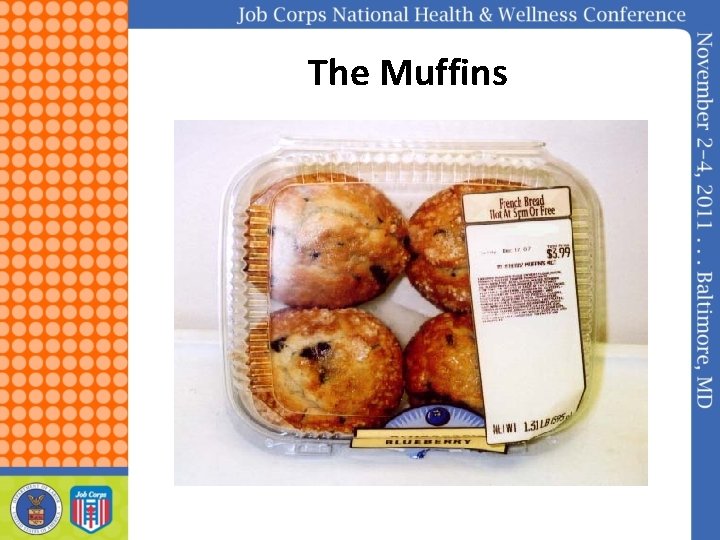
Amazing Muffins! Mary agreed to eat these muffins! Because they would have no effect on her weight. 0 calories 0 gm fat 1 gm protein
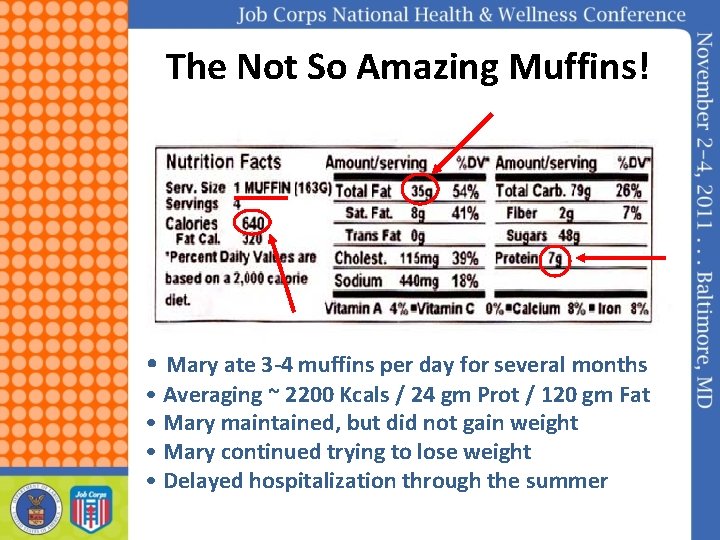
The Not So Amazing Muffins! • Mary ate 3 -4 muffins per day for several months • Averaging ~ 2200 Kcals / 24 gm Prot / 120 gm Fat • Mary maintained, but did not gain weight • Mary continued trying to lose weight • Delayed hospitalization through the summer
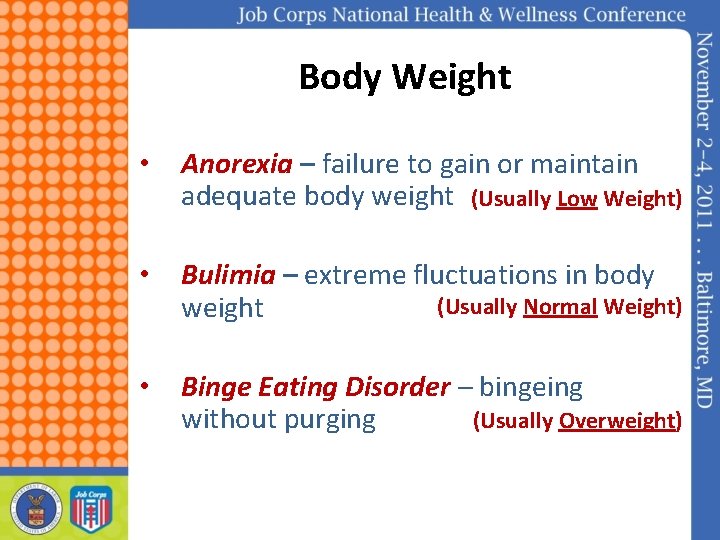
Body Weight • Anorexia – failure to gain or maintain adequate body weight (Usually Low Weight) • Bulimia – extreme fluctuations in body (Usually Normal Weight) weight • Binge Eating Disorder – bingeing (Usually Overweight) without purging
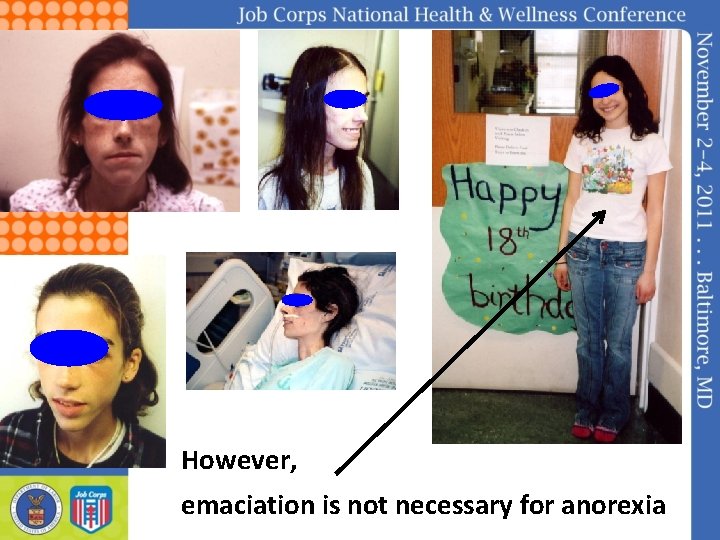
However, emaciation is not necessary for anorexia
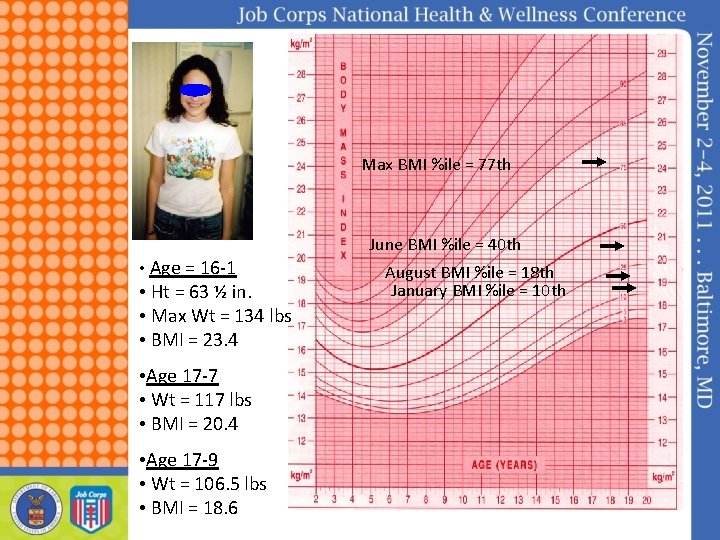
Max BMI %ile = 77 th June BMI %ile = 40 th • Age = 16 -1 • Ht = 63 ½ in. • Max Wt = 134 lbs • BMI = 23. 4 • Age 17 -7 • Wt = 117 lbs • BMI = 20. 4 • Age 17 -9 • Wt = 106. 5 lbs • BMI = 18. 6 August BMI %ile = 18 th January BMI %ile = 10 th
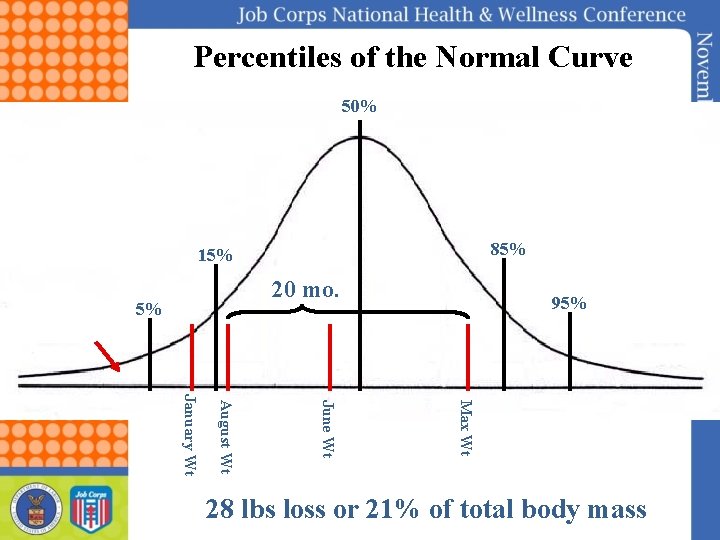
Percentiles of the Normal Curve 50% 85% 15% 20 mo. 5% 95% Max Wt June Wt August Wt January Wt 28 lbs loss or 21% of total body mass
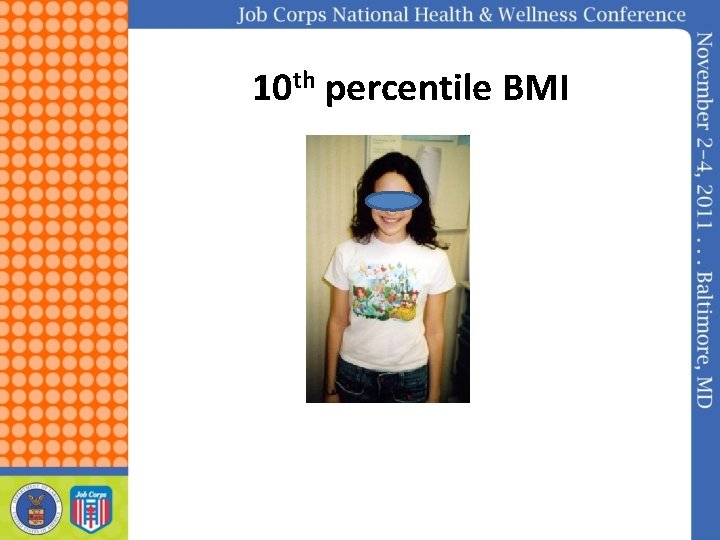
10 th percentile BMI
Making the Diagnosis in Job Corps • Anorexia – the health & wellness staff should recognize symptoms • Bulimia – fellow students will tattle on their classmates • Binge Eating – may be noticed by dorm staff and students may self report
Some Signs and Symptoms of Anorexia Nervosa To Watch for in Job Corps
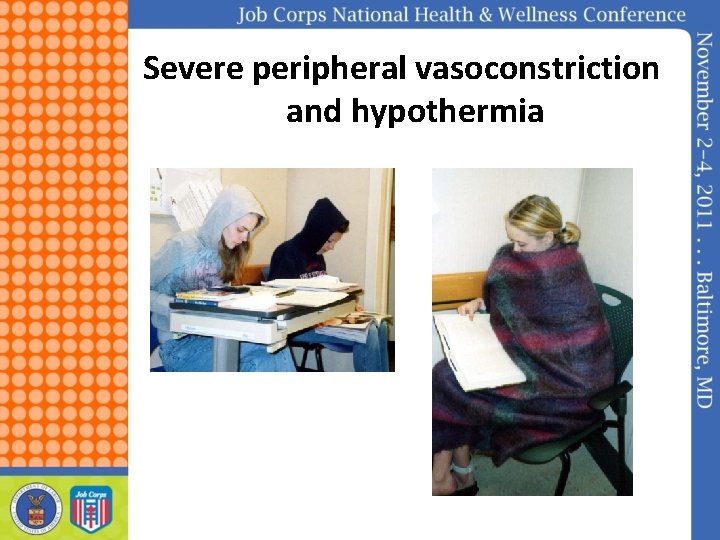
Severe peripheral vasoconstriction and hypothermia
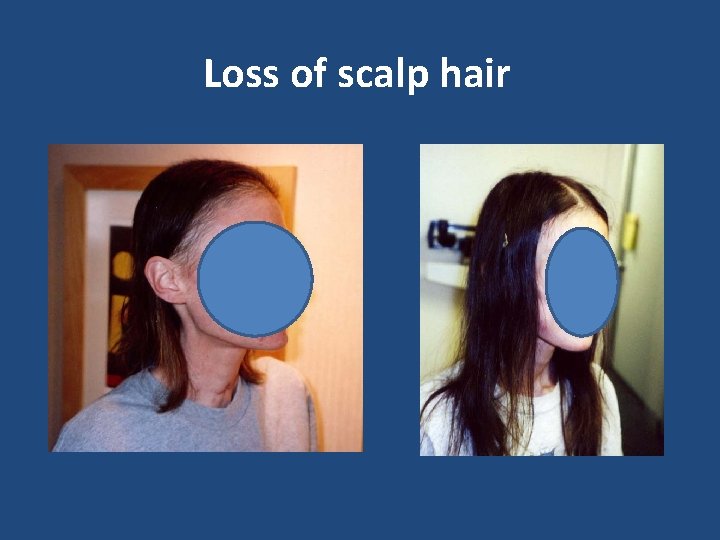
Loss of scalp hair
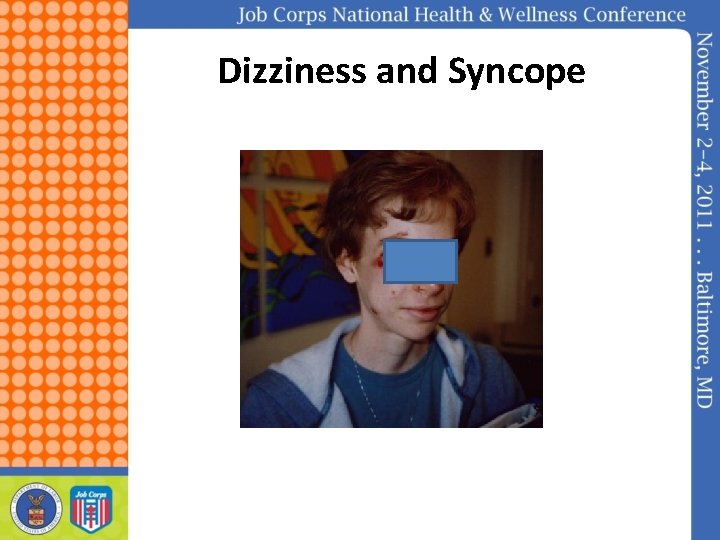
Dizziness and Syncope
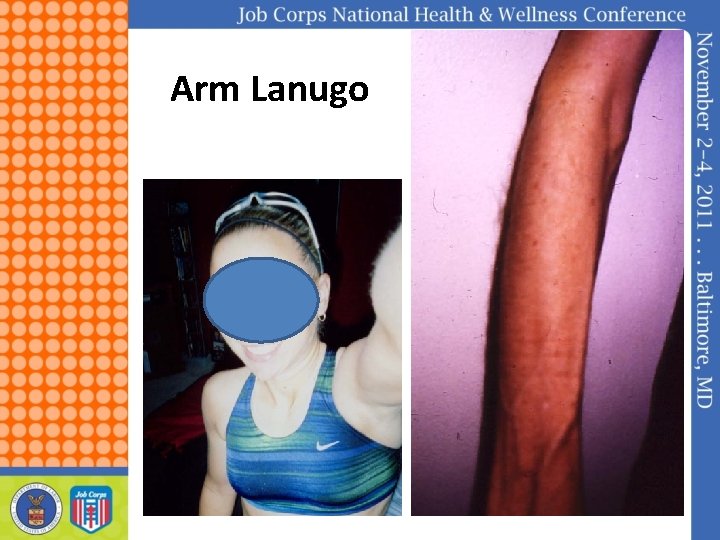
Arm Lanugo
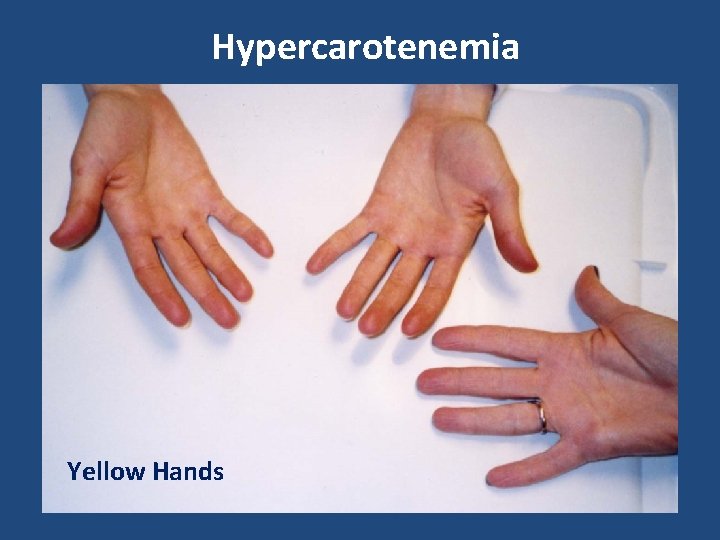
Hypercarotenemia Yellow Hands
Bulimia in the Dorms • • • Empty food wrappers everywhere Backed-up sink drains Backed-up shower drains Emesis around toilet Sleep disturbances Loss of motivation
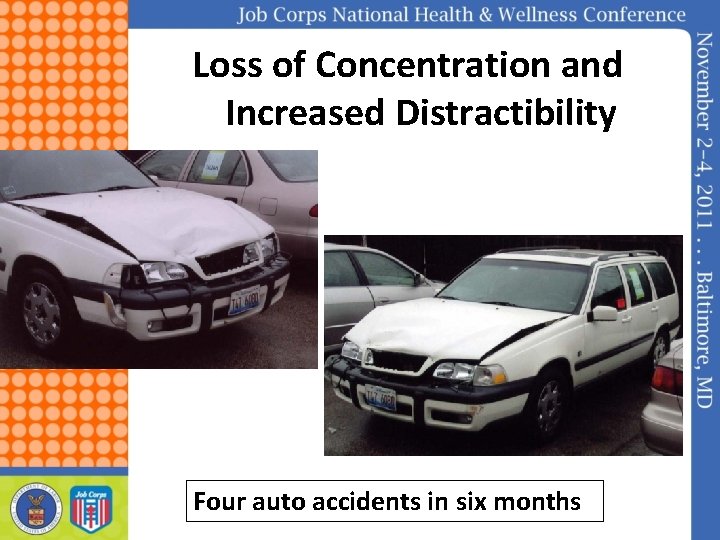
Loss of Concentration and Increased Distractibility Four auto accidents in six months
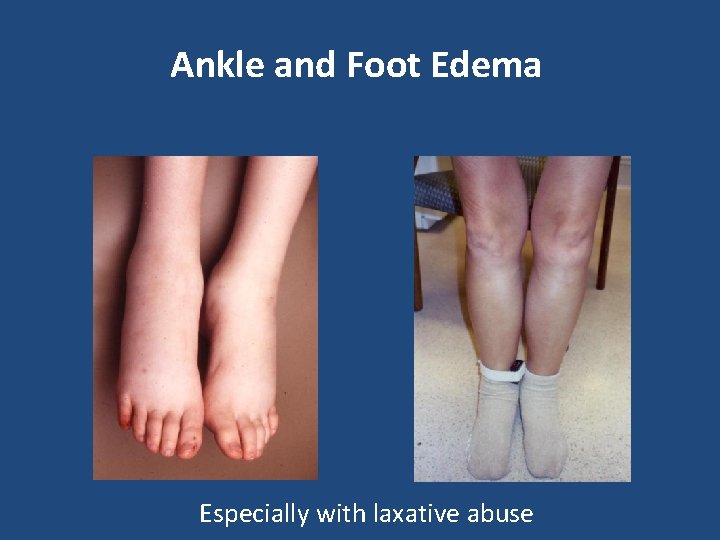
Ankle and Foot Edema Especially with laxative abuse
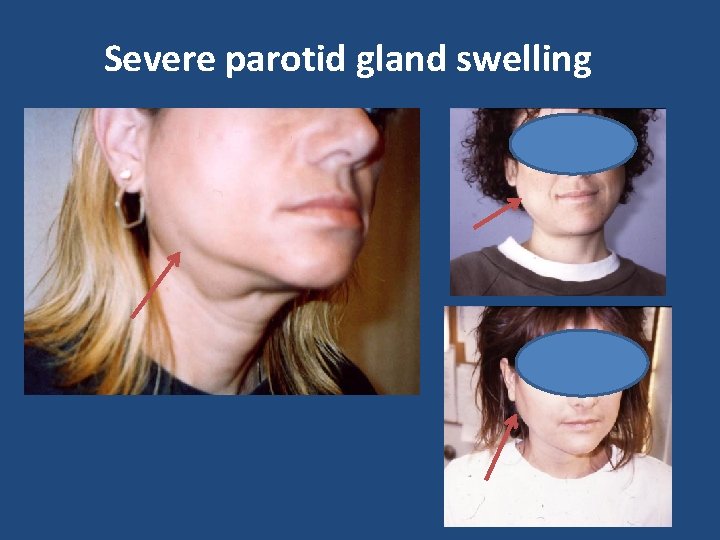
Severe parotid gland swelling
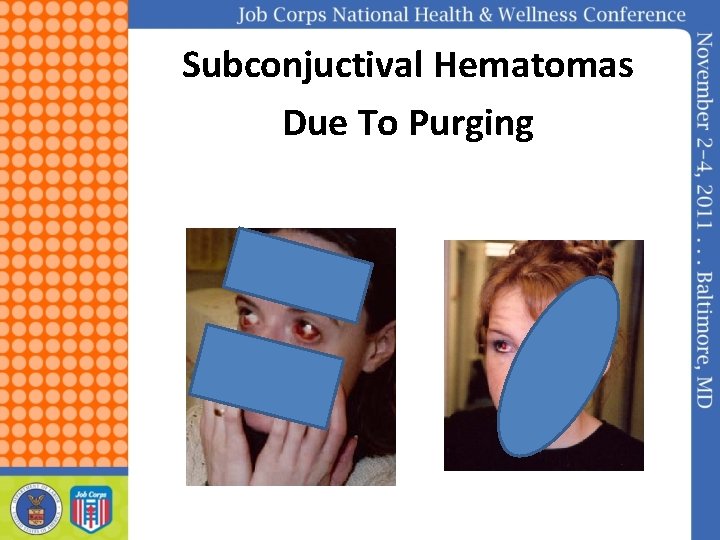
Subconjuctival Hematomas Due To Purging
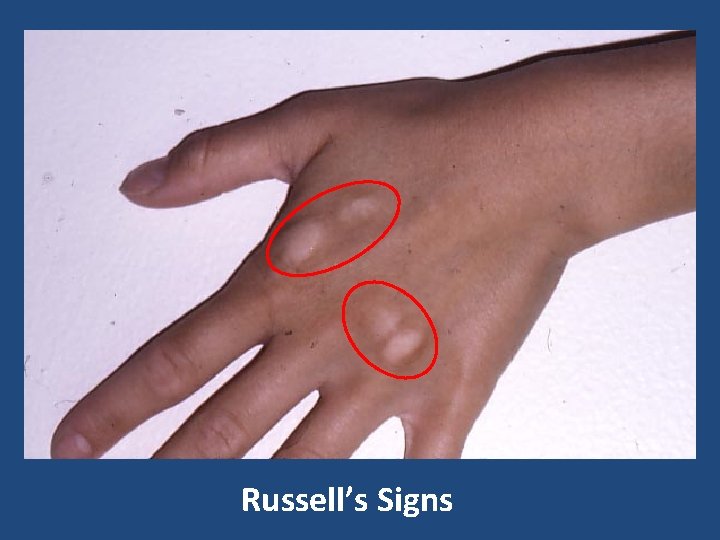
Russell’s Signs
Unusual Habits

Drinking chocolate milk from a spoon
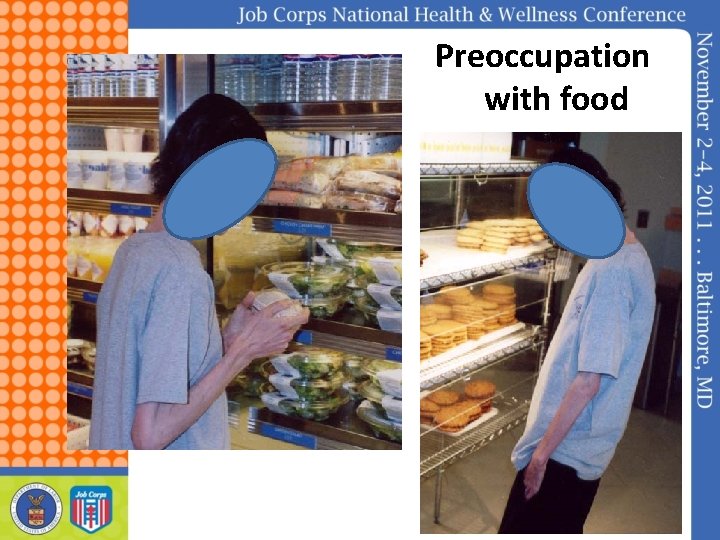
Preoccupation with food
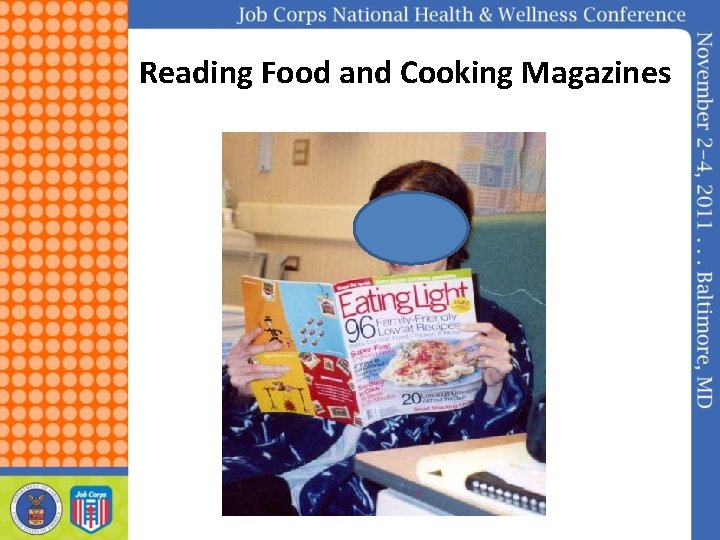
Reading Food and Cooking Magazines
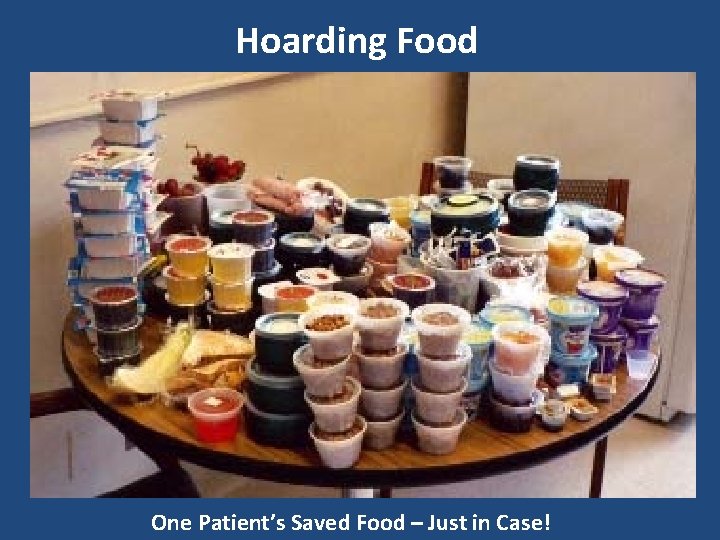
Hoarding Food One Patient’s Saved Food – Just in Case!
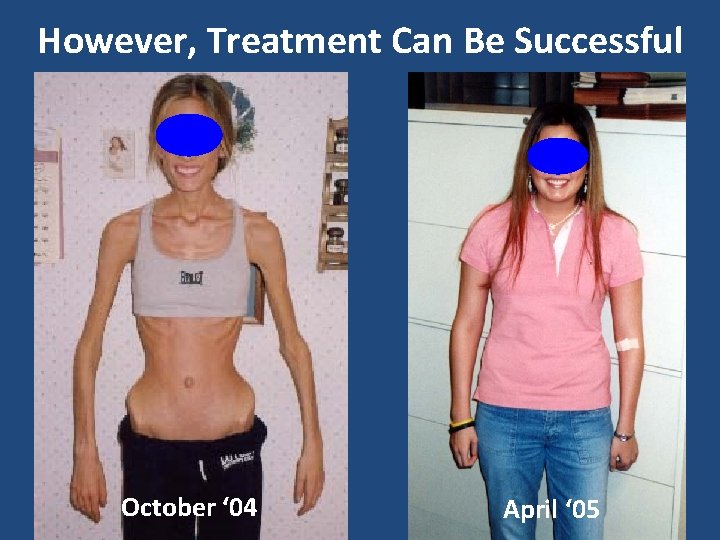
However, Treatment Can Be Successful October ‘ 04 April ‘ 05
Risks to Keeping Students in Job Corps with Eating Disorders • Missed classes from spending time in the infirmary • Decreased motivation for training • Occasional trips to the ER for dehydration and/or electrolyte imbalance • Possible medical hospitalization for the sickest of the affected students
Staff Education • Consider having an in-service to make staff aware of an eating disorder and what the approach should be in helping a student complete their training while struggling with this illness
Management on Center? • Bulimia students are sometimes helped by SSRI’s • Bulimia students must decrease their symptoms enough to live in the dorm, stay in class and minimize ER trips • Anorexia students must be willing to increase their weight to a safe level (est. 17. 5 BMI) • Anorexia students must be able to fully participate in the training and minimize their need for ER trips
Chronic Health Problems PRH 6. 10 R 1. b. 4 • “Students identified as having chronic health problems…. . shall be monitored as directed by the center physician or other appropriate center health care provider. ” Eating Disorders
Medical Separation PRH 6. 12 R 11. b “Students are medically separated when they are determined to have a pre-existing or acquired health condition that: • Significantly interferes with or precludes further training in Job Corps, or • The health problem is complicated to manage, or • The necessary treatment will be unusually costly. ” Last Resort
The Psychology Behind Eating Disorders
Psychological Factors • • • Sense of self worth based on weight Use food as a means to feel in control Black and White thinking Perfectionism Poor impulse control Inadequate coping skills
Interpersonal Factors • Troubled family and personal relationships • Difficulty expressing emotions and feelings • History of being teased or ridiculed based on size or weight • History of physical or sexual abuse
Social Factors • Cultural pressures that glorify "thinness" and place value on obtaining the "perfect body" • Narrow definitions of beauty that include only women and men of specific body weights and shapes • Cultural norms that value people on the basis of physical appearance and not inner qualities and strengths
Biological Factors • In some individuals with eating disorders, certain chemicals in the brain that control hunger, appetite, and digestion have been found to be imbalanced. The exact meaning and implications of these imbalances remains under investigation
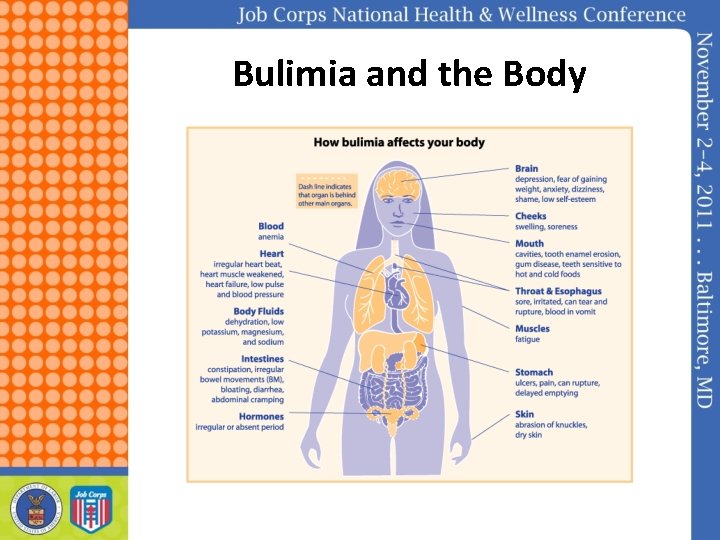
Bulimia and the Body
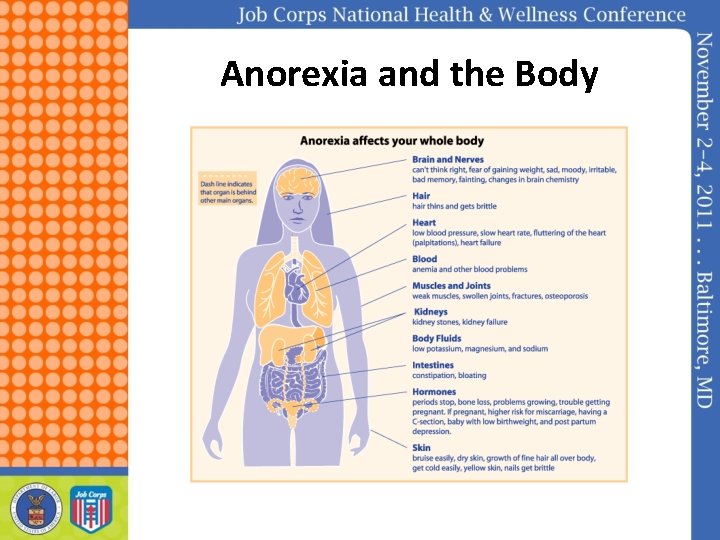
Anorexia and the Body
Thoughts and Beliefs • In spite of average or above-average intelligence, the person thinks in magical and simplistic ways, for example, "If I am thinner, I will feel better about myself. " • Becomes irrational and denies that anything is wrong. Argues with people who try to help, and then withdraws, sulks, or throws a tantrum. Wanting to be special, s/he becomes competitive. Strives to be the best, the smallest, the thinnest, and so forth. • Has trouble concentrating. Obsesses about food and weight and holds to rigid, perfectionistic standards for self and others. • Is envious of thin people in general and thinner people in particular. Seeks to emulate them.
Feelings • Has trouble talking about feelings, especially anger. Denies anger, saying something like, "Everything is OK. I am just tired and stressed. " Escapes stress by turning to binge food, exercise, or anorexic rituals. • Becomes moody, irritable, cross, snappish, and touchy. Responds to confrontation and even low-intensity interactions with tears, tantrums, or withdrawal. Feels s/he does not fit in and therefore avoids friends and activities. Withdraws into self and feelings, becoming socially isolated. • Feels inadequate, fearful of not measuring up. Frequently experiences depression, anxiety, guilt, loneliness, and at times overwhelming emptiness, meaninglessness, hopelessness, and despair.
Social Behavior • Tries to please everyone and withdraws when this is not possible. Tries to take care of others when s/he is the person who needs care. May present self as needy and dependent or conversely as fiercely independent and rejecting of all attempts to help. • Person tries to control what and where the family eats. S/he consistently selects low-fat, low-sugar non-threatening -- and unappealing -- foods and restaurants that provide these "safe" items. • Relationships tend to be either superficial or dependent. Person craves true intimacy but at the same time is terrified of it.
Body Image is… • How you see yourself when you look in the mirror or when you picture yourself in your mind. • What you believe about your own appearance (including your memories, assumptions, and generalizations). • How you feel about your body, including your height, shape, and weight. • How you sense and control your body as you move. How you feel in your body, not just about your body.
Challenges to Treatment • Lack of motivation to change – Intrinsically reinforced by the weight loss, because it feels good to them – May deny the existence of the problem, or the severity of it • Lack of insight – Not really about food more about sense of self
Eating Disorder Not Otherwise Specified Who develops ED-NOS? • ED-NOS typically begin in adolescence or early adulthood although they can occur at any time throughout the lifespan. • Like anorexia nervosa and bulimia, ED-NOS is far more common in females; however, among those individuals whose primary symptom is binge eating, the number of males and females is more even. • Estimates suggest that ED-NOS accounts for almost three quarters of all community treated eating disorder cases.
What are the Common Signs of ED-NOS? • For individuals who binge, most notable is the disappearance of large amounts of food, long periods of eating, or noticeable blocks of time when the individual is alone. • This preoccupation and these behaviors allow the person to shift their focus from painful feelings and reduce tension and anxiety.
What are the Medical Complications? • Individuals with ED-NOS who binge and purge run risks similar to bulimia in that they can severely damage their bodies. Electrolyte imbalance and dehydration can occur and may cause cardiac complications and, occasionally, sudden death. • In rare instances, binge eating can cause the stomach to rupture.
What Treatment is Recommended? • Cognitive-behavioral therapy, either in a group setting or individual therapy session, has been shown to benefit. It focuses on self-monitoring of eating and purging behaviors as well as changing the distorted thinking patterns associated with the disorder. Cognitive-behavioral therapy is often combined with nutritional counseling and/or antidepressant medications such as fluoxetine (Prozac). • Treatment plans should be adjusted to meet the needs of the individual concerned, but usually a comprehensive treatment plan involving a variety of experts and approaches is best. It is important to take an approach that involves developing support for the person with an eating disorder from the family environment or within the patient’s community environment (support groups or other socially supportive environments).




BARBECUE!!! 9/17/2020 85
9/17/2020 86



















30 yrs and still sane?
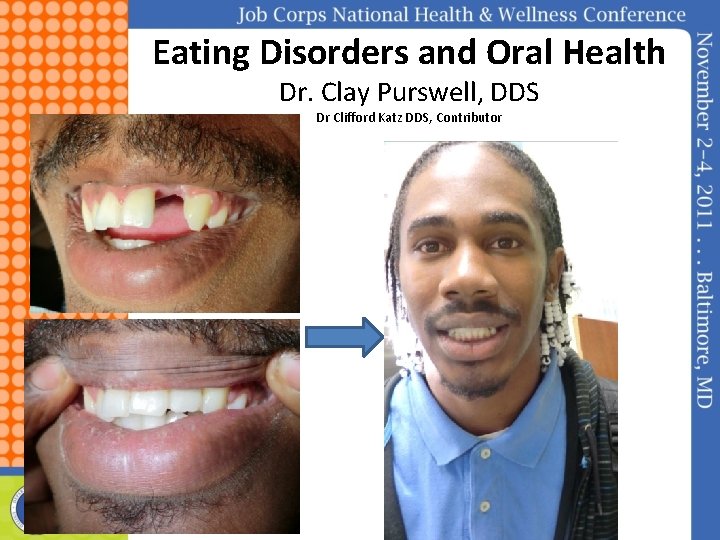
Eating Disorders and Oral Health Dr. Clay Purswell, DDS Dr Clifford Katz DDS, Contributor
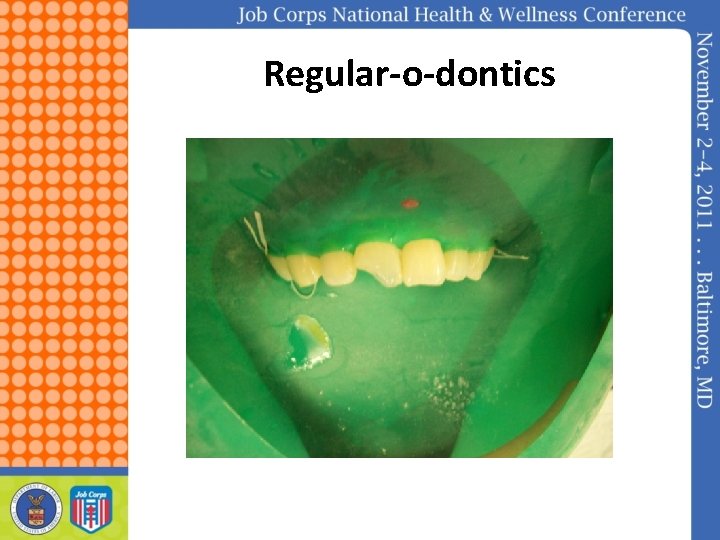
Regular-o-dontics
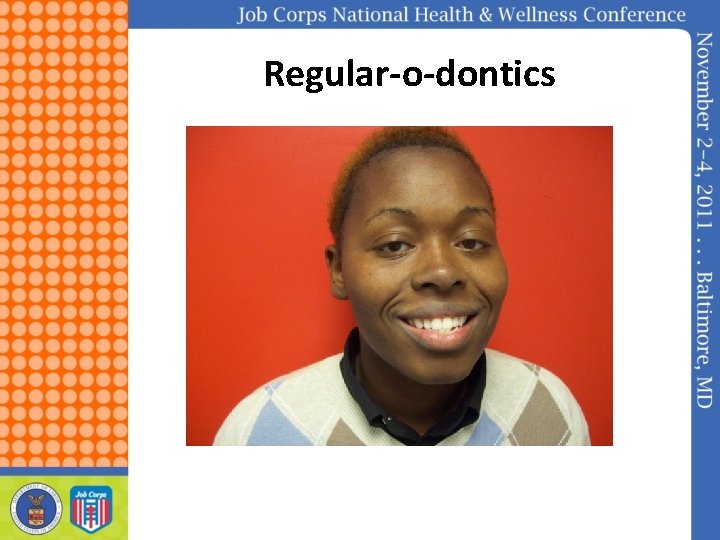
Regular-o-dontics
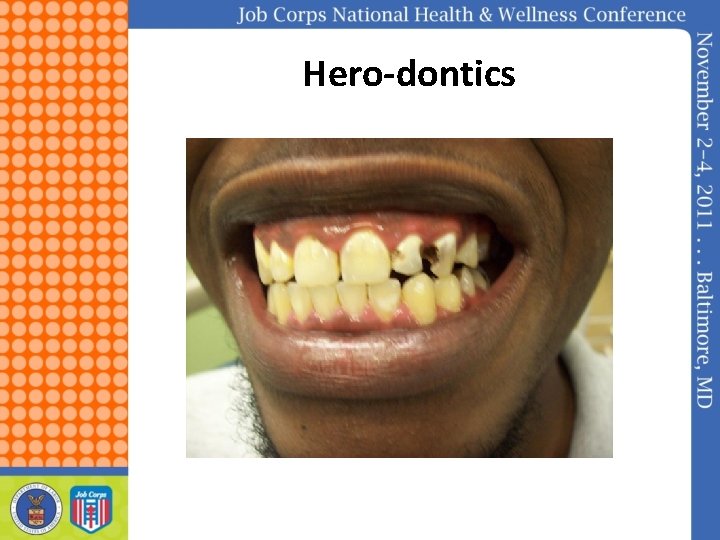
Hero-dontics
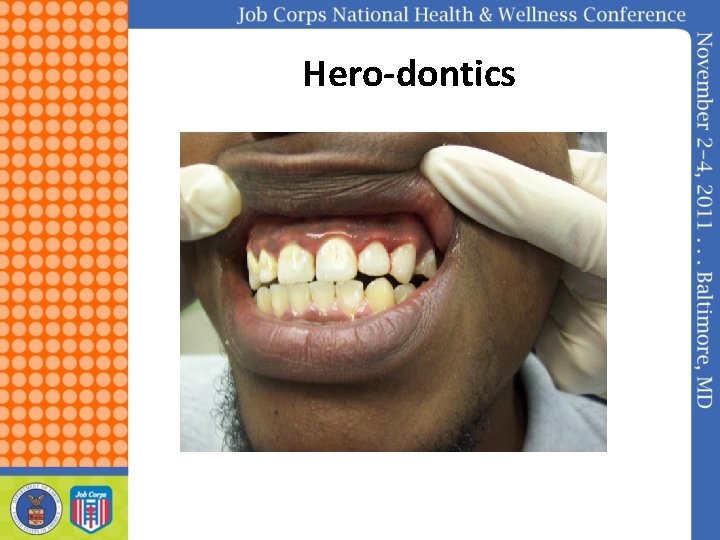
Hero-dontics
? - Dontics
Eating Disorders and Oral Health- What Determines Oral Health?
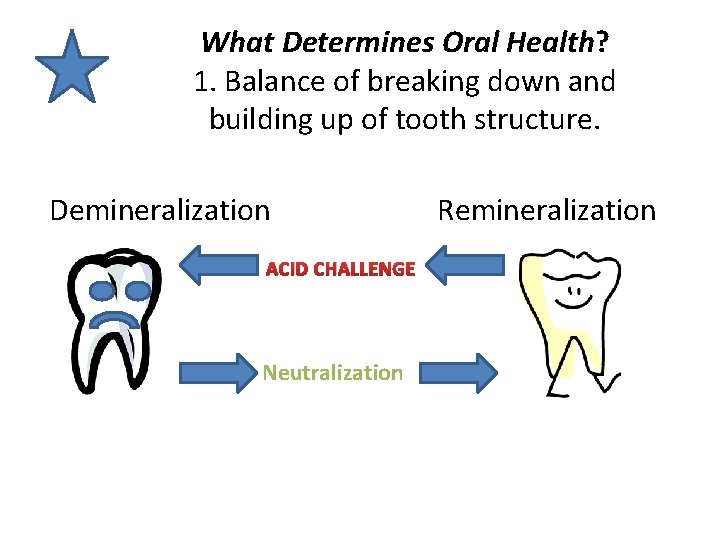
What Determines Oral Health? 1. Balance of breaking down and building up of tooth structure. Demineralization ACID CHALLENGE Neutralization Remineralization
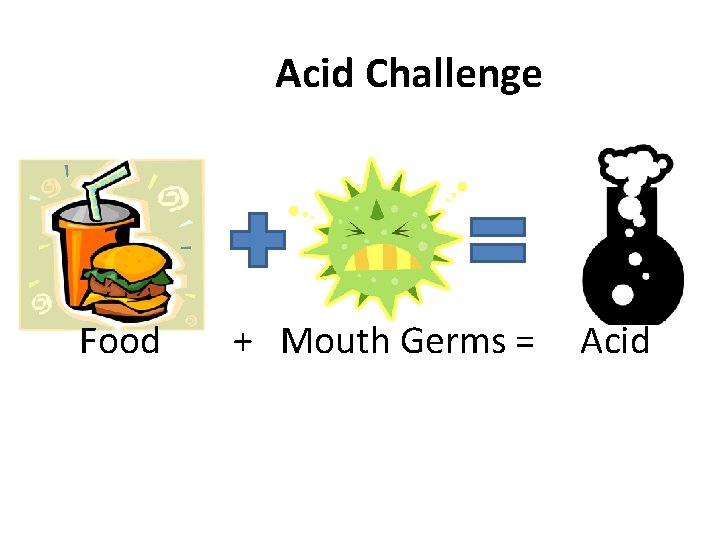
Acid Challenge Food + Mouth Germs = Acid
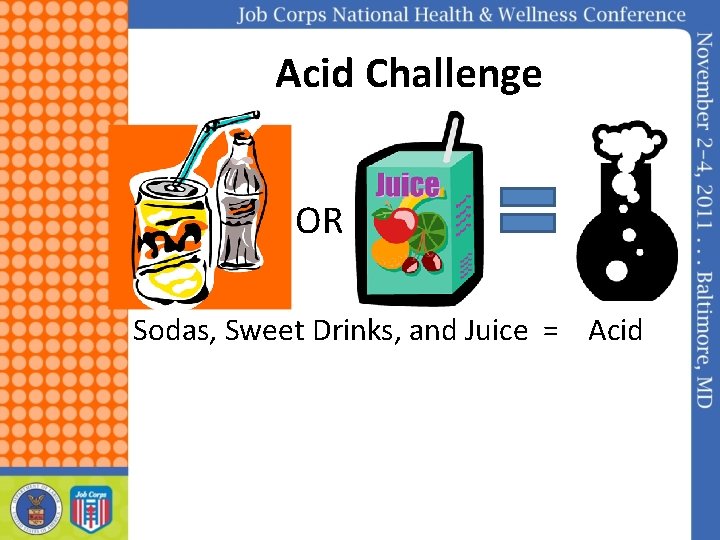
Acid Challenge OR Sodas, Sweet Drinks, and Juice = Acid
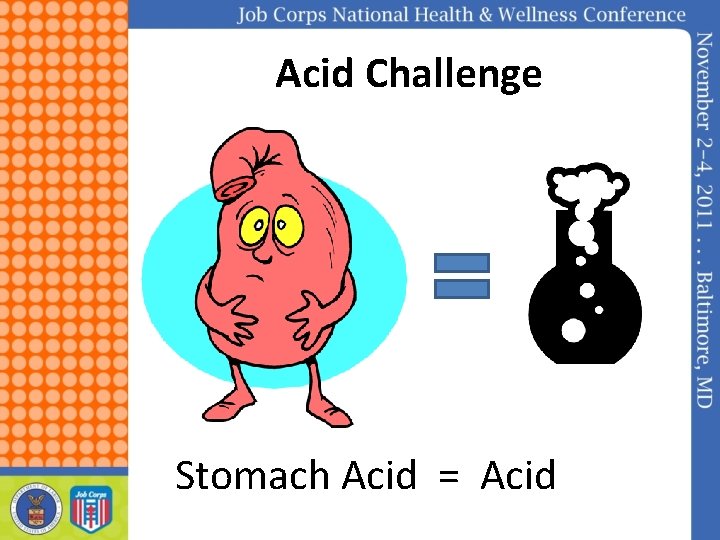
Acid Challenge Stomach Acid = Acid
Acid Challenge? ? Drugs of abuse = ?
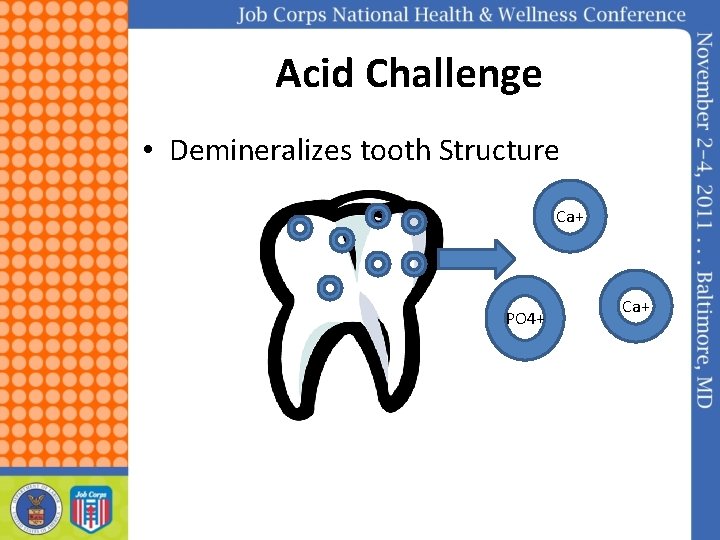
Acid Challenge • Demineralizes tooth Structure C Ca+ PO 4+ Ca+
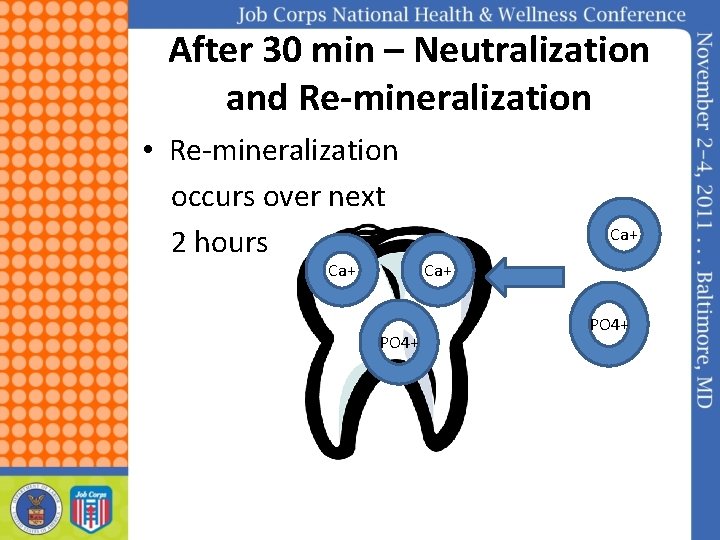
After 30 min – Neutralization and Re-mineralization • Re-mineralization occurs over next 2 hours Ca+ PO 4+
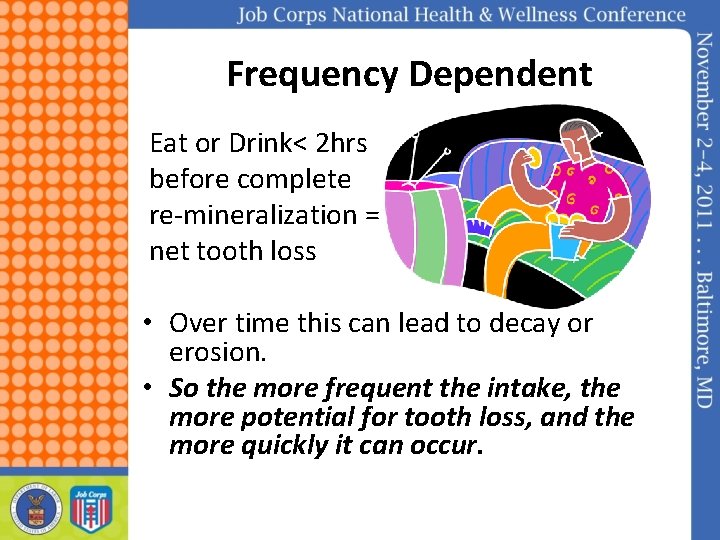
Frequency Dependent Eat or Drink< 2 hrs before complete re-mineralization = net tooth loss • Over time this can lead to decay or erosion. • So the more frequent the intake, the more potential for tooth loss, and the more quickly it can occur.
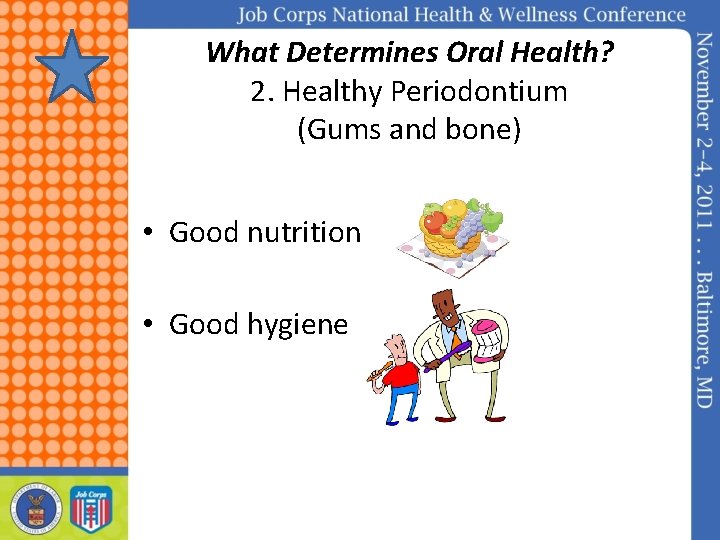
What Determines Oral Health? 2. Healthy Periodontium (Gums and bone) • Good nutrition • Good hygiene
What Determines Oral Health? 3. Other Factors • 1. Disease • 2. Physiologic processes including – Inflammatory – Ulcerative – Carcinogenic – Auto Immune • 3. Diet, Habits, and Lifestyle

Other “Eating Disorders” And Oral Health
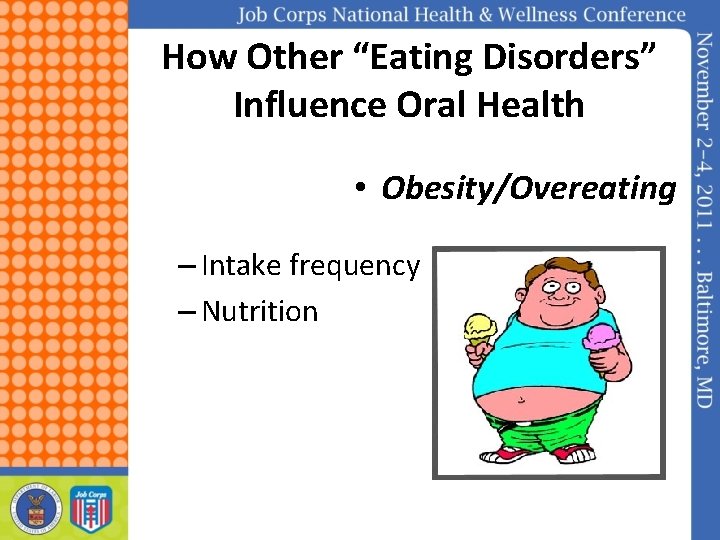
How Other “Eating Disorders” Influence Oral Health • Obesity/Overeating – Intake frequency – Nutrition
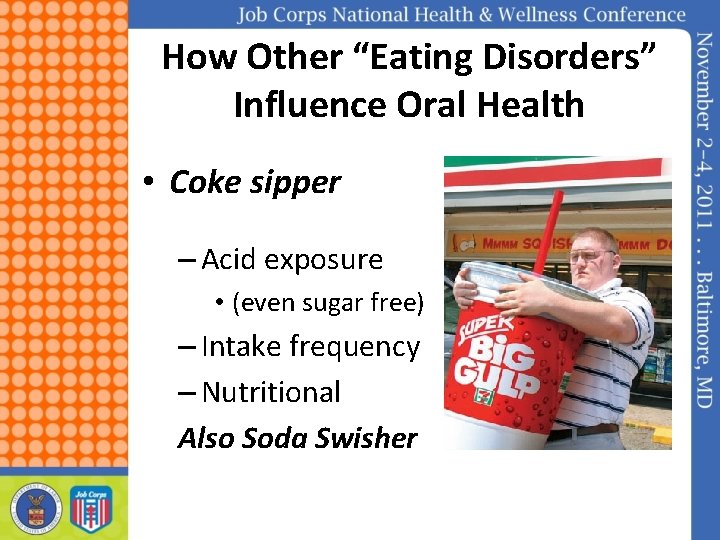
How Other “Eating Disorders” Influence Oral Health • Coke sipper – Acid exposure • (even sugar free) – Intake frequency – Nutritional Also Soda Swisher
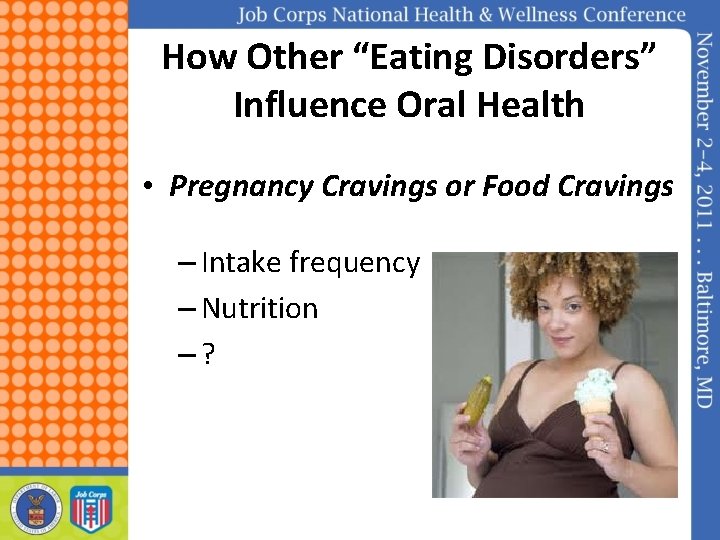
How Other “Eating Disorders” Influence Oral Health • Pregnancy Cravings or Food Cravings – Intake frequency – Nutrition –?
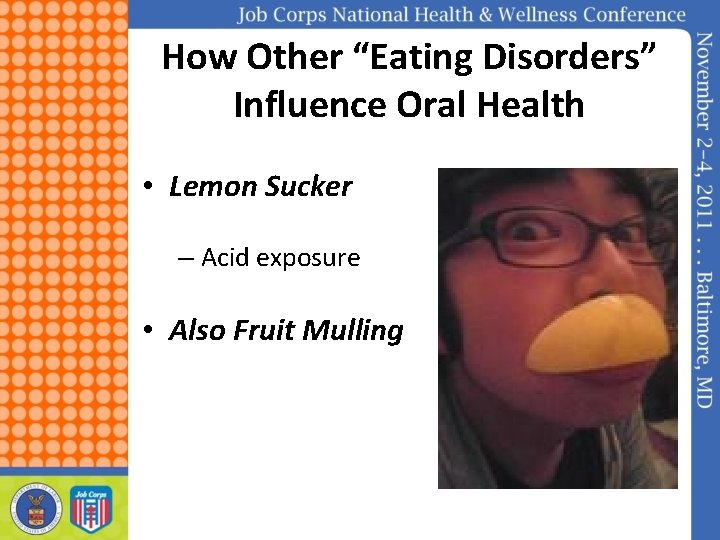
How Other “Eating Disorders” Influence Oral Health • Lemon Sucker – Acid exposure • Also Fruit Mulling
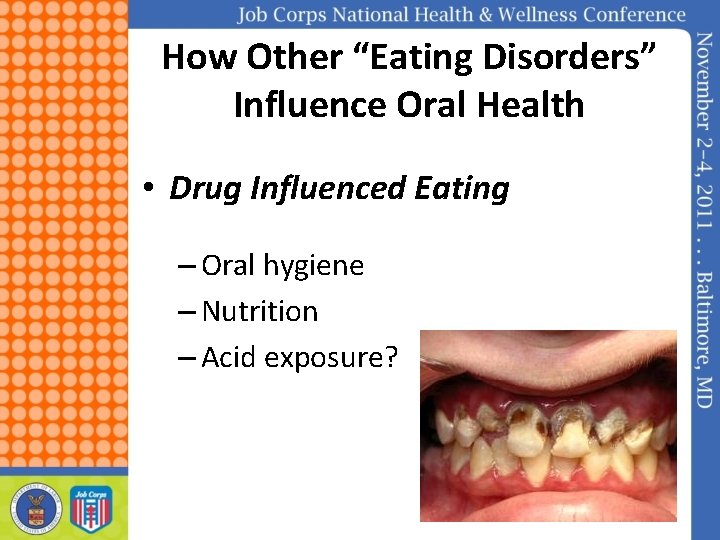
How Other “Eating Disorders” Influence Oral Health • Drug Influenced Eating – Oral hygiene – Nutrition – Acid exposure?
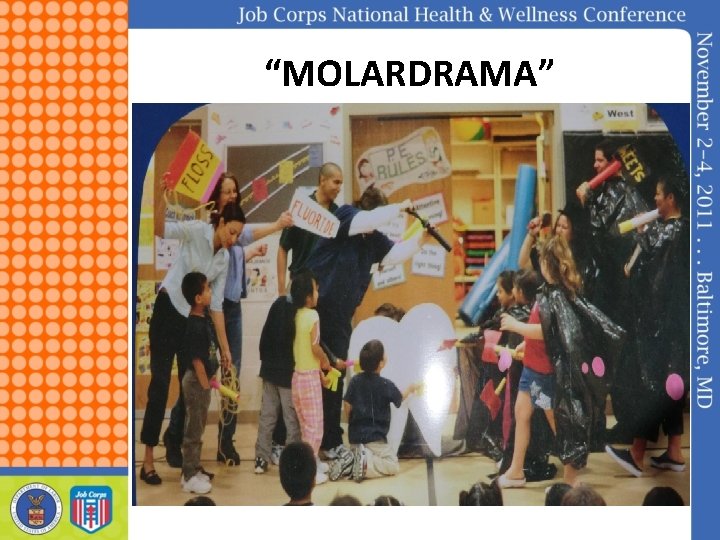
“MOLARDRAMA”
Effects of Anorexia and Bulimia
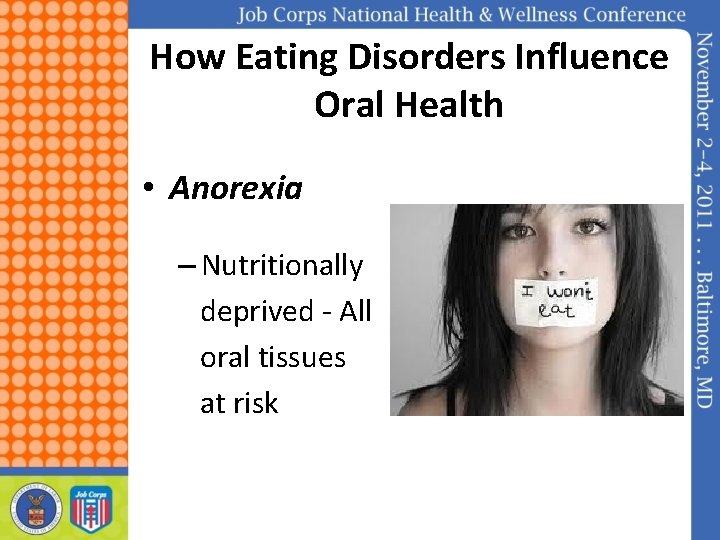
How Eating Disorders Influence Oral Health • Anorexia – Nutritionally deprived - All oral tissues at risk
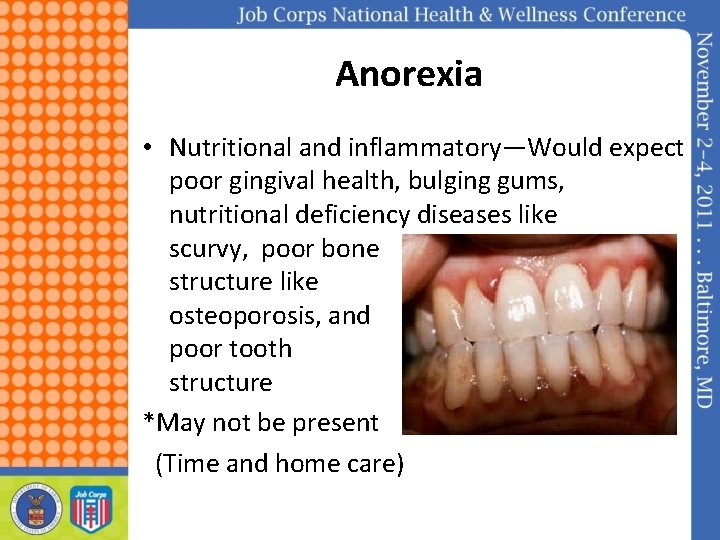
Anorexia • Nutritional and inflammatory—Would expect poor gingival health, bulging gums, nutritional deficiency diseases like scurvy, poor bone structure like osteoporosis, and poor tooth structure *May not be present (Time and home care)
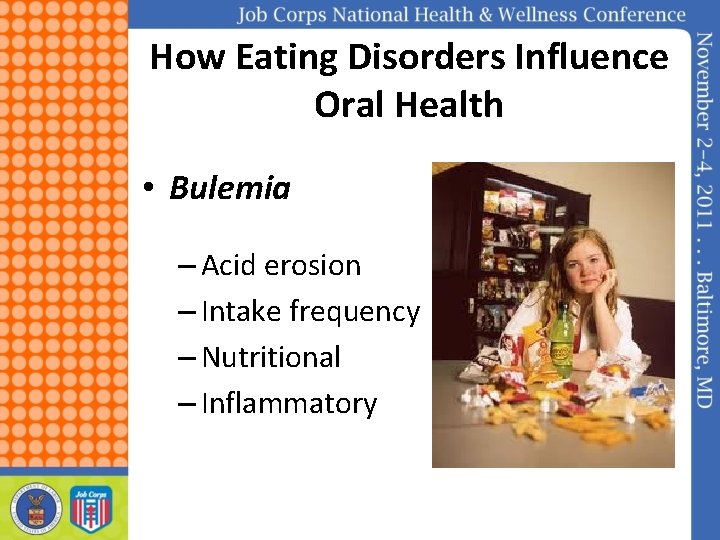
How Eating Disorders Influence Oral Health • Bulemia – Acid erosion – Intake frequency – Nutritional – Inflammatory
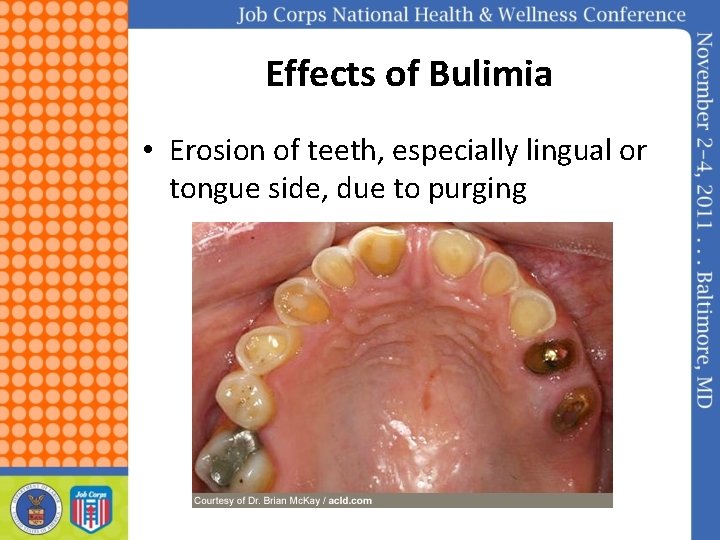
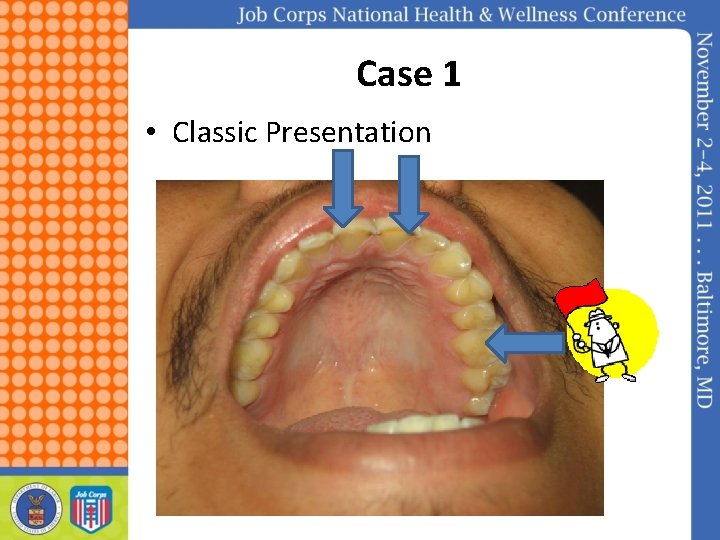
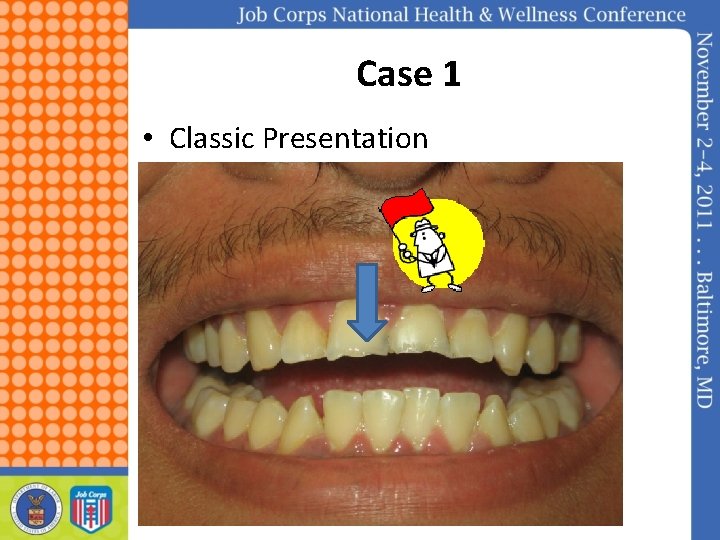
Effects of Bulimia • Erosion of teeth, especially lingual or tongue side, due to purging
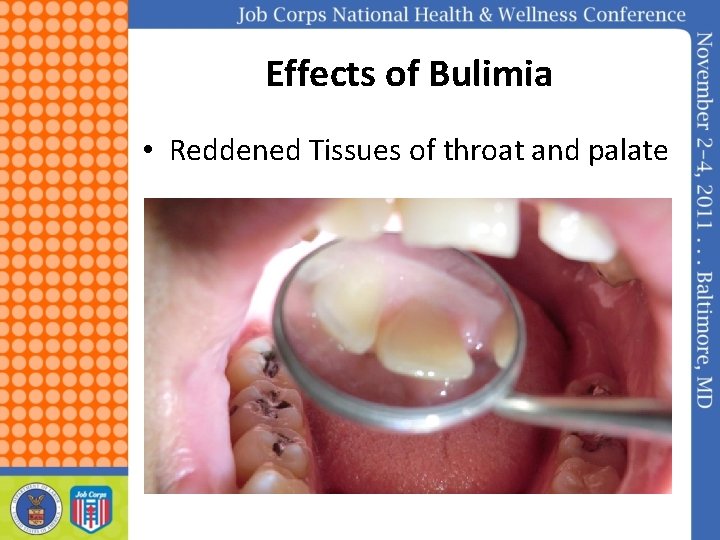
Effects of Bulimia • Reddened Tissues of throat and palate
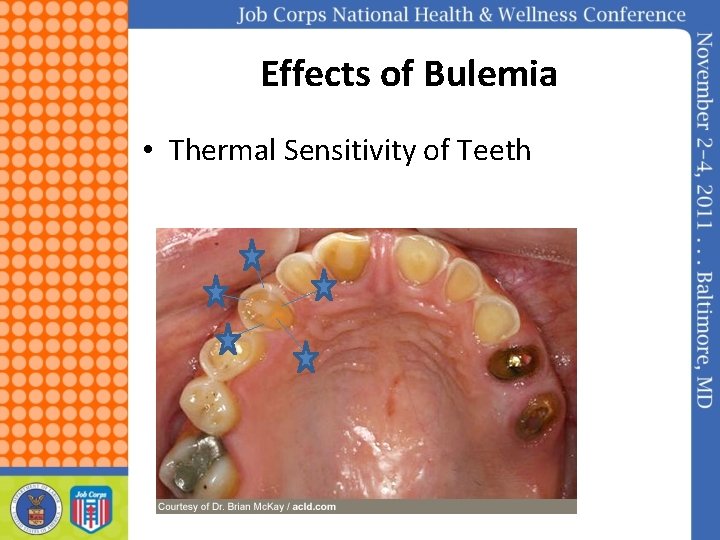
Effects of Bulemia • Thermal Sensitivity of Teeth
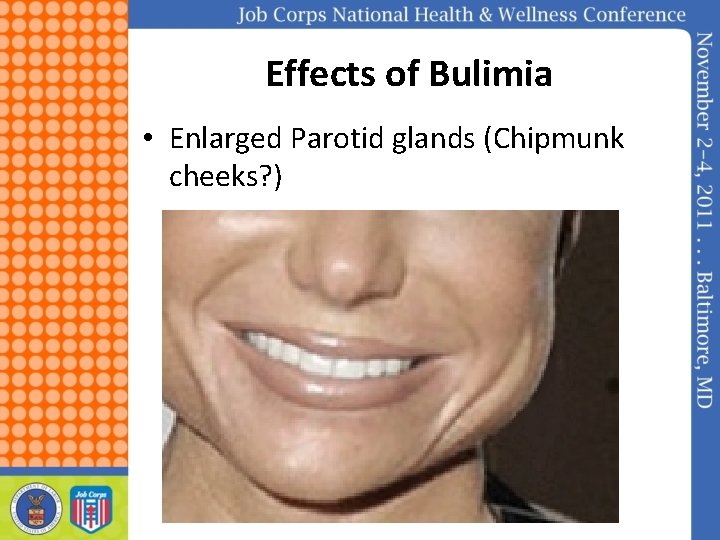
Effects of Bulimia • Enlarged Parotid glands (Chipmunk cheeks? )
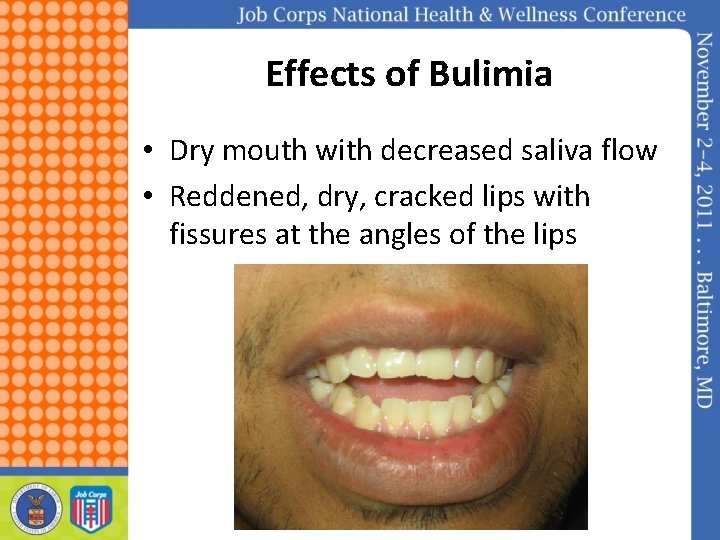
Effects of Bulimia • Dry mouth with decreased saliva flow • Reddened, dry, cracked lips with fissures at the angles of the lips

Picture of Me and Kids in uniforms
CASE STUDIES and Warning Flags
Case 1 • Classic Presentation
Case 1 • Classic Presentation
Case 2 • Warning Flags
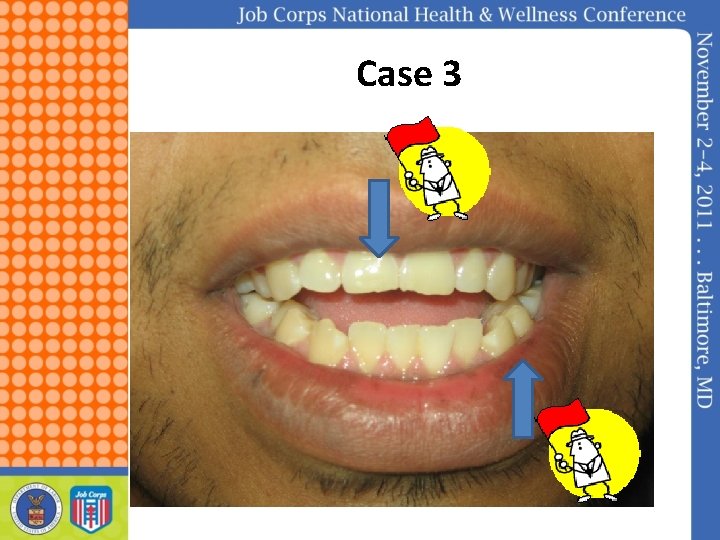
Case 3
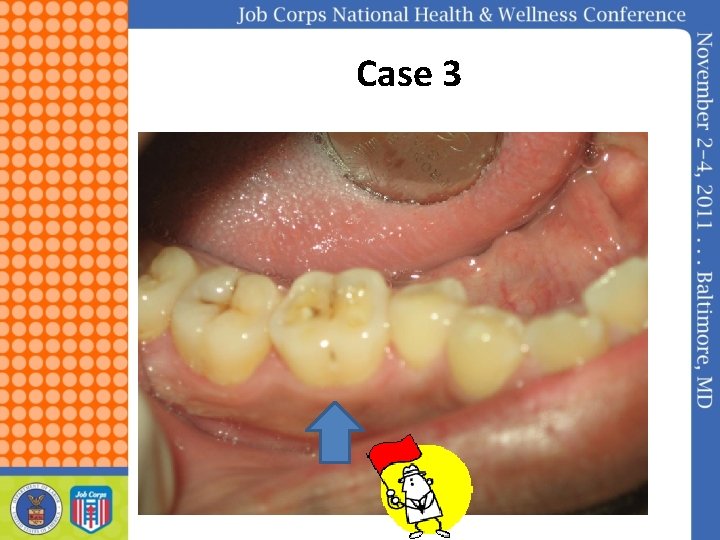
Case 3
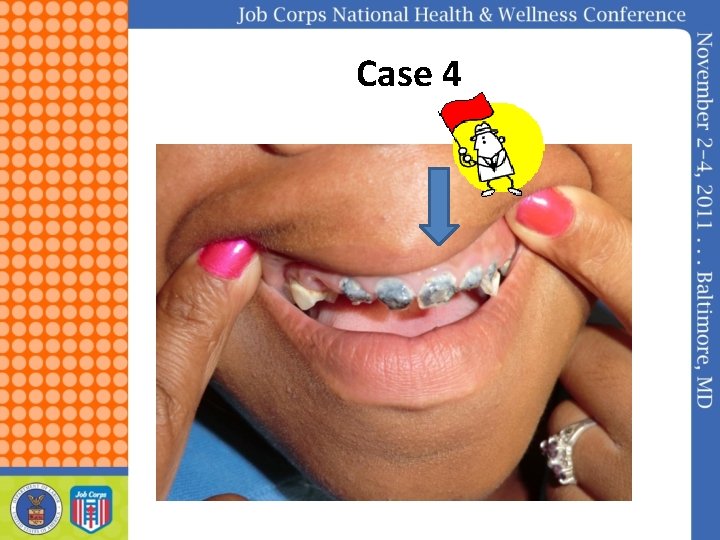
Case 4
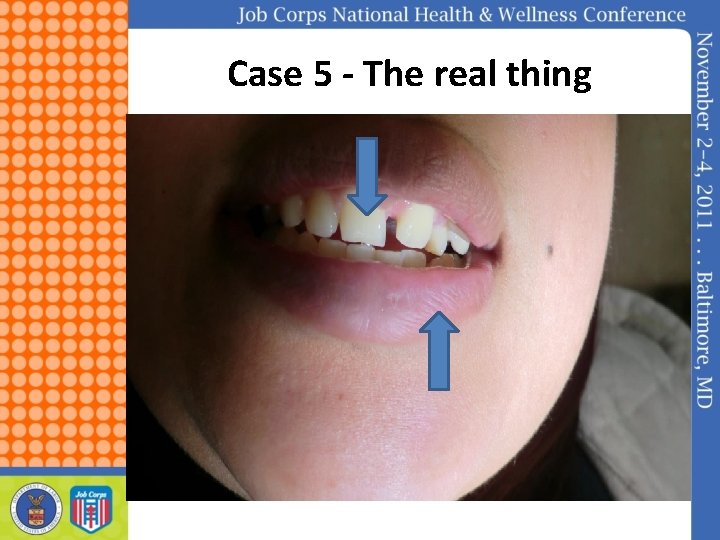
Case 5 - The real thing
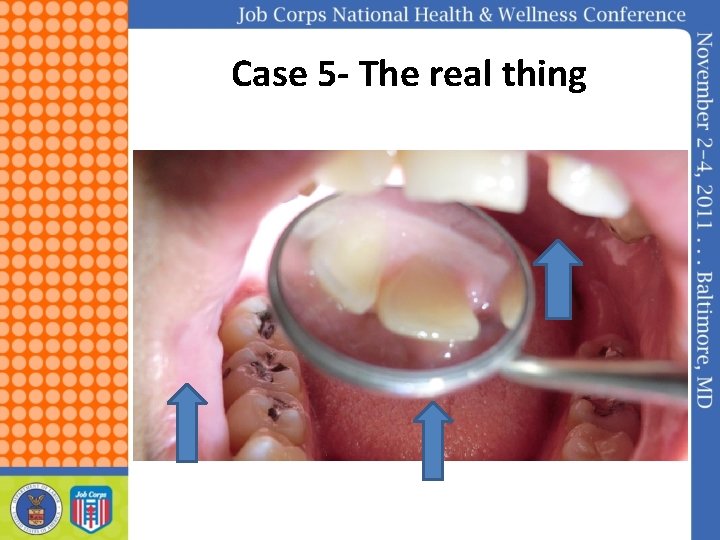
Case 5 - The real thing
Dental Management of Eating Disorder Patient
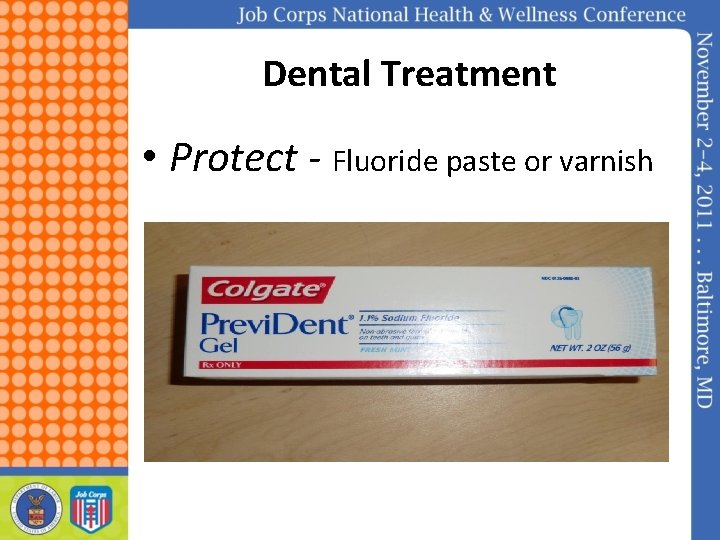
Dental Treatment • Protect - Fluoride paste or varnish
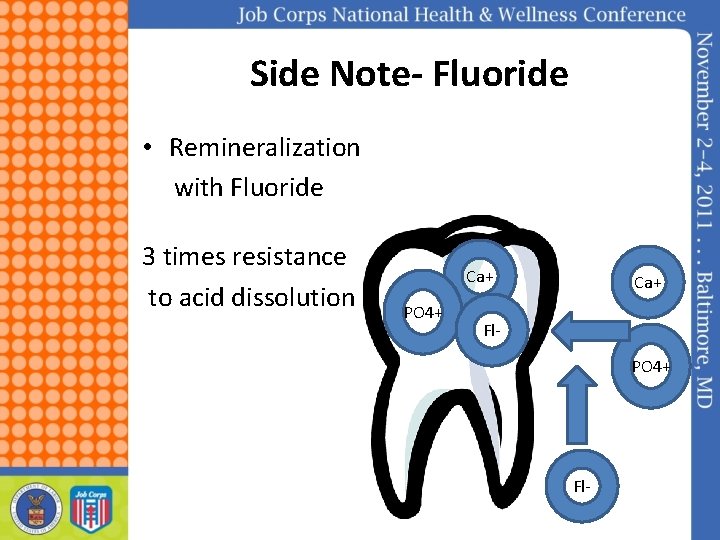
Side Note- Fluoride • Remineralization with Fluoride 3 times resistance to acid dissolution Ca+ PO 4+ Ca+ Fl. PO 4+ Fl-
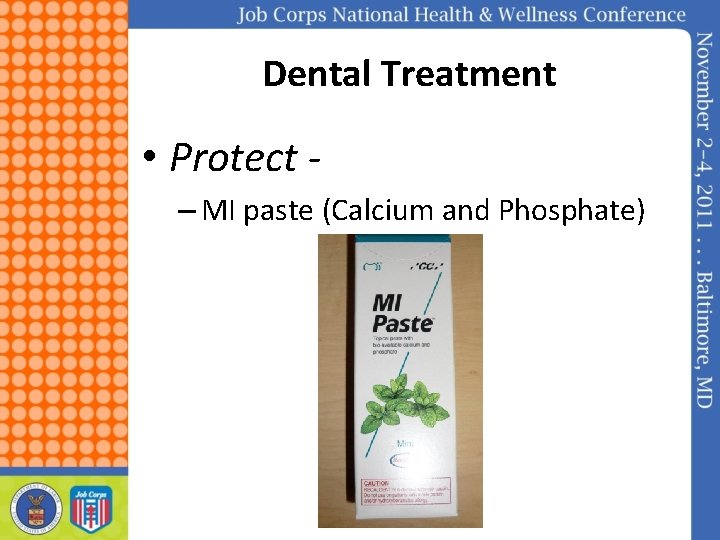
Dental Treatment • Protect – MI paste (Calcium and Phosphate)
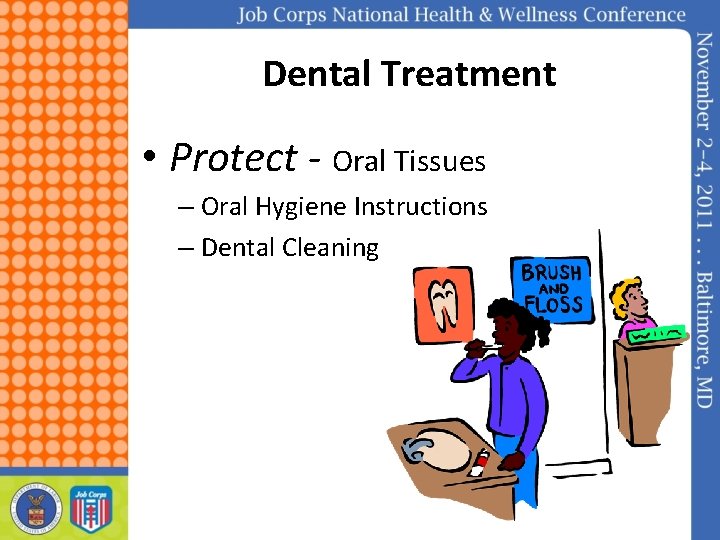
Dental Treatment • Protect - Oral Tissues – Oral Hygiene Instructions – Dental Cleaning
Dental Treatment • Restore– Form and – Function – Employability
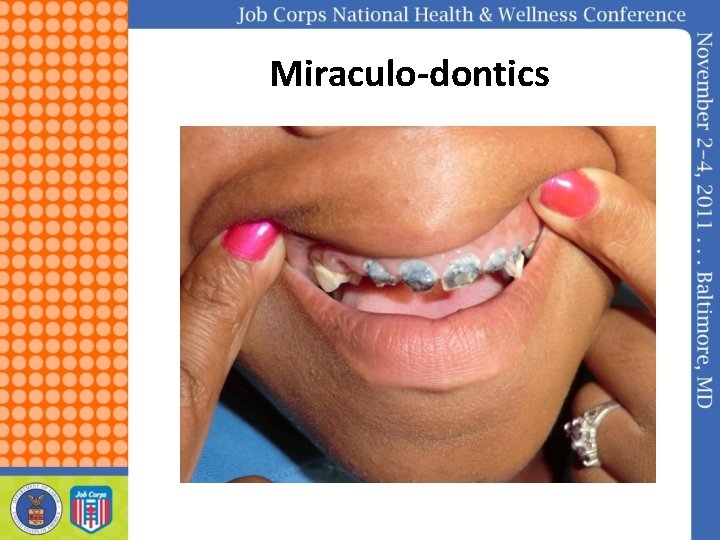
Miraculo-dontics
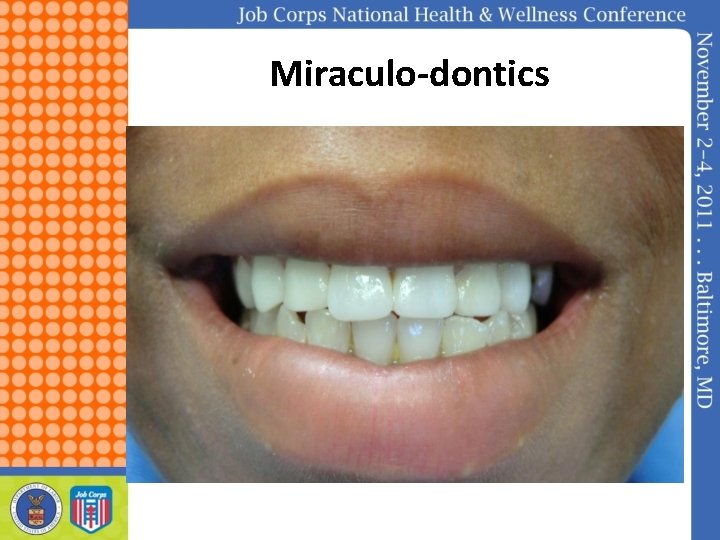
Miraculo-dontics

Refer!
Case Study • 18 year old Latino female • Reports 60 lb weight gain during pregnancy at 16 – never lost • History of childhood sexual trauma (ages 5 -14) • Mother died of AIDS when student was 12 • BMI = 33. 4 (65 inches, 201 lbs. ) on arrival • Reports depressed mood and sleep disturbance • RA reports excessive food in dorm • Progressing in Job Corps, but a loner • BMI = 35. 1 (211 lbs) after 9 months
- Slides: 167