
EATING DISORDERS AND MALNUTRITION Done by Dana Ibrahim
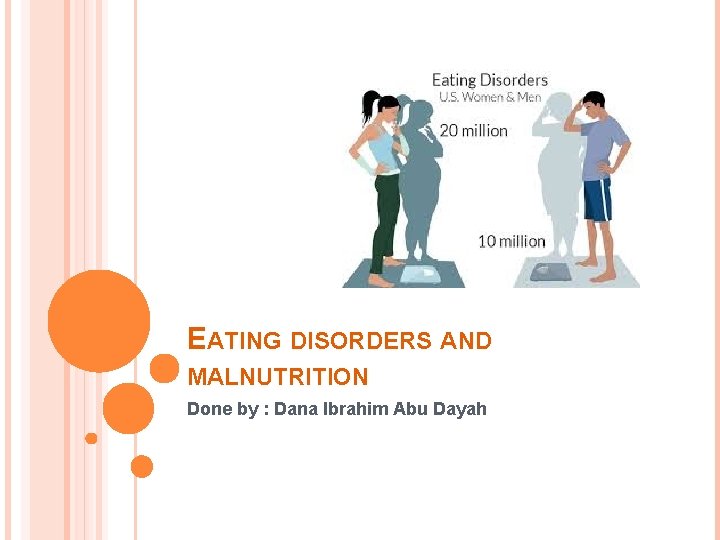
EATING DISORDERS AND MALNUTRITION Done by : Dana Ibrahim Abu Dayah
OUTLINE 1 - Introduction 2 - Eating disorders : Anorexia nervosa, Bulimia nervosa 3 - Eating disorders and community health nursing 4 -Malnutrition 4 - Article 5 - Summary 6 - Conclusion
OBJECTIVES At the end of this seminar the student will be able to : 1 -Define malnutrition and eating disorders. 2 -define each type of eating disorder 2 Be familiar with the characteristics of each type 3 -Be familiar with nursing care plan for each type 4 -value the role of community health nursing in managing eating disorders among school age.
INTRODUCTION Society and culture have a great deal of influence on eating behaviores. Psychological or behavioral factors play a role in the presentation of eating disorders. The incidence of eating disorders has continued to increase over the past 30 years.
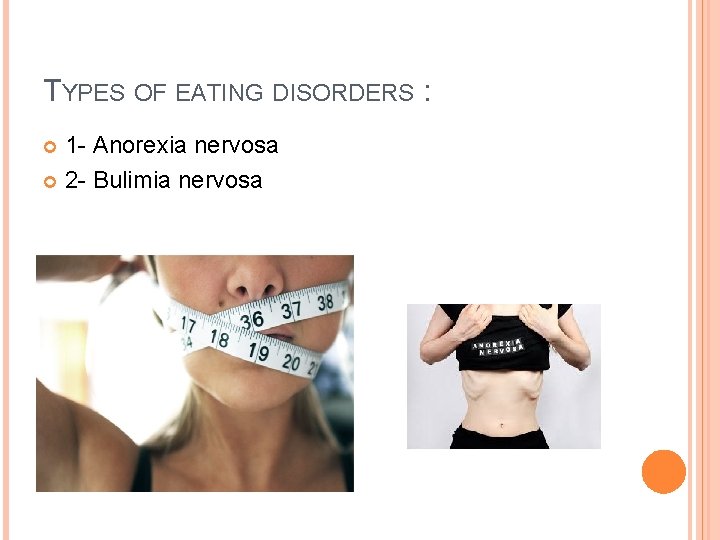
TYPES OF EATING DISORDERS : 1 - Anorexia nervosa 2 - Bulimia nervosa
ANOREXIA NERVOSA is eating disorder characterized by a morbid fear of obesity and prolonged loss of appetite. Subtypes of anorexia nervosa: Restricting � Lose weight primarily through dieting, fasting, or excessive exercise Purging � Person regularly engages in binge eating or purging � Purging is self-induced vomiting, misuse of laxatives, diuretics, or enemas
Symptoms : 1 - Refusal to maintain 85% of ideal body weight. 2 - Intense fear of gaining weight or become fat. 3 - Disturbed perception of the shape or size of the body. 4 - Denial of the seriousness of the proplem 5 - Amenorrhea – 3 monthes without period.
BULIMIA NERVOSA is an episodic, uncontrolled, compulsive, rapid ingestion of large quantities of food over a short period of time , followed by Excessive vomiting and laxative or diuretic abuse. Subtypes of BN : Purging type � Person regularly engages in self-induced vomiting or the misuse of laxatives, diuretics, or enemas Non-purging type � Person regularly engages in other inappropriate compensatory behavior—fasting or excessive exercise

SYMPTOMS: 1 - Recurrent episodes of binge eating (eating a large amount of food given the context with an associated sense of loss of control) 2 - Recurrent inappropriate compensatory behavior (purging, fasting, excessive, exercise) 3 -Binge eating and compensatory behavior occur at least 2 times per week 4 - Clients are usually normal body weight or overweight
EPIDEMIOLOGICAL FACTORS: The incidence of anorexia nervosa has increased in the past 30 years both in the United States and in Western Europe (Halmi, 2008). Anorexia nervosa occurs predominantly in females 12 to 30 years of age. Fewer than 10 percent of the cases are males (American Psychiatric Association [APA], 2000). Bulimia nervosa: is more prevalent than anorexia nervosa, with estimates up to 4 percent of young women (Andreasen & Black, 2006).

EATING DISORDERS STATISTICS Every 62 minutes at least one person dies as a direct result from an eating disorders. (AN) : 0. 9% of american women suffer from anorexia nervosa. 1 in 5 anorexia deaths is by suicide. (BN): 1. 5% of american women suffer from bulimia nervosa in their life time. 2007 -2016 “ National Association of Anorexia Nervosa and associated disorders. ”
NURSING ROLE : 1 - Observe patients’ nutritional status. 2 - Maintain adequate nutrition and electrolyte balance. 3 - Monitor weight , skin condition.
DIAGNOSIS IMBALANCED NUTRITION DISTURBED BODY IMAGE/LOW SELF-ESTEEM
COMMUNITY HEALTH NURSES ROLE school nurse: 1. identify eating disorder especially school nurse 2. screening for eating disorder *home health nurse: 1. Monitoring home nutrients 2. Appropriate referral to physician, treatment center or psychiatric treatment centre. 3. Provide information to the family or clients. 4. The treatment of eating disorders is not just a matter of education but a long process of uncovering the cause and building new coping skills for the client and family
TREATMENT OF EATING DISORDERS 1 - Restoration of healthy body weight. 2 - Correction of medical complications. 3 - Adoption of healthful eating habits. 4 - prevention of relapse.
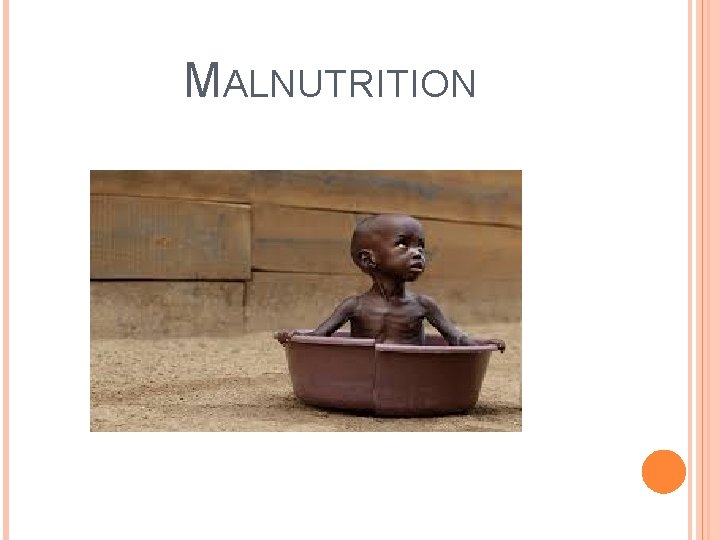
MALNUTRITION
refers to both under nutrition (sub nutrition) and over nutrition. Also defined as insufficient, excessive or imbalanced consumption of nutrients.
SYMPTOM OF MALNUTRITION: 1. 2. 3. 4. 5. 6. 7. 8. Loss of fat Breathing difficulties Depression High risk of hypothermia Longer healing time for wounds Fatigue Slow behavioral development Mental retardation
ARTICLE Eating disorders – Malnutrition for women Increasing number of individuals is being diagnosed with eating disorders, as social media and western culture portray thinness as signs of happiness and well-being. Individuals with eating disorders are obsessed with food, body image, and weight loss. Depending on the severity and duration of their illness, they may display physical symptoms such as weight loss, amenorrhea, loss of interest in sex, low blood pressure, depressed body temperature, chronic and unexplained vomiting and the growth of soft, fine hair on the body and face.
SUMMARY § The incidence of eating disorders has continued to increase over the past 30 years. § Individuals with anorexia nervosa, a disorder that is characterized by a morbid fear of obesity and a gross distortion of body image, literally can starve themselves to death. § Bulimia nervosa is an eating disorder characterized by the consumption of huge amounts of food, usually in a short period of time, and often in secret. § With bulimia nervosa, tension is relieved and pleasure felt during the time of the binge, but is soon followed by feelings of guilt and depression.
Compulsive eating can result in obesity, which is defined by the National Institutes of Health as a body mass index (BMI) of 30. Treatment modalities for eating disorders include behavior modification, individual psychotherapy, family therapy, and psychopharmacology
CONCLUSION Predisposing factors to eating disorders include genetics, physiological factors, family dynamics, and environmental and lifestyle factors. And as a community health nurse we can control some of these factors by health education of the client and the family.
References: Essentials of Psychiatric Mental Health Nursing Concepts of Care in Evidence-Based Practice. FIFTH EDITION Mary C. Townsend, dsn, pmhcns-bc
- Slides: 23