
Eastern Woodlands CHEROKEE http cherokeeimages comculturear ttattoos html
- Slides: 9
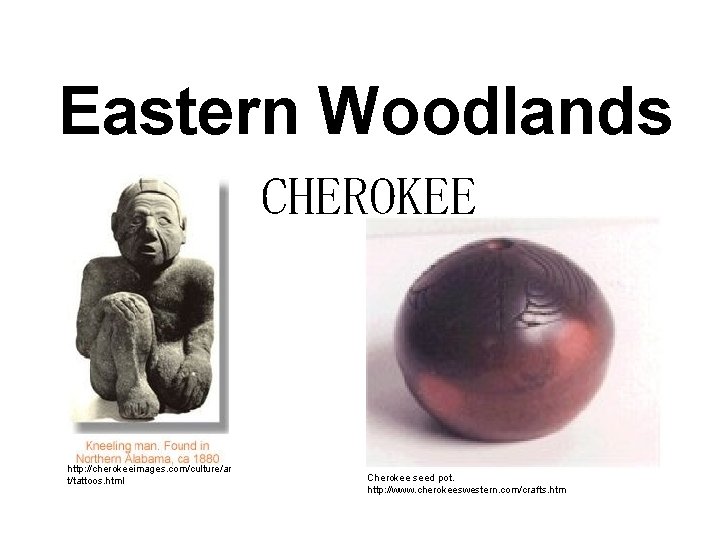
Eastern Woodlands CHEROKEE http: //cherokeeimages. com/culture/ar t/tattoos. html Cherokee seed pot. http: //www. cherokeeswestern. com/crafts. htm
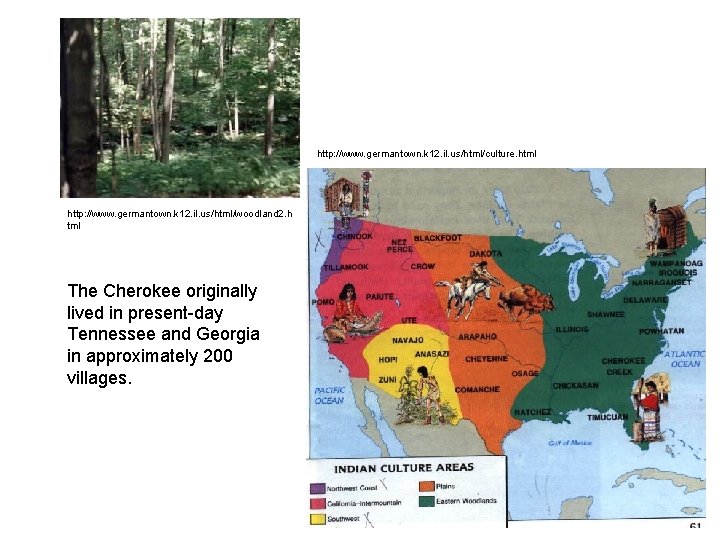
http: //www. germantown. k 12. il. us/html/culture. html http: //www. germantown. k 12. il. us/html/woodland 2. h tml The Cherokee originally lived in present-day Tennessee and Georgia in approximately 200 villages.
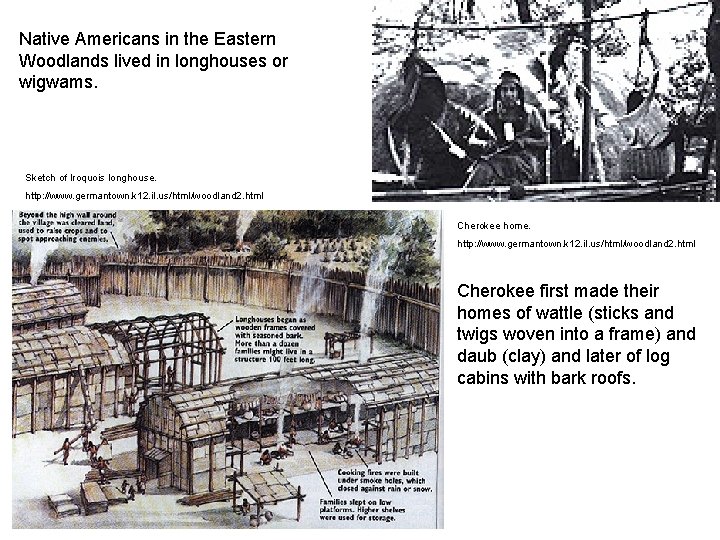
Native Americans in the Eastern Woodlands lived in longhouses or wigwams. Sketch of Iroquois longhouse. http: //www. germantown. k 12. il. us/html/woodland 2. html Cherokee home. http: //www. germantown. k 12. il. us/html/woodland 2. html Cherokee first made their homes of wattle (sticks and twigs woven into a frame) and daub (clay) and later of log cabins with bark roofs.
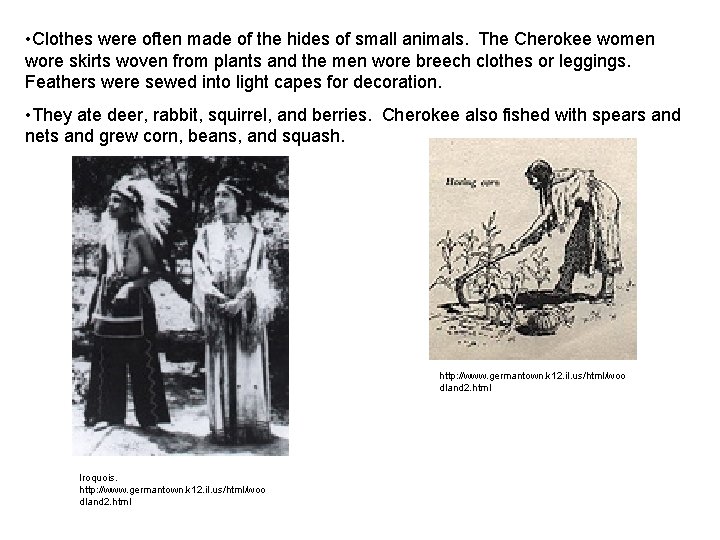
• Clothes were often made of the hides of small animals. The Cherokee women wore skirts woven from plants and the men wore breech clothes or leggings. Feathers were sewed into light capes for decoration. • They ate deer, rabbit, squirrel, and berries. Cherokee also fished with spears and nets and grew corn, beans, and squash. http: //www. germantown. k 12. il. us/html/woo dland 2. html Iroquois. http: //www. germantown. k 12. il. us/html/woo dland 2. html
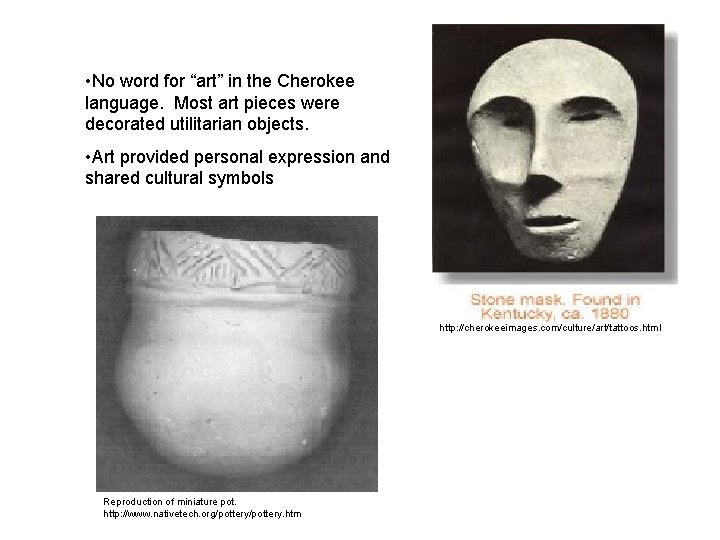
• No word for “art” in the Cherokee language. Most art pieces were decorated utilitarian objects. • Art provided personal expression and shared cultural symbols http: //cherokeeimages. com/culture/art/tattoos. html Reproduction of miniature pot. http: //www. nativetech. org/pottery. htm
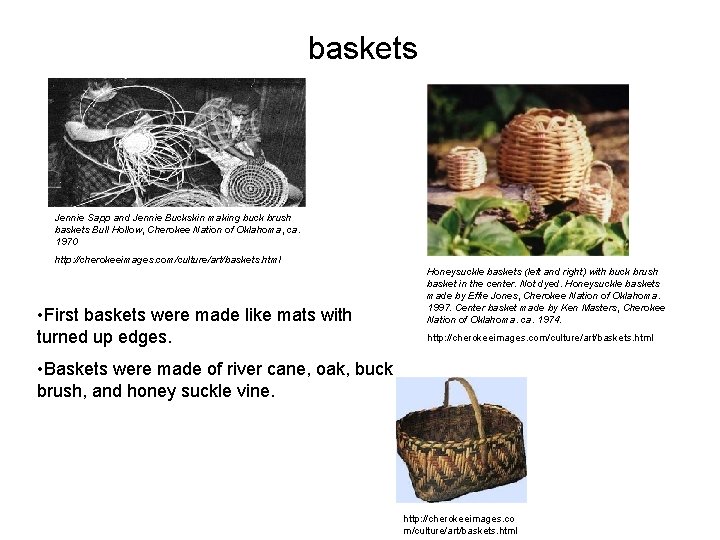
baskets Jennie Sapp and Jennie Buckskin making buck brush baskets Bull Hollow, Cherokee Nation of Oklahoma, ca. 1970 http: //cherokeeimages. com/culture/art/baskets. html • First baskets were made like mats with turned up edges. Honeysuckle baskets (left and right) with buck brush basket in the center. Not dyed. Honeysuckle baskets made by Effie Jones, Cherokee Nation of Oklahoma. 1997. Center basket made by Ken Masters, Cherokee Nation of Oklahoma. ca. 1974. http: //cherokeeimages. com/culture/art/baskets. html • Baskets were made of river cane, oak, buck brush, and honey suckle vine. http: //cherokeeimages. co m/culture/art/baskets. html
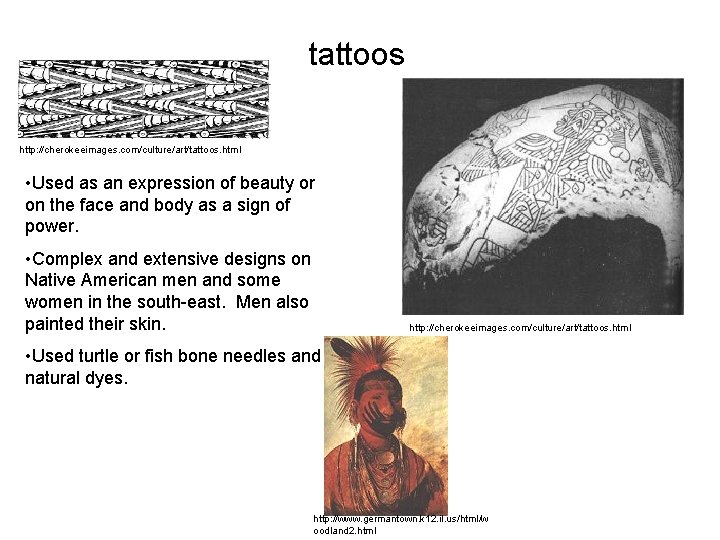
tattoos http: //cherokeeimages. com/culture/art/tattoos. html • Used as an expression of beauty or on the face and body as a sign of power. • Complex and extensive designs on Native American men and some women in the south-east. Men also painted their skin. http: //cherokeeimages. com/culture/art/tattoos. html • Used turtle or fish bone needles and natural dyes. http: //www. germantown. k 12. il. us/html/w oodland 2. html
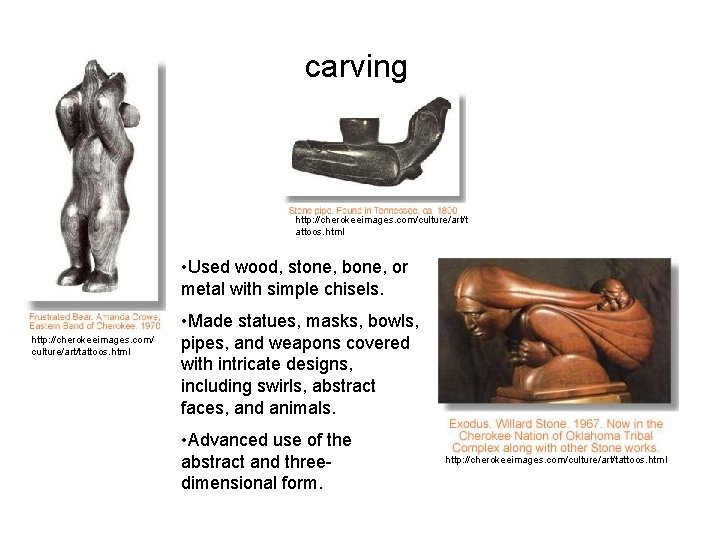
carving http: //cherokeeimages. com/culture/art/t attoos. html • Used wood, stone, bone, or metal with simple chisels. http: //cherokeeimages. com/ culture/art/tattoos. html • Made statues, masks, bowls, pipes, and weapons covered with intricate designs, including swirls, abstract faces, and animals. • Advanced use of the abstract and threedimensional form. http: //cherokeeimages. com/culture/art/tattoos. html
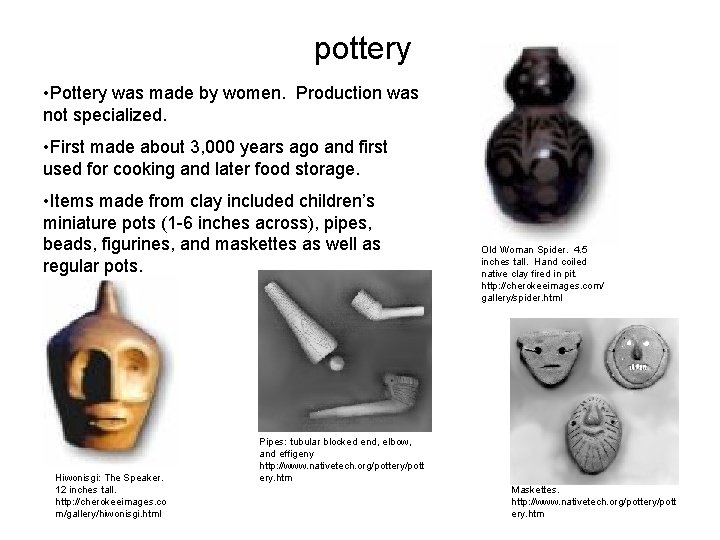
pottery • Pottery was made by women. Production was not specialized. • First made about 3, 000 years ago and first used for cooking and later food storage. • Items made from clay included children’s miniature pots (1 -6 inches across), pipes, beads, figurines, and maskettes as well as regular pots. Hiwonisgi: The Speaker. 12 inches tall. http: //cherokeeimages. co m/gallery/hiwonisgi. html Old Woman Spider. 4. 5 inches tall. Hand coiled native clay fired in pit. http: //cherokeeimages. com/ gallery/spider. html Pipes: tubular blocked end, elbow, and effigeny http: //www. nativetech. org/pottery/pott ery. htm Maskettes. http: //www. nativetech. org/pottery/pott ery. htm