
Eastern European Revolutions Complete the chart and discussion
- Slides: 44
Eastern European Revolutions • Complete the chart and discussion questions for Eastern European nations using C. 31
Soviet Union & Eastern Europe – 1980 s & 1990 s Discuss Soviet Union 1980 s; finish chapt. 30 questions (if not complete) HW: “Revolutions of 1989” (p. 1034 – 1040); fill out Eastern European Revolutions chart (minus Yugoslavia)
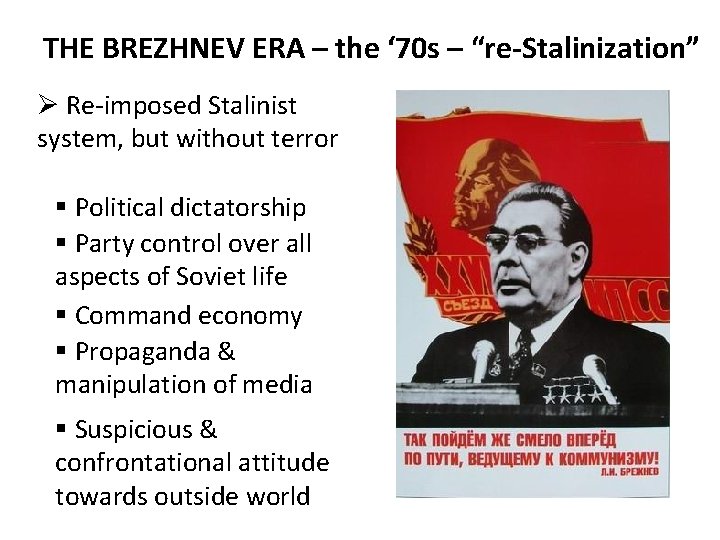
THE BREZHNEV ERA – the ‘ 70 s – “re-Stalinization” Ø Re-imposed Stalinist system, but without terror § Political dictatorship § Party control over all aspects of Soviet life § Command economy § Propaganda & manipulation of media § Suspicious & confrontational attitude towards outside world
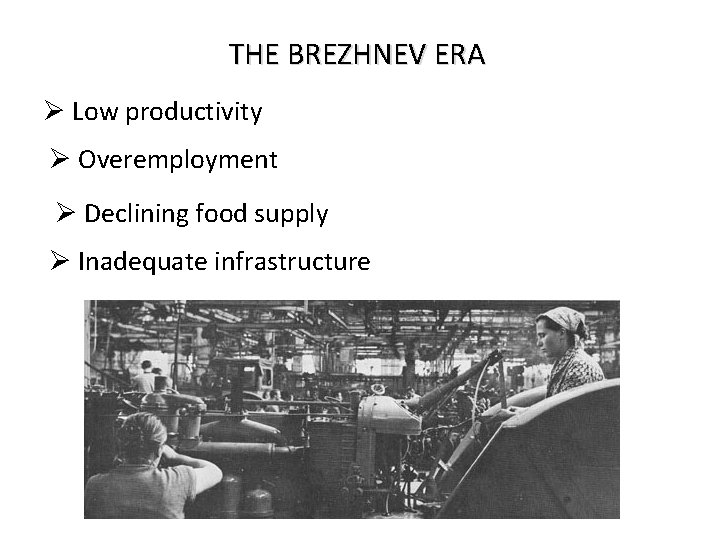
THE BREZHNEV ERA Ø Low productivity Ø Overemployment Ø Declining food supply Ø Inadequate infrastructure
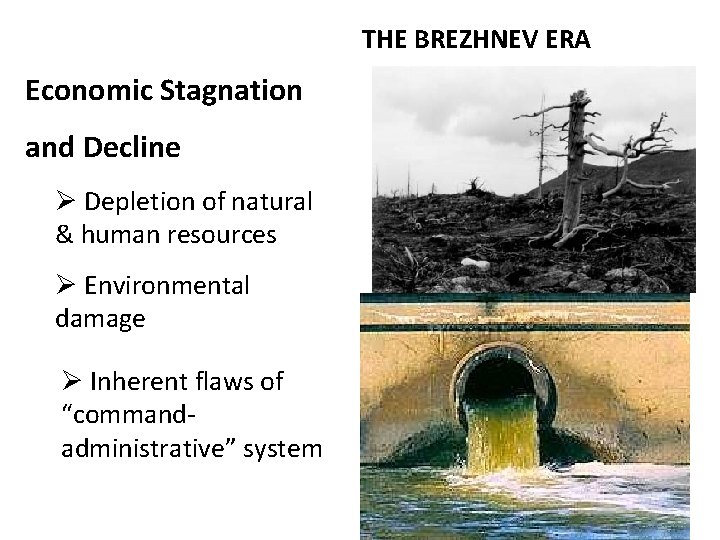
THE BREZHNEV ERA Economic Stagnation and Decline Ø Depletion of natural & human resources Ø Environmental damage Ø Inherent flaws of “commandadministrative” system
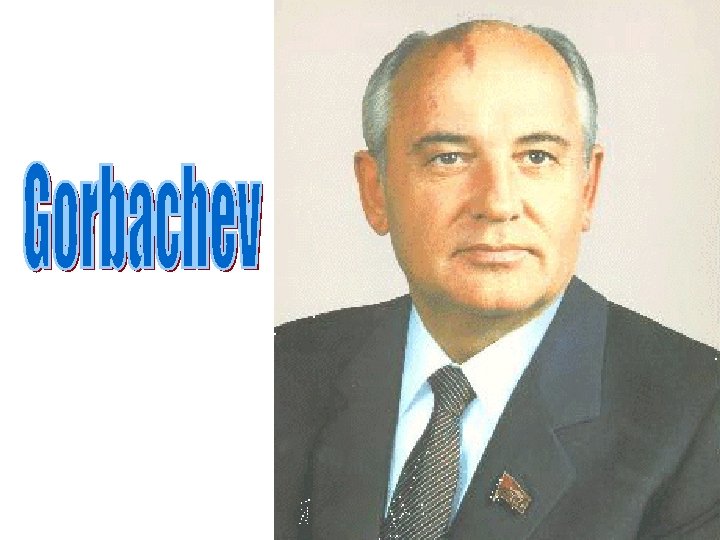
Future of Reform – what happens in the ‘ 80 s • Within three years of the death of Soviet leader Leonid Brezhnev in 1982, following the brief "interregna, " Gorbachev was elected General Secretary by the Politburo in 1985. • Soviet army pulled from Afghanistan • Nuclear weapons reduced • Satellite nations were surrendered • Germany is permitted to reunify
Perestroika • 1986 “Economic Restructuring” • Economic hardship (trying to shift system without tools or training) • Problems= central planning – Local managers= more authority – Laws allow for private business – Severe need for new technology https: //www. youtube. com/watch? v=UBOZOPS 3 G 4 w : 56
Glasnost • 1986 “Openness” • Lenin through Brezhnev (minus a little Khrushchev)= totalitarian state • Religion accepted, not liked – Christians open churches, Jews leave • Dissidents released • Controls relaxed (censorship) – Criticize govt, examine social problems
Two Dissidents • Alexander Solzhenitsyn – Criticized Stalin – Sent to gulag, wrote book – 1974 - forced out of USSR, to US • Andrei Sakharov – Helped develop hydrogen bomb – Returned to Moscow under glasnost
Demokratizatsiya • 1989 Economic success- Party must loosen control • Multi-candidate elections • Secret ballot • New legislature Congress of Peoples’ Deputies (still only 1 party) – Gorbachev elected President – hardline communists DO NOT LIKE THIS
Economic Reform • Market economy replaces central planning – Individual enterprise, private property • Foreign Investments • Socialism emphasized (not quite Capitalism) • Reform brings higher standard of living and problems
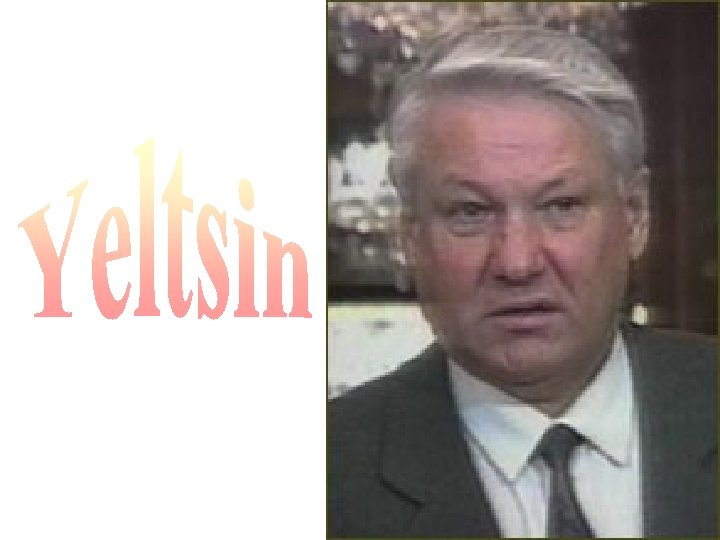
Economic Problems • Chernobyl Accident- Explosion at a nuclear power plant in Ukraine • Economy and standard of living fall • Lack of cohesion emerged – Communism had led to artificial unity – Freedom and democracy provoke dissatisfaction – Ethnic/national groups want independence • Yeltsin (leader of Russian Federation’s Parliament) and Russian Republic declare independence
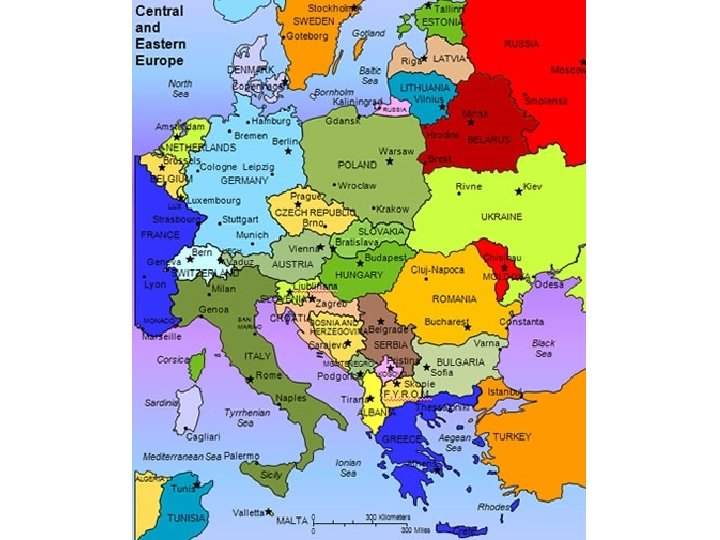
Revolutions in Eastern Europe • People in Eastern Europe were not always happy with Soviet style Communist Governments • Gorbachev made it clear that the Soviet Union would not intervene anymore militarily in their countries (No more Brezhnev Doctrine) • Led to revolutions breaking out throughout Eastern Europe
POLAND • Workers protest led to change • 1980 - Worker named Lech Walesa organized national trade union know as Solidarity, quickly gained support of works and the Roman Catholic Church – Gdansk Agreement • Walesa gets arrested but protest continues • In 1988, the Polish government agreed to free parliamentary elections—the first free elections in Eastern Europe in 40 years. • A new government was elected, ending 45 years of Communist rule in Poland. • December 1990, Walesa was chosen as president. • Shock Therapy - Free-market reforms led to severe unemployment and discontent. • 1995, Aleksander Kwasniewski, a former Communist, defeated Walesa and became the new president. • Continued Poland’s move toward a prosperous free market economy.
Revolutions of 1989 and Disbanding of the Soviet Union Today: Discuss revolutions of ’ 89, disbanding of Soviet Union, German reunification Tomorrow: Yeltsin, Putin, Yugoslavia Wednesday: EU, Globalization, Immigration HW: outline - “Building a new Empire in the 1990 s” (p. 1040 – 1051 )
Hungary • Under Janos Kadar- communist dictatorship, but with some liberal reforms • Reform- free enterprise, stock market, • New constitution- free parliamentary elections (multi-party) 1989 • Oct. 1989 Radicals depose Communists – Communists vote itself out – New govt. = conservative govt.
Czechoslovakia • Velvet Revolution - Mass demonstrations took place in 1988 and 1989. • In December 1989, the Communist government collapsed and elected Vaclav Havel as president. • The new government in Czechoslovakia faced old ethnic conflicts. • The two national groups, Czechs and Slovaks, agreed to a peaceful division of the country. • January 1, 1993, Czechoslovakia split into the Czech Republic and Slovakia.
ROMANIA • 1965 -Communist leader Nicolae Ceausescu had set up a dictatorship • He used secret police to crush all dissent. • His economic policies led to a sharp drop in living standards, including food shortages and the rationing of bread, flour, and sugar. • His plan for rapid urbanization made the Romanian people angry. – Entire villages were bulldozed as part of the plan. • December 1989, the secret police murdered thousands of people who were peacefully demonstrating. • The army refused to support any more repression. Ceausescu and his wife were captured and executed. • A new government was quickly formed.
Why the Coup? • Top Party officials, KGB, defense ministry- upset over Gorbachev about E. Europe – Fear of losing power
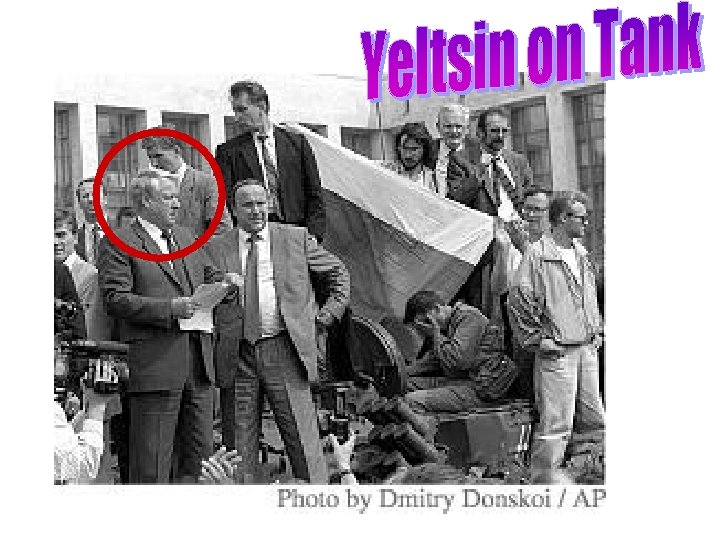
The Coup • Aug. 2, 1991 Communists stage Coup – Gorbachev taken into custody while on vacation – State of Emergency declared – People protest- fear of dictatorship – Yeltsin speaks against coup (gains fame)
The Coup Fails • Gorbachev returns to Moscow – Resigns as Secretary General • Communist Party officially disbanded • Soviet strength had collapsed – Baltic States demand gain independence – 10 republics declare independence (not complete break)
End of the USSR • Post-coup leaders of republics form State Council – Gorbachev president, Yeltsin most powerful • Council creates loose confederation and prevents economic collapse • Council breaks down – Commonwealth of Independent States. Ukraine, Russia, Byelorussia, others follow – Gorbachev resigns Dec. 25, 1991 – https: //www. youtube. com/watch? v=VAPk 7 z 5 Yzrw
New Germany
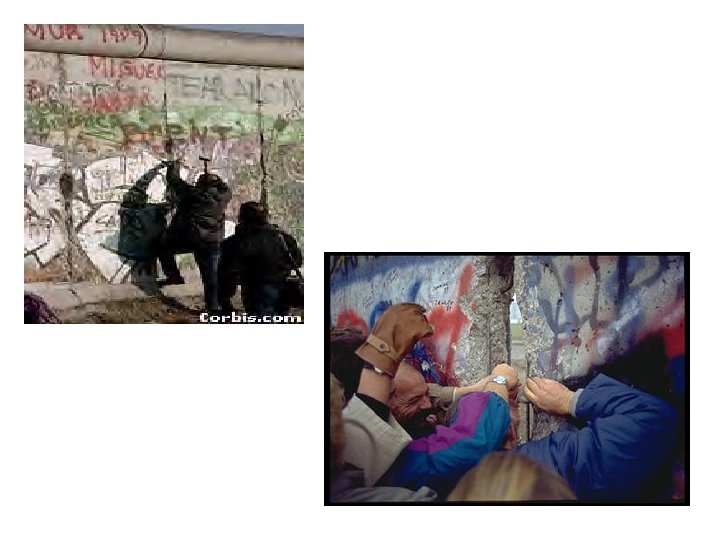
East Germany • 1971 -Erich Honecker became head of the Communist Party • Used the Stasi, the secret police, to rule for the next 18 years. • 1989, many East Germans began to flee their country after Hungary opens its borders. • Mass demonstrations broke out in the fall of 1989. • November 9, the Communist government gave in and opened its border with the West. • Thousands of East Germans rushed across the border. • Families who had not seen each other in years were reunited. • People on both sides of the Berlin Wall began tearing the wall down. • The reunification of Germany took place on October 3, 1990.
West Germany • 1982 Helmut Kohl-sets up 10 point plan and Alliance for Germany – 1990 plans reunification of Germanys – Agreement with Gorbachev in 1990 for nuclear dismantling – Paris Accord – involved US and other nations
Fall of Soviet Union & Disintegration of Yugoslavia
Former Yugoslavia • Yugoslavia had a Communist government, but it had never been a Soviet satellite state. • Josep Tito died in 1980 • A government composed of representatives from the six republics and two provinces of Yugoslavia kept the country under Communist rule. • By 1990, new parties had emerged, and the Communist Party lost its power. • In 1990, the Yugoslav republics of Slovenia, Croatia, Bosnia-Herzegovina, and Macedonia began to push for independence.
Former Yugoslavia • Dec. 29, 1989 - Communist leaders suggest multi-party system • Broke apart in war – Ethnic groups- Serbs, Croats, Muslims, Slovenes, Macedonians, Montenegrins – 6 republics
Ethnic Ties Differences: • Serbs- Greek Orthodox, Cyrillic alphabet • Croats & Slovenes- Catholic, Roman alphabet Similarities: • Both don’t like Muslims • Common tie = common country
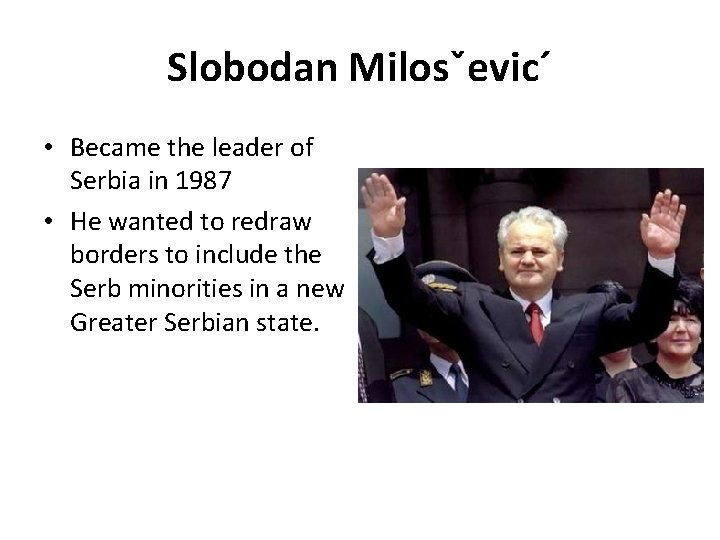
Slobodan Milosˇevic´ • Became the leader of Serbia in 1987 • He wanted to redraw borders to include the Serb minorities in a new Greater Serbian state.
Conflict in the Balkans • PHASE 1: June 1991 - Slovenia and Croatia declared their independence. • September- Yugoslavian army began a full assault against Croatia. • Before a cease-fire was arranged, the Serbian forces captured one-third of Croatia’s territory. • PHASE 2: In 1992, the Serbs began an assault against Bosnia-Herzegovina. • By mid- 1993, Serbian forces had acquired 70 percent of Bosnian territory.
Bosnia • Feb. 1992 Bosnia-Herzegovinaindependence – Serbs opposed- would be minority to Muslims – March 1992 - war (Karadzic supported by Bosnian Serbs) – Serbs used brutality against Bosnian Muslims (ethnic cleansing) – 1995 70% Bosnia held by Serbs
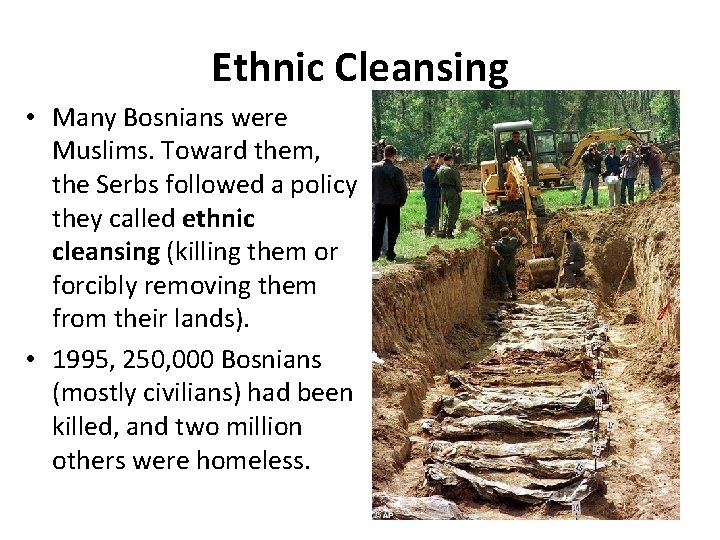
Ethnic Cleansing • Many Bosnians were Muslims. Toward them, the Serbs followed a policy they called ethnic cleansing (killing them or forcibly removing them from their lands). • 1995, 250, 000 Bosnians (mostly civilians) had been killed, and two million others were homeless.
NATO Involvement • 1995, Bosnian and Croatian forces regained much of the territory that had been lost to Serbian forces. • NATO orders air strikes in retaliation for Serb attacks on civilians. • Attacks forced the Serbs to sign a peace treaty on December 14. • Agreement split Bosnia into a loose union of a Serb republic and a Muslim-Croat federation. • NATO sent a force of sixty thousand troops to monitor the area (peacekeeping).
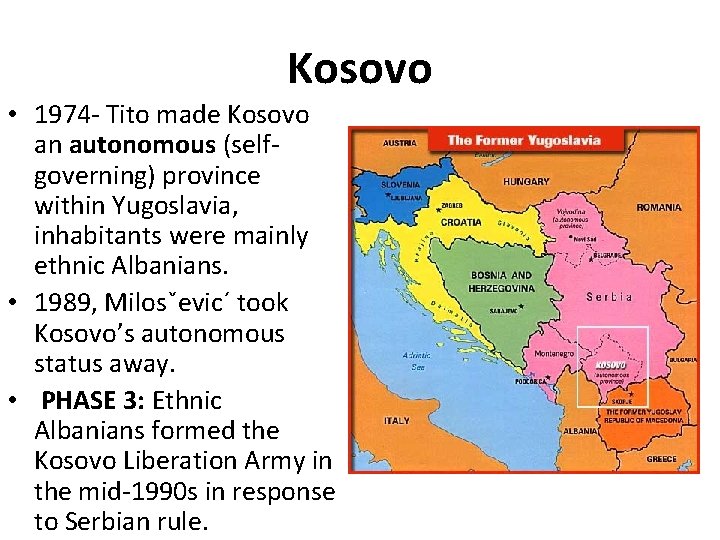
Kosovo • 1974 - Tito made Kosovo an autonomous (selfgoverning) province within Yugoslavia, inhabitants were mainly ethnic Albanians. • 1989, Milosˇevic´ took Kosovo’s autonomous status away. • PHASE 3: Ethnic Albanians formed the Kosovo Liberation Army in the mid-1990 s in response to Serbian rule.
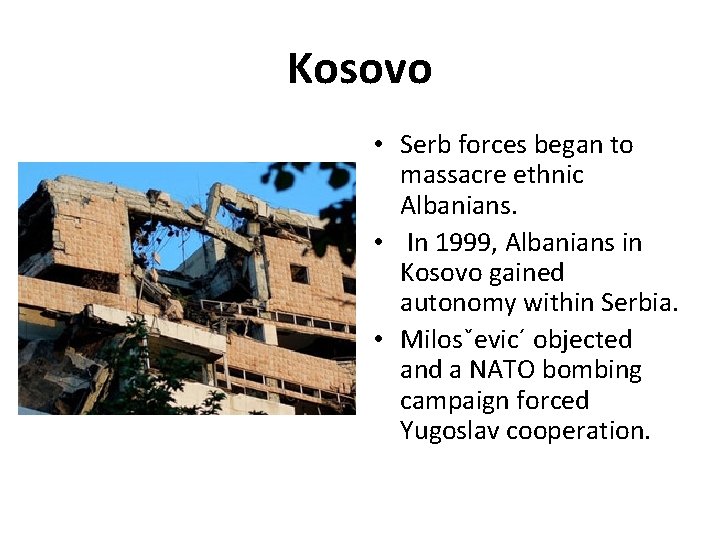
Kosovo • Serb forces began to massacre ethnic Albanians. • In 1999, Albanians in Kosovo gained autonomy within Serbia. • Milosˇevic´ objected and a NATO bombing campaign forced Yugoslav cooperation.
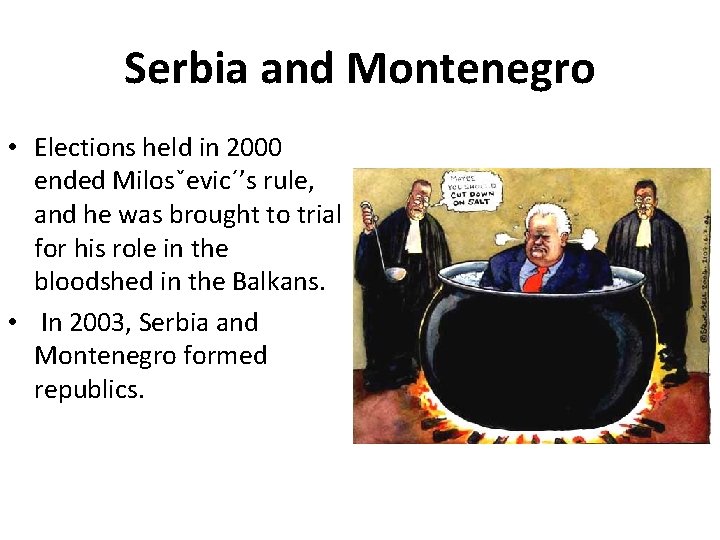
Serbia and Montenegro • Elections held in 2000 ended Milosˇevic´’s rule, and he was brought to trial for his role in the bloodshed in the Balkans. • In 2003, Serbia and Montenegro formed republics.
Crash course – Clinton years https: //www. youtube. com/watch? v=rbo. N 6 F 2 g-k