
EASTERN EUROPEAN REVOLUTIONS 1989 G T N E
- Slides: 33
EASTERN EUROPEAN REVOLUTIONS - 1989 G T N E DI I V A R O S LE SS U O S T P HE E ES ST F T G O N E L LL L L O A A R F T H N HE C O T C TO
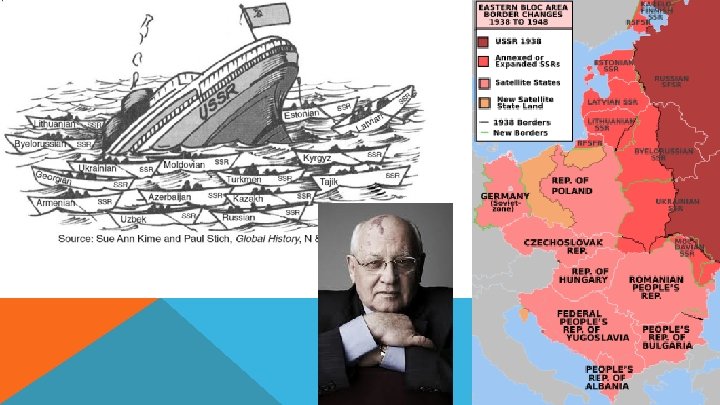
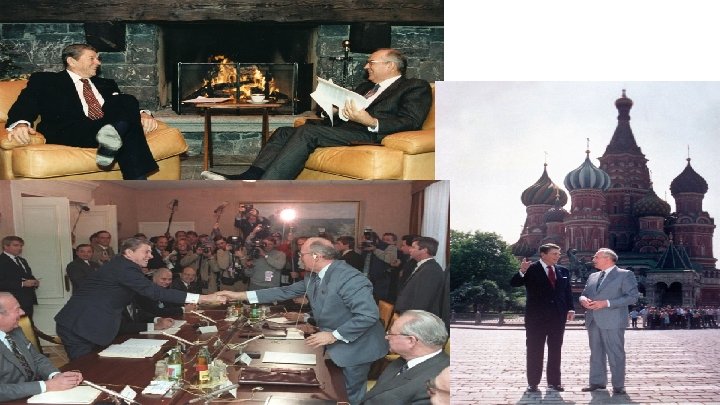
In June 1989, Gorbachev declared that political unrest in Eastern Europe was a domestic issue and the USSR would not intervene § “What Poles & Hungarians decide is their affair, but we will respect their decision whatever it is. ” In effect, he was announcing the end of the Brezhnev Doctrine and proclaimed there would be no Soviet military involvement in rebellions. § Gorbachev did not foresee the collapse of communism in Eastern Europe, he just hoped those governments would introduce reforms similar to his own in the USSR EASTERN EUROPEAN DISSENT: BACKGROUND
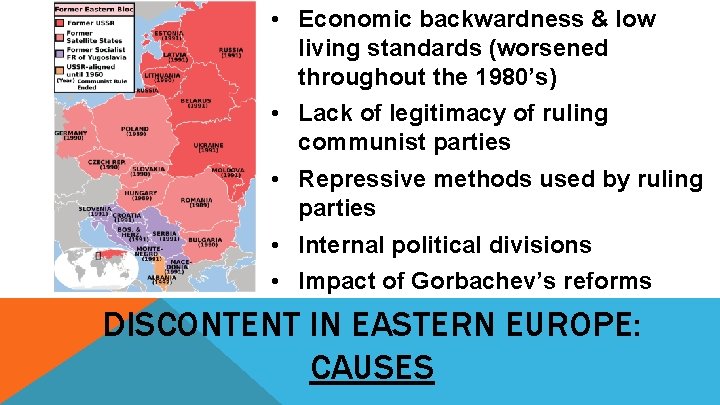
• Economic backwardness & low living standards (worsened throughout the 1980’s) • Lack of legitimacy of ruling communist parties • Repressive methods used by ruling parties • Internal political divisions • Impact of Gorbachev’s reforms DISCONTENT IN EASTERN EUROPE: CAUSES
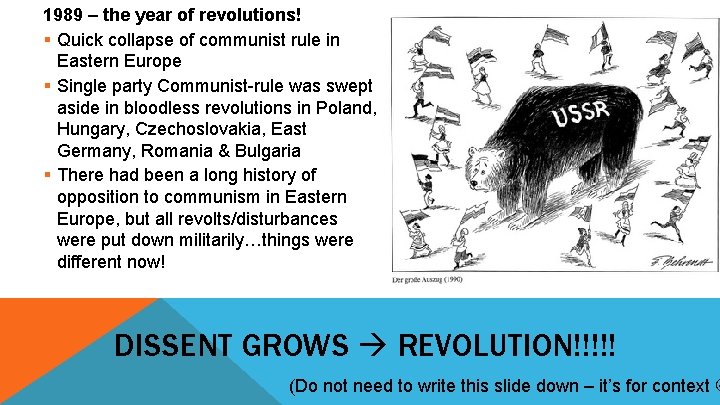
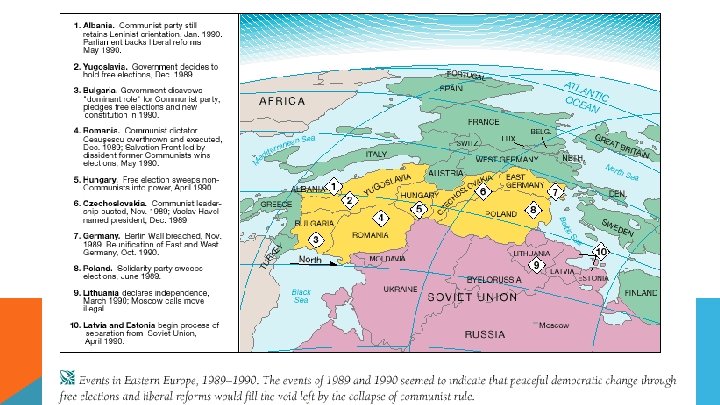
1989 – the year of revolutions! § Quick collapse of communist rule in Eastern Europe § Single party Communist-rule was swept aside in bloodless revolutions in Poland, Hungary, Czechoslovakia, East Germany, Romania & Bulgaria § There had been a long history of opposition to communism in Eastern Europe, but all revolts/disturbances were put down militarily…things were different now! DISSENT GROWS REVOLUTION!!!!! (Do not need to write this slide down – it’s for context
READING: EASTERN EUROPEAN REVOLTS! • Read this before you continue on with the lesson! • Read 4. 4 pages 203 -210 • Poland section requires additional reading (see worksheet) • As you read, complete the graphic organizer for notes! • Just because it is NOT on the graphic organizer does NOT mean you can skip the content
STOP! BEFORE YOU REVIEW THIS LESSON, READ 4. 4 AND COMPLETE THE CORRESPONDING WORKSHEET! AFTER YOU FINISH READING, REVIEW THE SLIDES. STOP PERIODICALLY TO RESPOND TO THE REVIEW QUESTIONS. IF YOU KNOW THEM – MOVE ON! IF YOU DON ‘T, LOOK IT UP! REMEMBER, YOU ARE TEACHING YOURSELF
REVIEW 1. In six words or less why did Eastern European nations revolt in 1989? How and why was this a cause for the fall of the USSR? 2. THINKER: Even though Gorbachev promised internal affairs of Eastern European nations were “domestic issues, ” several communist leaders believed he still should’ve/could’ve intervened to restrict revolts. Do you agree with this? Could Gorbachev have done anything to stop revolution from spreading? Why do you think he decided not to intervene?
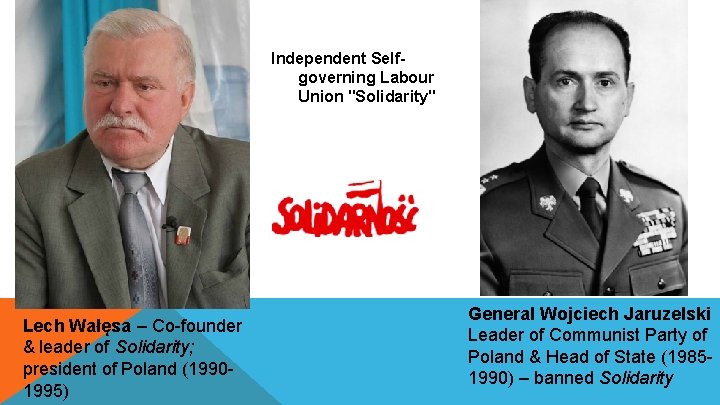
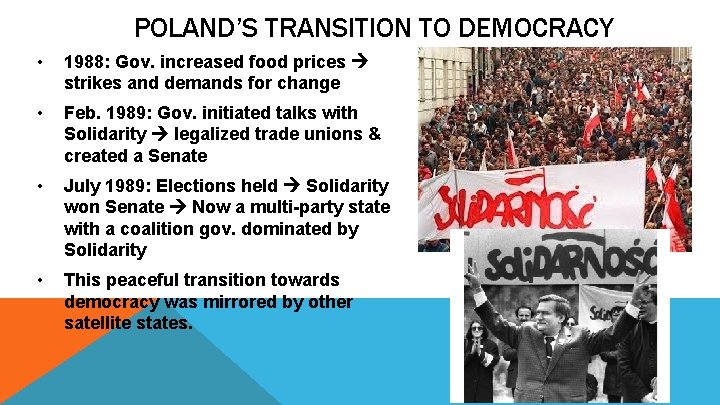
POLAND Independent Selfgoverning Labour Union "Solidarity" Lech Wałęsa – Co-founder & leader of Solidarity; president of Poland (19901995) General Wojciech Jaruzelski Leader of Communist Party of Poland & Head of State (19851990) – banned Solidarity
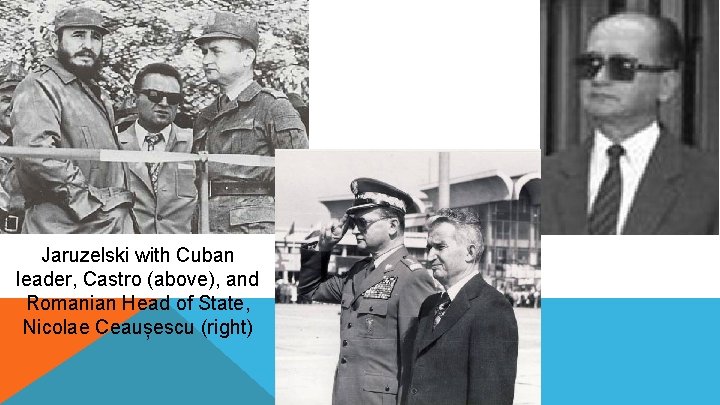
Jaruzelski with Cuban leader, Castro (above), and Romanian Head of State, Nicolae Ceaușescu (right)
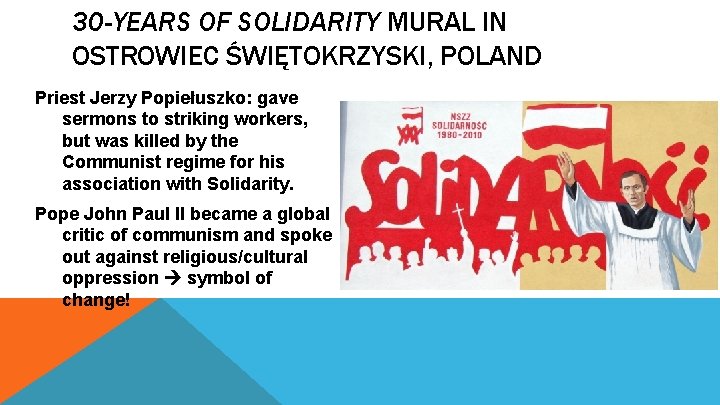
30 -YEARS OF SOLIDARITY MURAL IN OSTROWIEC ŚWIĘTOKRZYSKI, POLAND Priest Jerzy Popiełuszko: gave sermons to striking workers, but was killed by the Communist regime for his association with Solidarity. Pope John Paul II became a global critic of communism and spoke out against religious/cultural oppression symbol of change!
POLAND’S TRANSITION TO DEMOCRACY • 1988: Gov. increased food prices strikes and demands for change • Feb. 1989: Gov. initiated talks with Solidarity legalized trade unions & created a Senate • July 1989: Elections held Solidarity won Senate Now a multi-party state with a coalition gov. dominated by Solidarity • This peaceful transition towards democracy was mirrored by other satellite states.
THE VELVET REVOLUTIONCZECHOSLOVAKIA
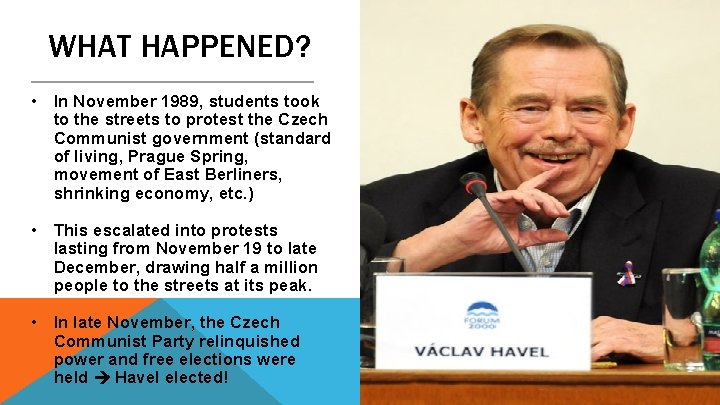
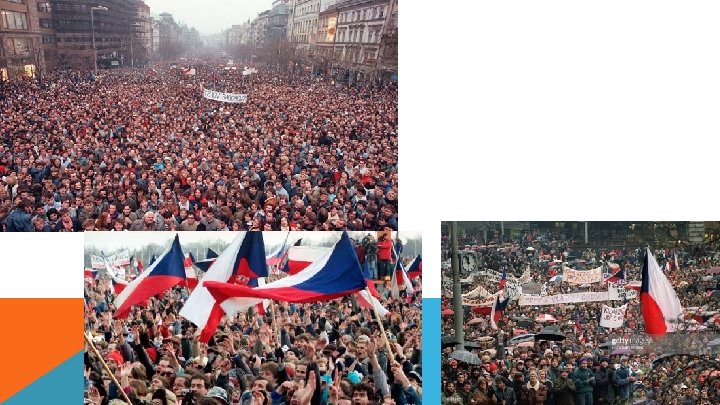
WHAT HAPPENED? • In November 1989, students took to the streets to protest the Czech Communist government (standard of living, Prague Spring, movement of East Berliners, shrinking economy, etc. ) • This escalated into protests lasting from November 19 to late December, drawing half a million people to the streets at its peak. • In late November, the Czech Communist Party relinquished power and free elections were held Havel elected!
• Due to advances in weapon delivery, no longer needed Eastern Europe as “buffer zone” • Not prepared to further damage relations with West • Miscalculated the communist regimes of Eastern Europe – thought they would introduce reforms similar to his • Eastern Europe was a financial liability • Cost of stationing troops • Cost of providing Warsaw Pact countries with military supplies • Increased TV ownership & media coverage (“as much the triumph of communication as the failure of communism”) WHY DIDN’T GORBACHEV STOP THESE REVOLUTIONS?
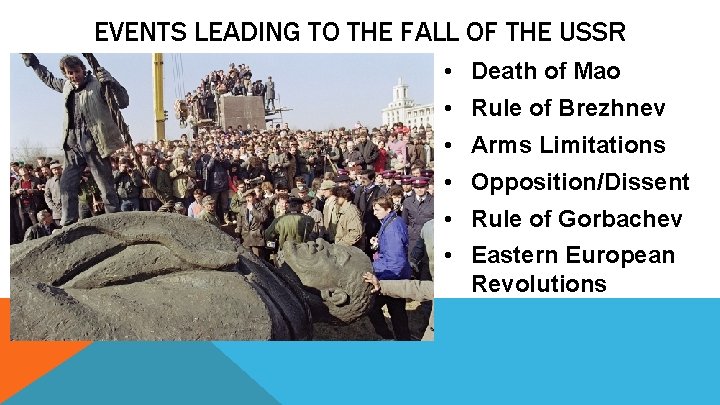
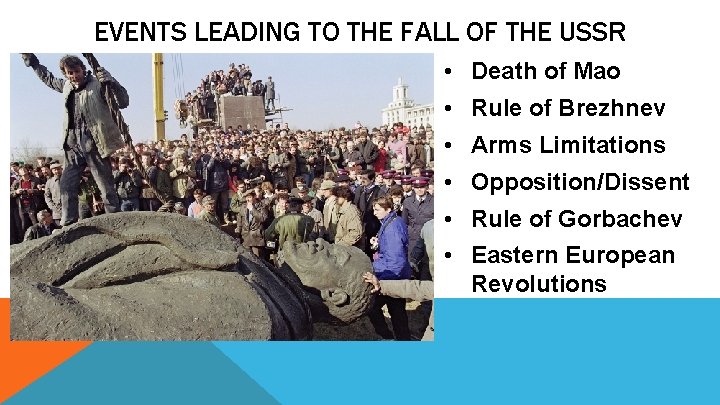
EVENTS LEADING TO THE FALL OF THE USSR • Death of Mao • Rule of Brezhnev • Arms Limitations • Opposition/Dissent • Rule of Gorbachev • Eastern European Revolutions
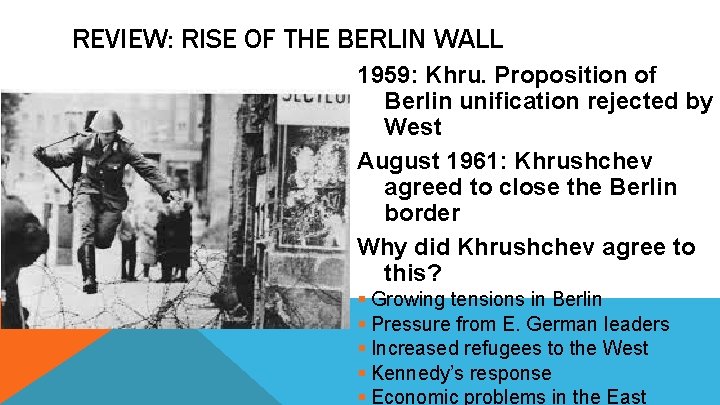
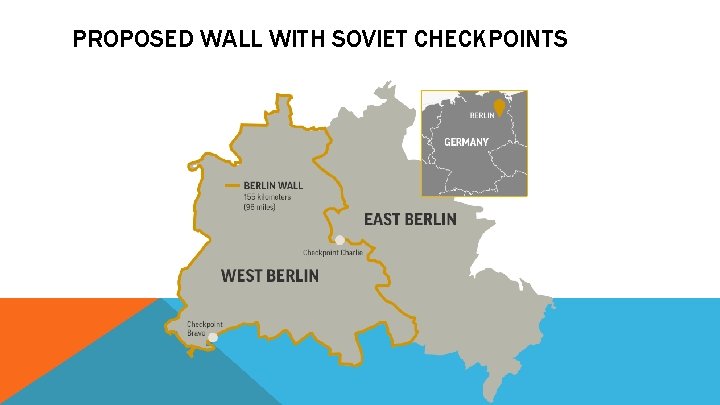
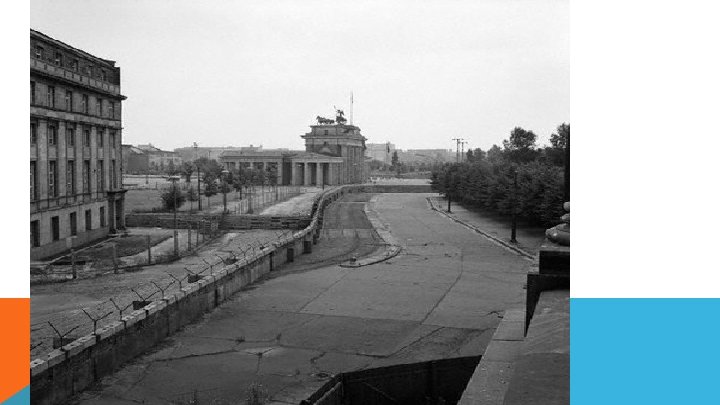
REVIEW: RISE OF THE BERLIN WALL 1959: Khru. Proposition of Berlin unification rejected by West August 1961: Khrushchev agreed to close the Berlin border Why did Khrushchev agree to this? § Growing tensions in Berlin § Pressure from E. German leaders § Increased refugees to the West § Kennedy’s response § Economic problems in the East
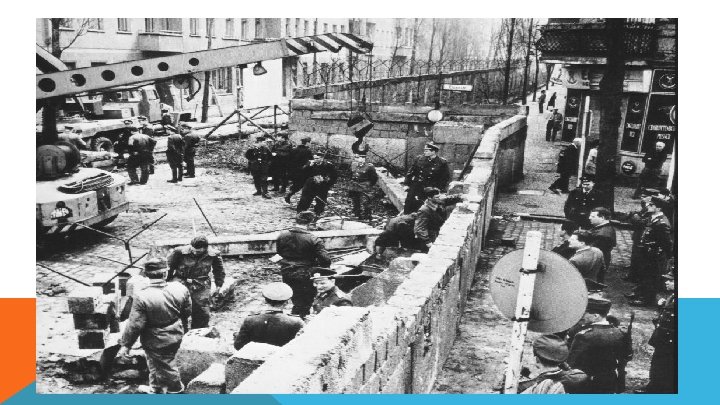
PROPOSED WALL WITH SOVIET CHECKPOINTS
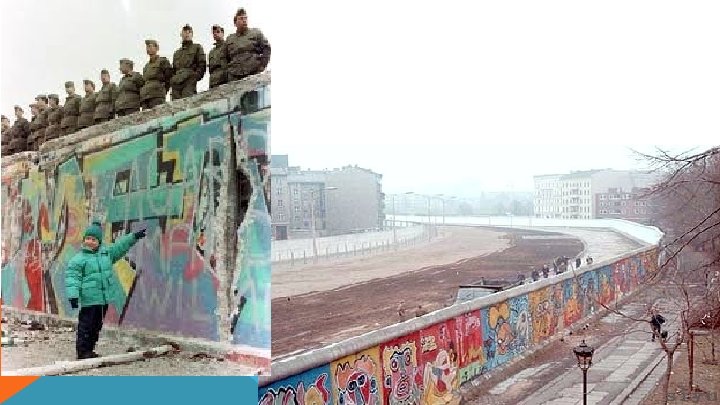
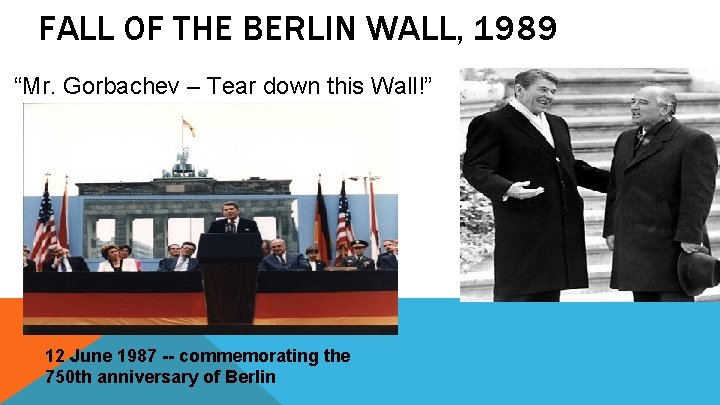
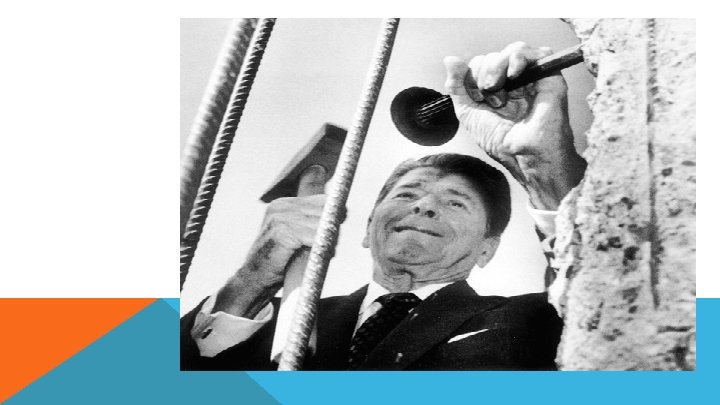
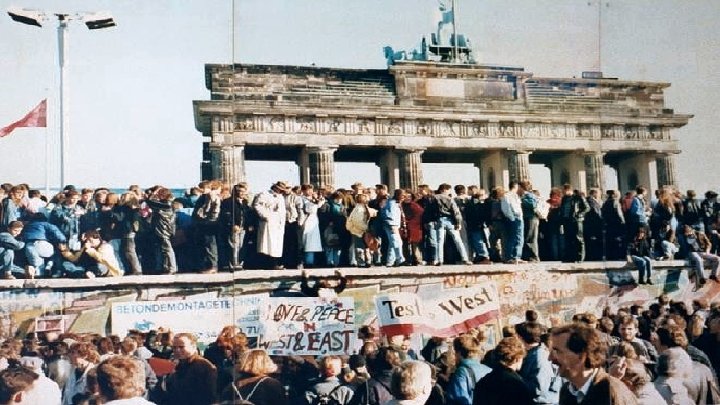
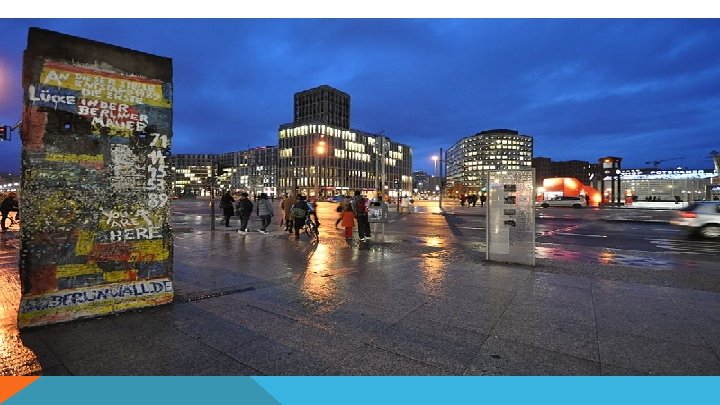
FALL OF THE BERLIN WALL, 1989 “Mr. Gorbachev – Tear down this Wall!” 12 June 1987 -- commemorating the 750 th anniversary of Berlin
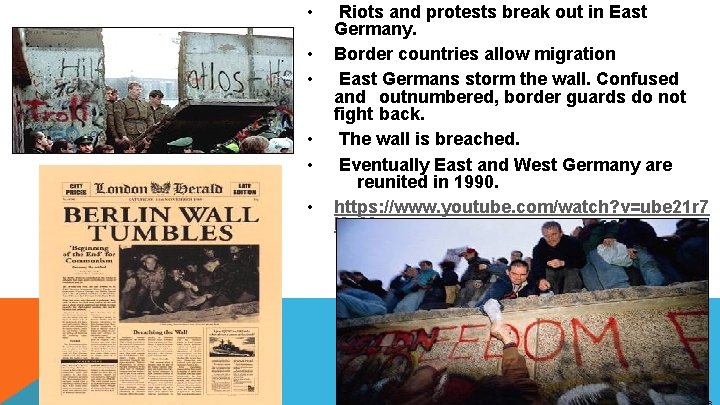
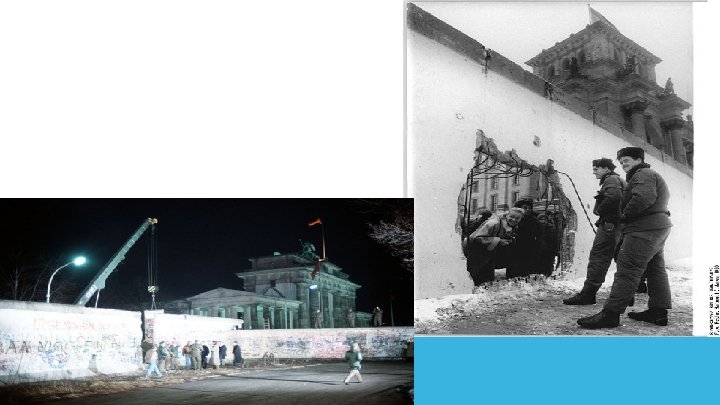
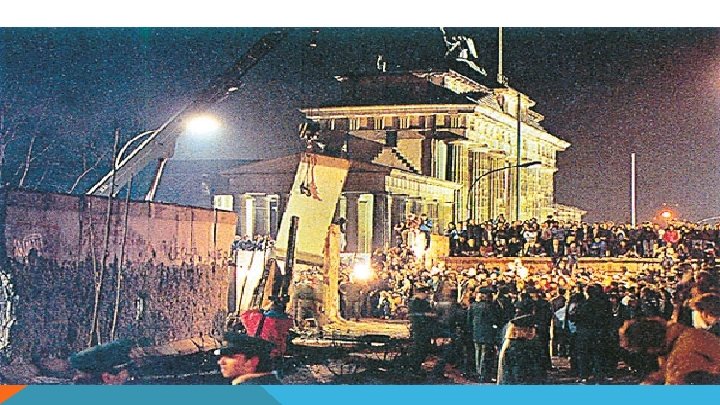
• • • Riots and protests break out in East Germany. Border countries allow migration East Germans storm the wall. Confused and outnumbered, border guards do not fight back. The wall is breached. Eventually East and West Germany are reunited in 1990. https: //www. youtube. com/watch? v=ube 21 r 7 l 2 o. M
EVENTS LEADING TO THE FALL OF THE USSR • Death of Mao • Rule of Brezhnev • Arms Limitations • Opposition/Dissent • Rule of Gorbachev • Eastern European Revolutions
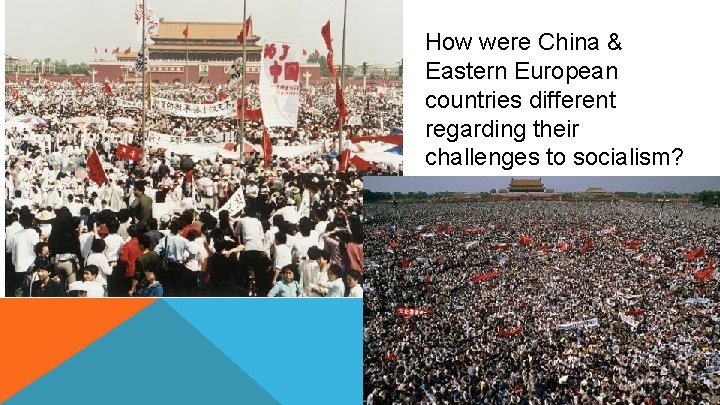
How were China & Eastern European countries different regarding their challenges to socialism?