
Easter Seals Project Action ESPA Inclusive ServiceLearning Program

- Slides: 27
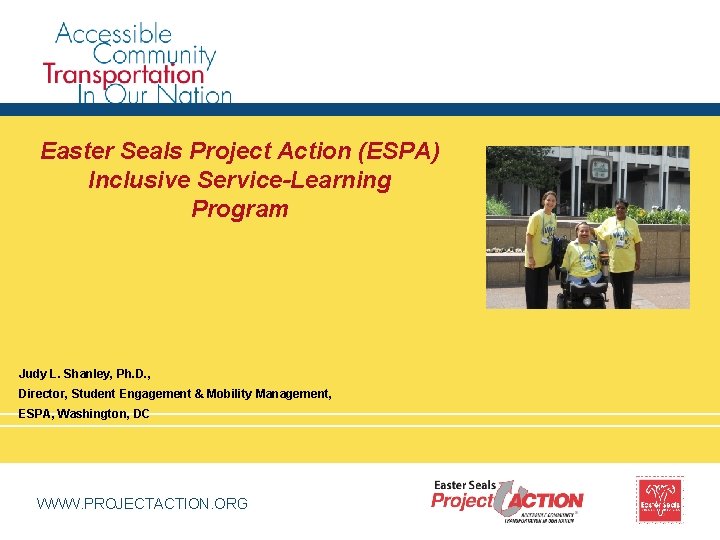
Easter Seals Project Action (ESPA) Inclusive Service-Learning Program Judy L. Shanley, Ph. D. , Director, Student Engagement & Mobility Management, ESPA, Washington, DC WWW. PROJECTACTION. ORG
Easter Seals Project Action (ESPA) • Our mission is to promote universal access to transportation for people with disabilities under federal law and beyond by partnering with transportation providers, the disability community and others through the provision of training, technical assistance, applied research, outreach and communication. • Funded by the Federal Transit Administration – 23 years • Our Work – Training Events – travel training, webinars, online training – Technical Assistance – 800#, email, in-person (ATCI events) – Applied Research – development of useful materials – Outreach – building awareness, educating Shanley, NYC, District 75, March 2012
Inclusive Service-Learning Program Goals • Heighten access and use of accessible public transportation by students to improve their attainment of postsecondary goals related to employment, higher education, and independent living; • Help schools and educators develop resources and relationships with transit and transportation professionals related to accessible transportation; • Support school and district secondary transition services around Federal Department of Education indicators (Indicator 13 & 14). Shanley, NYC, District 75, March 2012
Key Characteristics of the Inclusive Service. Learning Program • Students and educators can access ESPA free materials to implement a service-learning project • Students across general and special education working together • Projects can be flexible in content and duration • Activities should encourage collaboration across education and transit • Educators participate in an online forums to share experiences • Ongoing support is provided by ESPA • Data collection regarding student learning and outcomes is important Shanley, NYC, District 75, March 2012
Benefits to Students and Schools • Improved knowledge of accessible transportation options • Increased inclusive education and community based experiences • Enhanced relationships across schools and transit • Reduce the barriers toward student attainment of postsecondary goals due to accessible transportation challenges (improved indicator 1, 2, 13, & 14) • Opportunity for participation to be highlighted through ESPA - a national, highly visible project Shanley, NYC, District 75, March 2012
Learning Transit Together through Self-Advocacy Easter Seals Inclusive Transportation Service-Learning Pilot Valerie Paradiz, Ph. D
3 Steps of Self-Advocacy • What is Self-Advocacy? • The three steps: 1. Self-Awareness 2. Advocacy Plan 3. Implementation
Here’s an Example
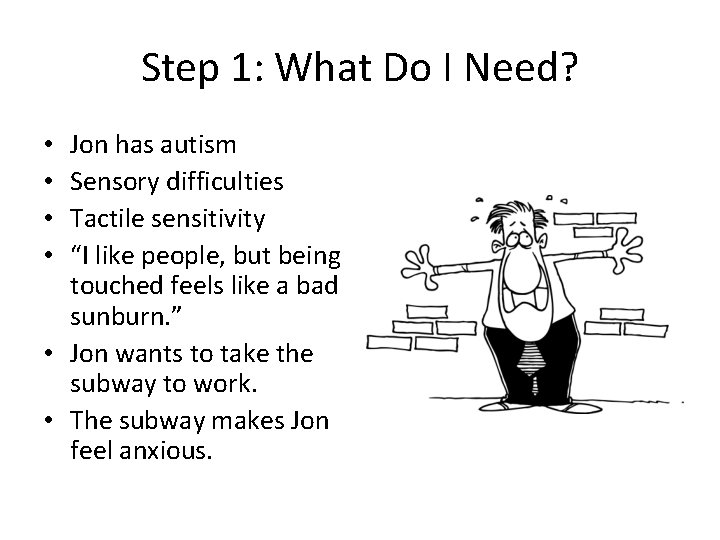
Step 1: What Do I Need? Jon has autism Sensory difficulties Tactile sensitivity “I like people, but being touched feels like a bad sunburn. ” • Jon wants to take the subway to work. • The subway makes Jon feel anxious. • •
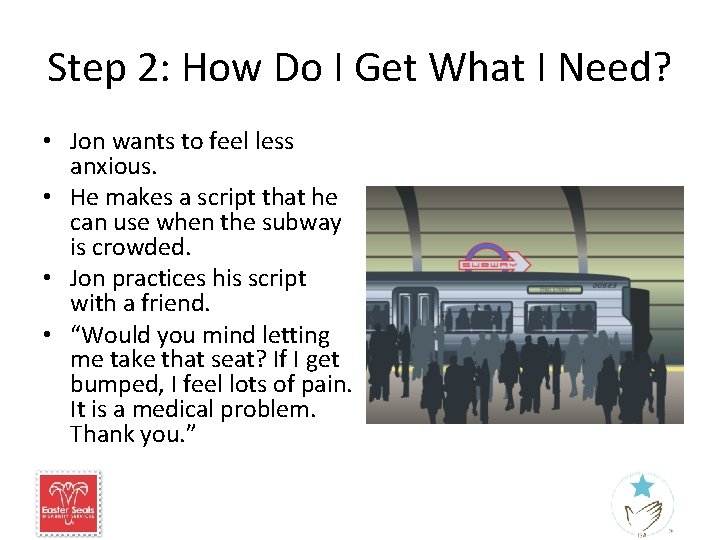
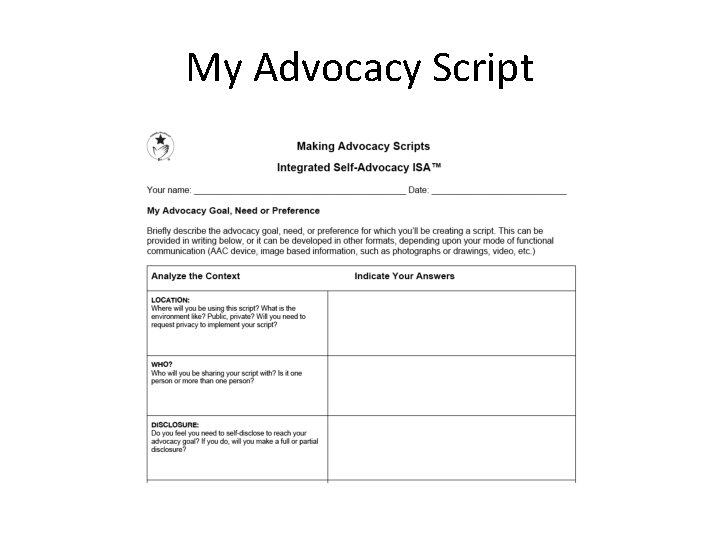
Step 2: How Do I Get What I Need? • Jon wants to feel less anxious. • He makes a script that he can use when the subway is crowded. • Jon practices his script with a friend. • “Would you mind letting me take that seat? If I get bumped, I feel lots of pain. It is a medical problem. Thank you. ”
Step 2: What is Disclosure? • Jon does not feel he needs to share that he has autism in order to make a good advocacy plan. • Jon is going to make a “partial disclosure” by saying he has a medical condition. • A partial disclosure helps others understand that your needs are legitimate, but you don’t have to “tell all. ”
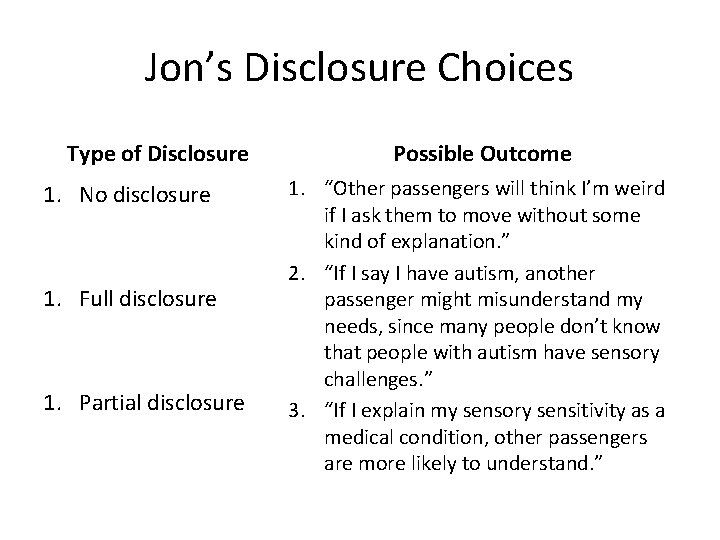
Jon’s Disclosure Choices Type of Disclosure 1. No disclosure 1. Full disclosure 1. Partial disclosure Possible Outcome 1. “Other passengers will think I’m weird if I ask them to move without some kind of explanation. ” 2. “If I say I have autism, another passenger might misunderstand my needs, since many people don’t know that people with autism have sensory challenges. ” 3. “If I explain my sensory sensitivity as a medical condition, other passengers are more likely to understand. ”
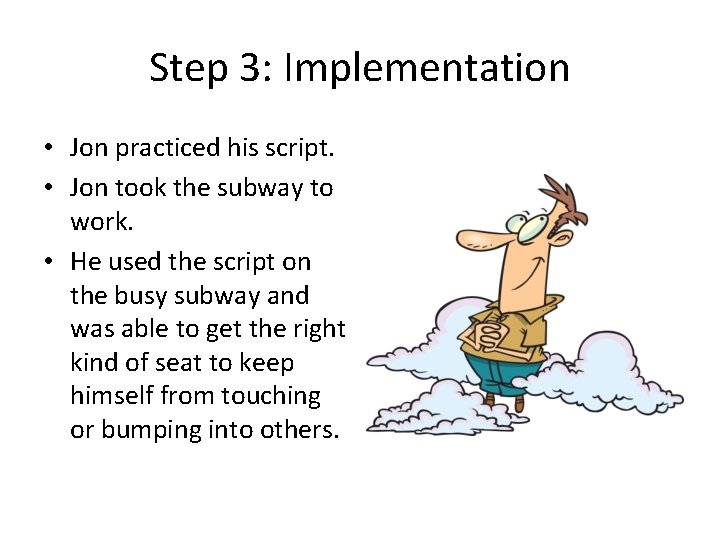
Step 3: Implementation • Jon practiced his script. • Jon took the subway to work. • He used the script on the busy subway and was able to get the right kind of seat to keep himself from touching or bumping into others.
Your Self-Advocacy Experience • Can you think of a time that you advocated for something for yourself? • Can you identify the three steps of selfadvocacy in your experience?
Disclosure and the ADA • We all have the right to access public transportation. • The American’s with Disabilities Act (ADA) protects this right for people with disabilities. • Some disabilities are easy to recognize. • Some disabilities are not easy to recognize, like Jon’s sensory problem. • If you disclose to a transportation worker that you have a disability, they must abide by ADA rules and allow you access and certain supports. • Disclosure can be a form of self-advocacy.
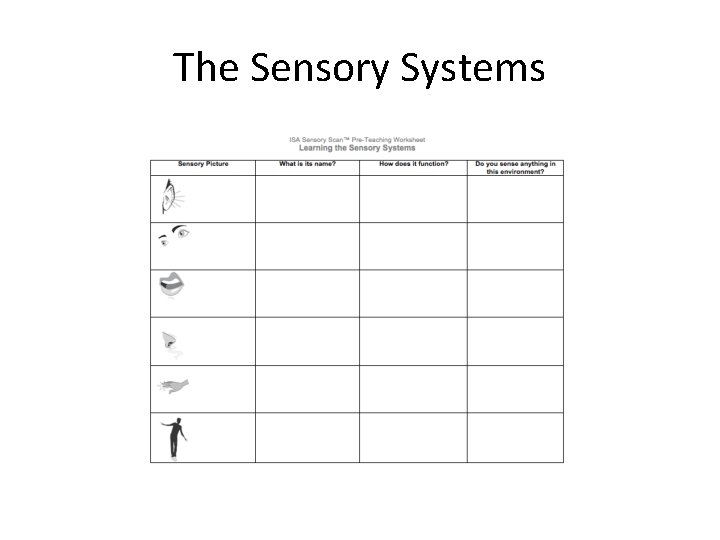
Our Sensory Experiences • • • The Sensory Systems Over/Under Sensitivity Sensory Overload Shut Down and “Behaviors” Sensory Integration Disorder
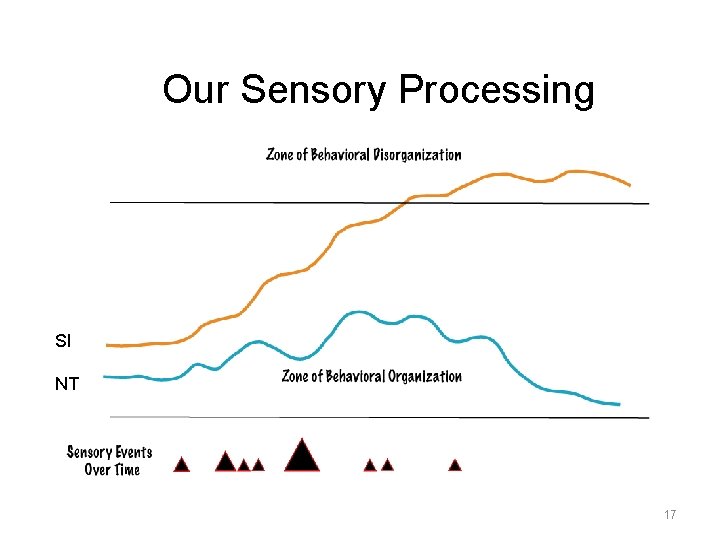
Our Sensory Processing SI NT 17
The Sensory Systems
Scanning Environments
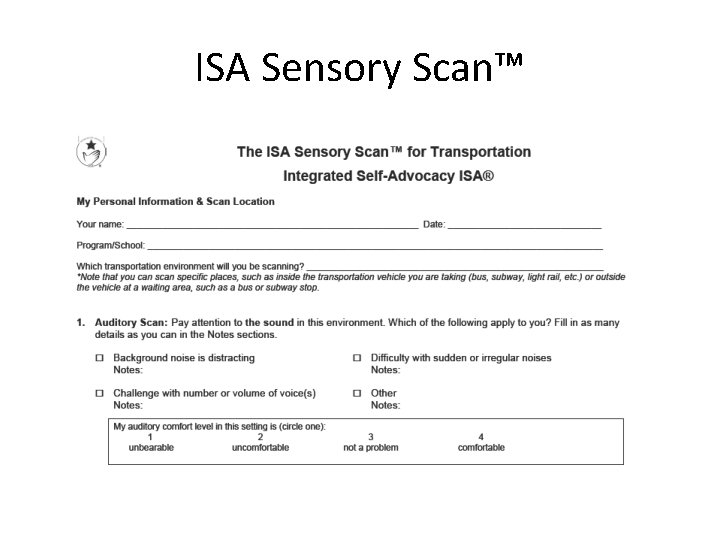
ISA Sensory Scan™
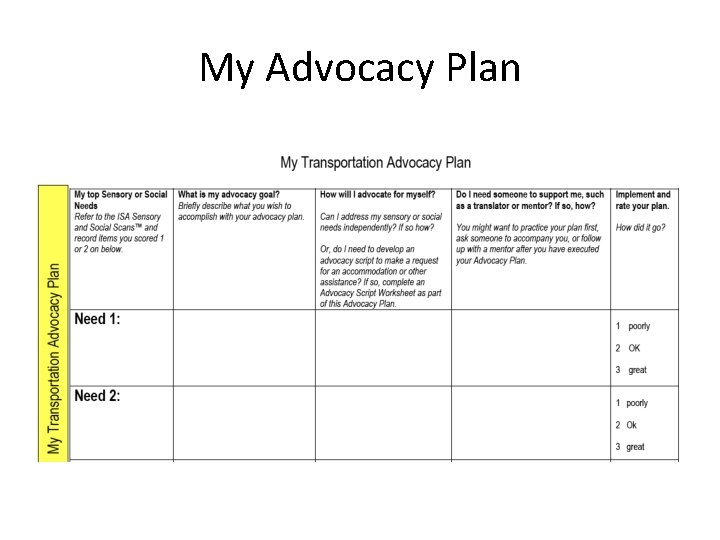
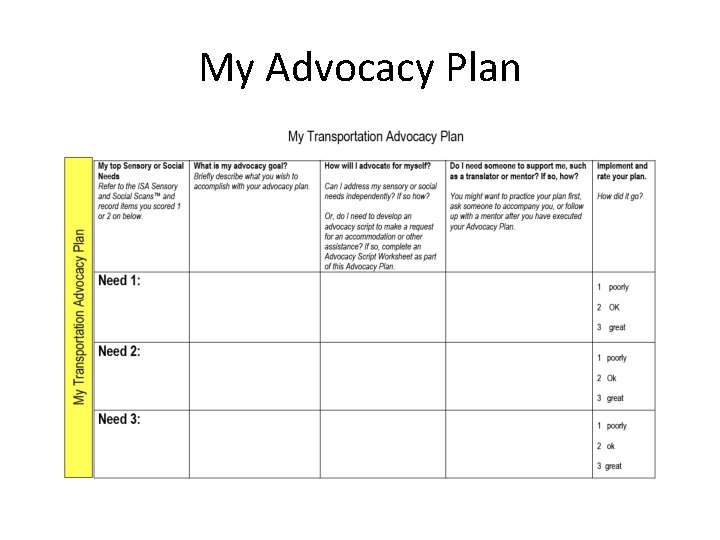
My Advocacy Plan
My Advocacy Script
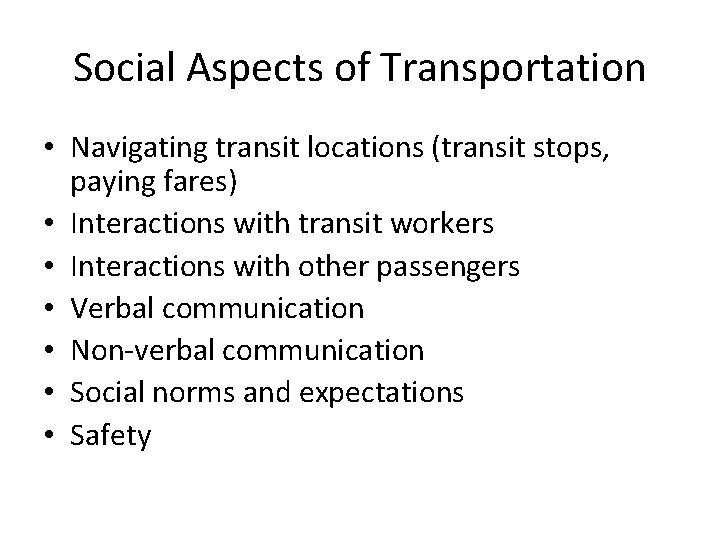
Social Aspects of Transportation • Navigating transit locations (transit stops, paying fares) • Interactions with transit workers • Interactions with other passengers • Verbal communication • Non-verbal communication • Social norms and expectations • Safety
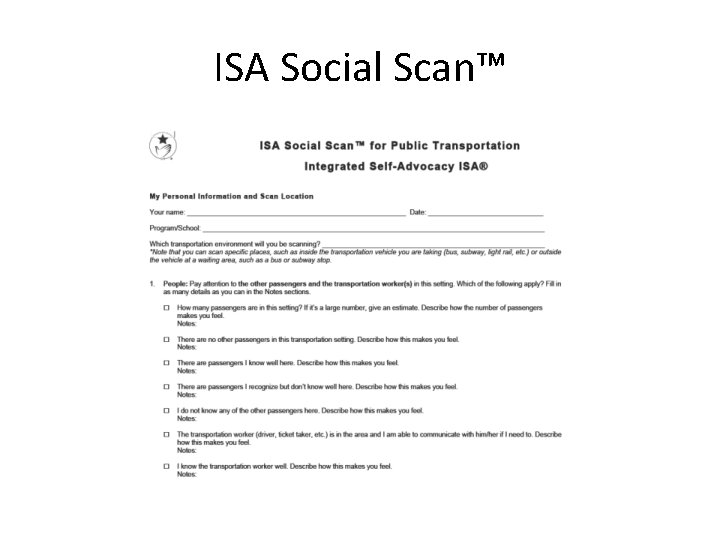
ISA Social Scan™
My Advocacy Plan
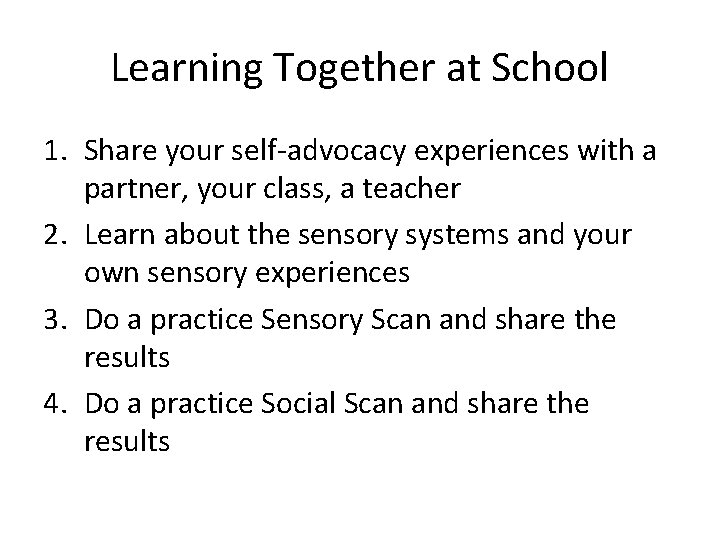
Learning Together at School 1. Share your self-advocacy experiences with a partner, your class, a teacher 2. Learn about the sensory systems and your own sensory experiences 3. Do a practice Sensory Scan and share the results 4. Do a practice Social Scan and share the results
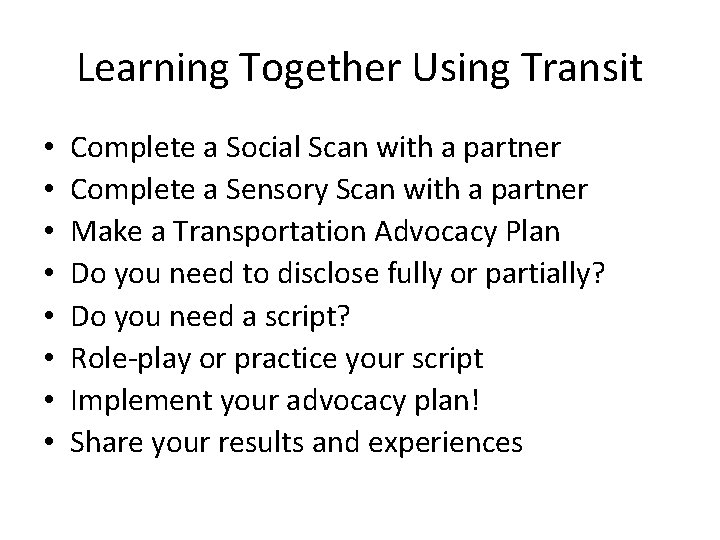
Learning Together Using Transit • • Complete a Social Scan with a partner Complete a Sensory Scan with a partner Make a Transportation Advocacy Plan Do you need to disclose fully or partially? Do you need a script? Role-play or practice your script Implement your advocacy plan! Share your results and experiences