
East Lancashire and Oldham Community Genetics Service Who
- Slides: 13
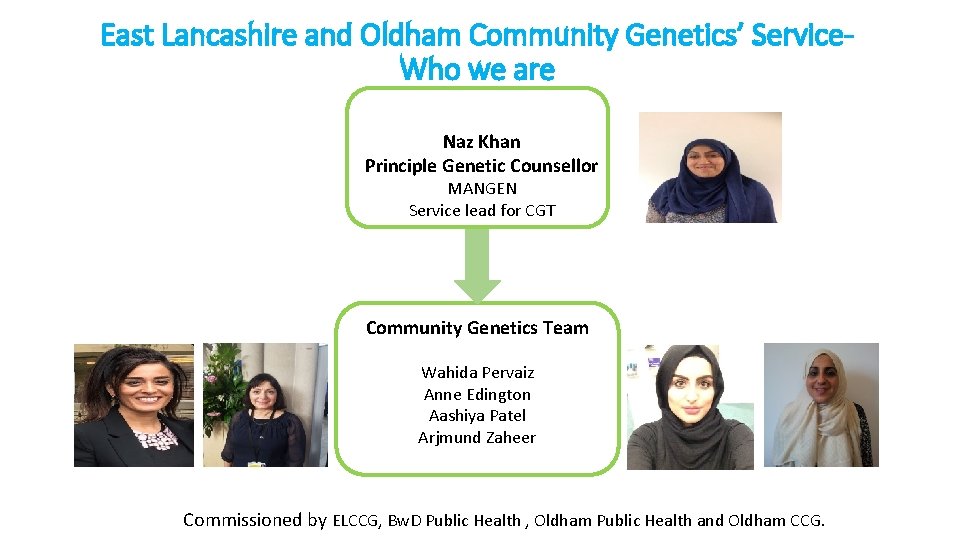
East Lancashire and Oldham Community Genetics’ Service. Who we are Naz Khan Principle Genetic Counsellor MANGEN Service lead for CGT Community Genetics Team Wahida Pervaiz Anne Edington Aashiya Patel Arjmund Zaheer Commissioned by ELCCG, Bw. D Public Health , Oldham Public Health and Oldham CCG.
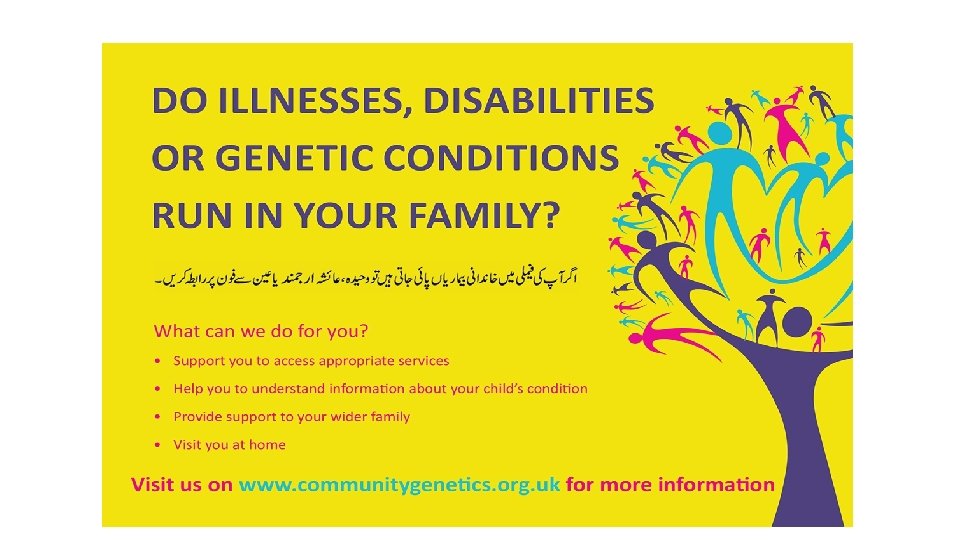
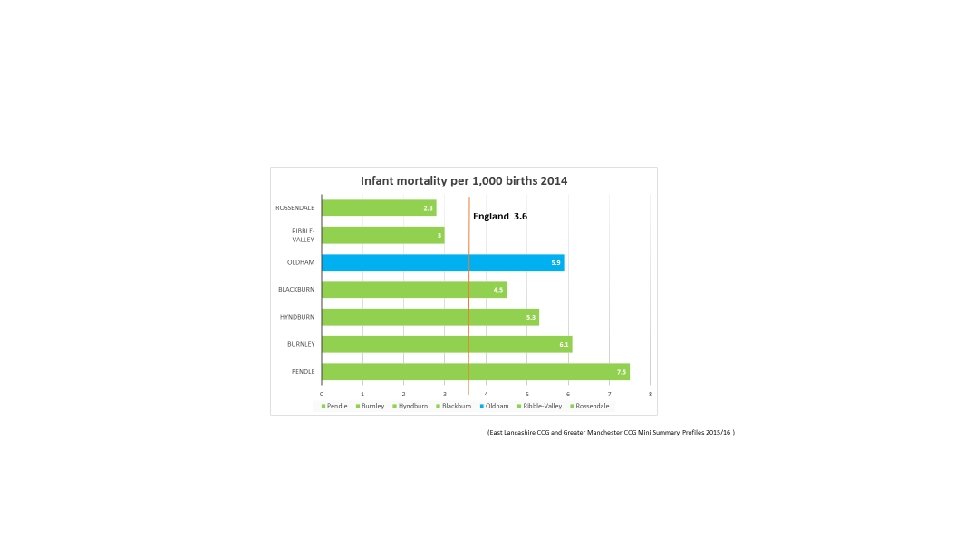
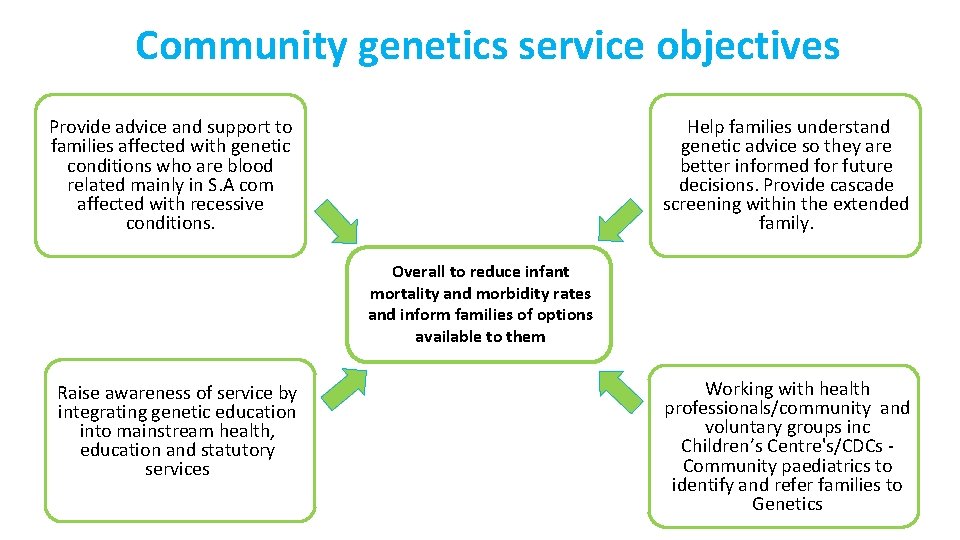
Community genetics service objectives Provide advice and support to families affected with genetic conditions who are blood related mainly in S. A com affected with recessive conditions. Help families understand genetic advice so they are better informed for future decisions. Provide cascade screening within the extended family. Overall to reduce infant mortality and morbidity rates and inform families of options available to them Raise awareness of service by integrating genetic education into mainstream health, education and statutory services Working with health professionals/community and voluntary groups inc Children’s Centre's/CDCs Community paediatrics to identify and refer families to Genetics
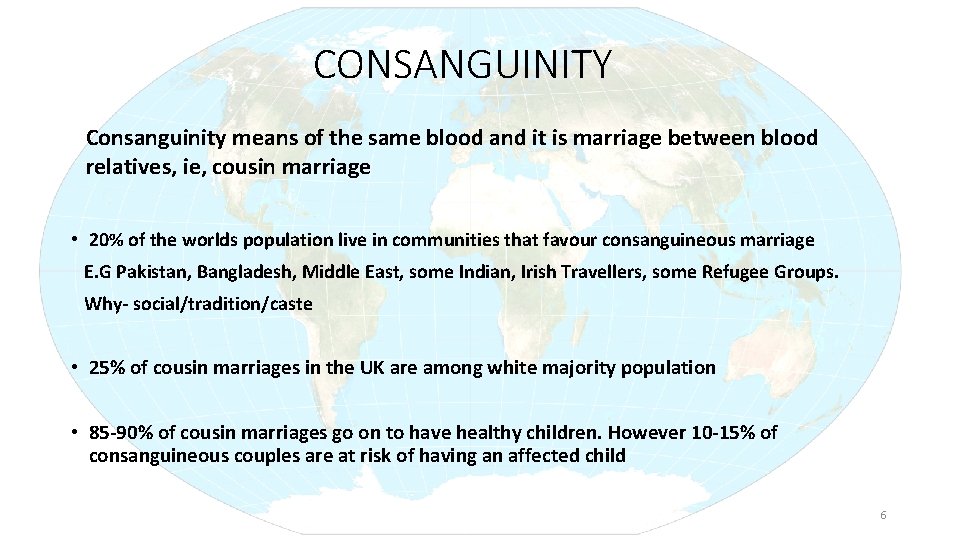
CONSANGUINITY Consanguinity means of the same blood and it is marriage between blood relatives, ie, cousin marriage • 20% of the worlds population live in communities that favour consanguineous marriage E. G Pakistan, Bangladesh, Middle East, some Indian, Irish Travellers, some Refugee Groups. Why- social/tradition/caste • 25% of cousin marriages in the UK are among white majority population • 85 -90% of cousin marriages go on to have healthy children. However 10 -15% of consanguineous couples are at risk of having an affected child 6
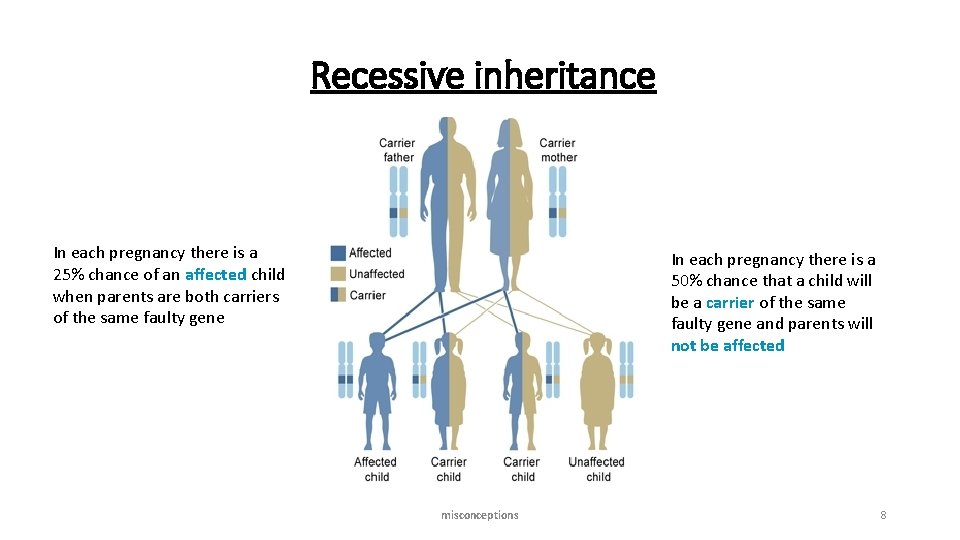
Recessive inheritance In each pregnancy there is a 25% chance of an affected child when parents are both carriers of the same faulty gene In each pregnancy there is a 50% chance that a child will be a carrier of the same faulty gene and parents will not be affected misconceptions 8
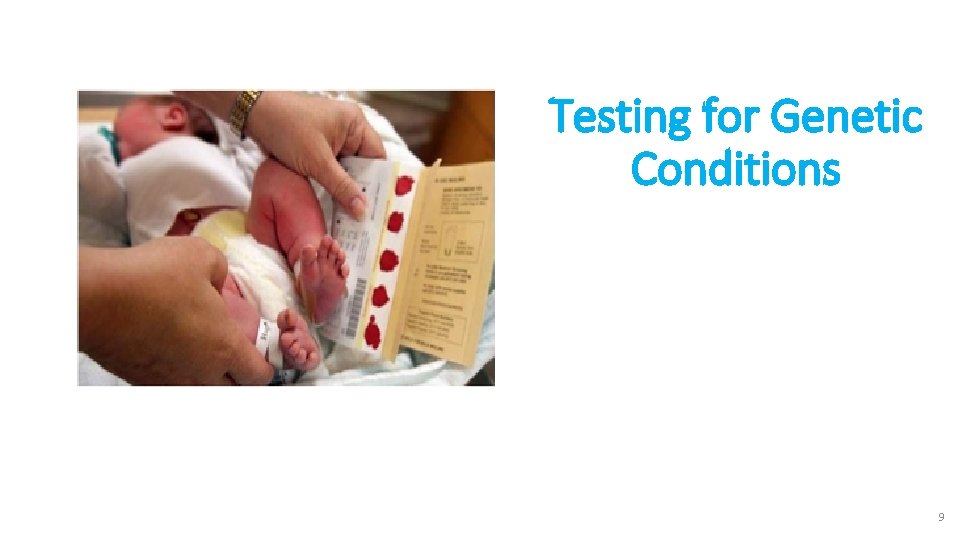
Testing for Genetic Conditions 9
HOW DO WE HELP FAMILIES WITH GENETIC CONDITIONS • Help families to obtain a diagnosis, understand benefit from screening tests for the immediate and extended family • Offer advice and support to families with genetic conditions when either a child or a parent is affected. This can be done at home when possible or at local hospital clinics. • We work closely with other support services which can assist families with a condition. • For those with rare conditions and no diagnosis there is a chance to participate in studies such as the 100, 000 Genome project which can sometimes identify the gene which has caused the disorder. 10