
East Asia Land of Contrasts Natural Resources Compare
- Slides: 14
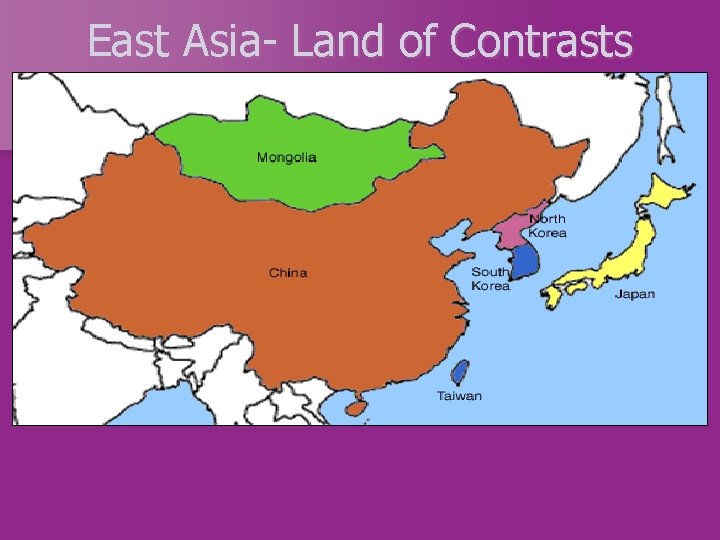
East Asia- Land of Contrasts
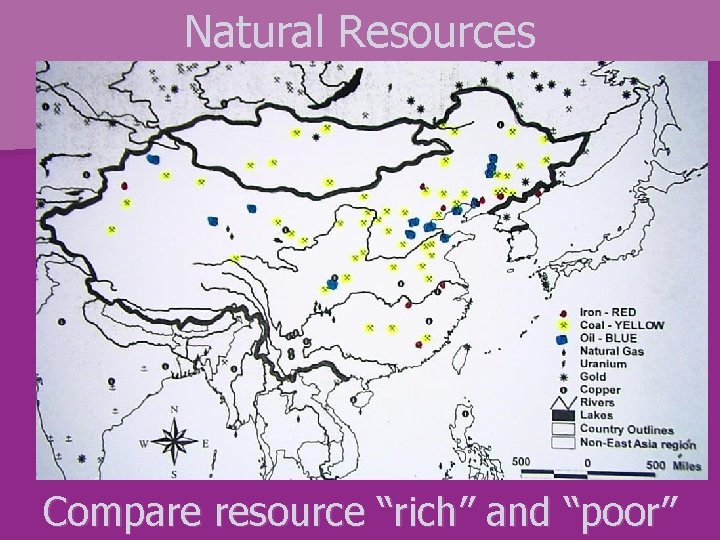
Natural Resources Compare resource “rich” and “poor”
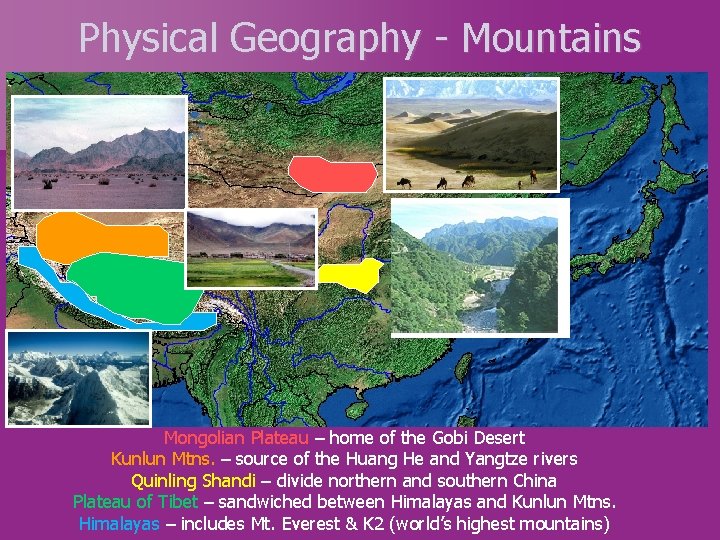
Physical Geography - Mountains Mongolian Plateau – home of the Gobi Desert Kunlun Mtns. – source of the Huang He and Yangtze rivers Quinling Shandi – divide northern and southern China Plateau of Tibet – sandwiched between Himalayas and Kunlun Mtns. Himalayas – includes Mt. Everest & K 2 (world’s highest mountains)
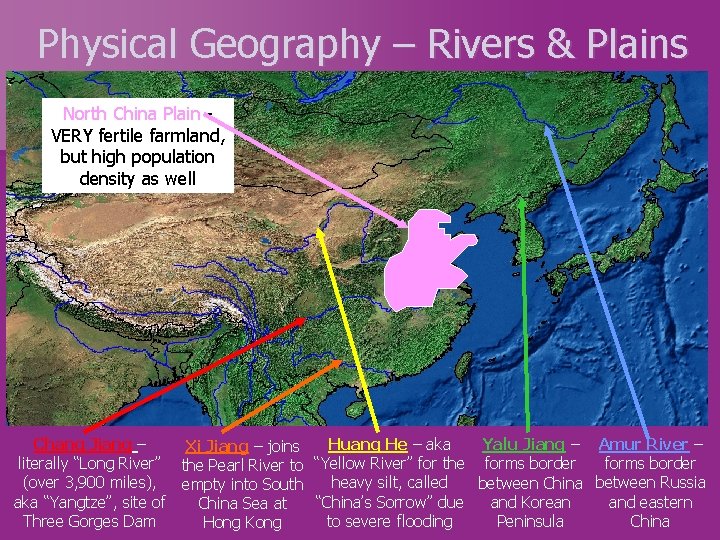
Physical Geography – Rivers & Plains North China Plain VERY fertile farmland, but high population density as well Chang Jiang – Huang He – aka Yalu Jiang – Amur River – Xi Jiang – joins literally “Long River” the Pearl River to “Yellow River” for the forms border (over 3, 900 miles), heavy silt, called between China between Russia empty into South aka “Yangtze”, site of “China’s Sorrow” due and eastern and Korean China Sea at Three Gorges Dam to severe flooding China Peninsula Hong Kong
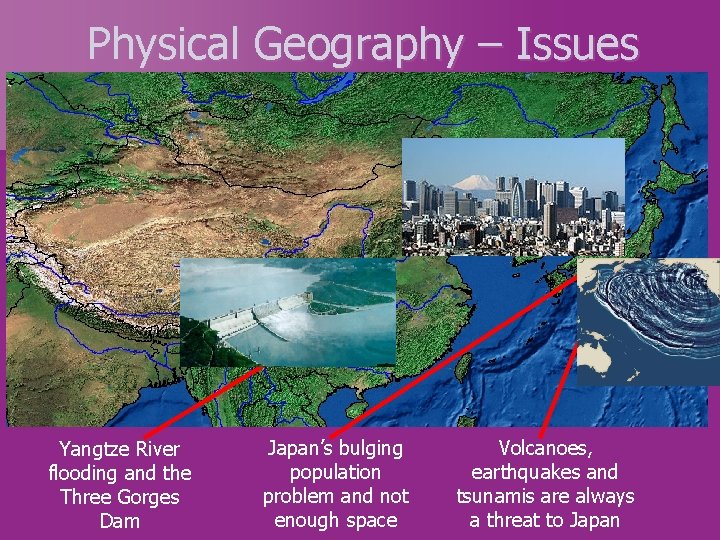
Physical Geography – Issues Yangtze River flooding and the Three Gorges Dam Japan’s bulging population problem and not enough space Volcanoes, earthquakes and tsunamis are always a threat to Japan
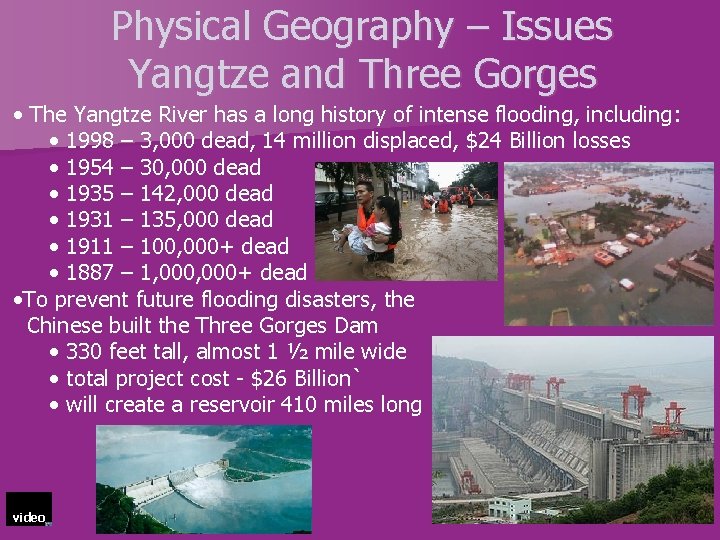
Physical Geography – Issues Yangtze and Three Gorges • The Yangtze River has a long history of intense flooding, including: • 1998 – 3, 000 dead, 14 million displaced, $24 Billion losses • 1954 – 30, 000 dead • 1935 – 142, 000 dead • 1931 – 135, 000 dead • 1911 – 100, 000+ dead • 1887 – 1, 000+ dead • To prevent future flooding disasters, the Chinese built the Three Gorges Dam • 330 feet tall, almost 1 ½ mile wide • total project cost - $26 Billion` • will create a reservoir 410 miles long video
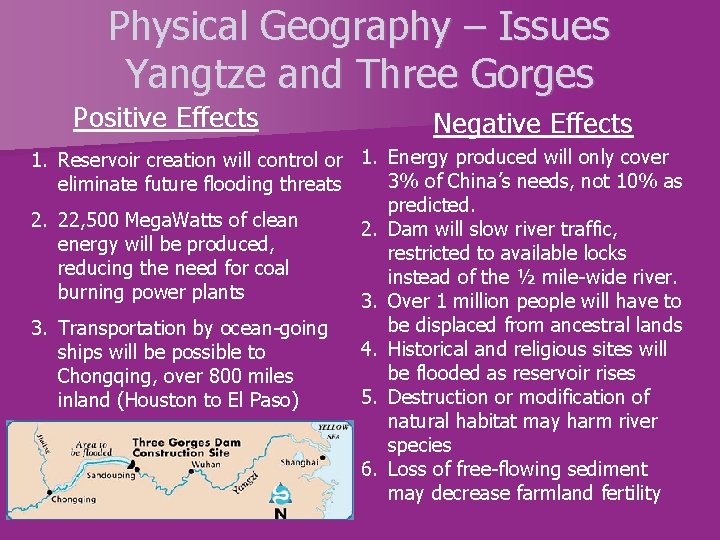
Physical Geography – Issues Yangtze and Three Gorges Positive Effects Negative Effects 1. Reservoir creation will control or 1. Energy produced will only cover 3% of China’s needs, not 10% as eliminate future flooding threats predicted. 2. 22, 500 Mega. Watts of clean 2. Dam will slow river traffic, energy will be produced, restricted to available locks reducing the need for coal instead of the ½ mile-wide river. burning power plants 3. Over 1 million people will have to be displaced from ancestral lands 3. Transportation by ocean-going 4. Historical and religious sites will ships will be possible to be flooded as reservoir rises Chongqing, over 800 miles 5. Destruction or modification of inland (Houston to El Paso) natural habitat may harm river species 6. Loss of free-flowing sediment may decrease farmland fertility
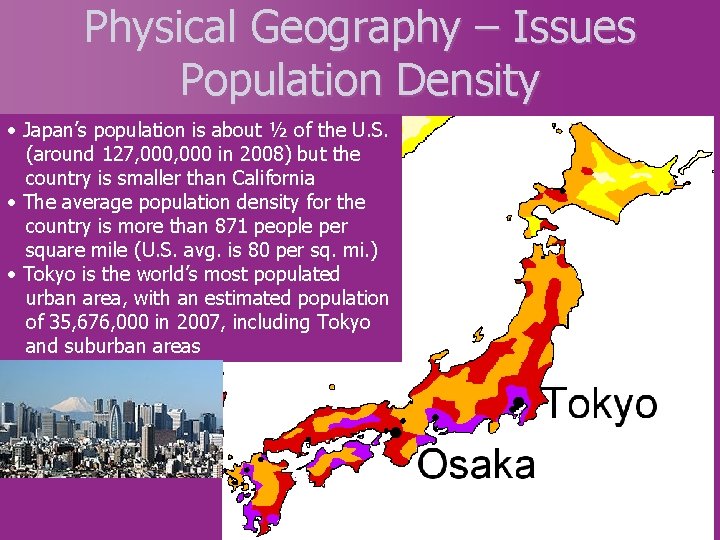
Physical Geography – Issues Population Density • Japan’s population is about ½ of the U. S. (around 127, 000 in 2008) but the country is smaller than California • The average population density for the country is more than 871 people per square mile (U. S. avg. is 80 per sq. mi. ) • Tokyo is the world’s most populated urban area, with an estimated population of 35, 676, 000 in 2007, including Tokyo and suburban areas
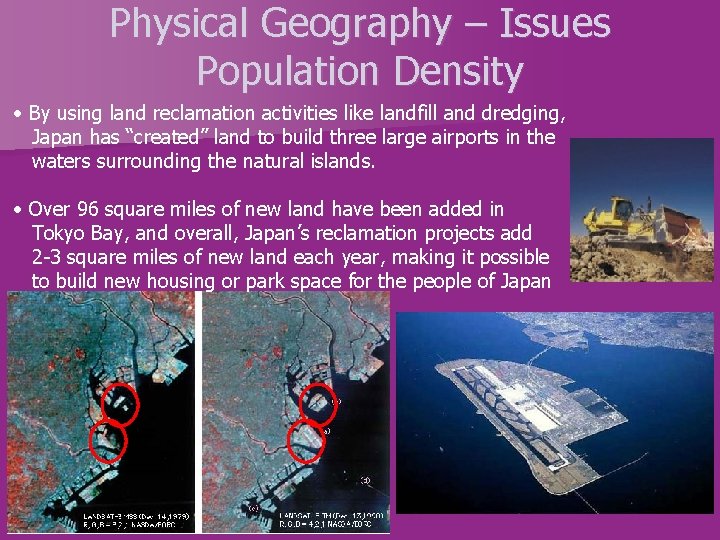
Physical Geography – Issues Population Density • By using land reclamation activities like landfill and dredging, Japan has “created” land to build three large airports in the waters surrounding the natural islands. • Over 96 square miles of new land have been added in Tokyo Bay, and overall, Japan’s reclamation projects add 2 -3 square miles of new land each year, making it possible to build new housing or park space for the people of Japan
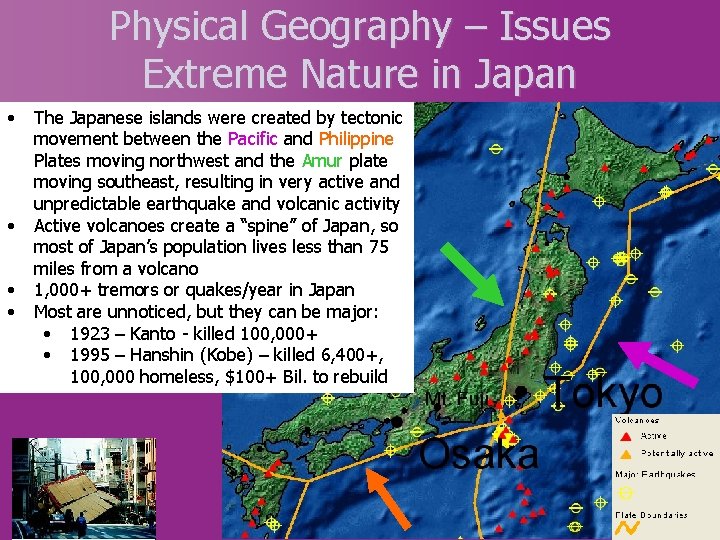
Physical Geography – Issues Extreme Nature in Japan • • The Japanese islands were created by tectonic movement between the Pacific and Philippine Plates moving northwest and the Amur plate moving southeast, resulting in very active and unpredictable earthquake and volcanic activity Active volcanoes create a “spine” of Japan, so most of Japan’s population lives less than 75 miles from a volcano 1, 000+ tremors or quakes/year in Japan Most are unnoticed, but they can be major: • 1923 – Kanto - killed 100, 000+ • 1995 – Hanshin (Kobe) – killed 6, 400+, 100, 000 homeless, $100+ Bil. to rebuild
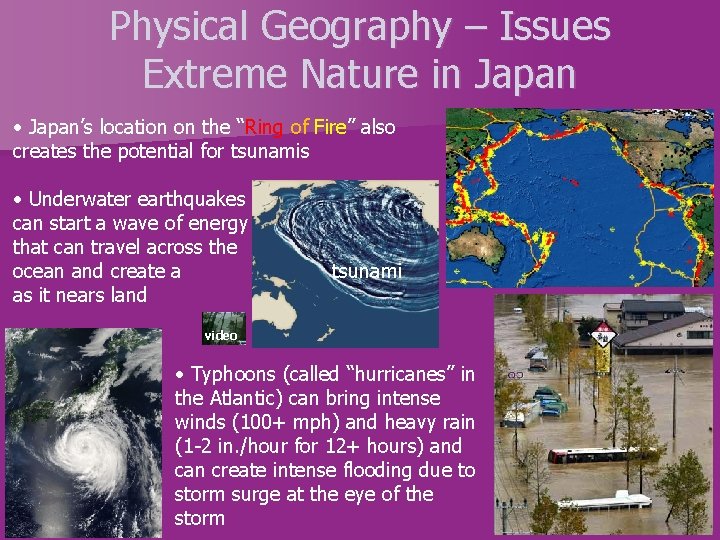
Physical Geography – Issues Extreme Nature in Japan • Japan’s location on the “Ring of Fire” also creates the potential for tsunamis • Underwater earthquakes can start a wave of energy that can travel across the ocean and create a as it nears land tsunami video • Typhoons (called “hurricanes” in the Atlantic) can bring intense winds (100+ mph) and heavy rain (1 -2 in. /hour for 12+ hours) and can create intense flooding due to storm surge at the eye of the storm
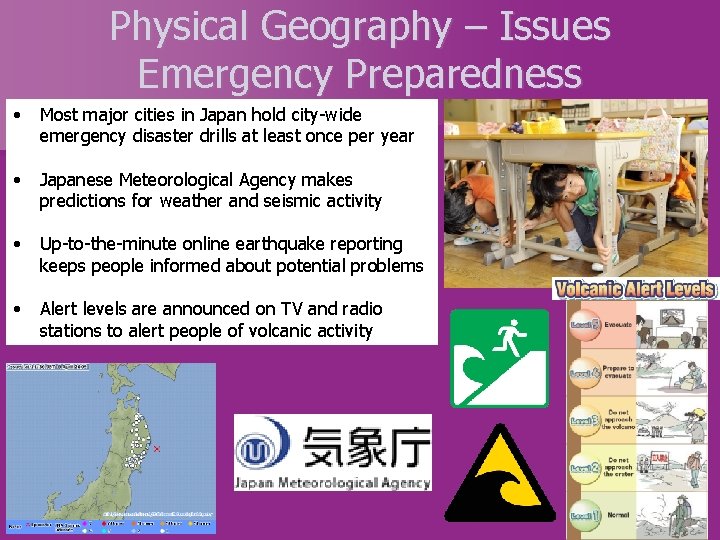
Physical Geography – Issues Emergency Preparedness • Most major cities in Japan hold city-wide emergency disaster drills at least once per year • Japanese Meteorological Agency makes predictions for weather and seismic activity • Up-to-the-minute online earthquake reporting keeps people informed about potential problems • Alert levels are announced on TV and radio stations to alert people of volcanic activity
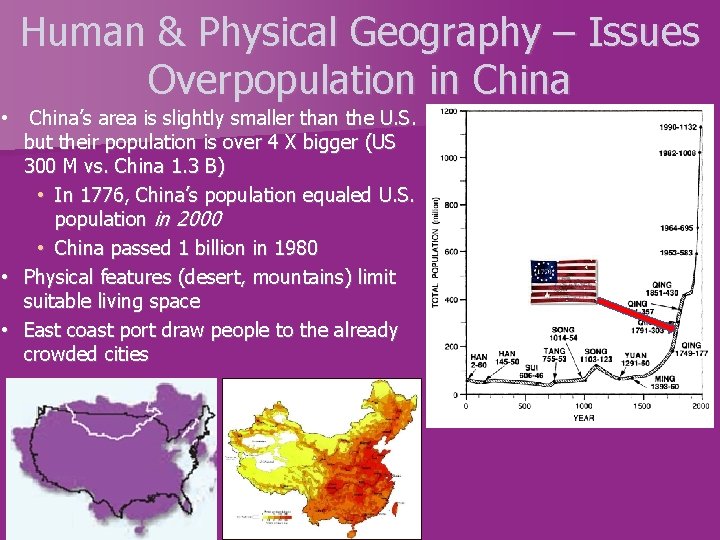
Human & Physical Geography – Issues Overpopulation in China’s area is slightly smaller than the U. S. but their population is over 4 X bigger (US 300 M vs. China 1. 3 B) • In 1776, China’s population equaled U. S. population in 2000 • China passed 1 billion in 1980 • Physical features (desert, mountains) limit suitable living space • East coast port draw people to the already crowded cities •
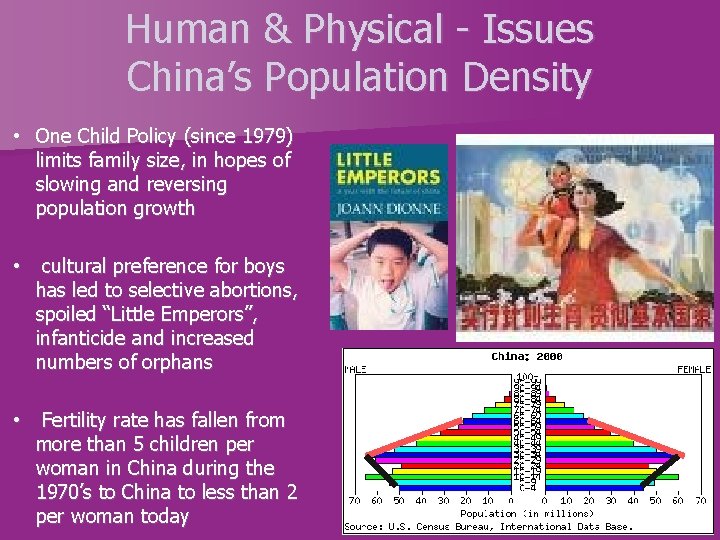
Human & Physical - Issues China’s Population Density • One Child Policy (since 1979) limits family size, in hopes of slowing and reversing population growth • cultural preference for boys has led to selective abortions, spoiled “Little Emperors”, infanticide and increased numbers of orphans • Fertility rate has fallen from more than 5 children per woman in China during the 1970’s to China to less than 2 per woman today