
East Asia and the West Why did Western

- Slides: 39
East Asia and the West Why did Western Imperialistic nations have differing result in China, Japan and Southeast Asia? China Japan
Western Nations Gain Power • In 1800, European nations were more concerned about trading with the Chinese, but the Chinese did not see the Europeans as very important. • However, the Qing dynasty was losing power.
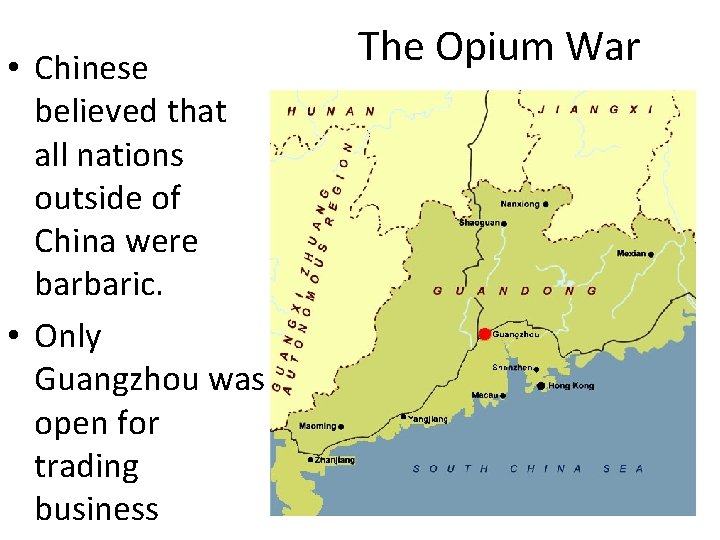
• Chinese believed that all nations outside of China were barbaric. • Only Guangzhou was open for trading business The Opium War
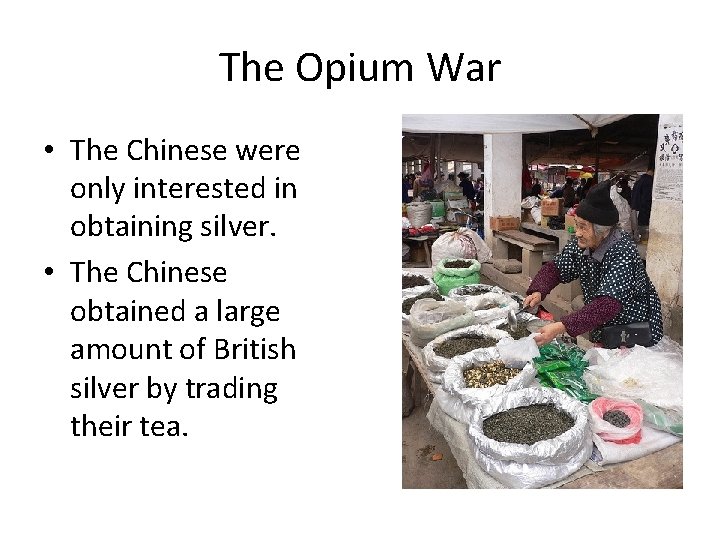
The Opium War • The Chinese were only interested in obtaining silver. • The Chinese obtained a large amount of British silver by trading their tea.
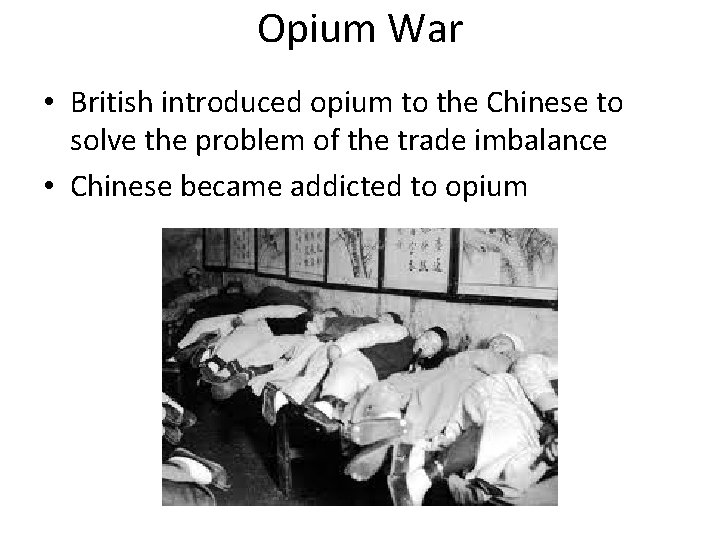
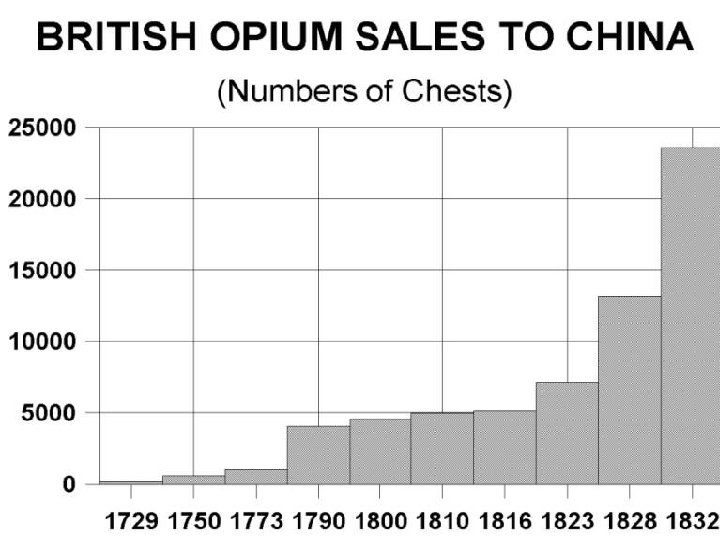
Opium War • British introduced opium to the Chinese to solve the problem of the trade imbalance • Chinese became addicted to opium
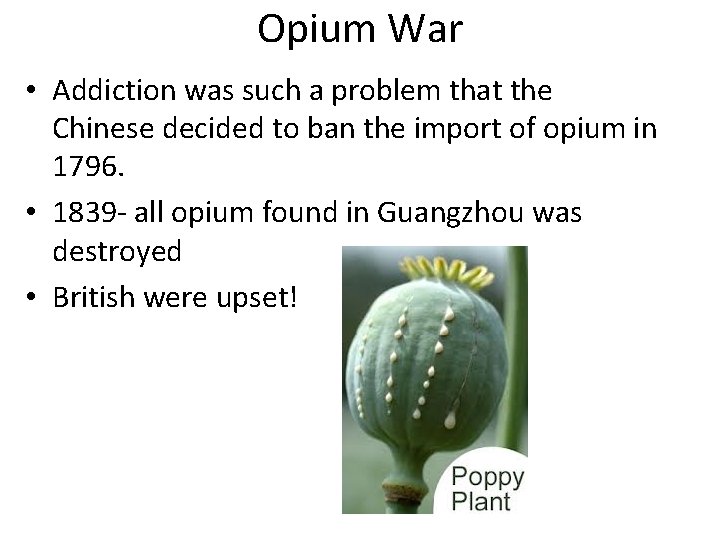
Opium War • Addiction was such a problem that the Chinese decided to ban the import of opium in 1796. • 1839 - all opium found in Guangzhou was destroyed • British were upset!
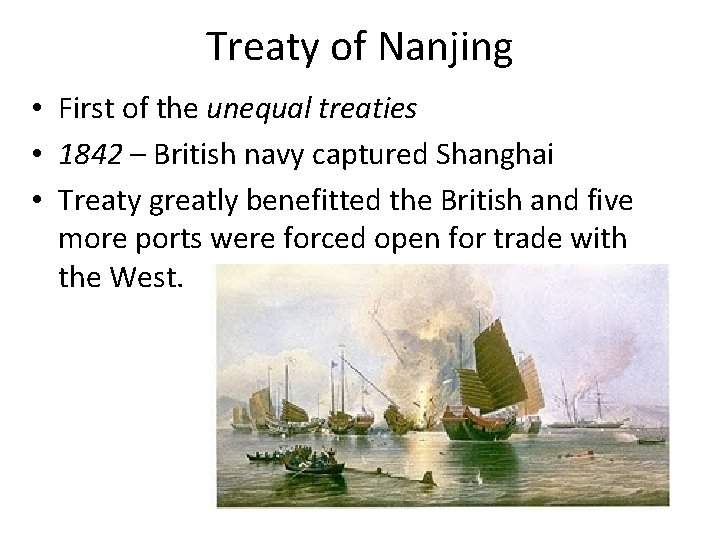
Treaty of Nanjing • First of the unequal treaties • 1842 – British navy captured Shanghai • Treaty greatly benefitted the British and five more ports were forced open for trade with the West.
Extraterritoriality • British citizens accused of crimes had the right to be tried in British courts rather than Chinese courts. • Is this fair?
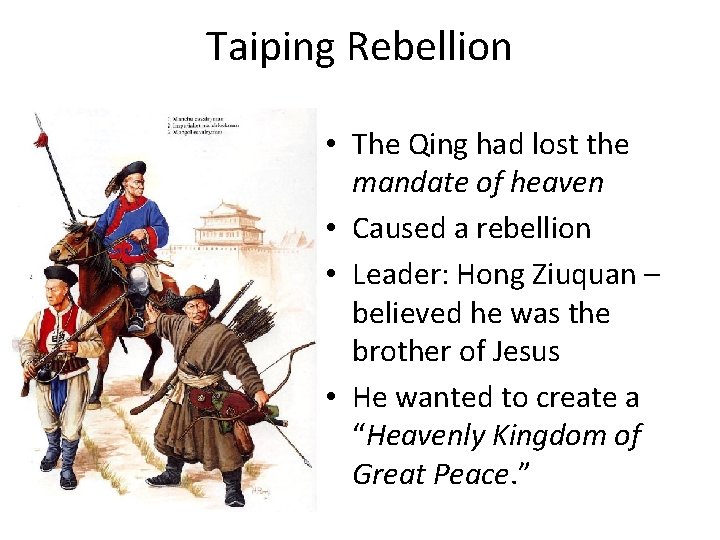
Taiping Rebellion • The Qing had lost the mandate of heaven • Caused a rebellion • Leader: Hong Ziuquan – believed he was the brother of Jesus • He wanted to create a “Heavenly Kingdom of Great Peace. ”
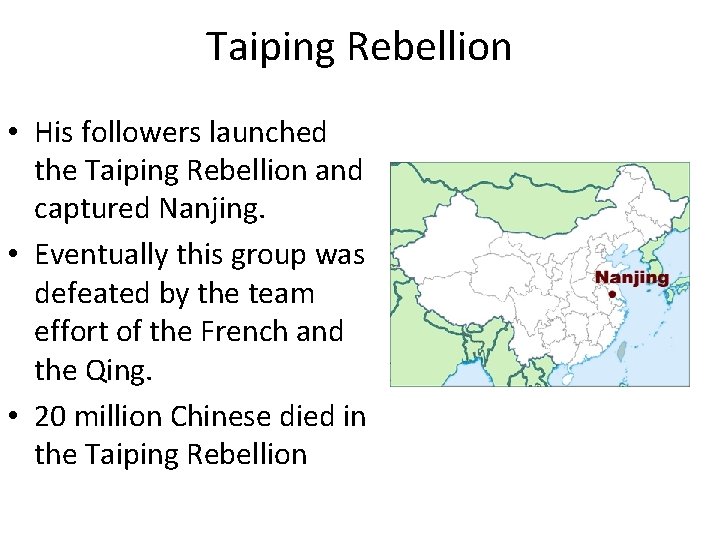
Taiping Rebellion • His followers launched the Taiping Rebellion and captured Nanjing. • Eventually this group was defeated by the team effort of the French and the Qing. • 20 million Chinese died in the Taiping Rebellion
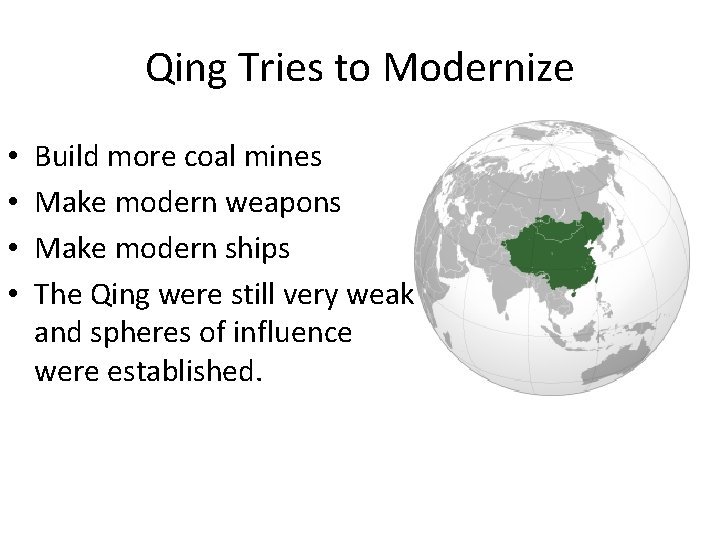
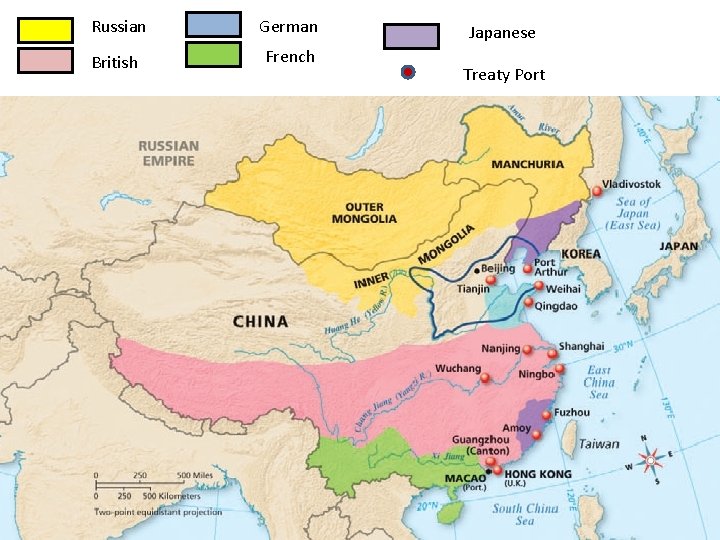
Qing Tries to Modernize • • Build more coal mines Make modern weapons Make modern ships The Qing were still very weak and spheres of influence were established.
Russian German British French Japanese Treaty Port
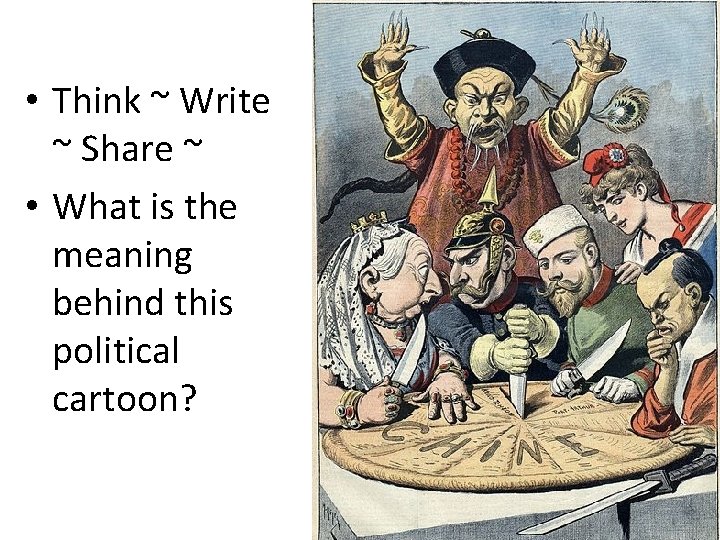
• Think ~ Write ~ Share ~ • What is the meaning behind this political cartoon?
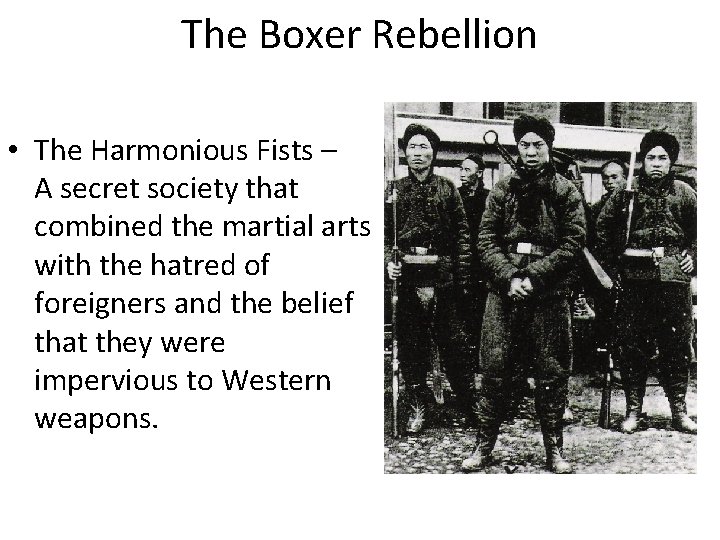
The Boxer Rebellion • The Harmonious Fists – A secret society that combined the martial arts with the hatred of foreigners and the belief that they were impervious to Western weapons.
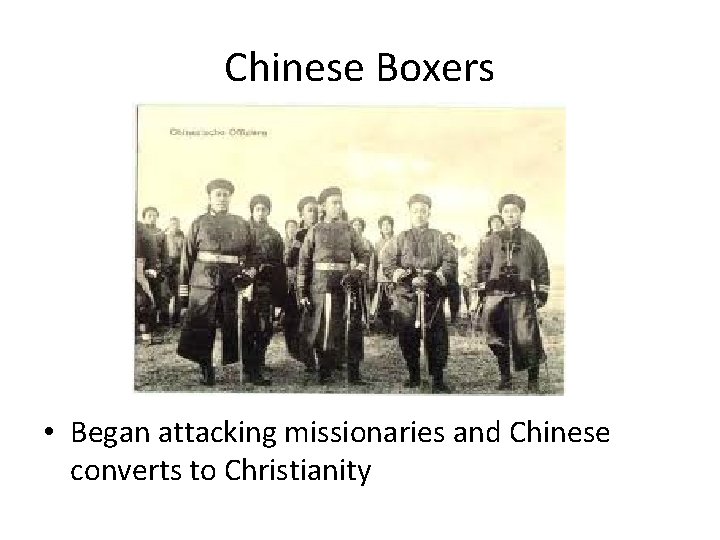
Chinese Boxers • Began attacking missionaries and Chinese converts to Christianity
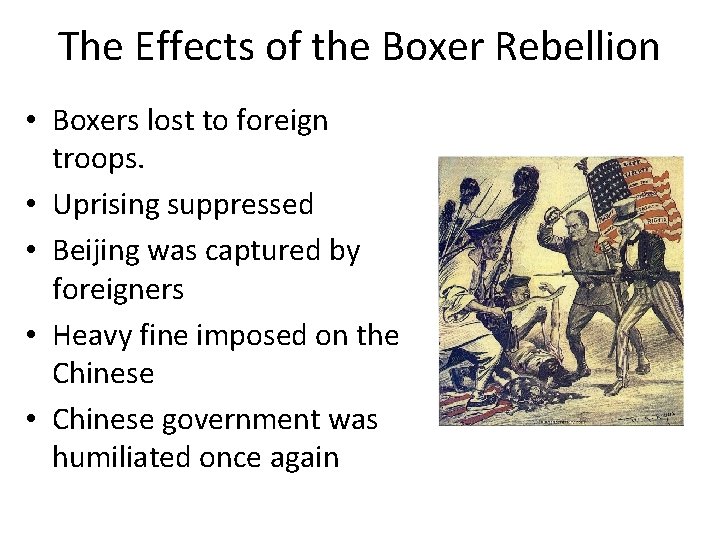
The Effects of the Boxer Rebellion • Boxers lost to foreign troops. • Uprising suppressed • Beijing was captured by foreigners • Heavy fine imposed on the Chinese • Chinese government was humiliated once again
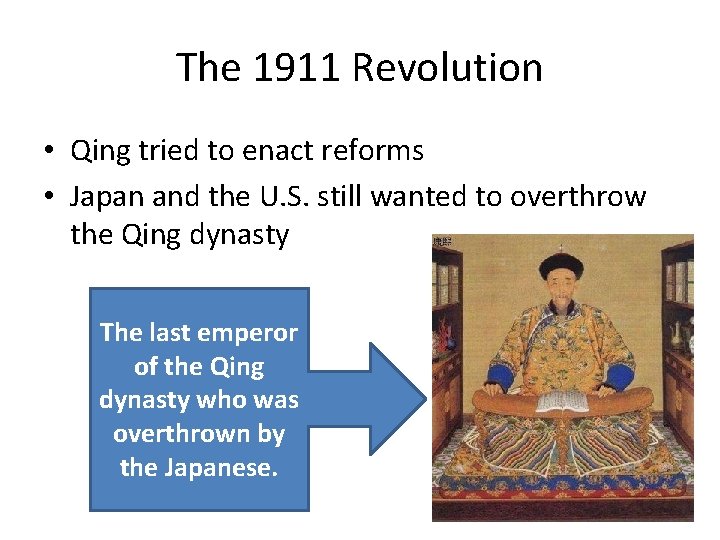
The 1911 Revolution • Qing tried to enact reforms • Japan and the U. S. still wanted to overthrow the Qing dynasty The last emperor of the Qing dynasty who was overthrown by the Japanese.
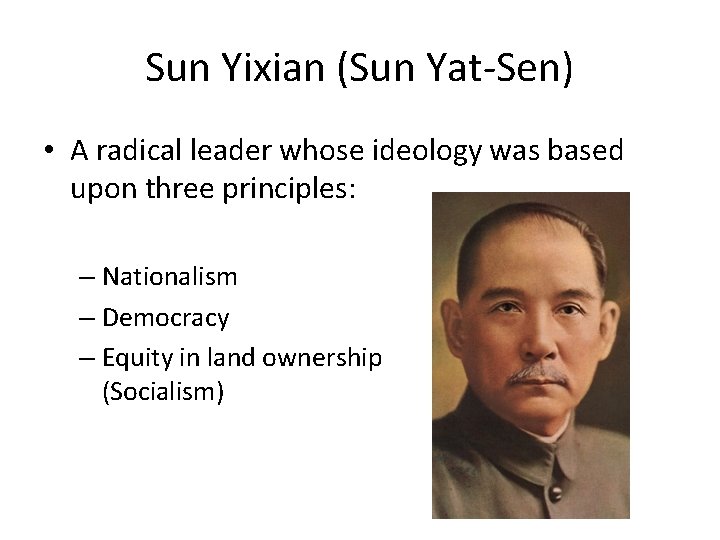
Sun Yixian (Sun Yat-Sen) • A radical leader whose ideology was based upon three principles: – Nationalism – Democracy – Equity in land ownership (Socialism)
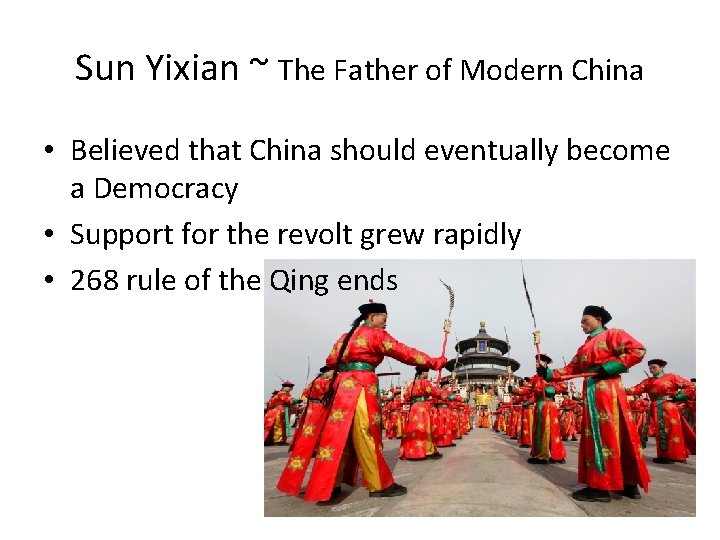
Sun Yixian ~ The Father of Modern China • Believed that China should eventually become a Democracy • Support for the revolt grew rapidly • 268 rule of the Qing ends
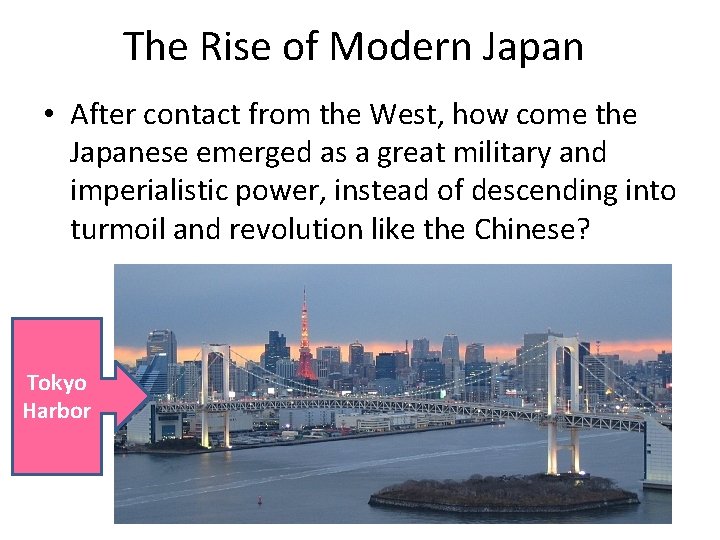
The Rise of Modern Japan • After contact from the West, how come the Japanese emerged as a great military and imperialistic power, instead of descending into turmoil and revolution like the Chinese? Tokyo Harbor
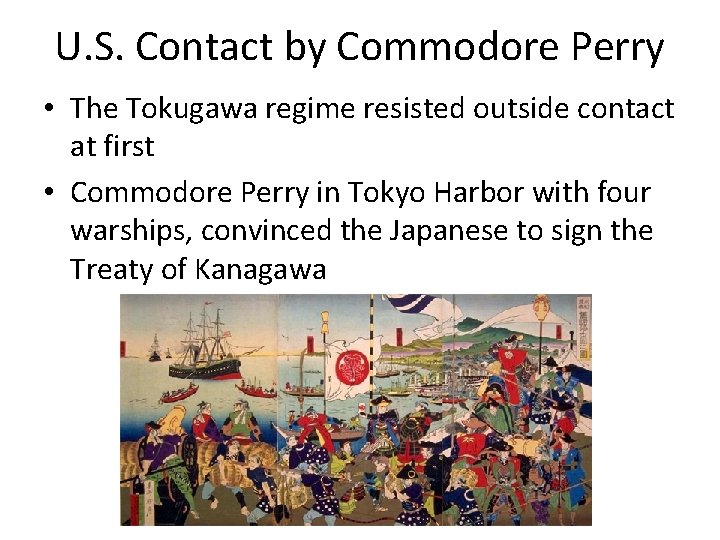
U. S. Contact by Commodore Perry • The Tokugawa regime resisted outside contact at first • Commodore Perry in Tokyo Harbor with four warships, convinced the Japanese to sign the Treaty of Kanagawa
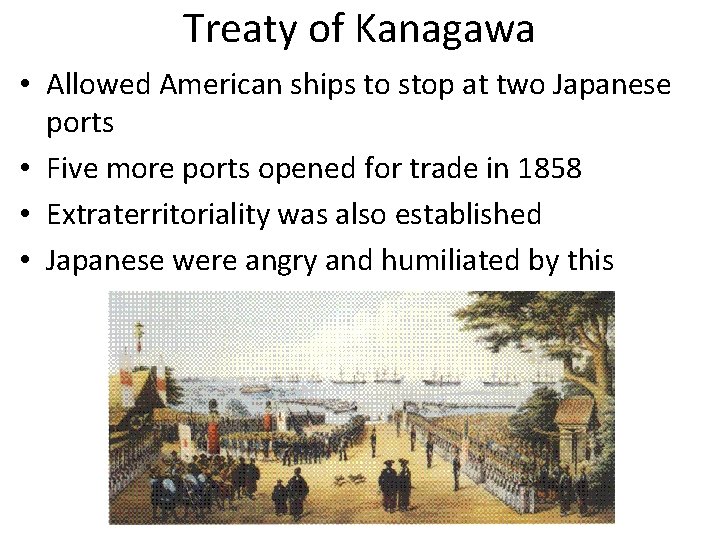
Treaty of Kanagawa • Allowed American ships to stop at two Japanese ports • Five more ports opened for trade in 1858 • Extraterritoriality was also established • Japanese were angry and humiliated by this
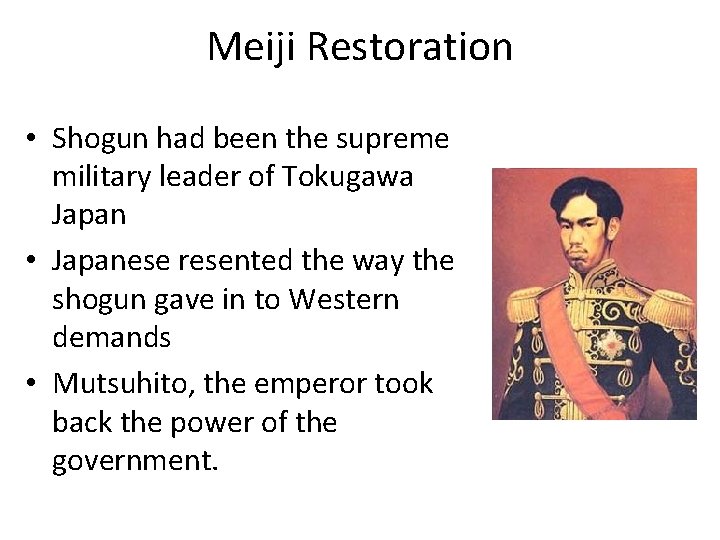
Meiji Restoration • Shogun had been the supreme military leader of Tokugawa Japan • Japanese resented the way the shogun gave in to Western demands • Mutsuhito, the emperor took back the power of the government.
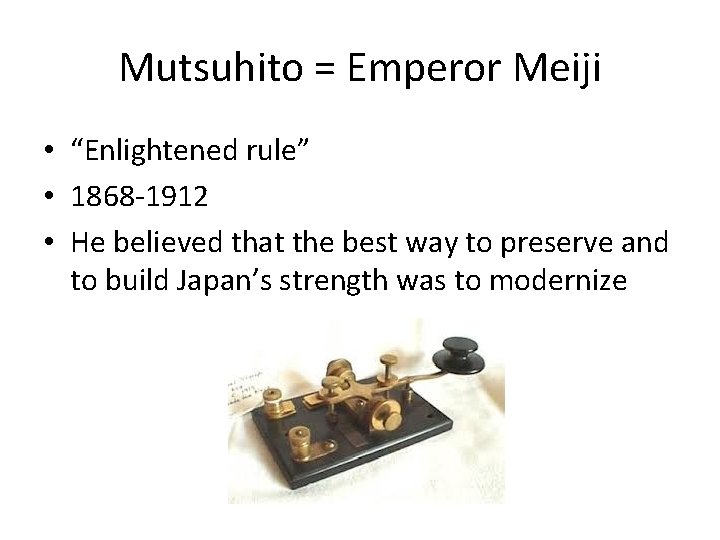
Mutsuhito = Emperor Meiji • “Enlightened rule” • 1868 -1912 • He believed that the best way to preserve and to build Japan’s strength was to modernize
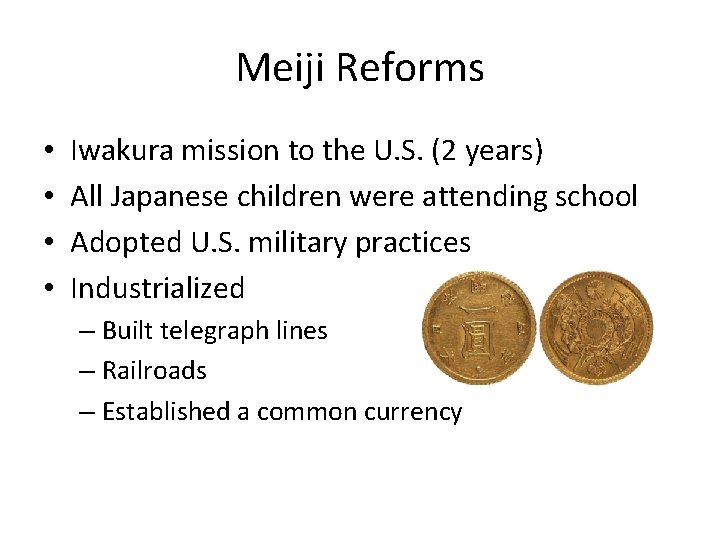
Meiji Reforms • • Iwakura mission to the U. S. (2 years) All Japanese children were attending school Adopted U. S. military practices Industrialized – Built telegraph lines – Railroads – Established a common currency
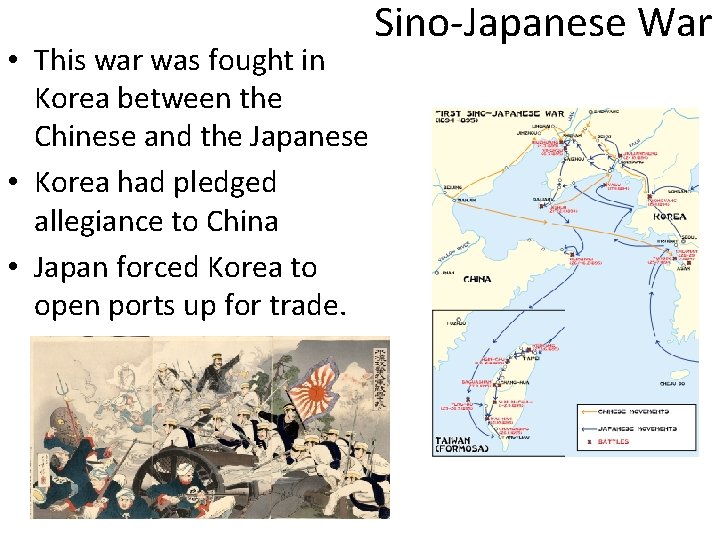
• This war was fought in Korea between the Chinese and the Japanese • Korea had pledged allegiance to China • Japan forced Korea to open ports up for trade. Sino-Japanese War
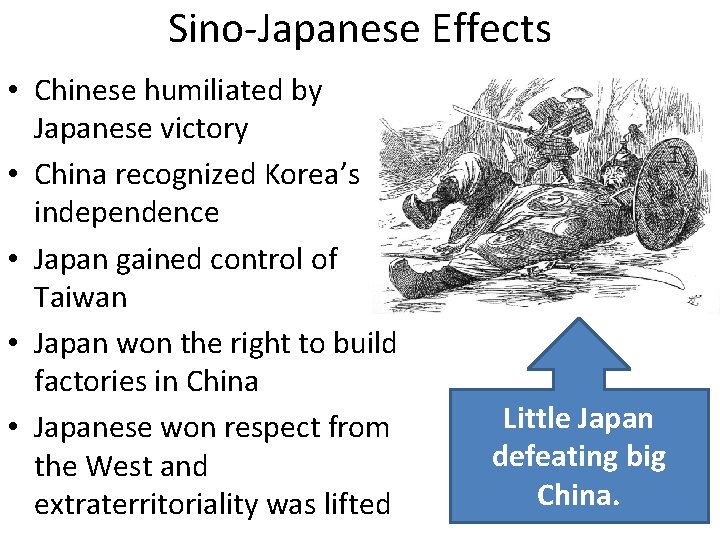
Sino-Japanese Effects • Chinese humiliated by Japanese victory • China recognized Korea’s independence • Japan gained control of Taiwan • Japan won the right to build factories in China • Japanese won respect from the West and extraterritoriality was lifted Little Japan defeating big China.
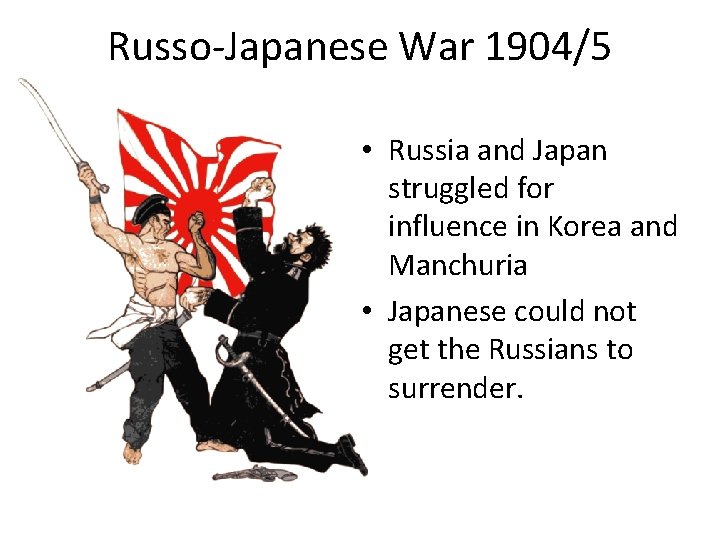
Russo-Japanese War 1904/5 • Russia and Japan struggled for influence in Korea and Manchuria • Japanese could not get the Russians to surrender.
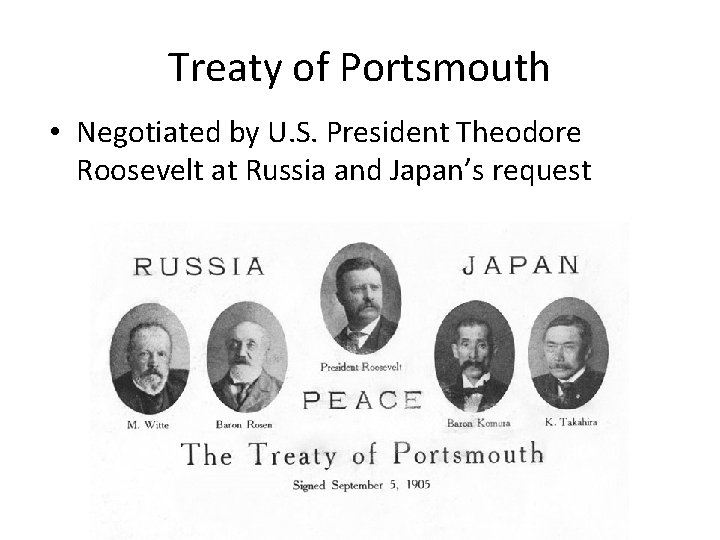
Treaty of Portsmouth • Negotiated by U. S. President Theodore Roosevelt at Russia and Japan’s request
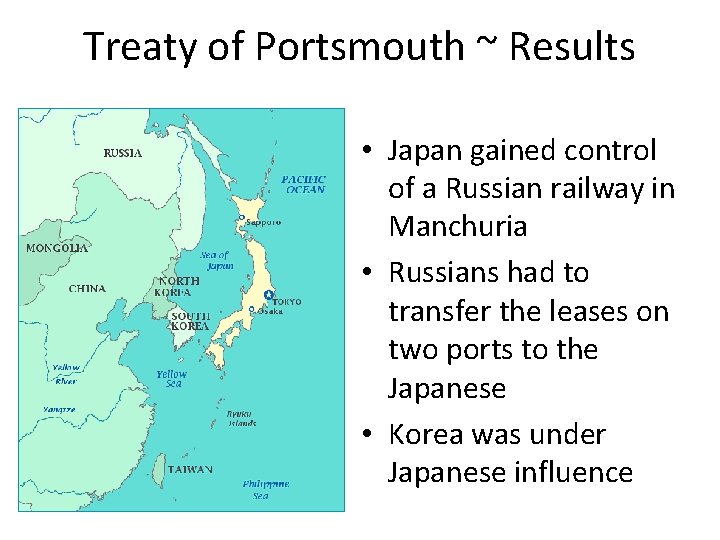
Treaty of Portsmouth ~ Results • Japan gained control of a Russian railway in Manchuria • Russians had to transfer the leases on two ports to the Japanese • Korea was under Japanese influence
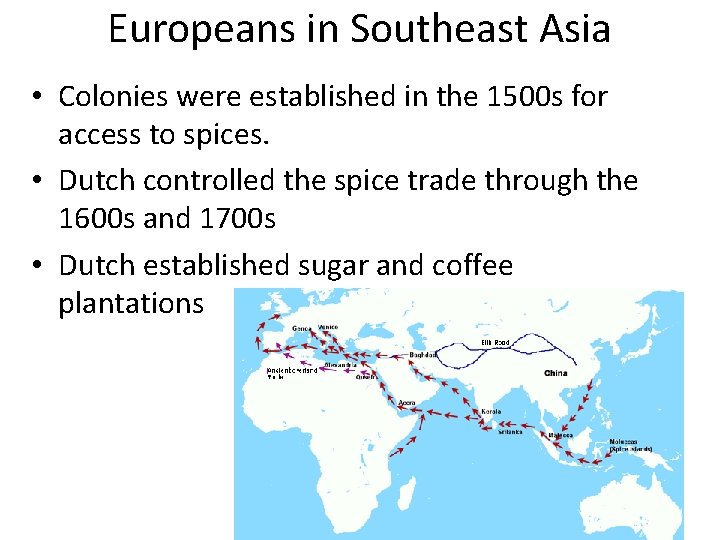
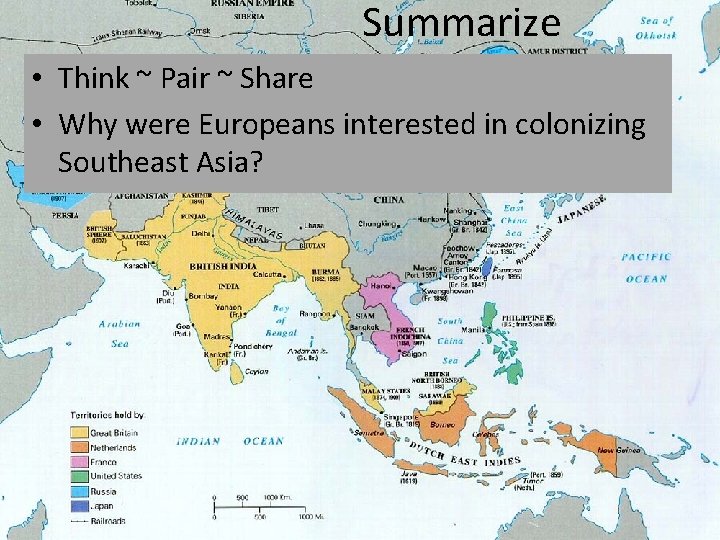
Europeans in Southeast Asia • Colonies were established in the 1500 s for access to spices. • Dutch controlled the spice trade through the 1600 s and 1700 s • Dutch established sugar and coffee plantations
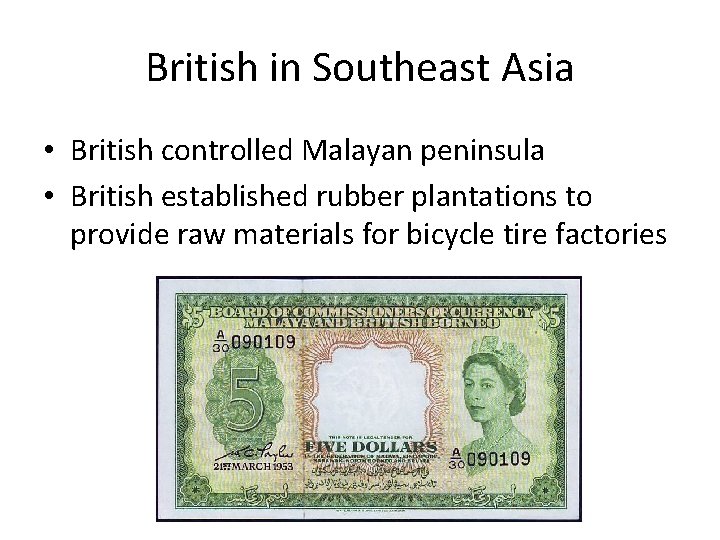
British in Southeast Asia • British controlled Malayan peninsula • British established rubber plantations to provide raw materials for bicycle tire factories
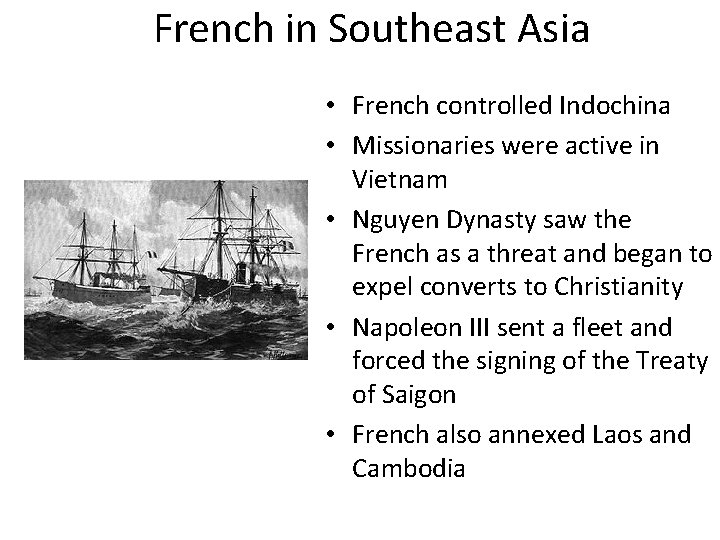
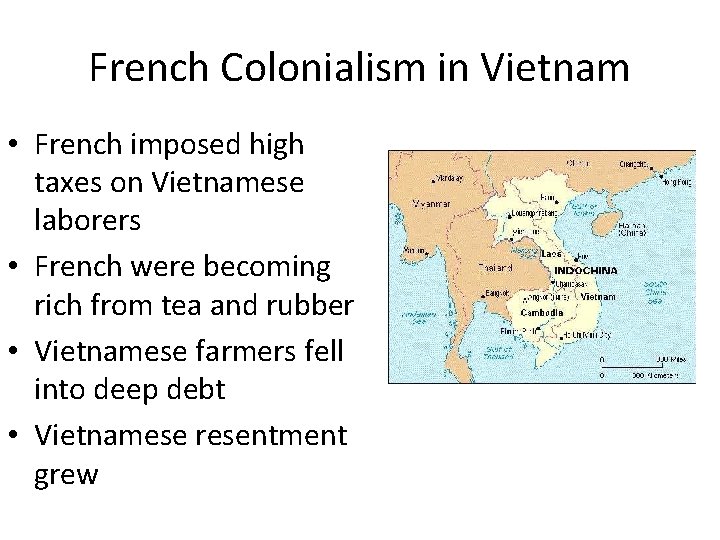
French in Southeast Asia • French controlled Indochina • Missionaries were active in Vietnam • Nguyen Dynasty saw the French as a threat and began to expel converts to Christianity • Napoleon III sent a fleet and forced the signing of the Treaty of Saigon • French also annexed Laos and Cambodia
French Colonialism in Vietnam • French imposed high taxes on Vietnamese laborers • French were becoming rich from tea and rubber • Vietnamese farmers fell into deep debt • Vietnamese resentment grew
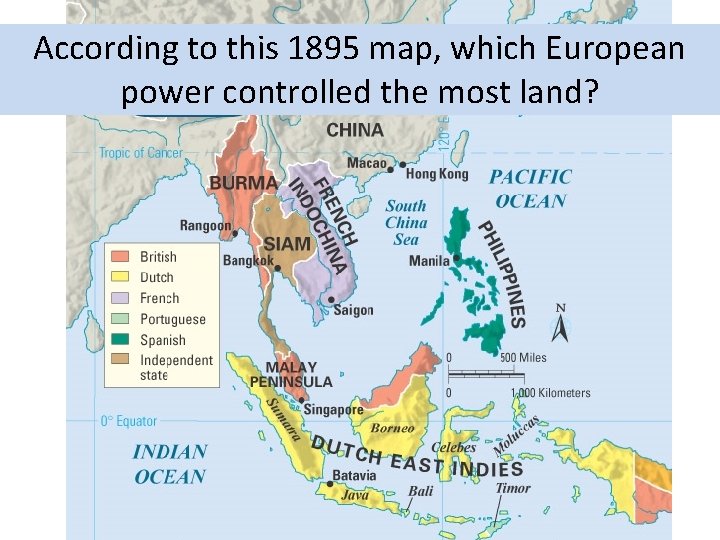
According to this 1895 map, which European power controlled the most land?
Summarize • Think ~ Pair ~ Share • Why were Europeans interested in colonizing Southeast Asia?
Name: ___________________ Date: __________ DIRECTIONS: Use the information on page 354 in your textbook to complete this chart. Your chart should contain at least two main points or descriptions per reform category. Meiji Reforms Governmental Rapid Industrialization Military Reforms Description