
Earthworm PHYLUM ANNELID Bloodworm Polychaete Leech What is
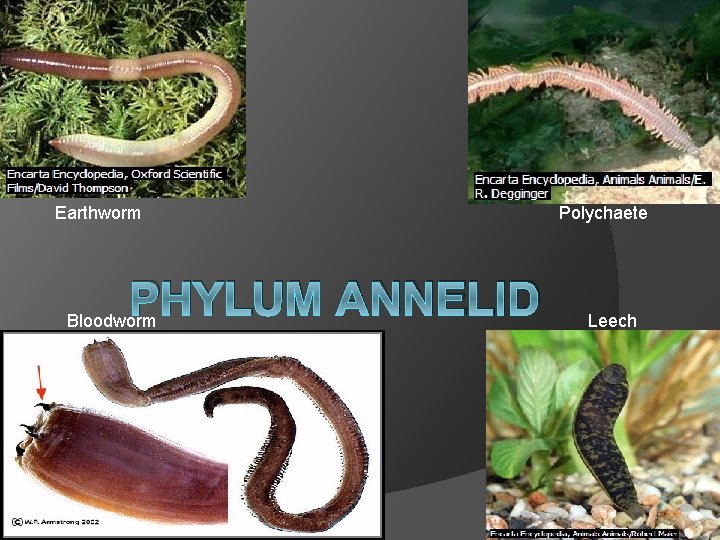
Earthworm PHYLUM ANNELID Bloodworm Polychaete Leech
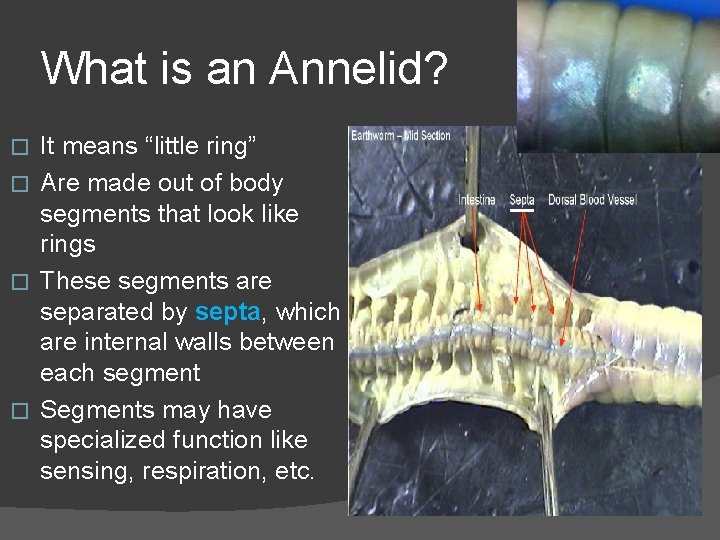
What is an Annelid? It means “little ring” � Are made out of body segments that look like rings � These segments are separated by septa, which are internal walls between each segment � Segments may have specialized function like sensing, respiration, etc. �
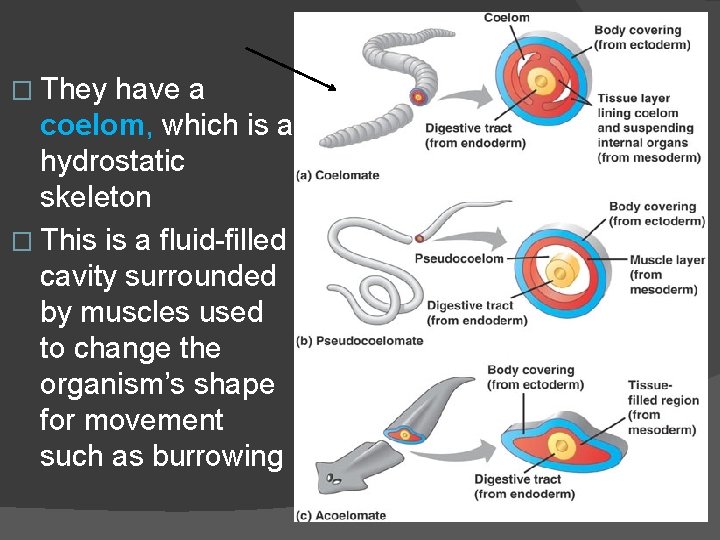
� They have a coelom, which is a hydrostatic skeleton � This is a fluid-filled cavity surrounded by muscles used to change the organism’s shape for movement such as burrowing

Feeding and Digestion Annelids have a tube-within-a -tube digestive tract that food passes through from the mouth to anus � Annelids may be filter feeders or predators. � Earthworms feed on decaying vegetation � The pharynx is covered with sticky mucus � It collects food by extending the pharynx and pressing it against food sediments �
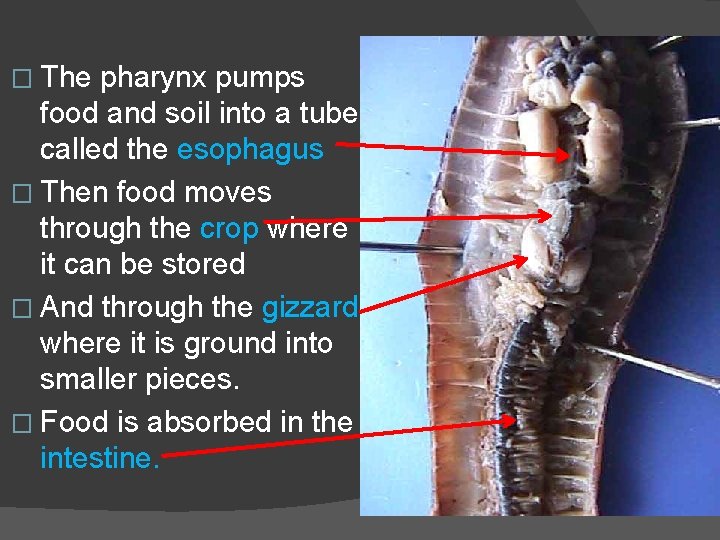
� The pharynx pumps food and soil into a tube called the esophagus � Then food moves through the crop where it can be stored � And through the gizzard where it is ground into smaller pieces. � Food is absorbed in the intestine.
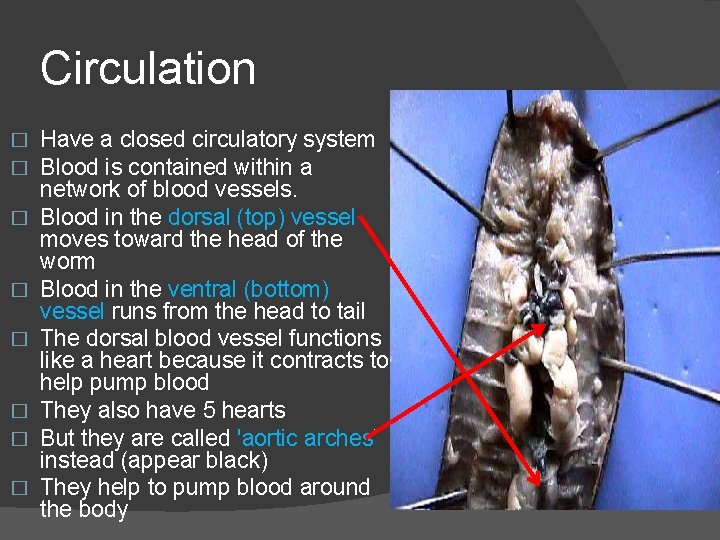
Circulation � � � � Have a closed circulatory system Blood is contained within a network of blood vessels. Blood in the dorsal (top) vessel moves toward the head of the worm Blood in the ventral (bottom) vessel runs from the head to tail The dorsal blood vessel functions like a heart because it contracts to help pump blood They also have 5 hearts But they are called 'aortic arches' instead (appear black) They help to pump blood around the body
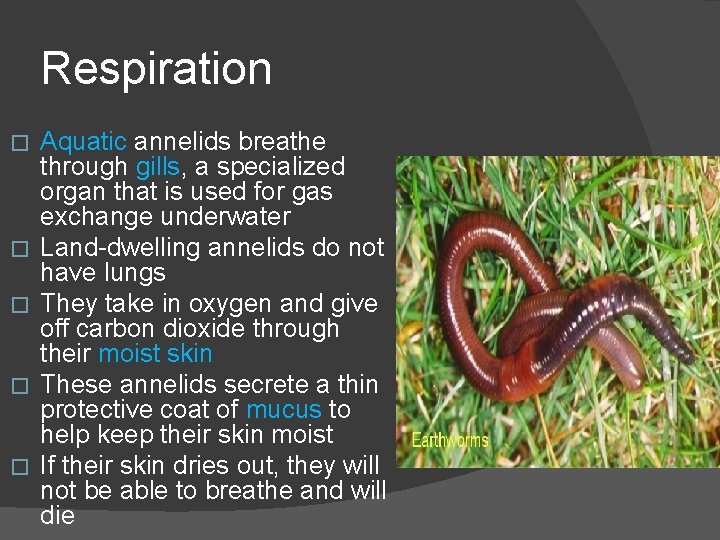
Respiration � � � Aquatic annelids breathe through gills, a specialized organ that is used for gas exchange underwater Land-dwelling annelids do not have lungs They take in oxygen and give off carbon dioxide through their moist skin These annelids secrete a thin protective coat of mucus to help keep their skin moist If their skin dries out, they will not be able to breathe and will die
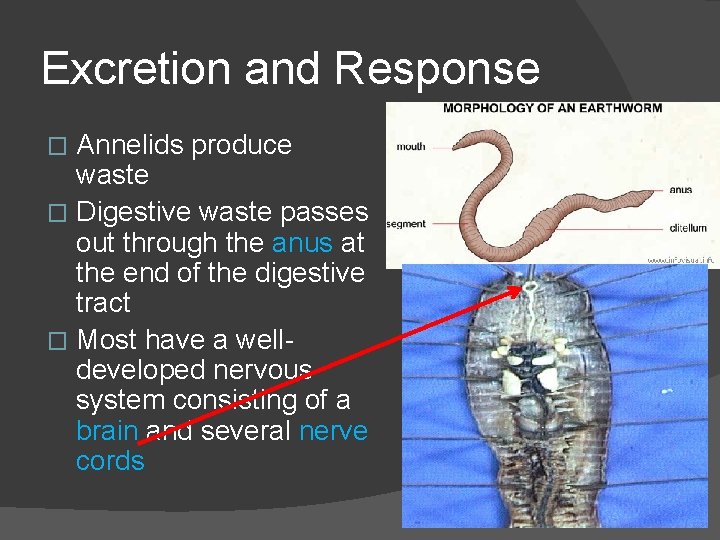
Excretion and Response Annelids produce waste � Digestive waste passes out through the anus at the end of the digestive tract � Most have a welldeveloped nervous system consisting of a brain and several nerve cords �
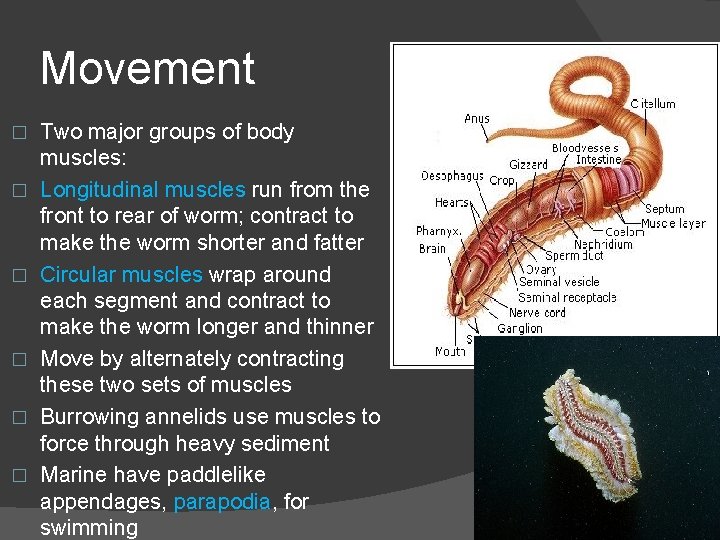
Movement � � � Two major groups of body muscles: Longitudinal muscles run from the front to rear of worm; contract to make the worm shorter and fatter Circular muscles wrap around each segment and contract to make the worm longer and thinner Move by alternately contracting these two sets of muscles Burrowing annelids use muscles to force through heavy sediment Marine have paddlelike appendages, parapodia, for swimming
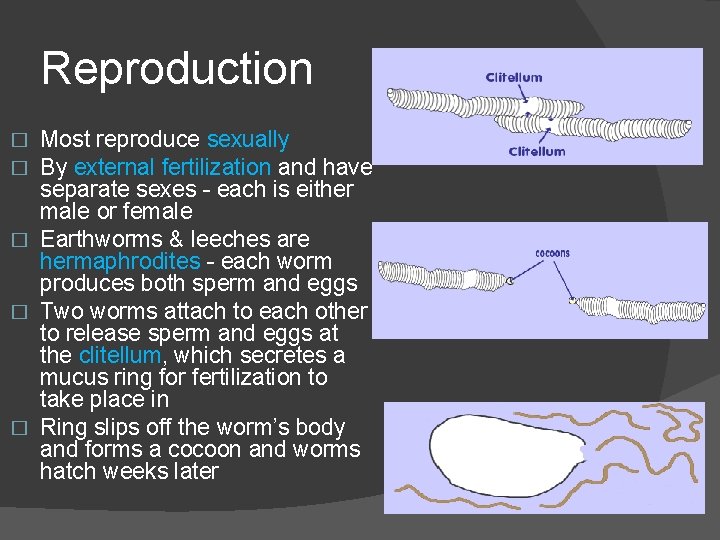
Reproduction Most reproduce sexually By external fertilization and have separate sexes - each is either male or female � Earthworms & leeches are hermaphrodites - each worm produces both sperm and eggs � Two worms attach to each other to release sperm and eggs at the clitellum, which secretes a mucus ring for fertilization to take place in � Ring slips off the worm’s body and forms a cocoon and worms hatch weeks later � �
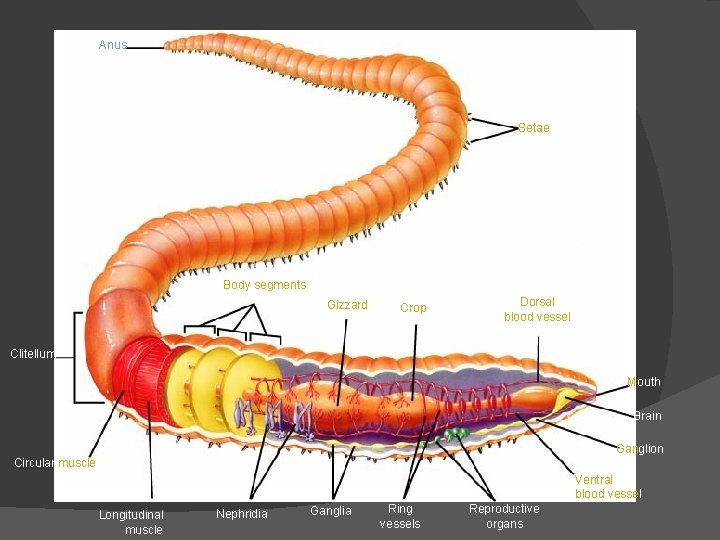
Anus Setae Body segments Gizzard Crop Dorsal blood vessel Clitellum Mouth Brain Ganglion Circular muscle Ventral blood vessel Longitudinal muscle Nephridia Ganglia Ring vessels Reproductive organs
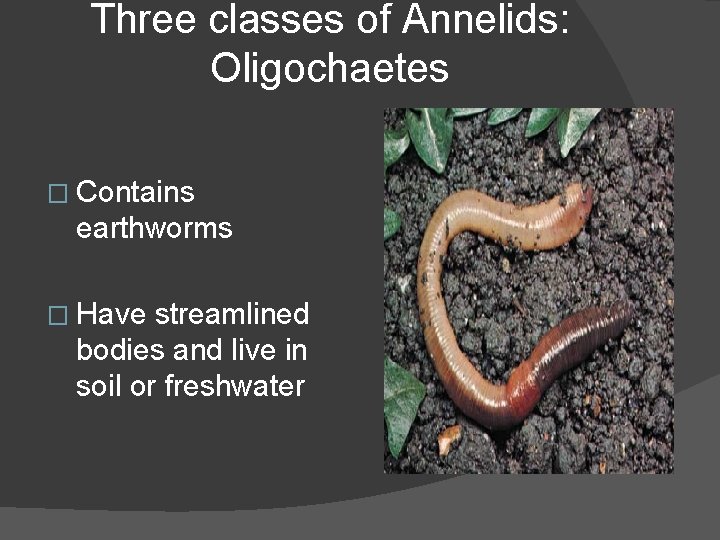
Three classes of Annelids: Oligochaetes � Contains earthworms � Have streamlined bodies and live in soil or freshwater
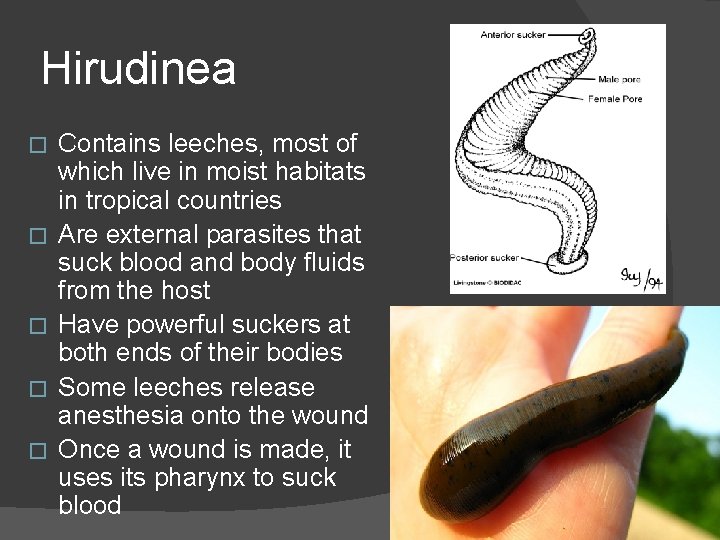
Hirudinea � � � Contains leeches, most of which live in moist habitats in tropical countries Are external parasites that suck blood and body fluids from the host Have powerful suckers at both ends of their bodies Some leeches release anesthesia onto the wound Once a wound is made, it uses its pharynx to suck blood
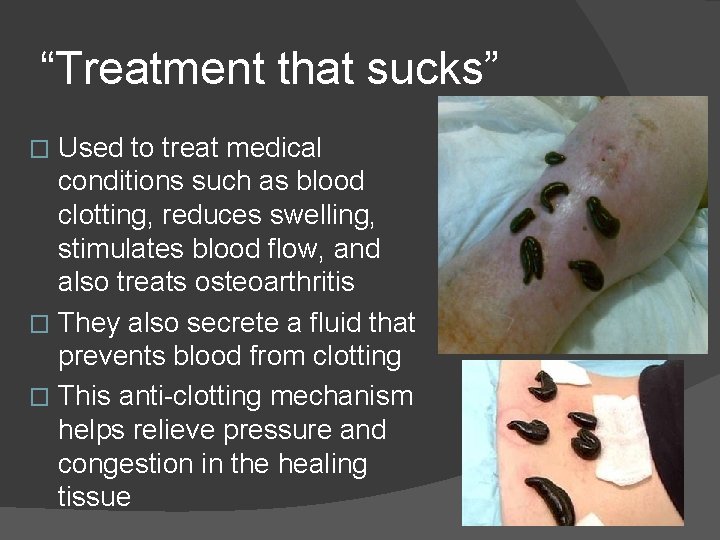
“Treatment that sucks” Used to treat medical conditions such as blood clotting, reduces swelling, stimulates blood flow, and also treats osteoarthritis � They also secrete a fluid that prevents blood from clotting � This anti-clotting mechanism helps relieve pressure and congestion in the healing tissue �
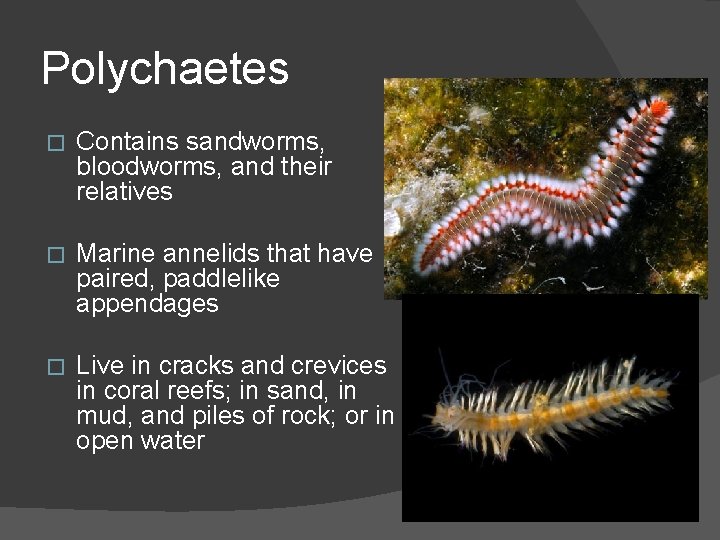
Polychaetes � Contains sandworms, bloodworms, and their relatives � Marine annelids that have paired, paddlelike appendages � Live in cracks and crevices in coral reefs; in sand, in mud, and piles of rock; or in open water
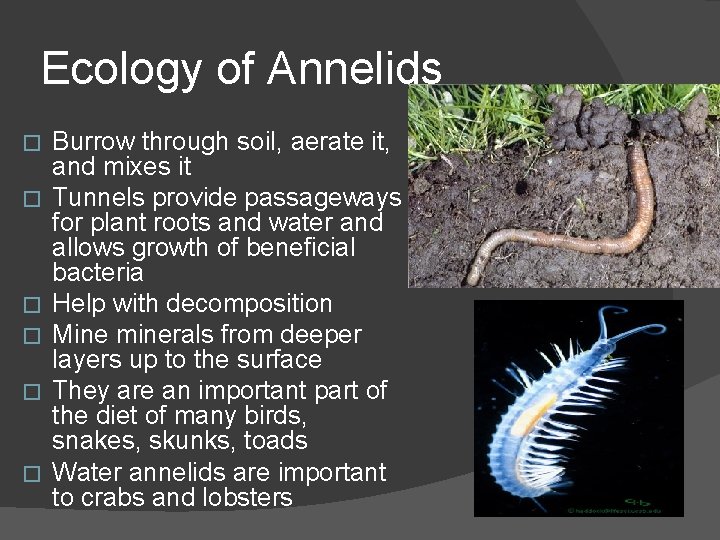
Ecology of Annelids � � � Burrow through soil, aerate it, and mixes it Tunnels provide passageways for plant roots and water and allows growth of beneficial bacteria Help with decomposition Mine minerals from deeper layers up to the surface They are an important part of the diet of many birds, snakes, skunks, toads Water annelids are important to crabs and lobsters
- Slides: 16