
Earths Tilt What is tilting The earth is
- Slides: 16
Earth’s Tilt
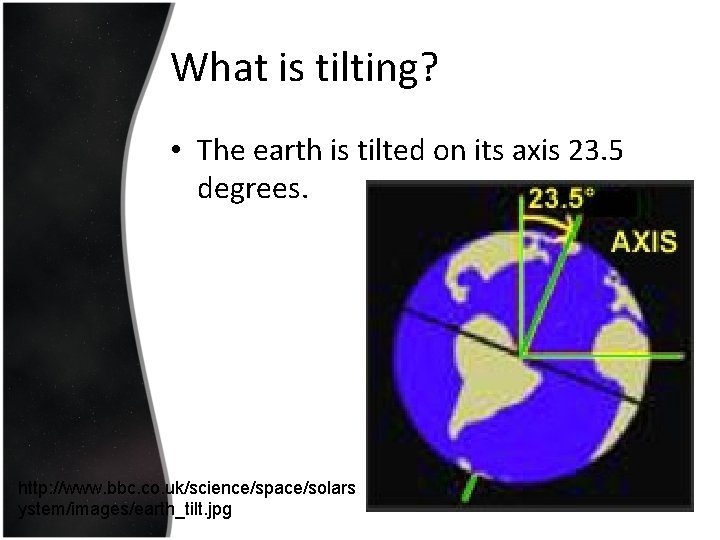
What is tilting? • The earth is tilted on its axis 23. 5 degrees. http: //www. bbc. co. uk/science/space/solars ystem/images/earth_tilt. jpg
How does the earth move? • Rotation – one complete turn on earth’s axis. – Takes approximately 24 hours to make one turn. (1 day) • Revolution – one complete orbit of the earth around the sun. – Takes approximately 365 ¼ days. (1 year) • So why do we have leap year?
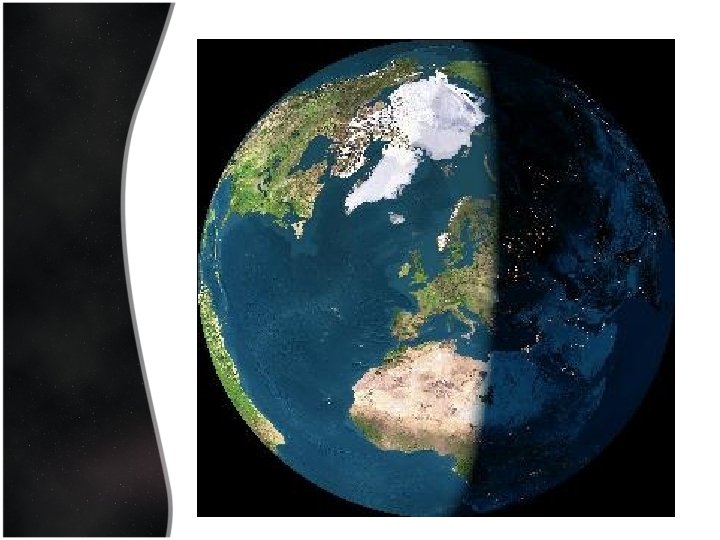
What causes day & night? • As earth rotates on its axis, it turns towards and away from the sun. • DAY TIME is when your half of the earth is facing the sun. • NIGHTIME is when your half of the earth is turned away from the sun.
Time Zones
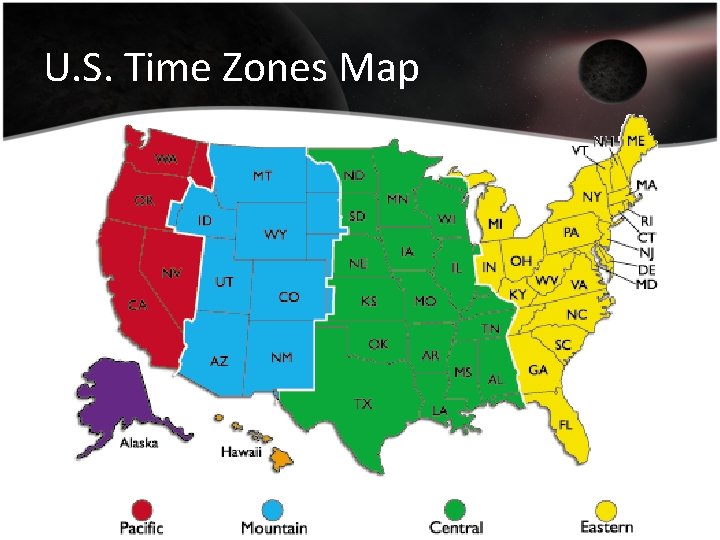
Why are there time zones? • As earth moves, different parts of the earth receive sunlight at different times. • This is why there are different time zones around the world. • In the US, the east coast turns towards the sun first.
U. S. Time Zones Map
Think, Pair, Share: • How would you explain a sunset? • How much of the earth experiences daylight at any given time? • Is the earth in the center of the universe? • Why do some places on earth receive 6 months of daylight and then 6 months of nightime? • What is the purpose of a leap year?
Seasons
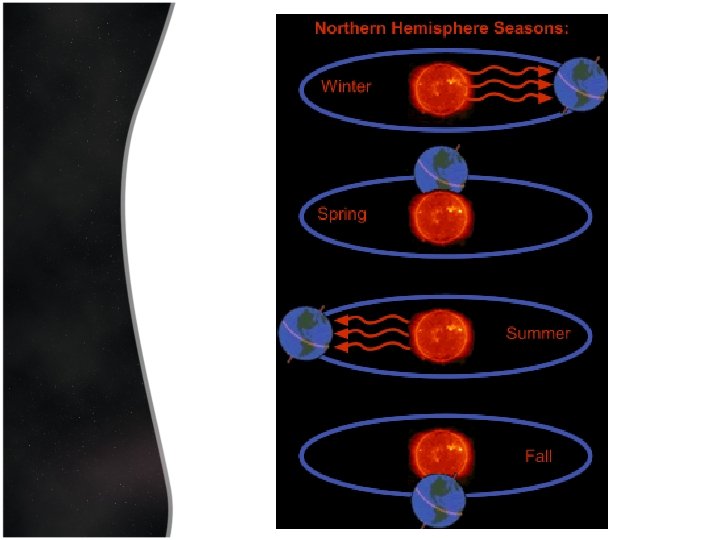
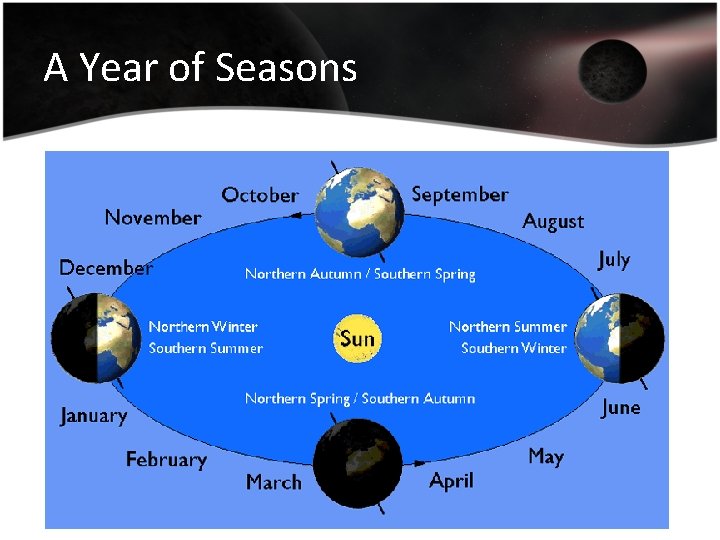
Why are there seasons? • It takes Earth 1 year to orbit around the sun. • As Earth orbits, it is tilted at different angles towards/away from the sun. • Summer is warmer than winter (in each hemisphere) because the Sun's rays hit the Earth at a more direct angle during summer than during winter
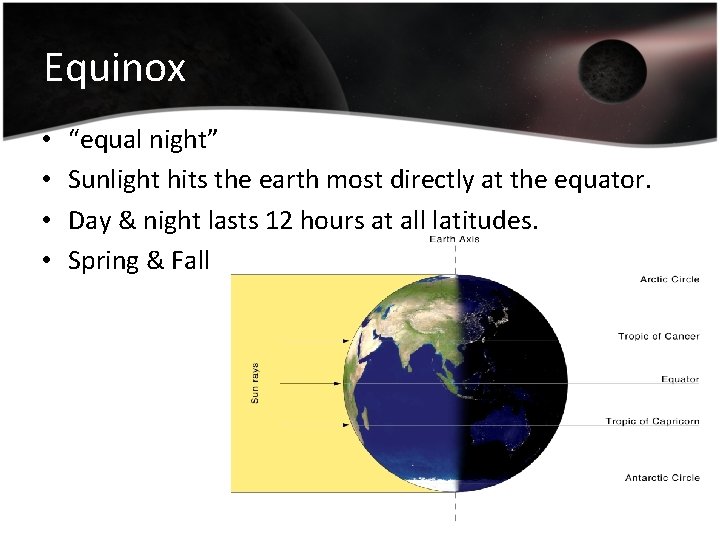
Equinox • • “equal night” Sunlight hits the earth most directly at the equator. Day & night lasts 12 hours at all latitudes. Spring & Fall
Solstice • A Solstice occurs twice a year, when the tilt of the Earth's axis is tilted directly towards or away from the Sun, causing the Sun to appear to reach its northernmost and southernmost extremes. • Winter solstice is the shortest day of the year. In the Northern Hemisphere. It occurs on December 21 and marks the beginning of winter. • The Summer Solstice is the longest day of the year. It occurs on June 21 and marks the beginning of summer.
A Year of Seasons
Think, Pair, Share: • If it’s winter in the Southern Hemisphere, what season will it be in the Northern Hemisphere? • How is it possible for us to be out on break and go to the beach and students in Australia to be out on break and go skiing? • What is a solstice? When do they occur? • What is an equinox? When do they occur?