
Earths Structure and Materials Table of Contents Classifying
Earth’s Structure and Materials Table of Contents Classifying Rocks Ms. De Los Rios 7 th Grade
Vocabulary 3. 3 1. Rock-forming minerals- any of the common minerals that make up most of the Earth’s crust. 2. Granite- a usually light-colored igneous rock that is found in continental crust. 3. Basalt- a dark, dense, igneous rock with a fine texture, found in the oceanic crust. 4. Grains- the particles of minerals or other rocks that give a rock its texture. 5. Texture- the look and feel of a rock’s surface, determined by the size, shape, and pattern of a rock’s grains. 6. Igneous rock- a type of rock that forms from the cooling of molten rock at or below the surface. 7. Sedimentary rock a type of rock that forms when small particles of rocks or organic remains are pressed and cemented together. 8. Metamorphic rock a type of rock that forms when a rock is changed by heat, pressure, or chemical reactions.
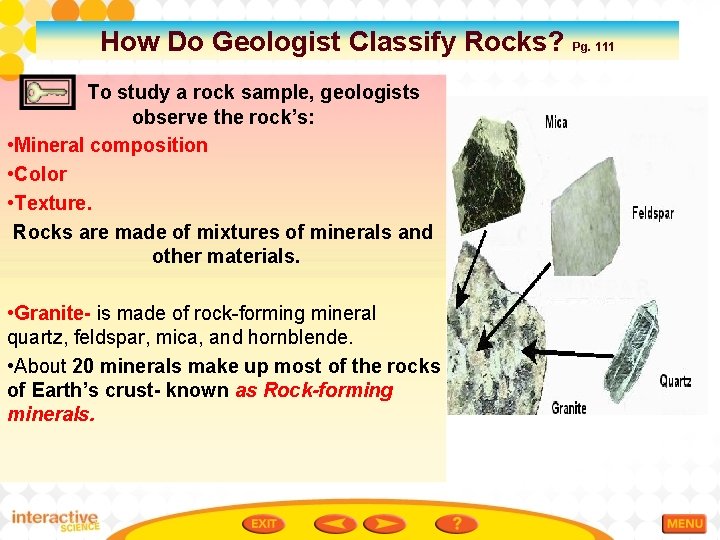
How Do Geologist Classify Rocks? Pg. 111 To study a rock sample, geologists observe the rock’s: • Mineral composition • Color • Texture. Rocks are made of mixtures of minerals and other materials. • Granite- is made of rock-forming mineral quartz, feldspar, mica, and hornblende. • About 20 minerals make up most of the rocks of Earth’s crust- known as Rock-forming minerals.
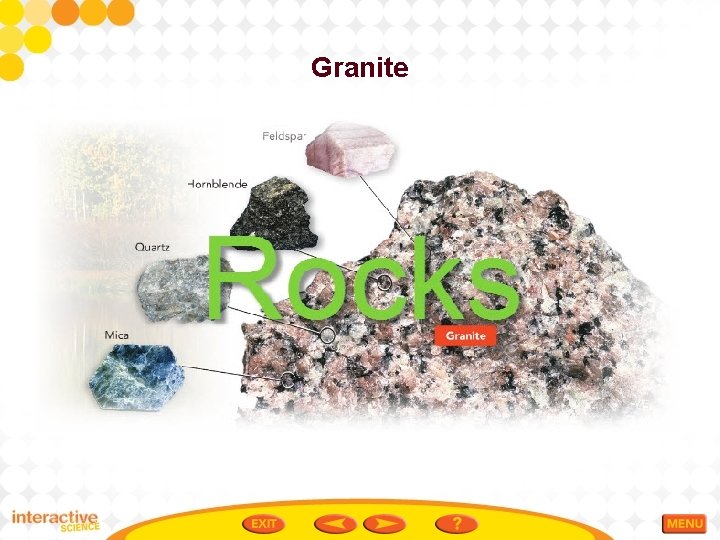
Granite
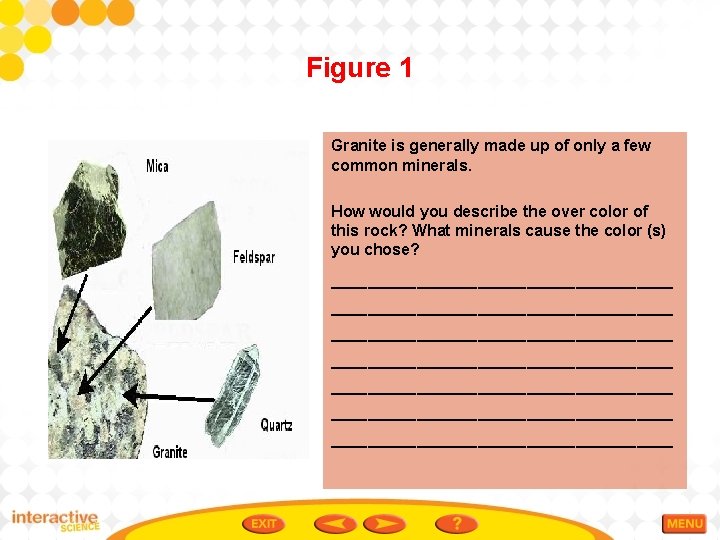
Figure 1 Granite is generally made up of only a few common minerals. How would you describe the over color of this rock? What minerals cause the color (s) you chose? ____________________________ ____________________________
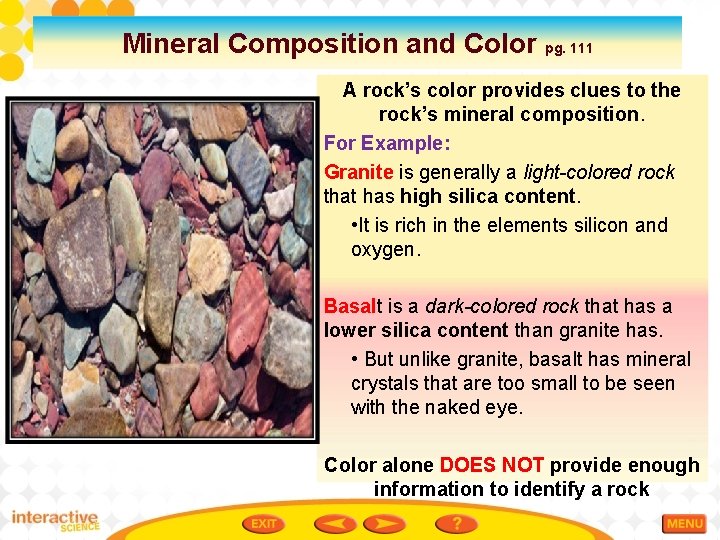
Mineral Composition and Color pg. 111 A rock’s color provides clues to the rock’s mineral composition. For Example: Granite is generally a light-colored rock that has high silica content. • It is rich in the elements silicon and oxygen. Basalt is a dark-colored rock that has a lower silica content than granite has. • But unlike granite, basalt has mineral crystals that are too small to be seen with the naked eye. Color alone DOES NOT provide enough information to identify a rock
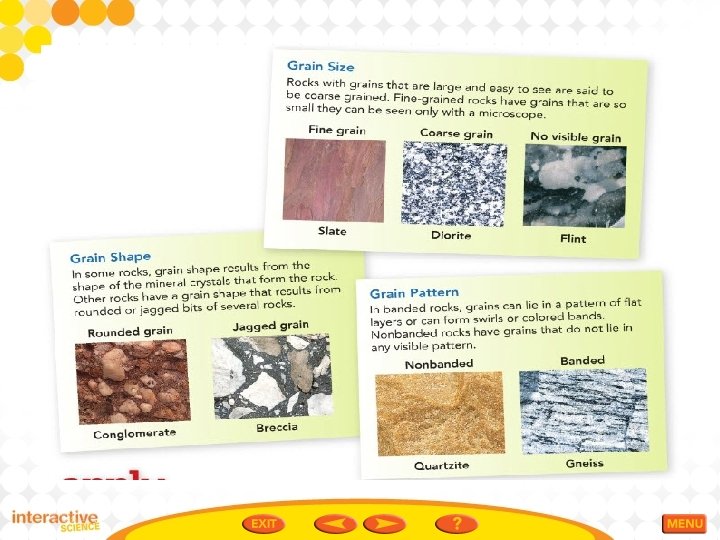
Texture pg. 112 Color alone DOES NOT provide enough information to identify a rock. Texture, however, is very useful!! Most rocks are made up of particles of minerals or other rocks, which geologists call grains. Texture is: Grains give the rock its texture. the look and feel of a rock’s surface. To describe the texture of a rock, geologists use terms that are based on: • Size • Shape • pattern of the grains. Some rocks are smooth and glassy, while others are rough or chalky.
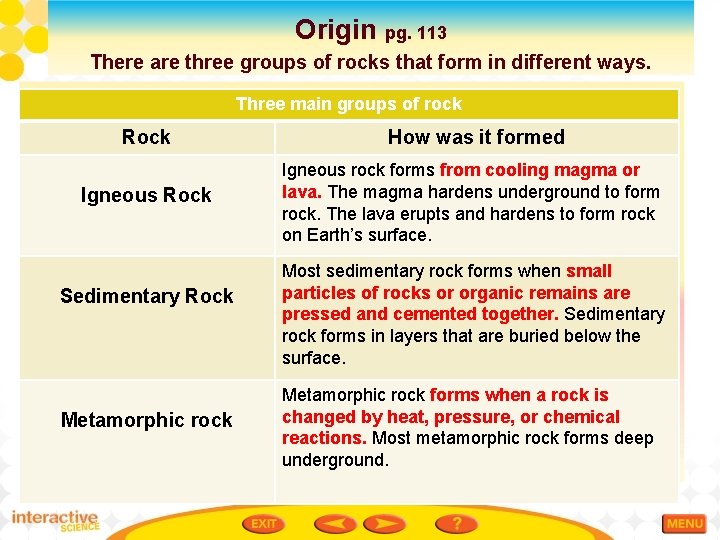
Origin pg. 113 There are three groups of rocks that form in different ways. Three main groups of rock Rock How was it formed Igneous Rock Igneous rock forms from cooling magma or lava. The magma hardens underground to form rock. The lava erupts and hardens to form rock on Earth’s surface. Sedimentary Rock Metamorphic rock Most sedimentary rock forms when small particles of rocks or organic remains are pressed and cemented together. Sedimentary rock forms in layers that are buried below the surface. Metamorphic rock forms when a rock is changed by heat, pressure, or chemical reactions. Most metamorphic rock forms deep underground.
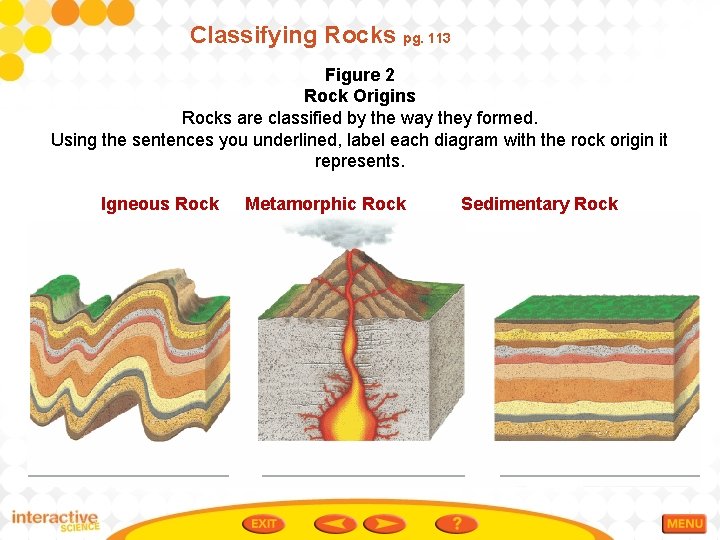
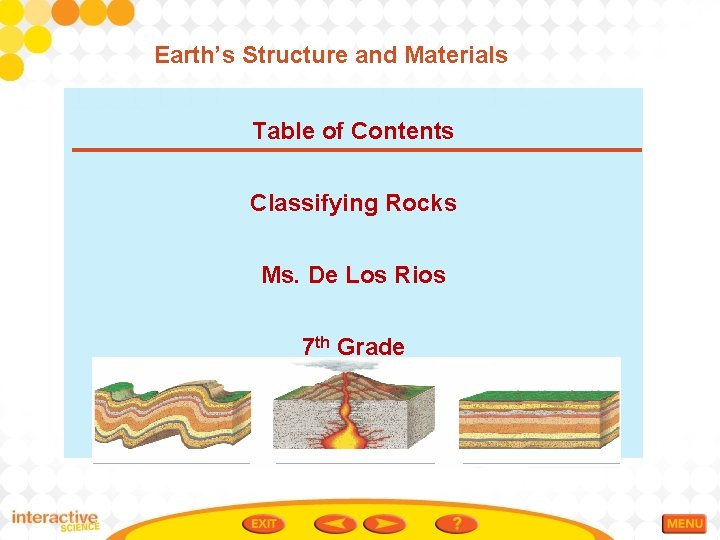
Classifying Rocks pg. 113 Figure 2 Rock Origins Rocks are classified by the way they formed. Using the sentences you underlined, label each diagram with the rock origin it represents. Igneous Rock Metamorphic Rock Sedimentary Rock
- Slides: 10