
Earths Natural Resources Renewable Resources Resources that can
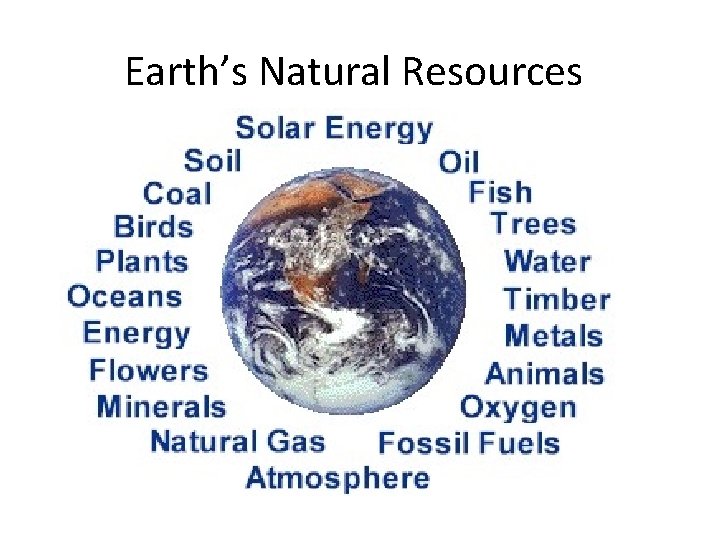
Earth’s Natural Resources
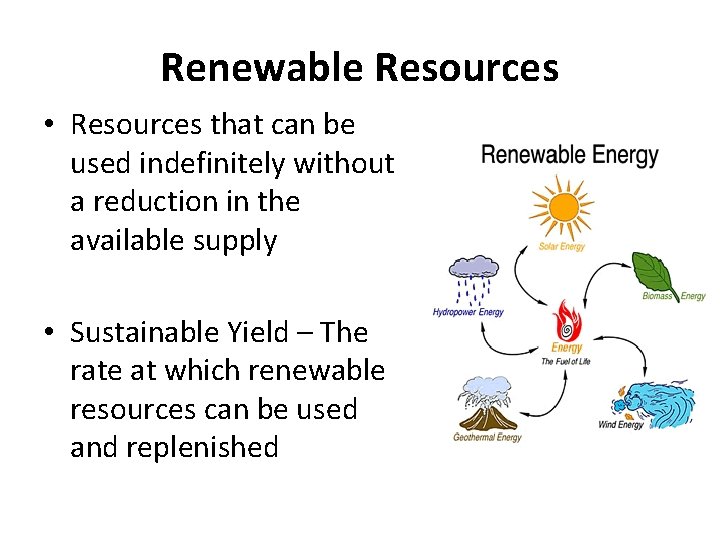
Renewable Resources • Resources that can be used indefinitely without a reduction in the available supply • Sustainable Yield – The rate at which renewable resources can be used and replenished
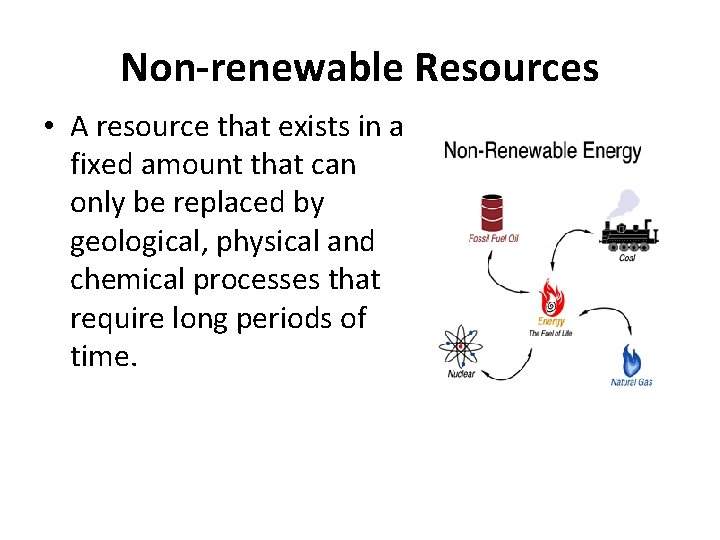
Non-renewable Resources • A resource that exists in a fixed amount that can only be replaced by geological, physical and chemical processes that require long periods of time.
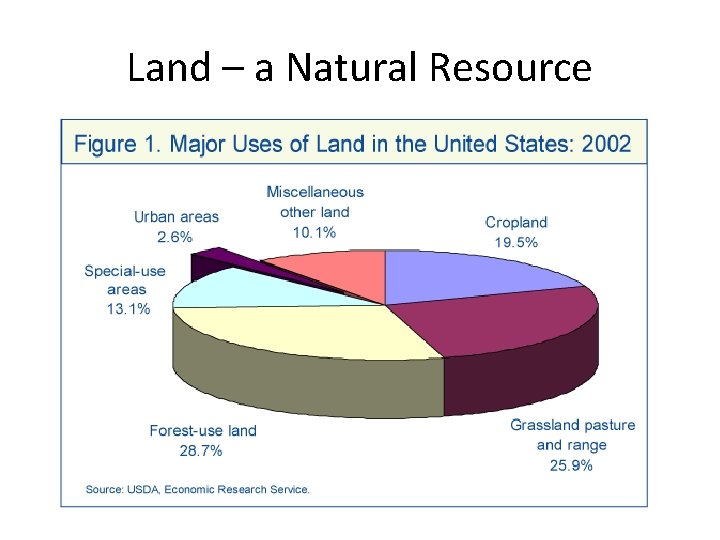
Land – a Natural Resource
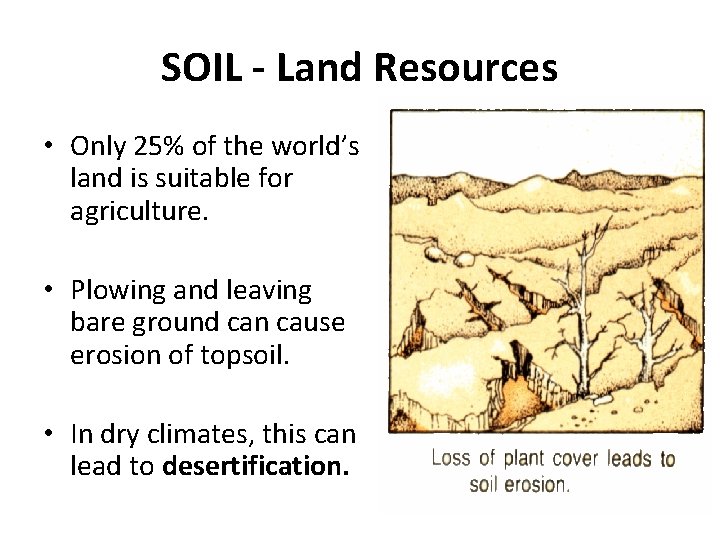
SOIL - Land Resources • Only 25% of the world’s land is suitable for agriculture. • Plowing and leaving bare ground can cause erosion of topsoil. • In dry climates, this can lead to desertification.
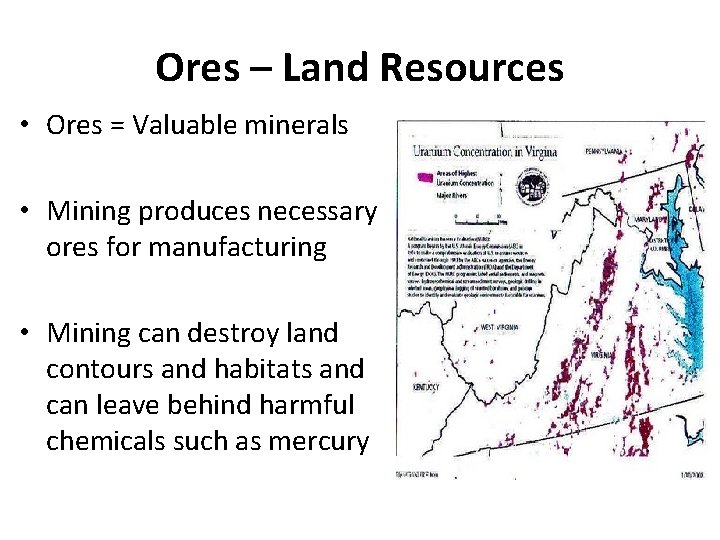
Ores – Land Resources • Ores = Valuable minerals • Mining produces necessary ores for manufacturing • Mining can destroy land contours and habitats and can leave behind harmful chemicals such as mercury
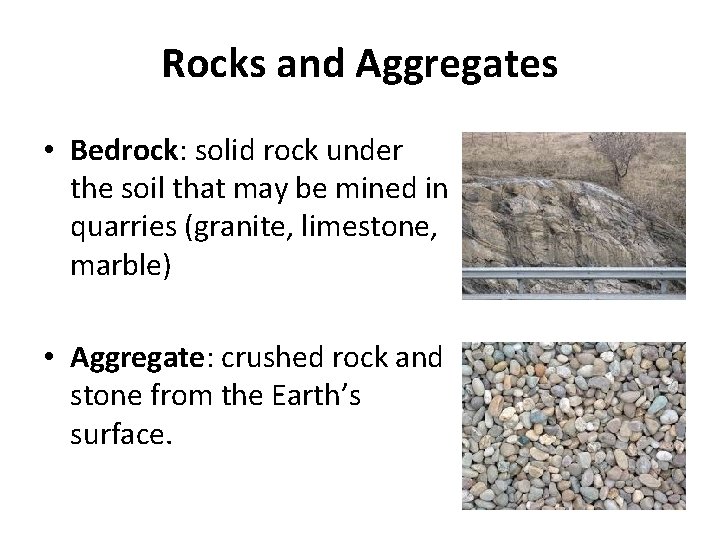
Rocks and Aggregates • Bedrock: solid rock under the soil that may be mined in quarries (granite, limestone, marble) • Aggregate: crushed rock and stone from the Earth’s surface.
Air Resources • Air contains the substances that most landorganisms need to survive. – Oxygen, Carbon Dioxide • Atmosphere protects us from harmful solar radiation • The atmosphere also circulates fresh water around the world in the form of precipitation. • Wind can be used to generate energy.
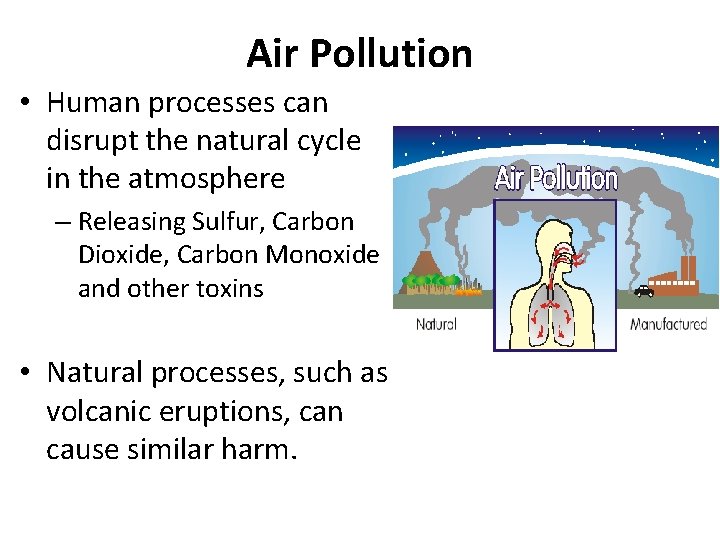
Air Pollution • Human processes can disrupt the natural cycle in the atmosphere – Releasing Sulfur, Carbon Dioxide, Carbon Monoxide and other toxins • Natural processes, such as volcanic eruptions, can cause similar harm.
Indoor Air Pollution • Closed building environments can build up chemical and biological hazards – Formaldehyde, styrene, tobacco smoke, asbestos, and carbon monoxide can build up – Radon-222 is a decay product of Uranium-238 and can collect in basements. – Molds can build up where damp conditions are created • We call these problems “sick building syndrome”
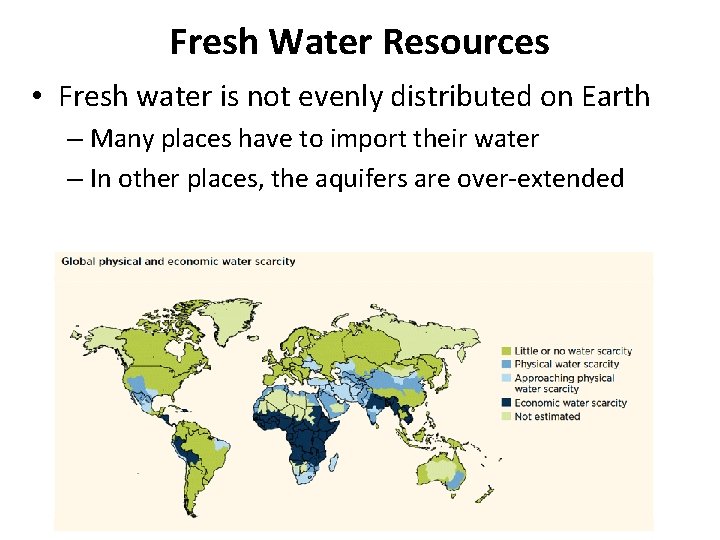
Fresh Water Resources • Fresh water is not evenly distributed on Earth – Many places have to import their water – In other places, the aquifers are over-extended
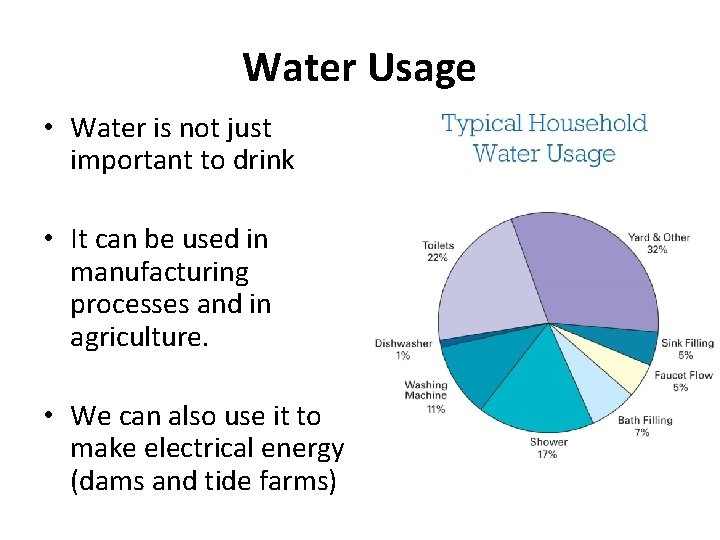
Water Usage • Water is not just important to drink • It can be used in manufacturing processes and in agriculture. • We can also use it to make electrical energy (dams and tide farms)
Energy • Today, energy generation usually means generating ELECTRICAL energy. • Traditional sources of energy (RENEWABLE) – Wood, Crops, Fecal Material and Peat can be burned to generate heat. • Fossils fuels (NON-RENEWABLE!) – Coal, petroleum and natural gas can be used for heat or burnt to run an engine or generator. • Burning fuel can release carbon dioxide or carbon monoxide in the air
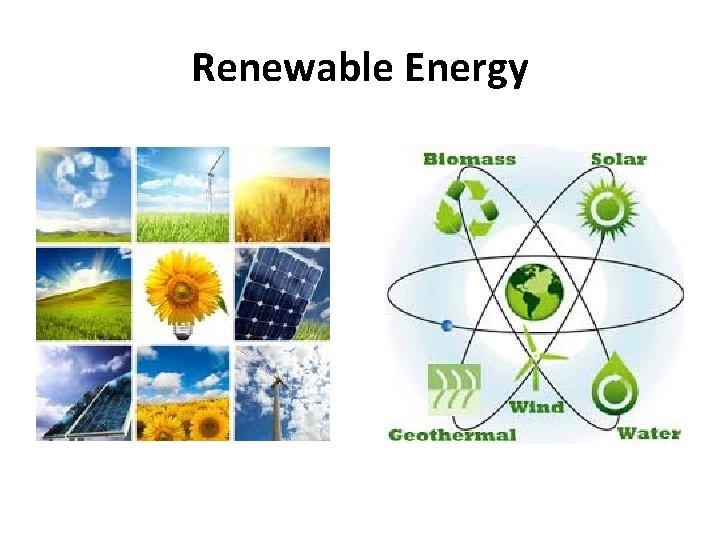
Renewable Energy • Solar energy – Can be used to heat or to generate electricity in solar panels (photovoltaic cells) • Water energy – Waves, tides and rivers can be used to generate electricity • Geothermal – Internal heat of the Earth can be used as an energy source
Renewable Energy • Wind energy – Wind turbines can be used to generate electricity • Biomass – Uses plants and animal waste to make methane
Renewable Energy
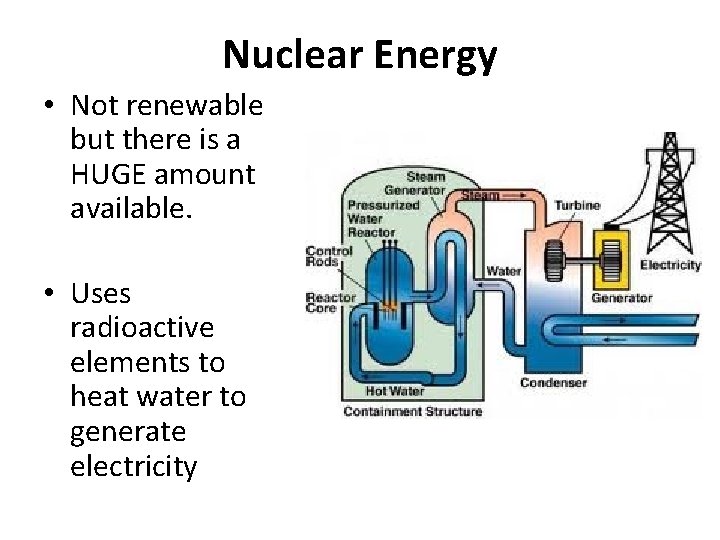
Nuclear Energy • Not renewable but there is a HUGE amount available. • Uses radioactive elements to heat water to generate electricity
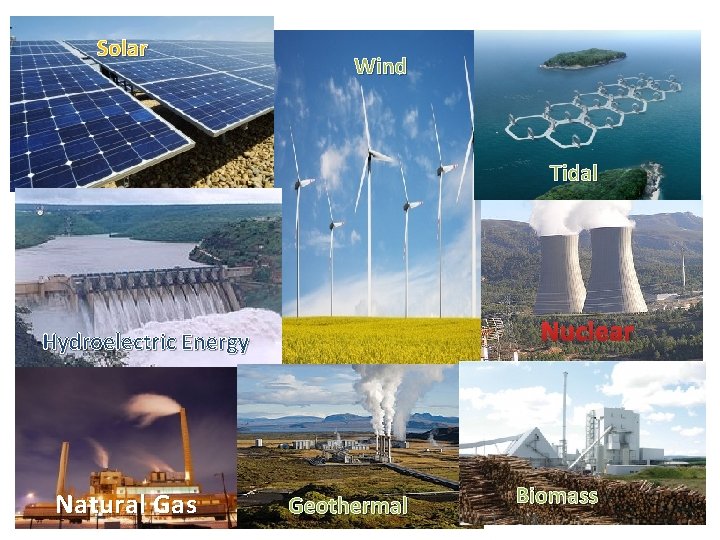
Solar Wind Tidal Nuclear Hydroelectric Energy Natural Gas Geothermal Biomass
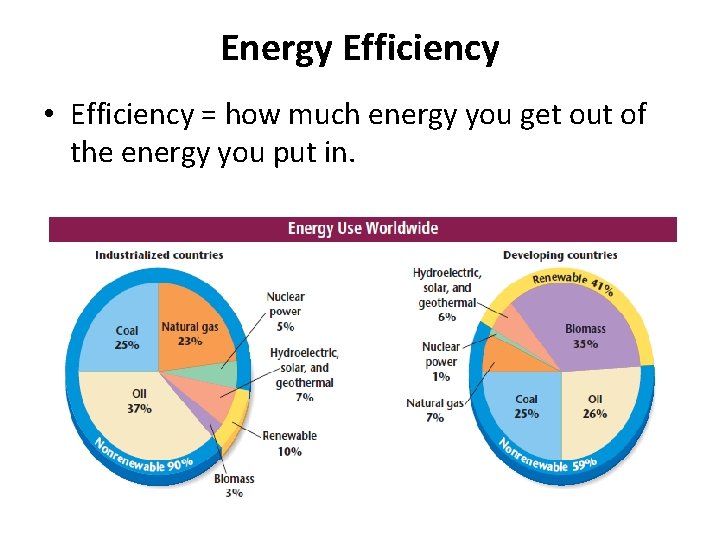
Energy Efficiency • Efficiency = how much energy you get out of the energy you put in.
Solar • Solar power uses the sun’s energy to directly produce electricity • PRO: Once installed, solar produces very cheap energy with no emissions • CON: Current cost of solar panels is still high. Requires use in areas with consistent sun. • Cannot be used to fuel vehicles YET
Biomass • Bioenergy falls into two broad categories: – biomass for use in electricity and heat generation – liquid biofuels for use in transportation. – • PRO: – Biomass produces less greenhouse gas – Can be used to fuel some vehicles • CON: – Biomass diverts land from production of food
Geothermal • Geothermal energy can be used to provide 24 hour power regardless of weather conditions. • PRO: Inexpensive to run, clean energy source that is renewable • CON: Expensive to install and not available everywhere • Cannot be used to fuel vehicles
Hydroelectric • Hydroelectric uses gravitational energy of moving water to generate electricity • PRO: Clean renewable energy source • CON: Can only be used where flowing water is available; can interfere with habitats • Cannot be used to fuel vehicles
Wind • Wind power uses air movement to produce electrical energy • PRO: Once installed, wind produces very cheap energy with no emissions and relatively small environmental impact on habitats • CON: Must be installed where there is consistent air flow and then rerouted to other locations. • Cannot be used to fuel vehicles
Nuclear • Nuclear power uses radioactive decay to provide power • PRO: Low long-term cost, relative abundance of fuel, no carbon emissions • CON: Waste disposal and accident damage issues are a concern. • Cannot be used to fuel vehicles
Natural Gas • Natural gas is a fossil fuel with less carbon emissions than oil • PRO: Cleaner burning fuel • CON: Drilling for non-renewable natural gas requires questionable technologies (fracking) • Can be used to fuel some vehicles
Coal • Coal is a widely available natural but nonrenewable resource that can be used for energy production • PRO: Relatively abundant and inexpensive • CON: Produces greenhouse gases and is nonrenewable • Cannot be used to fuel vehicles
Petroleum • Petroleum products are fossil fuels that are used in most vehicles and can be used to generate electrical power • PRO: Almost all current transportation systems require the use of petroleum • CON: Emissions from petroleum products cause pollution and accidental spills can be environmental disasters. • Are used to fuel most vehicles
Energy Conservation • There are many ways to reduce energy usage. – Programs to replace old appliances and vehicles with new, energy-efficient products – Increased use of mass transit – Recycling: such as aluminum – Turning off lights, technology, etc. – Use of renewable resources
Make-up of Virginia • Land use (35 th-largest state by area) – Forests 65% – Wetlands and water 6% – 5% commercial and residential • Four eco-regions in Virginia: – Mid Atlantic coastal forests near the Atlantic coast in the southeast corner of the state – Southeastern mixed forests on the Piedmont, – Appalachian-Blue Ridge forests on the Appalachian Mountains – Appalachian mixed forests in the far west
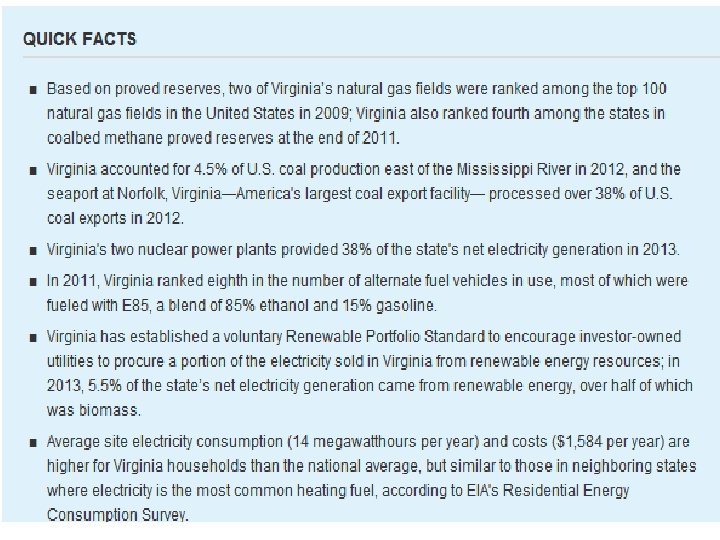
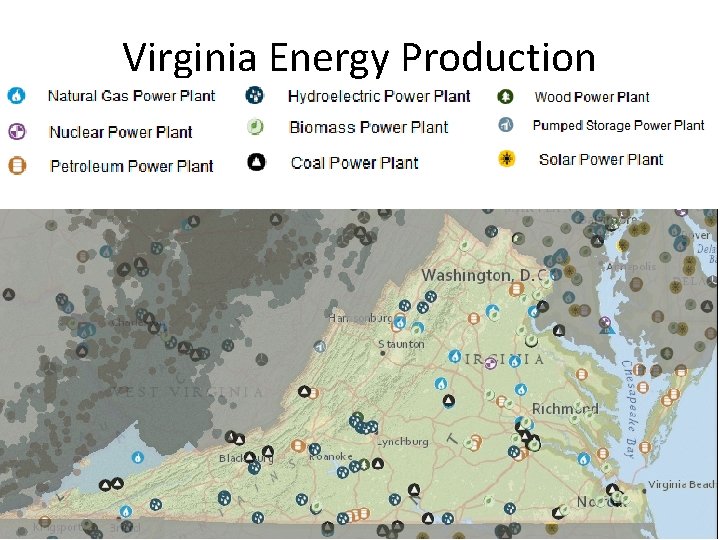
Virginia Energy Production
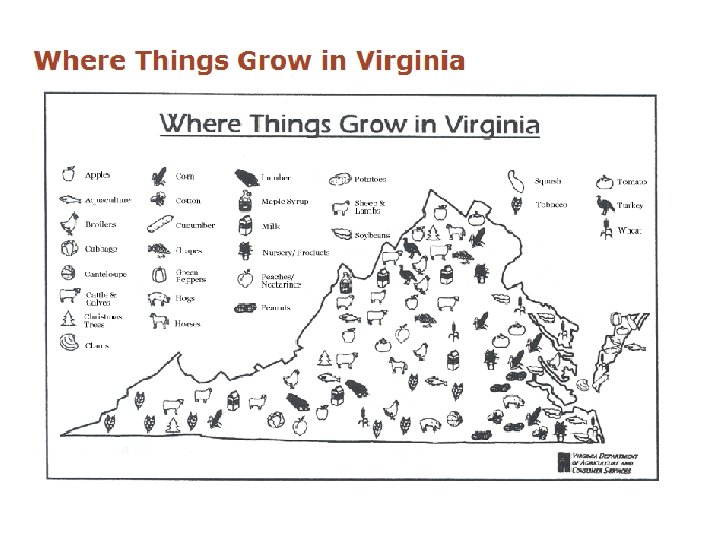
Agriculture in Virginia • Agriculture is Virginia's largest industry • About 20 out of every 100 jobs are held in agriculture. – Plants: field crops, vegetables, livestock, and nursery products, and vineyards – Animals: commercial horses and the growing of fish.
Virginia’s Water • Annual rainfall is 42 inches but ranges from 35 to 55 inches. – In Virginia, rainfall is distributed evenly throughout the year without distinct wet and dry periods. • Approximately 79, 800 million gallons per day • Supplied by Virginia's surface and ground water.
Chesapeake Bay Wetlands • Virginia's tidal wetlands include salt marshes, brackish and freshwater marshes, and swamps. • Wetlands along the water's edge provide the following valuable services: – Absorb excess flood water – Protect uplands from the storm damage of wind and waves – Provide constant, ideal habitat-including food and shelter for many animals and essential nursery habitat for others – Filter out pollution – Mix oxygen into the water.
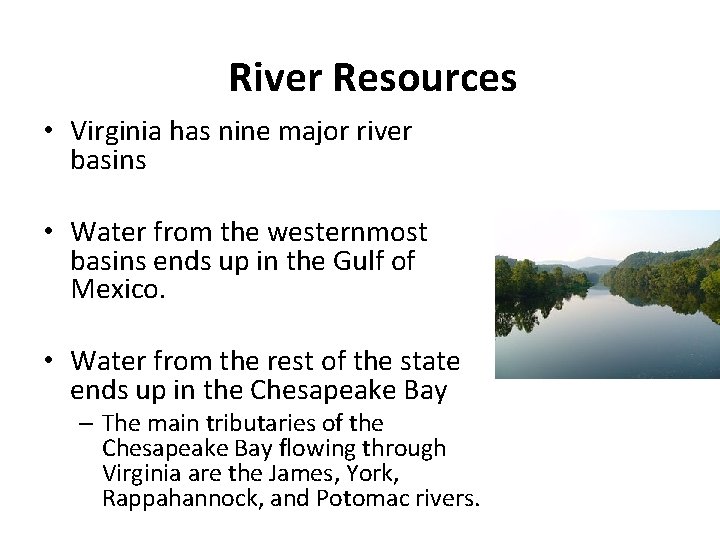
River Resources • Virginia has nine major river basins • Water from the westernmost basins ends up in the Gulf of Mexico. • Water from the rest of the state ends up in the Chesapeake Bay – The main tributaries of the Chesapeake Bay flowing through Virginia are the James, York, Rappahannock, and Potomac rivers.
Virginia’s Physiographic Provinces • A physiographic province is a landform region, an area with similar terrain that has been shaped by a common geologic history. • Geographers recognize more than 20 physiographic provinces in North America; – Virginia intersects five of these
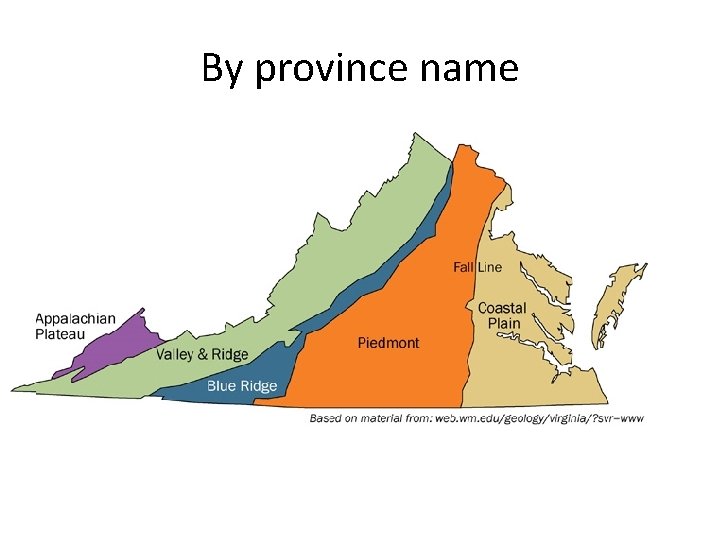
By province name
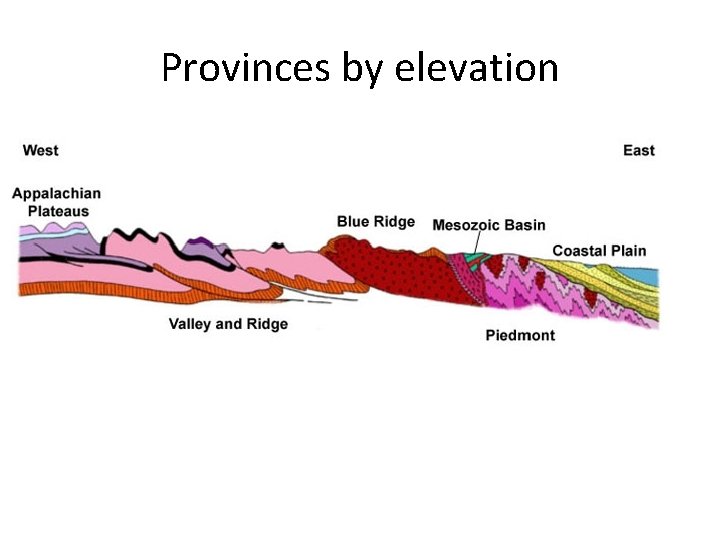
Provinces by elevation
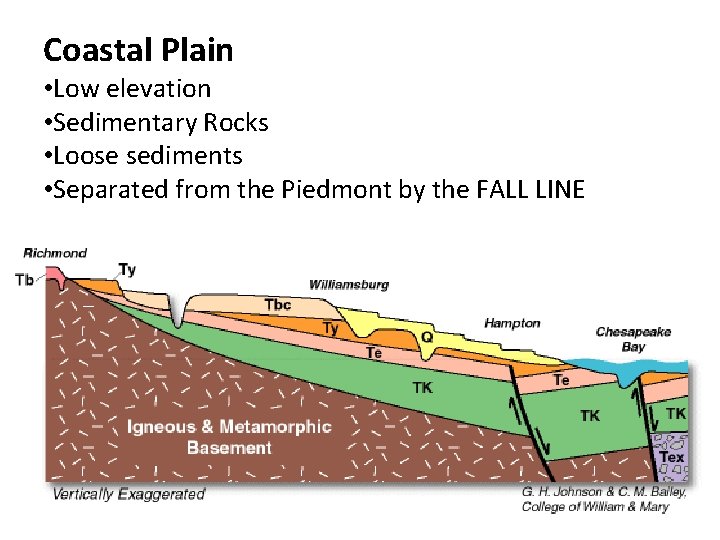
Coastal Plain • Low elevation • Sedimentary Rocks • Loose sediments • Separated from the Piedmont by the FALL LINE
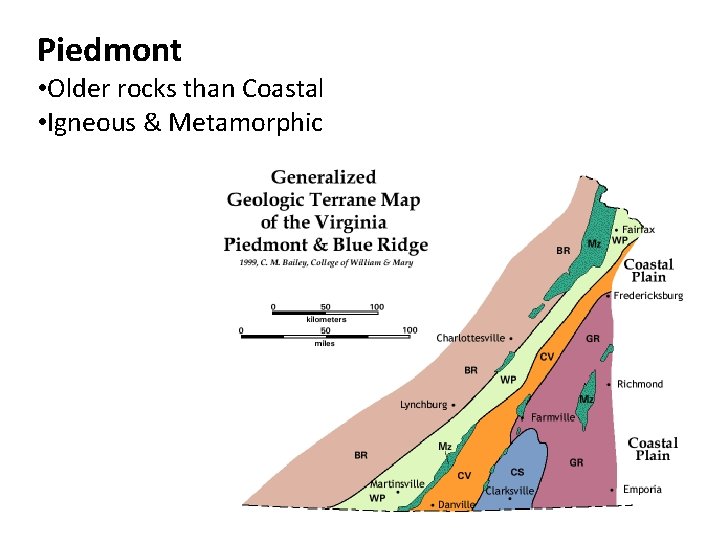
Piedmont • Older rocks than Coastal • Igneous & Metamorphic
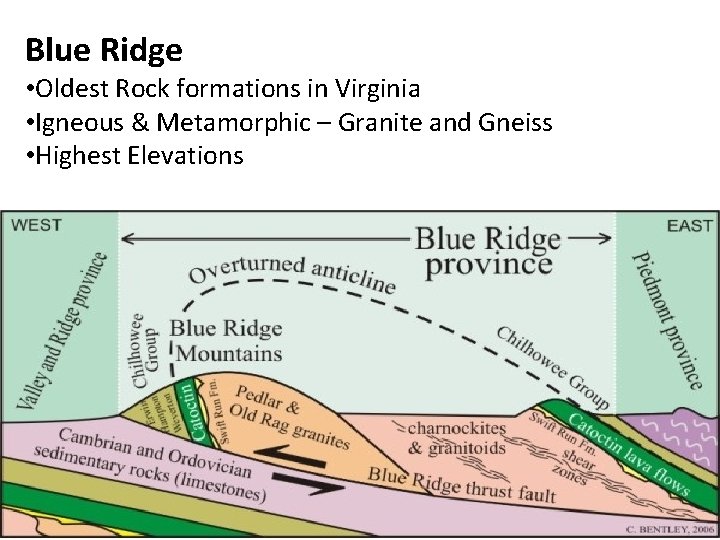
Blue Ridge • Oldest Rock formations in Virginia • Igneous & Metamorphic – Granite and Gneiss • Highest Elevations
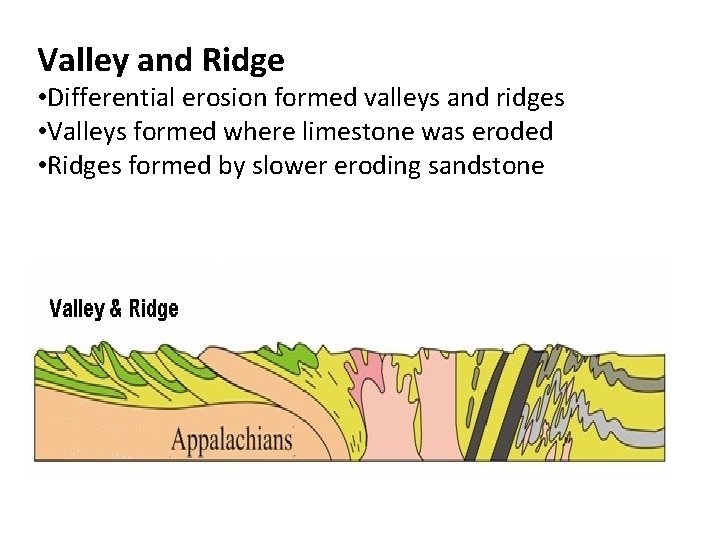
Valley and Ridge • Differential erosion formed valleys and ridges • Valleys formed where limestone was eroded • Ridges formed by slower eroding sandstone
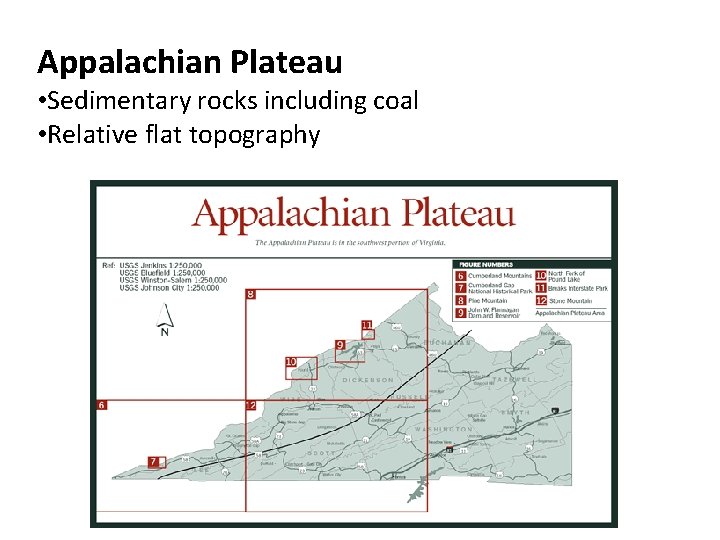
Appalachian Plateau • Sedimentary rocks including coal • Relative flat topography
Mineral Resources in Virginia • Coal remains most important to the Virginia, but remember, it is not a mineral!!! • Coastal Plain Province: sand, gravel, and clay and mineral sands. • Piedmont: kyanite, slate, vermiculite, granite, gabbro, diabase, and feldspar. • Blue Ridge: quartzite as crushed stone and, in the past, mining occurred for copper, iron, manganese, and a limited amount of tin.
Mineral Resources in Virginia • Valley and Ridge: limestone, dolostone, sandstone, gypsum, iron oxides, clay, oil, natural gas, and shale. • Appalachian Plateau: coal, methane, natural gas, and some oil, along with some crushed stone.
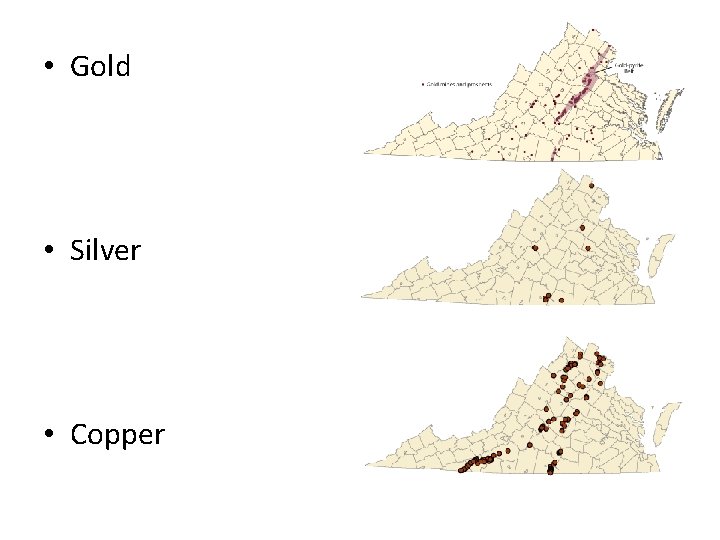
• Gold • Silver • Copper
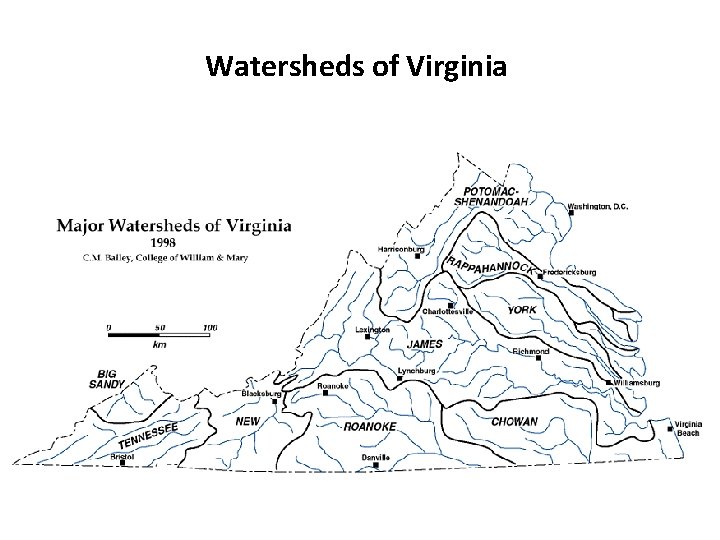
Watersheds of Virginia
- Slides: 49